Artificial Intelligence Archives - gettectonic.com - Page 21
Salesforce and Healthcare

What is Healthcare Technology?

What is the role of healthcare technology? Healthtech companies play a crucial role in elevating patient care and outcome. Within the health and life sciences industry technology plays an important role. Leveraging innovative technologies and digital solutions, these companies contribute to the enhancement of diagnostic accuracy, treatment planning, and monitoring efficiency for healthcare providers. How is technology defined in healthcare? Healthtech encompasses a broad spectrum of technologies, including medical devices, information technology (IT) systems, algorithms, artificial intelligence (AI), cloud computing, and blockchain. The purpose is to provide support to healthcare organizations, facilitating improved services and patient care. CRM in healthcare not only stores patients’ contact information. It also gives a comprehensive overview of their medical history, appointments, and prescriptions. Using a healthcare CRM system, providers can customize their patient management plans so that each patient gets precisely the amount of care they need. How does HealthTech differ from MedTech? HealthTech is implemented through diverse technologies like wearables, applications, or databases. MedTech primarily involves medical equipment, prosthesis, and tools. Despite their distinct differences, both HealthTech and MedTech share a common goal of integrating technology into healthcare. What is healthcare management and technology? Health information management and healthtech professionals are engaged in comprehending healthcare dat. The intricacies of which require in-depth knowledge of the software and systems that govern its utilization. The convergence of these fields aims to enhance the quality of life for medical patients by integrating technology into healthcare practices. The global healthcare CRM market size was estimated at USD 14.3 billion in 2021 and is expected to reach USD 16.0 billion in 2022. The value is predicted to grow at a CAGR of 8.4% from 2022 to 2030. North America remained the largest market for medical CRM in 2021. Health Cloud is one of the Salesforce Industry Clouds: a solution tailored to meet the unique needs of specific industries. It combines the best of Salesforce’s CRM capabilities with advanced features tailored for healthcare providers, payers, medical device companies, and pharmaceutical manufacturers. What is a Hipaa compliant CRM? HIPAA regulations require this information be protected and kept confidential… A HIPAA-compliant CRM ensures that the information is handled securely and that the organization is in compliance with the law. Like1 Related Posts Who is Salesforce? Who is Salesforce? Here is their story in their own words. From our inception, we’ve proudly embraced the identity of Read more Salesforce Marketing Cloud Transactional Emails Salesforce Marketing Cloud Transactional Emails are immediate, automated, non-promotional messages crucial to business operations and customer satisfaction, such as order Read more Salesforce Unites Einstein Analytics with Financial CRM Salesforce has unveiled a comprehensive analytics solution tailored for wealth managers, home office professionals, and retail bankers, merging its Financial Read more AI-Driven Propensity Scores AI plays a crucial role in propensity score estimation as it can discern underlying patterns between treatments and confounding variables Read more

Read More
Does Salesforce Have Artificial Intelligence?

Does Salesforce Have Artificial Intelligence?

Is Salesforce Equipped with Artificial Intelligence Capabilities? Salesforce Einstein is an intelligent layer built into the Lightning Platform, offering robust AI technologies that are seamlessly integrated into the user work environment. The Einstein Platform also provides a comprehensive set of platform services for administrators and developers, enabling the creation of intelligent applications and tailored AI solutions for businesses. Key Einstein Features: Salesforce Einstein is considered genuine artificial intelligence, providing a comprehensive AI solution specifically tailored for Customer Relationship Management (CRM). It eliminates the need for extensive data preparation or model management, seamlessly integrating with Salesforce data. According to Gartner, businesses in Sales, Marketing, Customer Experience, and Digital Commerce express significant interest in AI and Predictive Analytics. Salesforce, holding a substantial 19.5% share in the CRM Vendor Market, has been an early adopter of AI capabilities and technology. For Salesforce developers, embracing AI is crucial to staying relevant. It’s not AI itself that poses a threat but individuals proficient in utilizing AI tools who may replace those who are not. To remain competitive, becoming well-versed in prompt engineering and AI tools is highly recommended. Like Related Posts Who is Salesforce? Who is Salesforce? Here is their story in their own words. From our inception, we’ve proudly embraced the identity of Read more Salesforce Marketing Cloud Transactional Emails Salesforce Marketing Cloud Transactional Emails are immediate, automated, non-promotional messages crucial to business operations and customer satisfaction, such as order Read more Salesforce Unites Einstein Analytics with Financial CRM Salesforce has unveiled a comprehensive analytics solution tailored for wealth managers, home office professionals, and retail bankers, merging its Financial Read more AI-Driven Propensity Scores AI plays a crucial role in propensity score estimation as it can discern underlying patterns between treatments and confounding variables Read more

Read More
Salesforce Einstein and Einstein Automate

Lead Conversion at the Speed of Einstein

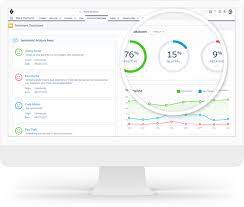
The primary challenges faced by businesses today revolve around lead generation and conversion. Lead conversion with Einstein is fast. Tectonic proudly offers comprehensive solutions for both challenges through the implementation and customization of Salesforce Einstein Lead Scoring. Salesforce Einstein Lead Scoring, a pivotal feature within Sales Cloud Einstein, leverages artificial intelligence to empower sales representatives in converting leads more efficiently. By analyzing historical sales data, Einstein Lead Scoring determines the likelihood of a lead converting into an opportunity. This predictive intelligence enables sales teams to segment and prioritize leads for faster conversion. Tectonic and Lead Conversion with Einstein Let Tectonic’s’ customization and implementation services ensure that your company maximizes the value derived from Sales Cloud Einstein, setting your sales representatives up for success. The factors influencing lead conversion, as predicted by Einstein Lead Scoring, are conveniently displayed on each lead record in Salesforce, aiding sales reps in quick preparation for calls and interactions. Lead Conversion with Einstein Einstein Lead Scoring models are uniquely built for each customer and organization, analyzing standard and custom fields through various predictive models. The machine learning behind Einstein continuously improves accuracy by updating models monthly. This ensures that leads are scored every hour using the latest model, promptly adapting to any changes in lead data. Truly, the power of Einstein Lead Scoring lies in its ability to discover insights, predict lead conversion likelihood, and provide automatic insights into the newly determined score. Studies indicate that AI-powered companies spend less time prospecting and more time actively growing revenue. Einstein Lead Scoring allows your company to focus more on selling and less on prospecting, leading to faster lead conversion and shorter sales cycles. Tectonic assists in automating sales and marketing processes, integrating the capabilities of Einstein Lead Scoring into your business. With zero setup requirements, custom lead score-driven workflows, and smart lead lists. Einstein Lead Scoring ensures that your sales teams work smarter and faster. The Lead Score Your Lead Score field added by Einstein Lead Scoring in your Salesforce org lets sales and marketing teams prioritize leads. This is based on similarities to prior converted leads. Through data science and machine learning, Einstein Lead Scoring offers a faster and more accurate solution. When compared to traditional rules-based lead scoring. Your Salesforce admin, or Tectonic’s Salesforce team, can set up Einstein Lead Scoring to score all leads together. Or group them into segments based on field criteria. The dashboard provides key lead score metrics. By offering insights into average lead score by lead source, conversion rate by lead score, and lead score distribution across converted and lost opportunities. Sales Cloud Einstein Sales Cloud Einstein, with Einstein Lead Scoring, is a ready-to-use set of tools that learn from Salesforce CRM data and activities, continuously enhancing its predictions. Because Sales Cloud Einstein includes additional features such as Salesforce Inbox and Einstein Activity Capture. Einstein Opportunity Insights offers smart reminders or tasks for nurturing customer relationships. Einstein Lead Scoring helps prioritize leads for conversion. Incorporating Sales Cloud Einstein and Einstein Lead Scoring into your sales and marketing strategy can yield a great return. Your Salesforce investment will fill your opportunity pipeline. Contact Tectonic for a free consultation to explore how Sales Cloud Einstein can accelerate lead conversion for your business. Like1 Related Posts Who is Salesforce? Who is Salesforce? Here is their story in their own words. From our inception, we’ve proudly embraced the identity of Read more Salesforce Marketing Cloud Transactional Emails Salesforce Marketing Cloud Transactional Emails are immediate, automated, non-promotional messages crucial to business operations and customer satisfaction, such as order Read more Salesforce Unites Einstein Analytics with Financial CRM Salesforce has unveiled a comprehensive analytics solution tailored for wealth managers, home office professionals, and retail bankers, merging its Financial Read more AI-Driven Propensity Scores AI plays a crucial role in propensity score estimation as it can discern underlying patterns between treatments and confounding variables Read more

Read More
Einstein Opportunity Scoring Boosts Sales

Einstein Opportunity Scoring Boosts Sales

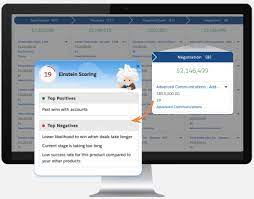
Your business thrives on seizing the right opportunities to drive more deals. Identifying these pivotal sales chances is crucial for prioritizing and capitalizing on prospects to secure successful outcomes. Enter Einstein Opportunity Scoring Boosts Sales. Enter Salesforce’s Einstein Opportunity Scoring system, designed to gauge the likelihood of an opportunity’s success, ranging from scores of 1 to 99, powered by artificial intelligence analysis. These scores offer a clear indication of each opportunity’s potential, empowering you to prioritize effectively and maximize your business’s deal closure rates. So, how does this innovative system function? In today’s digital age, Salesforce’s Einstein Opportunity Scoring leverages AI to analyze past opportunities, scrutinizing both closed-won and closed-lost instances to identify key factors influencing scores. These factors encompass various opportunity details, historical data, and product information, culminating in accurate scoring models refreshed every few hours to ensure precision. Moreover, you have the flexibility to customize your scoring model to align with specific business needs, modifying criteria by adding or removing records or custom fields. This adaptability extends further with regular scoring model updates every 10 days, reflecting the dynamic nature of the business landscape. Accessing this feature is simple—users with a Sales Cloud Einstein license can leverage Einstein Opportunity Scoring. And even if you lack this specific license or the Sales Cloud Einstein product suite, fret not, as this feature gradually rolls out to all customers, irrespective of license status. What advantages does Opportunity Scoring offer your business? Firstly, the opportunity scorecard presents a comprehensive overview of each deal, highlighting positive and negative influencing factors, aiding in focused deal analysis. Additionally, the system offers actionable suggestions for score improvement, ensuring optimal deal management. Furthermore, Opportunity Scoring aids in opportunity tracking, preventing deal slippage, and facilitating informed decision-making. Sales representatives can leverage low opportunity scores to seek guidance from sales managers, ultimately boosting deal conversion rates. To maximize the effectiveness of Einstein Opportunity Scoring, continuous improvement is key. Ensure proper opportunity segregation, timely entry of opportunities, and accurate data updates to enhance scoring accuracy and increase deal success rates. In instances where scores may not appear, reasons could range from initial feature setup time to opportunity closure or admin exclusion. Meeting specific data requirements, including closed-won and closed-lost opportunities, and regular updates, ensures robust scoring outcomes. In conclusion, harness the power of Salesforce’s Einstein Opportunity Scoring to unlock valuable insights and predictive capabilities, driving sales success and propelling your business forward. For further insights into Einstein Opportunity Scoring, explore our blogs section for comprehensive information. Like Related Posts Who is Salesforce? Who is Salesforce? Here is their story in their own words. From our inception, we’ve proudly embraced the identity of Read more Salesforce Marketing Cloud Transactional Emails Salesforce Marketing Cloud Transactional Emails are immediate, automated, non-promotional messages crucial to business operations and customer satisfaction, such as order Read more Salesforce Unites Einstein Analytics with Financial CRM Salesforce has unveiled a comprehensive analytics solution tailored for wealth managers, home office professionals, and retail bankers, merging its Financial Read more AI-Driven Propensity Scores AI plays a crucial role in propensity score estimation as it can discern underlying patterns between treatments and confounding variables Read more

Read More
public sector and tribal governent

What is BI in Salesforce?

Salesforce BI helps to create fast, digestible reports to help you make informed decisions at the right time. Salesforce Einstein is a leading business intelligence software solution that will help streamline your operations. Read on in this insight to learn how Salesforce BI capabilities including Tableau rank in the Gartner Magic Quadrant. Make the right decision every time using analytics that go beyond business intelligence software. See why Gartner named Salesforce (Tableau) a Leader in the Gartner® Magic Quadrant™ for Analytics and Business Intelligence Platforms for the 11th consecutive year. Data and analytics leaders must use analytics and BI platforms to support the needs of IT, analysts, consumers and data scientists. While integration with cloud ecosystems and business applications is a key selection requirement, buyers also need platforms to support openness and interoperability. Analytics and business intelligence (ABI) platforms enable less technical users, including business people, to model, analyze, explore, share and manage data, and collaborate and share findings, enabled by IT and augmented by artificial intelligence (AI). For several years, the Magic Quadrant for Analytic and Business Intelligence Platforms has emphasized visual self-service for end users augmented by AI to deliver automated insights. While this remains a significant use case, the ABI platform market will increasingly need to focus on the needs of the analytic content consumer and business decision makers. To achieve this, automated insights must be relevant in context of a user’s goals, actions and workflow. Many platforms are adding capabilities for users to easily compose low-code or no-code automation workflows and applications. This blend of capabilities is helping to expand the vision for analytics beyond simply delivering datasets and presenting dashboards. Today’s ABI platforms can deliver enriched contextualized insights, refocus attention on decision-making processes and ultimately take actions that will deliver business value. In addition to the increasing consumer design focus trend, we see other key market trends, including the need for improved governance of analytic content creation and dissemination, and the demand for a headless, open architecture. For example, a headless ABI platform would decouple the metrics store from the front-end presentation layer, enabling more interoperability with competitive products. ABI platform functionality includes the following 12 critical capabilities, which have been updated to reflect areas of market change, differentiation and customer demand: Gartner added three new critical capabilities as part of our metrics store evaluation criteria this year:  ABI platforms have always been about measurement. For decades, the slicing and dicing of measures by their dimensional attributes was synonymous with the act of performing business intelligence. However, over the last decade, the focus on metrics and measurement was overshadowed by data visualization. As data visualization became the most conspicuous capability, some business executives began to conflate ABI platforms with data visualization — as if ABI platforms are glorified chart wizards. This misconception minimizes much of the work performed and the business value delivered by ABI platforms. Establishing metrics stores as a critical capability to execute makes it clear that defining and communicating performance measures throughout an organization is one of the key purposes of an ABI platform. Analytics collaboration is a combination of many features (such as Slack/Teams integration, action frameworks) that collectively improve an organization’s ability to make decisions with consensus. Data science integration reflects the increasing likelihood that a business analyst may want to use data science to test certain hypotheses, and that data scientists will need to leverage features such as data prep and data visualization. In addition, Gartner is changing “catalogs” to “analytic catalogs” to emphasize a set of requirements that are not being met by ABI platform vendors today. Most large enterprises have thousands of reports built across multiple ABI platforms, but consumers in these organizations have no easy way to access these reports. The name change to analytic catalogs reflects the need for ABI platform vendors to deliver analytic content with the consumer in mind. Three critical capabilities were removed from our evaluation criteria: security, natural language generation (NLG; rolled into data storytelling) and cloud analytics (which will no longer be considered a platform capability, but instead a go-to-market strategy covered in the Magic Quadrant). And one of the security sub-criteria, about the granularity of authorization (e.g., row-based security) has been moved to the enterprise reporting capability. Salesforce (Tableau) Tableau, a Salesforce company, is a Leader in this Magic Quadrant. Its products are mainly focused on visual-based exploration that enables business users to access, prepare, analyze and present findings in their data. CRM Analytics, formerly Tableau CRM, provides augmented analytics capabilities for analysts and citizen data scientists. Tableau has global operations and serves clients of all sizes. In 2022, Tableau reinforced its augmented consumer vision to provide contextualized insights with deeper integration with Salesforce Data Cloud. IT also improved decision intelligence by bringing domain-aware insights into action with Revenue Intelligence and other Salesforce-native apps. The extensible design and x-platform integrations (Salesforce Flow, MuleSoft, UiPath and Looker) further enable composable analytics to bring insights into workflow with agility. Strengths Cautions Like Related Posts Who is Salesforce? Who is Salesforce? Here is their story in their own words. From our inception, we’ve proudly embraced the identity of Read more Salesforce Marketing Cloud Transactional Emails Salesforce Marketing Cloud Transactional Emails are immediate, automated, non-promotional messages crucial to business operations and customer satisfaction, such as order Read more Salesforce Unites Einstein Analytics with Financial CRM Salesforce has unveiled a comprehensive analytics solution tailored for wealth managers, home office professionals, and retail bankers, merging its Financial Read more AI-Driven Propensity Scores AI plays a crucial role in propensity score estimation as it can discern underlying patterns between treatments and confounding variables Read more

Read More
Salesforce SOQL Tools and AI

Salesforce SOQL Tools and AI

Salesforce Object Query Language (SOQL) is a robust instrument empowering users to retrieve data from Salesforce efficiently. With SOQL, you can interrogate any Salesforce object, spanning from custom objects to user permissions like profile and permission set perms. Salesforce SOQL Tools and AI. As a seasoned Salesforce Admin, crafting SOQL queries can often prove cumbersome. Not only must you master the syntax, but you must also ensure the queries are both effective and precise. Salesforce SOQL Tools and AI Fortunately, the advent of generative artificial intelligence (AI) tools offers a solution to this challenge. Generative AI tools, capable of producing text, code, and creative content, have emerged as invaluable aids in generating SOQL queries. Among these, Bard and ChatGPT have emerged as particularly helpful tools for crafting SOQL queries. In this discourse, I’ll illustrate how to leverage prompts to generate SOQL queries using these generative AI tools, providing query examples and resources to kickstart your journey with SOQL in your organization. Initiating SOQL Queries with Generative AI Tools To start, it’s essential to furnish the generative AI tool with pertinent information about the intended query. For instance, one might instruct the tool to generate a query retrieving all open opportunities. Subsequently, upon prompting: “Write SOQL that returns all open opportunities in Salesforce.” ChatGPT furnishes the following response: “SELECT Id, Name, StageName, CloseDate, Amount FROM Opportunity WHERE IsClosed = false” This query selects Opportunity records and retrieves their pertinent attributes, filtering the results to include only open opportunities based on the IsClosed field. Bard echoes a similar sentiment with its rendition of the query: “SELECT Id, Name, StageName, Amount, CloseDate FROM Opportunity WHERE IsClosed = false” However, the essence of prompt writing and critical thinking lies in refining the generated response. For instance, by slightly altering the prompt to include additional criteria: “Write SOQL that returns all open opportunities in Salesforce, including all standard fields and filtering results by StageName.” ChatGPT furnishes an adapted query: “SELECT Id, Name, AccountId, Amount, CloseDate, CreatedBy.Name, CreatedDate, LastModifiedBy.Name, LastModifiedDate, StageName FROM Opportunity WHERE StageName != ‘Closed Won’ AND StageName != ‘Closed Lost’” It’s worth noting that ChatGPT lacks insight into the specifics of your organization’s structure, necessitating occasional guidance to accommodate custom fields. However, through conversational cues, you can educate it accordingly: “My Salesforce org includes a custom field with the API name of NonProfit__c for Opportunity. It’s a boolean field. Please include it in all future SOQL queries on Opportunity.” To which ChatGPT responds: “Certainly! To include the custom field NonProfit__c in all future SOQL queries on Opportunity, you can modify the query as follows: SELECT Id, Name, AccountId, Amount, CloseDate, CreatedBy.Name, CreatedDate, LastModifiedBy.Name, LastModifiedDate, StageName, NonProfit__c FROM Opportunity WHERE StageName != ‘Closed Won’ AND StageName != ‘Closed Lost’” By incorporating NonProfit__c into the SELECT statement, the custom field is seamlessly integrated into the query results. Leveraging SOQL for User Permissions Reporting One particularly advantageous application of SOQL for Salesforce Admins is reporting on user permissions. By utilizing the SOQL Query tool in Code Builder or the Developer Console, admins can scrutinize permissions assigned to users via permission sets, profiles, objects, and fields. Here are a few illustrative examples of user permission SOQL queries, collaboratively devised with the assistance of ChatGPT: Check user permissions on an object: SELECT PermissionsRead, PermissionsCreate, PermissionsEdit, PermissionsDelete FROM ObjectPermissions WHERE ParentId IN (SELECT Id FROM PermissionSet WHERE PermissionSet.Name = ‘Your_Permission_Set_Name’) AND SObjectType = ‘Your_Object_Name’ AND PermissionsRead = true Check user permissions on a field: SELECT PermissionsRead, PermissionsEdit FROM FieldPermissions WHERE ParentId IN (SELECT Id FROM PermissionSet WHERE PermissionSet.Name = ‘Your_Permission_Set_Name’) AND SObjectType = ‘Your_Object_Name’ AND Field = ‘Your_Field_Name’ AND PermissionsRead = true Determine which permission sets grant Edit access for a specific field: SELECT ParentId, Parent.Name, Parent.Type, Field, PermissionsEdit, PermissionsRead, SobjectType FROM FieldPermissions WHERE Parent.IsOwnedByProfile = true AND Field = ‘ADM_Work__c.Subject__c’ AND PermissionsEdit = True Identify users assigned managed packages: SELECT Id, UserId, PackageLicense.NamespacePrefix FROM UserPackageLicense WHERE PackageLicense.NamespacePrefix = ‘YOUR_PREFIX_HERE’ Embark on Efficient SOQL Query Generation Today With generative AI tools, initiating sample SOQL queries becomes a n easier process, alleviating the need to grapple with syntax intricacies. For admins who occasionally require SOQL queries and find themselves toggling between documentation and references to commence, leveraging generative AI represents a compelling alternative. Here are some additional pointers for harnessing generative AI tools to craft SOQL queries effectively: Be precise: Furnish the tool with specific instructions to ensure accuracy and efficiency in query generation. Provide examples: Supplying the tool with query examples aids in generating more tailored queries. Test rigorously: Following query generation, ensure thorough testing to verify the returned results align with expectations. Ultimately, by harnessing the power of generative AI, admins can streamline the process of crafting SOQL queries, thereby enhancing productivity and efficiency in Salesforce data management endeavors. Data analysis serves as a cornerstone of business strategy, yet crafting custom SOQL queries to import specific Salesforce data can prove complex and time-consuming, particularly for those without coding expertise. When you add the necessity to amalgamate data from various systems, the process becomes even more cumbersome and inefficient. Coefficient Salesforce SOQL Tools and AI In this insight, we’ll demonstrate how Coefficient’s Formula Builder, powered by GPT, streamlines the creation of custom SOQL functions, and how Coefficient facilitates direct data imports from Salesforce within Google Sheets, all seamlessly integrated into your workflow without ever leaving your spreadsheet. To get started, launch the Coefficient add-on directly within your Google Sheets. If you haven’t already installed Coefficient, simply navigate to the Google Workspace Marketplace to acquire it. Here’s how to install Coefficient: Now that you have Coefficient installed, you can effortlessly import your live Salesforce data. In the Coefficient sidebar within Google Sheets, follow these steps: To do this, follow these steps: The Formula Builder will promptly generate a custom SOQL query based on your specifications. Simply copy this query, and you’re ready to go. With Coefficient, data analysis becomes more efficient and accessible, empowering users of all skill levels to harness the power of Salesforce data seamlessly within Google


Read More

AI in Sales Enablement

automation, and personalization to enhance sales processes, increase customer engagement, and drive revenue growth. Companies are working with AI to improve analysis of all customer contact points to both identify leads and weigh lead quality. That includes ingesting information from web pages, email campaigns, phone calls, and much more.

Read More
Salesforce

What is Salesforce?

Salesforce is cloud-based CRM software. It makes it easier for companies to find more prospects, close more deals, and connect with customers in a whole new, personalized way, so they can provide them with amazing service at scale. Salesforce, Inc. is an American cloud-based software company headquartered in San Francisco, California. It provides customer relationship management software and applications focused on sales, customer service, marketing automation, e-commerce, analytics, and application development. According to Wikipedia… Salesforce brings together all your data, from any source. Customer 360, the complete suite of products, unites your sales, service, marketing, commerce, and IT teams with a single, shared view of customer information. With artificial intelligence integrated across all products, SFDC helps everyone in your company work more productively and better deliver the personalized experiences customers love. To explore all Salesforce has to offer for your business, contact Tectonic today. Salesforce is cloud-based CRM software (What is CRM?). It makes it easier for companies to find more prospects, close more deals, and connect with customers in a whole new way, so they can provide them with amazing service at scale. Salesforce brings together all your data, from any source. Customer 360, our complete suite of products, unites your sales, service, marketing, commerce, and IT teams with a single, shared view of customer information. With artificial intelligence integrated across all products, SFDC helps everyone in your company work more productively and better deliver the personalized experiences customers love. Content updaed February 2025, Shannan Hearne Like Related Posts Who is Salesforce? Who is Salesforce? Here is their story in their own words. From our inception, we’ve proudly embraced the identity of Read more Salesforce Marketing Cloud Transactional Emails Salesforce Marketing Cloud Transactional Emails are immediate, automated, non-promotional messages crucial to business operations and customer satisfaction, such as order Read more Salesforce Unites Einstein Analytics with Financial CRM Salesforce has unveiled a comprehensive analytics solution tailored for wealth managers, home office professionals, and retail bankers, merging its Financial Read more AI-Driven Propensity Scores AI plays a crucial role in propensity score estimation as it can discern underlying patterns between treatments and confounding variables Read more

Read More
AI-driven propensity scores

AI-Driven Propensity Scores

AI plays a crucial role in propensity score estimation as it can discern underlying patterns between treatments and confounding variables through machine learning, without explicit programming. This insight has gone through numerous updates as the information and use of AI-driven propensity scores evolved. In many cases, writers give a brief overview of the what of a tool. Today, we are going way beyond “what the sausage tastes like” to “how the sausage is made” Tectonic hopes you will enjoy learning how propensity models and AI driven propensity scores improve your data. Propensity Model in Artificial Intelligence: Propensity modeling generates a propensity score, representing the probability that a visitor, lead, or customer will take a specific action. For instance, a propensity model, using data science or machine learning, can help predict the likelihood of a lead converting to a customer. AI-driven propensity scores take an existing data model and improve its predictions, speed, and analysis with AI. Propensity Score in CRM: In CRM, a propensity score is the model’s probabilistic estimate of a customer performing a specific action. Grouping customers by score ranges allows for effective comparison and analysis within each bucket. Enhancing Propensity Modeling with AI: Traditional statistical propensity models might lack accuracy, but integrating machine learning technologies, as demonstrated by Alphonso, can significantly optimize ad spend and increase prediction accuracy from 8% to 80%. That’s a whopping 72% improvement. Propensity Modeling Overview: Propensity modeling involves predictive models analyzing past behaviors to forecast the future actions of a target audience. It identifies the likelihood of specific actions, aiding in personalized marketing. Role of Machine Learning in Propensity Models: Propensity models rely on machine learning algorithms, acting as binary classifiers predicting whether a certain event or behavior will occur. Logistic regression and Classification and Regression Tree Analysis are common methods for calculating propensity scores. Characteristics of Effective Propensity Models: For robust predictions, propensity models should be dynamic, scalable, and adaptive. Dynamic models adapt to trends, scalable for diverse predictions, and adaptive with regular data updates. Propensity Modeling Applications: Propensity models find applications in predicting customer behavior, such as purchasing, converting, churning, or engaging. Real-time predictions, data analysis, and AI integration contribute to successful implementations. AI-driven propensity scores are extremely useful in that they can be coupled with many other models to give additional insights to your data. Types of Propensity Score Models: Various models include propensity to purchase/convert, customer lifetime value (CLV), propensity to churn, and propensity to engage. Combining models can enhance the effectiveness of marketing campaigns. When to Use Propensity Scores: Propensity scores are beneficial when random assignment of treatments is impractical. They help estimate treatment effects in observational studies, providing an alternative to traditional model-building methods. Limitations of Propensity Score Methods: While propensity scores help achieve exchangeability between exposed and unexposed groups, they do not claim to eliminate confounding due to unmeasured covariates. Findings from observational studies must be interpreted cautiously due to potential residual confounding. Content updated October 2021. Content updated February 2025. Like3 Related Posts Who is Salesforce? Who is Salesforce? Here is their story in their own words. From our inception, we’ve proudly embraced the identity of Read more Salesforce Marketing Cloud Transactional Emails Salesforce Marketing Cloud Transactional Emails are immediate, automated, non-promotional messages crucial to business operations and customer satisfaction, such as order Read more Salesforce Unites Einstein Analytics with Financial CRM Salesforce has unveiled a comprehensive analytics solution tailored for wealth managers, home office professionals, and retail bankers, merging its Financial Read more Tectonic’s Successful Salesforce Track Record Salesforce Technology Services Integrator – Tectonic has successfully delivered Salesforce in a variety of industries including Public Sector, Hospitality, Manufacturing, Read more

Read More
gettectonic.com