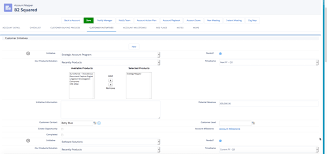
To optimize revenue from existing clients, businesses can employ account planning, particularly for small businesses engaging in B2B sales. A highly effective strategy involves regularly reviewing client accounts that necessitate a more personalized sales approach. Salesforce Account Planning is a great way to keep account managers on the same page and shorten sales cycles.
Many entrepreneurs and sales managers often use a uniform process for converting leads and managing contract renewals. However, without an account planning strategy, companies may be missing out on significant revenue opportunities. By implementing account plans, teams gain a profound understanding of client needs and challenges, enabling them to tailor sales approaches for higher conversion rates and increased contract values through cross-sells and upsells.
Salesforce Account Planning
Account management planning and execution, for many sales teams, facilitate revenue growth without necessarily expanding their prospect pool.
Now, let’s dexplore the concept of account planning. Customer accounts are inherently intricate, and traditional sales processes tend to categorize them based on standard criteria like industry, employee count, overall sales, and other general data points. While using the same sales pitch for similar business profiles may yield success, important details might be overlooked, hindering the potential for additional revenue from the same account.
This is where account planning becomes most valuable. It encourages sales professionals to dive deeper into each customer’s individual needs, motivations, and business context. This understanding empowers sales managers to identify new avenues for revenue growth within existing accounts. For example, being aware of recent organizational changes among clients, such as office expansion or funding rounds, allows businesses to offer products and services that align with the client’s growth trajectory. This depth of understanding enhances the chances of proposal acceptance.
By addressing the specific challenges and opportunities clients face, businesses can propose mutually beneficial solutions.
Here are eight essential steps for effective account planning:
- Identify your existing accounts: List all current customers, including details about their purchasing habits and company profiles.
- Calculate potential revenue and success rate: Determine potential spending and the likelihood of converting new sales to prioritize accounts.
- Determine points of contact and decision makers: Understand key persons involved in the sales process to address them appropriately at each stage.
- Understand their needs and motivations: Ask about goals, recent pain points, challenges, and how success is defined in their roles. Leverage organizational developments to your advantage.
- Compare offerings against client needs: Adapt pitches to focus on solutions aligned with the highest priorities of prospects.
- Evaluate competitive landscape and risks: Analyze external pressures clients face and use this information to highlight the advantages of your solutions.
- Define current customer concerns: Identify reservations about your product or service to address them effectively.
- Address buyer reservations and close the sale: Use data to illustrate win-win scenarios, demonstrating how your solution aligns with the client’s goals.
By following these steps, businesses can enhance their account planning strategy for sustained revenue growth from existing clients.

Who is Salesforce? Here is their story in their own words. From our inception, we've proudly embraced the identity of Read more

Salesforce Marketing Cloud Transactional Emails are immediate, automated, non-promotional messages crucial to business operations and customer satisfaction, such as order Read more

Salesforce has unveiled a comprehensive analytics solution tailored for wealth managers, home office professionals, and retail bankers, merging its Financial Read more
AI plays a crucial role in propensity score estimation as it can discern underlying patterns between treatments and confounding variables Read more