Salesforce Platform Archives - gettectonic.com
Ensuring Trust in AI Agent Deployment

Ensuring Trust in AI Agent Deployment

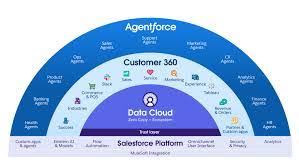
Ensuring Trust in AI Agent Deployment: A Secure Approach to Business Transformation The Imperative for Trustworthy AI Agents AI agents powered by platforms like Agentforce represent a significant advancement in business automation, offering capabilities ranging from enhanced customer service to intelligent employee assistance. However, organizations face a critical challenge in adopting this technology: establishing sufficient trust to deploy AI agents with sensitive data and core business operations. Recent industry research highlights prevalent concerns: Salesforce has maintained trust as its foundational value throughout its 25-year history, adapting this principle across technological evolutions from cloud computing to generative AI. The company now applies this same rigorous approach to AI agent deployment through a comprehensive trust framework. The Four Essential Components of Trusted AI Implementation 1. Comprehensive Data Governance Framework The reliability of AI agents depends fundamentally on data quality and security. The Salesforce platform addresses this through: Data Protection Systems Advanced Data Management Industry experts emphasize that robust AI systems require equally robust data foundations. 2. Secure Integration Architecture AI agents require safe interaction channels with other systems: 3. Built-in Development Safeguards The platform incorporates multiple layers of protection throughout the AI lifecycle: 4. Proprietary Trust Layer A specialized security interface between users and large language models offers: Case Study: Healthcare Transformation with Precina Precina’s implementation demonstrates the platform’s capabilities in a regulated environment. By unifying patient records through Agentforce while maintaining HIPAA compliance, the organization achieved: Precina’s CTO noted that Salesforce’s cybersecurity standards enabled trust equivalent to their own care standards when handling patient information. Enterprise AI: Balancing Innovation and Responsibility Salesforce leadership emphasizes that the company’s quarter-century of experience in secure solutions uniquely positions it to guide enterprises through AI adoption. The integration of unified data management, intuitive development tools, and embedded governance enables organizations to deploy AI solutions that are both transformative and responsible. The recommended implementation approach includes: In the evolving landscape of enterprise AI, Salesforce positions trust not just as a corporate value but as a critical competitive differentiator for organizations adopting these technologies. Like Related Posts AI Automated Offers with Marketing Cloud Personalization AI-Powered Offers Elevate the relevance of each customer interaction on your website and app through Einstein Decisions. Driven by a Read more Salesforce OEM AppExchange Expanding its reach beyond CRM, Salesforce.com has launched a new service called AppExchange OEM Edition, aimed at non-CRM service providers. Read more The Salesforce Story In Marc Benioff’s own words How did salesforce.com grow from a start up in a rented apartment into the world’s Read more Salesforce Jigsaw Salesforce.com, a prominent figure in cloud computing, has finalized a deal to acquire Jigsaw, a wiki-style business contact database, for Read more

Read More
Why Salesforce Release Management Matters

Salesforce Winter ‘26 Release: Key Dates and Prep Guide Winter ‘26 is coming—and with it, a wave of updates to the Salesforce platform. To ensure a smooth transition, here’s what you need to know: 1. Mark Your Calendar: Key Winter ‘26 Release Dates Salesforce will roll out Winter ‘26 in waves, with major upgrade weekends on: How to Check Your Instance’s Upgrade Date: Don’t know your instance? Go to Setup > Company Information in your Salesforce org. 2. Test Critical Functions Before Upgrade While Salesforce releases are typically stable, proactive testing helps avoid surprises. Before your production upgrade: 3. Sandbox Upgrades: Preview vs. Non-Preview Your sandbox is your testing playground—here’s when to expect updates: Tip: Pre-release orgs (available soon) let you explore new features, but they won’t include your custom configurations. 4. Stay Ahead with Release Notes The Winter ‘26 Release Notes (coming soon) will detail all new features across Salesforce products. Action Plan for Winter ‘26 ✅ Verify your instance’s upgrade date (Salesforce Trust).✅ Test core processes in sandbox/pre-release orgs.✅ Review release notes to prioritize feature adoption. Pro Tip: Schedule internal training sessions to align teams on key updates BEFORE they happen. Final ThoughtSalesforce releases are opportunities—not obstacles. By planning ahead, you’ll leverage Winter ‘26’s enhancements while minimizing disruption. Stay tuned for deeper dives into top features once release notes drop! Need help preparing? Drop us a message—we’re here to ensure your upgrade is seamless. Like Related Posts AI Automated Offers with Marketing Cloud Personalization AI-Powered Offers Elevate the relevance of each customer interaction on your website and app through Einstein Decisions. Driven by a Read more Salesforce OEM AppExchange Expanding its reach beyond CRM, Salesforce.com has launched a new service called AppExchange OEM Edition, aimed at non-CRM service providers. Read more The Salesforce Story In Marc Benioff’s own words How did salesforce.com grow from a start up in a rented apartment into the world’s Read more Salesforce Jigsaw Salesforce.com, a prominent figure in cloud computing, has finalized a deal to acquire Jigsaw, a wiki-style business contact database, for Read more

Read More
Agentforce 3 and AI Agents

Agentforce 3 and AI Agents

Salesforce Lifts the Lid on AI Agents with Agentforce 3 No More Black Box AISalesforce has unveiled Agentforce 3, a suite of tools designed to build, test, and manage AI agents with full transparency. The key components—Agentforce Studio (an agent design and testing environment) and Agentforce Command Center (a monitoring dashboard)—will roll out in August, giving businesses unprecedented control over their AI workflows. Taking the Reins on AI Performance The Command Center introduces an observability dashboard that tracks:✔ Agent latency✔ Error rates✔ Escalation rates✔ Individual customer interactions This granular visibility allows businesses to identify failures, analyze root causes, and refine agent behavior—all in plain language. “You’ve got to be able to understand, monitor, and manage these agents before you let them loose on customers—let alone other agents,” said Rebecca Wettemann, Founder of Valoir. Interoperability on the Horizon Salesforce is also advancing AI agent collaboration with: These standards will enable cross-platform agent coordination, allowing one AI agent to orchestrate others—a vision shared by ServiceNow and other enterprise players. Early Adopters See Real-World Impact Goodyear is already customizing Agentforce to:🔹 Strengthen relationships with automakers & resellers🔹 Personalize consumer interactions (e.g., tire recommendations based on weather, location, and purchase history) “We’re shifting from transactional sales to lifetime customer value,” said Mamatha Chamarthi, Goodyear’s Chief Digital Officer. Governance & Security in a Multi-Agent Future Salesforce ensures secure interoperability with:✔ Policy-based data access controls for MCP/A2A agents✔ AgentExchange marketplace (already hosting MCP connections from AWS, Google Cloud, PayPal, and others) “Builders will be able to orchestrate dynamic, multi-agent experiences—safely,” said Gary Lerhaupt, Salesforce VP of Product Architecture. Challenges Ahead: The Ecosystem Factor Despite the push for interoperability, Salesforce still blocks rivals from searching Slack data—a potential hurdle for developer adoption. “Success hinges on open ecosystems,” noted Wettemann. “You need to get more players on board.” The Bottom Line With Agentforce 3, Salesforce is moving AI agents out of the lab and into the real world—equipping businesses with the tools to deploy, monitor, and optimize them at scale. The next frontier? Seamless cross-platform AI teamwork—but only if the industry plays nice. Key Takeaways: Like Related Posts AI Automated Offers with Marketing Cloud Personalization AI-Powered Offers Elevate the relevance of each customer interaction on your website and app through Einstein Decisions. Driven by a Read more Salesforce OEM AppExchange Expanding its reach beyond CRM, Salesforce.com has launched a new service called AppExchange OEM Edition, aimed at non-CRM service providers. Read more The Salesforce Story In Marc Benioff’s own words How did salesforce.com grow from a start up in a rented apartment into the world’s Read more Salesforce Jigsaw Salesforce.com, a prominent figure in cloud computing, has finalized a deal to acquire Jigsaw, a wiki-style business contact database, for Read more

Read More
Marketing Cloud Intelligence

5 Ways Marketing Intelligence Transforms Campaign Performance and ROI

Struggling to prove marketing ROI? You’re not alone. Are you optimizing campaigns in real time—or just reacting to yesterday’s results? Can you confidently tie marketing spend to revenue, or are you relying on guesswork? If fragmented data, delayed insights, and wasted ad spend are holding you back, Salesforce Marketing Intelligence is the solution. This AI-powered analytics platform unifies your marketing data, automates optimizations, and delivers actionable insights—so you can boost performance, reduce waste, and maximize ROI. The Challenge: Turning Data into Revenue Today’s customer journey spans social, email, search, and more—but without clear insights, optimizing spend and proving impact is nearly impossible. Traditional analytics leave marketers with: Marketing Intelligence changes that. What Is Marketing Intelligence? Salesforce Marketing Intelligence is an AI-driven analytics solution that:✅ Unifies marketing data in real time✅ Automates optimizations with AI agents✅ Delivers actionable insights to improve ROI Built on Data Cloud, Tableau, and Einstein AI, it transforms raw data into smart, autonomous decisions—so you spend less time analyzing and more time executing high-impact strategies. 5 Breakthrough Innovations in Marketing Intelligence 1. AI-Powered Paid Media Optimization Autonomous agents analyze performance data 24/7, automatically: 2. Real-Time Performance Dashboard (Marketer Homepage) Get an instant, AI-summarized view of all campaigns—with alerts for underperforming ads and one-click optimizations. 3. AI Data Enrichment & Cleaning No more messy spreadsheets. AI standardizes and categorizes your data (e.g., grouping “Meta” and “Reddit” as “Social Channels”) for clearer insights. 4. 3-Click Data Integration Connect Google Ads, Meta, Shopify, CRM, and more in seconds with pre-built connectors—no coding needed. 5. End-to-End Attribution Tracking See the full customer journey—from first click to closed deal—with built-in first- and last-touch attribution. Marketing Intelligence in Action: A Retailer’s Success Story Your Garden Place (YGP), a sustainable home goods brand, used Marketing Intelligence to: Result: Higher conversions, lower wasted spend, and data-backed confidence in every decision. Stop Guessing. Start Optimizing. Marketing Intelligence eliminates the guesswork—giving you real-time insights, AI-driven optimizations, and closed-loop attribution—all on the Salesforce platform. Ready to transform your marketing performance? Reach out to Tectonic to explore Marketing Intelligence today. “A top priority for marketers is understanding performance in real time. Marketing Intelligence provides instant insights and autonomous actions—ensuring every dollar drives impact.”—Stephen Hammond, GM, Marketing Cloud Like Related Posts AI Automated Offers with Marketing Cloud Personalization AI-Powered Offers Elevate the relevance of each customer interaction on your website and app through Einstein Decisions. Driven by a Read more Salesforce OEM AppExchange Expanding its reach beyond CRM, Salesforce.com has launched a new service called AppExchange OEM Edition, aimed at non-CRM service providers. Read more The Salesforce Story In Marc Benioff’s own words How did salesforce.com grow from a start up in a rented apartment into the world’s Read more Salesforce Jigsaw Salesforce.com, a prominent figure in cloud computing, has finalized a deal to acquire Jigsaw, a wiki-style business contact database, for Read more

Read More

Salesforce Industry Clouds

Salesforce Industry Clouds: Tailored Solutions for Public Sector Transformation Government-Specific CRM Built for the Digital Era Salesforce Public Sector Solutions (PSS) represents a paradigm shift in government technology, offering purpose-built applications that combine the power of CRM with public sector operational needs. This comprehensive suite enables agencies to modernize constituent services while maintaining rigorous compliance standards. Core Differentiators Public Sector Solutions Architecture 1. Foundation Layer ![Government Cloud Infrastructure] 2. Government Data Model Standard Object Enhanced Capability Case Violation tracking, benefit eligibility Account Citizen/business entity differentiation Inspection Mobile checklist workflows 3. Prebuilt Applications Diagram Code Download License & Permits Dynamic Forms Fee Automation Grants Mgmt Application Portal Disbursement Tracking Key Solution Areas 🆘 Emergency Program Management 📑 License & Permit Management 🔍 Inspection Management 💰 Grants Management Implementation Framework Phased Rollout Approach Add-On Modules Proven Outcomes BioMADE Case StudyChallenge: 9-month grant approval cyclesSolution: PSS Grants Management + DocuSignResults: Local Government Impact python Copy Download # Productivity metrics after PSS adoption print(f”Case resolution time: {before_hrs}hrs → {after_hrs}hrs”) print(f”Constituent satisfaction: {before_score} → {after_score}”) Typical Output:Case resolution time: 72hrs → 18hrsConstituent satisfaction: 62% → 89% Why Governments Choose Salesforce “PSS allowed us to stand up pandemic relief programs in 11 days – something that previously took 11 months.”— State CIO, Northeast U.S. Like Related Posts AI Automated Offers with Marketing Cloud Personalization AI-Powered Offers Elevate the relevance of each customer interaction on your website and app through Einstein Decisions. Driven by a Read more Salesforce OEM AppExchange Expanding its reach beyond CRM, Salesforce.com has launched a new service called AppExchange OEM Edition, aimed at non-CRM service providers. Read more The Salesforce Story In Marc Benioff’s own words How did salesforce.com grow from a start up in a rented apartment into the world’s Read more Salesforce Jigsaw Salesforce.com, a prominent figure in cloud computing, has finalized a deal to acquire Jigsaw, a wiki-style business contact database, for Read more

Read More
Create a Service Provider Portal in PSS

Salesforce Industry Clouds: Tailored Solutions for Public Sector Transformation

Salesforce Public Sector Solutions (PSS) represents a paradigm shift in government technology, offering purpose-built applications that combine the power of CRM with public sector operational needs. This comprehensive suite enables agencies to modernize constituent services while maintaining rigorous compliance standards. Core Differentiators Public Sector Solutions Architecture 1. Foundation Layer ![Government Cloud Infrastructure] 2. Government Data Model Standard Object Enhanced Capability Case Violation tracking, benefit eligibility Account Citizen/business entity differentiation Inspection Mobile checklist workflows 3. Prebuilt Applications Diagram Code Download License & Permits Dynamic Forms Fee Automation Grants Mgmt Application Portal Disbursement Tracking Key Solution Areas 🆘 Emergency Program Management 📑 License & Permit Management 🔍 Inspection Management 💰 Grants Management Implementation Framework Phased Rollout Approach Add-On Modules Proven Outcomes BioMADE Case StudyChallenge: 9-month grant approval cyclesSolution: PSS Grants Management + DocuSignResults: Local Government Impact python Copy Download # Productivity metrics after PSS adoption print(f”Case resolution time: {before_hrs}hrs → {after_hrs}hrs”) print(f”Constituent satisfaction: {before_score} → {after_score}”) Typical Output:Case resolution time: 72hrs → 18hrsConstituent satisfaction: 62% → 89% Why Governments Choose Salesforce “PSS allowed us to stand up pandemic relief programs in 11 days – something that previously took 11 months.”— State CIO, Northeast U.S. Like Related Posts AI Automated Offers with Marketing Cloud Personalization AI-Powered Offers Elevate the relevance of each customer interaction on your website and app through Einstein Decisions. Driven by a Read more Salesforce OEM AppExchange Expanding its reach beyond CRM, Salesforce.com has launched a new service called AppExchange OEM Edition, aimed at non-CRM service providers. Read more The Salesforce Story In Marc Benioff’s own words How did salesforce.com grow from a start up in a rented apartment into the world’s Read more Salesforce Jigsaw Salesforce.com, a prominent figure in cloud computing, has finalized a deal to acquire Jigsaw, a wiki-style business contact database, for Read more

Read More
What is Up with Salesforce Analytics?

What is Up with Salesforce Analytics?

Tableau/CRM Analytics, Tableau Next, and Marketing Intelligence represent different facets of a unified analytics platform built on the Salesforce ecosystem. They offer various levels of integration and AI-driven capabilities for data analysis and insights, catering to diverse user needs within organizations.  Let’s break it down: Tableau/CRM Analytics (formerly Einstein Analytics): Tableau Next: Marketing Intelligence: Relationship and Integration: In essence, Tableau/CRM Analytics provides a foundational layer for CRM-specific analytics, while Tableau Next and Marketing Intelligence build upon that foundation to offer more advanced and AI-driven insights across the entire organization, according to Salesforce.  Like Related Posts AI Automated Offers with Marketing Cloud Personalization AI-Powered Offers Elevate the relevance of each customer interaction on your website and app through Einstein Decisions. Driven by a Read more Salesforce OEM AppExchange Expanding its reach beyond CRM, Salesforce.com has launched a new service called AppExchange OEM Edition, aimed at non-CRM service providers. Read more The Salesforce Story In Marc Benioff’s own words How did salesforce.com grow from a start up in a rented apartment into the world’s Read more Salesforce Jigsaw Salesforce.com, a prominent figure in cloud computing, has finalized a deal to acquire Jigsaw, a wiki-style business contact database, for Read more

Read More
Marketing Automation

AI and Automation

The advent of AI agents is widely discussed as a transformative force in application development, with much of the focus on the automation that generative AI brings to the process. This shift is expected to significantly reduce the time and effort required for tasks such as coding, testing, deployment, and monitoring. However, what is even more intriguing is the change not just in how applications are built, but in what is being built. This perspective was highlighted during last week’s Salesforce developer conference, TDX25. Developers are no longer required to build entire applications from scratch. Instead, they can focus on creating modular building blocks and guidelines, allowing AI agents to dynamically assemble these components at runtime. In a pre-briefing for the event, Alice Steinglass, EVP and GM of Salesforce Platform, outlined this new approach. She explained that with AI agents, development is broken down into smaller, more manageable chunks. The agent dynamically composes these pieces at runtime, making individual instructions smaller and easier to test. This approach also introduces greater flexibility, as agents can interpret instructions based on policy documents rather than relying on rigid if-then statements. Steinglass elaborated: “With agents, I’m actually doing it differently. I’m breaking it down into smaller chunks and saying, ‘Hey, here’s what I want to do in this scenario, here’s what I want to do in this scenario.’ And then the agent, at runtime, is able to dynamically compose these individual pieces together, which means the individual instructions are much smaller. That makes it easier to test. It also means I can bring in more flexibility and understanding so my agent can interpret some of those instructions. I could have a policy document that explains them instead of hard coding them with if-then statements.” During a follow-up conversation, Steinglass further explored the practical implications of this shift. She acknowledged that adapting to this new paradigm would be a significant change for developers, comparable to the transition from web to mobile applications. However, she emphasized that the transition would be gradual, with stepping stones along the way. She noted: “It’s a sea change in the way we build applications. I don’t think it’s going to happen all at once. People will move over piece by piece, but the result’s going to be a fundamentally different way of building applications.” Different Building Blocks One reason the transition will be gradual is that most AI agents and applications built by enterprises will still incorporate traditional, deterministic functions. What will change is how these existing building blocks are combined with generative AI components. Instead of hard-coding business logic into predetermined steps, AI agents can adapt on-the-fly to new policies, rules, and goals. Steinglass provided an example from customer service: “What AI allows us to do is to break down those processes into components. Some of them will still be deterministic. For example, in a service agent scenario, AI can handle tasks like understanding customer intent and executing flexible actions based on policy documents. However, tasks like issuing a return or connecting to an ERP system will remain deterministic to ensure consistency and compliance.” She also highlighted how deterministic processes are often used for high-compliance tasks, which are automated due to their strict rules and scalability. In contrast, tasks requiring more human thought or frequent changes were previously left unautomated. Now, AI can bridge these gaps by gluing together deterministic and non-deterministic components. In sales, Salesforce’s Sales Development Representative (SDR) agent exemplifies this hybrid approach. The definition of who the SDR contacts is deterministic, based on factors like value or reachability. However, composing the outreach and handling interactions rely on generative AI’s flexibility. Deterministic processes re-enter the picture when moving a prospect from lead to opportunity. Steinglass explained that many enterprise processes follow this pattern, where deterministic inputs trigger workflows that benefit from AI’s adaptability. Connections to Existing Systems The introduction of the Agentforce API last week marked a significant step in enabling connections to existing systems, often through middleware like MuleSoft. This allows agents to act autonomously in response to events or asynchronous triggers, rather than waiting for human input. Many of these interactions will involve deterministic calls to external systems. However, non-deterministic interactions with autonomous agents in other systems require richer protocols to pass sufficient context. Steinglass noted that while some partners are beginning to introduce actions in the AgentExchange marketplace, standardized protocols like Anthropic’s Model Context Protocol (MCP) are still evolving. She commented: “I think there are pieces that will go through APIs and events, similar to how handoffs between systems work today. But there’s also a need for richer agent-to-agent communication. MuleSoft has already built out AI support for the Model Context Protocol, and we’re working with partners to evolve these protocols further.” She emphasized that even as richer communication protocols emerge, they will coexist with traditional deterministic calls. For example, some interactions will require synchronous, context-rich communication, while others will resemble API calls, where an agent simply requests a task to be completed without sharing extensive context. Agent Maturity Map To help organizations adapt to these new ways of building applications, Salesforce uses an agent maturity map. The first stage involves building a simple knowledge agent capable of answering questions relevant to the organization’s context. The next stage is enabling the agent to take actions, transitioning from an AI Q&A bot to a true agentic capability. Over time, organizations can develop standalone agents capable of taking multiple actions across the organization and eventually orchestrate a digital workforce of multiple agents. Steinglass explained: “Step one is ensuring the agent can answer questions about my data with my information. Step two is enabling it to take an action, starting with one action and moving to multiple actions. Step three involves taking actions outside the organization and leveraging different capabilities, eventually leading to a coordinated, multi-agent digital workforce.” Salesforce’s low-code tooling and comprehensive DevSecOps toolkit provide a significant advantage in this journey. Steinglass highlighted that Salesforce’s low-code approach allows business owners to build processes and workflows,

Read More

Secure AI Innovation for CIOs

Secure AI Innovation for CIOs: Balancing Speed & Stability CIOs No Longer Choose Between Innovation and Security The role of the CIO has transformed. Once focused on maintaining infrastructure, today’s IT leaders are drivers of innovation—especially with AI reshaping business. But with great opportunity comes great responsibility: ✅ How do we innovate quickly without compromising security?✅ How do we protect customer data in an AI-driven world?✅ How do we optimize operations at scale? Salesforce Platform provides the secure, unified foundation CIOs need to lead AI adoption while maintaining governance. 3 Key Challenges for Modern CIOs 1. Innovate Fast—But With Guardrails AI’s potential is limitless, but implementation must be strategic: Salesforce Solution: 2. Protect Data to Build Trust AI runs on data—but unsecured data is a liability. CIOs must: Salesforce Solution: 3. Optimize Operations at Scale With 900+ SaaS apps per enterprise, visibility is critical. AI can: Salesforce Solution: Announcing: Enhanced Data Protection with Own Salesforce Platform now integrates Own Company—a leader in data management trusted by 7,000+ customers. New capabilities include: Product Key Benefit Backup & Recover Automated, scalable data restoration Salesforce Discover Feed clean data to BI tools—no prep needed Archive Store inactive data without bloating production Data Mask & Seed Anonymize sensitive data for safe testing The CIO’s AI Playbook With Salesforce Platform, you don’t choose between innovation and stability—you get both. Like Related Posts AI Automated Offers with Marketing Cloud Personalization AI-Powered Offers Elevate the relevance of each customer interaction on your website and app through Einstein Decisions. Driven by a Read more Salesforce OEM AppExchange Expanding its reach beyond CRM, Salesforce.com has launched a new service called AppExchange OEM Edition, aimed at non-CRM service providers. Read more The Salesforce Story In Marc Benioff’s own words How did salesforce.com grow from a start up in a rented apartment into the world’s Read more Salesforce Jigsaw Salesforce.com, a prominent figure in cloud computing, has finalized a deal to acquire Jigsaw, a wiki-style business contact database, for Read more

Read More
Salesforce Foundations

Salesforce Products

Salesforce Products: A Complete Guide to Powering Your Business Growth Transform Your Business with Salesforce’s Integrated Solutions For companies focused on growth, efficiency, and exceptional customer experiences, Salesforce provides a comprehensive suite of cloud-based tools that adapt to your unique business needs. Whether you’re managing sales pipelines, marketing campaigns, customer service operations, or eCommerce platforms, Salesforce offers specialized solutions that work together seamlessly. Core Salesforce Products for Every Business Function 1. Sales Cloud: The Ultimate Sales Acceleration Platform “Since implementing Sales Cloud, our reps spend 30% more time selling and 40% less time on admin work.” – Enterprise Sales Director 2. Service Cloud: Revolutionizing Customer Support 3. Marketing Cloud: Personalized Engagement at Scale 4. Commerce Cloud: Unified Shopping Experiences Enhancing Your Salesforce Ecosystem Experience Cloud: Build Digital Communities Data & Analytics: Smarter Decision Making Customization & Integration Why Companies Choose Salesforce ✅ Proven Scalability: From startups to Fortune 500 enterprises✅ Continuous Innovation: 3 major releases per year with new features✅ Trusted Security: Enterprise-grade protection for your data✅ Global Ecosystem: 150,000+ certified consultants and developers Getting Started with Salesforce Whether you’re evaluating CRM options or planning a digital transformation, Salesforce offers: Next Steps:Explore Salesforce products in depth or speak with a solutions consultant to identify the right tools for your business needs. Like Related Posts AI Automated Offers with Marketing Cloud Personalization AI-Powered Offers Elevate the relevance of each customer interaction on your website and app through Einstein Decisions. Driven by a Read more Salesforce OEM AppExchange Expanding its reach beyond CRM, Salesforce.com has launched a new service called AppExchange OEM Edition, aimed at non-CRM service providers. Read more The Salesforce Story In Marc Benioff’s own words How did salesforce.com grow from a start up in a rented apartment into the world’s Read more Salesforce Jigsaw Salesforce.com, a prominent figure in cloud computing, has finalized a deal to acquire Jigsaw, a wiki-style business contact database, for Read more

Read More

Agentforce Aids Distribution

Good360’s manual processes slowed their ability to distribute essential goods to communities in crisis. Agentforce will speed up distribution and automate donation matching for greater impact. About Good360 Good360 is a nonprofit organization on a mission to close the need gap. They work with corporate donors and nonprofit partners to put essential items like clothing and household items to great use. The Challenge for Good360 Manual processes hinder Good360’s efforts to get product donations to the people who need them. Good360 has been bridging the gap between surplus and demand since 1983, when it was founded to help distribute million worth of donated office equipment to nonprofits. What started as a single act of generosity has grown into a nationwide operation that’s distributed more than $18 billion in essential products, helped more than 100 million people, and kept all those excess goods out of landfills in the process. With millions of people in the U.S. living in poverty and natural disasters increasing in frequency and intensity, demand for their services will only continue to grow. From distributing emergency supplies to communities devastated by Hurricane Helene in Georgia to bringing comfort to NICU families in Florida, Good360’s impact is widely varied and deeply felt. Their challenge isn’t typically a lack of donations, rather, it’s ensuring that donations reach the right people at the right time. When a corporation notifies Good360 that a donation is ready, the matching team must manually search their network of tens of thousands of nonprofit partners to assess which ones have an urgent need for that type of donation. Then, they have to calculate possible shipping distances, contact the nonprofit to check whether the donation is still essential, and verify the shipping destination. Good360’s work plays a significant role in disaster recovery where every second counts. Even though this work is urgent, only two employees are dedicated to coordinating disaster-related donation matching. “The people who join Good360 are motivated to make a difference, they’re laser-focused on furthering our mission” said Stephane Moulec, Good360’s Chief Technology Officer. “Operations are part of what we do, but anything that streamlines admin so our employees can spend more time on building relationships with nonprofit partners and affected communities is a huge win.” With thousands of truckloads of goods coming in every year, this laborious matching process constrained the number of donations they were able to accept and distribute. “Globally, a significant amount of goods that could be matched to disaster survivors end up going to the landfill,” said Moulec. “Good360 is here to change that.” Good360 is determined to maximize every donation while reducing their carbon footprint and keeping operational costs low. They knew that with the right solution, they could increase the number of donations they’re able to accept, streamline distribution, and ensure critical supplies reach people faster. How Salesforce Helps Good360 Agentforce-powered resource matching is expected to triple Good360’s disaster recovery impact. Good360 is taking their mission to the next level with Agentforce — the agentic layer of the Salesforce Platform. To get goods to disaster-affected communities faster, they’re building a resource-matching agent that automates the donation routing process. Agentforce prioritizes communities that could use the donation most while recommending the nearest location, to reduce fuel consumption. Powered by Data Cloud, which harmonizes data from Nonprofit Cloud and third-party systems like NetSuite, Agentforce will instantly analyze donor, partner nonprofit, community, and logistics data to generate a curated list of top matches for each donation. Nonprofit Cloud unifies data for incoming donations, nonprofit profiles, and fundraising, while the prebuilt connection with NetSuite streamlines inventory, procurement, and business transactions — which will give Agentforce access to critical operational and financial data. Plus, Agentforce’s deep integration with Nonprofit Cloud ensures every donation is properly cataloged and placed where it makes the most sense, considering everything from travel distance and storage to cause alignment. “It was so fast and easy to ground our agents in the right data and test as we went,” said Lashowna Dukes, Good360’s Senior Salesforce Administrator. “We were confident in the logic of the outputs.” For example, if a sportswear company donates 15,000 pairs of unworn children’s shoes to a post-hurricane recovery effort, Agentforce will compile a list of nearby nonprofit partners that supply clothing to children. Instead of manually sorting through their network of tens of thousands of partner nonprofits, the matching team can immediately start outreach based on Agentforce’s recommendations. Once a nonprofit is selected, Agentforce will automatically update Nonprofit Cloud records, schedule shipments with third-party transportation vendors, and provide real-time email updates through Nonprofit Cloud to both the donor and recipient nonprofit. Its integration with Salesforce Maps allows Good360 to visualize the locations of donated products and partner nonprofits, making it easier to optimize routes and reduce transportation emissions. “With resource-matching agents, we’ll transform how we allocate and ship donations, reduce waste, cut our carbon footprint, and deliver disaster relief,” said Moulec. “We estimate this will save our employees over 1,000 hours annually, allowing them to focus on critical frontline response.” With Agentforce, Good360 will be able to connect disaster-affected communities with essential supplies up to three times faster with a goal of reducing its carbon footprint by 20%. It was so fast and easy to ground our agents in the right data and test as we went. We knew we could trust the outputs. Lashowna Dukes Senior Salesforce Administrator, Good360 AI agents will give Good360 the power to scale their impact without stretching their staff. Optimized resource matching is just the start. Good360 sees big potential for Agentforce to support fundraising by handling research, data collection, and impact analysis — freeing up staff to focus on building relationships with donors and nonprofit partners. With hundreds of corporate donors and tens of thousands of nonprofit partners, Agentforce can help Good360 tap into their full network more consistently — something that isn’t possible with manual processes. For example, it can turn unstructured inputs like chats and emails with donors and nonprofit partners into insights for better

Read More
Agentforce to the Team

Agentforce Explained

What Is Agentforce? As a kid, you probably wished for a robot to handle chores like washing dishes or tidying your room so you could spend more time riding bikes or playing video games. Now, as an adult in the business world, that wish hasn’t changed—you still want something to handle tedious tasks and improve customer interactions. Enter Agentforce. Agentforce seamlessly integrates AI-powered agents into your workflows, allowing them to manage tasks for employees and customers. These agents understand your business and can autonomously handle a range of responsibilities, making work more efficient and engaging. How Does Agentforce Work? Agentforce is a proactive, conversational AI solution built on the Salesforce Platform. It consists of autonomous AI agents that can interpret inquiries, take actions, and adapt dynamically with minimal or no human intervention. Think of them as digital teammates that learn, respond, and execute tasks efficiently within your predefined guidelines. Key Components of Agentforce Data Like employees, AI agents need information to perform effectively. With Agentforce, you define the data and access controls available to your agents. They can utilize structured and unstructured data from knowledge articles, CRM records, and external sources to complete their tasks securely. Reasoning The core intelligence behind each agent is its reasoning engine, which enables it to comprehend user intent, navigate complex interactions, and make informed decisions. Salesforce’s Atlas Reasoning Engine powers this capability, ensuring agents can adapt as conversations evolve. Actions Actions are the specific tasks an agent performs, such as initiating a product return, generating sales emails, or accessing external APIs. These actions can be customized or created from scratch to align with your business processes. Topics Topics define what an agent is capable of handling. For example, an Order Management topic might include actions like tracking orders or processing returns. Natural language instructions assigned to topics help agents execute the right actions at the right time. Channels Agentforce can be deployed across multiple communication platforms, including Salesforce, Slack, text messaging, and email. Agents can also integrate workflows across channels for a seamless experience. How Agentforce Gets Work Done When a user submits a request, the agent identifies the most relevant topic and initiates corresponding actions. It might retrieve customer details, book appointments, or search your knowledge base for solutions. If additional information is needed, the agent can request clarification or escalate the issue when necessary. What Jobs Can Agentforce Perform? Agentforce offers both standard agents and custom agents, catering to different business needs. Standard Agents Agentforce includes a library of ready-to-use AI agents designed for various roles. These agents come pre-configured with relevant topics and actions and integrate seamlessly with specific Salesforce clouds and licenses. Some examples include: Custom Agents If no standard agent fits your needs, you can create a custom agent using natural language commands. Simply describe the job, and Agentforce will generate relevant topics and instructions based on its extensive library of actions and workflows. For instance, you can configure an agent to review travel expenses or manage internal approvals. Note: The standard agents available depend on your Salesforce licenses. Check if a standard agent meets your needs before creating a custom one. Where Can You Use Agentforce? If you have the necessary Agentforce permissions, you can configure agents for both employees and customers. Employees can interact with agents directly within Salesforce, Slack, or mobile apps for tasks like summarizing account details or reviewing cases. Customers can engage with agents via websites or experience sites for support, scheduling, and self-service interactions. Agents and Trust Salesforce prioritizes security, and Agentforce is built with the Einstein Trust Layer to mitigate AI risks. This ensures: The Agentforce Testing Center allows you to preview and refine agent responses, ensuring reliability and security before deployment. Wrap-Up Agentforce brings the power of AI-driven automation to your business, enabling digital teammates that assist with tasks, improve efficiency, and enhance customer interactions. By integrating natural language processing, intelligent reasoning, and secure data handling, Agentforce helps businesses scale operations while maintaining trust and control. Whether you use standard or custom agents, the possibilities for automation are limitless. Like1 Related Posts AI Automated Offers with Marketing Cloud Personalization AI-Powered Offers Elevate the relevance of each customer interaction on your website and app through Einstein Decisions. Driven by a Read more Salesforce OEM AppExchange Expanding its reach beyond CRM, Salesforce.com has launched a new service called AppExchange OEM Edition, aimed at non-CRM service providers. Read more The Salesforce Story In Marc Benioff’s own words How did salesforce.com grow from a start up in a rented apartment into the world’s Read more Salesforce Jigsaw Salesforce.com, a prominent figure in cloud computing, has finalized a deal to acquire Jigsaw, a wiki-style business contact database, for Read more

Read More
gettectonic.com