The Future of ERP: Agile, Modular, and Built for Growth
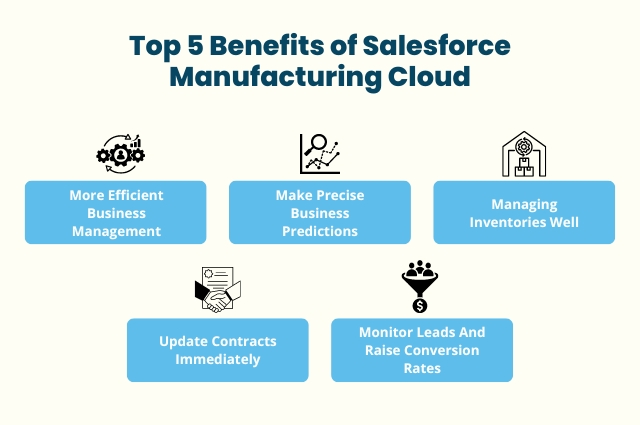
In today’s fast-moving business landscape, agility separates industry leaders from the rest. Outdated, monolithic ERP systems can’t keep up—they lock companies into rigid workflows instead of adapting to their needs. Enter modular ERP, a modern approach that combines enterprise-grade structure with the flexibility businesses demand. And when built natively on Salesforce, it becomes a game-changer—delivering seamless integration, real-time insights, and unmatched scalability. Why Legacy ERP Systems Are Failing Businesses Traditional ERP solutions were designed as one-size-fits-all systems, promising to handle everything from finance to supply chain in a single platform. But in reality, they often create more problems than they solve: For dynamic industries like manufacturing, distribution, and retail, these limitations lead to inefficiencies, delayed decisions, and rising operational costs. What Makes Modular ERP Different? Modular ERP redefines enterprise software by allowing businesses to deploy only what they need—and scale when ready. Think of it as a customizable toolkit: start with core functions like inventory or financials, then add supply chain, procurement, or manufacturing modules as your business grows. This approach eliminates the risks of a full-scale ERP overhaul while maximizing ROI—no bloat, no unnecessary features, just what you need to run smarter. Why Salesforce Is the Ideal ERP Foundation Salesforce is the world’s #1 CRM, but its power extends far beyond sales. As an ERP platform, it offers: ✅ Real-time data sync across sales, finance, logistics, and operations✅ True cloud scalability with enterprise-grade security✅ Low-code customization for rapid deployment✅ Seamless integration with Salesforce apps and third-party tools✅ Mobile-friendly access for today’s hybrid workforce When ERP is built natively on Salesforce businesses get the best of both worlds: the depth of enterprise resource planning and the agility of the Salesforce ecosystem. 5 Key Benefits of Modular ERP on Salesforce Real-World Impact: A Manufacturer’s Success Story A mid-sized industrial parts manufacturer was struggling with siloed systems—their legacy ERP couldn’t adapt to remote work or shifting demand. By implementing Salesforce, they: ✔ Cut inventory costs by 25% with real-time tracking✔ Reduced production cycle times by 18%✔ Gained end-to-end operational visibility✔ Scaled effortlessly by adding supply chain and finance modules later The Bottom Line: ERP That Works for You The future of ERP isn’t monolithic—it’s modular, cloud-based, and built for change. With ERP on Salesforce, businesses can finally break free from rigid systems and embrace a solution that evolves with them. Ready to modernize your operations? The right ERP shouldn’t hold you back—it should propel you forward. Like Related Posts Who is Salesforce? Who is Salesforce? Here is their story in their own words. From our inception, we’ve proudly embraced the identity of Read more Salesforce Marketing Cloud Transactional Emails Salesforce Marketing Cloud Transactional Emails are immediate, automated, non-promotional messages crucial to business operations and customer satisfaction, such as order Read more Salesforce Unites Einstein Analytics with Financial CRM Salesforce has unveiled a comprehensive analytics solution tailored for wealth managers, home office professionals, and retail bankers, merging its Financial Read more AI-Driven Propensity Scores AI plays a crucial role in propensity score estimation as it can discern underlying patterns between treatments and confounding variables Read more