- gettectonic.com
Paradigm Shifts That Changed Marketing

The Psychology of Copy Writing

Emotional impulses, rather than logical reasoning, are the primary drivers of decision-making. By evoking specific emotions in consumers, you can prompt them to take desired actions. The Psychology of Copy Writing goes far beyond knowing your product or service’s position and proposition. You have to create copy with the buyer in mind. To evoke these emotions, you need triggers, which you can obtain by incorporating psychological principles into your copywriting. This expert utilization of psychological principles in content is known as neuromarketing, and you’re in the right place to learn how to leverage it effectively. The Psychology of Copy Writing What is Neuromarketing? Neuromarketing combines neuroscience, psychology, cognitive science, and marketing to comprehend and influence consumer behavior. It dips into subconscious and emotional factors that influence decision-making. Why Use Neuromarketing in Your Copywriting? Incorporating neuromarketing techniques into your copywriting yields several benefits: Neurological engagement can boost advertising effectiveness by up to 19%. Additionally, 63% of users remember brands that tell stories, while 74% of consumers trust businesses more after reading positive reviews. Neuromarketing Examples Analyzing research insights allows you to identify neurological responses, emotional triggers, and attention patterns. Incorporating these insights into your marketing strategy can drive purchasing decisions. Here are some examples: Effective Neuromarketing Techniques Incorporate the following principles into your copywriting to drive desired actions: Apply these techniques ethically and transparently to build trust and enhance consumer engagement. Continuously test and iterate to refine your strategies based on audience feedback and behavioral insights. Content updated April 2024. Like Related Posts Who is Salesforce? Who is Salesforce? Here is their story in their own words. From our inception, we’ve proudly embraced the identity of Read more Salesforce Marketing Cloud Transactional Emails Salesforce Marketing Cloud Transactional Emails are immediate, automated, non-promotional messages crucial to business operations and customer satisfaction, such as order Read more Salesforce Unites Einstein Analytics with Financial CRM Salesforce has unveiled a comprehensive analytics solution tailored for wealth managers, home office professionals, and retail bankers, merging its Financial Read more AI-Driven Propensity Scores AI plays a crucial role in propensity score estimation as it can discern underlying patterns between treatments and confounding variables Read more

Read More
Forecasting With Foundation Models

Forecasting Tools

Leveraging Technology and AI for Accurate Sales Forecasting Sales forecasting is essential for business success, helping organizations allocate resources, set goals, and anticipate challenges. However, forecasting is inherently complex, involving uncertainty, variability, and vast datasets. By leveraging modern tools and AI-powered technologies, businesses can streamline this process, improve forecast accuracy, and drive better decision-making. This section explores the benefits of using technology for sales forecasting, highlights key tools available in the market, and discusses how AI enhances forecasting and analytics for B2B sales. Benefits of Technology in Sales Forecasting Tools for Enhanced Sales Forecasting AI’s Role in Revolutionizing Sales Forecasting AI-driven tools enable businesses to overcome traditional forecasting limitations, offering several advantages: AI Tools for Sales Forecasting Conclusion Harnessing technology and AI for sales forecasting transforms the process from a time-consuming challenge to a strategic advantage. By adopting visualization tools, automation, and AI-powered insights, businesses can generate reliable projections, optimize decision-making, and position themselves for success in dynamic markets. Content updated November 2024. Like Related Posts Who is Salesforce? Who is Salesforce? Here is their story in their own words. From our inception, we’ve proudly embraced the identity of Read more Salesforce Marketing Cloud Transactional Emails Salesforce Marketing Cloud Transactional Emails are immediate, automated, non-promotional messages crucial to business operations and customer satisfaction, such as order Read more Salesforce Unites Einstein Analytics with Financial CRM Salesforce has unveiled a comprehensive analytics solution tailored for wealth managers, home office professionals, and retail bankers, merging its Financial Read more AI-Driven Propensity Scores AI plays a crucial role in propensity score estimation as it can discern underlying patterns between treatments and confounding variables Read more

Read More
Value of Queues in Salesforce

Value of Queues in Salesforce

Salesforce Queues serve as a streamlined and collaborative solution for the management of records and tasks. The value of queues in Salesforce is the ease of access they provide for records. They offer an organized and automated method to structure, distribute, and assign work items among users or teams efficiently. Visualize a Salesforce Queue as a virtual container or repository that holds a collection of records or tasks. These items encompass leads, cases, opportunities, or any standard/custom object in your Salesforce org. Instead of manually assigning individual records to specific users, the queue becomes the focal point for distributing work seamlessly. Value of Queues in Salesforce The utility of Salesforce Queues shines in situations where multiple users or teams collaborate in handling incoming requests or overseeing a specific record type. For instance, a customer support team may utilize a queue for incoming cases, allowing any team member to access and work on cases from the shared queue. Significance of Salesforce Queues: In sales and support teams, the influx of leads and issues demanding resolution is often substantial. Without proper assignment of this workload, inefficiencies and mismanagement can arise. Salesforce Queues play a pivotal role in addressing this challenge. A queue acts as an orderly arrangement of records, especially leads, ensuring systematic prioritization and handling. Through the use of queues, collaborating team members can efficiently distribute and manage the workload associated with these records. This collaborative framework empowers employees to share responsibilities and address tasks as they become available. Records remain within the queue until claimed by an individual user. The implementation of queues benefits both the organization’s workforce and its customers. It prevents employee overload by ensuring a balanced distribution of tasks while ensuring prompt attention to customer concerns. As a result, this approach guarantees that no records are overlooked or left unattended. Like Related Posts Who is Salesforce? Who is Salesforce? Here is their story in their own words. From our inception, we’ve proudly embraced the identity of Read more Salesforce Marketing Cloud Transactional Emails Salesforce Marketing Cloud Transactional Emails are immediate, automated, non-promotional messages crucial to business operations and customer satisfaction, such as order Read more Salesforce Unites Einstein Analytics with Financial CRM Salesforce has unveiled a comprehensive analytics solution tailored for wealth managers, home office professionals, and retail bankers, merging its Financial Read more AI-Driven Propensity Scores AI plays a crucial role in propensity score estimation as it can discern underlying patterns between treatments and confounding variables Read more

Read More
Salesforce role hierarchy

What is a Salesforce Data Dictionary?

What is a Salesforce Data Dictionary? A Salesforce data dictionary functions as a comprehensive repository containing names, attributes, and descriptions of data objects or business logic within a data model. Its primary purpose is to ensure consistency in the terminology used by business users or stakeholders, particularly regarding type/category, such as personally identifiable information (PII). This user-friendly and business-centric solution allows organizations to document and establish a shared vocabulary for their use of Salesforce, facilitating the simplification of processes through just-in-time learning solutions like Spekit. Components of a Data Dictionary A data dictionary serves as a centralized metadata repository where all CRM changes are documented, enabling quick impact analysis and future changes without concerns about system breaks. It compiles and communicates the structure and content of data, offering meaningful descriptions for individually named data objects. Benefits of a Salesforce Data Dictionary Clear Metadata Across Teams Understanding Field Accessibility to Sensitive Data Reduce Technical Debt Avoid Unintended Breaks Trust the Integrity of Your Business Reports How to Create a Data Dictionary in Salesforce To create a data dictionary in Salesforce, follow these steps: Difference Between Metadata and Data Dictionary The data dictionary contains data about the data in the database, while metadata is the data about the data in the data warehouse. These terms are commonly used and play distinct roles. Types of Data Dictionary There are two types of data dictionaries: active and passive. An active data dictionary is tied to a specific database and updates automatically with the data management system. Benefits of Data Dictionary The benefits of a data dictionary include faster detection of data anomalies, improved data quality, availability of trustworthy data, greater transparency within data teams, better regulatory compliance, and faster analytics. Content updated July 2023. Like2 Related Posts Who is Salesforce? Who is Salesforce? Here is their story in their own words. From our inception, we’ve proudly embraced the identity of Read more Salesforce Marketing Cloud Transactional Emails Salesforce Marketing Cloud Transactional Emails are immediate, automated, non-promotional messages crucial to business operations and customer satisfaction, such as order Read more Salesforce Unites Einstein Analytics with Financial CRM Salesforce has unveiled a comprehensive analytics solution tailored for wealth managers, home office professionals, and retail bankers, merging its Financial Read more AI-Driven Propensity Scores AI plays a crucial role in propensity score estimation as it can discern underlying patterns between treatments and confounding variables Read more

Read More
Salesforce Success Story

Case Study: Flexible CRM for High Growth Sales

Hospitality company needs to enhance their CRM capabilities to match the business with a Flexible CRM for High Growth Sales. Industry: Hospitality – High Tech Client is a hospitality company specialized in a new, modern mode of housing, making it easy to live well — wherever, whenever. Company has homes in over 30 cities across the U.S. and have hosted over 1 million nights of stays. Backed by Airbnb, Comcast, Bowery, and Initialized Capital, they’ve raised $90M in funding. Problem: Implemented : Our solution? Results: Salesforce offers customized solutions for the travel and hospitality industries, assisting companies in this field to provide outstanding client experiences, optimize workflows, and spur expansion. These solutions make use of the Salesforce Customer 360 platform to improve communication, organize data, and give visitors a customized experience. Salesforce offers digital transformation technology for travel, tourist, and hospitality industries. If you are considering a Salesforce hospitality implementation, contact Tectonic today. Like2 Related Posts Who is Salesforce? Who is Salesforce? Here is their story in their own words. From our inception, we’ve proudly embraced the identity of Read more Salesforce Marketing Cloud Transactional Emails Salesforce Marketing Cloud Transactional Emails are immediate, automated, non-promotional messages crucial to business operations and customer satisfaction, such as order Read more Salesforce Unites Einstein Analytics with Financial CRM Salesforce has unveiled a comprehensive analytics solution tailored for wealth managers, home office professionals, and retail bankers, merging its Financial Read more AI-Driven Propensity Scores AI plays a crucial role in propensity score estimation as it can discern underlying patterns between treatments and confounding variables Read more

Read More
crm analytics

Understand Customer Service Analytics

Customer Service Analytics: Types, Use Cases & Key Benefits Customer service analytics transforms raw customer data into actionable insights—helping businesses improve support, boost retention, and drive revenue. With today’s complex customer journeys, analytics tools are essential for tracking interactions, predicting trends, and optimizing experiences. What Is Customer Service Analytics? Customer service analytics involves collecting and analyzing data from every touchpoint—support tickets, purchases, surveys, social media, and more. Companies use this data to: By leveraging analytics, businesses move from reactive problem-solving to proactive customer success strategies. 4 Key Types of Customer Service Analytics 1. Customer Experience (CX) Analytics What it does: Tracks key support metrics to assess performance and identify trends.Key metrics: Why it matters: 2. Customer Journey Analytics What it does: Maps the full customer lifecycle—from first contact to repeat purchases.Key data sources: Why it matters: 3. Customer Retention Analytics What it does: Measures loyalty and identifies churn risks.Key metrics: Why it matters: 4. Customer Engagement Analytics What it does: Tracks interactions across all channels (email, chat, social media).Key insights: Why it matters: Top 7 Customer Service Metrics to Track Metric What It Measures Why It Matters CSAT Customer satisfaction Gauges service quality First Response Time Speed of initial reply Impacts customer perception Time to Resolution Issue resolution speed Reduces frustration Customer Effort Score Ease of getting help Lower effort = higher loyalty Churn Rate Lost customers Identifies retention issues Lifetime Value (CLV) Customer profitability Guides long-term strategy Loyal Customer Rate Repeat buyers Measures brand advocacy How Analytics Improves Customer Service “Analytics turns raw data into stories—revealing relationships and driving smarter decisions.” – Susan Lahey Choosing the Right Analytics Software The best tools integrate data from all customer touchpoints, offering: Key takeaway: Don’t fear the data—embrace it. With the right analytics strategy, businesses can enhance CX, reduce churn, and boost revenue. Like Related Posts Who is Salesforce? Who is Salesforce? Here is their story in their own words. From our inception, we’ve proudly embraced the identity of Read more Salesforce Marketing Cloud Transactional Emails Salesforce Marketing Cloud Transactional Emails are immediate, automated, non-promotional messages crucial to business operations and customer satisfaction, such as order Read more Salesforce Unites Einstein Analytics with Financial CRM Salesforce has unveiled a comprehensive analytics solution tailored for wealth managers, home office professionals, and retail bankers, merging its Financial Read more AI-Driven Propensity Scores AI plays a crucial role in propensity score estimation as it can discern underlying patterns between treatments and confounding variables Read more

Read More
Einstein Send Time Optimization

Salesforce Send Time Optimization Einstein

Einstein Send Time Optimization (STO) in Marketing Cloud Engagement revolutionizes message delivery by leveraging machine learning to predict the most effective times for engagement. This feature aids marketers in enhancing email and push notification engagement by automating the analysis of each contact’s optimal send time. Key Highlights of Einstein Send Time Optimization: Einstein Send Time Optimization, available with Marketing Cloud Einstein terms, offers a powerful tool for marketers seeking to personalize and optimize the timing of their email and mobile messages, thereby maximizing engagement. Content updated February 2024. Like1 Related Posts Salesforce Marketing Cloud Transactional Emails Salesforce Marketing Cloud Transactional Emails are immediate, automated, non-promotional messages crucial to business operations and customer satisfaction, such as order Read more Salesforce Unites Einstein Analytics with Financial CRM Salesforce has unveiled a comprehensive analytics solution tailored for wealth managers, home office professionals, and retail bankers, merging its Financial Read more Perfect Drip Campaign In an ideal world, you effortlessly conquer the lead generation challenges with one creative arm tied behind your back, craft Read more What is Salesforce? Salesforce is cloud-based CRM software. It makes it easier for companies to find more prospects, close more deals, and connect Read more

Read More
use of salesforce cpq

Salesforce CPQ

Salesforce CPQ: Streamlining Sales with Automation and Accuracy Salesforce CPQ (Configure, Price, Quote) simplifies and accelerates the sales process by automating quote generation, ensuring accurate pricing, and integrating seamlessly with Salesforce CRM. It empowers businesses to handle complex product configurations, manage renewals, and enhance sales collaboration—all while improving the customer experience. Key Benefits of Salesforce CPQ ✅ Automated Quote GenerationEliminate manual errors and save time with an automated quoting process that ensures consistency and accuracy. ✅ Complex Product ConfigurationEasily manage bundles, options, and customizations to create precise product configurations tailored to customer needs. ✅ Accurate Pricing & DiscountsApply predefined pricing rules, discounts, and approval workflows to maintain consistency and compliance across all quotes. ✅ Streamlined Renewal ManagementAutomate recurring billing and subscription renewals, generating renewal quotes effortlessly. ✅ Enhanced Sales CollaborationEnable sales teams to work more efficiently with a centralized platform for managing quotes, orders, and approvals. ✅ Seamless CRM IntegrationConnect directly with Salesforce Sales Cloud, ensuring a unified view of customer data and sales activities. ✅ Improved Customer ExperienceDeliver accurate, timely quotes that enhance transparency and build customer trust. ✅ Product & Price Rules for ComplianceEnsure all quotes align with company policies by applying automated product and pricing rules. ✅ Contract & Renewal ManagementKeep track of contracts, automate renewals, and maintain a clear, centralized view of agreement details. ✅ Increased Sales Accuracy & EfficiencyReduce manual effort, speed up the sales cycle, and close deals faster with automated quoting. With Salesforce CPQ, businesses can simplify complex sales processes, drive efficiency, and create a seamless experience for both sales teams and customers. Want to optimize your sales process? 🚀 Let’s talk about how Salesforce CPQ can work for you! Like Related Posts Who is Salesforce? Who is Salesforce? Here is their story in their own words. From our inception, we’ve proudly embraced the identity of Read more Salesforce Marketing Cloud Transactional Emails Salesforce Marketing Cloud Transactional Emails are immediate, automated, non-promotional messages crucial to business operations and customer satisfaction, such as order Read more Salesforce Unites Einstein Analytics with Financial CRM Salesforce has unveiled a comprehensive analytics solution tailored for wealth managers, home office professionals, and retail bankers, merging its Financial Read more AI-Driven Propensity Scores AI plays a crucial role in propensity score estimation as it can discern underlying patterns between treatments and confounding variables Read more

Read More
Salesforce and Google Calendar

Salesforce, Gmail, and Google Calendar Integration

Facilitate a seamless integration of Gmail and Google Calendar with Salesforce to optimize your sales representatives’ workflow. According to McKinsey & Company, sales reps dedicate up to 28% of their day to email and calendars, emphasizing the need to integrate these applications. Integration yields several benefits: Integration aids key sales activities: Address common challenges faced by sales reps: Integration features, along with Einstein Activity Capture, enhance sales reps’ capabilities: Empower sales teams with increased productivity. Integrate Gmail and Google Calendar with Salesforce. Like1 Related Posts AI-Driven Propensity Scores AI plays a crucial role in propensity score estimation as it can discern underlying patterns between treatments and confounding variables Read more Agiloft Salesforce Integration Optimize organizational efficiency, performance, and value by automating contracts with Agiloft Contract Lifecycle Management Software. Regain control and streamline processes Read more Salesforce AI Einstein Next Best Action Salesforce AI Einstein Next Best Action is a feature designed to identify the most effective actions available to agents and Read more Demandbase Salesforce Integration The integration of Demandbase with Salesforce creates a seamless connection between Demandbase One and your Salesforce CRM, establishing a bidirectional Read more

Read More
Sales Pipeline

Salesforce Pipeline Forecasting Tools

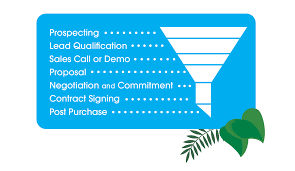
Does Salesforce offer forecasting capabilities? Salesforce Pipeline Forecasting Tools. Indeed, Salesforce provides a robust suite of customizable forecasting tools, revolutionizing strategic planning by infusing data-driven insights into decision-making processes, moving away from reliance on intuition or guesswork. Salesforce Collaborative Forecasting empowers sales leaders with visibility into future sales bookings or revenue. Real-life success stories from companies like Pure Storage and Nitro underscore the tangible benefits of leveraging forecasting within Salesforce. This feature supports matrix sales organizations by tracking revenue splits or overlays and offers the flexibility of forecasting by custom fields. What is pipeline forecast management in Salesforce and Salesforce Pipeline Forecasting Tools? Pipeline management encompasses the active oversight of all sales opportunities as they progress through a multi-step sales cycle towards a successful close. Salesforce’s forecasting features, including Collaborative Forecasting, address the challenge of obtaining accurate forecasts by leveraging abundant data and reporting tools. This ensures a comprehensive understanding of opportunities in the pipeline and facilitates strategies to advance deals. Why is forecasting important in Salesforce? Sales forecasts in Salesforce play a critical role in anticipating potential challenges before they materialize, allowing ample time for preparation and risk mitigation. This proactive approach enables businesses to navigate hurdles effectively. Salesforce Forecasting is strategic planning, demand planning, and revenue forecasting software that harnesses collaborative data for precise future projections. The customizable software enables businesses to base strategic planning on empirical data rather than conjecture. The Collaborative Forecast feature in Salesforce Sales Cloud provides real-time views of team forecasts, supporting automatic roll-ups, quota attainment visibility, collaboration, and various forecast types. Salesforce Sales Cloud offers two methods for forecasting: non-cumulative and cumulative. Non-cumulative forecasting reports closed, committed, best case, and pipeline numbers separately, while Cumulative Forecast provides more comprehensive data aggregation across forecast categories, including closed, committed, best case, and open pipeline. Sales forecasting, a technique for predicting expected sales revenue, relies on a company’s historical data. Salesforce forecasting tools facilitate this process by providing robust analytical capabilities. What are the Salesforce forecasting stages? Forecast Category groups opportunities within the sales cycle based on their stage. Standard forecast categories include Pipeline, Best Case, Commit, Omitted, and Closed. What is the difference between forecasting and pipeline in Salesforce? While pipeline management focuses on advancing opportunities through the purchasing process, forecasting predicts future sales from a segment of the pipeline. Is Tableau a forecasting tool? Yes, Tableau Desktop offers forecasting capabilities for quantitative time-series data using exponential smoothing models, capturing evolving trends and seasonality effectively. What is the difference between pipeline and workflow? Pipelines govern the end-to-end flow of items through stages, while workflows manage status changes throughout an item‘s lifecycle. What is the difference between pipeline and funnel in Salesforce? A pipeline represents the sales rep’s perspective and process for closing deals, whereas the funnel illustrates the customer’s buyer journey phases. Is forecasting a KPI? Absolutely, revenue forecasting accuracy serves as a fundamental Key Performance Indicator (KPI), comparing forecasted revenue with actual revenue for a given period to gauge performance effectively. Like1 Related Posts Salesforce Marketing Cloud Transactional Emails Salesforce Marketing Cloud Transactional Emails are immediate, automated, non-promotional messages crucial to business operations and customer satisfaction, such as order Read more Asset Management Salesforce Can Salesforce do asset management? You can manage assets in Consumer Goods (desktop) and in the Consumer Goods offline mobile Read more Lookup Relationship in Salesforce What is Lookup relationship in Salesforce? Salesforce’s lookup relationships is a significant capability that allows users to connect two objects Read more Listview in Salesforce What is a listview in Salesforce? A list view is a filtered list of records where you can view records Read more

Read More
analytics 360 and journey builder

Google Analytics 360 and Salesforce Marketing Cloud

Customers seek to engage with brands that understand and value them, offering personalized interactions. Google Analytics 360 and Marketing Cloud provide a full understanding of your customers. 67 percent express a willingness to pay more for an enhanced brand experience. However, 51 percent of consumers feel that brands are currently falling short in delivering this desired level of customer experience. Various challenges contribute to this, including disconnected data, outdated systems, disparate channels, and siloed departments. The solution to overcoming these obstacles lies in integration. Integration of Google Analytics 360 and Marketing Cloud is the fix! While the answer seems straightforward, the task of untangling data from multiple fragmented systems to create a unified and actionable view of the consumer is more complex. Salesforce and Google recognize this challenge and have joined forces to facilitate the seamless integration of cross-channel insights for marketers within the Salesforce Marketing Cloud and Google Marketing Platform. Empowering Marketers This integration offers several capabilities, empowering marketers to be more productive, analyze rich data in one place and create personalized messages. The ability to make informed marketing decisions is key for many. Key features include simplified setup, cross-channel analytics, content performance analysis, website optimization, marketing attribution, and audience activation. The simplified setup allows users to view Analytics 360 reports in one Marketing Cloud dashboard. The cross-channel analytics feature provides a comprehensive understanding of customer engagement metrics, integrating data from various sources, including web and advertising. Content performance analysis goes beyond open and click rates, offering insights into customer behavior after interacting with marketing content. Website optimization leverages Marketing Cloud engagement data to enhance web optimization tests and personalize the site experience based on a broader, cross-channel view of the consumer. Marketing attribution enriches attribution reports with Marketing Cloud engagement data for a more complete view of the channels and tactics leading to optimal results. Integration of Google Analytics 360 and Marketing Cloud Provides Simplification The integration also simplifies the process of providing additional marketing and channel engagement data to Google Marketing Platform for measurement and activation through auto-tagging of journeys. Additionally, for the first time, marketers can create audiences in Analytics 360 based on users’ web and app browsing behavior and directly share and activate them through additional Marketing Cloud channels like email, SMS, or push notifications. This coordination ensures a consistent and personalized customer journey across various channels. Like1 Related Posts Who is Salesforce? Who is Salesforce? Here is their story in their own words. From our inception, we’ve proudly embraced the identity of Read more Salesforce Marketing Cloud Transactional Emails Salesforce Marketing Cloud Transactional Emails are immediate, automated, non-promotional messages crucial to business operations and customer satisfaction, such as order Read more Salesforce Unites Einstein Analytics with Financial CRM Salesforce has unveiled a comprehensive analytics solution tailored for wealth managers, home office professionals, and retail bankers, merging its Financial Read more AI-Driven Propensity Scores AI plays a crucial role in propensity score estimation as it can discern underlying patterns between treatments and confounding variables Read more

Read More
Salesforce Success Story

Case Study: Service Cloud Marketing Cloud Hospitality

Resort company builds loyalty and drives sales increase across all sites using data and segmentation. hospitality salesforce service marketing case study. Industry: Hospitality Located at the epicenter of Honolulu’s most exciting neighborhoods, resort offers guaranteed oceanfront panoramic views in guestrooms and luxury suites. The hotel also has its own golf course. Problem: Implemented : Technologies integrated : Our solution? Results: Tectonic has assisted customers in generating a live view of their visitors so they can pleasantly surprise and amuse them with customized service during every engagement. Salesforce offers customized solutions for the travel and hospitality industries, assisting companies in this field to provide outstanding client experiences, optimize workflows, and spur expansion. These solutions make use of the Salesforce Customer 360 platform to improve communication, organize data, and give visitors a customized experience. Salesforce offers digital transformation technology for travel, tourist, and hospitality industries. If you are considering a Salesforce hospitality implementation, contact Tectonic today. Like2 Related Posts Who is Salesforce? Who is Salesforce? Here is their story in their own words. From our inception, we’ve proudly embraced the identity of Read more Salesforce Marketing Cloud Transactional Emails Salesforce Marketing Cloud Transactional Emails are immediate, automated, non-promotional messages crucial to business operations and customer satisfaction, such as order Read more Salesforce Unites Einstein Analytics with Financial CRM Salesforce has unveiled a comprehensive analytics solution tailored for wealth managers, home office professionals, and retail bankers, merging its Financial Read more AI-Driven Propensity Scores AI plays a crucial role in propensity score estimation as it can discern underlying patterns between treatments and confounding variables Read more

Read More
clock

Salesforce Integrations for Sales and Marketing Teams

What do Salesforce integrations entail? Salesforce Integrations for Sales and Marketing Teams. Salesforce integrations involve establishing connections between Salesforce and various third-party applications, ranging from marketing automation tools and customer service software to accounting programs. This seamless exchange of data between platforms serves to enhance Salesforce’s overall functionality. How extensive is Salesforce’s integration ecosystem? Salesforce boasts a robust integration ecosystem, with over 3,000 integrations available on its AppExchange marketplace. Beyond these, users can leverage: Salesforce Integrations for Sales and Marketing Teams While there isn’t a one-size-fits-all list of essential Salesforce integrations for sales and marketing, we’ve curated a selection of widely-used integrations across various categories: These integrations cater to diverse needs within sales and marketing, facilitating efficient data handling, analytics, communication, project management, and more. Like1 Related Posts Who is Salesforce? Who is Salesforce? Here is their story in their own words. From our inception, we’ve proudly embraced the identity of Read more Salesforce Marketing Cloud Transactional Emails Salesforce Marketing Cloud Transactional Emails are immediate, automated, non-promotional messages crucial to business operations and customer satisfaction, such as order Read more Salesforce Unites Einstein Analytics with Financial CRM Salesforce has unveiled a comprehensive analytics solution tailored for wealth managers, home office professionals, and retail bankers, merging its Financial Read more AI-Driven Propensity Scores AI plays a crucial role in propensity score estimation as it can discern underlying patterns between treatments and confounding variables Read more

Read More
Salesforce for Hospitality

Salesforce for Hospitality

Transforming Hospitality with Salesforce CRM The hospitality industry, known for its expansive options and fierce competition, faces challenges from small hotels to globally recognized resorts. Beyond traditional amenities like clean rooms and Wi-Fi, evolving customer expectations demand highly personalized services for enhanced comfort and swift issue resolution. Salesforce CRM emerges aremains a tool for managing customer interactions and elevating the operations of various players in the hospitality sector. Leading establishments such as Quest Apartment Hotels, Carlson Hotels Worldwide, and HotelTonight harness the capabilities of Salesforce CRM to enhance their services. Salesforce for Hospitality Beyond the realm of hotels, the world’s most widely used CRM solution empowers the entire hospitality industry, encompassing transportation and travel, to deliver personalized and seamless customer experiences. Transportation companies leverage real-time query management and dynamic services to navigate the future of freight efficiently. Simultaneously, travel and hospitality entities utilize data-driven insights to tailor travel options, incorporate artificial intelligence for personalized recommendations, and establish connected guest services, ensuring unparalleled comfort and satisfaction. In essence, Salesforce CRM offers the hospitality industry unified customer views, heightened customer satisfaction and loyalty, invaluable analytics data, automation solutions, and prompt customer service. Its implementation accelerates industry efficiency, fostering innovation and driving continuous improvements in the realm of hospitality. Content updated September 2023. Like Related Posts Who is Salesforce? Who is Salesforce? Here is their story in their own words. From our inception, we’ve proudly embraced the identity of Read more Salesforce Marketing Cloud Transactional Emails Salesforce Marketing Cloud Transactional Emails are immediate, automated, non-promotional messages crucial to business operations and customer satisfaction, such as order Read more Salesforce Unites Einstein Analytics with Financial CRM Salesforce has unveiled a comprehensive analytics solution tailored for wealth managers, home office professionals, and retail bankers, merging its Financial Read more AI-Driven Propensity Scores AI plays a crucial role in propensity score estimation as it can discern underlying patterns between treatments and confounding variables Read more

Read More
gettectonic.com