

Asana Archives - gettectonic.com
New Slack Innovations

Slack News from Salesforce

Starting today, we’re updating Slack plans and pricing to expand access to AI, Agentforce, and Salesforce for organizations of all sizes. With these changes, customers will benefit from native AI, access to digital labor, deeper CRM integrations, and enterprise-grade security so they can grow faster with Slack. Since our last pricing adjustment in 2022, Slack has evolved into a unified work operating system and conversational interface for all your enterprise apps, data, and agents. Now more than ever, AI, data, and security are integral to Slack and essential for bringing AI agents successfully into the digital employee experience. We are committed to giving every team an onramp to AI-powered productivity in Slack — and every organization a secure foundation to grow with digital labor. That’s why we’re simplifying our pricing and bringing innovations into the core Slack experience across all our plans. Slack users gain new features across every plan We’re integrating AI features across all paid plans, adding summarization and huddle notes to the Pro plan, while supercharging our Business+ plan with a range of AI features including workflow generation, recaps, translation, and search. Our new Enterprise+ plan unlocks AI-powered enterprise search and evolved task management capabilities across your organization. Additionally, AI agents from Agentforce and partner AI apps can now be deployed in all paid plans. Every Salesforce customer will get Slack (Free Plan) with access to Salesforce integrations in Slack, so every team can collaborate around CRM data with Salesforce Channels in Slack or from Salesforce. Business+ and Enterprise+ teams will gain premium Salesforce features to forecast revenue, swarm deals, coordinate approvals, and respond to real-time event triggers. We’re enhancing security across all plans, bringing session duration controls and native device management to all of our plans — including Free, and adding SAML-based SSO for Salesforce customers — giving every team a trusted foundation to securely connect their people, data, AI, and agents. What’s changing with Slack pricing Slack is the work operating system for the agentic era These plan additions reflect our rapid pace of innovation over the last 18 months to deliver the most comprehensive work operating system for the era of AI and digital labor. Together, we are reinventing work for the age of digital labor. Humans are at the center — connected in conversation, amplified by AI, with instant access to contextual data — all built on a strong foundation of security and trust. For more information on these updates, visit the Slack Plans page or contact your account representative. Like Related Posts Who is Salesforce? Who is Salesforce? Here is their story in their own words. From our inception, we’ve proudly embraced the identity of Read more Salesforce Marketing Cloud Transactional Emails Salesforce Marketing Cloud Transactional Emails are immediate, automated, non-promotional messages crucial to business operations and customer satisfaction, such as order Read more Salesforce Unites Einstein Analytics with Financial CRM Salesforce has unveiled a comprehensive analytics solution tailored for wealth managers, home office professionals, and retail bankers, merging its Financial Read more AI-Driven Propensity Scores AI plays a crucial role in propensity score estimation as it can discern underlying patterns between treatments and confounding variables Read more

Read More
ai

Fireflies.ai Launches Domain-Specific Mini Apps to Automate Meeting Insights

Khosla Ventures-backed Fireflies.ai, an AI-powered note-taking platform, unveiled a suite of domain-specific “mini apps” on Wednesday, designed to automatically extract actionable insights from meeting transcripts. With the rise of automatic speech recognition (ASR) and generative AI, meeting intelligence startups—such as Otter, Read AI, Circleback, Krisp, and Granola—have seen rapid growth. Fireflies.ai is no exception, with co-founder and CEO Krish Ramineni reporting an 8x increase in users and achieving profitability. To accelerate its expansion, the startup is rolling out over 200 mini apps tailored to various roles and use cases, including: While competitors like Circleback require manual prompting to generate insights from transcripts, Fireflies.ai’s mini apps eliminate the need for user input, streamlining the process. “The time it takes to derive insights post-meeting is significant,” Ramineni told TechCrunch. “These apps close that gap by automating actions immediately after meetings, boosting productivity.” Users can also integrate outputs with platforms like Salesforce, HubSpot, Asana, Jira, Slack, and Microsoft Teams. For instance, a meeting summary can be automatically shared with a manager via Slack once the discussion concludes. Fireflies.ai allows users to deploy mini apps per meeting and even build custom apps for specialized needs. The company plans to introduce team-sharing capabilities in the future. Beyond mini apps, Fireflies.ai is enhancing meeting intelligence with pre-meeting briefs on participants and organizations. The startup is also testing “digital twins”—AI avatars that can attend meetings and respond to basic queries, similar to experiments by Zoom and others. This expansion underscores Fireflies.ai’s push to automate workflows and maximize efficiency in professional collaboration. Like Related Posts Who is Salesforce? Who is Salesforce? Here is their story in their own words. From our inception, we’ve proudly embraced the identity of Read more Salesforce Marketing Cloud Transactional Emails Salesforce Marketing Cloud Transactional Emails are immediate, automated, non-promotional messages crucial to business operations and customer satisfaction, such as order Read more Salesforce Unites Einstein Analytics with Financial CRM Salesforce has unveiled a comprehensive analytics solution tailored for wealth managers, home office professionals, and retail bankers, merging its Financial Read more AI-Driven Propensity Scores AI plays a crucial role in propensity score estimation as it can discern underlying patterns between treatments and confounding variables Read more

Read More
Project Management With Asana and Salesforce

Salesforce and Asana Integration Approach

How to Integrate Asana and Salesforce: A Complete Guide Table of Contents Integrating Asana and Salesforce can eliminate workflow silos and accelerate collaboration. Both platforms offer integration capabilities, but their suitability varies based on your needs and resources. This guide will help you navigate the options, evaluate their pros and cons, and choose the one that best suits your organization. Can You Integrate Asana and Salesforce? Yes! Asana and Salesforce integration is possible through three primary methods: Each option comes with unique features, costs, and technical requirements. This guide explores each solution to help you make an informed decision. Why Integrate Asana and Salesforce? Integration can achieve two major goals: Depending on your goals, certain integration methods may be better suited to your needs. Integration Options Overview 1. Asana for Salesforce This official integration is ideal for large organizations with Enterprise-level plans for both Asana and Salesforce. It enables automation of workflows between the two platforms, such as: Pros: Cons: Rating: 2.6/5 on Salesforce AppExchange. 2. Visor Visor offers bi-directional integration with Asana and Salesforce, making it a powerful choice for combining and visualizing data. Key Features: Best For: Setup Steps: Limitations: 3. Zapier Zapier enables custom automation between Asana and Salesforce. It’s perfect for automating simple, repetitive workflows, such as: Pros: Cons: Quick Comparison Table Feature Asana for Salesforce Zapier Visor Automates processes ✔ ✔ ✘ Combines Salesforce & Asana data ✘ ✘ ✔ Gantt charts and project boards ✘ ✘ ✔ Dashboards and timelines ✘ ✘ ✔ Two-way data sync ✘ ✘ ✔ Comparison Table Which Integration Option Is Best for You? The right choice depends on your goals: Get Started with Visor for Free Visor is one integration tool, that helps you bridge the gap between Asana and Salesforce, offering advanced visualization tools and seamless collaboration. Start using Visor for free today: Like Related Posts Who is Salesforce? Who is Salesforce? Here is their story in their own words. From our inception, we’ve proudly embraced the identity of Read more Salesforce Marketing Cloud Transactional Emails Salesforce Marketing Cloud Transactional Emails are immediate, automated, non-promotional messages crucial to business operations and customer satisfaction, such as order Read more Salesforce Unites Einstein Analytics with Financial CRM Salesforce has unveiled a comprehensive analytics solution tailored for wealth managers, home office professionals, and retail bankers, merging its Financial Read more AI-Driven Propensity Scores AI plays a crucial role in propensity score estimation as it can discern underlying patterns between treatments and confounding variables Read more

Read More
AI Agents and Consumer Trust

AI Agents Next AI Evolution

AI agents are being hailed as the next big leap in artificial intelligence, but there’s no universally accepted definition of what they are—or what they should do. Even within the tech community, there’s debate about what constitutes an AI agent. At its core, an AI agent can be described as software powered by artificial intelligence that performs tasks once handled by human roles, such as customer service agents, HR representatives, or IT help desk staff. However, their potential spans much further. These agents don’t just answer questions—they take action, often working across multiple systems. For example, Perplexity recently launched an AI agent to assist with holiday shopping, while Google introduced Project Mariner, an agent that helps users book flights, find recipes, and shop for household items. While the idea seems straightforward, it’s muddied by inconsistent definitions. For Google, AI agents are task-based assistants tailored to specific roles, like coding help for developers or troubleshooting issues for IT professionals. In contrast, Asana views agents as digital co-workers that take on assigned tasks, and Sierra—a startup led by former Salesforce co-CEO Bret Taylor—envisions agents as sophisticated customer experience tools that surpass traditional chatbots by tackling complex problems. This lack of consensus adds to the uncertainty around what AI agents can truly achieve. Rudina Seseri, founder and managing partner at Glasswing Ventures, explains this ambiguity stems from the technology’s infancy. She describes AI agents as intelligent systems capable of perceiving their environment, reasoning, making decisions, and taking actions to achieve specific goals autonomously. These agents rely on a mix of AI technologies, including natural language processing, machine learning, and computer vision, to operate in dynamic environments. Optimists, like Box CEO Aaron Levie, believe AI agents will improve rapidly as advancements in GPU performance, model efficiency, and AI frameworks create a self-reinforcing cycle of innovation. However, skeptics like MIT robotics pioneer Rodney Brooks caution against overestimating progress, noting that solving real-world problems—especially those involving legacy systems with limited API access—can be far more challenging than anticipated. David Cushman of HFS Research likens current AI agents to assistants rather than fully autonomous entities, with their capabilities limited to helping users complete specific tasks within pre-defined boundaries. True autonomy, where AI agents handle contingencies and perform at scale without human oversight, remains a distant goal. Jon Turow, a partner at Madrona Ventures, emphasizes the need for dedicated infrastructure to support the development of AI agents. He envisions a tech stack that allows developers to focus on product differentiation while leaving scalability and reliability to the platform. This infrastructure would likely involve multiple specialized models working together under a routing layer, rather than relying on a single large language model (LLM). Fred Havemeyer of Macquarie US Equity Research agrees, noting that the most effective AI agents will combine various models to handle complex tasks. He imagines a future where agents act like autonomous supervisors, delegating tasks and reasoning through multi-step processes to achieve abstract goals. While this vision is compelling, the current state of AI agents suggests we’re still in a transitional phase. The progress so far is promising, but several breakthroughs are needed before agents can operate as envisioned—truly autonomous, multi-functional, and capable of seamless collaboration across diverse systems. This story, originally published on July 13, 2024, has been updated to reflect new developments from Perplexity and Google. Like Related Posts Who is Salesforce? Who is Salesforce? Here is their story in their own words. From our inception, we’ve proudly embraced the identity of Read more Salesforce Marketing Cloud Transactional Emails Salesforce Marketing Cloud Transactional Emails are immediate, automated, non-promotional messages crucial to business operations and customer satisfaction, such as order Read more Salesforce Unites Einstein Analytics with Financial CRM Salesforce has unveiled a comprehensive analytics solution tailored for wealth managers, home office professionals, and retail bankers, merging its Financial Read more AI-Driven Propensity Scores AI plays a crucial role in propensity score estimation as it can discern underlying patterns between treatments and confounding variables Read more

Read More
What Should Enterprises Build with Agentic AI?

What Should Enterprises Build with Agentic AI?

The rise of agentic AI has dominated recent discussions in enterprise technology, sparking debates over its transformative potential and practical applications. Just weeks ago, few had heard of the term. Now, every tech vendor is racing to stake their claim in this emerging space, positioning agentic AI as the successor to AI co-pilots. While co-pilots assist users with tasks, agentic AI represents the next step: delegating tasks to intelligent agents capable of independent execution, akin to assigning work to a junior colleague. But beyond the buzz, the pressing questions remain: Cutting Through the Hype Recent launches provide a snapshot of how enterprises are beginning to deploy agentic AI. Salesforce’s Agentforce, Asana’s AI Studio, and Atlassian’s Rovo AI Assistant all emphasize the ability of these agents to streamline workflows by interpreting unstructured data and automating complex tasks. These tools promise flexibility over previous rigid, rule-based systems. For example, instead of painstakingly scripting every step, users can instruct an agent to “follow documented policies, analyze data, and propose actions,” reserving human approval for final execution. However, the performance of these agents hinges on data quality and system robustness. Salesforce’s Marc Benioff, for instance, critiques Microsoft’s Copilot for lacking a robust data model, emphasizing Salesforce’s own structured approach as a competitive edge. Similarly, Asana and Atlassian highlight the structured work graphs underpinning their platforms as critical for accurate and reliable outputs. Key Challenges Despite the promise, there are significant challenges to deploying agentic AI effectively: Early Wins and Future Potential Early adopters are seeing value in high-volume, repetitive scenarios such as customer service. For example: However, these successes represent low-hanging fruit. The true promise lies in rethinking how enterprises work. As one panelist at Atlassian’s event noted: “We shouldn’t just use this AI to enhance existing processes. We should ask whether these are the processes we want for the future.” The Path Forward The transformative potential of agentic AI will depend on broader process standardization. Just as standardized shipping containers revolutionized logistics, and virtual containers transformed IT operations, similar breakthroughs in process design could unlock exponential gains for AI-driven workflows. For now, enterprises should: Conclusion Agentic AI holds immense potential, but its real power lies in enabling enterprises to question and redesign how work gets done. While it may still be in its early days, businesses that align their AI investments with strategic goals—and not just immediate fixes—will be best positioned to thrive in this new era of intelligent automation. Like1 Related Posts Who is Salesforce? Who is Salesforce? Here is their story in their own words. From our inception, we’ve proudly embraced the identity of Read more Salesforce Marketing Cloud Transactional Emails Salesforce Marketing Cloud Transactional Emails are immediate, automated, non-promotional messages crucial to business operations and customer satisfaction, such as order Read more Salesforce Unites Einstein Analytics with Financial CRM Salesforce has unveiled a comprehensive analytics solution tailored for wealth managers, home office professionals, and retail bankers, merging its Financial Read more AI-Driven Propensity Scores AI plays a crucial role in propensity score estimation as it can discern underlying patterns between treatments and confounding variables Read more
Read More
AI Agents and Digital Transformation

Ready for AI Agents

Brands that can effectively integrate agentic AI into their operations stand to gain a significant competitive edge. But as with any innovation, success will depend on balancing the promise of automation with the complexities of trust, privacy, and user experience.

Read More
Slack Automation with New Workflow Features

Slack Automation with New Workflow Features

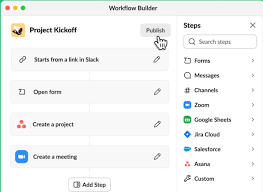
Salesforce Expands Slack Automation with New Workflow Features Salesforce has introduced new capabilities in Slack, allowing customers to build workflows that automatically trigger when an event occurs in third-party apps like PagerDuty, Asana, Bitbucket, and others. This update also enhances the user experience, making it more intuitive to create workflows in Slack. Users now have access to over 50 plug-and-play templates tailored to common productivity tasks. Additionally, developers gain access to more coding languages and tools for building custom workflows, which can be easily shared with their teams. Why It Matters Key Highlights Workflow Builder, Slack’s no-code automation tool, empowers users to streamline tasks directly within Slack, reducing the burden on IT teams. Salesforce highlights the following new features: From Slack’s Perspective Slack has also made it easier to customize workflows with expanded developer tools. Developers can now build custom steps using open APIs and new developer resources, integrating these steps into Workflow Builder. These tools support additional programming languages, including JavaScript, TypeScript, Python, and Java, further enhancing the flexibility of custom workflows. According to Rob Seaman, Slack’s Chief Product Officer, “At Slack, one of our product principles is ‘don’t make me think.’ We’re applying that to automation, making it intuitive and delightful for everyone. These new features empower both developers and end users to automate any business process across their apps seamlessly in Slack.” What This Means for Businesses As companies seek ways to increase productivity without overloading IT teams, automation has become a critical solution. Tools like Slack’s no-code Workflow Builder enable users of any skill level to automate repetitive tasks, freeing up time for more strategic work. This is particularly important in an era where skilled workers, especially in data science and programming, are in short supply. The expanded capabilities in Workflow Builder make it easier to create powerful workflows that integrate with third-party systems. In addition, Salesforce has expanded Slack AI, initially launched in April as an add-on for paying customers, to support multiple languages, including Japanese and Spanish. This ongoing development strengthens Slack’s position as a central hub for workplace automation. Like Related Posts Who is Salesforce? Who is Salesforce? Here is their story in their own words. From our inception, we’ve proudly embraced the identity of Read more Salesforce Marketing Cloud Transactional Emails Salesforce Marketing Cloud Transactional Emails are immediate, automated, non-promotional messages crucial to business operations and customer satisfaction, such as order Read more Salesforce Unites Einstein Analytics with Financial CRM Salesforce has unveiled a comprehensive analytics solution tailored for wealth managers, home office professionals, and retail bankers, merging its Financial Read more AI-Driven Propensity Scores AI plays a crucial role in propensity score estimation as it can discern underlying patterns between treatments and confounding variables Read more

Read More
Slack and AI and Time

Slack and AI and Time

The longer you stay at an organization, the more Slack channels you find yourself entangled in, making it increasingly difficult to cut through the noise. Even at Fortune, the accumulation of channels and the platform’s familiar clicking notifications are ever-present, with writers engaging in conversations ranging from breaking news to local food tips and football discussions. Managing Slack can feel like a job in itself. However, as Slack incorporates AI to streamline tasks and minimize busy work, users now face the challenge of deciding how to use their newly freed-up time. Slack’s AI introduces a new time dilemma. By simplifying the once time-consuming task of sifting through messages for critical information, the platform’s new “recap” function provides workers with a summary of incoming messages and highlights what’s most important. Companies like OpenAI, Spotify, and Uber are also optimizing their workflows by integrating Slack with other tools, such as the work management app Asana. AI is being utilized in various ways across Europe as well. Slack CEO Denise Dresser, seven months into her role at the Salesforce-owned messaging app, noted a Workforce Labs study showing that U.K. users are leveraging Slack’s writing assistant feature, while French users are primarily using it for summarization. In Germany, 36% of desk workers are employing AI to automate their tasks more regularly than their European counterparts. The initial results are promising. Slack reports that its AI tool has saved users an average of 97 minutes per week in administrative time. However, this has led to a new challenge: many workers are unsure how to best use their extra time. “They were still focusing on the work of work, which means we haven’t yet made the operational and mindset shift to start doing new things,” Dresser shared with Fortune, reflecting on the Workforce Labs findings. This situation highlights the next significant discussion about AI’s impact on work—how it will enhance productivity, replace roles, and potentially create new ones. There’s also ongoing debate about whether AI could render the traditional five-day workweek obsolete, offering people the option to enjoy more leisure time or take on more work. Dresser, for her part, plans to use her freed-up time to engage more with clients and is optimistic about AI’s potential to revolutionize workflows. “I personally think AI is going to be one of the most significant enhancers of human productivity we’ve ever seen, and I believe it will truly unlock human potential,” Dresser says. “It will likely create more jobs. We may see entirely new roles emerge, and I think that’s going to be exciting.” Like Related Posts Who is Salesforce? Who is Salesforce? Here is their story in their own words. From our inception, we’ve proudly embraced the identity of Read more Salesforce Marketing Cloud Transactional Emails Salesforce Marketing Cloud Transactional Emails are immediate, automated, non-promotional messages crucial to business operations and customer satisfaction, such as order Read more Salesforce Unites Einstein Analytics with Financial CRM Salesforce has unveiled a comprehensive analytics solution tailored for wealth managers, home office professionals, and retail bankers, merging its Financial Read more AI-Driven Propensity Scores AI plays a crucial role in propensity score estimation as it can discern underlying patterns between treatments and confounding variables Read more

Read More
Slack Operating System

Slack Operating System

Slack Advances Its Work Operating System with Enhanced Automation Capabilities With 3,000 workflows created this year alone, Rivian relies on Slack’s automation features to save time and boost team productivity. Slack Operating System are making a world of difference. Salesforce has announced new innovations in Slack, making it easier for users to build automations regardless of their technical expertise. Key Updates: Why This Matters: With 71% of business leaders under pressure to increase team productivity, and 70% of IT leaders concerned that rising business demands could stifle innovation, automation is crucial. A recent survey reveals that 77% of users believe automating routine tasks would significantly boost productivity. Companies need user-friendly, no-code automation solutions that enhance productivity without overburdening IT departments. A Closer Look: Slack’s Perspective: Rob Seaman, Chief Product Officer at Slack, stated, “At Slack, one of our product principles is ‘don’t make me think.’ We’re applying that principle to the traditionally technical and time-consuming area of automation, making it an intuitive and delightful productivity driver for everyone. These new features make Slack even more powerful, giving both developers and end users the tools they need to automate any business process across their work apps.” Customer Reaction: “Automation is a core capability that increases productivity and saves time for Rivian employees when doing repetitive work. Workflow Builder allows Slack users to easily create no-code automation at any experience level. Our Slack users created approximately 3,000 workflows in 2024, with heavy adoption in Production, Operation, and Service groups,” said Anoop Narang, Head of Digital Workplace & Solutions at Rivian. Availability: The enhancements to Workflow Builder are now generally available to all customers. Other app updates you might have missed. Slack 4.40.120 August 27, 2024 Bug Fixes Slack 4.39.95 July 29, 2024 Bug Fixes Slack 4.39.93 July 18, 2024 Bug Fixes Slack 4.39.90 July 8, 2024 Bug Fixes Slack 4.39.89 June 25, 2024 Bug Fixes Like Related Posts Who is Salesforce? Who is Salesforce? Here is their story in their own words. From our inception, we’ve proudly embraced the identity of Read more Salesforce Marketing Cloud Transactional Emails Salesforce Marketing Cloud Transactional Emails are immediate, automated, non-promotional messages crucial to business operations and customer satisfaction, such as order Read more Salesforce Unites Einstein Analytics with Financial CRM Salesforce has unveiled a comprehensive analytics solution tailored for wealth managers, home office professionals, and retail bankers, merging its Financial Read more AI-Driven Propensity Scores AI plays a crucial role in propensity score estimation as it can discern underlying patterns between treatments and confounding variables Read more

Read More
Everyone Is Implementing AI

Everyone Is Implementing AI

AI is undoubtedly a generational change in software, with its full trajectory still unpredictable. There is a perceived divide between the “Haves” and “Have Nots.” Companies like OpenAI, Microsoft, and Databricks are seen as understanding AI’s potential, with Nvidia providing the necessary hardware support. Many hot start-ups are Gen AI native, continuing to attract unicorn valuations. Meanwhile, several SaaS leaders appear to be lagging behind. We say, Everyone Is Implementing AI. Marc Benioff stated in their latest quarterly call: “Now, we’re working with thousands of customers to power generative AI use cases with our Einstein Copilot, our prompt builder, our Einstein Studio, all of which went live in the first quarter. And we’ve closed hundreds of copilot deals since this incredible technology has gone GA. And in just the last few months, we’re seeing Einstein Copilot develop higher levels of capability. We are absolutely delighted and cannot be more excited about the success that we’re seeing with our customers with this great new capability.” Everyone Is Implementing AI However, it remains unclear whether simply adding AI to classic B2B SaaS products accelerates growth. Despite significant investments in AI, companies like Salesforce, Asana, and ZoomInfo are growing at less than 10% annually. The main point is that while “AI Washing” might impress some investors, AI must significantly accelerate revenue growth to achieve more than market parity. It is essential to see how AI can add real value and integrate it effectively. But AI alone may not be a growth accelerant. Everyone Is Implementing AI Recent data from Emergence Capital shows that 60% of VC-backed SaaS companies have already released GenAI features, with another 24% planning to do so. Achieving “AI Parity” is crucial, but simply adding GenAI features may not be disruptive in the B2B space. Companies must go further to stand out, despite the challenges. Like Related Posts Who is Salesforce? Who is Salesforce? Here is their story in their own words. From our inception, we’ve proudly embraced the identity of Read more Salesforce Marketing Cloud Transactional Emails Salesforce Marketing Cloud Transactional Emails are immediate, automated, non-promotional messages crucial to business operations and customer satisfaction, such as order Read more Salesforce Unites Einstein Analytics with Financial CRM Salesforce has unveiled a comprehensive analytics solution tailored for wealth managers, home office professionals, and retail bankers, merging its Financial Read more AI-Driven Propensity Scores AI plays a crucial role in propensity score estimation as it can discern underlying patterns between treatments and confounding variables Read more

Read More
Single Digit Members

Single Digit Members

The Single Digit Growth Club: A Surge in New Members What Do Salesforce and Asana Have in Common? Both Salesforce and Asana: They have now joined the ranks of The Single Digit Growth Club, projecting growth below 10% for the coming year. It Wasn’t Supposed to Be This Way Why not? Mainly due to historically high Net Revenue Retention (NRR). Salesforce traditionally maintained an NRR well above 110%. Asana, despite catering to many SMBs (where high NRR is harder to achieve), also had high NRR until recently. With an NRR of 110%, growth expectations were typically around 20%-30% annually. With an NRR of 120% or more, as many companies had until recently (and some, like Databricks, still have at 140%+), 40% annual growth seemed attainable even at $1B ARR. However, while NRR is still strong, often at least 100%, it is no longer overperforming in many cases. Even high fliers like Monday.com have seen dips in NRR. Despite their smaller deal sizes, Monday.com’s NRR is the lowest it has been in over four years. The Impact of NRR Declines A drop of 10%-20% in NRR is significantly hampering growth, pushing even market leaders into The Single Digit Growth Club. But not everyone is struggling. The Haves and Have Nots in SaaS In today’s SaaS landscape, there is a stark contrast between the Haves and the Have Nots. Companies operating outside of B2B, those that are truly AI-native, and others are experiencing remarkable growth. However, within tech sales, a decline in NRR is severely impacting growth. Conclusion The shift to single-digit growth is a reality many SaaS companies are grappling with. As we navigate this new landscape, it’s clear that maintaining high NRR and adapting to market changes are crucial for sustaining growth. Like Related Posts Who is Salesforce? Who is Salesforce? Here is their story in their own words. From our inception, we’ve proudly embraced the identity of Read more Salesforce Marketing Cloud Transactional Emails Salesforce Marketing Cloud Transactional Emails are immediate, automated, non-promotional messages crucial to business operations and customer satisfaction, such as order Read more Salesforce Unites Einstein Analytics with Financial CRM Salesforce has unveiled a comprehensive analytics solution tailored for wealth managers, home office professionals, and retail bankers, merging its Financial Read more AI-Driven Propensity Scores AI plays a crucial role in propensity score estimation as it can discern underlying patterns between treatments and confounding variables Read more

Read More
Government-Citizen Communication

Government-Citizen Communication

Engaging Citizens and Influencing Behavior: A Public Sector Strategy Engaging citizens and influencing their behavior to achieve mission-critical outcomes follows a model similar to the traditional marketing funnel used in the private sector. By adapting this approach, government communicators can drive tangible results that contribute to the overall well-being of society. Government-Citizen Communication. Public Sector Communication Objectives: In today’s digital age, citizens expect timely, personalized communication. To meet this demand, government agencies must deliver the right message through the right channels at the right time. A failure to do so risks reduced engagement, which can negatively affect the success of public programs. Expanding Audience Reach To maximize citizen engagement, it’s crucial to focus on reaching a broader audience rather than narrowing it. A key question for communicators and their teams to ask is: “How broad is our audience?” This is an essential aspect of the funnel that ensures wider reach and greater impact. Communication Methods Public sector communication often utilizes a mix of channels, including radio, newspapers, television, and social media, to connect with the public. Collaboration is vital in this sector, requiring effective communication tools to coordinate across teams, departments, and agencies. As technology evolves, new tools are enhancing how public servants communicate and collaborate. Technology-Driven Collaboration Tools Several communication and collaboration tools are reshaping how the public sector operates: Best Practices for Government-Citizen Communication To foster effective engagement, government agencies should implement the following best practices: Secure, Customizable Citizen Communication Solutions Governments can benefit from a secure, open-source communication tool tailored to public sector needs. Such solutions ensure compliance with data protection laws and foster trust between citizens and government institutions, enhancing public service delivery and digital engagement. Tectonic’s Conclusion For optimal citizen engagement, government communicators must focus on expanding their audience reach and utilizing advanced communication tools. In doing so, they can enhance collaboration, drive citizen involvement, and ensure the success of critical public programs. Like Related Posts Who is Salesforce? Who is Salesforce? Here is their story in their own words. From our inception, we’ve proudly embraced the identity of Read more Salesforce Marketing Cloud Transactional Emails Salesforce Marketing Cloud Transactional Emails are immediate, automated, non-promotional messages crucial to business operations and customer satisfaction, such as order Read more Salesforce Unites Einstein Analytics with Financial CRM Salesforce has unveiled a comprehensive analytics solution tailored for wealth managers, home office professionals, and retail bankers, merging its Financial Read more AI-Driven Propensity Scores AI plays a crucial role in propensity score estimation as it can discern underlying patterns between treatments and confounding variables Read more
Read More
Salesforce Integration

Salesforce Integrations for Sales and Marketing Teams

First Understand Salesforce Integrations Salesforce integrations involve establishing seamless connections between Salesforce and diverse third-party applications. These applications range from marketing automation tools and customer service software to accounting programs. The purpose is to facilitate a smooth exchange of data, ultimately enhancing Salesforce’s overall functionality. Salesforce integrations for sales and marketing teams brings all the applications needed for the relationship with prospects into one place. Salesforce’s Integration Ecosystem While Salesforce boasts a robust integration ecosystem, featuring over 3,000 integrations available on its AppExchange marketplace. Users can leverage various integration approaches: Salesforce Integrations for Sales and Marketing While there’s no complete universal list of essential Salesforce integrations for sales and marketing, several widely-used integrations cater to diverse needs: No-code Data Automation Integrations: Analytics and Reporting Integrations: Email Marketing Automation Integration: Data Storage Integration: Communications Apps Integrations: Project Management Tools Integration: Account Management Integration: CRM Tools Integration: Helpdesk Integrations: Feedback Tools Integration: These integrations facilitate efficient data handling, analytics, communication, project management, and more within sales and marketing teams. Integrations for Sales and Marketing Tools Salesforce seamlessly integrates with various tools relevant to Sales and Marketing teams, including but not limited to: Salesforce Integration with Teams and Workday The Salesforce AppExchange Salesforce’s Role in Sales and Marketing Salesforce Marketing Cloud Salesforce and ERP Integration Digital Marketing and Salesforce Salesforce’s Role in Marketing Automation Content updated November 2023. Like Related Posts Who is Salesforce? Who is Salesforce? Here is their story in their own words. From our inception, we’ve proudly embraced the identity of Read more Salesforce Marketing Cloud Transactional Emails Salesforce Marketing Cloud Transactional Emails are immediate, automated, non-promotional messages crucial to business operations and customer satisfaction, such as order Read more Salesforce Unites Einstein Analytics with Financial CRM Salesforce has unveiled a comprehensive analytics solution tailored for wealth managers, home office professionals, and retail bankers, merging its Financial Read more AI-Driven Propensity Scores AI plays a crucial role in propensity score estimation as it can discern underlying patterns between treatments and confounding variables Read more

Read More

Asana Salesforce Integration

Can Asana and Salesforce integrate? Is the Asana Salesforce integration difficult to implement? This integration is available to Asana Enterprise or higher customers who also have a Salesforce Enterprise, or Unlimited account. It’s optimized for Salesforce Lightning but also compatible with Salesforce Classic. Here’s how to set up the integration: Visit Asana for Salesforce in the Salesforce AppExchange. Asana for Salesforce Streamline collaboration throughout the sales cycle to deliver amazing customer experiences and connect goals to monitor impact and make informed business decisions. With Asana integrated with Salesforce you can: Can Asana track sales? You can also use custom fields to track accounts as they move through the sales process. By assigning them to stages like “new lead,” “contacted lead,” “opportunity,” “unresponsive,” and more. Forms help you capture and keep track of lead information from prospects and existing customers. Asana is built on Amazon Web services which facilitates some kind of flexibility needed on several fronts along with scalability. You get your favorite work management and CRM tools together at last. Asana for Salesforce allows you to drive seamless collaboration between sales and other teams so you can deliver amazing customer experiences. Connect Salesforce with Asana Goals to make informed business decisions. With Salesforce for Asana Goals, you can automatically link the progress of deals to goals without manual updates. Asana is an American software company based in San Francisco. Their flagship Asana service is a web and mobile “work management” platform. Designed to help teams organize, track, and manage their work. Asana, Inc. was founded in 2008 by Dustin Moskovitz and Justin Rosenstein. Like Related Posts Who is Salesforce? Who is Salesforce? Here is their story in their own words. From our inception, we’ve proudly embraced the identity of Read more Salesforce Marketing Cloud Transactional Emails Salesforce Marketing Cloud Transactional Emails are immediate, automated, non-promotional messages crucial to business operations and customer satisfaction, such as order Read more Salesforce Unites Einstein Analytics with Financial CRM Salesforce has unveiled a comprehensive analytics solution tailored for wealth managers, home office professionals, and retail bankers, merging its Financial Read more AI-Driven Propensity Scores AI plays a crucial role in propensity score estimation as it can discern underlying patterns between treatments and confounding variables Read more

Read More
gettectonic.com