Building Scalable AI Agents
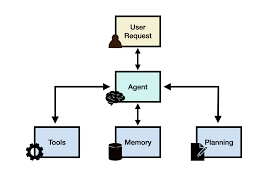
Building Scalable AI Agents: Infrastructure, Planning, and Security The key building blocks of AI agents—planning, tool integration, and memory—demand sophisticated infrastructure to function effectively in production environments. As the technology advances, several critical components have emerged as essential for successful deployments. Development Frameworks & Architecture The ecosystem for AI agent development has matured, with several key frameworks leading the way: While these frameworks offer unique features, successful agents typically share three core architectural components: Despite these strong foundations, production deployments often require customization to address high-scale workloads, security requirements, and system integrations. Planning & Execution Handling complex tasks requires advanced planning and execution flows, typically structured around: An agent’s effectiveness hinges on its ability to: ✅ Generate structured plans by intelligently combining tools and knowledge (e.g., correctly sequencing API calls for a customer refund request).✅ Validate each task step to prevent errors from compounding.✅ Optimize computational costs in long-running operations.✅ Recover from failures through dynamic replanning.✅ Apply multiple validation strategies, from structural verification to runtime testing.✅ Collaborate with other agents when consensus-based decisions improve accuracy. While multi-agent consensus models improve accuracy, they are computationally expensive. Even OpenAI finds that running parallel model instances for consensus-based responses remains cost-prohibitive, with ChatGPT Pro priced at $200/month. Running majority-vote systems for complex tasks can triple or quintuple costs, making single-agent architectures with robust planning and validation more viable for production use. Memory & Retrieval AI agents require advanced memory management to maintain context and learn from experience. Memory systems typically include: 1. Context Window 2. Working Memory (State Maintained During a Task) Key context management techniques: 3. Long-Term Memory & Knowledge Management AI agents rely on structured storage systems for persistent knowledge: Advanced Memory Capabilities Standardization efforts like Anthropic’s Model Context Protocol (MCP) are emerging to streamline memory integration, but challenges remain in balancing computational efficiency, consistency, and real-time retrieval. Security & Execution As AI agents gain autonomy, security and auditability become critical. Production deployments require multiple layers of protection: 1. Tool Access Control 2. Execution Validation 3. Secure Execution Environments 4. API Governance & Access Control 5. Monitoring & Observability 6. Audit Trails These security measures must balance flexibility, reliability, and operational control to ensure trustworthy AI-driven automation. Conclusion Building production-ready AI agents requires a carefully designed infrastructure that balances:✅ Advanced memory systems for context retention.✅ Sophisticated planning capabilities to break down tasks.✅ Secure execution environments with strong access controls. While AI agents offer immense potential, their adoption remains experimental across industries. Organizations must strategically evaluate where AI agents justify their complexity, ensuring that they provide clear, measurable benefits over traditional AI models. Like1 Related Posts Who is Salesforce? Who is Salesforce? Here is their story in their own words. From our inception, we’ve proudly embraced the identity of Read more Salesforce Unites Einstein Analytics with Financial CRM Salesforce has unveiled a comprehensive analytics solution tailored for wealth managers, home office professionals, and retail bankers, merging its Financial Read more AI-Driven Propensity Scores AI plays a crucial role in propensity score estimation as it can discern underlying patterns between treatments and confounding variables Read more Tectonic’s Successful Salesforce Track Record Salesforce Technology Services Integrator – Tectonic has successfully delivered Salesforce in a variety of industries including Public Sector, Hospitality, Manufacturing, Read more