PII Archives - gettectonic.com
Ensuring Trust in AI Agent Deployment

Ensuring Trust in AI Agent Deployment

Ensuring Trust in AI Agent Deployment: A Secure Approach to Business Transformation The Imperative for Trustworthy AI Agents AI agents powered by platforms like Agentforce represent a significant advancement in business automation, offering capabilities ranging from enhanced customer service to intelligent employee assistance. However, organizations face a critical challenge in adopting this technology: establishing sufficient trust to deploy AI agents with sensitive data and core business operations. Recent industry research highlights prevalent concerns: Salesforce has maintained trust as its foundational value throughout its 25-year history, adapting this principle across technological evolutions from cloud computing to generative AI. The company now applies this same rigorous approach to AI agent deployment through a comprehensive trust framework. The Four Essential Components of Trusted AI Implementation 1. Comprehensive Data Governance Framework The reliability of AI agents depends fundamentally on data quality and security. The Salesforce platform addresses this through: Data Protection Systems Advanced Data Management Industry experts emphasize that robust AI systems require equally robust data foundations. 2. Secure Integration Architecture AI agents require safe interaction channels with other systems: 3. Built-in Development Safeguards The platform incorporates multiple layers of protection throughout the AI lifecycle: 4. Proprietary Trust Layer A specialized security interface between users and large language models offers: Case Study: Healthcare Transformation with Precina Precina’s implementation demonstrates the platform’s capabilities in a regulated environment. By unifying patient records through Agentforce while maintaining HIPAA compliance, the organization achieved: Precina’s CTO noted that Salesforce’s cybersecurity standards enabled trust equivalent to their own care standards when handling patient information. Enterprise AI: Balancing Innovation and Responsibility Salesforce leadership emphasizes that the company’s quarter-century of experience in secure solutions uniquely positions it to guide enterprises through AI adoption. The integration of unified data management, intuitive development tools, and embedded governance enables organizations to deploy AI solutions that are both transformative and responsible. The recommended implementation approach includes: In the evolving landscape of enterprise AI, Salesforce positions trust not just as a corporate value but as a critical competitive differentiator for organizations adopting these technologies. Like Related Posts Who is Salesforce? Who is Salesforce? Here is their story in their own words. From our inception, we’ve proudly embraced the identity of Read more Salesforce Marketing Cloud Transactional Emails Salesforce Marketing Cloud Transactional Emails are immediate, automated, non-promotional messages crucial to business operations and customer satisfaction, such as order Read more Salesforce Unites Einstein Analytics with Financial CRM Salesforce has unveiled a comprehensive analytics solution tailored for wealth managers, home office professionals, and retail bankers, merging its Financial Read more AI-Driven Propensity Scores AI plays a crucial role in propensity score estimation as it can discern underlying patterns between treatments and confounding variables Read more


Read More
DXP - Digital Experience Platform

DXP – Digital Experience Platform

A Digital Experience Platform (DXP) is a set of integrated technologies that help organizations create, manage, and deliver personalized digital experiences across various touchpoints. DXPs aim to provide a central hub for managing a company’s digital ecosystem, enabling consistent and engaging customer interactions. They often include features like content management, e-commerce, personalization, and experimentation.  Key aspects of a DXP: Benefits of using a DXP: Like Related Posts Who is Salesforce? Who is Salesforce? Here is their story in their own words. From our inception, we’ve proudly embraced the identity of Read more Salesforce Marketing Cloud Transactional Emails Salesforce Marketing Cloud Transactional Emails are immediate, automated, non-promotional messages crucial to business operations and customer satisfaction, such as order Read more Salesforce Unites Einstein Analytics with Financial CRM Salesforce has unveiled a comprehensive analytics solution tailored for wealth managers, home office professionals, and retail bankers, merging its Financial Read more AI-Driven Propensity Scores AI plays a crucial role in propensity score estimation as it can discern underlying patterns between treatments and confounding variables Read more

Read More
enterprise ai rag

Enterprise AI RAG

Retrieval-Augmented Generation (RAG): Enhancing AI with External Knowledge Large language models (LLMs) can answer nearly any question—but their responses aren’t always based on verified or up-to-date information. Retrieval-augmented generation (RAG) bridges this gap by enabling AI applications to access external knowledge sources, making it invaluable for enterprises leveraging proprietary data. By integrating RAG into their AI strategy, organizations can deliver accurate, secure, and compliant AI-powered solutions grounded in real-time, internal knowledge. To get started, explore RAG’s architecture, benefits, and challenges, then follow a six-step best practices checklist for enterprise adoption. How RAG Works In a standard LLM, responses are generated solely from pre-trained data, limiting accuracy to the model’s training cutoff date and excluding proprietary business knowledge. RAG enhances this process in three stages: Why Enterprises Need RAG RAG overcomes three key LLM limitations: Challenges to Address: 6 Best Practices for Implementing RAG Integrating RAG into Your AI Roadmap Start with high-impact use cases like customer support, internal knowledge bases, or compliance documentation. Take a phased approach, building expertise in data preparation, embeddings, and prompt engineering. Complement RAG with fine-tuning and supervised learning for a robust, enterprise-ready AI solution. Like Related Posts Who is Salesforce? Who is Salesforce? Here is their story in their own words. From our inception, we’ve proudly embraced the identity of Read more Salesforce Unites Einstein Analytics with Financial CRM Salesforce has unveiled a comprehensive analytics solution tailored for wealth managers, home office professionals, and retail bankers, merging its Financial Read more AI-Driven Propensity Scores AI plays a crucial role in propensity score estimation as it can discern underlying patterns between treatments and confounding variables Read more Tectonic’s Successful Salesforce Track Record Salesforce Technology Services Integrator – Tectonic has successfully delivered Salesforce in a variety of industries including Public Sector, Hospitality, Manufacturing, Read more

Read More

Secure AI Innovation for CIOs

Secure AI Innovation for CIOs: Balancing Speed & Stability CIOs No Longer Choose Between Innovation and Security The role of the CIO has transformed. Once focused on maintaining infrastructure, today’s IT leaders are drivers of innovation—especially with AI reshaping business. But with great opportunity comes great responsibility: ✅ How do we innovate quickly without compromising security?✅ How do we protect customer data in an AI-driven world?✅ How do we optimize operations at scale? Salesforce Platform provides the secure, unified foundation CIOs need to lead AI adoption while maintaining governance. 3 Key Challenges for Modern CIOs 1. Innovate Fast—But With Guardrails AI’s potential is limitless, but implementation must be strategic: Salesforce Solution: 2. Protect Data to Build Trust AI runs on data—but unsecured data is a liability. CIOs must: Salesforce Solution: 3. Optimize Operations at Scale With 900+ SaaS apps per enterprise, visibility is critical. AI can: Salesforce Solution: Announcing: Enhanced Data Protection with Own Salesforce Platform now integrates Own Company—a leader in data management trusted by 7,000+ customers. New capabilities include: Product Key Benefit Backup & Recover Automated, scalable data restoration Salesforce Discover Feed clean data to BI tools—no prep needed Archive Store inactive data without bloating production Data Mask & Seed Anonymize sensitive data for safe testing The CIO’s AI Playbook With Salesforce Platform, you don’t choose between innovation and stability—you get both. Like Related Posts Who is Salesforce? Who is Salesforce? Here is their story in their own words. From our inception, we’ve proudly embraced the identity of Read more Salesforce Marketing Cloud Transactional Emails Salesforce Marketing Cloud Transactional Emails are immediate, automated, non-promotional messages crucial to business operations and customer satisfaction, such as order Read more Salesforce Unites Einstein Analytics with Financial CRM Salesforce has unveiled a comprehensive analytics solution tailored for wealth managers, home office professionals, and retail bankers, merging its Financial Read more AI-Driven Propensity Scores AI plays a crucial role in propensity score estimation as it can discern underlying patterns between treatments and confounding variables Read more

Read More
Salesforce sfr-guard

SFR-Guard

Responsible AI isn’t just about regulatory requirements. SFR-Guard assist in aligning technology with your company’s values and mission. From the Salesforce 360 Blog – https://www.salesforce.com/blog/sfr-guard-ensuring-llm-safety-and-integrity-in-crm-applications/ Securing the Future of AI: Salesforce’s SFR-Guard for Safe, Trusted Generative AI The Critical Need for AI Safety in the Age of Autonomous Agents As generative AI becomes deeply embedded in business workflows—from CRM interactions to code generation—ensuring these systems operate safely and ethically is paramount. At Salesforce AI Research, we’re pioneering advanced guardrail technologies that protect users while maintaining AI’s transformative potential. Understanding the Risks: Why LLM Agents Need Protection Modern AI agents act as autonomous assistants capable of: Three key threat vectors emerge: Introducing SFR-Guard: Salesforce’s AI Safety Framework Our SFR-Guard model family provides enterprise-grade protection specialized for CRM workflows, outperforming alternatives: Model Parameters Fine-Grained Detection Explanations Severity Levels Public Benchmark Private CRM Benchmark SFR-Guard 0.05B-8B ✅ ✅ ✅ 83.3 93.0 GPT-4o Unknown ✅ ✅ ✅ 78.7 84.5 LlamaGuard 3 8B ✅ ❌ ❌ 71.3 71.0 Key Innovations Deep Dive: How SFR-Guard Works Toxicity Detection Matrix Category Examples Hate Speech Racial/ethnic slurs Identity Attacks Targeted harassment Violence Threats or glorification Physical Harm Dangerous instructions Sexual Content Explicit material Profanity Obscene language Prompt Injection Protection Attack Type Defense Strategy Role-Play/Jailbreaks DAN attack prevention Privilege Escalation Policy enforcement Prompt Leakage Sensitive data masking Adversarial Suffixes Encoding detection Privacy Attacks PII redaction Malicious Code Secure code generation The Future of Trusted AI at Salesforce Our ongoing research spans: Experience safer AI today: SFR-Guard technologies power Salesforce’s Trust Layer, Security Checks, and Guardrails – ensuring your Agentforce deployments remain both powerful and protected. “In the AI era, trust isn’t a feature—it’s the foundation.”— Salesforce AI Research Like Related Posts Who is Salesforce? Who is Salesforce? Here is their story in their own words. From our inception, we’ve proudly embraced the identity of Read more Salesforce Marketing Cloud Transactional Emails Salesforce Marketing Cloud Transactional Emails are immediate, automated, non-promotional messages crucial to business operations and customer satisfaction, such as order Read more Salesforce Unites Einstein Analytics with Financial CRM Salesforce has unveiled a comprehensive analytics solution tailored for wealth managers, home office professionals, and retail bankers, merging its Financial Read more AI-Driven Propensity Scores AI plays a crucial role in propensity score estimation as it can discern underlying patterns between treatments and confounding variables Read more

Read More
salesforce agentforce ai powered agentic agents

Building Trusted AI

Building Trusted AI: A Roadmap for IT Leaders AI is revolutionizing how organizations operate, fueling workflows, creativity, and innovation at unprecedented levels. It’s no surprise that nearly 70% of senior IT leaders now consider AI a top business priority. But with great potential comes great responsibility. AI introduces challenges around trust, security, and ethics, extending far beyond today’s implementations. To fully harness AI’s power—while ensuring transparency and security—IT leaders must take a structured, responsible approach. Here are five key steps to maximize AI’s potential without compromising trust. Step 1: Build AI on a Foundation of Quality Data AI is only as good as the data it’s built on. Generative AI models rely on vast datasets to generate meaningful outputs—but poor-quality data can lead to bias, irrelevance, or even harmful results. To ensure data integrity:✔ Diversify data sources to reflect different perspectives, scenarios, and contexts, reducing bias.✔ Clean and normalize data to minimize noise and ensure consistent quality.✔ Use tools like Privacy Center to manage data across multiple sources and eliminate duplicates.✔ Continuously refine datasets to stay aligned with evolving trends and insights. By prioritizing high-quality, well-managed data, organizations set a strong foundation for ethical and reliable AI systems. Learn how AI works and how to use it responsibly on Trailhead, Salesforce’s free learning platform. Step 2: Define Ethical Boundaries and Strengthen Data Privacy Trust is built on respecting customer privacy and protecting sensitive data. With AI systems handling personally identifiable information (PII) and other confidential data, strong policies are essential. Key actions to prioritize AI ethics and privacy: 🔹 Adopt secure, compliant data handling from collection to storage (Privacy Center helps manage retention policies).🔹 Implement data minimization—collect only what’s needed and retain it only as long as necessary.🔹 Encrypt sensitive data and limit access to authorized personnel and systems.🔹 Form an ethical AI task force to oversee compliance and mitigate legal or reputational risks. Transparency in data collection and usage builds trust and helps prevent misuse. Step 3: Conduct Regular AI Audits Even with ethical safeguards, AI can produce unintended biases, inaccuracies, or misinformation—especially in critical decision-making scenarios. A robust AI auditing strategy includes: ✔ Automated compliance checks to scan AI outputs against ethical standards and policies.✔ User feedback loops (surveys, interviews) to assess AI performance and its real-world impact.✔ Risk identification and mitigation—proactively addressing emerging challenges. Regular audits ensure AI remains accurate, fair, and aligned with business objectives. Step 4: Strengthen AI Security and Monitoring AI systems process valuable data, making security a top priority—especially in regulated industries. In response, governments worldwide, including the U.S. White House and the EU, are introducing policies for independent AI audits. How to protect AI systems: ✔ Define strict access controls to limit AI interactions to authorized users only.✔ Use tools like Security Center to manage user permissions and secure configurations.✔ Conduct ongoing security reviews (including penetration testing and quality control).✔ Enable Event Monitoring to set alerts or block unintended AI actions. By embedding security into every layer of AI processes, organizations can trust the AI they deploy. Step 5: Prioritize Transparency and Encourage Feedback A lack of transparency breeds distrust. In fact, only 42% of customers trusted businesses to use AI ethically in 2024—a 16% decline from the previous year. How to build AI transparency: 🔹 Clearly label AI-generated content so users know when AI is at work.🔹 Document AI processes to explain how data is collected, processed, and used.🔹 Disclose AI auditing and security measures to reinforce trust.🔹 Actively gather feedback to assess AI’s impact and align it with organizational values. Transparency isn’t just about compliance—it’s about building lasting trust with customers and stakeholders. Trusted AI is a Journey, Not a Destination Building trustworthy AI requires continuous effort—not just a one-time fix. Organizations must take a proactive approach to data quality, security, audits, and transparency. Platforms like Agentforce are designed to support responsible AI adoption—from policy creation to implementation—helping businesses innovate securely and ethically. By embedding trust into AI strategies today, businesses can lead with confidence tomorrow. Like Related Posts Who is Salesforce? Who is Salesforce? Here is their story in their own words. From our inception, we’ve proudly embraced the identity of Read more Salesforce Marketing Cloud Transactional Emails Salesforce Marketing Cloud Transactional Emails are immediate, automated, non-promotional messages crucial to business operations and customer satisfaction, such as order Read more Salesforce Unites Einstein Analytics with Financial CRM Salesforce has unveiled a comprehensive analytics solution tailored for wealth managers, home office professionals, and retail bankers, merging its Financial Read more AI-Driven Propensity Scores AI plays a crucial role in propensity score estimation as it can discern underlying patterns between treatments and confounding variables Read more
Read More
Unlocking the Future of AI with Phidata

Data Masking Explained

What is Data Masking? Data masking is a crucial data security technique that replaces sensitive information with realistic yet fictitious values, ensuring the original data remains protected from unauthorized access. This method secures sensitive data—such as personally identifiable information (PII), financial records, or proprietary business data—while still allowing it to be used for testing, development, or analytics. An effective data masking solution should include these core features: Data masking plays a vital role in data governance, helping organizations control access to sensitive information while balancing security and usability. Why Does Data Masking Matter for AI and Agent Testing? As artificial intelligence continues to drive business transformation, it relies heavily on data to train models, generate insights, and automate workflows. However, using real customer and enterprise data in AI development poses significant privacy risks. Data masking mitigates these risks by enabling AI systems to train on realistic yet anonymized datasets, keeping sensitive production data secure. Protecting Sensitive Data Testing AI-powered Salesforce applications often requires realistic datasets, including PII, financial information, and confidential business records. Using unmasked data in non-production environments increases exposure risks, such as insider threats, misconfigurations, or accidental leaks. By replacing sensitive data with masked equivalents, organizations can maintain privacy while enabling effective development and testing. Ensuring Compliance with Data Protection Regulations Regulatory frameworks like GDPR, CCPA, and HIPAA impose strict requirements for handling sensitive data—even in testing environments. GDPR, for example, mandates pseudonymization or anonymization to protect privacy. Failure to implement proper data masking strategies can result in severe fines and reputational damage. Masking ensures compliance while maintaining a secure foundation for Salesforce testing. Enhancing Test Accuracy AI-driven Salesforce applications require realistic testing scenarios to ensure functionality and accuracy. Masked data preserves the structure and variability of original CRM datasets, allowing developers to simulate real-world interactions without exposing sensitive information. This approach improves test precision and accelerates the deployment of high-quality applications. Reducing Bias and Promoting Fairness Data masking also supports fairness in AI models by removing personally identifiable details that could unintentionally introduce bias. Anonymizing sensitive attributes helps organizations build ethical, unbiased AI systems that support diverse and equitable outcomes. Key Considerations for Implementing Data Masking To effectively implement data masking in Salesforce environments, organizations should consider the following: Define Scope and Objectives Before masking data, determine what needs protection—whether it’s customer records, financial transactions, or proprietary insights. Align masking strategies with business goals, such as development, testing, or compliance, to ensure maximum effectiveness. Select the Right Masking Techniques Different masking methods serve distinct purposes: By integrating data masking into privacy-first strategies, organizations not only ensure compliance but also foster secure innovation and long-term digital trust. A Privacy-First Approach to AI Development As privacy becomes a defining factor in AI and trust-driven application development, data masking is an essential safeguard for security, compliance, and ethical innovation. For organizations leveraging Salesforce AI solutions like Agentforce, masking enables the safe use of realistic but anonymized datasets, ensuring privacy while accelerating AI-driven transformation. Start with Salesforce’s built-in data masking tools to secure sensitive information and empower secure, compliant, and forward-thinking AI development. Like Related Posts Who is Salesforce? Who is Salesforce? Here is their story in their own words. From our inception, we’ve proudly embraced the identity of Read more Salesforce Marketing Cloud Transactional Emails Salesforce Marketing Cloud Transactional Emails are immediate, automated, non-promotional messages crucial to business operations and customer satisfaction, such as order Read more Salesforce Unites Einstein Analytics with Financial CRM Salesforce has unveiled a comprehensive analytics solution tailored for wealth managers, home office professionals, and retail bankers, merging its Financial Read more AI-Driven Propensity Scores AI plays a crucial role in propensity score estimation as it can discern underlying patterns between treatments and confounding variables Read more

Read More
Cohere-Powered Slack Agents

Cohere-Powered Slack Agents

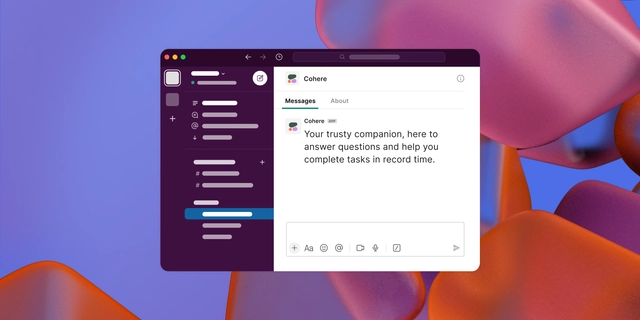
Salesforce AI and Cohere-Powered Slack Agents: Seamless CRM Data Interaction and Enhanced Productivity Slack agents, powered by Salesforce AI and integrated with Cohere, enable seamless interaction with CRM data within the Slack platform. These agents allow teams to use natural language to surface data insights and take action, simplifying workflows. With Slack’s AI Workflow Builder and support for third-party AI agents, including Cohere, productivity is further enhanced through automated processes and customizable AI assistants. By leveraging these technologies, Slack agents provide users with direct access to CRM data and AI-powered insights, improving efficiency and collaboration. Key Features of Slack Agents: Salesforce AI and Cohere Productivity Enhancements with Slack Agents: Salesforce AI and Cohere AI Agent Capabilities in Slack: Salesforce and Cohere Data Security and Compliance for Slack Agents FAQ What are Slack agents, and how do they integrate with Salesforce AI and Cohere?Slack agents are AI-powered assistants that enable teams to interact with CRM data directly within Slack. Salesforce AI agents allow natural language data interactions, while Cohere’s integration enhances productivity with customizable AI assistants and automated workflows. How do Salesforce AI agents in Slack improve team productivity?Salesforce AI agents enable users to interact with both CRM and conversational data, update records, and analyze opportunities using natural language. This integration improves workflow efficiency, leading to a reported 47% productivity boost. What features does the Cohere integration with Slack AI offer?Cohere integration offers customizable AI assistants that can help generate workflows, summarize channel content, and provide intelligent responses to user queries within Slack. How do Slack agents handle data security and compliance?Slack agents leverage cloud-native DLP solutions, automatically detecting sensitive data across different file types and setting up automated remediation processes for enhanced security and compliance. Can Slack agents work with AI providers beyond Salesforce and Cohere?Yes, Slack supports AI agents from various providers. In addition to Salesforce AI and Cohere, integrations include Adobe Express, Anthropic, Perplexity, IBM, and Amazon Q Business, offering users a wide array of AI-powered capabilities. Like Related Posts Who is Salesforce? Who is Salesforce? Here is their story in their own words. From our inception, we’ve proudly embraced the identity of Read more Salesforce Marketing Cloud Transactional Emails Salesforce Marketing Cloud Transactional Emails are immediate, automated, non-promotional messages crucial to business operations and customer satisfaction, such as order Read more Salesforce Unites Einstein Analytics with Financial CRM Salesforce has unveiled a comprehensive analytics solution tailored for wealth managers, home office professionals, and retail bankers, merging its Financial Read more AI-Driven Propensity Scores AI plays a crucial role in propensity score estimation as it can discern underlying patterns between treatments and confounding variables Read more

Read More
gettectonic.com