
Salesforce Architects Archives - gettectonic.com
Salesforce Instance Refresh Maintenance

Why Salesforce is the Key to Cloud Transformation

Cloud transformation is essential for businesses aiming to scale, boost efficiency, and enhance customer experiences. As a leading cloud platform, Salesforce plays a pivotal role in this transition—connecting cloud ecosystems, optimizing operations, and ensuring seamless customer interactions. But to unlock its full potential, organizations need the right Salesforce experts to drive the transformation successfully. The Role of Salesforce in Cloud Transformation As a cloud-native platform, Salesforce provides automation, AI-driven insights, and deep integration across business functions. It acts as the central hub, linking sales, marketing, customer service, and back-end operations. During cloud migration, Salesforce ensures:✅ Customer data remains accessible and secure✅ Workflows stay optimized for efficiency✅ AI-powered insights drive smarter decision-making Without experienced Salesforce professionals, businesses risk data silos, inefficient processes, and failed integrations—leading to costly delays and operational setbacks. Challenges in Hiring Salesforce Experts 1. Talent Shortages & High Demand The growing reliance on Salesforce has created a ultra-competitive hiring landscape. Roles like Salesforce Developers, Architects, and Administrators are in high demand, making it challenging for companies to attract and retain top talent. 2. The Need for More Than Just Technical Skills Many organizations focus solely on coding expertise, but cloud transformation demands professionals who understand business processes, data architecture, and integration strategies. A developer who codes without considering business goals may create solutions that don’t align with the organization’s needs. 3. Integration Complexities Salesforce rarely operates in isolation—it must integrate with ERP systems, marketing automation tools, and other cloud platforms. Poorly planned integrations can lead to inefficiencies and disrupt transformation efforts, underscoring the need for specialists who can manage system connectivity effectively. Strategies for Hiring the Right Salesforce Experts 1. Clearly Define Roles & Responsibilities Before hiring, identify the specific expertise required. For example: 2. Prioritize Certifications & Hands-On Experience Look for candidates with certifications like: Additionally, hands-on experience with cloud integrations, API development, and data migration is crucial for success. 3. Assess Problem-Solving Abilities Cloud transformation is complex, often presenting unexpected challenges. A structured hiring process should include scenario-based questions and technical assessments to evaluate candidates’ ability to handle real-world Salesforce challenges. 4. Explore Contract & Full-Time Hiring Models Given the talent shortage, companies may need a mix of contract and full-time hires: 5. Align Hiring with Cloud Strategy Salesforce experts must collaborate with cloud engineers and IT teams to ensure seamless integration. When hiring, prioritize candidates who understand system architecture and can align Salesforce capabilities with long-term business goals. Building a Strong Salesforce Team for Cloud Transformation Hiring the right Salesforce experts is critical for a smooth and effective cloud transformation. By defining roles, prioritizing experience, and assessing real-world skills, businesses can build teams that drive long-term success. Salesforce managed services is an alternative to the talent shortage. If your organization is looking to strengthen its Salesforce talent strategy, partnering with experts like Tectonic can bridge hiring gaps. Tectonic delivers top-tier Salesforce talent to power your digital transformation. With a vast network of vetted professionals and data-driven recruitment strategies, we help companies secure skilled experts—fast without increasing headcount. Let’s build your Salesforce dream team. Like Related Posts Who is Salesforce? Who is Salesforce? Here is their story in their own words. From our inception, we’ve proudly embraced the identity of Read more Salesforce Marketing Cloud Transactional Emails Salesforce Marketing Cloud Transactional Emails are immediate, automated, non-promotional messages crucial to business operations and customer satisfaction, such as order Read more Salesforce Unites Einstein Analytics with Financial CRM Salesforce has unveiled a comprehensive analytics solution tailored for wealth managers, home office professionals, and retail bankers, merging its Financial Read more AI-Driven Propensity Scores AI plays a crucial role in propensity score estimation as it can discern underlying patterns between treatments and confounding variables Read more


Read More
Data Cloud and Genpact

Unlock the Power of Your Data with Data Cloud

Seamlessly Connect, Unify, and Activate Your Data Data Cloud enables you to harness the full potential of your data—structured or unstructured—by integrating it across multiple sources. Key Capabilities: ✔ Connect All Data Sources – Ingest both batch and streaming data seamlessly.✔ Zero-Copy Data Federation – Access data without duplicating it.✔ Data Transformation & Governance – Standardize and secure your data.✔ Harmonize to a Common Data Model – Ensure consistency across datasets.✔ Identity Resolution – Unify data with advanced rulesets.✔ Advanced Analytics & Insights – Query, analyze, and extract business intelligence.✔ AI-Powered Predictions – Use AI to anticipate customer behavior.✔ Segmentation & Activation – Create targeted audience segments for personalized experiences.✔ Multi-Source Data Activation – Output data to multiple channels based on business needs.✔ Integration with Agentforce – Leverage data for AI-powered automation.✔ Continuous Optimization – Measure, refine, and enhance your data strategy. Designed for Every Role Data Cloud provides role-specific functionality, ensuring value across your organization. User Description Learn More Admins Enhance your admin skills with Data Cloud. Administer Data Cloud (Trailhead) Analysts Leverage Tableau to expand your analytics capabilities. Tableau Cloud Help Documentation Builders Develop applications using Data Cloud. ISVforce Guide Business Users Ingest data for diverse business needs. Salesforce Help Data Architects Map and model data effectively. Salesforce Architects Frameworks Developers Utilize APIs and SDKs to interact with Data Cloud. Data Cloud Developer Center Marketers Segment and activate audiences for cross-channel campaigns. Segmentation in Data Cloud (Trailhead) Partners Implement Data Cloud for customers. Partner Learning Camp Get Started with Data Cloud Customize Your Experience Data Cloud is built to scale, allowing you to tailor features to your business needs. While some features are included, others are available as add-ons or have adjustable limits. Work with your account executive to find the right solution. Available Editions: 📌 Data Cloud Starter – Get core Data Cloud functionality. 📌 Data Cloud + Tableau – Unlock powerful analytics with Tableau Enterprise. 📌 Marketing Use Cases – Leverage Segmentation and Activation for personalized marketing campaigns. 📌 Industry-Specific Solutions – Tailor Data Cloud for specialized needs. Better Together: Data & AI The best AI solutions are built on trusted, high-quality data. Data Cloud consolidates disparate data sources into unified customer and account profiles, fueling AI-driven automation and insights with Agentforce. Unlock the full potential of your data with Salesforce Data Cloud. Ready to get started? Learn more. Like Related Posts Who is Salesforce? Who is Salesforce? Here is their story in their own words. From our inception, we’ve proudly embraced the identity of Read more Salesforce Marketing Cloud Transactional Emails Salesforce Marketing Cloud Transactional Emails are immediate, automated, non-promotional messages crucial to business operations and customer satisfaction, such as order Read more Salesforce Unites Einstein Analytics with Financial CRM Salesforce has unveiled a comprehensive analytics solution tailored for wealth managers, home office professionals, and retail bankers, merging its Financial Read more AI-Driven Propensity Scores AI plays a crucial role in propensity score estimation as it can discern underlying patterns between treatments and confounding variables Read more
Read More
ABM and ABE

Salesforce to ABM’s Rescue

ABM Doesn’t Work Without a Salesforce Engine Built for It In B2B, we obsess over alignment—marketing to sales, sales to CS, GTM to product. But there’s one critical pairing most teams ignore until it’s too late: Account-based marketing and Salesforce architecture. They’re not separate. They’re a single system. And when one fails, the other collapses. ABM Suffocates Without Clean Architecture ABM’s power comes from its full-funnel precision:✔ Smart targeting (who to engage)✔ Personalized motion (how to engage)✔ Closed-loop insights (what’s working) But here’s the reality: None of this works if your Salesforce instance is held together by duct tape. We’ve audited 49 B2B companies’ Salesforce setups. Only a handful were truly functional. The rest? You can’t run data-driven ABM on a broken system. If Salesforce isn’t your single source of truth, your campaigns are just guessing. Why We Built ABM-First Salesforce Architecture At Tectonic, ABM is our core. But we kept hitting the same wall:🚀 Great strategy → 💥 Poor execution (because the tech stack couldn’t support it). So we fixed it. We teamed up with top Salesforce architects to answer:What would a Salesforce foundation look like if it were designed exclusively for ABM? Not a sales-led or marketing-hacked system. Not a Frankenstein monster of legacy customizations. But a clean, scalable architecture that:✔ Unifies data across prospecting → deal velocity → expansion✔ Automates reporting (no more manual spreadsheets)✔ Adapts to GTM shifts (not held hostage by past decisions) This Is the Future of GTM Infrastructure You can’t afford:❌ Systems that break when a key employee leaves❌ “Customizations” that are really technical debt❌ ABM programs that stall because the data is unreliable So here’s the truth: ABM success starts with Salesforce health.You don’t need a better playbook—you need a better system. That’s what we build at Tectonic. No duct tape. No blind spots. Just ABM and Salesforce, engineered as one. Let’s fix the foundation first. Get in touch. Like Related Posts Who is Salesforce? Who is Salesforce? Here is their story in their own words. From our inception, we’ve proudly embraced the identity of Read more Salesforce Marketing Cloud Transactional Emails Salesforce Marketing Cloud Transactional Emails are immediate, automated, non-promotional messages crucial to business operations and customer satisfaction, such as order Read more Salesforce Unites Einstein Analytics with Financial CRM Salesforce has unveiled a comprehensive analytics solution tailored for wealth managers, home office professionals, and retail bankers, merging its Financial Read more AI-Driven Propensity Scores AI plays a crucial role in propensity score estimation as it can discern underlying patterns between treatments and confounding variables Read more
Read More
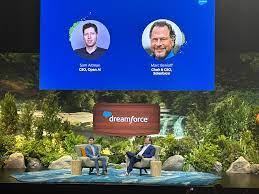
Crucial Role of Data and Integration in AI at Dreamforce

Salesforce Data Integration

Salesforce Data Integration: A Comprehensive Guide Introduction Salesforce offers numerous tools to access, synchronize, and share data with external systems. However, selecting the right tool for your project is critical. This guide explores Salesforce’s data integration landscape, providing recommendations based on specific use cases—along with guidance on which tools to avoid. Scope of This Guide This decision guide focuses on data-level integrations involving Salesforce, covering: While these are just a subset of integration challenges faced by Salesforce Architects, future guides will address: Note: Many tools discussed here can also solve enterprise-wide integration challenges, but those use cases are beyond this guide’s scope. Key Takeaways Common Considerations for Choosing Data Integration Tools Before selecting a tool, evaluate these key factors: Area to Consider Key Questions Existing Tools & Landscape Is an ESB/ETL solution already in place? Are there compliance requirements? Are systems cloud or on-premise? Data Flow Does data need to move synchronously, asynchronously, or in batches? Should data be replicated? Which system is the source of truth? Implementation What’s the effort for non-Salesforce systems? Which teams will deliver integrations? What tools do they prefer? Maintainability Who will maintain the integration? What skills do they have (or need)? What’s the total cost of ownership? Data Volume Is it a large data volume (LDV) scenario? How frequent are bulk changes? What’s the impact of singleton updates? Limits Are complex transformations needed? Will data be combined from multiple sources? How often will integrations run per user? Overview of Data Integration Tools Tool Salesforce → External External → Salesforce Execution License Required? Apex Actions ✅ Yes ✅ Yes Server-side ❌ No Change Data Capture ✅ Yes ❌ No Server-side ❌ No* Custom Apex (REST/SOAP) ✅ Yes ✅ Yes Server-side ❌ No External Services ✅ Yes ❌ No Server-side ❌ No Generic Events (Legacy) ✅ Yes ❌ No Server-side ❌ No** Heroku Connect ✅ Yes ✅ Yes Server-side ✅ Yes MuleSoft Anypoint ✅ Yes ✅ Yes Server-side ✅ Yes MuleSoft Composer ✅ Yes ✅ Yes Server-side ✅ Yes Native Salesforce APIs ❌ No ✅ Yes Server-side ❌ No OmniScript ✅ Yes ✅ Yes Client-side**** ✅ Yes OmniStudio Integration ✅ Yes ✅ Yes Server-side ✅ Yes Outbound Messaging ⚠️ Not Ideal ❌ No Server-side ❌ No Platform Events ✅ Yes ✅ Yes Server-side ❌ No*** PushTopic (Legacy) ⚠️ Not Ideal ❌ No Server-side ❌ No** Salesforce Connect ✅ Yes ✅ Yes Server-side ✅ Yes ✅ = Recommended | ⚠️ = Possible but consider alternatives | ❌ = Not supported Notes: Other Tools (Not Primary Integration Solutions) While these tools support aspects of data movement, they should not be the foundation of an integration strategy: Final Recommendations By aligning the right tool with your use case, you can optimize performance, reduce technical debt, and ensure scalable integrations. Content updated April 2025. Like Related Posts Who is Salesforce? Who is Salesforce? Here is their story in their own words. From our inception, we’ve proudly embraced the identity of Read more Salesforce Marketing Cloud Transactional Emails Salesforce Marketing Cloud Transactional Emails are immediate, automated, non-promotional messages crucial to business operations and customer satisfaction, such as order Read more Salesforce Unites Einstein Analytics with Financial CRM Salesforce has unveiled a comprehensive analytics solution tailored for wealth managers, home office professionals, and retail bankers, merging its Financial Read more AI-Driven Propensity Scores AI plays a crucial role in propensity score estimation as it can discern underlying patterns between treatments and confounding variables Read more

Read More
Salesforce Technical Architect

Salesforce Architects

Is there a demand for technical Salesforce architects? Indeed, there is a significant demand for Salesforce technical architects capable of designing, implementing, and overseeing cloud architectures that align with the needs and expectations of businesses. These architects should possess knowledge of various cloud platforms and services such as AWS, Azure, Google Cloud, or Salesforce. Successful Salesforce architects exhibit both big-picture thinking and in-depth problem-solving skills. While they require broad and deep technical knowledge, they also need soft skills such as listening, communication, and presentation abilities. Surprisingly, becoming an architect doesn’t necessarily require a development background. However, architects should be proficient in reading code, recommending coding best practices, and knowing when to code and when to leverage declarative (clicks not code) solutions. Salesforce architects often contribute expertise in integrating Salesforce with other technologies, governance, and development operations. They blend technical proficiency with business acumen to empower collaboration between business and IT for a stronger future. In the realm of Salesforce, a Salesforce Architect serves as a trusted advisor and leader, collaborating with business stakeholders to design a vision and architecture for solving business problems. Positioned as the technical team leader, they educate teams on technical best practices and translate business needs into a technical vision executable by low code or pro code builders. Architects also develop proofs-of-concept (POCs) for iterative team enhancements. In Salesforce implementations, architects design the organization’s strategy and data model, implement solutions for identity and access, manage data and process integrations, and address challenges related to large data volumes and data privacy. They identify optimal solutions for business requirements, recommending the use of clicks, code, or a combination based on the specific business use case. As seasoned problem solvers, architects often serve as the final escalation point for any production issues. Content updated February 2024. Like1 Related Posts Who is Salesforce? Who is Salesforce? Here is their story in their own words. From our inception, we’ve proudly embraced the identity of Read more Salesforce Marketing Cloud Transactional Emails Salesforce Marketing Cloud Transactional Emails are immediate, automated, non-promotional messages crucial to business operations and customer satisfaction, such as order Read more Salesforce Unites Einstein Analytics with Financial CRM Salesforce has unveiled a comprehensive analytics solution tailored for wealth managers, home office professionals, and retail bankers, merging its Financial Read more AI-Driven Propensity Scores AI plays a crucial role in propensity score estimation as it can discern underlying patterns between treatments and confounding variables Read more

Read More
gettectonic.com