Salesforce Queues
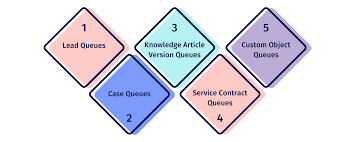
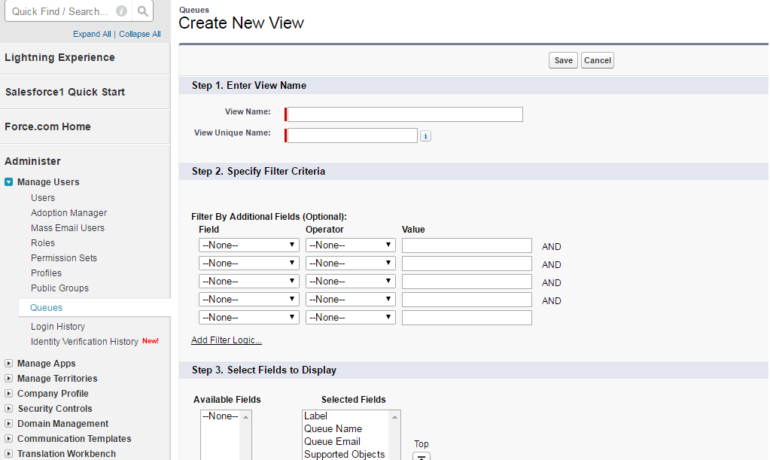
Salesforce Queues streamline the prioritization, distribution, and assignment of records among teams that collaborate on shared workloads. They function as holding areas within Salesforce where records wait for team members to pick them up and take ownership, either for themselves or on behalf of another user. Key Benefits of Salesforce Queues: How Salesforce Queues Work: In Salesforce, queues act as record owners instead of individual users. Records awaiting action are associated with a queue until a team member takes ownership. Components of a Salesforce Queue: Difference Between Queues and Groups in Salesforce: While both serve as ways to share records, queues and groups differ in their functionality. Creating a Salesforce Queue (Lead Queue Example): Step 1: Create a Queue Step 2: Create or Edit Assignment Rules Step 3: Test It Out Using Salesforce Queues Efficiently: Additional Salesforce Queue Examples: Salesforce Queues optimize team collaboration by facilitating record prioritization, distribution, and assignment. Organizations can leverage queues to enhance visibility and streamline workload management across teams effectively. With no limit to the number of queues you can create, Salesforce Queues empower teams to work smarter and collaborate efficiently. Like Related Posts Who is Salesforce? Who is Salesforce? Here is their story in their own words. From our inception, we’ve proudly embraced the identity of Read more Salesforce Marketing Cloud Transactional Emails Salesforce Marketing Cloud Transactional Emails are immediate, automated, non-promotional messages crucial to business operations and customer satisfaction, such as order Read more Salesforce Unites Einstein Analytics with Financial CRM Salesforce has unveiled a comprehensive analytics solution tailored for wealth managers, home office professionals, and retail bankers, merging its Financial Read more AI-Driven Propensity Scores AI plays a crucial role in propensity score estimation as it can discern underlying patterns between treatments and confounding variables Read more