

Technical Debt Archives - gettectonic.com
agentforce testing center

Agentforce Testing Center

A New Framework for Reliable AI Agent Testing Testing traditional software is well understood, but AI agents introduce unique challenges. Their responses can vary based on interactions, memory, tool access, and sometimes inherent randomness. This unpredictability makes agent testing difficult—especially when repeatability, safety, and clarity are critical. Enter the Agentforce Testing Center. Agentforce Testing Center (ATC), part of Salesforce’s open-source Agentforce ecosystem, provides a structured framework to simulate, test, and monitor AI agent behavior before deployment. It supports real-world scenarios, tool mocking, memory control, guardrails, and test coverage—bringing testing discipline to dynamic agent environments. This insight explores how ATC works, its key differences from traditional testing, and how to set it up for Agentforce-based agents. We’ll cover test architecture, mock tools, memory injection, coverage tracking, and real-world use cases in SaaS, fintech, and HR. Why AI Agents Need a New Testing Paradigm? AI agents powered by LLMs don’t follow fixed instructions—they reason, adapt, and interact with tools and memory. Traditional testing frameworks assume: ✅ Deterministic inputs/outputs✅ Predefined state machines✅ Synchronous, linear flows But agentic systems are: ❌ Probabilistic (LLM outputs vary)❌ Stateful (memory affects decisions)❌ Non-deterministic (tasks may take different paths) Without proper testing, hallucinations, tool misuse, or logic loops can slip into production. Agentforce Testing Center bridges this gap by simulating realistic, repeatable agent behavior. What Is Agentforce Testing Center? ATC is a testing framework for Agentforce-based AI agents, offering: How ATC Works: Architecture & Testing Flow ATC wraps the Agentforce agent loop in a controlled testing environment: Step-by-Step Setup 1. Install Agentforce + ATC bash Copy Download pip install agentforce atc *(Requires Python 3.8+)* 2. Define a Test Scenario python Copy Download from atc import TestScenario scenario = TestScenario( name=”Customer Support Ticket”, goal=”Resolve a refund request”, memory_seed={“prior_chat”: “User asked about refund policy”} ) 3. Mock Tools python Copy Download scenario.mock_tool( name=”payment_api”, mock_response={“status”: “refund_approved”} ) 4. Add Assertions python Copy Download scenario.add_assertion( condition=lambda output: “refund” in output.lower(), error_message=”Agent failed to process refund” ) 5. Run & Analyze python Copy Download results = scenario.run() print(results.report()) Sample Output: text Copy Download ✅ Test Passed: Refund processed correctly 🛑 Tool Misuse: Called CRM API without permission ⚠️ Coverage Gap: Missing fallback logic Advanced Testing Patterns 1. Loop Detection Prevent agents from repeating actions indefinitely: python Copy Download scenario.add_guardrail(max_steps=10) 2. Regression Testing for LLM Upgrades Compare outputs between model versions: python Copy Download scenario.compare_versions( current_model=”gpt-4″, previous_model=”gpt-3.5″ ) 3. Multi-Agent Testing Validate workflows with multiple agents (e.g., research → writer → reviewer): python Copy Download scenario.test_agent_flow( agents=[researcher, writer, reviewer], expected_output=”Accurate, well-structured report” ) Best Practices for Agent Testing Real-World Use Cases Industry Agent Use Case Test Scenario SaaS Sales Copilot Generate follow-up email for healthcare lead Fintech Fraud Detection Bot Flag suspicious wire transfer HR Tech Resume Screener Rank top candidates with Python skills The Future of Agent Testing As AI agents move from prototypes to production, reliable testing is critical. Agentforce Testing Center provides: ✔ Controlled simulations (memory, tools, scenarios)✔ Actionable insights (coverage, guardrails, regressions)✔ CI/CD integration (automate safety checks) Start testing early—unchecked agents quickly become technical debt. Ready to build trustworthy AI agents?Agentforce Testing Center ensures they behave as expected—before they reach users. Like Related Posts Who is Salesforce? Who is Salesforce? Here is their story in their own words. From our inception, we’ve proudly embraced the identity of Read more Salesforce Marketing Cloud Transactional Emails Salesforce Marketing Cloud Transactional Emails are immediate, automated, non-promotional messages crucial to business operations and customer satisfaction, such as order Read more Salesforce Unites Einstein Analytics with Financial CRM Salesforce has unveiled a comprehensive analytics solution tailored for wealth managers, home office professionals, and retail bankers, merging its Financial Read more AI-Driven Propensity Scores AI plays a crucial role in propensity score estimation as it can discern underlying patterns between treatments and confounding variables Read more


Read More
Salesforce Flow Builder

The Complete Guide to Migrating from Workflow Rules & Process Builder to Salesforce Flow

The End of an Era: Why Salesforce is Consolidating Automation Tools Salesforce has officially announced the retirement of Workflow Rules and Process Builder, marking a pivotal shift in platform automation. After Spring ’25: This consolidation addresses long-standing challenges: Why Flow is the Undisputed Future Salesforce Flow represents a quantum leap in automation capabilities: Capability Workflow Process Builder Flow Visual Designer ❌ ✔️ ✔️ Multi-Step Logic ❌ ✔️ ✔️ User Screens ❌ ❌ ✔️ External Integrations ❌ ❌ ✔️ Error Handling ❌ Limited ✔️ Scheduled Actions Basic ✔️ Advanced Reusable Components ❌ Limited ✔️ Key Advantages of Flow: Urgent Action Required: Migration Timeline Critical Milestones Risks of Delaying Migration Proven Migration Methodology Phase 1: Discovery & Assessment Phase 2: Design & Build Phase 3: Testing & Deployment Common Migration Pitfalls & Solutions Challenge Solution Logic gaps Comprehensive test cases covering edge conditions Performance issues Optimize with bulkification patterns Null handling differences Explicit null checks in flow logic Trigger order conflicts Use Flow Trigger Orchestration Pro Tip: The Migrate to Flow tool handles ~70% of use cases—plan to manually rebuild complex logic. Strategic Considerations Getting Help For organizations needing support: Critical Decision Point: Organizations with 50+ automations should consider engaging Salesforce-certified partners to accelerate migration while minimizing risk. The Bottom Line This transition represents more than just a technical change—it’s a strategic opportunity to modernize your automation foundation. By migrating to Flow now, organizations can: ✔ Eliminate technical debt✔ Unlock advanced capabilities✔ Future-proof their Salesforce investment✔ Position for AI and next-gen automation The clock is ticking—start your migration journey today to ensure a smooth transition before the sunset deadline. Like Related Posts Who is Salesforce? Who is Salesforce? Here is their story in their own words. From our inception, we’ve proudly embraced the identity of Read more Salesforce Marketing Cloud Transactional Emails Salesforce Marketing Cloud Transactional Emails are immediate, automated, non-promotional messages crucial to business operations and customer satisfaction, such as order Read more Salesforce Unites Einstein Analytics with Financial CRM Salesforce has unveiled a comprehensive analytics solution tailored for wealth managers, home office professionals, and retail bankers, merging its Financial Read more AI-Driven Propensity Scores AI plays a crucial role in propensity score estimation as it can discern underlying patterns between treatments and confounding variables Read more

Read More
Revenue Cloud

Salesforce Revenue Cloud Advanced

Salesforce Revenue Cloud Advanced (RCA): The Ultimate Quote-to-Cash Solution Revolutionize Your Revenue Operations Salesforce Revenue Cloud Advanced (RCA) is an end-to-end revenue management platform that transforms complex quote-to-cash processes into automated, compliant, and customer-centric experiences. Designed for mid-market and enterprise organizations, RCA empowers businesses to: ✔ Simplify CPQ, billing, and revenue recognition✔ Ensure compliance with ASC 606/IFRS 15✔ Accelerate deal velocity✔ Manage multi-channel revenue streams Ideal for: SaaS, Manufacturing, High Tech, Healthcare, and other industries with subscription models, usage-based pricing, and dynamic bundling. Key Capabilities of Revenue Cloud Advanced 1. Intelligent CPQ (Configure, Price, Quote) 2. Flexible Billing & Monetization 3. Accurate Revenue Recognition 4. Partner & Channel Management Who Benefits from RCA? Team Key Value Sales Faster quoting, guided selling, deal acceleration Finance Automated revenue compliance, reduced manual errors RevOps End-to-end process automation, scalability IT Pre-built integrations, low technical debt Why Choose Salesforce RCA? Native to the Salesforce Ecosystem Seamlessly integrates with: AI-Powered Insights Enterprise-Grade Scalability Transform Your Revenue Lifecycle ✅ Close deals faster with AI-guided selling✅ Eliminate billing errors with automation✅ Stay audit-ready with compliant revenue reporting✅ Scale effortlessly as your business grows Ready to optimize your quote-to-cash process? Contact Tectonic today. Like Related Posts Who is Salesforce? Who is Salesforce? Here is their story in their own words. From our inception, we’ve proudly embraced the identity of Read more Salesforce Marketing Cloud Transactional Emails Salesforce Marketing Cloud Transactional Emails are immediate, automated, non-promotional messages crucial to business operations and customer satisfaction, such as order Read more Salesforce Unites Einstein Analytics with Financial CRM Salesforce has unveiled a comprehensive analytics solution tailored for wealth managers, home office professionals, and retail bankers, merging its Financial Read more AI-Driven Propensity Scores AI plays a crucial role in propensity score estimation as it can discern underlying patterns between treatments and confounding variables Read more

Read More
Critical Imperative of Salesforce Testing

Critical Imperative of Salesforce Testing

The Critical Imperative of Salesforce Testing: Why “Just Config” Isn’t Enough Salesforce: The Beating Heart of Modern Business Salesforce has evolved far beyond a simple CRM—it now powers sales pipelines, automates service workflows, orchestrates marketing campaigns, and drives mission-critical operations for organizations of all sizes. Yet, as its capabilities expand, one discipline remains dangerously underestimated: rigorous, structured testing. The Dangerous Myth: “It’s Just Configuration” Many assume that because Salesforce is low-code/no-code, it doesn’t require thorough testing. But today’s Salesforce environments are complex ecosystems where:✔ A misconfigured Flow can break an entire lead process.✔ An unchecked integration can corrupt data across systems.✔ An untested Lightning component can frustrate users and tank adoption. The reality?🔴 Minor errors cause major disruptions.🔴 Testing isn’t optional—it’s a business imperative. Why Salesforce Testing Can’t Be Ignored 1. The Hidden Complexity of Salesforce Modern Salesforce orgs are interconnected webs of: Every Salesforce release (Spring, Summer, Winter) introduces changes that can break existing functionality—making proactive testing essential. 2. The Staggering Cost of Poor Testing Skipping proper QA leads to: Risk Impact Revenue Loss Broken sales processes → lost deals User Distrust Buggy UX → low adoption & shadow systems Data Corruption Failed integrations → bad reporting & decisions Compliance Fines Security gaps → GDPR/HIPAA violations Technical Debt Patchwork fixes → slower innovation Fact: Fixing a post-launch defect costs 10x–100x more than catching it early. From Ad-Hoc to Strategic: Building a Testing Framework The Problem with “Just Click Around” Testing Many teams rely on informal manual checks, but this approach:❌ Misses edge cases❌ Fails to scale❌ Wastes time on repetitive tasks The Solution: Structured Testing A disciplined QA strategy includes: The Future: A Culture of Quality Testing shouldn’t be an afterthought—it’s a shared responsibility requiring:✅ Continuous validation (test early, test often)✅ Risk-based prioritization (focus on mission-critical processes)✅ Feedback loops (learn from defects to prevent repeats) Leaders who invest in Salesforce QA: Next Steps: Building Your Testing Blueprint Before diving into automation, master:🔹 Manual test case design🔹 Environment management🔹 Stakeholder alignment Ready to transform your Salesforce quality? Contact Tectonic today. Quality isn’t expensive—neglecting it is. Like Related Posts Who is Salesforce? Who is Salesforce? Here is their story in their own words. From our inception, we’ve proudly embraced the identity of Read more Salesforce Marketing Cloud Transactional Emails Salesforce Marketing Cloud Transactional Emails are immediate, automated, non-promotional messages crucial to business operations and customer satisfaction, such as order Read more Salesforce Unites Einstein Analytics with Financial CRM Salesforce has unveiled a comprehensive analytics solution tailored for wealth managers, home office professionals, and retail bankers, merging its Financial Read more AI-Driven Propensity Scores AI plays a crucial role in propensity score estimation as it can discern underlying patterns between treatments and confounding variables Read more

Read More
Slack Operating System

U.S. Government Secures Major Discounts on Slack for Federal Agencies

U.S. Government Secures Major Discounts on Slack for Federal Agencies Through New GSA-Salesforce Partnership May 19, 2025 – In a major step to boost federal efficiency, the U.S. General Services Administration (GSA) has signed a landmark OneGov agreement with Salesforce, slashing the cost of Slack for government agencies. The deal provides deep discounts on Slack’s enterprise collaboration tools, enabling federal offices to modernize operations while cutting costs. Key Details of the Agreement Under the new terms, federal agencies will receive: These reduced rates will be available until November 30, 2025, giving agencies a six-month window to adopt the platform at significantly lower costs. Unlike past agreements, where agencies negotiated individual discounts, this deal leverages the total purchasing power of the federal government, ensuring better pricing and streamlined procurement. The move reflects the GSA’s push to centralize IT acquisitions, eliminating redundancies and maximizing savings. Leadership and Strategic Goals Josh Gruenbaum, GSA Federal Acquisition Service Commissioner, highlighted the partnership’s significance: “Through the OneGov initiative, we’re demonstrating that the federal government is a strong partner for industry, securing top-tier tools at the best value for taxpayers.” The OneGov program, backed by the current administration, aims to foster long-term partnerships with tech providers, potentially leading to more discounted offerings in the coming fiscal year. Boosting Government Productivity Slack, now part of Salesforce, serves as a unified hub for communication, app integration, and AI-driven workflows. Its adoption across federal agencies could improve interdepartmental collaboration, reduce inefficiencies, and accelerate decision-making. The inclusion of Slack AI for Enterprise introduces advanced automation, helping agencies process data faster and optimize operations—a critical advantage for large, complex organizations. A Shift in Federal Tech Procurement This agreement signals a broader move toward modernizing government IT infrastructure while controlling costs. As noted by NextGov, the deal is part of GSA’s strategy to offer cost-effective, scalable solutions under the OneGov framework. By standardizing collaboration tools across agencies, the federal government could enhance interoperability, reduce reliance on fragmented systems, and lower long-term technical debt. Looking Ahead Industry analysts suggest that this partnership could pave the way for more AI and cloud-based solutions in government. The steep discounts may drive rapid adoption, setting a precedent for future public-private tech collaborations. As agencies integrate Slack into their workflows, the impact on federal productivity and service delivery will be closely monitored—potentially serving as a model for future digital transformation efforts. Sources: BizSugar, Investing.com, NextGov Like Related Posts Who is Salesforce? Who is Salesforce? Here is their story in their own words. From our inception, we’ve proudly embraced the identity of Read more Salesforce Marketing Cloud Transactional Emails Salesforce Marketing Cloud Transactional Emails are immediate, automated, non-promotional messages crucial to business operations and customer satisfaction, such as order Read more Salesforce Unites Einstein Analytics with Financial CRM Salesforce has unveiled a comprehensive analytics solution tailored for wealth managers, home office professionals, and retail bankers, merging its Financial Read more AI-Driven Propensity Scores AI plays a crucial role in propensity score estimation as it can discern underlying patterns between treatments and confounding variables Read more

Read More
Marketing Automation

AI and Automation

The advent of AI agents is widely discussed as a transformative force in application development, with much of the focus on the automation that generative AI brings to the process. This shift is expected to significantly reduce the time and effort required for tasks such as coding, testing, deployment, and monitoring. However, what is even more intriguing is the change not just in how applications are built, but in what is being built. This perspective was highlighted during last week’s Salesforce developer conference, TDX25. Developers are no longer required to build entire applications from scratch. Instead, they can focus on creating modular building blocks and guidelines, allowing AI agents to dynamically assemble these components at runtime. In a pre-briefing for the event, Alice Steinglass, EVP and GM of Salesforce Platform, outlined this new approach. She explained that with AI agents, development is broken down into smaller, more manageable chunks. The agent dynamically composes these pieces at runtime, making individual instructions smaller and easier to test. This approach also introduces greater flexibility, as agents can interpret instructions based on policy documents rather than relying on rigid if-then statements. Steinglass elaborated: “With agents, I’m actually doing it differently. I’m breaking it down into smaller chunks and saying, ‘Hey, here’s what I want to do in this scenario, here’s what I want to do in this scenario.’ And then the agent, at runtime, is able to dynamically compose these individual pieces together, which means the individual instructions are much smaller. That makes it easier to test. It also means I can bring in more flexibility and understanding so my agent can interpret some of those instructions. I could have a policy document that explains them instead of hard coding them with if-then statements.” During a follow-up conversation, Steinglass further explored the practical implications of this shift. She acknowledged that adapting to this new paradigm would be a significant change for developers, comparable to the transition from web to mobile applications. However, she emphasized that the transition would be gradual, with stepping stones along the way. She noted: “It’s a sea change in the way we build applications. I don’t think it’s going to happen all at once. People will move over piece by piece, but the result’s going to be a fundamentally different way of building applications.” Different Building Blocks One reason the transition will be gradual is that most AI agents and applications built by enterprises will still incorporate traditional, deterministic functions. What will change is how these existing building blocks are combined with generative AI components. Instead of hard-coding business logic into predetermined steps, AI agents can adapt on-the-fly to new policies, rules, and goals. Steinglass provided an example from customer service: “What AI allows us to do is to break down those processes into components. Some of them will still be deterministic. For example, in a service agent scenario, AI can handle tasks like understanding customer intent and executing flexible actions based on policy documents. However, tasks like issuing a return or connecting to an ERP system will remain deterministic to ensure consistency and compliance.” She also highlighted how deterministic processes are often used for high-compliance tasks, which are automated due to their strict rules and scalability. In contrast, tasks requiring more human thought or frequent changes were previously left unautomated. Now, AI can bridge these gaps by gluing together deterministic and non-deterministic components. In sales, Salesforce’s Sales Development Representative (SDR) agent exemplifies this hybrid approach. The definition of who the SDR contacts is deterministic, based on factors like value or reachability. However, composing the outreach and handling interactions rely on generative AI’s flexibility. Deterministic processes re-enter the picture when moving a prospect from lead to opportunity. Steinglass explained that many enterprise processes follow this pattern, where deterministic inputs trigger workflows that benefit from AI’s adaptability. Connections to Existing Systems The introduction of the Agentforce API last week marked a significant step in enabling connections to existing systems, often through middleware like MuleSoft. This allows agents to act autonomously in response to events or asynchronous triggers, rather than waiting for human input. Many of these interactions will involve deterministic calls to external systems. However, non-deterministic interactions with autonomous agents in other systems require richer protocols to pass sufficient context. Steinglass noted that while some partners are beginning to introduce actions in the AgentExchange marketplace, standardized protocols like Anthropic’s Model Context Protocol (MCP) are still evolving. She commented: “I think there are pieces that will go through APIs and events, similar to how handoffs between systems work today. But there’s also a need for richer agent-to-agent communication. MuleSoft has already built out AI support for the Model Context Protocol, and we’re working with partners to evolve these protocols further.” She emphasized that even as richer communication protocols emerge, they will coexist with traditional deterministic calls. For example, some interactions will require synchronous, context-rich communication, while others will resemble API calls, where an agent simply requests a task to be completed without sharing extensive context. Agent Maturity Map To help organizations adapt to these new ways of building applications, Salesforce uses an agent maturity map. The first stage involves building a simple knowledge agent capable of answering questions relevant to the organization’s context. The next stage is enabling the agent to take actions, transitioning from an AI Q&A bot to a true agentic capability. Over time, organizations can develop standalone agents capable of taking multiple actions across the organization and eventually orchestrate a digital workforce of multiple agents. Steinglass explained: “Step one is ensuring the agent can answer questions about my data with my information. Step two is enabling it to take an action, starting with one action and moving to multiple actions. Step three involves taking actions outside the organization and leveraging different capabilities, eventually leading to a coordinated, multi-agent digital workforce.” Salesforce’s low-code tooling and comprehensive DevSecOps toolkit provide a significant advantage in this journey. Steinglass highlighted that Salesforce’s low-code approach allows business owners to build processes and workflows,

Read More

Secure AI Innovation for CIOs

Secure AI Innovation for CIOs: Balancing Speed & Stability CIOs No Longer Choose Between Innovation and Security The role of the CIO has transformed. Once focused on maintaining infrastructure, today’s IT leaders are drivers of innovation—especially with AI reshaping business. But with great opportunity comes great responsibility: ✅ How do we innovate quickly without compromising security?✅ How do we protect customer data in an AI-driven world?✅ How do we optimize operations at scale? Salesforce Platform provides the secure, unified foundation CIOs need to lead AI adoption while maintaining governance. 3 Key Challenges for Modern CIOs 1. Innovate Fast—But With Guardrails AI’s potential is limitless, but implementation must be strategic: Salesforce Solution: 2. Protect Data to Build Trust AI runs on data—but unsecured data is a liability. CIOs must: Salesforce Solution: 3. Optimize Operations at Scale With 900+ SaaS apps per enterprise, visibility is critical. AI can: Salesforce Solution: Announcing: Enhanced Data Protection with Own Salesforce Platform now integrates Own Company—a leader in data management trusted by 7,000+ customers. New capabilities include: Product Key Benefit Backup & Recover Automated, scalable data restoration Salesforce Discover Feed clean data to BI tools—no prep needed Archive Store inactive data without bloating production Data Mask & Seed Anonymize sensitive data for safe testing The CIO’s AI Playbook With Salesforce Platform, you don’t choose between innovation and stability—you get both. Like Related Posts Who is Salesforce? Who is Salesforce? Here is their story in their own words. From our inception, we’ve proudly embraced the identity of Read more Salesforce Marketing Cloud Transactional Emails Salesforce Marketing Cloud Transactional Emails are immediate, automated, non-promotional messages crucial to business operations and customer satisfaction, such as order Read more Salesforce Unites Einstein Analytics with Financial CRM Salesforce has unveiled a comprehensive analytics solution tailored for wealth managers, home office professionals, and retail bankers, merging its Financial Read more AI-Driven Propensity Scores AI plays a crucial role in propensity score estimation as it can discern underlying patterns between treatments and confounding variables Read more
Read More
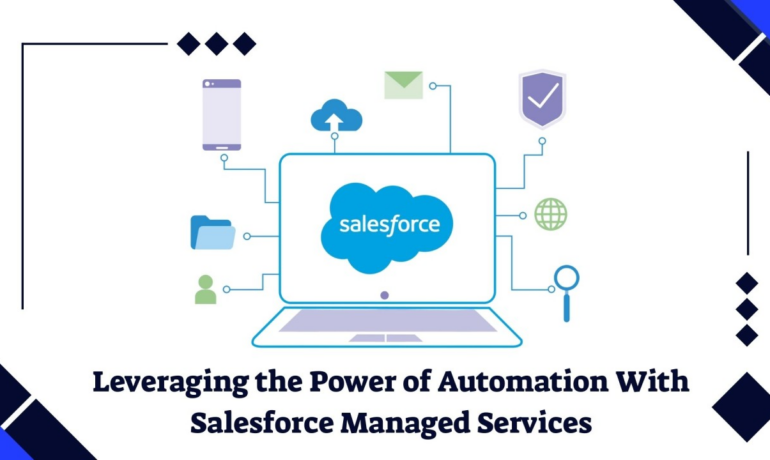
Salesforce Managed Services

Key Signs Your Business Needs a Salesforce Support & Maintenance Partner

Salesforce is a powerful CRM platform, but simply implementing it doesn’t guarantee success. To maximize ROI, businesses need continuous optimization, expert guidance, and proactive maintenance—something an in-house team may struggle to provide alone. Discover the key signs your business needs a Salesforce support and maintenance partner. Many companies invest in Salesforce expecting high returns but end up facing: These challenges turn Salesforce into a cost center rather than a revenue-driving platform. If you’re noticing these issues, it’s time to consider a Salesforce support and maintenance partner. This insight explores the critical warning signs and how a managed services provider can help. What Is a Salesforce Support & Maintenance Partner? A Salesforce support and maintenance partner is a specialized provider that manages, optimizes, and secures your Salesforce org. They provide you: ✔ Proactive Monitoring – 24/7 performance checks to prevent downtime, security breaches, and data decay.✔ Expert Guidance – Certified professionals resolve feature stagnation (unused automation/AI tools) and boost user adoption.✔ Strategic Roadmaps – Align Salesforce with business goals for long-term success.✔ Elimination of Technical Debt – Reduce technology noise slowing down your org. Why Are They Crucial? ✅ Cost Efficiency – Avoid hiring full-time specialists.✅ Risk Mitigation – Ensure compliance, security, and data integrity.✅ ROI Maximization – Unlock advanced features and improve team efficiency. A trusted partner like Tectonic identifies warning signs early, preventing short- and long-term inefficiencies. 9 Key Signs You Need a Salesforce Support & Maintenance Partner 1. Declining User Adoption The Problem: Employees avoid Salesforce due to poor training, complex workflows, or inefficient processes.Why It Matters: Low adoption wastes your CRM investment. (Only 36% of agents upsell due to lack of training—Salesforce State of Service Report.)The Solution: 2. Security & Compliance Risks The Problem: Unclear GDPR/HIPAA compliance, outdated security settings, or unauthorized access attempts.Why It Matters: Data breaches lead to fines, legal risks, and lost trust. (Non-compliance costs $14.8M on average—Globalscape.)The Solution: 3. Rising Ticket Backlogs The Problem: IT teams are overwhelmed with unresolved requests, slowing operations.Why It Matters: Delays hurt sales cycles, employee morale, and customer satisfaction.The Solution: 4. Underutilized Salesforce Features The Problem: Only basic functions (leads/contacts) are used—AI, automation, and analytics are ignored.Why It Matters: Manual processes slow growth. (Only 49% of service orgs use AI—Salesforce.)The Solution: 5. Poor Data Quality & Duplicates The Problem: Duplicate leads, missing fields, and inaccurate reports lead to bad decisions.Why It Matters: Poor data costs .9M annually (Gartner).The Solution: 6. Increasing Downtime The Problem: Frequent crashes, slow reports, or integration failures.Why It Matters: Downtime = lost sales & productivity. (Meta lost $100M in 2 hours in 2024.)The Solution: 7. Lack of Strategic Roadmap The Problem: No clear upgrade plan, leading to disorganized workflows.Why It Matters: 30-70% of CRM projects fail due to poor planning.The Solution: 8. Unstable Customizations The Problem: Apex triggers, Flows, or Lightning components break after updates.Why It Matters: Patchwork fixes increase technical debt & admin workload.The Solution: 9. Slow Salesforce Performance The Problem: Reports load slowly, or users face “Service Unavailable” errors.Why It Matters: A 100ms delay can hurt conversions by 7% (Akamai).The Solution: Conclusion If you’re experiencing any of these issues, your Salesforce org needs expert care. A managed services partner like Tectonic helps:✔ Reduce downtime✔ Improve performance✔ Boost user adoption✔ Enhance security & compliance With 24/7 proactive support, strategic roadmaps, and advanced feature utilization, Tectonic ensures your Salesforce investment drives revenue—not costs. Need help optimizing Salesforce? Contact Tectonic today for a free assessment. Like1 Related Posts Who is Salesforce? Who is Salesforce? Here is their story in their own words. From our inception, we’ve proudly embraced the identity of Read more Salesforce Marketing Cloud Transactional Emails Salesforce Marketing Cloud Transactional Emails are immediate, automated, non-promotional messages crucial to business operations and customer satisfaction, such as order Read more Salesforce Unites Einstein Analytics with Financial CRM Salesforce has unveiled a comprehensive analytics solution tailored for wealth managers, home office professionals, and retail bankers, merging its Financial Read more AI-Driven Propensity Scores AI plays a crucial role in propensity score estimation as it can discern underlying patterns between treatments and confounding variables Read more
Read More
Is Agentforce Different?

Is Agentforce Different?

The Salesforce hype machine is in full swing, with product announcements like Chatter, Einstein GPT, and Data Cloud, all positioned as revolutionary tools that promise to transform how we work. Is Agentforce Different? However, it’s often difficult to separate fact from fiction in the world of Salesforce. The cloud giant thrives on staying ahead of technological advancements, which means reinventing itself every year with new releases and updates. You could even say three times per year with the major releases. Why Enterprises Need Multiple Salesforce Orgs Over the past decade, Salesforce product launches have been hit or miss—primarily miss. Offerings like IoT Cloud, Work.com, and NFT Cloud have faded into obscurity. This contrasts sharply with Salesforce’s earlier successes, such as Service Cloud, the AppExchange, Force.com, Salesforce Lightning, and Chatter, which defined its first decade in business. One notable exception is Data Cloud. This product has seen significant success and now serves as the cornerstone of Salesforce’s future AI and data strategy. With Salesforce’s growth slowing quarter over quarter, the company must find new avenues to generate substantial revenue. Artificial Intelligence seems to be their best shot at reclaiming a leadership position in the next technological wave. Is Agentforce Different? While Salesforce has been an AI leader for over a decade, the hype surrounding last year’s Dreamforce announcements didn’t deliver the growth the company was hoping for. The Einstein Copilot Studio—comprising Copilot, Prompt Builder, and Model Builder—hasn’t fully lived up to expectations. This can be attributed to a lack of AI readiness among enterprises, the relatively basic capabilities of large language models (LLMs), and the absence of fully developed use cases. In Salesforce’s keynote, it was revealed that over 82 billion flows are launched weekly, compared to just 122,000 prompts executed. While Flow has been around for years, this stat highlights that the use of AI-powered prompts is still far from mainstream—less than one prompt per Salesforce customer per week, on average. When ChatGPT launched at the end of 2022, many predicted the dawn of a new AI era, expecting a swift and dramatic transformation of the workplace. Two years later, it’s clear that AI’s impact has yet to fully materialize, especially when it comes to influencing global productivity and GDP. However, Salesforce’s latest release feels different. While AI Agents may seem new to many, this concept has been discussed in AI circles for decades. Marc Benioff’s recent statements during Dreamforce reflect a shift in strategy, including a direct critique of Microsoft’s Copilot product, signaling the intensifying AI competition. This year’s marketing strategy around Agentforce feels like it could be the transformative shift we’ve been waiting for. While tools like Salesforce Copilot will continue to evolve, agents capable of handling service cases, answering customer questions, and booking sales meetings instantly promise immediate ROI for organizations. Is the Future of Salesforce in the Hands of Agents? Despite the excitement, many questions remain. Are Salesforce customers ready for agents? Can organizations implement this technology effectively? Is Agentforce a real breakthrough or just another overhyped concept? Agentforce may not be vaporware. Reports suggest that its development was influenced by Salesforce’s acquisition of Airkit.AI, a platform that claims to resolve 90% of customer queries. Salesforce has even set up dedicated launchpads at Dreamforce to help customers start building their own agents. Yet concerns remain, especially regarding Salesforce’s complexity, technical debt, and platform sprawl. These issues, highlighted in this year’s Salesforce developer report, cannot be overlooked. Still, it’s hard to ignore Salesforce’s strategic genius. The platform has matured to the point where it offers nearly every functionality an organization could need, though at times the components feel a bit disconnected. For instance: Salesforce is even hinting at usage-based pricing, with a potential $2 charge per conversation—an innovation that could reshape their pricing model. Will Agents Be Salesforce’s Key to Future Growth? With so many unknowns, only time will tell if agents will be the breakthrough Salesforce needs to regain the momentum of its first two decades. Regardless, agents appear to be central to the future of AI. Leading organizations like Copado are also launching their own agents, signaling that this trend will define the next phase of AI innovation. In today’s macroeconomic environment, where companies are overstretched and workforce demands are high, AI’s ability to streamline operations and improve customer service has never been more critical. Whoever cracks customer service AI first could lead the charge in the inevitable AI spending boom. We’re all waiting to see if Salesforce has truly cracked the AI code. But one thing is certain: the race to dominate AI in customer service has begun. And Salsesforce may be at the forefront. Like Related Posts Who is Salesforce? Who is Salesforce? Here is their story in their own words. From our inception, we’ve proudly embraced the identity of Read more Salesforce Marketing Cloud Transactional Emails Salesforce Marketing Cloud Transactional Emails are immediate, automated, non-promotional messages crucial to business operations and customer satisfaction, such as order Read more Salesforce Unites Einstein Analytics with Financial CRM Salesforce has unveiled a comprehensive analytics solution tailored for wealth managers, home office professionals, and retail bankers, merging its Financial Read more AI-Driven Propensity Scores AI plays a crucial role in propensity score estimation as it can discern underlying patterns between treatments and confounding variables Read more

Read More
ABM and ABE

Salesforce to ABM’s Rescue

ABM Doesn’t Work Without a Salesforce Engine Built for It In B2B, we obsess over alignment—marketing to sales, sales to CS, GTM to product. But there’s one critical pairing most teams ignore until it’s too late: Account-based marketing and Salesforce architecture. They’re not separate. They’re a single system. And when one fails, the other collapses. ABM Suffocates Without Clean Architecture ABM’s power comes from its full-funnel precision:✔ Smart targeting (who to engage)✔ Personalized motion (how to engage)✔ Closed-loop insights (what’s working) But here’s the reality: None of this works if your Salesforce instance is held together by duct tape. We’ve audited 49 B2B companies’ Salesforce setups. Only a handful were truly functional. The rest? You can’t run data-driven ABM on a broken system. If Salesforce isn’t your single source of truth, your campaigns are just guessing. Why We Built ABM-First Salesforce Architecture At Tectonic, ABM is our core. But we kept hitting the same wall:🚀 Great strategy → 💥 Poor execution (because the tech stack couldn’t support it). So we fixed it. We teamed up with top Salesforce architects to answer:What would a Salesforce foundation look like if it were designed exclusively for ABM? Not a sales-led or marketing-hacked system. Not a Frankenstein monster of legacy customizations. But a clean, scalable architecture that:✔ Unifies data across prospecting → deal velocity → expansion✔ Automates reporting (no more manual spreadsheets)✔ Adapts to GTM shifts (not held hostage by past decisions) This Is the Future of GTM Infrastructure You can’t afford:❌ Systems that break when a key employee leaves❌ “Customizations” that are really technical debt❌ ABM programs that stall because the data is unreliable So here’s the truth: ABM success starts with Salesforce health.You don’t need a better playbook—you need a better system. That’s what we build at Tectonic. No duct tape. No blind spots. Just ABM and Salesforce, engineered as one. Let’s fix the foundation first. Get in touch. Like Related Posts Who is Salesforce? Who is Salesforce? Here is their story in their own words. From our inception, we’ve proudly embraced the identity of Read more Salesforce Marketing Cloud Transactional Emails Salesforce Marketing Cloud Transactional Emails are immediate, automated, non-promotional messages crucial to business operations and customer satisfaction, such as order Read more Salesforce Unites Einstein Analytics with Financial CRM Salesforce has unveiled a comprehensive analytics solution tailored for wealth managers, home office professionals, and retail bankers, merging its Financial Read more AI-Driven Propensity Scores AI plays a crucial role in propensity score estimation as it can discern underlying patterns between treatments and confounding variables Read more
Read More
Technical Debt

Understanding and Managing Technical Debt in Salesforce

Salesforce is a powerful and dynamic CRM platform with a vast array of tools and features. Given its complexity, users must make critical decisions daily—whether creating custom objects, automating workflows, nurturing leads, or developing applications. Each choice impacts how effectively Salesforce is utilized, influencing both short-term success and long-term sustainability. However, users often opt for the quickest solution rather than the most robust one. While this may provide immediate results, it can lead to inefficiencies and challenges over time. This is where technical debt comes into play. What Is Technical Debt in Salesforce? Technical debt refers to the hidden cost an organization incurs when prioritizing speed over quality in software development and system configuration. It results from taking shortcuts that may seem convenient at first but ultimately require additional work—often in the form of rework, maintenance, or system inefficiencies. A Real-World Analogy Imagine you’re on a trek and encounter two paths leading to the same destination. The shorter route is steep and exhausting, while the longer path includes rest stops and is easier on your body. Although the shorter path may seem efficient, it leaves you drained. Similarly, in Salesforce, quick fixes—such as writing redundant code, skipping documentation, or excessive customization—may seem efficient initially but create long-term complications, leading to technical debt. Common Causes of Technical Debt in Salesforce Types of Technical Debt in Salesforce Identifying and Measuring Technical Debt To assess technical debt, consider both business-related and technical questions: Business-Related Questions Technical Questions How to Avoid Technical Debt in Salesforce Final Thoughts Technical debt is an inevitable challenge in any complex system, but with proactive planning and best practices, it can be minimized. The key is to prioritize sustainability over speed—choosing well-structured, scalable solutions rather than quick fixes that may lead to costly rework in the future. By maintaining best practices, regular system reviews, and strategic planning, organizations can optimize their Salesforce environment for efficiency, scalability, and long-term success. Like Related Posts Who is Salesforce? Who is Salesforce? Here is their story in their own words. From our inception, we’ve proudly embraced the identity of Read more Salesforce Marketing Cloud Transactional Emails Salesforce Marketing Cloud Transactional Emails are immediate, automated, non-promotional messages crucial to business operations and customer satisfaction, such as order Read more Salesforce Unites Einstein Analytics with Financial CRM Salesforce has unveiled a comprehensive analytics solution tailored for wealth managers, home office professionals, and retail bankers, merging its Financial Read more AI-Driven Propensity Scores AI plays a crucial role in propensity score estimation as it can discern underlying patterns between treatments and confounding variables Read more

Read More
The Growing Role of AI in Cloud Management

The Growing Role of AI in Cloud Management

AI technologies are redefining cloud management by automating IT systems, improving security, optimizing cloud costs, enhancing data management, and streamlining the provisioning of AI services across complex cloud ecosystems. With the surging demand for AI, its ability to address technological complexities makes a unified cloud management strategy indispensable for IT teams. Cloud and security platforms have steadily integrated AI and machine learning to support increasingly autonomous IT operations. The rapid rise of generative AI (GenAI) has further spotlighted these AI capabilities, prompting vendors to prioritize their development and implementation. Adnan Masood, Chief AI Architect at UST, highlights the transformative potential of AI-driven cloud management, emphasizing its ability to oversee vast data centers hosting millions of applications and services with minimal human input. “AI automates tasks such as provisioning, scaling, cost management, monitoring, and data migration,” Masood explains, showcasing its wide-ranging impact. From Reactive to Proactive Cloud Management Traditionally, CloudOps relied heavily on manual intervention and expertise. AI has shifted this paradigm, introducing automation, predictive analytics, and intelligent decision-making. This evolution enables enterprises to transition from reactive, manual management to proactive, self-optimizing cloud environments. Masood underscores that this shift allows cloud systems to self-manage and optimize with minimal human oversight. However, organizations must navigate challenges, including complex data integration, real-time processing limitations, and model accuracy concerns. Business hurdles like implementation costs, uncertain ROI, and maintaining the right balance between AI automation and human oversight also require careful evaluation. AI’s Transformation of Cloud Computing AI has reshaped cloud management into a more proactive and efficient process. Key applications include: “AI enhances efficiency, scalability, and flexibility for IT teams,” says Agustín Huerta, SVP of Digital Innovation at Globant. He views AI as a pivotal enabler of automation and optimization, helping businesses adapt to rapidly changing environments. AI also automates repetitive tasks such as provisioning, performance monitoring, and cost management. More importantly, it strengthens security across cloud infrastructure by detecting misconfigurations, vulnerabilities, and malicious activities. Nick Kramer of SSA & Company highlights how AI-powered natural language interfaces simplify cloud management, transforming it from a technical challenge to a logical one. With conversational AI, business users can manage cloud operations more efficiently, accelerating problem resolution. AI-Enabled Cloud Management Tools Ryan Mallory, COO at Flexential, categorizes AI-powered cloud tools into: The Rise of Self-Healing Cloud Systems AI enables cloud systems to detect, resolve, and optimize issues with minimal human intervention. For instance, AI can identify system failures and trigger automatic remediation, such as restarting services or reallocating resources. Over time, machine learning enhances these systems’ accuracy and reliability. Key Applications of AI in Cloud Management AI’s widespread applications in cloud computing include: Benefits of AI in Cloud Management AI transforms cloud management by enabling autonomous systems capable of 24/7 monitoring, self-healing, and optimization. This boosts system reliability, reduces downtime, and provides businesses with deeper analytical insights. Chris Vogel from S-RM emphasizes that AI’s analytical capabilities go beyond automation, driving strategic business decisions and delivering measurable value. Challenges of AI in Cloud Management Despite its advantages, AI adoption in cloud management presents challenges, including: AI’s Impact on IT Departments AI’s growing influence on cloud management introduces new responsibilities for IT teams, including managing unauthorized AI systems, ensuring data security, and maintaining high-quality data for AI applications. IT departments must provide enterprise-grade AI solutions that are private, governed, and efficient while balancing the costs and benefits of AI integration. Future Trends in AI-Driven Cloud Management Experts anticipate that AI will revolutionize cloud management, much like cloud computing reshaped IT a decade ago. Prasad Sankaran from Cognizant predicts that organizations investing in AI for cloud management will unlock opportunities for faster innovation, streamlined operations, and reduced technical debt. As AI continues to evolve, cloud environments will become increasingly autonomous, driving efficiency, scalability, and innovation across industries. Businesses embracing AI-driven cloud management will be well-positioned to adapt to the complexities of tomorrow’s IT landscape. Like Related Posts Who is Salesforce? Who is Salesforce? Here is their story in their own words. From our inception, we’ve proudly embraced the identity of Read more Salesforce Unites Einstein Analytics with Financial CRM Salesforce has unveiled a comprehensive analytics solution tailored for wealth managers, home office professionals, and retail bankers, merging its Financial Read more AI-Driven Propensity Scores AI plays a crucial role in propensity score estimation as it can discern underlying patterns between treatments and confounding variables Read more Tectonic’s Successful Salesforce Track Record Salesforce Technology Services Integrator – Tectonic has successfully delivered Salesforce in a variety of industries including Public Sector, Hospitality, Manufacturing, Read more

Read More
Technical Debt

Technical Debt

In the software industry, “Technical Debt” is perhaps the most frustrating term. This may be controversial, and clean architecture enthusiasts might disagree, but let’s dip into this topic. Defining Technical Debt During interviews, candidates are often asked to define “tech debt,” and surprisingly, each one provides a different answer. The industry seems to lack a consensus. These responses can generally be classified into a few categories: Common Issues with Definitions: The Ubiquity of Tech Debt Regardless of the definition, every company has tech debt. There’s always some code that is difficult to modify, not optimized, or based on an outdated framework. For instance, in 2014, parts of Amazon’s retail website were written in Perl, even though Java had become the standard. Despite its age and the lack of Perl expertise, this code was crucial and used daily by millions. Consensus on Tech Debt Despite varied definitions, one thing is consistent: tech debt is viewed negatively. Candidates often express concern when a company admits to having tech debt. Some even state they would not want to work for a company with tech debt. The Cost of Tech Debt The primary argument against tech debt is its cost. However, unlike financial loans with clear interest rates, tech debt is difficult to quantify. Observations of team velocity, for example, showed slower progress with monolithic architectures compared to microservices initially. Yet, as the number of microservices grew, maintenance burden increased, slowing progress despite cleaner architecture. Similarly, velocity comparisons between Android and iOS teams revealed that clean architecture principles did not always correlate with faster development or fewer bugs. Respecting Legacy Code The conversation about tech debt often implies that past decisions were mistakes. This presumption overlooks the context in which those decisions were made. For example, at Amazon, the use of an internal key-value storage system (Beaver) instead of DynamoDB was criticized, until it was pointed out that DynamoDB did not exist when the project started. Assuming good intentions and understanding the original constraints can provide valuable insights into past choices. Reevaluating Technical Debt Technical debt, like financial debt, can accumulate interest over time, making it more challenging to address the longer it is ignored. However, debt itself is not inherently bad. Just as financial debt can enable significant investments like buying a house or starting a company, technical debt can facilitate rapid development and market entry. For example, a startup’s initial mobile app, built quickly using React Native by a single front-end engineer, enabled the company to acquire thousands of clients and secure funding, ultimately allowing for the development of a native app by a dedicated team. Technical debt should be viewed as a tool rather than a liability. It can be beneficial if managed properly, enabling projects and growth. It is crucial to respect the decisions made by predecessors, recognizing the context and constraints they faced. Properly leveraging technical debt can provide time, attract clients, and unblock projects, turning it into a strategic advantage rather than a hindrance. Like Related Posts Who is Salesforce? Who is Salesforce? Here is their story in their own words. From our inception, we’ve proudly embraced the identity of Read more Salesforce Marketing Cloud Transactional Emails Salesforce Marketing Cloud Transactional Emails are immediate, automated, non-promotional messages crucial to business operations and customer satisfaction, such as order Read more Salesforce Unites Einstein Analytics with Financial CRM Salesforce has unveiled a comprehensive analytics solution tailored for wealth managers, home office professionals, and retail bankers, merging its Financial Read more AI-Driven Propensity Scores AI plays a crucial role in propensity score estimation as it can discern underlying patterns between treatments and confounding variables Read more
Read More
Salesforce Implementation Solutions

Salesforce Implementation Solutions Are Here!

Tectonic is Pleased to Announce Salesforce Implementation Solutions! The world’s #1 CRM platform has just received a new function in deliverability. Salesforce Implementation Solutions from Tectonic are pre-planned, flxed rate priced, low technical debt solution to Salesforce implementations. Designed with the SMB in mind, Tectonic’s Salesforce Implementation Solutions get you up and running quickly on the Salesforce solutions you need. Finding the right mix of Salesforce products can be as challenging as finding the right Salesforce partner. Tectonic has custom designed Salesforce Implementation Solutions to help ease the integration to the Salesforce platform. Sometimes called quickstarts, jumpstarts, or even accelorators, Salesforce Implementation Solutions are designed to get you set up right and fast, to see the value from your Salesforce investment. Tectonic has tailored our packages to address specific business needs. Pre-defined Salesforce Deliverables at a Fixed Price The Salesforce Implementation Solutions experts at Tectonic will enable you to deploy Salesforce in weeks not months to maximize efficiency. Whether you are seeking a marketing platform solution, a healthcare CRM, personalization, feedback management, or core Salesforce platform capabilities we have you covered. Tectonic gets you started on Salesforce quickly and affordably, without compromising on quality. These fast implementation solutions help you hit the ground running. It doesn’t matter if you’ve never used Salesforce, never purchased a Salesforce license, or have been using the simple, out-of-the-box version. Our team of Salesforce experts will identify and implement what is critical for your business’s immediate success. Thereby giving you the functionality that can develop and grow along with your business at minimal cost, and lightning speed. Why Salesforce Implementation Solutions? From kick off call and discovery to UAT and launch, these packages are here for quick and easy implementation service. With a flat fee, you know your project will be completed on time and budget. When you are seeking a basic platform stand-up, you don’t need to be bombarded with endless choices and decisions. With the help of our certified Salesforce professionals, you will receive expert guidance and support as we implement your new system with a focus on maximizing functionality. You want an implementation with a proven roadmap. Implementation solutions include a range of tools and resources, such as a personalized onboarding plan, training resources, and pre-built solutions, that can help reduce the time it takes to implement Salesforce. This can be especially helpful if you are new to Salesforce or if you need to get your implementation completed in a short time frame. Efficiency, speed, and success are the promises of Tectonic Salesforce Implementation Solutions. Salesforce is your customer success platform, designed to help you sell, service, market, analyze, and connect with your customers. Interested in making the most of Salesforce? Tectonic’s implementation solutions get your business or nonprofit up and running in weeks. Automation is one of the big keys to managing tons of data. Our implementations get you where you need to be in no time flat. Salesforce CRM isn’t just a solution to automate processes, manage workflows, and corral data. Salesforce can jumpstart your digital transformation. Tectonic’s Salesforce implementations avoid the unexpected costs of an implementation. Fixed price packages prevent surprises. Tectonic provides niche, high quality, service-oriented Salesforce implementation, customization, and managed services. The best time to embark on your transformation was 5 years ago. The second best time is right now.  Tectonic Salesforce implementation solutions, or quickstarts, are limited engagement implementations. They zero in on key planning and decision making, standard and custom configurations, and essential training to get up and running lightning fast. Therefore our solutions provide immediate benefits and ROI. Tectonic even offers implementations for upgrading versions and clouds within Salesforce. These all-in-one solutions take the guesswork out of implementing Salesforce with a proven partner to guide you every step of the way. Learn about all Tectonic’s Salesforce Implementation Solutions here. If you have other needs you’d like to address in a flat bundled project, contact us today. Like2 Related Posts Who is Salesforce? Who is Salesforce? Here is their story in their own words. From our inception, we’ve proudly embraced the identity of Read more Salesforce Marketing Cloud Transactional Emails Salesforce Marketing Cloud Transactional Emails are immediate, automated, non-promotional messages crucial to business operations and customer satisfaction, such as order Read more Salesforce Unites Einstein Analytics with Financial CRM Salesforce has unveiled a comprehensive analytics solution tailored for wealth managers, home office professionals, and retail bankers, merging its Financial Read more AI-Driven Propensity Scores AI plays a crucial role in propensity score estimation as it can discern underlying patterns between treatments and confounding variables Read more

Read More
gettectonic.com