Zendesk Archives - gettectonic.com
The Rise of Conceptual AI

Emerging AI Interface Paradigms

The 7 Emerging AI Interface Paradigms Shaping the Future of UX The rise of LLMs and AI agents has supercharged traditional UI patterns like chatbots—but the real breakthrough lies in embedding AI into sophisticated, task-driven interfaces. From right-panel assistants to semantic spreadsheets, these spatial layouts aren’t just design choices—they fundamentally shape how users discover, trust, and interact with AI. This article explores seven emerging AI interface layouts, analyzing how each influences user expectations, discoverability, and agent capabilities. 1. The Customer Service Agent (Chatbot Widget) Example: Zendesk, IntercomLayout: Floating bottom-right chat window Key Traits: ✅ Discoverability: Subtle yet persistent, avoiding disruption.✅ Interaction Pattern: Asynchronous, lightweight support—users open/close as needed.✅ Agent’s Role: Reactive helper—handles FAQs, order lookups, password resets. Modern AI adds memory, personalization, and automation.❌ Limitations: Not built for proactive, multi-step reasoning or deep collaboration. 2. The Precision Assistant (Inline Overlay Prompts) Example: Notion AI, GrammarlyLayout: Context-aware suggestions within text (underlines, hovers, popovers) Key Traits: ✅ Discoverability: Triggered by user actions (typing, selecting).✅ Interaction Pattern: Micro-level edits—accept, tweak, or regenerate instantly.✅ Agent’s Role: A surgical editor—rephrases sentences, completes code snippets, adjusts tone.❌ Limitations: Struggles with open-ended creativity or multi-step logic. 3. The Creative Collaborator (Infinite Canvas) Example: TLDraw, Figma, MiroLayout: Boundless 2D workspace with AI-triggered element enhancements Key Traits: ✅ Discoverability: AI surfaces when hovering/selecting objects (stickies, shapes, text).✅ Interaction Pattern: Parallel AI calls—generate, rename, or refine canvas elements without breaking flow.✅ Agent’s Role: A visual co-creator—suggests layouts, refines ideas, augments sketches.❌ Limitations: Weak at version control or document-wide awareness. 4. The General-Purpose Assistant (Center-Stage Chat) Example: ChatGPT, Perplexity, MidjourneyLayout: Full-width conversational pane with prompt-first input Key Traits: ✅ Discoverability: Minimalist—focused on the input box.✅ Interaction Pattern: Freeform prompting—iterative refinements via follow-ups.✅ Agent’s Role: A broad-knowledge helper—answers questions, writes, codes, designs.❌ Limitations: Poor for structured workflows (e.g., app building, form filling). 5. The Strategic Partner (Left-Panel Co-Creator) Example: ChatGPT Canvas, LovableLayout: Persistent left-side chat panel + right-side workspace Key Traits: ✅ Discoverability: Aligns with F-shaped scanning—keeps AI always accessible.✅ Interaction Pattern: Multi-turn ideation—users refine outputs in real time.✅ Agent’s Role: A thought partner—structures complex projects (code, docs, designs).❌ Limitations: Overkill for lightweight tasks; vague prompts risk errors. 6. The Deep-Context Expert (Right-Panel Assistant) Example: GitHub Copilot, Microsoft Copilot, Gmail GeminiLayout: Collapsible right-hand panel for on-demand help Key Traits: ✅ Discoverability: Non-intrusive but available—stays out of the way until needed.✅ Interaction Pattern: Just-in-time assistance—debugs code, drafts emails, summarizes docs.✅ Agent’s Role: A specialist—understands deep context (coding, legal, enterprise).❌ Limitations: Not ideal for AI-first experiences; novices may overlook it. 7. The Distributed Research Agent (Semantic Spreadsheet) Example: AnswerGrid, ElicitLayout: AI-powered grid where each cell acts as a mini-agent Key Traits: ✅ Discoverability: Feels familiar (rows, columns) but autofills intelligently.✅ Interaction Pattern: Prompt-to-grid—AI scrapes data, synthesizes research, populates cells.✅ Agent’s Role: A data synthesis engine—automates research, compiles reports.❌ Limitations: Requires structured thinking; spreadsheet-savvy users only. Conclusion: AI Interfaces Are a New Design Frontier LLMs aren’t just tools—they’re a new computing medium. Just as GUIs and mobile reshaped UX decades ago, AI demands rethinking where intelligence lives in our products. Key Takeaways: 🔹 Spatial layout dictates perceived AI role (assistant vs. co-creator vs. expert).🔹 Discoverability & trust depend on placement (left/right/center).🔹 The best AI interfaces feel invisible—enhancing workflows, not disrupting them. The future belongs to context-aware, embedded AI—not just chatbots. Which paradigm will dominate your product? Like Related Posts Who is Salesforce? Who is Salesforce? Here is their story in their own words. From our inception, we’ve proudly embraced the identity of Read more Salesforce Unites Einstein Analytics with Financial CRM Salesforce has unveiled a comprehensive analytics solution tailored for wealth managers, home office professionals, and retail bankers, merging its Financial Read more AI-Driven Propensity Scores AI plays a crucial role in propensity score estimation as it can discern underlying patterns between treatments and confounding variables Read more Tectonic’s Successful Salesforce Track Record Salesforce Technology Services Integrator – Tectonic has successfully delivered Salesforce in a variety of industries including Public Sector, Hospitality, Manufacturing, Read more


Read More
Agentic AI Race

How Agentic AI is Redefining Customer Service

Australia’s AI-Powered CX Revolution: How Agentic AI is Redefining Customer Service The Rise of Autonomous Customer Experience Australia has become a global proving ground for a radical shift in customer service – one where AI agents don’t just assist but independently resolve issues, predict needs, and transform brand interactions. This isn’t about simple chatbots following scripts; it’s about agentic AI – intelligent digital agents capable of complex problem-solving, seamless human handoffs, and continuous self-improvement. Leading companies like Zendesk, Salesforce, and digital accommodation provider Urban Rest are already deploying these systems at scale, fundamentally reshaping what customer experience means in 2024 and beyond. Why Agentic AI Changes Everything 1. From Scripted Responses to Genuine Problem-Solving 2. The New Pricing Model: Pay for Resolution, Not Interactions Zendesk is pioneering a radical approach: 3. The Marketing Transformation Salesforce ANZ’s Leandro Perez sees CMOs becoming CX orchestrators: Real-World Deployments Right Now Salesforce’s AI Layer Urban Rest’s Digital Concierge The Human-AI Balance: Trust & Transparency Key insights from frontline deployments: What Leaders Need to Do Now “The last generation managed only humans. The next will manage teams of AI agents,” notes Perez. “That changes everything about leadership.” How Agentic AI is Redefining Customer Service Agentic AI isn’t coming – it’s already here. Early adopters are seeing: As Zendesk’s Gavin puts it: “Don’t wait for perfect. Start learning now – because your competitors certainly are.” The question isn’t whether to adopt, but how fast you can implement responsibly. Like Related Posts Who is Salesforce? Who is Salesforce? Here is their story in their own words. From our inception, we’ve proudly embraced the identity of Read more Salesforce Marketing Cloud Transactional Emails Salesforce Marketing Cloud Transactional Emails are immediate, automated, non-promotional messages crucial to business operations and customer satisfaction, such as order Read more Salesforce Unites Einstein Analytics with Financial CRM Salesforce has unveiled a comprehensive analytics solution tailored for wealth managers, home office professionals, and retail bankers, merging its Financial Read more AI-Driven Propensity Scores AI plays a crucial role in propensity score estimation as it can discern underlying patterns between treatments and confounding variables Read more

Read More
Marketing Cloud Next

Marketing Cloud Next

Marketing Cloud Next: The Dawn of Agentic Marketing Redefining Marketing in the AI Era Salesforce has unveiled Marketing Cloud Next — the world’s first full-funnel agentic marketing platform that transforms every customer interaction into an intelligent, two-way conversation. This isn’t just an upgrade; it’s a paradigm shift from static campaigns to dynamic, AI-driven engagement ecosystems. New UI New Functionality B2B and B2C on the same platform Built on core Why This Changes Everything “75% of marketers use AI, but only 32% see real impact. Agentic marketing closes this gap.” How Agentic Marketing Works The Old Way vs. The New Way Traditional Marketing Agentic Marketing Manual campaign builds AI assembles full campaigns from briefs One-way communications Dynamic two-way conversations Siloed channels Unified customer journey orchestration Post-campaign analytics Real-time autonomous optimization Generic personalization 1:1 micro-segmentation Example: An AI agent detects a high-value lead browsing pricing pages at 2 AM. It: Key Innovations in Marketing Cloud Next 1. Create: Campaigns at the Speed of Thought “P&G reduced campaign launch time from 3 weeks to 4 hours in beta tests.” 2. Engage: Always-On Conversations 3. Qualify: Smarter Lead Management 4. Optimize: Autonomous Performance The Technology Behind the Revolution Agentforce AI Architecture Real-World Impact Case Study: Global Retailer By the Numbers Getting Started Availability Migration Path “Early adopters see ROI in <90 days by focusing on high-friction processes first.” The Future of Marketing is Agentic With Marketing Cloud Next, Salesforce isn’t just adding AI features — it’s rearchitecting marketing around autonomous collaboration. This is the end of:❌ Spray-and-pray campaigns❌ Siloed channel strategies❌ Post-mortem analytics And the beginning of:✅ Self-optimizing customer journeys✅ Frictionless cross-team coordination✅ Real-time revenue impact visibility Ready to transform your marketing? Join the waitlist for exclusive early access. Contact Tecctonic on the form below. #MarketingInnovation #AI #Salesforce #CustomerExperience #DigitalTransformation Like Related Posts Who is Salesforce? Who is Salesforce? Here is their story in their own words. From our inception, we’ve proudly embraced the identity of Read more Salesforce Marketing Cloud Transactional Emails Salesforce Marketing Cloud Transactional Emails are immediate, automated, non-promotional messages crucial to business operations and customer satisfaction, such as order Read more Salesforce Unites Einstein Analytics with Financial CRM Salesforce has unveiled a comprehensive analytics solution tailored for wealth managers, home office professionals, and retail bankers, merging its Financial Read more AI-Driven Propensity Scores AI plays a crucial role in propensity score estimation as it can discern underlying patterns between treatments and confounding variables Read more

Read More
Salesforce Data Cloud Hits $900M in Revenue

Salesforce Data Cloud Hits $900M in Revenue

Salesforce Data Cloud Hits $900M in Revenue, Powering the Future of AI-Driven Business As AI evolves toward autonomous agents, unified data has become the backbone of enterprise intelligence—ensuring accuracy, compliance, and actionable insights. Without it, AI outputs grow unreliable, and compliance risks surge. Salesforce Data Cloud is addressing this challenge by unifying fragmented data sources, enabling smarter AI-powered experiences. The platform just hit a major milestone in FY25, reaching 0M in annual recurring revenue (ARR)—a testament to its rapid adoption. Why Data Cloud Stands Out Unlike traditional data solutions that require costly overhauls, Data Cloud enables real-time data activation with:✔ Zero-copy architecture (no data duplication)✔ 270+ pre-built connectors (Zendesk, Shopify, Snowflake, and more)✔ Unified structured & unstructured data processing Rahul Auradkar, EVP & GM of Unified Data Services and Einstein at Salesforce, explains: “Data Cloud is the leading data activation layer because it harmonizes data from any source—powering every AI action, automation, and insight. Our hyperscale capabilities, governance, and open ecosystem help enterprises break down silos, creating the foundation for trusted AI.” The Strategic Power of Unified Data Data Cloud acts as an intelligent activation layer, pulling data from warehouses, lakes, CRMs, and external systems to create a single customer view. This fuels: Insulet, a medical device company, leveraged Data Cloud to enhance customer experiences. Amit Guliani, acting CTO, says: “Unified data helps us move from insights to action—delivering personalized solutions that simplify life for people with diabetes.” Industry Recognition & Real-World Impact Salesforce Data Cloud has been named a Leader in the 2025 Gartner Magic Quadrant for Customer Data Platforms and praised by IDC, Forrester, and Constellation Research. Wyndham Hotels & Resorts uses it to transform guest experiences. Scott Strickland, Chief Commercial Officer, shares: “Data Cloud gives our agents a unified view of reservations, loyalty, and CRM data—letting us anticipate needs and personalize stays across thousands of properties.” The Future: Agentic AI Powered by Real-Time Data Data Cloud is the foundation for autonomous AI agents, enabling:🔹 Proactive workflows (agents triggered by customer behavior)🔹 Self-optimizing operations (automated risk detection, dynamic responses)🔹 Trusted governance (GDPR compliance, access controls, security) Adam Berlew, CMO at Equinix, notes: “Data Cloud is shifting our marketing strategy, enabling AI-powered personalization and automation at scale—key to our competitive edge.” Conclusion: AI Runs on Unified Data As businesses transition to AI-first models, Salesforce Data Cloud ensures:✅ Agents act autonomously with real-time, trusted data✅ Humans focus on strategy while AI handles routine tasks✅ Every interaction is hyper-personalized With $900M in ARR and rapid enterprise adoption, Data Cloud is proving to be the essential engine for the next wave of AI-driven business. Key Takeaways: Salesforce Data Cloud isn’t just unifying data—it’s powering the future of intelligent business. Like Related Posts Who is Salesforce? Who is Salesforce? Here is their story in their own words. From our inception, we’ve proudly embraced the identity of Read more Salesforce Marketing Cloud Transactional Emails Salesforce Marketing Cloud Transactional Emails are immediate, automated, non-promotional messages crucial to business operations and customer satisfaction, such as order Read more Salesforce Unites Einstein Analytics with Financial CRM Salesforce has unveiled a comprehensive analytics solution tailored for wealth managers, home office professionals, and retail bankers, merging its Financial Read more AI-Driven Propensity Scores AI plays a crucial role in propensity score estimation as it can discern underlying patterns between treatments and confounding variables Read more

Read More
AI-Powered Contact Center Landscape

Salesforce’s Vision for the Future of Service Cloud & Contact Center Integration

The New Era of CCaaS-CRM Convergence At Enterprise Connect 2025, Salesforce and AWS unveiled Salesforce Contact Center with Amazon Connect, expanding beyond voice to embed omnichannel routing, digital channels, and AI-powered workflows directly into Service Cloud. This follows similar deep integrations with Genesys and Five9, signaling Salesforce’s commitment to open, flexible contact center partnerships—rather than locking customers into a single vendor. “We want all vendors to integrate deeply with our system. AI needs real-time, cross-channel data to deliver seamless experiences.”—Ryan Nichols, Chief Customer Officer, Service Cloud, Salesforce Key Benefits of the New Integrations ✔ Unified Agent Workspace – Blend voice, chat, email, and more in one CRM view.✔ AI-Ready Infrastructure – Real-time data flows power smarter automation.✔ BYO Channel Flexibility – Keep existing CCaaS investments while enhancing Service Cloud. Salesforce’s “Bring Your Own Channel” Strategy Rather than building its own CCaaS, Salesforce is doubling down on partnerships via: 🔹 Bring Your Own Telephony (BYOT) – Already adopted by 18+ CCaaS providers.🔹 Bring Your Own Channel (BYOC) Program – Extends integrations to digital channels, routing, and AI. “We’re an open platform. Partners can build deeper, more customized connections.”—Ryan Nichols Contrasting Approaches: Salesforce vs. Zendesk The Future of Service Cloud: AI, Predictions & Prescriptive Guidance Salesforce is evolving Service Cloud into a self-optimizing, AI-driven platform with: 1. My Service Journey 2. Customer Success Score 3. AI Agents & Predictive Service The Bottom Line ✅ Salesforce is betting on open CCaaS partnerships—not walled gardens.✅ Service Cloud’s future is predictive, prescriptive, and AI-native.✅ Zendesk’s in-house CCaaS move could reshape competitive dynamics. What’s Next? Want to optimize Service Cloud for AI? Contact Tectonic today. Like Related Posts Who is Salesforce? Who is Salesforce? Here is their story in their own words. From our inception, we’ve proudly embraced the identity of Read more Salesforce Marketing Cloud Transactional Emails Salesforce Marketing Cloud Transactional Emails are immediate, automated, non-promotional messages crucial to business operations and customer satisfaction, such as order Read more Salesforce Unites Einstein Analytics with Financial CRM Salesforce has unveiled a comprehensive analytics solution tailored for wealth managers, home office professionals, and retail bankers, merging its Financial Read more AI-Driven Propensity Scores AI plays a crucial role in propensity score estimation as it can discern underlying patterns between treatments and confounding variables Read more

Read More

The Top Sales Software Tools to Power Your Team in 2025

For seasoned sales professionals, hitting ambitious targets is just part of the job. But in today’s hyper-competitive market, raw skill alone isn’t enough—you need the right sales software to maximize productivity, streamline lead management, and strengthen customer relationships. The difference between a good sales year and a record-breaking one often comes down to the tools your team uses. In this guide, we’ll break down the best sales software of 2025, highlighting key features that can transform your daily workflow. What Is Sales Software? Sales software automates and optimizes the sales process, helping businesses reduce costs, accelerate deals, and improve customer outcomes. From CRMs to AI-powered analytics, these tools empower sales leaders to:✔ Track rep performance & identify training gaps✔ Forecast revenue with greater accuracy✔ Manage leads efficiently across the pipeline✔ Automate repetitive tasks so teams focus on selling Core Functions of Sales Software Beyond CRMs, sales software includes conversation intelligence, incentive compensation management, and pipeline optimization platforms—each playing a critical role in a high-performing sales stack. Key Features to Look for in Sales Software Before choosing a solution, assess your team’s needs and budget. Here’s what to prioritize: ✅ Seamless Integrations – Must work with your existing CRM, HR, payroll, and ERP systems.✅ Advanced Analytics – Real-time dashboards and AI-driven insights for smarter decisions.✅ User-Friendly Design – If it’s hard to use, reps won’t adopt it.✅ Workflow Automation – AI-powered tools that cut manual tasks, giving reps 30%+ more selling time.✅ Robust Security – Protects sensitive customer and company data in a remote-work era.✅ Lead Tracking & Scoring – Identifies high-intent prospects to boost conversions. The 9 Best Sales Software Tools in 2025 Based on G2 & Capterra ratings (4+ stars), these platforms lead the pack: 1. Salesforce Sales Cloud Best for: AI-driven sales management✔ Lead prioritization with smart scoring✔ Autonomous AI agents for follow-ups✔ Real-time dashboards for performance tracking 2. Pipedrive Best for: Small businesses scaling fast✔ AI-generated email prompts✔ Pipeline visualization for deal tracking✔ Sales forecasting tools 3. Outreach Best for: Sales execution & engagement✔ AI-powered prospecting workflows✔ Win-loss analytics✔ Multi-channel sync (Email, LinkedIn, CRM) 4. HubSpot Sales Hub Best for: All-in-one CRM & automation✔ Customizable workflows✔ Built-in email tracking✔ User-friendly interface 5. SAP Sales Cloud Best for: Enterprise sales teams✔ Generative AI for forecasting✔ Mobile-friendly for field reps✔ Embedded analytics 6. Monday CRM Best for: Customizable workflows✔ AI auto-categorizes leads✔ Collaboration with marketing teams✔ Visual sales pipeline 7. Freshsales Best for: High-volume lead management✔ AI lead scoring✔ Email engagement tracking✔ Highly customizable 8. Apptivo Best for: SMBs needing flexibility✔ No-code automation✔ Duplicate lead prevention✔ Strong customer support 9. Zendesk Best for: Sales + customer service alignment✔ AI-assisted live chat✔ Omnichannel support✔ Seamless Salesforce integration How to Choose the Right Sales Software Before committing, ask:🔹 Does it integrate with our current stack?🔹 Will reps actually use it? (Ease of adoption is critical.)🔹 Can it scale with our growth?🔹 What’s the customer support like? Pro Tip: Get feedback from your sales team—what features would make their jobs easier? Final Thoughts The right sales software doesn’t just manage leads—it accelerates revenue, boosts rep productivity, and turns data into actionable insights. Whether you’re a startup or an enterprise, investing in the best tools ensures your team closes more deals, faster. Ready to upgrade your sales stack? Contact Tectonic today. Like Related Posts Who is Salesforce? Who is Salesforce? Here is their story in their own words. From our inception, we’ve proudly embraced the identity of Read more Salesforce Marketing Cloud Transactional Emails Salesforce Marketing Cloud Transactional Emails are immediate, automated, non-promotional messages crucial to business operations and customer satisfaction, such as order Read more Salesforce Unites Einstein Analytics with Financial CRM Salesforce has unveiled a comprehensive analytics solution tailored for wealth managers, home office professionals, and retail bankers, merging its Financial Read more AI-Driven Propensity Scores AI plays a crucial role in propensity score estimation as it can discern underlying patterns between treatments and confounding variables Read more

Read More
AI Agent Rivalry

Generative AI in CX

Generative AI in CX: Opportunities and Challenges Generative AI offers the promise of transformative efficiency and innovation in customer experience (CX). However, businesses face significant hurdles in adopting the technology, including budget constraints, compliance challenges, and internal alignment issues. A Growing Gap Between Innovation and AdoptionCX technology vendors often outpace their customers in releasing advanced features. With generative AI, this gap feels wider than ever. For example, Zendesk’s CX Trends 2025 report revealed that over 25% of surveyed businesses have delayed AI adoption due to budgetary, knowledge, or organizational support barriers. Similarly, an October survey by NTT Data found that more than half of senior IT decision-makers had yet to align generative AI strategies with business goals. While only 39% of respondents reported significant investments in generative AI, most companies remain in early phases, such as pilots and trials. Some businesses, however, have no plans to invest at all. Early Adoption in CXDespite these challenges, early adopters are exploring generative AI applications in customer service and contact centers. AI-powered bots, or “agents,” are proving effective in summarizing answers and improving efficiency. However, deploying these agents requires substantial preparation, such as organizing customer data and defining roles and processes—a significant task for many IT teams. John Seeds, CMO at TTEC Digital, emphasized the importance of using generative AI internally first:“We start by addressing inconsistencies and cleaning up data. Once that’s done, businesses can present it effectively to reduce inbound calls and enhance self-service in contact centers.” Expanding Beyond Customer ServiceGenerative AI is also being embraced by marketing and e-commerce teams. Platforms like Salesforce, Google, and Sitecore have introduced tools that assist with campaign ideation and content creation. While these tools don’t always produce polished outputs, they serve as powerful starting points for creatives. The Generative AI RevolutionAI has been a staple in CX for years, powering analytics, natural language processing, and automation. But the release of OpenAI’s ChatGPT in late 2022 revolutionized the field. John Ball, SVP at ServiceNow, noted:“Generative AI has removed the need for handcrafting every dialogue or intent model. It opens up possibilities for chat and email recommendations without requiring as much manual setup.” Similarly, Salesforce AI executives, including Silvio Savarese, highlighted the technology’s unprecedented adoption:“It was incredible to see how quickly generative AI captured global attention,” Savarese said. Questions of Autonomy and TrustThe rise of AI agents introduces questions about trust and autonomy. Can bots make decisions that keep customers happy? What happens if they make mistakes? As companies explore these possibilities, many are focusing on augmenting human workflows rather than replacing them entirely. For example, Trimedx plans to use ServiceNow’s generative AI to automate report generation for its clinical hardware in hospitals. This application aims to save time while supporting human decision-making. Similarly, Siemens has deployed its own AI “bionic agent” to handle tasks like supply chain management, with generative AI accelerating customization and productivity. Regulatory and Ethical ConsiderationsAs adoption grows, so do concerns around compliance and copyright. The Biden administration’s recent CX-related regulations, including a ban on junk fees, could influence how AI is integrated into business processes. Additionally, initiatives like Adobe’s Content Authenticity Initiative aim to ensure transparency in AI-generated content by providing tools to verify the origins and editing history of digital assets. The Road AheadGenerative AI holds immense potential to transform CX by improving efficiency, reducing costs, and driving innovation. However, businesses must address challenges in data readiness, compliance, and ethical usage to fully realize its benefits. While early adopters are making strides, widespread success will depend on thoughtful implementation and alignment with organizational goals. Like Related Posts Who is Salesforce? Who is Salesforce? Here is their story in their own words. From our inception, we’ve proudly embraced the identity of Read more Salesforce Marketing Cloud Transactional Emails Salesforce Marketing Cloud Transactional Emails are immediate, automated, non-promotional messages crucial to business operations and customer satisfaction, such as order Read more Salesforce Unites Einstein Analytics with Financial CRM Salesforce has unveiled a comprehensive analytics solution tailored for wealth managers, home office professionals, and retail bankers, merging its Financial Read more AI-Driven Propensity Scores AI plays a crucial role in propensity score estimation as it can discern underlying patterns between treatments and confounding variables Read more

Read More
Amazon Q Business

Amazon Q Business

Amazon Q Business: Revolutionizing Enterprise Productivity with Generative AI and Plugins Amazon Q Business is a generative AI-powered assistant that empowers employees by solving problems, generating content, and offering actionable insights from across enterprise data sources. In addition to its robust search capabilities across indexed third-party services, Amazon Q Business enables real-time access to dynamic data like stock prices, vacation balances, and location tracking through its plugins. These plugins also allow employees to perform direct actions—such as prioritizing service tickets—within enterprise applications, all through a single interface. This eliminates the need to toggle between systems, saving valuable time and increasing productivity. This insight delves into how Amazon Q Business plugins seamlessly integrate with enterprise applications through built-in and custom configurations. We’ll explore: Simplifying Enterprise Tasks with Plugins Amazon Q Business enables users to access non-indexed data—such as calendar availability, stock prices, or PTO balances—and execute actions like booking a meeting or submitting PTO using services like Jira, ServiceNow, Salesforce, Fidelity, Vanguard, ADP, Workday, and Google Calendar. This unified approach streamlines workflows and minimizes reliance on multiple apps for task completion. Solution Overview Amazon Q Business connects to over 50 enterprise applications using connectors and plugins: Plugins are categorized into two types: Built-in Plugins Amazon Q Business supports more than 50 actions across applications: Category Application Sample Actions Ticketing ServiceNow Create, update, delete tickets Zendesk Suite Search, create, update tickets Project Management Jira Cloud Read, create, update, delete issues Smartsheet Search and manage sheets and reports CRM Salesforce Manage accounts, opportunities, and cases Communication Microsoft Teams Send private or channel messages Productivity Google Calendar Find events, list calendars Salesforce Plugin Example The Salesforce plugin allows users to: Configuration Steps: Custom Plugins For scenarios not covered by built-in plugins, custom plugins enable seamless integration with proprietary systems. For example: HR Time Off Plugin Example This plugin allows employees to: Setup Steps: End-to-End Use Cases 1. Salesforce Integration Sam, a Customer Success Manager, retrieves high-value opportunities using the Salesforce plugin. She creates a new case directly from the Amazon Q interface, enhancing efficiency by reducing application switching. 2. ServiceNow Ticket Management Sam uses Amazon Q Business to resolve a laptop email sync issue. After referencing indexed IT documentation, she creates a ServiceNow ticket and escalates it directly through the plugin interface. 3. HR System Integration Sam checks her PTO balance and submits a vacation request using the HR Time Off custom plugin, ensuring seamless task completion without switching to another app. Impact on Workflow Efficiency Amazon Q Business plugins simplify workflows by: Conclusion Amazon Q Business plugins represent a transformative step in automating enterprise workflows and enhancing employee productivity. From preconfigured integrations to custom-built solutions, these plugins provide unparalleled flexibility to adapt to diverse business needs. How can Amazon Q Business transform workflows in your organization? Whether through built-in integrations or custom solutions, explore the power of Amazon Q Business plugins to unlock new levels of efficiency. Share your feedback and use cases to inspire innovation across enterprises! Like Related Posts Who is Salesforce? Who is Salesforce? Here is their story in their own words. From our inception, we’ve proudly embraced the identity of Read more Salesforce Marketing Cloud Transactional Emails Salesforce Marketing Cloud Transactional Emails are immediate, automated, non-promotional messages crucial to business operations and customer satisfaction, such as order Read more Salesforce Unites Einstein Analytics with Financial CRM Salesforce has unveiled a comprehensive analytics solution tailored for wealth managers, home office professionals, and retail bankers, merging its Financial Read more AI-Driven Propensity Scores AI plays a crucial role in propensity score estimation as it can discern underlying patterns between treatments and confounding variables Read more

Read More
Integrate Digital Delivery and Human Connection

Types of Salesforce Integration

Types of Salesforce Integration: A Comprehensive Guide As a leading CRM platform, Salesforce is often required to integrate with other systems to deliver a seamless experience and ensure efficient business operations. Whether it’s syncing data, automating workflows, or enabling real-time communication, Salesforce provides robust integration methods tailored to various needs. In this guide, we’ll explore the different types of Salesforce integrations, their practical applications, and how to choose the right approach for your business. Why Integrate Salesforce? Integrating Salesforce with other systems empowers businesses to: Types of Salesforce Integration 1. Data Integration Ensures data consistency between Salesforce and external systems, enabling seamless synchronization. 2. Process Integration Links workflows across systems, ensuring actions in one system trigger automated processes in another. 3. User Interface (UI) Integration Combines multiple applications into a single interface for a unified user experience. 4. Application Integration Connects Salesforce with external apps for real-time data exchange and functional synchronization. 5. Real-Time Integration Facilitates instant synchronization of data and events between Salesforce and external systems. 6. Batch Integration Processes large data volumes in chunks, typically during off-peak hours. 7. Hybrid Integration Combines multiple integration types, such as real-time and batch, to handle complex requirements. Tools for Salesforce Integration Native Salesforce Tools: Third-Party Tools: Best Practices for Salesforce Integration Conclusion Salesforce integration is essential for streamlining operations and unlocking business potential. With options like data, process, and real-time integration, Salesforce offers the flexibility to meet diverse needs. By adopting the right integration approach and adhering to best practices, businesses can create a unified, efficient ecosystem, enhancing operations and improving customer experience. Whether integrating with ERP systems, marketing tools, or support platforms, Salesforce provides the tools to make integration seamless and impactful. Like Related Posts Who is Salesforce? Who is Salesforce? Here is their story in their own words. From our inception, we’ve proudly embraced the identity of Read more Salesforce Marketing Cloud Transactional Emails Salesforce Marketing Cloud Transactional Emails are immediate, automated, non-promotional messages crucial to business operations and customer satisfaction, such as order Read more Salesforce Unites Einstein Analytics with Financial CRM Salesforce has unveiled a comprehensive analytics solution tailored for wealth managers, home office professionals, and retail bankers, merging its Financial Read more AI-Driven Propensity Scores AI plays a crucial role in propensity score estimation as it can discern underlying patterns between treatments and confounding variables Read more

Read More
GoTo Adds AI Integration

GoTo Adds AI Integration

GoTo Adds AI-Powered Integrations to GoTo Connect for Enhanced CRM Connectivity GoTo has introduced advanced AI-driven integrations between its GoTo Connect platform and major CRM systems to deliver seamless connectivity and improve customer experience (CX) across various channels. GoTo Connect’s newly integrated CRM platforms include Salesforce, HubSpot, Zoho, ServiceNow, MS Dynamics, Freshdesk, Zendesk, and more, enabling businesses to manage customer interactions more effectively. Enhanced Customer Relationship Management Olga Lagunova, Chief Product and Technology Officer at GoTo, emphasized the impact of these integrations on customer relationships:“Working across multiple systems can be inefficient and time-consuming, detracting from valuable customer service time. Our new GoTo Connect integrations enhance how businesses interact with customers by centralizing workflows within the platform,” Lagunova noted. “Our AI capabilities, like call summaries and recordings stored directly in CRMs, empower teams to work smarter within their preferred tools.” New AI-Driven Features With this update, GoTo Connect automatically generates and stores AI-based call summaries and transcriptions within CRM contact records. This streamlined process gives teams faster access to comprehensive customer profiles, reducing manual tasks and increasing efficiency. The system also stores call and message details automatically in the CRM, maintaining a full history of interactions to support a seamless customer journey. A recent Zendesk study cited by GoTo revealed that over 70% of customers are frustrated by needing to repeat information to different service agents. GoTo Connect addresses this by providing agents with a unified view of customer data and current conversations, helping reduce silos and improve service quality. Streamlined Workflows and Insights Beyond call summaries, GoTo Connect’s integration offers screen pop-ups displaying customer details for agents, contact syncing, click-to-call features, call and messaging logs, and voicemail transcriptions. These features help teams respond more promptly and accurately to customer inquiries. Expanding on GoTo Connect CX In related news, GoTo recently launched GoTo Connect CX, combining its virtual phone system with AI-powered tools to create enhanced, efficient CX solutions for businesses of all sizes, while reducing operational costs. The new integrations and GoTo Connect CX are now available to all GoTo Connect customers, reflecting GoTo’s commitment to unifying customer service tools for a better, more connected experience. Like1 Related Posts Who is Salesforce? Who is Salesforce? Here is their story in their own words. From our inception, we’ve proudly embraced the identity of Read more Salesforce Marketing Cloud Transactional Emails Salesforce Marketing Cloud Transactional Emails are immediate, automated, non-promotional messages crucial to business operations and customer satisfaction, such as order Read more Salesforce Unites Einstein Analytics with Financial CRM Salesforce has unveiled a comprehensive analytics solution tailored for wealth managers, home office professionals, and retail bankers, merging its Financial Read more AI-Driven Propensity Scores AI plays a crucial role in propensity score estimation as it can discern underlying patterns between treatments and confounding variables Read more

Read More
Zendesk Launches AI Agent Builder

Zendesk Launches AI Agent Builder

Zendesk Launches AI Agent Builder and Enhances Agent Copilot Zendesk has unveiled its AI Agent Builder, a key feature in a series of significant updates across its platform. This new tool enables customer service teams to create bots—now referred to as “AI Agents”—using natural language descriptions. For example, a user might input: “A customer wants to return a product.” The AI Agent Builder will recognize the scenario and automatically create a framework for the AI Agent, which can then be reviewed, tested, and deployed. This framework might include essential steps like checking the order number, verifying the items for return, and cross-referencing the return policy. Matthias Goehler, CTO for EMEA at Zendesk, explains, “You can define any number of workflows in the same straightforward manner. The best part is that business users can do this without needing to design complex flowcharts or decision trees.” However, developers may still need to consult an API when creating AI Agents that interact with multiple third-party applications. Other Enhancements to Zendesk’s AI Agents The AI Agent Builder simplifies the automation of customer interactions that involve multiple steps. For more straightforward queries, Zendesk can connect a single AI Agent to trusted knowledge sources, allowing it to autonomously provide answers. Recently, the vendor has expanded this capability to email and strengthened its partnership with Poly.AI to integrate conversational AI capabilities into the voice channel. Goehler remarked, “When I first heard a Poly bot, I thought it was a human; it even had subtle dialects and varied pacing.” This natural-sounding voice, combined with real-time data processing, enables the bot to understand customer intent and guide them through various processes. Zendesk aims to help customers automate up to 80 percent of their service inquiries. However, Goehler acknowledges that some situations will always require human intervention, whether due to case complexity or customer preferences. Therefore, the company continues to enhance its Agent Copilot, which now includes several new features. The “Enhanced” Zendesk Agent Copilot One of the most exciting new features in Agent Copilot is its “Procedure” capability. This allows contact centers to define specific procedures for the Copilot to execute on behalf of live agents. Users can specify these procedures in natural language, such as: “Do this first, then this, and finally this.” During live interactions, agents can request the Copilot to carry out tasks like scheduling appointments or sending shipping labels. The Copilot can also proactively suggest procedures, share recommended responses, and offer guidance through its new “auto-assist” mode. While the live agent remains in control, they can approve the Copilot’s suggestions, allowing it to handle much of the workload. Goehler noted, “If the agent wants to adjust something, they can do that, too. The AI continues to suggest steps and solutions.” This feature is particularly beneficial for companies facing high staff turnover, as it allows new agents to quickly adapt with consistent, high-quality guidance. Zendesk has also introduced Agent Copilot for Voice, making many of its capabilities accessible during customer calls. Agents will receive live call insights and relevant knowledge base content to enhance their interactions. Elsewhere at Zendesk 2024 has been a transformative year for Zendesk. The company has entered the workforce engagement management (WEM) market with acquisitions of Klaus and Tymeshift. This follows the integration of Ultimate, which laid the groundwork for the new Zendesk AI Agents and significantly enhanced the vendor’s conversational AI expertise. Additionally, Zendesk has developed a customer messaging app in collaboration with Meta, established a venture arm for AI startups, and announced new partnerships with AWS and Anthropic. Notably, Zendesk has gained attention for introducing an “industry-first” outcome-based pricing model. This move is significant as many CCaaS and CRM vendors, facing pressure from AI solutions that reduce headcounts, have traditionally relied on seat-based pricing models. By adopting outcome-based pricing, Zendesk ensures that customers only pay more when they achieve desired outcomes, addressing a key challenge in the industry. Like Related Posts Who is Salesforce? Who is Salesforce? Here is their story in their own words. From our inception, we’ve proudly embraced the identity of Read more Salesforce Unites Einstein Analytics with Financial CRM Salesforce has unveiled a comprehensive analytics solution tailored for wealth managers, home office professionals, and retail bankers, merging its Financial Read more AI-Driven Propensity Scores AI plays a crucial role in propensity score estimation as it can discern underlying patterns between treatments and confounding variables Read more Tectonic’s Successful Salesforce Track Record Salesforce Technology Services Integrator – Tectonic has successfully delivered Salesforce in a variety of industries including Public Sector, Hospitality, Manufacturing, Read more

Read More
CXM

CXM

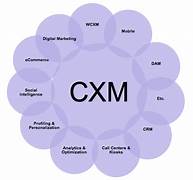
XM Software Providers Set to Replace Point Solutions with Multifunction Suites By 2028, Enterprises Will Transition to Comprehensive CXM Solutions, According to New ISG Research According to new research from Information Services Group (ISG) (Nasdaq: III), companies are expected to shift from various customer experience (CX) point solutions to comprehensive, cross-functional suites by 2028. This transition aims to manage CX at the enterprise level more effectively. Keith Dawson, Director of Customer Experience Research at ISG, explains, “Enterprises recognize the need for platforms that manage the entire customer lifecycle. We are witnessing the rise of tools that integrate communication components with analytic assessments of customer value, loyalty, and intent, marking a significant shift in the marketplace.” The ISG Buyers Guide™ for Customer Experience Management (CXM) defines CXM as a suite of applications on a unified platform that provides a comprehensive view of customer activity and enables management of that activity across departments. The report notes that the mix of applications in a software provider’s suite often reflects their historical expertise and origins. CXM addresses the limitations of traditional Customer Resource Management (CRM) software, which has been more departmental and application-centric. In contrast, CXM focuses on the customer journey and interactions across all channels. The report highlights challenges in comparing similar offerings from different providers due to their varied origins and expertise. The range of functionality across CXM products often reflects their diverse components, users, and use cases. ISG identifies five core areas of platform functionality in CXM software: knowledge management, resource management, automation, analytics, and customer journey management. However, CXM software is still developing, and it is uncommon to find a single solution that excels in all five areas. Many providers start with their core strengths and expand their capabilities over time. The ISG Buyers Guide evaluates CXM software providers based on support for analytics, customer journey management, knowledge management, CRM platform support, operational resource management, and process control and optimization. To be included in the CXM Buyers Guide, products must cover at least three of the four areas: resource management, automation, analytics, and customer journey management. Separate guides on Customer Journey Management (CJM) and Knowledge Management (KM) are available for more specific analysis. For its 2024 Buyers Guides, ISG assessed 19 providers, including Adobe, eGain, Emplifi, Freshworks, Genesys, HubSpot, Microsoft, Nextiva, NICE, Oracle, Qualtrics, Salesforce, SAP, ServiceNow, Sprinklr, SugarCRM, Verint, Zendesk, and Zoho. The top three software providers in each category are: Mark Smith, Partner at ISG Software Research, notes, “Managing customer experience is crucial for every organization, yet many lack the technology to orchestrate the customer journey across channels. The Buyers Guide for CXM offers insights to help businesses understand, optimize, and select software providers that move beyond the limitations of traditional CRM systems.” The ISG Buyers Guides for CXM, CJM, and KM are based on over a year of market research. The research is independent and not influenced by software providers, aiming to help enterprises optimize their software investments. For more details, visit the ISG Buyers Guides to read executive summaries and request full reports. About ISG Software Research ISG Software Research, formerly Ventana Research, delivers expert market research and analysis on business and IT software. The firm provides consulting, advisory, research, and education services for enterprises, software and service providers, and investment firms. For more information and to join the community, visit Ventana Research. About ISG ISG (Information Services Group) (Nasdaq: III) is a global technology research and advisory firm specializing in digital transformation services. With a client base of over 900 organizations, ISG helps clients achieve operational excellence and growth. The firm’s expertise spans AI and automation, cloud and data analytics, sourcing advisory, and more. Founded in 2006 and based in Stamford, Conn., ISG employs 1,600 professionals in over 20 countries. For more information, visit ISG. Like Related Posts Who is Salesforce? Who is Salesforce? Here is their story in their own words. From our inception, we’ve proudly embraced the identity of Read more Salesforce Marketing Cloud Transactional Emails Salesforce Marketing Cloud Transactional Emails are immediate, automated, non-promotional messages crucial to business operations and customer satisfaction, such as order Read more Salesforce Unites Einstein Analytics with Financial CRM Salesforce has unveiled a comprehensive analytics solution tailored for wealth managers, home office professionals, and retail bankers, merging its Financial Read more AI-Driven Propensity Scores AI plays a crucial role in propensity score estimation as it can discern underlying patterns between treatments and confounding variables Read more

Read More
Everyone Is Implementing AI

Everyone Is Implementing AI

AI is undoubtedly a generational change in software, with its full trajectory still unpredictable. There is a perceived divide between the “Haves” and “Have Nots.” Companies like OpenAI, Microsoft, and Databricks are seen as understanding AI’s potential, with Nvidia providing the necessary hardware support. Many hot start-ups are Gen AI native, continuing to attract unicorn valuations. Meanwhile, several SaaS leaders appear to be lagging behind. We say, Everyone Is Implementing AI. Marc Benioff stated in their latest quarterly call: “Now, we’re working with thousands of customers to power generative AI use cases with our Einstein Copilot, our prompt builder, our Einstein Studio, all of which went live in the first quarter. And we’ve closed hundreds of copilot deals since this incredible technology has gone GA. And in just the last few months, we’re seeing Einstein Copilot develop higher levels of capability. We are absolutely delighted and cannot be more excited about the success that we’re seeing with our customers with this great new capability.” Everyone Is Implementing AI However, it remains unclear whether simply adding AI to classic B2B SaaS products accelerates growth. Despite significant investments in AI, companies like Salesforce, Asana, and ZoomInfo are growing at less than 10% annually. The main point is that while “AI Washing” might impress some investors, AI must significantly accelerate revenue growth to achieve more than market parity. It is essential to see how AI can add real value and integrate it effectively. But AI alone may not be a growth accelerant. Everyone Is Implementing AI Recent data from Emergence Capital shows that 60% of VC-backed SaaS companies have already released GenAI features, with another 24% planning to do so. Achieving “AI Parity” is crucial, but simply adding GenAI features may not be disruptive in the B2B space. Companies must go further to stand out, despite the challenges. Like Related Posts Who is Salesforce? Who is Salesforce? Here is their story in their own words. From our inception, we’ve proudly embraced the identity of Read more Salesforce Marketing Cloud Transactional Emails Salesforce Marketing Cloud Transactional Emails are immediate, automated, non-promotional messages crucial to business operations and customer satisfaction, such as order Read more Salesforce Unites Einstein Analytics with Financial CRM Salesforce has unveiled a comprehensive analytics solution tailored for wealth managers, home office professionals, and retail bankers, merging its Financial Read more AI-Driven Propensity Scores AI plays a crucial role in propensity score estimation as it can discern underlying patterns between treatments and confounding variables Read more

Read More
AI All Grown Up

Generative AI Tools

One of the most significant use cases for generative AI in business is customer service and support. Most of us have likely experienced the frustration of dealing with traditional automated systems. However, today’s advanced AI, powered by large language models and natural language chatbots, is rapidly improving these interactions. While many still prefer human agents for complex or sensitive issues, AI is proving highly capable of handling routine inquiries efficiently. Here’s an overview of some of the top AI-powered tools for automating customer service. Although the human element will always be essential in customer experience, these tools free up human agents from repetitive tasks, allowing them to focus on more complex challenges requiring empathy and creativity. Cognigy Cognigy is an AI platform designed to automate customer service voice and chat channels. It goes beyond simply reading FAQ responses by delivering personalized, context-sensitive answers in multiple languages. Cognigy’s AI Copilot feature enhances human contact center workers by offering real-time AI assistance during interactions, making both fully automated and human-augmented support possible. IBM WatsonX Assistant IBM’s WatsonX Assistant helps businesses create AI-powered personal assistants to streamline tasks, including customer support. With its drag-and-drop configuration, companies can set up seamless self-service experiences. The platform uses retrieval-augmented generation (RAG) to ensure that responses are accurate and up-to-date, continuously improving as it learns from customer interactions. Salesforce Einstein Service Cloud Einstein Service Cloud, part of the Salesforce platform, automates routine and complex customer service tasks. Its AI-powered Agentforce bots manage “low-touch” interactions, while “high-touch” cases are overseen by human agents supported by AI. Fully customizable, Einstein ensures that responses align with your brand’s tone and voice, all while leveraging enterprise data securely. Zendesk AI Zendesk, a leader in customer support, integrates generative AI to boost its service offerings. By using machine learning and natural language processing, Zendesk understands customer sentiment and intent, generates personalized responses, and automatically routes inquiries to the most suitable agent—be it human or machine. It also provides human agents with real-time guidance on resolving issues efficiently. Ada Ada is a conversational AI platform built for large-scale customer service automation. Its no-code interface allows businesses to create custom bots, reducing the cost of handling inquiries by up to 78% per ticket. By integrating domain-specific data, Ada helps improve both support efficiency and customer experience across omnichannel support environments. More AI Tools for Customer Service There are numerous other AI tools designed to enhance automated customer support: While AI tools are transforming customer service, the key lies in using them to complement human agents, allowing for a balance of efficiency and personalized care. Like Related Posts Who is Salesforce? Who is Salesforce? Here is their story in their own words. From our inception, we’ve proudly embraced the identity of Read more Salesforce Marketing Cloud Transactional Emails Salesforce Marketing Cloud Transactional Emails are immediate, automated, non-promotional messages crucial to business operations and customer satisfaction, such as order Read more Salesforce Unites Einstein Analytics with Financial CRM Salesforce has unveiled a comprehensive analytics solution tailored for wealth managers, home office professionals, and retail bankers, merging its Financial Read more AI-Driven Propensity Scores AI plays a crucial role in propensity score estimation as it can discern underlying patterns between treatments and confounding variables Read more

Read More
gettectonic.com