- gettectonic.com - Page 3
AMPScript Beautifier

AMPScript Beautifier

AMPScript Beautifier This extension helps you format (beautify/prettify) your SFMC AMPscript for easier readability and maintenance. AMPScript Beautifier Features: To simplify your SFMC development, click [here](link to extension). Usage: The format command can also run automatically based on your settings (editor.formatOnSave). Extension Settings: This extension contributes the following settings: Default values for these settings can be found in Features Contributions. Note: This extension was originally developed in collaboration with Merkle DACH (formerly Isobar Switzerland) and is now available to the developer community. Known Issues: Make AMPscript beautiful again! This Brackets extension reformats AMPscript (from Salesforce.com Marketing Cloud/ExactTarget) for enhanced readability. Download Brackets here: http://brackets.io/ You may download and install this extension in one of three ways. Using Extension Manager to find it through the extension registry you always find the latest stable release conveniently within Brackets. You can also get the latest work-in-progress version by downloading or installing the extension directly from the repository. This allows you to try new features that might not have been tested fully yet. Like1 Related Posts Salesforce Marketing Cloud Transactional Emails Salesforce Marketing Cloud Transactional Emails are immediate, automated, non-promotional messages crucial to business operations and customer satisfaction, such as order Read more Perfect Drip Campaign In an ideal world, you effortlessly conquer the lead generation challenges with one creative arm tied behind your back, craft Read more Salesforce Content Builder Salesforce Content Builder empowers you to craft compelling emails and landing page templates, complete with reusable and interactive content blocks. Read more Demandbase Salesforce Integration The integration of Demandbase with Salesforce creates a seamless connection between Demandbase One and your Salesforce CRM, establishing a bidirectional Read more

Read More
What is GovSlack

What is GovSlack?

GovSlack: Streamlined, Secure Collaboration for Government GovSlack brings together your team, tools, and partners into one secure platform, specifically designed to meet government regulations for processing and storing sensitive data. By integrating GovSlack, organizations can eliminate internal and external communication silos while empowering employees with the flexibility to excel in their roles. What is GovSlack?GovSlack is a tailored version of Slack that allows agencies, contractors, citizens, and partners to collaborate in a centralized, secure workspace. It complies with the strictest security and operational standards required by public sector clients. Is Slack FedRAMP approved?Yes, Slack holds FedRAMP Moderate authorization to meet public sector compliance needs. GovSlack goes further, earning FedRAMP JAB High authorization and is actively pursuing DoD CC SRG IL4 compliance to cater to defense sector clients. Does the federal government use Slack?Security is crucial for public sector agencies and their partners. Federal agencies trust Slack as their secure digital HQ, helping teams from the U.S. Department of Veterans Affairs to the GSA’s 18F office enhance collaboration while meeting stringent data privacy requirements. GovSlack Key FeaturesGovSlack, launched in July 2022 after extensive testing and feedback from government clients, offers several features to ensure secure and compliant collaboration: GovSlack integrates seamlessly with other government-specific tools such as Salesforce Government Cloud Plus, creating a powerful CRM and collaboration ecosystem to accelerate agency goals and improve constituent services. Case Study: Army Software Factory (SWF)The Army SWF, using agile methods to upskill soldiers and develop cutting-edge digital solutions, required a flexible and secure collaboration platform. By adopting GovSlack, they fostered improved collaboration without compromising compliance with stringent DoD policies. Partner IntegrationsLeading companies such as Lockheed Martin and Box are leveraging GovSlack to streamline collaboration while maintaining compliance with federal regulations. For example, Lockheed Martin is using GovSlack to manage projects with government partners while ensuring sensitive data remains protected. ThoughtsGovSlack is built for secure, government-specific collaboration, providing agencies and their partners with the flexibility to work more effectively while meeting compliance needs. By integrating with key tools and offering enhanced security features, GovSlack supports the digital transformation efforts of public sector organizations across the globe. Like Related Posts Who is Salesforce? Who is Salesforce? Here is their story in their own words. From our inception, we’ve proudly embraced the identity of Read more Salesforce Marketing Cloud Transactional Emails Salesforce Marketing Cloud Transactional Emails are immediate, automated, non-promotional messages crucial to business operations and customer satisfaction, such as order Read more Salesforce Unites Einstein Analytics with Financial CRM Salesforce has unveiled a comprehensive analytics solution tailored for wealth managers, home office professionals, and retail bankers, merging its Financial Read more AI-Driven Propensity Scores AI plays a crucial role in propensity score estimation as it can discern underlying patterns between treatments and confounding variables Read more

Read More
Generative AI Prompts with Retrieval Augmented Generation

Generative AI Cheat Sheets

Wanted to utilize this insight to share a link to some incredible AI cheat sheets compiled by Medium. Generative AI Cheat Sheets. Top 8 Cheat Sheets on AI Whether you need assistance building a Powerpoint Presentation, AI for enterprise, machine learning, podcast enhancement tools, large language models, efficient ChatGPT prompts, efficient use of emojis, journeys, or more. This list is pretty inclusive. Tectonic would like to share one additional tool we have been using internally. Fireflies. Firflies helps teams transcribe, summarize, search, and analyze voice conversations. When ChatGPT made its debut in late 2022, it sparked global recognition of the transformative capabilities of artificial intelligence (AI). This groundbreaking chatbot represents one of the most significant advancements in AI history. Unlike traditional AI systems that analyze or categorize existing data, generative AI has the remarkable ability to create entirely new content, spanning text, images, audio, synthetic data, and more. This innovation is poised to revolutionize human creativity and productivity across industries, including business, science, and society as a whole. From ChatGPT to DALL-E, the latest wave of generative AI applications has emerged from foundation models, sophisticated machine learning systems trained on massive datasets encompassing text, images, audio, or a combination of these data types. Recent advancements now enable companies to develop specialized models for image and language generation based on these foundation models, most of which are large language models (LLMs) trained on natural language. The power of these models lies not only in their scale but also in their adaptability to diverse tasks without the need for task-specific training. Techniques like zero-shot learning and in-context learning allow models to make predictions and generate responses even in domains they haven’t been explicitly trained on. As a result, companies can leverage these models to address a wide range of challenges, from customer service automation to product design. The introduction of pre-trained foundation models with unprecedented adaptability is expected to have profound implications. According to Accenture’s 2023 Technology Vision report, 97% of global executives believe that foundation models will revolutionize how and where AI is applied, enabling seamless connections across different data types. To thrive in this evolving landscape, businesses must leverage the full potential of generative AI. To expedite implementation, organizations can readily access foundation models through APIs. However, customization and fine-tuning are necessary to tailor these models to specific use cases and maximize their effectiveness. By harnessing generative AI, companies can enhance efficiency, drive innovation, and gain a competitive edge in the market. As generative AI continues to evolve, its impact will only multiply. Companies will increasingly rely on these technologies to streamline workflows, optimize processes, and unlock new opportunities for growth and innovation. With the global AI market projected to reach nearly trillion by 2030, the future holds immense potential for companies to leverage generative AI in solving complex problems and driving transformative change. Generative AI encompasses various machine learning techniques, including transformer models, generative adversarial networks (GANs), and variational autoencoders (VAEs). These technologies underpin a wide range of applications, from natural language processing to image generation, enabling businesses to approach tasks in innovative ways. While generative AI presents unprecedented opportunities, it also raises ethical and security concerns. It is essential for companies to adopt responsible AI practices and ensure the safe and ethical use of these technologies. By embracing generative AI and investing in the necessary infrastructure and talent, businesses can unlock its full potential and drive sustainable growth in the digital era. Like Related Posts Who is Salesforce? Who is Salesforce? Here is their story in their own words. From our inception, we’ve proudly embraced the identity of Read more Salesforce Marketing Cloud Transactional Emails Salesforce Marketing Cloud Transactional Emails are immediate, automated, non-promotional messages crucial to business operations and customer satisfaction, such as order Read more Salesforce Unites Einstein Analytics with Financial CRM Salesforce has unveiled a comprehensive analytics solution tailored for wealth managers, home office professionals, and retail bankers, merging its Financial Read more AI-Driven Propensity Scores AI plays a crucial role in propensity score estimation as it can discern underlying patterns between treatments and confounding variables Read more

Read More
Considerations When Implementing PHI

Considerations When Implementing PHI

Consumers today express heightened concerns about their data privacy, with 92% of Americans showing apprehension about online privacy. This apprehension extends beyond worries about the security of mobile phones, email, and browsers, particularly in the healthcare sector, where providers face increased scrutiny in safeguarding patients’ Protected Health Information (PHI). PHI is a prime target for cybercriminals due to its sensitivity, but securing it at scale poses significant challenges. Considerations When Implementing PHI. What is PHI and how is it protected? With certain exceptions, the Privacy Rule protects a subset of individually identifiable health information, known as protected health information or PHI, that is held or maintained by covered entities or their business associates acting for the covered entity. HIPAA mandates stringent rules for the protection of healthcare information qualifying as PHI, imposing severe financial and criminal penalties for non-compliance. The HIPAA Privacy Rule specifically oversees PHI, encompassing health or personal information that can identify an individual, including historical, present, or future data related to mental or physical health. Entities handling PHI must adhere to strict requirements for transmitting, storing, and disposing of this data, as patients inherently possess legal rights to the privacy and security of their PHI. Compliance is vital for the protection of PHI, not only to fulfill regulatory obligations but also to mitigate the substantial risks posed by cybercriminals who target this valuable information. The allure for cybercriminals lies in the lucrative market for healthcare data, with records selling for hundreds to thousands of dollars per record on the black market. Given the potential for compromising millions of patient records in a single breach, attackers stand to gain significant sums. In contrast, other personal identifiers like Social Security numbers and credit card information fetch considerably lower prices. What are some of the barriers to implementing HIPAA guidelines in health care organizations? The three main aspects of HIPAA that continue to be a challenge for organizations are privacy, security and breach notification. Ensuring compliance involves both technical and procedural considerations, and practices must implement updated training programs, access controls, secure data disposal methods, encryption measures, and regular security assessments. Compliance extends beyond internal practices, requiring thorough scrutiny of third-party vendors’ adherence to PHI protection regulations. In the broader context of system compliance with PHI regulations, including HIPAA, specific software requirements play a pivotal role. These requirements, such as data encryption, access controls, audit logs, data integrity measures, and breach notification capabilities, collectively ensure the confidentiality, integrity, and availability of PHI. Compliance necessitates an organizational commitment to privacy and security considerations, encompassing technical safeguards, administrative policies, and physical security measures. Various businesses, including hospitals, insurance providers, pharmacies, and psychologists, handle PHI, making its protection challenging yet imperative to adhere to HIPAA standards. Maintain documents containing PHI in locked cabinets or locked rooms when the documents are not in use and after working hours. Establish physical and/or procedural controls (e.g., key or combination access, access authorization levels) that limit access to only those persons who have a need for the information. What’s your responsibility in protecting PHI? This includes implementing HIPAA-required administrative , physical , and technical safeguards with regard to any person, process, application, service, or system used to collect, process, manage, analyze, or store PHI. Like1 Related Posts Who is Salesforce? Who is Salesforce? Here is their story in their own words. From our inception, we’ve proudly embraced the identity of Read more Tectonic’s Successful Salesforce Track Record Salesforce Technology Services Integrator – Tectonic has successfully delivered Salesforce in a variety of industries including Public Sector, Hospitality, Manufacturing, Read more Salesforce Health Cloud Information Since its inception in 2016, Salesforce Health Cloud has evolved significantly, adapting to the intricacies of the sensitive and dynamic Read more Capture Initial Traffic Source With Google Analytics To ensure the proper sequencing of Tags, modify the Tag sequencing in the Google Analytics preview Tag settings. The custom Read more

Read More
Salesforce prompt builder

Create Test and Refine Prompt Templates With Prompt Builder

Salesforce has introduced Prompt Builder, a revolutionary tool powered by generative AI, designed to enhance business tasks by seamlessly integrating prompts into workflows. This article delves into the core AI concepts underlying Prompt Builder, offering insights into creating, managing, testing, and refining prompt templates for optimal performance. Before digging into the intricacies of this new innovation, let’s first explore what generative AI means for administrators. Create Test and Refine Prompt Templates With Prompt Builder. Understanding Key Terms: Key Features of Prompt Builder: Utilizing Prompt Templates: Testing and Refining Prompt Templates: Deploying Prompts: Designing Effective Prompt Templates: Embracing Generative AI with Prompt Builder: As Prompt Builder prepares for its general availability in Spring ’24, businesses can anticipate a paradigm shift in how they harness AI to propel their operations forward. Whether seasoned Salesforce Admins or newcomers to AI integration, Prompt Builder offers a gateway to unlocking the myriad possibilities of generative AI within Salesforce. Create Test and Refine Prompt Templates With Prompt Builder. Like1 Related Posts Who is Salesforce? Who is Salesforce? Here is their story in their own words. From our inception, we’ve proudly embraced the identity of Read more Salesforce Marketing Cloud Transactional Emails Salesforce Marketing Cloud Transactional Emails are immediate, automated, non-promotional messages crucial to business operations and customer satisfaction, such as order Read more Salesforce Unites Einstein Analytics with Financial CRM Salesforce has unveiled a comprehensive analytics solution tailored for wealth managers, home office professionals, and retail bankers, merging its Financial Read more AI-Driven Propensity Scores AI plays a crucial role in propensity score estimation as it can discern underlying patterns between treatments and confounding variables Read more

Read More
Generative AI Terms Do I Need to Understand

What Generative AI Terms Do I Need to Understand to Participate in AI Conversations?

You don’t need to be a software engineer, a data scientist, or a geek to understand gen AI or speak with authority about it with technical people. But business leaders should be able to think about AI holistically. Including benefits and risks, where it fits into the company’s culture, and mission. As well as what type of governance and infrastructure it requires.  What Generative AI Terms Do I Need to Understand to participate in the conversation? Business leaders can’t help lead AI programs to success if they can’t engage with the tech teams.    We’ve put together a list of the most essential AI terms that will help everyone in your company — no matter their technical background – understand the power of generative AI. Each term is defined based on how it impacts both your customers and your team, a crucial element in understanding the power of AI.  Gen AI technologies (and adoption) are growing extraordinarily fast. As it informs more business decisions and transforms your relationships with customers, leaders at all levels must understand its potential, its use cases, and its risks. How do you do that? Start by asking the right questions about AI.   Salesforce’s most recent survey on generative AI use among the general population within the U.S., UK, Australia and India found the public is split between users and non-users. Within each country, the online populations surveyed reported the below usage (note: cultural bias may impact results): Like1 Related Posts AI-Driven Propensity Scores AI plays a crucial role in propensity score estimation as it can discern underlying patterns between treatments and confounding variables Read more Einstein Relationship Insights ERI, serves as an AI-powered research assistant, enhancing sales processes. ERI operates as a desktop plugin with a browser extension, Read more Joined Datasets in B2B Marketing Analytics B2BMA empowers users to generate additional datasets using the data manager. This process involves creating datasets in various ways, such Read more AI in Sales Enablement automation, and personalization to enhance sales processes, increase customer engagement, and drive revenue growth. Companies are working with AI to Read more

Read More
what is ai opportunity scoring

What is AI Opportunity Scoring

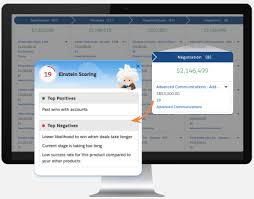
AI opportunity scoring uses artificial intelligence and machine learning to analyze historical data and predict the likelihood of a sales opportunity closing. This score, typically on a scale of 1 to 100 or 1 to 99, helps prioritize opportunities, allocate resources effectively, and improve sales forecasting.  Here’s a more detailed explanation: Einstein Opportunity Scoring uses data science and machine learning to score your opportunities so that you can prioritize them. By using machine learning, Einstein Opportunity Scoring provides a simpler, faster, and more accurate solution than traditional rule-based scoring approaches. Like Related Posts Who is Salesforce? Who is Salesforce? Here is their story in their own words. From our inception, we’ve proudly embraced the identity of Read more Salesforce Unites Einstein Analytics with Financial CRM Salesforce has unveiled a comprehensive analytics solution tailored for wealth managers, home office professionals, and retail bankers, merging its Financial Read more AI-Driven Propensity Scores AI plays a crucial role in propensity score estimation as it can discern underlying patterns between treatments and confounding variables Read more Tectonic’s Successful Salesforce Track Record Salesforce Technology Services Integrator – Tectonic has successfully delivered Salesforce in a variety of industries including Public Sector, Hospitality, Manufacturing, Read more

Read More
What is a Co-Marketing Cloud?

What is a Co-Marketing Cloud?

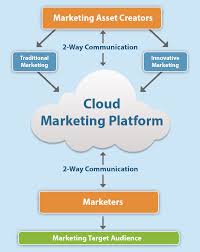
The Rise of Co-Marketing Clouds: Supercharging Partner Campaigns A co-marketing cloud is transforming how brands collaborate on marketing initiatives. This powerful platform serves as a centralized command center for managing joint campaigns with partners, enabling businesses to: Why Co-Marketing Clouds Are Game-Changers 🔹 Unified Campaign ManagementA single dashboard controls all co-marketing efforts—from content creation to performance tracking—eliminating chaotic email threads and spreadsheets. 🔹 Smart Data IntegrationThe platform automatically aggregates performance metrics across email, social, ads, and more, providing a holistic view of what’s working (and what’s not). 🔹 AI-Powered OptimizationAdvanced algorithms analyze campaign data to:✅ Recommend high-performing content variations✅ Identify ideal audience segments✅ Predict optimal send times and channels 🔹 Efficiency at ScaleAutomated workflows handle repetitive tasks like:• Partner approvals• Asset sharing• Compliance checks Real-World Example: SOCi’s Co-Marketing Solution Companies like SOCi specialize in co-marketing clouds for multi-location brands, helping them: The Bottom Line Co-marketing clouds turn partner collaborations from logistical nightmares into growth accelerators. By combining centralized control with AI-driven intelligence, these platforms help brands unlock the full potential of joint marketing—with less hassle and better results. “It’s like having a marketing co-pilot for every partnership initiative.” For businesses investing in partnership marketing, a co-marketing cloud isn’t just helpful—it’s becoming essential infrastructure. Like1 Related Posts Who is Salesforce? Who is Salesforce? Here is their story in their own words. From our inception, we’ve proudly embraced the identity of Read more Salesforce Marketing Cloud Transactional Emails Salesforce Marketing Cloud Transactional Emails are immediate, automated, non-promotional messages crucial to business operations and customer satisfaction, such as order Read more Salesforce Unites Einstein Analytics with Financial CRM Salesforce has unveiled a comprehensive analytics solution tailored for wealth managers, home office professionals, and retail bankers, merging its Financial Read more AI-Driven Propensity Scores AI plays a crucial role in propensity score estimation as it can discern underlying patterns between treatments and confounding variables Read more

Read More
Salesforce for Charities

Salesforce for Charities

Salesforce Nonprofit Cloud serves as a comprehensive solution encompassing fundraising, program management, grant management, marketing, and donor management for nonprofit organizations. Salesforce for Charities enables the measurement, tracking, and updating of data across all facets of nonprofit operations and management. Within the charity and nonprofit sector, Salesforce Nonprofit Cloud is highly favored, boasting a clientele of over 50,000 organizations in more than 80 countries—a number that continues to grow. Notably, numerous international charities prefer Salesforce, leading to the establishment of a dedicated business unit tailored specifically for the nonprofit sector. Choosing Salesforce for reporting proves to be an excellent decision for nonprofits due to its recognized accuracy and reliability. The software plays a crucial role in facilitating efficient data management and insights, allowing nonprofits to scale effectively and fulfill their missions. Charities leverage Salesforce Nonprofit Cloud for various purposes, including tracking donations and fundraising campaigns. The CRM software generates reports and analytics, offering insights into the success of these efforts and pinpointing areas for improvement. Overall, Salesforce provides a robust foundation for nonprofits to create efficiency with data, gain valuable insights, and successfully scale their operations to deliver on their mission. Ready for success now? Empower your teams to be more effective, productive, and impactful with Salesforce for Nonprofits. By Tectonic’s Salesforce Marketing Consultant, Shannan Hearne Like1 Related Posts Who is Salesforce? Who is Salesforce? Here is their story in their own words. From our inception, we’ve proudly embraced the identity of Read more Salesforce Marketing Cloud Transactional Emails Salesforce Marketing Cloud Transactional Emails are immediate, automated, non-promotional messages crucial to business operations and customer satisfaction, such as order Read more Salesforce Unites Einstein Analytics with Financial CRM Salesforce has unveiled a comprehensive analytics solution tailored for wealth managers, home office professionals, and retail bankers, merging its Financial Read more AI-Driven Propensity Scores AI plays a crucial role in propensity score estimation as it can discern underlying patterns between treatments and confounding variables Read more

Read More
b2b marketing cloud salesforce

What is B2B in Marketing Cloud?

In the context of Salesforce Marketing Cloud, “B2B” refers to the Business-to-Business aspect of marketing, meaning engaging with other businesses, rather than individual consumers, to drive sales. Salesforce Marketing Cloud B2B provides tools for businesses to manage their B2B marketing efforts, including lead generation, nurturing, and campaign management.  Key aspects of Salesforce Marketing Cloud B2B: In essence, B2B marketing within Salesforce Marketing Cloud focuses on the unique needs and behaviors of business customers, providing the tools to nurture and engage with them effectively.  Like Related Posts Who is Salesforce? Who is Salesforce? Here is their story in their own words. From our inception, we’ve proudly embraced the identity of Read more Salesforce Marketing Cloud Transactional Emails Salesforce Marketing Cloud Transactional Emails are immediate, automated, non-promotional messages crucial to business operations and customer satisfaction, such as order Read more Salesforce Unites Einstein Analytics with Financial CRM Salesforce has unveiled a comprehensive analytics solution tailored for wealth managers, home office professionals, and retail bankers, merging its Financial Read more AI-Driven Propensity Scores AI plays a crucial role in propensity score estimation as it can discern underlying patterns between treatments and confounding variables Read more

Read More
Healthcare Cloud Marketplace

Healthcare Cloud Marketplace

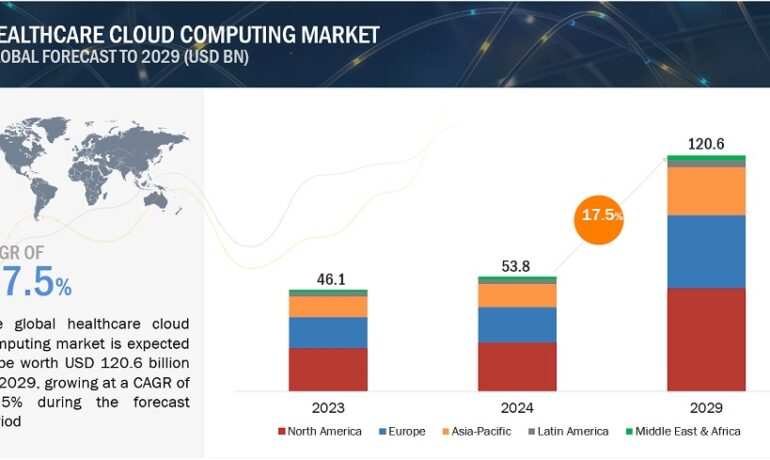
Healthcare Cloud Computing Market: A Comprehensive Overview and Future Outlook Vantage Market Research Report: Insights into Healthcare Cloud Computing by 2030 WASHINGTON, D.C., February 6, 2024 /EINPresswire.com/ — The global Healthcare Cloud Marketplace was valued at USD 38.25 billion in 2022 and is projected to grow at a compound annual growth rate (CAGR) of 18.2% from 2023 to 2030, reaching approximately USD 145.86 billion by 2030, according to Vantage Market Research. This technology allows healthcare organizations to utilize cloud-based services for data storage, management, and analysis, providing numerous benefits such as cost efficiency, scalability, flexibility, security, and interoperability. It enhances healthcare delivery by enabling seamless data access and sharing across various locations, devices, and networks. Additionally, cloud computing supports the integration of advanced technologies like artificial intelligence, big data analytics, telehealth, and mobile health, driving progress in disease diagnosis, treatment, and prevention. Market Dynamics The market’s growth is fueled by several key factors, including the increasing demand for healthcare IT solutions, the rising prevalence of chronic diseases, the widespread adoption of electronic health records (EHRs), and evolving payment models and regulatory frameworks. The exponential increase in healthcare data, encompassing patient records, imaging scans, and research findings, necessitates scalable storage and analysis solutions. Cloud computing meets this need by providing flexible and scalable infrastructure, accommodating data growth without overburdening IT systems. The rise of telehealth and remote patient monitoring further boosts the demand for secure, cloud-based platforms that facilitate efficient data exchange. However, stringent data privacy regulations like HIPAA and GDPR require robust security measures, compelling healthcare organizations to seek cloud providers that offer strong compliance and access controls. This need for a balance between agility and security shapes the healthcare cloud computing market’s future trajectory. Leading Companies in the Global Healthcare Cloud Computing Market Market Segmentation By Product: By Deployment: By Component: By Pricing Model: By Service Model: Key Trends and Opportunities The healthcare cloud computing market is witnessing significant trends, including the adoption of hybrid and multi-cloud models, which combine the benefits of both public and private clouds. The integration of artificial intelligence (AI) and machine learning (ML) into cloud-based healthcare applications is opening new avenues for personalized medicine, clinical decision support, and drug discovery. Moreover, blockchain technology is emerging as a solution to enhance data security and patient privacy, addressing critical industry concerns. Key Findings: Opportunities: Healthcare Cloud Marketplace The healthcare cloud computing market is poised for robust growth, driven by the increasing demand for scalable and secure data management solutions. As healthcare organizations navigate challenges related to data privacy and security, robust cloud solutions and supportive government policies will be essential in unlocking the full potential of cloud computing in healthcare. Like Related Posts Who is Salesforce? Who is Salesforce? Here is their story in their own words. From our inception, we’ve proudly embraced the identity of Read more Salesforce Marketing Cloud Transactional Emails Salesforce Marketing Cloud Transactional Emails are immediate, automated, non-promotional messages crucial to business operations and customer satisfaction, such as order Read more Salesforce Unites Einstein Analytics with Financial CRM Salesforce has unveiled a comprehensive analytics solution tailored for wealth managers, home office professionals, and retail bankers, merging its Financial Read more AI-Driven Propensity Scores AI plays a crucial role in propensity score estimation as it can discern underlying patterns between treatments and confounding variables Read more

Read More
AI Adoption Not Even Across the Board

AI Adoption Not Even Across the Board

Reflecting on AI’s potential and its challenges, McElheran calls for a balanced approach: “To fully harness AI’s benefits, we need a realistic, evidence-based approach that accounts for both the advantages and the societal costs associated with adoption.”

Read More
Marketing Cloud

Key Components Of Salesforce Marketing Cloud Engagement

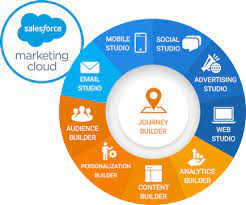
The key components of Salesforce Marketing Cloud Engagement are powerful marketing and personalization tools continually improving. The tools in Salesforce Marketing Cloud Engagement enable you to engage your customers with meaningful content. Key Components of Salesforce Marketing Cloud Engagement Journey Builder The Journey Builder empowers businesses to craft a seamless customer experience across various channels, encompassing mail, ads, web, and mobile platforms. This tool enables businesses to deliver a personalized experience at every stage of the customer lifecycle. Additionally, the Journey Builder ensures the synchronization of messages across all marketing channels, guaranteeing that customers receive relevant information at the right time, regardless of their location. Key functions of the Journey Builder include: Email Studio Email Studio, a user-friendly drag-and-drop tool, facilitates the creation of innovative and relevant emails. By categorizing profiles based on data, businesses can efficiently reach out to clients with customized emails, resulting in successful and profitable email campaigns. Mobile Studio Mobile Studio enables businesses to establish an omnichannel marketing strategy by seamlessly integrating mobile with other marketing channels. Marketers can reach customers through personalized messaging, SMS, push notifications, and group messages at any time and from any location. Advertising Studio Advertising Studio leverages customer data across marketing channels to build personalized customer experiences. It aids in managing retargeting, acquisition, and aligning marketing campaigns, connecting channels, harnessing customer data, and generating more leads. Marketing Cloud Intelligence Salesforce Marketing Cloud Intelligence connects and unifies all marketing data and analytics, providing a comprehensive view for marketers to optimize leads, increase pipeline growth, and ensure better conversions. This tool offers detailed analytics and insights into social media, email, sales platforms, and landing pages, facilitating data-driven decision-making. Cross-Channel Salesforce Marketing Solution Intelligence This solution enhances efficiency and reduces costs by offering a unified view of overall performance. Real-time analytics, dashboards, and insights are displayed across regions, teams, and business units. Marketing Cloud Personalization Personalization is a real-time engagement solution that helps organizations understand customer affinities, reduce acquisition costs, and increase conversion rates. AI-driven content, offers, and recommendations save time and optimize spend through automated A/B testing. Marketing Cloud Personalization is a real-time engagement solution for visualizing, tracking, and managing customer experiences. Additional Products: Salesforce Marketing Cloud Engagement Are you ready to get your prospects and customers more engaged? Employing the key components of Salesforce Marketing Cloud Engagement helps. Contact Tectonic today to explore a Salesforce Engagement solution. Like2 Related Posts Salesforce Marketing Cloud Transactional Emails Salesforce Marketing Cloud Transactional Emails are immediate, automated, non-promotional messages crucial to business operations and customer satisfaction, such as order Read more Perfect Drip Campaign In an ideal world, you effortlessly conquer the lead generation challenges with one creative arm tied behind your back, craft Read more What is Salesforce? Salesforce is cloud-based CRM software. It makes it easier for companies to find more prospects, close more deals, and connect Read more Salesforce Content Builder Salesforce Content Builder empowers you to craft compelling emails and landing page templates, complete with reusable and interactive content blocks. Read more

Read More
gettectonic.com