AI Powered CRM Archives - gettectonic.com
ai driven crm explained

AI Driven CRM Explained

AI-driven CRM, also known as AI CRM, is a Customer Relationship Management system that integrates Artificial Intelligence and Machine Learning to enhance customer interactions and improve business operations. It analyzes customer data, identifies patterns, and makes predictions to personalize customer experiences, automate tasks, and provide actionable insights.  Here’s a deeper look: Key Features and Benefits: How AI Enhances CRM: Examples of AI in CRM: Like Related Posts Who is Salesforce? Who is Salesforce? Here is their story in their own words. From our inception, we’ve proudly embraced the identity of Read more Salesforce Marketing Cloud Transactional Emails Salesforce Marketing Cloud Transactional Emails are immediate, automated, non-promotional messages crucial to business operations and customer satisfaction, such as order Read more Salesforce Unites Einstein Analytics with Financial CRM Salesforce has unveiled a comprehensive analytics solution tailored for wealth managers, home office professionals, and retail bankers, merging its Financial Read more AI-Driven Propensity Scores AI plays a crucial role in propensity score estimation as it can discern underlying patterns between treatments and confounding variables Read more

Read More
Learning AI

The New Age of Compliance with AI

How can small businesses ensure compliance? Business in the New Age of Compliance with AI can be challenging. While larger corporations often allocate resources for extensive research and development to maintain compliance, smaller businesses may lack the means to conduct thorough due diligence. In such cases, it becomes crucial for them to pose the right questions to vendors and technology partners within their ecosystem. Even as Salesforce takes strides in creating trustworthy generative AI solutions for its customers, these customers also engage with other vendors and processors. It is imperative for them to remain vigilant about potential risks and not rely solely on trust. Salesforce and Tectonic suggest that smaller companies should inquire about: For smaller companies, depending on the due diligence of third-party service providers becomes essential. Evaluating privacy protocols, security procedures, identification of potential harms, and safeguarding measures are critical aspects that demand close attention. In this New Age of Compliance with AI everyone is responsible. Choosing an AI savvy Salesforce partner like Tectonic protects you and your company. The Einstein Trust Layer is your insurance that you are doing artificial intelligence right. Like1 Related Posts Who is Salesforce? Who is Salesforce? Here is their story in their own words. From our inception, we’ve proudly embraced the identity of Read more Salesforce Marketing Cloud Transactional Emails Salesforce Marketing Cloud Transactional Emails are immediate, automated, non-promotional messages crucial to business operations and customer satisfaction, such as order Read more Salesforce Unites Einstein Analytics with Financial CRM Salesforce has unveiled a comprehensive analytics solution tailored for wealth managers, home office professionals, and retail bankers, merging its Financial Read more AI-Driven Propensity Scores AI plays a crucial role in propensity score estimation as it can discern underlying patterns between treatments and confounding variables Read more

Read More
ethical ai consumer trust vs expectations

Ethical AI-Consumer Trust Vs Expectations

Consumer Trust and Responsible AI Implementation Ethical AI Consumer Trust vs Expectations Research indicates that while consumers have low trust in AI systems, they expect companies to use them responsibly. Around 90% of consumers believe that companies have a duty to contribute positively to society. However, despite guidance on responsible technology use, many consumers remain apprehensive about how companies are deploying technology, particularly AI. ethical ai consumer trust vs expectations A global survey conducted in March 2021 revealed that citizens lack trust in AI systems but still hold organizations accountable for upholding principles of trustworthy AI. To earn customers’ trust in AI and mitigate brand and legal risks, companies need to adopt ethical AI practices centered around principles such as Transparency, Fairness, Responsibility, Accountability, and Reliability. Developing an Ethical AI Practice Over the past few years, industry professionals like have focused on maturing AI ethics practices within companies like Salesforce. This journey toward ethical AI maturity often begins with an ad hoc approach. Ad Hoc Stage In the ad hoc stage, individuals within organizations start recognizing unintended consequences of AI and informally advocate for considering bias, fairness, accountability, and transparency. These early advocates spark awareness among colleagues and managers, prompting discussions on the ethical implications of AI. Some advocates eventually transition to full-time roles focused on building ethical AI practices within their companies. Organized and Repeatable Stage With executive buy-in, companies progress to the organized and repeatable stage, establishing a culture where responsible AI practices are valued. This stage involves: Achieve Ethical AI Consumer Trust vs Expectations During this stage, companies must move beyond superficial “ethics washing” by actively integrating ethical principles into their operations and fostering a culture of responsibility. Additionally, the independence and empowerment of individuals in responsible AI roles are crucial for maintaining integrity and honesty in ethical AI practices. Final Insight Thoughts As companies progress through the maturity model for ethical AI practices, they strengthen consumer trust and mitigate risks associated with AI deployment. By prioritizing transparency, fairness, and accountability, organizations can navigate the ethical complexities of AI implementation and contribute positively to society. ethical ai consumer trust vs expectations Like1 Related Posts Who is Salesforce? Who is Salesforce? Here is their story in their own words. From our inception, we’ve proudly embraced the identity of Read more Salesforce Marketing Cloud Transactional Emails Salesforce Marketing Cloud Transactional Emails are immediate, automated, non-promotional messages crucial to business operations and customer satisfaction, such as order Read more Salesforce Unites Einstein Analytics with Financial CRM Salesforce has unveiled a comprehensive analytics solution tailored for wealth managers, home office professionals, and retail bankers, merging its Financial Read more AI-Driven Propensity Scores AI plays a crucial role in propensity score estimation as it can discern underlying patterns between treatments and confounding variables Read more

Read More
Salesforce Data Cloud

Salesforce Data Cloud Evolution

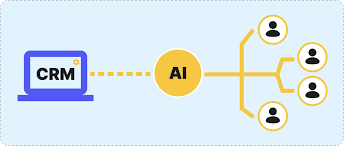
Data Cloud stands as the fastest-growing organically built product in Salesforce’s history, signifying a significant milestone in solving the enduring data problem within Customer Relationship Management (CRM). Salesforce Data Cloud Evolution since its beginnings is an interesting story. With an average of 928 systems per company, identity resolution becomes challenging, especially when managing more than one system. Salesforce’s expansion into AI-powered CRM emphasizes the synergy between AI and data, recognizing that AI’s optimal functionality requires robust data support. Data Cloud acts as the foundation accelerating connectivity across different ‘clouds’ within the Salesforce platform. While it’s available for purchase, even Salesforce customers without licensed Data Cloud still benefit from its foundational advantages, with increased strength when utilized as a personalization and data unification platform. The history of Data Cloud reflects its evolution through various iterations, from Customer 360 Audiences to Salesforce Genie, ultimately settling as Data Cloud in 2023. This journey marked significant developments, expanding from a marketer’s tool to catering for sales, service, and diverse use cases across the Salesforce platform. Data harmonization with Data Cloud simplifies the complex process, requiring fewer efforts compared to traditional methods. It comes pre-wired to Salesforce objects, reducing the need for extensive data modeling and integration steps. The technical capability map showcases a comprehensive integration of various technologies, making Data Cloud versatile and adaptable. Data Cloud’s differentiators include being pre-wired to Salesforce objects, industry-specific data models, prompt engineering capabilities, and the inclusion of the Einstein Trust Layer, addressing concerns related to generative AI adoption. Looking ahead, Data Cloud continues to evolve with constant innovation and features in Salesforce’s major releases. The introduction of Data Cloud for Industries, starting with Health Cloud, signifies ongoing enhancements to cater to industry-specific needs. Closing the skills gap is crucial for effective Data Cloud implementation, requiring a blend of developer skills, data management expertise, business analyst skills, and proficiency in prompt engineering. Salesforce envisions Data Cloud, combined with CRM and AI, as the next generation of customer relationship management, emphasizing the importance of sound data and skillful implementation. Data Cloud represents the ‘Holy Grail of CRM,’ offering a solution to the long-standing data challenges in CRM. However, its success as an investment depends on the organization’s readiness to demonstrate return on investment (ROI) through solid use cases, ensuring unified customer profiles and reaping the rewards of this transformative technology. FAQ When did Salesforce introduce data cloud? Customer 360 Audiences: Salesforce’s initial CDP offering, launched in 2020. Salesforce CDP: The name changed in 2021 to align with how the blooming CDP market was referring to this technology. Does Salesforce data cloud compete with Snowflake? They offer distinct capabilities and cater to diverse business needs. Salesforce Data Cloud specializes in data enrichment, personalization, and real-time updates, while Snowflake boasts scalable data warehousing and powerful analytics capabilities. What is the data cloud in Salesforce? Deeply integrated into the Einstein 1 Platform, Data Cloud makes all your data natively available across all Salesforce applications — Sales Cloud, Service Cloud, Marketing Cloud, Commerce Cloud, Tableau, and MuleSoft — to power automation and business processes and inform AI. Is Salesforce Genie now data cloud? Announced at Dreamforce ’22, Salesforce Genie was declared the greatest Salesforce innovation in the company’s history. Now known as Data Cloud, it ingests and stores real-time data streams at massive scale, and combines it with Salesforce data. This paves the way for highly personalized customer experiences Like1 Related Posts AI-Driven Propensity Scores AI plays a crucial role in propensity score estimation as it can discern underlying patterns between treatments and confounding variables Read more Tectonic’s Successful Salesforce Track Record Salesforce Technology Services Integrator – Tectonic has successfully delivered Salesforce in a variety of industries including Public Sector, Hospitality, Manufacturing, Read more What is Salesforce? Salesforce is cloud-based CRM software. It makes it easier for companies to find more prospects, close more deals, and connect Read more Salesforce AI Einstein Next Best Action Salesforce AI Einstein Next Best Action is a feature designed to identify the most effective actions available to agents and Read more

Read More
cybersecurity and AI

Cybersecurity and AI

Within the expansive and rapidly growing digital domain, IT leaders and organizations confront an array of cybersecurity threats, akin to modern-day magicians working with tricks and deceptions to steal digital secrets. To counter these threats against cybersecurity and AI, businesses must bolster their defenses. Among the prominent cybersecurity concerns, three primary threats persistently trouble IT leaders: phishing, ransomware, and denial-of-service (DoS) and distributed denial-of-service (DDoS) attacks. Phishing: Cybercriminals cast hooks into the digital ocean, hoping to ensnare unsuspecting victims through malicious emails or harmful links, leading to unwittingly downloading malware. In targeted spearphishing efforts, cybercriminals craft personalized outreach, posing as trusted colleagues or contacts. Ransomware: This form of malware blocks access to computer systems by encrypting them, demanding victims pay a substantial ransom to regain access to their own information. DoS and DDoS Attacks: These attacks disrupt networks by inundating them with requests, making it challenging or nearly impossible for legitimate users to access them. Insider Breach: Insider breaches, whether accidental or intentional, occur when an employee or authorized individual exposes systems to an attack. Accidental breaches may happen when an employee’s laptop is stolen, providing unauthorized access, while intentional breaches involve malicious employees facilitating entry for other cybercriminals or divulging proprietary information. Supply Chain Attack: Exploiting vulnerabilities in third-party vendors’ security practices, hackers infiltrate networks and inflict harm, even when an organization’s data management security is robust. AI in Cybersecurity: As businesses adopt AI tools, understanding associated risks is crucial. Robust data protection measures are essential, while AI aids in automating cyberattack detection and response efforts. Amidst escalating threats, AI tools continuously scan networks, devise solutions, and act swiftly to safeguard sensitive data. Automation tools driven by AI address the shortage of 3.4 million cybersecurity experts globally. Securing the Future: As digital networks expand, cybersecurity practices must evolve. Emerging technologies like AI and machine learning play vital roles in monitoring the threat landscape. However, human awareness and adherence to best practices remain crucial. In this dynamic digital world, the collaboration of technology and human vigilance stands as our most robust defense against cyber threats. Like Related Posts AI-Driven Propensity Scores AI plays a crucial role in propensity score estimation as it can discern underlying patterns between treatments and confounding variables Read more Salesforce AI Einstein Next Best Action Salesforce AI Einstein Next Best Action is a feature designed to identify the most effective actions available to agents and Read more Einstein Relationship Insights ERI, serves as an AI-powered research assistant, enhancing sales processes. ERI operates as a desktop plugin with a browser extension, Read more Joined Datasets in B2B Marketing Analytics B2BMA empowers users to generate additional datasets using the data manager. This process involves creating datasets in various ways, such Read more
Read More

AI in Sales Enablement

automation, and personalization to enhance sales processes, increase customer engagement, and drive revenue growth. Companies are working with AI to improve analysis of all customer contact points to both identify leads and weigh lead quality. That includes ingesting information from web pages, email campaigns, phone calls, and much more.

Read More
Salesforce AI Einstein Next Best Action

Salesforce AI Einstein Next Best Action

Salesforce AI Einstein Next Best Action is a feature designed to identify the most effective actions available to agents and customers in real-time. Operating as a recommendation engine powered by extensive data analysis, it facilitates a dynamic workflow aimed at optimizing the customer pipeline. Tailoring recommendations to specific individuals at opportune moments is made effortless with Einstein Next Best Action. This Salesforce Platform feature enables the configuration of business rules and filters to present the most suitable course of action for any user. It offers a diverse range of recommended actions directly accessible within Salesforce, enhancing decision-making processes. Salesforce AI Einstein Next Best Action for Personalization Personalizing the customer experience: Next Best Action (NBA) empowers organizations to customize their interactions with customers based on individual preferences, behaviors, and historical data. This fosters a more personalized and pertinent experience, ultimately boosting customer satisfaction and fostering loyalty. What is Einstein’s Next Best Action for upselling? NBA continuously evaluates real-time customer data to deliver personalized recommendations for the most effective actions to take, whether it involves cross-selling, upselling, or addressing a customer concern. These recommendations consider various factors such as customer history, product usage, and behavioral patterns. Salesforce AI Einstein Next Best Action Cost Is Einstein Next Best Action free? Einstein Next Best Action operates on a usage-based entitlement model. Every organization receives a monthly allotment of free Next Best Action requests. If usage exceeds this free allowance or any purchased entitlements, Salesforce communicates with the organization to discuss additional options for their contract. Next Best Action is a paid Salesforce product but also offers free usage for up to 5000 requests each month. What is the Next Best Action strategy? Next-best-action marketing, also known as best next action or recommended action, is a customer-centric marketing approach that assesses various actions applicable to a specific customer and determines the most favorable course of action. It’s a subset of next-best-action decision-making focused on optimizing customer interactions. The Salesforce Einstein feature is being renamed Agentforce. Conent editingd June 2025, Shannan Hearne. Like1 Related Posts Who is Salesforce? Who is Salesforce? Here is their story in their own words. From our inception, we’ve proudly embraced the identity of Read more Salesforce Marketing Cloud Transactional Emails Salesforce Marketing Cloud Transactional Emails are immediate, automated, non-promotional messages crucial to business operations and customer satisfaction, such as order Read more Salesforce Unites Einstein Analytics with Financial CRM Salesforce has unveiled a comprehensive analytics solution tailored for wealth managers, home office professionals, and retail bankers, merging its Financial Read more AI-Driven Propensity Scores AI plays a crucial role in propensity score estimation as it can discern underlying patterns between treatments and confounding variables Read more

Read More
gettectonic.com