Codes Archives - gettectonic.com
The Rise of Conceptual AI

Emerging AI Interface Paradigms

The 7 Emerging AI Interface Paradigms Shaping the Future of UX The rise of LLMs and AI agents has supercharged traditional UI patterns like chatbots—but the real breakthrough lies in embedding AI into sophisticated, task-driven interfaces. From right-panel assistants to semantic spreadsheets, these spatial layouts aren’t just design choices—they fundamentally shape how users discover, trust, and interact with AI. This article explores seven emerging AI interface layouts, analyzing how each influences user expectations, discoverability, and agent capabilities. 1. The Customer Service Agent (Chatbot Widget) Example: Zendesk, IntercomLayout: Floating bottom-right chat window Key Traits: ✅ Discoverability: Subtle yet persistent, avoiding disruption.✅ Interaction Pattern: Asynchronous, lightweight support—users open/close as needed.✅ Agent’s Role: Reactive helper—handles FAQs, order lookups, password resets. Modern AI adds memory, personalization, and automation.❌ Limitations: Not built for proactive, multi-step reasoning or deep collaboration. 2. The Precision Assistant (Inline Overlay Prompts) Example: Notion AI, GrammarlyLayout: Context-aware suggestions within text (underlines, hovers, popovers) Key Traits: ✅ Discoverability: Triggered by user actions (typing, selecting).✅ Interaction Pattern: Micro-level edits—accept, tweak, or regenerate instantly.✅ Agent’s Role: A surgical editor—rephrases sentences, completes code snippets, adjusts tone.❌ Limitations: Struggles with open-ended creativity or multi-step logic. 3. The Creative Collaborator (Infinite Canvas) Example: TLDraw, Figma, MiroLayout: Boundless 2D workspace with AI-triggered element enhancements Key Traits: ✅ Discoverability: AI surfaces when hovering/selecting objects (stickies, shapes, text).✅ Interaction Pattern: Parallel AI calls—generate, rename, or refine canvas elements without breaking flow.✅ Agent’s Role: A visual co-creator—suggests layouts, refines ideas, augments sketches.❌ Limitations: Weak at version control or document-wide awareness. 4. The General-Purpose Assistant (Center-Stage Chat) Example: ChatGPT, Perplexity, MidjourneyLayout: Full-width conversational pane with prompt-first input Key Traits: ✅ Discoverability: Minimalist—focused on the input box.✅ Interaction Pattern: Freeform prompting—iterative refinements via follow-ups.✅ Agent’s Role: A broad-knowledge helper—answers questions, writes, codes, designs.❌ Limitations: Poor for structured workflows (e.g., app building, form filling). 5. The Strategic Partner (Left-Panel Co-Creator) Example: ChatGPT Canvas, LovableLayout: Persistent left-side chat panel + right-side workspace Key Traits: ✅ Discoverability: Aligns with F-shaped scanning—keeps AI always accessible.✅ Interaction Pattern: Multi-turn ideation—users refine outputs in real time.✅ Agent’s Role: A thought partner—structures complex projects (code, docs, designs).❌ Limitations: Overkill for lightweight tasks; vague prompts risk errors. 6. The Deep-Context Expert (Right-Panel Assistant) Example: GitHub Copilot, Microsoft Copilot, Gmail GeminiLayout: Collapsible right-hand panel for on-demand help Key Traits: ✅ Discoverability: Non-intrusive but available—stays out of the way until needed.✅ Interaction Pattern: Just-in-time assistance—debugs code, drafts emails, summarizes docs.✅ Agent’s Role: A specialist—understands deep context (coding, legal, enterprise).❌ Limitations: Not ideal for AI-first experiences; novices may overlook it. 7. The Distributed Research Agent (Semantic Spreadsheet) Example: AnswerGrid, ElicitLayout: AI-powered grid where each cell acts as a mini-agent Key Traits: ✅ Discoverability: Feels familiar (rows, columns) but autofills intelligently.✅ Interaction Pattern: Prompt-to-grid—AI scrapes data, synthesizes research, populates cells.✅ Agent’s Role: A data synthesis engine—automates research, compiles reports.❌ Limitations: Requires structured thinking; spreadsheet-savvy users only. Conclusion: AI Interfaces Are a New Design Frontier LLMs aren’t just tools—they’re a new computing medium. Just as GUIs and mobile reshaped UX decades ago, AI demands rethinking where intelligence lives in our products. Key Takeaways: 🔹 Spatial layout dictates perceived AI role (assistant vs. co-creator vs. expert).🔹 Discoverability & trust depend on placement (left/right/center).🔹 The best AI interfaces feel invisible—enhancing workflows, not disrupting them. The future belongs to context-aware, embedded AI—not just chatbots. Which paradigm will dominate your product? Like Related Posts AI Automated Offers with Marketing Cloud Personalization AI-Powered Offers Elevate the relevance of each customer interaction on your website and app through Einstein Decisions. Driven by a Read more Salesforce OEM AppExchange Expanding its reach beyond CRM, Salesforce.com has launched a new service called AppExchange OEM Edition, aimed at non-CRM service providers. Read more The Salesforce Story In Marc Benioff’s own words How did salesforce.com grow from a start up in a rented apartment into the world’s Read more Salesforce Jigsaw Salesforce.com, a prominent figure in cloud computing, has finalized a deal to acquire Jigsaw, a wiki-style business contact database, for Read more

Read More
phishing scams

Phishing Attacks

Phishing Attacks: How to Spot, Stop, and Prevent Cyber Scams Cybercriminals are constantly casting their nets, hoping to reel in unsuspecting victims with deceptive phishing scams. Despite widespread awareness, phishing remains one of the most successful attack vectors—leading to data breaches, financial losses, and reputational damage. What Is Phishing? Phishing is a social engineering attack where cybercriminals impersonate trusted entities to trick users into: A single successful phishing attack can lead to identity theft, regulatory fines, business disruption, and further cyber intrusions. How to Spot a Phishing Scam Modern phishing attacks are far more sophisticated than the infamous “Nigerian prince” scams. Here’s how to detect them: 1. Inspect the Email Closely 2. Watch for Urgency & Fear Tactics 3. Hover Over Links (But Don’t Click!) 4. Check for HTTPS & Security Indicators 5. Beware of Impersonation & Deepfakes What to Do If You Suspect Phishing For Individuals: ✔ Don’t click links or download attachments – Even “harmless” PDFs can contain malware.✔ Report the email – Forward it to your IT team or report to the Anti-Phishing Working Group (APWG).✔ Change compromised passwords – Enable multi-factor authentication (MFA) immediately. For Organizations: ✔ Train employees – Regular phishing simulations improve awareness.✔ Deploy email filters – Block malicious senders before they reach inboxes.✔ Use DMARC, DKIM & SPF – Prevent email spoofing.✔ Enforce MFA & least-privilege access – Reduce damage from stolen credentials. Types of Phishing Attacks Attack Type Description Email Phishing Mass-sent fraudulent emails (most common). Spear Phishing Personalized attacks targeting specific individuals. Whaling Targets executives (CEO fraud, fake invoices). Smishing (SMS Phishing) Scams via text messages (fake bank alerts). Vishing (Voice Phishing) Fraudulent calls pretending to be tech support. Quishing (QR Phishing) Malicious QR codes leading to fake login pages. Business Email Compromise (BEC) Impersonates executives to trick employees into wire transfers. Prevention: A Multi-Layered Defense 1. Security Awareness Training 2. Strong Credential Policies 3. Advanced Security Tools 4. Proactive Monitoring & Response Final Takeaway: Don’t Take the Bait Phishing attacks are evolving, but vigilance and the right defenses can stop them. By combining employee training, strong authentication, and advanced security tools, businesses can reduce risk and protect sensitive data. Stay alert—cybercriminals are always fishing for their next victim. Like Related Posts AI Automated Offers with Marketing Cloud Personalization AI-Powered Offers Elevate the relevance of each customer interaction on your website and app through Einstein Decisions. Driven by a Read more Salesforce OEM AppExchange Expanding its reach beyond CRM, Salesforce.com has launched a new service called AppExchange OEM Edition, aimed at non-CRM service providers. Read more The Salesforce Story In Marc Benioff’s own words How did salesforce.com grow from a start up in a rented apartment into the world’s Read more Salesforce Jigsaw Salesforce.com, a prominent figure in cloud computing, has finalized a deal to acquire Jigsaw, a wiki-style business contact database, for Read more

Read More
Streamline Data Collection from Connected Vehicles and Assets with AWS and Salesforce

Streamline Data Collection from Connected Vehicles and Assets with AWS and Salesforce

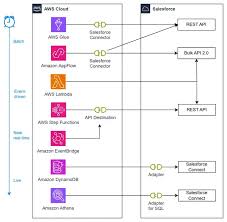
Unlock Real-Time Insights with AWS IoT and Salesforce Industry Clouds This guide explains how to gather, process, and distribute data from connected vehicles and industrial assets—such as manufacturing equipment or utility meters—into Salesforce Industry Cloud solutions using Amazon Web Services (AWS). Key AWS IoT Services for Data Collection By leveraging these services, businesses can integrate telemetry data into: Why This Integration Matters Strong customer relationships rely on real-time insights. Automakers, manufacturers, and utility providers can enhance customer interactions by unifying telemetry data with CRM workflows—enabling smarter marketing, sales, and service decisions. Prerequisites To integrate AWS IoT with Salesforce, you’ll need: AWS Services Salesforce Requirements Use Cases 1. Predictive Maintenance with AWS & Salesforce 2. In-Car Notifications 3. On-Demand Vehicle/Asset Health Insights 4. Data-Driven Customer Engagement Solution Architecture Data Flow Overview Implementation Steps 1. Set Up AWS IoT Rules 2. Configure Salesforce Event Handling 3. Enable Real-Time Analytics Conclusion By integrating AWS IoT with Salesforce Industry Clouds, businesses can:✔ Improve operational efficiency with predictive maintenance.✔ Enhance customer experiences through real-time alerts and diagnostics.✔ Drive data-driven decisions with unified analytics. Next Steps: Empower your teams with real-time IoT insights—start building today! Like Related Posts AI Automated Offers with Marketing Cloud Personalization AI-Powered Offers Elevate the relevance of each customer interaction on your website and app through Einstein Decisions. Driven by a Read more Salesforce OEM AppExchange Expanding its reach beyond CRM, Salesforce.com has launched a new service called AppExchange OEM Edition, aimed at non-CRM service providers. Read more The Salesforce Story In Marc Benioff’s own words How did salesforce.com grow from a start up in a rented apartment into the world’s Read more Salesforce Jigsaw Salesforce.com, a prominent figure in cloud computing, has finalized a deal to acquire Jigsaw, a wiki-style business contact database, for Read more

Read More
Log Into Salesforce with Your Email Address

Log Into Salesforce with Your Email Address

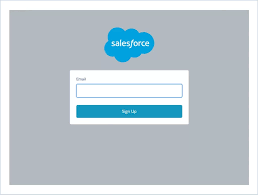
Log Into Salesforce with Your Email Address – A Game-Changer for Users & Admins Yes, you can now log into Salesforce using your email address instead of your username! Salesforce has introduced this new login option to simplify access. May Day, May Day! Log Into Salesforce with Your Email Address is here! How to Log In with Your Email This feature is perfect if you:✔ Forget your username✔ Manage multiple accounts✔ Want a faster login process Why This Matters Salesforce usernames must be unique across all orgs, while email addresses can be reused. Ever faced the “username already exists” error? Or struggled with a randomly generated Developer Edition username? Now, you can skip the hassle—just log in with your email! Introducing the Environment Switcher For admins and consultants managing multiple orgs, Salesforce’s Environment Switcher is a game-changer. When logging in with an email linked to multiple accounts, you’ll see:✅ A list of all connected orgs✅ Usernames, org types, and URLs✅ Search and renaming options for easy access Note: Sandboxes and Scratch Orgs are not yet supported in the Environment Switcher. Key Considerations 🔹 Verification Required: If your email is tied to multiple orgs, you’ll need access to your inbox for the one-time code.🔹 Mobile vs. Desktop: Codes last 30 days on desktop but expire after each mobile login.🔹 SSO Users: If your org uses Single Sign-On (SSO), you’ll still be redirected to your identity provider.🔹 Saved Emails: Previously used emails will appear for quick access (or you can choose a different login).🔹 Privacy Control: You can remove stored email addresses individually. Final Thoughts No more digging through password managers or struggling with forgotten usernames! Salesforce’s email login and Environment Switcher make accessing multiple orgs faster and easier—whether you’re handling client environments, Developer Editions, or production orgs. Like Related Posts AI Automated Offers with Marketing Cloud Personalization AI-Powered Offers Elevate the relevance of each customer interaction on your website and app through Einstein Decisions. Driven by a Read more Salesforce OEM AppExchange Expanding its reach beyond CRM, Salesforce.com has launched a new service called AppExchange OEM Edition, aimed at non-CRM service providers. Read more The Salesforce Story In Marc Benioff’s own words How did salesforce.com grow from a start up in a rented apartment into the world’s Read more Salesforce Jigsaw Salesforce.com, a prominent figure in cloud computing, has finalized a deal to acquire Jigsaw, a wiki-style business contact database, for Read more

Read More
Salesforce Instance Refresh Maintenance

Why Salesforce is the Key to Cloud Transformation

Cloud transformation is essential for businesses aiming to scale, boost efficiency, and enhance customer experiences. As a leading cloud platform, Salesforce plays a pivotal role in this transition—connecting cloud ecosystems, optimizing operations, and ensuring seamless customer interactions. But to unlock its full potential, organizations need the right Salesforce experts to drive the transformation successfully. The Role of Salesforce in Cloud Transformation As a cloud-native platform, Salesforce provides automation, AI-driven insights, and deep integration across business functions. It acts as the central hub, linking sales, marketing, customer service, and back-end operations. During cloud migration, Salesforce ensures:✅ Customer data remains accessible and secure✅ Workflows stay optimized for efficiency✅ AI-powered insights drive smarter decision-making Without experienced Salesforce professionals, businesses risk data silos, inefficient processes, and failed integrations—leading to costly delays and operational setbacks. Challenges in Hiring Salesforce Experts 1. Talent Shortages & High Demand The growing reliance on Salesforce has created a ultra-competitive hiring landscape. Roles like Salesforce Developers, Architects, and Administrators are in high demand, making it challenging for companies to attract and retain top talent. 2. The Need for More Than Just Technical Skills Many organizations focus solely on coding expertise, but cloud transformation demands professionals who understand business processes, data architecture, and integration strategies. A developer who codes without considering business goals may create solutions that don’t align with the organization’s needs. 3. Integration Complexities Salesforce rarely operates in isolation—it must integrate with ERP systems, marketing automation tools, and other cloud platforms. Poorly planned integrations can lead to inefficiencies and disrupt transformation efforts, underscoring the need for specialists who can manage system connectivity effectively. Strategies for Hiring the Right Salesforce Experts 1. Clearly Define Roles & Responsibilities Before hiring, identify the specific expertise required. For example: 2. Prioritize Certifications & Hands-On Experience Look for candidates with certifications like: Additionally, hands-on experience with cloud integrations, API development, and data migration is crucial for success. 3. Assess Problem-Solving Abilities Cloud transformation is complex, often presenting unexpected challenges. A structured hiring process should include scenario-based questions and technical assessments to evaluate candidates’ ability to handle real-world Salesforce challenges. 4. Explore Contract & Full-Time Hiring Models Given the talent shortage, companies may need a mix of contract and full-time hires: 5. Align Hiring with Cloud Strategy Salesforce experts must collaborate with cloud engineers and IT teams to ensure seamless integration. When hiring, prioritize candidates who understand system architecture and can align Salesforce capabilities with long-term business goals. Building a Strong Salesforce Team for Cloud Transformation Hiring the right Salesforce experts is critical for a smooth and effective cloud transformation. By defining roles, prioritizing experience, and assessing real-world skills, businesses can build teams that drive long-term success. Salesforce managed services is an alternative to the talent shortage. If your organization is looking to strengthen its Salesforce talent strategy, partnering with experts like Tectonic can bridge hiring gaps. Tectonic delivers top-tier Salesforce talent to power your digital transformation. With a vast network of vetted professionals and data-driven recruitment strategies, we help companies secure skilled experts—fast without increasing headcount. Let’s build your Salesforce dream team. Like Related Posts AI Automated Offers with Marketing Cloud Personalization AI-Powered Offers Elevate the relevance of each customer interaction on your website and app through Einstein Decisions. Driven by a Read more Salesforce OEM AppExchange Expanding its reach beyond CRM, Salesforce.com has launched a new service called AppExchange OEM Edition, aimed at non-CRM service providers. Read more The Salesforce Story In Marc Benioff’s own words How did salesforce.com grow from a start up in a rented apartment into the world’s Read more Salesforce Jigsaw Salesforce.com, a prominent figure in cloud computing, has finalized a deal to acquire Jigsaw, a wiki-style business contact database, for Read more

Read More
Shift From AI Agents to AI Agent Tool Use

Building Scalable AI Agents

Building Scalable AI Agents: Infrastructure, Planning, and Security The key building blocks of AI agents—planning, tool integration, and memory—demand sophisticated infrastructure to function effectively in production environments. As the technology advances, several critical components have emerged as essential for successful deployments. Development Frameworks & Architecture The ecosystem for AI agent development has matured, with several key frameworks leading the way: While these frameworks offer unique features, successful agents typically share three core architectural components: Despite these strong foundations, production deployments often require customization to address high-scale workloads, security requirements, and system integrations. Planning & Execution Handling complex tasks requires advanced planning and execution flows, typically structured around: An agent’s effectiveness hinges on its ability to: ✅ Generate structured plans by intelligently combining tools and knowledge (e.g., correctly sequencing API calls for a customer refund request).✅ Validate each task step to prevent errors from compounding.✅ Optimize computational costs in long-running operations.✅ Recover from failures through dynamic replanning.✅ Apply multiple validation strategies, from structural verification to runtime testing.✅ Collaborate with other agents when consensus-based decisions improve accuracy. While multi-agent consensus models improve accuracy, they are computationally expensive. Even OpenAI finds that running parallel model instances for consensus-based responses remains cost-prohibitive, with ChatGPT Pro priced at $200/month. Running majority-vote systems for complex tasks can triple or quintuple costs, making single-agent architectures with robust planning and validation more viable for production use. Memory & Retrieval AI agents require advanced memory management to maintain context and learn from experience. Memory systems typically include: 1. Context Window 2. Working Memory (State Maintained During a Task) Key context management techniques: 3. Long-Term Memory & Knowledge Management AI agents rely on structured storage systems for persistent knowledge: Advanced Memory Capabilities Standardization efforts like Anthropic’s Model Context Protocol (MCP) are emerging to streamline memory integration, but challenges remain in balancing computational efficiency, consistency, and real-time retrieval. Security & Execution As AI agents gain autonomy, security and auditability become critical. Production deployments require multiple layers of protection: 1. Tool Access Control 2. Execution Validation 3. Secure Execution Environments 4. API Governance & Access Control 5. Monitoring & Observability 6. Audit Trails These security measures must balance flexibility, reliability, and operational control to ensure trustworthy AI-driven automation. Conclusion Building production-ready AI agents requires a carefully designed infrastructure that balances:✅ Advanced memory systems for context retention.✅ Sophisticated planning capabilities to break down tasks.✅ Secure execution environments with strong access controls. While AI agents offer immense potential, their adoption remains experimental across industries. Organizations must strategically evaluate where AI agents justify their complexity, ensuring that they provide clear, measurable benefits over traditional AI models. Like1 Related Posts AI Automated Offers with Marketing Cloud Personalization AI-Powered Offers Elevate the relevance of each customer interaction on your website and app through Einstein Decisions. Driven by a Read more Salesforce OEM AppExchange Expanding its reach beyond CRM, Salesforce.com has launched a new service called AppExchange OEM Edition, aimed at non-CRM service providers. Read more The Salesforce Story In Marc Benioff’s own words How did salesforce.com grow from a start up in a rented apartment into the world’s Read more Salesforce Jigsaw Salesforce.com, a prominent figure in cloud computing, has finalized a deal to acquire Jigsaw, a wiki-style business contact database, for Read more

Read More
Google and Salesforce Expand Partnership

Google and Salesforce Expand Partnership

Google and Salesforce Expand Partnership to Enhance AI Agent Capabilities Google and Salesforce are deepening their collaboration to provide customers with greater flexibility in AI agent deployment. This expanded partnership will integrate Google Gemini within Salesforce’s Agentforce platform, enabling AI agents to process images, audio, and video with advanced multimodal capabilities. Enhanced AI Functionality with Gemini Through this integration, AI agents will gain access to Gemini’s powerful models, allowing them to handle complex tasks with extended context windows and leverage real-time insights from Google Search via Vertex AI. This collaboration aims to empower businesses with AI solutions that are not limited to a single model provider, offering crucial flexibility in AI customization. Srini Tallapragada, Salesforce’s President and Chief Engineering and Customer Success Officer, emphasized that the integration offers customers the ability to choose the applications and models that best suit their needs. “Salesforce offers a complete enterprise-grade agentic AI platform that makes it easy to deploy new capabilities quickly and realize business value fast. Google Cloud is a pioneer in enterprise agentic AI, offering some of the most powerful models, agents, and AI development tools on the planet. Together, we are creating the best place for businesses to scale with digital labor.” Key Benefits of the Integration The partnership is set to deliver significant advantages for businesses, as outlined in the official announcement: Thomas Kurian, CEO of Google Cloud, highlighted the benefits of this collaboration: “Our mutual customers have asked for seamless integration across Salesforce and Google Cloud. This expanded partnership enables them to accelerate AI transformations with state-of-the-art AI models, agentic AI, and advanced data analytics.” Strengthening Customer Service Integrations The partnership will also enhance the connection between Salesforce Service Cloud and Google Cloud’s Customer Engagement Suite, providing AI-driven improvements to customer support. Key upcoming features include: Expanding AI-Powered Decision-Making Beyond Gemini, Agentforce will integrate Google Search through Vertex AI, leveraging secure connections between Salesforce Data Cloud and Google BigQuery. This will enable AI agents to access real-time information for improved accuracy and decision-making. For example, in supply chain management, AI can track shipments, monitor inventory in Salesforce Commerce Cloud, and anticipate disruptions using real-time data on weather, port congestion, and geopolitical events. Additionally, joint customers will be able to utilize Salesforce’s unified platform—including Agentforce, Data Cloud, and Customer 360—on Google Cloud’s AI-optimized infrastructure. This integration ensures enhanced security through dynamic grounding, zero data retention, and toxicity detection via the Einstein Trust Layer. Businesses will also soon have the option to purchase Salesforce products via the Google Cloud Marketplace. More AI Innovations from Google and Salesforce Google recently announced the development of a personalized AI-powered chatbot that will be integrated into its devices, including smartphones, laptops, and tablets. This tool will automatically answer calls, process requests, and respond on behalf of users. Meanwhile, Salesforce’s Service Assistant—formerly known as Salesforce Service Planner—has launched on Service Cloud. Designed to support live agents, it generates step-by-step plans for resolving customer inquiries by analyzing intent, case history, and customer context. For optimal performance, Salesforce recommends integrating it with Data Cloud and the contact center knowledge base. With this expanded partnership, Google and Salesforce are setting the stage for businesses to leverage cutting-edge AI technology, driving innovation and operational efficiency across industries. Like Related Posts AI Automated Offers with Marketing Cloud Personalization AI-Powered Offers Elevate the relevance of each customer interaction on your website and app through Einstein Decisions. Driven by a Read more Salesforce OEM AppExchange Expanding its reach beyond CRM, Salesforce.com has launched a new service called AppExchange OEM Edition, aimed at non-CRM service providers. Read more The Salesforce Story In Marc Benioff’s own words How did salesforce.com grow from a start up in a rented apartment into the world’s Read more Salesforce Jigsaw Salesforce.com, a prominent figure in cloud computing, has finalized a deal to acquire Jigsaw, a wiki-style business contact database, for Read more

Read More
salesforce end to end

Salesforce and Google Announcement

Salesforce (NYSE:CRM) has entered into a deal with Google (NASDAQ:GOOGL) to offer its customer relations management software, Agentforce artificial intelligence assistants, and Data Cloud offerings through Google Cloud, the companies announced today. Google and Salesforce already have many of the same clients, and this new deal will allow for more product integration between Google Workspace and Salesforce’s customer relationship management and AI offerings. Salesforce already uses Amazon (AMZN) Web Services for much of its cloud computing. “Our mutual customers have asked us to be able to work more seamlessly across Salesforce and Google Cloud, and this expanded partnership will help them accelerate their AI transformations with agentic AI, state-of-the-art AI models, data analytics, and more,” said Thomas Kurian, CEO of Google Cloud. The deal is expected to total $2.5B over the next seven years, according to a report by Bloomberg. Salesforce and Google today announced a major expansion of their strategic partnership, delivering choice in the models and capabilities businesses use to build and deploy AI-powered agents. In today’s constantly evolving AI landscape, innovations like autonomous agents are emerging so quickly that businesses struggle to keep pace. This expanded partnership provides crucial flexibility, empowering customers to develop tailored AI solutions that meet their specific needs, rather than being locked into a single model provider. Google Cloud is at the forefront of enterprise AI innovation with millions of developers building with Google’s cutting-edge Gemini models and on Google Cloud’s AI-optimized infrastructure. This expanded partnership will empower Salesforce customers to build Agentforce agents using Gemini and to deploy Salesforce on Google Cloud. This is an expansion of the existing partnership that allows customers to use data from Data Cloud and Google BigQuery bi-directionally via zero-copy technology—further equipping customers with the data, AI, trust, and actions they need to bring autonomous agents into their businesses. Additionally, this integration empowers Agentforce agents with the ability to reference up-to-the-minute data, news, current events, and credible citations, substantially enhancing their contextual awareness and ability to deliver accurate, evidence-backed responses. For example, in supply chain management and logistics, an agent built with Agentforce could track shipments and monitor inventory levels in Salesforce Commerce Cloud and proactively identify potential disruptions using real-time data from Google Search, including weather conditions, port congestion, and geopolitical events. Availability is expected in the coming months. AI: Unlocking the Power of Choice and Flexibility with Gemini and Agentforce Businesses need the freedom to choose the best models for their needs rather than be locked into one vendor. In 2025, Google’s Gemini models will also be available for prompt building and reasoning directly within Agentforce. With Gemini and Agentforce, businesses will benefit from: For example, an insurance customer can submit a claim with photos of the damage and an audio voicemail from a witness. Agentforce, using Gemini, can then help the insurance provider deliver better customer experiences by processing all these inputs, assessing the claim’s validity, and even using text-to-speech to contact the customer with a resolution, streamlining the traditionally lengthy claims process. Availability is expected this year. Trust: Salesforce Platform deployed on Google Cloud Customers will be able to use Salesforce’s unified platform (Agentforce, Data Cloud, Customer 360) on Google Cloud’s highly secure, AI-optimized infrastructure, benefiting from features like dynamic grounding, zero data retention, and toxicity detection provided by the Einstein Trust Layer. Once Salesforce products are available on Google Cloud, customers will also have the ability to procure Salesforce offerings through the Google Cloud Marketplace, opening up new possibilities for global businesses to optimize their investments across Salesforce and Google Cloud and benefiting thousands of existing joint customers. Action: Enhanced Employee Productivity and Customer Service with AI-Powered Integrations Millions use Salesforce and Google Cloud daily. This partnership prioritizes choice and flexibility, enabling seamless cross-platform work. New and deeper connections between platforms like Salesforce Service Cloud and Google Cloud’s Customer Engagement Suite, as well as Slack and Google Workspace, will empower AI agents and service representatives with unified data access, streamlined workflows, and advanced AI capabilities, regardless of platform. Salesforce and Google Cloud are deeply integrating their customer service platforms—Salesforce Service Cloud and Google Cloud’s Customer Engagement Suite—to create a seamless and intelligent support experience. Expected later this year, this unified approach empowers AI agents in Service Cloud with: Salesforce and Google Cloud are also exploring deeper integrations between Slack and Google Workspace, boosting productivity and creating a more cohesive digital workspace for teams and organizations. The companies are currently exploring use cases such as: Expanding Partnership Capabilities and Integrations This partnership goes beyond core product integrations to deliver a more connected and intelligent data foundation for businesses. Expected availability throughout 2025: This landmark partnership between Salesforce and Google represents a strategic paradigm shift in enterprise AI deployment, emphasizing infrastructure innovation, AI capability enhancement, and enterprise value. The integration of Google Search grounding provides a unique competitive advantage, offering real-time, factual responses backed by the world’s most comprehensive search engine. The companies are committed to ongoing innovation and deeper collaboration to empower businesses with even more powerful solutions. Like1 Related Posts AI Automated Offers with Marketing Cloud Personalization AI-Powered Offers Elevate the relevance of each customer interaction on your website and app through Einstein Decisions. Driven by a Read more Salesforce OEM AppExchange Expanding its reach beyond CRM, Salesforce.com has launched a new service called AppExchange OEM Edition, aimed at non-CRM service providers. Read more The Salesforce Story In Marc Benioff’s own words How did salesforce.com grow from a start up in a rented apartment into the world’s Read more Salesforce Jigsaw Salesforce.com, a prominent figure in cloud computing, has finalized a deal to acquire Jigsaw, a wiki-style business contact database, for Read more

Read More
Potential of GenAI in Healthcare

5 Key Use Cases for Generative AI in Healthcare Documentation

Generative AI (GenAI) holds significant promise for improving healthcare documentation, but clear regulations and standards are needed to maximize benefits while minimizing risks. Healthcare documentation encompasses medical histories, clinical notes, diagnostic results, treatment plans, prescriptions, and billing records. Studies show that clinicians spend more time on documentation than patient care—a major contributor to burnout. GenAI can help by automating electronic health record (EHR) data entry and drafting medical notes for clinician review. According to a February 2025 American Medical Association (AMA) survey, early GenAI adoption in healthcare focuses on administrative tasks that enhance documentation quality and efficiency. For example, Microsoft’s Dax Copilot saves clinicians five minutes per patient encounter, while Oracle Health Clinical AI Agent reduces documentation time by nearly 30%. Here are five key ways GenAI improves healthcare documentation: 1. Streamline Workflows GenAI reduces administrative burdens by automating documentation tasks, allowing clinicians to focus more on patient care. Key applications include: A JAMA Network Open (2024) study found AI-generated draft replies to patient messages reduced provider workload and emotional exhaustion, suggesting strong potential for workflow efficiency. 2. Improve Data Accuracy GenAI enhances documentation precision by identifying missing or inconsistent data. Applications include: By minimizing manual entry, GenAI helps prevent errors that lead to billing delays or compliance issues. 3. Optimize Medical Data Approximately 80% of healthcare data is unstructured (e.g., physician notes, scanned documents). GenAI transforms this into structured, usable formats by: This optimization improves interoperability and speeds up decision-making. 4. Reduce Clinician Burnout Physician burnout is often linked to excessive documentation. GenAI alleviates stress by: A UC San Diego (2024) study found that AI-assisted documentation helps clinicians engage more with patients, improving satisfaction and outcomes. 5. Enhance Patient Engagement GenAI improves patient interactions by: By reducing screen time during visits, GenAI helps clinicians build stronger patient relationships. Best Practices for GenAI in Healthcare Documentation To ensure safe and effective AI adoption:✔ Start with pilot programs – Test AI tools in controlled settings.✔ Train clinicians on AI review – Ensure staff can validate AI-generated content.✔ Notify patients about AI use – Maintain transparency in documentation.✔ Secure patient data – Encrypt and de-identify protected health information (PHI).✔ Maintain audit logs – Track AI-generated documentation for accuracy and compliance. Challenges & Future Outlook GenAI faces hurdles in data privacy, regulatory compliance, and liability. Until formal standards emerge, frameworks like the WHO’s AI Ethics Guidelines and Coalition for Health AI (CHAI) Assurance Standards can help guide responsible use. As multimodal AI models advance, GenAI will better adapt to clinician workflows. However, strong governance is essential to balance innovation with patient safety. Conclusion GenAI is transforming healthcare documentation by reducing burnout, improving accuracy, and enhancing patient engagement. By implementing best practices and robust governance, healthcare organizations can harness AI’s potential while mitigating risks. Content updated April 2025. Like Related Posts AI Automated Offers with Marketing Cloud Personalization AI-Powered Offers Elevate the relevance of each customer interaction on your website and app through Einstein Decisions. Driven by a Read more Salesforce OEM AppExchange Expanding its reach beyond CRM, Salesforce.com has launched a new service called AppExchange OEM Edition, aimed at non-CRM service providers. Read more The Salesforce Story In Marc Benioff’s own words How did salesforce.com grow from a start up in a rented apartment into the world’s Read more Salesforce Jigsaw Salesforce.com, a prominent figure in cloud computing, has finalized a deal to acquire Jigsaw, a wiki-style business contact database, for Read more

Read More
MoEngage Unveils New Tools to Help Marketers Adapt to Consumer Trends

MoEngage Unveils New Tools to Help Marketers Adapt to Consumer Trends

MoEngage, a leading cross-channel customer engagement platform, has launched new features designed to help marketers quickly adapt to shifting consumer behaviors. These updates, introduced at the bi-annual MoEngage NEXT event, include Connected Apps for seamless data integration, a Salesforce CRM integration for streamlined data exchange, and Coupons for managing single-use discounts. “Our new capabilities reinforce our commitment to empowering marketers with tools to understand and adapt to evolving consumer expectations,” said Raviteja Dodda, CEO and Co-Founder of MoEngage. “These innovations enable our clients to scale personalized engagement based on individual preferences and behaviors.” Tackling Fragmented Engagement Tools Marketers often struggle to deliver personalized experiences due to disconnected engagement tools and data silos. To bridge this gap, MoEngage introduced Connected Apps, a low-code framework that integrates data across messaging platforms, advertising channels, IVR systems, data warehouses, and chatbots. Enhanced Integration with Salesforce CRM The new bi-directional native integration with Salesforce CRM simplifies data exchange between the two platforms. Marketers can now trigger real-time personalized campaigns without needing costly custom integrations. This integration not only improves efficiency but also reduces operational costs. Streamlining Coupon Management To enhance customer engagement, MoEngage launched Coupons, a feature that helps marketers allocate and manage single-use discount codes from a centralized dashboard. The tool includes real-time updates on coupon status, alerts for shortages and expiration dates, and ingestion tracking, ensuring smooth campaign execution while optimizing costs. Driving Scalable and Personalized Engagement With these innovations, MoEngage continues to solidify its position as a go-to platform for marketers seeking to adapt quickly to consumer trends. By addressing common pain points like data fragmentation and inefficient tools, MoEngage enables marketers to deliver meaningful, personalized customer experiences at scale. Like Related Posts AI Automated Offers with Marketing Cloud Personalization AI-Powered Offers Elevate the relevance of each customer interaction on your website and app through Einstein Decisions. Driven by a Read more Salesforce OEM AppExchange Expanding its reach beyond CRM, Salesforce.com has launched a new service called AppExchange OEM Edition, aimed at non-CRM service providers. Read more The Salesforce Story In Marc Benioff’s own words How did salesforce.com grow from a start up in a rented apartment into the world’s Read more Salesforce Jigsaw Salesforce.com, a prominent figure in cloud computing, has finalized a deal to acquire Jigsaw, a wiki-style business contact database, for Read more

Read More
healthcare Can prioritize ai governance

Salesforce Data Governance

Salesforce Data Governance Best Practices Salesforce provides a centralized platform for managing customer relationships, but without proper data governance, the system can quickly become unmanageable. Data governance ensures the accuracy, security, and usability of the vast amounts of information collected, helping teams make better decisions and maximizing the value of Salesforce investments. By establishing robust processes and policies, organizations can maintain clean, compliant, and reliable data. Here’s an overview of data governance in Salesforce, its importance, and strategies to implement it effectively. What Is Data Governance in Salesforce? Data governance in Salesforce refers to the practices that monitor and manage data accuracy, security, and compliance. Proper governance ensures your Salesforce data remains trustworthy and actionable, avoiding issues like errors, duplicates, and regulatory violations. Key Components of Salesforce Data Governance: Strong governance enables organizations to make informed decisions and unlock Salesforce’s full potential. The Impact of Data Governance on Decision-Making Accurate and well-governed data empowers leaders to make strategic, data-driven decisions. With clean and current records, organizations can: Good governance ensures data integrity, leading to smarter decisions and improved business performance. Principles of Effective Salesforce Data Governance Building a strong data governance framework starts with these core principles: 1. Data Ownership Assign clear ownership of datasets to specific individuals, teams, or departments. Owners are accountable for maintaining data quality, ensuring compliance, and resolving issues efficiently. Benefits include: 2. Monitoring and Compliance Conduct regular audits to ensure data accuracy, detect unauthorized access, and maintain compliance with regulations. Tools like Salesforce’s built-in monitoring features or third-party solutions (e.g., Validity DemandTools) can streamline this process. Audit checks should include: Consistent monitoring safeguards sensitive data and avoids costly fines, particularly in heavily regulated industries like healthcare and finance. Steps to Develop a Data Governance Strategy Techniques for Maintaining High-Quality Data High-quality data is the backbone of Salesforce governance. Apply these techniques to ensure your data meets quality standards: Standardizing Data for Better Governance Data standardization ensures consistency across Salesforce records, improving analysis and operational efficiency. Examples include: Leveraging Data Management Tools Data management tools are essential for maintaining data integrity and enhancing governance. Benefits include: By integrating these tools into your Salesforce processes, you can establish a solid foundation for data governance while boosting operational efficiency. Final Thoughts Effective data governance in Salesforce is critical for maintaining data quality, ensuring compliance, and empowering teams to make strategic decisions. By following best practices and leveraging the right tools, organizations can maximize the value of their Salesforce investment and drive long-term success. Like1 Related Posts AI Automated Offers with Marketing Cloud Personalization AI-Powered Offers Elevate the relevance of each customer interaction on your website and app through Einstein Decisions. Driven by a Read more Salesforce OEM AppExchange Expanding its reach beyond CRM, Salesforce.com has launched a new service called AppExchange OEM Edition, aimed at non-CRM service providers. Read more The Salesforce Story In Marc Benioff’s own words How did salesforce.com grow from a start up in a rented apartment into the world’s Read more Salesforce Jigsaw Salesforce.com, a prominent figure in cloud computing, has finalized a deal to acquire Jigsaw, a wiki-style business contact database, for Read more

Read More
Liquid Neural Networks

Liquid Neural Networks

LNNs mark a significant departure from traditional, rigid AI structures, drawing deeply from the adaptable nature of biological neural systems. MIT researchers explored how organisms manage complex decision-making and dynamic responses with minimal neurons, translating these principles into the design of LNNs

Read More
TrueDialog Adds SMS Application for Salesforce Marketing Cloud Engagement

TrueDialog Adds SMS Application for Salesforce Marketing Cloud Engagement

TrueDialog Unveils SMS Integration for Salesforce Marketing Cloud

TrueDialog, a leader in SMS texting solutions, has expanded its Salesforce offerings with the launch of its SMS integration for Salesforce Marketing Cloud Engagement, complementing its existing Sales Cloud application. Now available on Salesforce AppExchange, this addition enables seamless documentation of SMS activities across the Salesforce Cloud ecosystem.

With TrueDialog’s integration for Salesforce Marketing Cloud, companies can incorporate SMS into customized, targeted marketing journeys. This includes sending promotional messages, geo-targeted offers, triggered alerts, order confirmations, account updates, and more—all as part of a cohesive customer engagement strategy.

TrueDialog’s solution uniquely enables SMS message flow across Salesforce Marketing Cloud, Sales Cloud, Service Cloud, and Education Cloud, ensuring communication continuity across platforms. “TrueDialog is the only provider offering bidirectional SMS integration between Salesforce Marketing Cloud and other Salesforce Clouds, including Sales, Service, Commerce, and Education Clouds,” said John Wright, CEO of TrueDialog. “Our solution records text messages on all relevant Salesforce Clouds, maintaining communication continuity between companies and their customers—something no other provider offers.”

The TrueDialog SMS application is fully native to Salesforce Marketing Cloud, allowing users to work within their regular workflow without switching applications to integrate SMS steps. TrueDialog also offers flexible options for short and long codes, automated 10DLC registration for long codes, and TrueDelivery, a tool for assessing SMS deliverability.

Read More
gettectonic.com