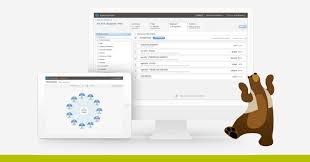
Marketing Cloud Audience Builder dynamically generates targeted audiences from contacts stored in your account based on attribute and behavioral values. These audiences can be used to target or exclude contacts from your marketing activities.
In today’s world, where a staggering 347.3 billion emails are sent globally every day, email inboxes have become increasingly cluttered. In your specific niche, you’re not the only one trying to reach your target audience; numerous others are vying for their attention. With consumers having a multitude of options, marketers bear the responsibility of positioning themselves in a way that makes it impossible for potential customers to overlook them.
Achieving this requires embracing customer-centricity, which involves deeply engaging with different buyer personas by segmenting your contact list based on various parameters such as age, gender, location, interests, preferences, past purchases, browsing history, and position in the sales funnel. However, manually managing this segmentation, especially with a large contact list, can be overwhelming. This is where a dependable tool like Salesforce Marketing Cloud’s Audience Builder proves invaluable.
The SFMC Audience Builder empowers marketers to create granular segmentation frameworks based on demographic and behavioral data, making the execution of targeted campaigns effortless. It dynamically generates targeted audiences by utilizing contacts in your account and leveraging behavioral values and stored attributes as guiding parameters. In this overview, we aim to provide a comprehensive understanding of SFMC’s Audience Builder.
Key Entities and Terminologies:
- Audiences:
- A collection of contacts grouped based on specific attributes at the time of receiving a message.
- Derives information from a sendable data extension.
- It is advisable to use a subscriber key with Audience Builder in Marketing Cloud.
- Audiences can contain both IDs and Codes, each serving a different purpose.
- IDs uniquely identify the audience object, aiding in tracking and reporting activities.
- Codes are not required to have unique values and are useful for associating or managing an audience with a campaign.
- Salesforce Audience Builder uses a flag in the data extension’s header to mark it as an audience.
- Groups, data extensions, or lists linked through a common ID or subscriber key can be used by the Salesforce Audience Builder.
- Segments:
- A group of people or contacts fulfilling a set of user-defined criteria.
- Used for targeted messaging and analysis.
- If no filter is added, the Salesforce Audience Builder uses the entire list of contacts from your account to create segments.
- Audience Builder Rules:
- Rules assigned by the user to create audiences.
- Examples include populating an audience with contacts who live in a specific location and made a purchase in the last month.
- Rules guide the selection of contacts for specific campaigns or exclusion from others.
- Audience Builder Attributes:
- Relies on attribute values stored by the Contact Builder for each contact.
- Determines whether a contact should be part of an audience based on these attribute values.
- For example, a contact with “New York” as their Home City attribute will be included in the audience of New York residents. If they update their attribute value after moving to another city, they will no longer be part of the New York residents audience.

Who is Salesforce? Here is their story in their own words. From our inception, we've proudly embraced the identity of Read more

Salesforce Marketing Cloud Transactional Emails are immediate, automated, non-promotional messages crucial to business operations and customer satisfaction, such as order Read more

Salesforce has unveiled a comprehensive analytics solution tailored for wealth managers, home office professionals, and retail bankers, merging its Financial Read more
AI plays a crucial role in propensity score estimation as it can discern underlying patterns between treatments and confounding variables Read more