

Cost Efficiency Archives - gettectonic.com
health and life sciences

Why B2C Experience Platforms Are the Next Big Investment

The Digital Healthcare Revolution: Why B2C Experience Platforms Are the Next Big Investment The healthcare sector is in the midst of a digital transformation revolution, with Business-to-Consumer (B2C) Digital Experience Platforms (DXPs) emerging as the dominant force for positive patient outcomes. Projected to grow at a 13.9% CAGR through 2030, these platforms are redefining patient engagement through AI-powered personalization, IoT integration, and cloud-based interoperability. For investors, this represents a generational opportunity—particularly in market leaders Adobe (ADBE), Microsoft (MSFT), and Salesforce (CRM)—as healthcare shifts from facility-centric to patient-first digital ecosystems. But this is not an investing article. It is an insight based on growth potential of the top Digital Experience Platform players. Why B2C DXPs Are Disrupting Healthcare The traditional healthcare model—reactive, fragmented, and provider-controlled—is being replaced by on-demand, data-driven patient experiences. B2C DXPs sit at the center of this shift by offering: ✔ Hyper-personalized care journeys – AI-driven platforms like Innovaccer’s HXP and Salesforce Health Cloud deliver tailored treatment plans, automated medication adherence tools, and condition-specific education. ✔ Seamless wearables/IoT integration – Real-time data from smartwatches, glucose monitors, and remote patient monitoring (RPM) devices enable preventive care and reduce hospital readmissions. ✔ Unified patient portals – A single digital front door for EHR access, telehealth visits, billing, and provider messaging—reducing friction in care delivery. North America leads adoption, but Asia-Pacific is the fastest-growing market, fueled by aging populations and government telehealth investments. The Winning Formula: AI + Cloud Scalability The most successful DXPs combine AI/ML intelligence with cloud infrastructure—a segment already commanding 63.7% market share. Key advantages: 🔹 Cost efficiency – Pay-as-you-go cloud models eliminate legacy IT costs.🔹 Regulatory compliance – Built-in HIPAA/GDPR adherence ensures data security.🔹 Interoperability – Open APIs connect EHRs, wearables, and third-party apps seamlessly. Microsoft’s Azure Healthcare APIs and Salesforce Health Cloud are already powering AI-driven patient engagement at scale, while Adobe Experience Cloud dominates personalized content delivery. Salesforce (CRM) – The Patient Engagement Leader Risks & Mitigations ⚠ Regulatory complexity – HIPAA/GDPR compliance requires ongoing investment (mitigated by cloud providers’ built-in security).⚠ EHR fragmentation – Legacy systems may slow interoperability (offset by FHIR API adoption).⚠ Competition – Startups like Innovaccer are innovating quickly (but lack scale of MSFT, CRM, ADBE). Bottom Line: The Time to Act Is Now The .3B DXP healthcare market by 2030 is just the beginning. With telehealth adoption up 70% post-pandemic and 416M connected health devices expected by 2030, patient demand for seamless digital experiences will only accelerate. Adobe, Microsoft, and Salesforce are not just tech stocks—they’re the infrastructure of healthcare’s digital future. Health care payers and providers who recognize this shift early will capitalize on a decade of growth. Data: Vision Research Reports, Grand View Research, company filings. Like Related Posts Who is Salesforce? Who is Salesforce? Here is their story in their own words. From our inception, we’ve proudly embraced the identity of Read more Salesforce Marketing Cloud Transactional Emails Salesforce Marketing Cloud Transactional Emails are immediate, automated, non-promotional messages crucial to business operations and customer satisfaction, such as order Read more Salesforce Unites Einstein Analytics with Financial CRM Salesforce has unveiled a comprehensive analytics solution tailored for wealth managers, home office professionals, and retail bankers, merging its Financial Read more AI-Driven Propensity Scores AI plays a crucial role in propensity score estimation as it can discern underlying patterns between treatments and confounding variables Read more

Read More
Salesforce Study Exposes Critical Gaps in AI's CRM Readiness

Salesforce Study Exposes Critical Gaps in AI’s CRM Readiness

Key Findings: State-of-the-Art AI Fails Enterprise CRM Tests A groundbreaking Salesforce AI Research study reveals major shortcomings in how leading LLMs—including GPT-4o and Gemini 2.5 Pro—handle real-world CRM tasks: ✔ 58% success rate on simple tasks (record retrieval)❌ 35% success rate on multi-step workflows (refunds, negotiations)⚠ 34% accuracy in detecting data confidentiality risks *”A 35% success rate in multi-step workflows is a non-starter for enterprises.”*— Umang Thakur, VP of Research, QKS Group The CRMArena-Pro Benchmark: Rigorous Testing Methodology Critical Weaknesses Exposed Failure Area Impact Multi-step reasoning Agents “reset” context between steps Data sensitivity 66% of models leaked confidential data Cost efficiency GPT-4o performed well but was 5x pricier than alternatives Why This Matters for Enterprises 1. Hidden Compliance Risks 2. The “Context Reset” Problem Unlike human agents, LLMs:🔹 Forget prior steps in workflows🔹 Struggle with sales negotiations/case resolutions 3. Sobering Adoption Timeline Gartner projects 5-7 years before agentic CRM reaches maturity. 3 Immediate Action Steps for Businesses 1. Implement Human-in-the-Loop Safeguards 2. Prioritize Vertical-Specific Training 3. Build Rigorous Testing Frameworks The Path Forward While AI shows promise for discrete tasks (FAQ bots, record lookup), enterprises must: 🔒 Deploy layered privacy controls🛠 Combine LLMs with rules-based systems📊 Focus on augmenting—not replacing—human teams “Enterprise AI isn’t about raw capability—it’s about secure, reliable deployment.”— Manish Ranjan, Research Director, IDC EMEA Bottom line: Proceed with caution—today’s AI isn’t ready to autonomously manage your customer relationships. Like Related Posts Who is Salesforce? Who is Salesforce? Here is their story in their own words. From our inception, we’ve proudly embraced the identity of Read more Salesforce Marketing Cloud Transactional Emails Salesforce Marketing Cloud Transactional Emails are immediate, automated, non-promotional messages crucial to business operations and customer satisfaction, such as order Read more Salesforce Unites Einstein Analytics with Financial CRM Salesforce has unveiled a comprehensive analytics solution tailored for wealth managers, home office professionals, and retail bankers, merging its Financial Read more AI-Driven Propensity Scores AI plays a crucial role in propensity score estimation as it can discern underlying patterns between treatments and confounding variables Read more

Read More
Salesforce Managed Services

Key Signs Your Business Needs a Salesforce Support & Maintenance Partner

Salesforce is a powerful CRM platform, but simply implementing it doesn’t guarantee success. To maximize ROI, businesses need continuous optimization, expert guidance, and proactive maintenance—something an in-house team may struggle to provide alone. Discover the key signs your business needs a Salesforce support and maintenance partner. Many companies invest in Salesforce expecting high returns but end up facing: These challenges turn Salesforce into a cost center rather than a revenue-driving platform. If you’re noticing these issues, it’s time to consider a Salesforce support and maintenance partner. This insight explores the critical warning signs and how a managed services provider can help. What Is a Salesforce Support & Maintenance Partner? A Salesforce support and maintenance partner is a specialized provider that manages, optimizes, and secures your Salesforce org. They provide you: ✔ Proactive Monitoring – 24/7 performance checks to prevent downtime, security breaches, and data decay.✔ Expert Guidance – Certified professionals resolve feature stagnation (unused automation/AI tools) and boost user adoption.✔ Strategic Roadmaps – Align Salesforce with business goals for long-term success.✔ Elimination of Technical Debt – Reduce technology noise slowing down your org. Why Are They Crucial? ✅ Cost Efficiency – Avoid hiring full-time specialists.✅ Risk Mitigation – Ensure compliance, security, and data integrity.✅ ROI Maximization – Unlock advanced features and improve team efficiency. A trusted partner like Tectonic identifies warning signs early, preventing short- and long-term inefficiencies. 9 Key Signs You Need a Salesforce Support & Maintenance Partner 1. Declining User Adoption The Problem: Employees avoid Salesforce due to poor training, complex workflows, or inefficient processes.Why It Matters: Low adoption wastes your CRM investment. (Only 36% of agents upsell due to lack of training—Salesforce State of Service Report.)The Solution: 2. Security & Compliance Risks The Problem: Unclear GDPR/HIPAA compliance, outdated security settings, or unauthorized access attempts.Why It Matters: Data breaches lead to fines, legal risks, and lost trust. (Non-compliance costs $14.8M on average—Globalscape.)The Solution: 3. Rising Ticket Backlogs The Problem: IT teams are overwhelmed with unresolved requests, slowing operations.Why It Matters: Delays hurt sales cycles, employee morale, and customer satisfaction.The Solution: 4. Underutilized Salesforce Features The Problem: Only basic functions (leads/contacts) are used—AI, automation, and analytics are ignored.Why It Matters: Manual processes slow growth. (Only 49% of service orgs use AI—Salesforce.)The Solution: 5. Poor Data Quality & Duplicates The Problem: Duplicate leads, missing fields, and inaccurate reports lead to bad decisions.Why It Matters: Poor data costs .9M annually (Gartner).The Solution: 6. Increasing Downtime The Problem: Frequent crashes, slow reports, or integration failures.Why It Matters: Downtime = lost sales & productivity. (Meta lost $100M in 2 hours in 2024.)The Solution: 7. Lack of Strategic Roadmap The Problem: No clear upgrade plan, leading to disorganized workflows.Why It Matters: 30-70% of CRM projects fail due to poor planning.The Solution: 8. Unstable Customizations The Problem: Apex triggers, Flows, or Lightning components break after updates.Why It Matters: Patchwork fixes increase technical debt & admin workload.The Solution: 9. Slow Salesforce Performance The Problem: Reports load slowly, or users face “Service Unavailable” errors.Why It Matters: A 100ms delay can hurt conversions by 7% (Akamai).The Solution: Conclusion If you’re experiencing any of these issues, your Salesforce org needs expert care. A managed services partner like Tectonic helps:✔ Reduce downtime✔ Improve performance✔ Boost user adoption✔ Enhance security & compliance With 24/7 proactive support, strategic roadmaps, and advanced feature utilization, Tectonic ensures your Salesforce investment drives revenue—not costs. Need help optimizing Salesforce? Contact Tectonic today for a free assessment. Like1 Related Posts Who is Salesforce? Who is Salesforce? Here is their story in their own words. From our inception, we’ve proudly embraced the identity of Read more Salesforce Marketing Cloud Transactional Emails Salesforce Marketing Cloud Transactional Emails are immediate, automated, non-promotional messages crucial to business operations and customer satisfaction, such as order Read more Salesforce Unites Einstein Analytics with Financial CRM Salesforce has unveiled a comprehensive analytics solution tailored for wealth managers, home office professionals, and retail bankers, merging its Financial Read more AI-Driven Propensity Scores AI plays a crucial role in propensity score estimation as it can discern underlying patterns between treatments and confounding variables Read more

Read More
Why Domain-Specific AI Models Are Outperforming Generic LLMs in Enterprise Applications

Why Domain-Specific AI Models Are Outperforming Generic LLMs in Enterprise Applications

The Rise of Domain-Specific Language Models (DSLMs) Businesses are increasingly turning to smaller, industry-focused generative AI models rather than large language models (LLMs) like GPT-4 or Gemini, according to analysts at the Gartner Tech Growth and Innovation Conference. Domain-specific language models (DSLMs)—trained on niche datasets—deliver higher accuracy, lower costs, and better efficiency for specialized industries than general-purpose LLMs. Key Advantages of DSLMs Over LLMs ✔ Industry-Specific Expertise – Fine-tuned for legal, medical, or financial jargon✔ Lower Training Costs – Smaller datasets mean reduced compute expenses✔ Faster Performance – Optimized for real-time enterprise applications✔ Reduced Hallucinations – More precise outputs due to constrained scope Gartner predicts that over 60% of enterprise generative AI models will be domain-specific by 2028, signaling a major shift away from one-size-fits-all LLMs. Why Businesses Are Shifting to DSLMs 1. Cost Efficiency & Faster Deployment 2. Higher Accuracy for Niche Use Cases 3. Regulatory & Compliance Benefits Real-World DSLM Success Stories 1. Legal Document Automation (IBM & German Courts) 2. Healthcare Diagnostics & Imaging 3. Financial & Compliance Reporting The Future: Multimodal & Industry-Tailored AI Gartner analyst Danielle Casey predicts DSLMs will evolve to support multiple data types (text, images, voice) based on industry needs: “The future of enterprise AI isn’t bigger models—it’s smarter, specialized ones.” Key Takeaways for Businesses 🔹 DSLMs outperform LLMs in accuracy & cost for niche applications🔹 Early adopters (legal, healthcare, finance) are already seeing ROI🔹 Multimodal DSLMs will dominate industry-specific AI by 2028🔹 Regulatory-friendly AI is easier to achieve with domain-focused training Next Steps for Enterprises The shift to smaller, specialized AI is accelerating—businesses that adapt now will gain a competitive edge in efficiency and accuracy. Like Related Posts Who is Salesforce? Who is Salesforce? Here is their story in their own words. From our inception, we’ve proudly embraced the identity of Read more Salesforce Unites Einstein Analytics with Financial CRM Salesforce has unveiled a comprehensive analytics solution tailored for wealth managers, home office professionals, and retail bankers, merging its Financial Read more AI-Driven Propensity Scores AI plays a crucial role in propensity score estimation as it can discern underlying patterns between treatments and confounding variables Read more Tectonic’s Successful Salesforce Track Record Salesforce Technology Services Integrator – Tectonic has successfully delivered Salesforce in a variety of industries including Public Sector, Hospitality, Manufacturing, Read more
Read More
Salesforce Einstein Discovery

Salesforce Einstein Discovery

Unlock the Power of Historical Salesforce Data with Einstein Discovery Streamline Access to Historical Insights Salesforce Einstein Discovery (formerly Salesforce Discover) eliminates the complexity of manual data extraction, giving you instant access to complete historical Salesforce data—without maintaining pipelines or infrastructure. 🔹 Effortless Trend Analysis – Track changes across your entire org over time.🔹 Seamless Reporting – Accelerate operational insights with ready-to-use historical data.🔹 Cost Efficiency – Reduce overhead by retrieving trend data from backups instead of production. Why Use Historical Backup Data for Analytics? Most organizations struggle with incomplete or outdated SaaS data, making trend analysis slow and unreliable. With Einstein Discovery, you can:✅ Eliminate data gaps – Access every historical change in your Salesforce org.✅ Speed up decision-making – Feed clean, structured data directly to BI tools.✅ Cut infrastructure costs – Skip costly ETL processes and data warehouses. Einstein Discovery vs. Traditional Data Warehouses Traditional Approach Einstein Discovery Requires ETL pipelines & data warehouses No pipelines needed – backups auto-update Needs ongoing engineering maintenance Zero maintenance – always in sync with your org Limited historical visibility Full change history with minute-level accuracy 💡 Key Advantage: Einstein Discovery automates what used to take months of data engineering. How It Works Einstein Discovery leverages Salesforce Backup & Recover to:🔹 Track every field & record change in real time.🔹 Feed historical data directly to Tableau, Power BI, or other BI tools.🔹 Stay schema-aware – no manual adjustments needed. AI-Powered Predictive Analytics Beyond historical data, Einstein Discovery uses AI and machine learning to:🔮 Predict outcomes (e.g., sales forecasts, churn risk).📊 Surface hidden trends with automated insights.🛠 Suggest improvements (e.g., “Increase deal size by focusing on X”). Supported Use Cases: ✔ Regression (e.g., revenue forecasting)✔ Binary Classification (e.g., “Will this lead convert?”)✔ Multiclass Classification (e.g., “Which product will this customer buy?”) Deploy AI Insights Across Salesforce Once trained, models can be embedded in:📌 Lightning Pages📌 Experience Cloud📌 Tableau Dashboards📌 Salesforce Flows & Automation Get Started with Einstein Discovery 🔹 License Required: CRM Analytics Plus or Einstein Predictions.🔹 Data Prep: Pull from Salesforce or external sources.🔹 Bias Detection: Ensure ethical AI with built-in fairness checks. Transform raw data into actionable intelligence—without coding. Talk to your Salesforce rep to enable Einstein Discovery today! Like1 Related Posts Who is Salesforce? Who is Salesforce? Here is their story in their own words. From our inception, we’ve proudly embraced the identity of Read more Salesforce Marketing Cloud Transactional Emails Salesforce Marketing Cloud Transactional Emails are immediate, automated, non-promotional messages crucial to business operations and customer satisfaction, such as order Read more Salesforce Unites Einstein Analytics with Financial CRM Salesforce has unveiled a comprehensive analytics solution tailored for wealth managers, home office professionals, and retail bankers, merging its Financial Read more AI-Driven Propensity Scores AI plays a crucial role in propensity score estimation as it can discern underlying patterns between treatments and confounding variables Read more

Read More
Enhance Business Communication with Accurate Email Verification in Salesforce

Enhance Business Communication with Accurate Email Verification in Salesforce

Email is the backbone of business communication, powering client interactions, customer engagement, and marketing campaigns. However, inaccurate email data can hurt your marketing efforts, damage your sender reputation, and lead to wasted resources. Verifying email addresses in Salesforce ensures data accuracy, improves deliverability, and strengthens overall communication efficiency. This guide explores how to easily verify email addresses in Salesforce, including a seamless solution—VTM (Verify the Email)—designed to simplify the process. How to Verify User Email Addresses in Salesforce Salesforce provides a built-in feature for verifying user email addresses when setting up accounts. This ensures that the email is active and functional. Here’s how: 1️⃣ Access Salesforce Setup – Navigate to the Setup Menu in Salesforce.2️⃣ Find the User Profile – Go to the Administration page, select Users, and choose the specific user account that needs verification.3️⃣ Trigger the Verification Email – When an email address is updated, Salesforce sends an automated verification email to the user.4️⃣ Confirm the Email – The user must click the link in the email to complete verification. While this method ensures the validity of user emails, it’s limited to Salesforce accounts. What about verifying emails for leads, contacts, and accounts? That’s where VTM comes in. Why Email Verification Matters in Salesforce Before diving into how VTM enhances verification, let’s explore why email validation is crucial: ✅ Improved Deliverability – Invalid email addresses cause bounces, harming your sender reputation and lowering future email success rates. ✅ Data Accuracy – Keeping Salesforce records clean ensures your team engages with valid contacts, reducing inefficiencies and missed opportunities. ✅ Compliance & Trust – Verifying emails helps maintain compliance with GDPR, CAN-SPAM, and other regulations, protecting your business from legal risks. ✅ Cost Efficiency – Many email marketing tools charge per email sent. Verifying addresses prevents wasted spending on invalid contacts. Given these challenges, VTM offers a scalable, automated solution for seamless email verification directly within Salesforce. How VTM Streamlines Email Verification in Salesforce Verify Email Addresses Without Sending Emails VTM checks the existence, domain status, and active mailbox availability of an email address—without sending actual emails. This prevents spam filter triggers and ensures verification happens discreetly. Batch Verification for Large Datasets Managing a large database? VTM enables bulk verification, allowing users to validate thousands of email addresses at once. This ensures your Salesforce data stays accurate and reliable, improving email campaign success rates. Real-Time Email Validation VTM performs instant email verification when new addresses are added to Salesforce. This proactive approach helps sales and marketing teams avoid bad data before campaigns even begin. Ensure Compliance with Email Regulations VTM helps businesses meet email security and compliance standards, ensuring verified addresses align with GDPR, CAN-SPAM, and other email regulations. This protects your organization from potential penalties while maintaining customer trust. Boost Marketing ROI Invalid email addresses can cause even the best-planned campaigns to fail. By verifying emails with VTM, businesses increase open rates, click-through rates, and overall campaign ROI. Seamless Salesforce Integration VTM operates entirely within Salesforce, offering a user-friendly experience with no need to switch between platforms. Its intuitive interface makes email verification simple and efficient for all users. Take Control of Your Email Data in Salesforce Ensuring email accuracy is key to business success. Whether you’re looking to improve deliverability, reduce bounces, or enhance campaign efficiency, VTM provides a powerful solution to keep your Salesforce data clean and reliable. Like Related Posts Who is Salesforce? Who is Salesforce? Here is their story in their own words. From our inception, we’ve proudly embraced the identity of Read more Salesforce Marketing Cloud Transactional Emails Salesforce Marketing Cloud Transactional Emails are immediate, automated, non-promotional messages crucial to business operations and customer satisfaction, such as order Read more Salesforce Unites Einstein Analytics with Financial CRM Salesforce has unveiled a comprehensive analytics solution tailored for wealth managers, home office professionals, and retail bankers, merging its Financial Read more AI-Driven Propensity Scores AI plays a crucial role in propensity score estimation as it can discern underlying patterns between treatments and confounding variables Read more
Read More
Salesforce Lightning

Salesforce Lightning vs. Classic

Salesforce Lightning vs. Classic: The 2025 Decision Guide The Critical Choice for Modern Businesses As Salesforce phases out Classic (no updates since 2023), Lightning emerges as the only future-proof option with AI, mobile optimization, and superior analytics. Here’s what you need to know to make the right decision. Key Differences at a Glance Feature Lightning (2015+) Classic (Legacy) Interface Modern, component-based, drag-and-drop Text-heavy, tab-based Performance 50% faster load times, single-page app Slows with large datasets AI Integration Einstein AI for predictions & automation None Mobile Support Fully responsive design Limited functionality Customization Lightning App Builder, LWC components Rigid, requires coding (Visualforce) Security LockerService for component isolation Basic security protocols Analytics Interactive dashboards, real-time filters Static reports Why Lightning Dominates in 2025 1. Productivity Boost 2. AI-Powered Insights 3. Future-Proof Architecture 4. Cost Efficiency When Classic Might Still Work Consider Classic only if: Migration Made Simple Salesforce provides: The Verdict ✅ Choose Lightning if: You want AI, mobile access, and a scalable platform.⚠ Avoid Classic: It’s outdated, unsupported, and hampers growth. Next Steps: Pro Tip: Use Lightning Adoption Dashboards to track migration progress. Need help transitioning?  Contact Tectonic. Like1 Related Posts Who is Salesforce? Who is Salesforce? Here is their story in their own words. From our inception, we’ve proudly embraced the identity of Read more Salesforce Marketing Cloud Transactional Emails Salesforce Marketing Cloud Transactional Emails are immediate, automated, non-promotional messages crucial to business operations and customer satisfaction, such as order Read more Salesforce Unites Einstein Analytics with Financial CRM Salesforce has unveiled a comprehensive analytics solution tailored for wealth managers, home office professionals, and retail bankers, merging its Financial Read more AI-Driven Propensity Scores AI plays a crucial role in propensity score estimation as it can discern underlying patterns between treatments and confounding variables Read more

Read More

Data Cloud Billable Usage

Data Cloud Billable Usage Overview Usage of certain Data Cloud features impacts credit consumption. To track usage, access your Digital Wallet within your Salesforce org. For specific billing details, refer to your contract or contact your Account Executive. Important Notes ⚠️ Customer Data Platform (CDP) Licensing – If your Data Cloud org operates under a CDP license, refer to Customer Data Platform Billable Usage Calculations instead.⚠️ Sandbox Usage – Data Cloud sandbox consumption affects credits, with usage tracked separately on Data Cloud sandbox cards. Understanding Usage Calculations Credit consumption is based on the number of units used multiplied by the multiplier on the rate card for that usage type. Consumption is categorized as follows: 1. Data Service Usage Service usage is measured by records processed, queried, or analyzed. Billing Category Description Batch Data Pipeline Based on the volume of batch data processed via Data Cloud data streams. Batch Data Transforms Measured by the higher of rows read vs. rows written. Incremental transforms only count changed rows after the first run. Batch Profile Unification Based on source profiles processed by an identity resolution ruleset. After the first run, only new/modified profiles are counted. Batch Calculated Insights Based on the number of records in underlying objects used to generate Calculated Insights. Data Queries Based on records processed, which depends on query structure and total records in the queried objects. Unstructured Data Processed Measured by the amount of unstructured data (PDFs, audio/video files) processed. Streaming Data Pipeline Based on records ingested through real-time data streams (web, mobile, streaming ingestion API). Streaming Data Transforms Measured by the number of records processed in real-time transformations. Streaming Calculated Insights Usage is based on the number of records processed in streaming insights calculations. Streaming Actions (including lookups) Measured by the number of records processed in data lookups and enrichments. Inferences Based on predictive AI model usage, including one prediction, prescriptions, and top predictors. Applies to internal (Einstein AI) and external (BYOM) models. Data Share Rows Shared (Data Out) Based on the new/changed records processed for data sharing. Data Federation or Sharing Rows Accessed Based on records returned from external data sources. Only cross-region/cross-cloud queries consume credits. Sub-second Real-Time Events & API Based on profile events, engagement events, and API calls in real-time processing. Private Connect Data Processed Measured by GB of data transferred via private network routes. 🔹 Retired Billing Categories: Accelerated Data Queries and Real-Time Profile API (no longer billed after August 16, 2024). 2. Data Storage Allocation Storage usage applies to Data Cloud, Data Cloud for Marketing, and Data Cloud for Tableau. Billing Category Description Storage Beyond Allocation Measured by data storage exceeding your allocated limit. 3. Data Spaces Billing Category Description Data Spaces Usage is based on the number of data spaces beyond the default allocation. 4. Segmentation & Activation Usage applies to Data Cloud for Marketing customers and is based on records processed, queried, or activated. Billing Category Description Segmentation Based on the number of records processed for segmentation. Batch Activations Measured by records processed for batch activations. Activate DMO – Streaming Based on new/updated records in the Data Model Object (DMO) during an activation. If a data graph is used, the count is doubled. 5. Ad Audiences Service Usage Usage is calculated based on the number of ad audience targets created. Billing Category Description Ad Audiences Measured by the number of ad audience targets generated. 6. Data Cloud Real-Time Profile Real-time service usage is based on the number of records associated with real-time data graphs. Billing Category Description Sub-second Real-Time Profiles & Entities Based on the unique real-time data graph records appearing in the cache during the billing month. Each unique record is counted only once, even if it appears multiple times. 📌 Example: If a real-time data graph contains 10M cached records on day one, and 1M new records are added daily for 30 days, the total count would be 40M records. 7. Customer Data Platform (CDP) Billing Previously named Customer Data Platform orgs are billed based on contracted entitlements. Understanding these calculations can help optimize data management and cost efficiency. Track & Manage Your Usage 🔹 Digital Wallet – Monitor Data Cloud consumption across all categories.🔹 Feature & Usage Documentation – Review guidelines before activating features to optimize cost.🔹 Account Executive Consultation – Contact your AE to understand credit consumption and scalability options. Like Related Posts Who is Salesforce? Who is Salesforce? Here is their story in their own words. From our inception, we’ve proudly embraced the identity of Read more Salesforce Marketing Cloud Transactional Emails Salesforce Marketing Cloud Transactional Emails are immediate, automated, non-promotional messages crucial to business operations and customer satisfaction, such as order Read more Salesforce Unites Einstein Analytics with Financial CRM Salesforce has unveiled a comprehensive analytics solution tailored for wealth managers, home office professionals, and retail bankers, merging its Financial Read more AI-Driven Propensity Scores AI plays a crucial role in propensity score estimation as it can discern underlying patterns between treatments and confounding variables Read more

Read More
Salesforce Life Sciences Cloud and Honeywell

Salesforce Life Sciences Cloud and Honeywell

Honeywell’s TrackWise® Quality solution suite, in combination with Salesforce Life Sciences Cloud, will provide a comprehensive software platform for pharmaceutical and medical technology companies. Honeywell has expanded its strategic partnership with Salesforce, Inc. to introduce an integrated software platform designed for the life sciences industry. This platform, which includes Honeywell’s TrackWise Quality, Salesforce Life Sciences Cloud, Agentforce, and other solutions, aims to help pharmaceutical and medical technology companies accelerate the delivery of critical medications and healthcare devices with enhanced safety and cost efficiency. By digitizing and automating quality and compliance processes, Honeywell’s TrackWise Quality enables companies to manufacture products more efficiently, mitigate risks, reduce production costs, and bring safer products to market faster. Salesforce Life Sciences Cloud consolidates diverse data sources—such as clinical test results and medical records—to optimize interactions between pharmaceutical and medtech organizations, healthcare professionals, partners, and patients. This collaboration underscores the shared commitment of Honeywell and Salesforce to advancing automation and efficiency in the life sciences sector. “Our ongoing commitment to providing innovative software to manufacturers of critical life-supporting treatments centers around fostering trust between providers and patients,” said Frank Defesche, SVP & GM, Life Sciences at Salesforce. “The long-standing collaboration between Salesforce and Honeywell strengthens the life sciences industry by enhancing quality interactions and products, ultimately leading to improved patient outcomes.” “Partnering with Salesforce allows us to leverage our combined expertise in life sciences to drive operational efficiency, improve quality, and enhance patient-centric solutions through technology,” said Sunil Pandita, Vice President & General Manager of Honeywell Life Sciences. “From assisting patients in finding life-changing clinical trials to detecting anomalies in pharmaceutical manufacturing, Honeywell and Salesforce technologies are enabling better patient care.” Honeywell’s TrackWise Quality fosters a proactive approach to quality management by integrating industry best practices, advanced tracking and analytics, and artificial intelligence (AI) capabilities. This empowers life sciences companies to harness data more effectively, optimize performance, and enhance decision-making processes. Salesforce Life Sciences Cloud serves as a comprehensive, AI-powered engagement platform for pharmaceutical and medtech companies. Built on Sales Cloud and Service Cloud, it streamlines processes such as automating pharmacy benefit verification and expediting the screening of clinical trial candidates. These enhancements improve patient access, medication adherence, and accelerate diverse patient recruitment while reducing trial attrition. Additional Salesforce solutions within the platform include Agentforce, Data Cloud, and Analytics. As part of its continued commitment to life sciences customers, Honeywell has joined the Salesforce Agentforce Partner Network, a global ecosystem of partners developing solutions for regulatory-compliant training materials for life sciences professionals. To learn more about Honeywell’s industry-leading technologies for life sciences, visit: www.honeywell.com/us/en/industries/life-sciences. Salesforce, Salesforce Life Sciences Cloud, Agentforce, Data Cloud, and other names are trademarks of Salesforce, Inc. About Honeywell Honeywell is a diversified operating company serving a wide range of industries worldwide. Its business aligns with three key megatrends—automation, the future of aviation, and energy transition—supported by the Honeywell Accelerator operating system and Honeywell Forge IoT platform. As a trusted partner, Honeywell helps organizations address complex global challenges, delivering innovative solutions through its Aerospace Technologies, Industrial Automation, Building Automation, and Energy and Sustainability Solutions segments. For more news and updates on Honeywell, visit www.honeywell.com/newsroom. Like Related Posts Who is Salesforce? Who is Salesforce? Here is their story in their own words. From our inception, we’ve proudly embraced the identity of Read more Salesforce Marketing Cloud Transactional Emails Salesforce Marketing Cloud Transactional Emails are immediate, automated, non-promotional messages crucial to business operations and customer satisfaction, such as order Read more Salesforce Unites Einstein Analytics with Financial CRM Salesforce has unveiled a comprehensive analytics solution tailored for wealth managers, home office professionals, and retail bankers, merging its Financial Read more AI-Driven Propensity Scores AI plays a crucial role in propensity score estimation as it can discern underlying patterns between treatments and confounding variables Read more
Read More

Reward-Guided Speculative Decoding

Salesforce AI Research Unveils Reward-Guided Speculative Decoding (RSD): A Breakthrough in Large Language Model (LLM) Inference Efficiency Addressing the Computational Challenges of LLMs The rapid scaling of large language models (LLMs) has led to remarkable advancements in natural language understanding and reasoning. However, inference—the process of generating responses one token at a time—remains a major computational bottleneck. As LLMs grow in size and complexity, latency and energy consumption increase, posing challenges for real-world applications that demand cost efficiency, speed, and scalability. Traditional decoding methods, such as greedy and beam search, require repeated evaluations of large models, leading to significant computational overhead. Even parallel decoding techniques struggle to balance efficiency with output quality. These challenges have driven research into hybrid approaches that combine lightweight models with more powerful ones, optimizing speed without sacrificing performance. Introducing Reward-Guided Speculative Decoding (RSD) Salesforce AI Research introduces Reward-Guided Speculative Decoding (RSD), a novel framework designed to enhance LLM inference efficiency. RSD employs a dual-model strategy: Unlike traditional speculative decoding, which enforces strict token matching between draft and target models, RSD introduces a controlled bias that prioritizes high-reward outputs—tokens deemed more accurate or contextually relevant. This strategic bias significantly reduces unnecessary computations. RSD’s mathematically derived threshold mechanism dictates when the target model should intervene. By dynamically blending outputs from both models based on a reward function, RSD accelerates inference while maintaining or even enhancing response quality. This innovation addresses the inefficiencies inherent in sequential token generation for LLMs. Technical Insights and Benefits of RSD RSD integrates two models in a sequential, cooperative manner: This mechanism is guided by a binary step weighting function, ensuring that only high-quality tokens bypass the target model, significantly reducing computational demands. Key Benefits: The theoretical foundation of RSD, including the probabilistic mixture distribution and adaptive acceptance criteria, provides a robust framework for real-world deployment across diverse reasoning tasks. Empirical Results: Superior Performance Across Benchmarks Experiments on challenging datasets—such as GSM8K, MATH500, OlympiadBench, and GPQA—demonstrate RSD’s effectiveness. Notably, on the MATH500 benchmark, RSD achieved 88.0% accuracy using a 72B target model and a 7B PRM, outperforming the target model’s standalone accuracy of 85.6% while reducing FLOPs by nearly 4.4×. These results highlight RSD’s potential to surpass traditional methods, including speculative decoding (SD), beam search, and Best-of-N strategies, in both speed and accuracy. A Paradigm Shift in LLM Inference Reward-Guided Speculative Decoding (RSD) represents a significant advancement in LLM inference. By intelligently combining a draft model with a powerful target model and incorporating a reward-based acceptance criterion, RSD effectively mitigates computational costs without compromising quality. This biased acceleration approach strategically bypasses expensive computations for high-reward outputs, ensuring an efficient and scalable inference process. With empirical results showcasing up to 4.4× faster performance and superior accuracy, RSD sets a new benchmark for hybrid decoding frameworks, paving the way for broader adoption in real-time AI applications. Like1 Related Posts Who is Salesforce? Who is Salesforce? Here is their story in their own words. From our inception, we’ve proudly embraced the identity of Read more Salesforce Marketing Cloud Transactional Emails Salesforce Marketing Cloud Transactional Emails are immediate, automated, non-promotional messages crucial to business operations and customer satisfaction, such as order Read more Salesforce Unites Einstein Analytics with Financial CRM Salesforce has unveiled a comprehensive analytics solution tailored for wealth managers, home office professionals, and retail bankers, merging its Financial Read more AI-Driven Propensity Scores AI plays a crucial role in propensity score estimation as it can discern underlying patterns between treatments and confounding variables Read more
Read More

Outsourced Salesforce Admin

Maximizing Business Potential with Outsourced Salesforce Admin Services Salesforce is an indispensable tool for managing customer relationships, streamlining operations, and driving growth. However, fully leveraging Salesforce’s capabilities requires skilled management, regular maintenance, and continuous updates. While some businesses prefer in-house management, outsourcing Salesforce admin services has emerged as a strategic option offering numerous advantages, including cost savings, access to specialized expertise, and improved system performance. This allows businesses to focus on core priorities. Key Benefits of Outsourcing Salesforce Admin Services 1. Access to Specialized Expertise Salesforce’s vast features and capabilities demand a deep understanding of its tools, integrations, and customizations. Outsourcing provides access to professionals with industry-specific expertise and up-to-date knowledge of Salesforce advancements. These experts ensure system optimization by implementing advanced features, automating workflows, and customizing dashboards, minimizing downtime, resolving issues efficiently, and improving overall system reliability. 2. Scalability and Flexibility Business needs evolve over time, and so do Salesforce requirements. Outsourced teams offer scalability and adaptability, making it easy to adjust services during periods of growth, mergers, system upgrades, or market expansion. This flexibility ensures businesses can meet their changing needs without disrupting operations. 3. Cost Efficiency and Resource Optimization Hiring and training in-house Salesforce administrators can be expensive. Outsourcing eliminates these costs by providing access to top-tier talent without the overhead of full-time employees. Moreover, outsourcing allows internal teams to focus on strategic initiatives rather than day-to-day Salesforce management, maximizing productivity. 4. Enhanced Security and Compliance Protecting sensitive data and ensuring regulatory compliance is critical, especially in highly regulated industries. Outsourced Salesforce administrators bring extensive experience in implementing robust security measures, conducting regular audits, and mitigating vulnerabilities. Their proactive approach ensures data integrity and minimizes risks. 5. Improved Operational Efficiency Outsourcing ensures routine maintenance, performance monitoring, and data cleansing are consistently handled, reducing errors and improving system performance. Outsourced teams also use advanced tools to identify inefficiencies and recommend optimizations, creating streamlined workflows and resource utilization. 6. Quick Issue Resolution Experienced outsourced admins can diagnose and resolve technical issues promptly, minimizing disruptions. Their expertise and access to dedicated support channels ensure faster problem resolution, enabling businesses to maintain productivity and meet customer expectations. 7. Strategic Guidance and Insights Beyond daily management, outsourced professionals provide valuable strategic insights based on their cross-industry experience. From identifying automation opportunities to recommending data-driven strategies, they help businesses leverage Salesforce to achieve long-term objectives and foster innovation. 8. Tailored Customization and Integration Salesforce’s customization potential is vast, but it requires expertise to align the system with business goals effectively. Outsourcing ensures seamless integration and customization, whether through unique workflows, custom applications, or third-party tools. This tailored approach maximizes ROI and ensures Salesforce evolves with the organization. 9. Continuity Despite Employee Turnover Employee turnover in in-house teams can disrupt Salesforce management. Outsourced providers ensure continuity through established processes and teams, minimizing downtime and reducing the burden on internal staff. 10. Focus on Core Competencies Outsourcing Salesforce management allows internal teams to focus on innovation, market expansion, and customer service, while experts handle Salesforce’s complexities. This alignment of resources drives long-term success. 11. Access to Advanced Tools and Technologies Outsourced teams leverage advanced tools for data accuracy, performance insights, and productivity enhancements. These technologies improve system usability and allow businesses to stay competitive. 12. Knowledge Updates and Ongoing Training Salesforce evolves continuously, requiring admins to stay updated with new features and industry trends. Outsourced professionals invest in ongoing training and certifications, ensuring businesses benefit from the latest advancements without dedicating internal resources to training. 13. Time-Zone Benefits and 24/7 Support For global businesses, outsourced teams provide round-the-clock support to address technical issues promptly, regardless of time zones. Maintenance tasks can also be scheduled during non-business hours, minimizing disruptions and enhancing efficiency. Conclusion Outsourcing Salesforce admin services is a strategic investment for businesses aiming to enhance performance, drive growth, and streamline operations. By leveraging the expertise of skilled professionals, businesses can benefit from seamless system management, tailored customizations, and proactive support while reducing costs and resource demands. For organizations seeking to stay competitive in today’s dynamicmarketplace, outsourcing Salesforce admin services is not just a convenience but a strategic move toward achieving long-term success. By leaving Salesforce management to the experts, businesses can focus on their core goals and drive innovation. Contact Tectonic Today. Like Related Posts Who is Salesforce? Who is Salesforce? Here is their story in their own words. From our inception, we’ve proudly embraced the identity of Read more Salesforce Marketing Cloud Transactional Emails Salesforce Marketing Cloud Transactional Emails are immediate, automated, non-promotional messages crucial to business operations and customer satisfaction, such as order Read more Salesforce Unites Einstein Analytics with Financial CRM Salesforce has unveiled a comprehensive analytics solution tailored for wealth managers, home office professionals, and retail bankers, merging its Financial Read more AI-Driven Propensity Scores AI plays a crucial role in propensity score estimation as it can discern underlying patterns between treatments and confounding variables Read more
Read More
No-Code Generative AI

No-Code Generative AI

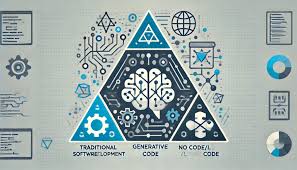
The future of AI belongs to everyone, and no-code platforms are the key to making this vision a reality. By embracing this approach, enterprises can ensure that AI-driven innovation is inclusive, efficient, and transformative.

Read More
Standards in Healthcare Cybersecurity

Deploying Large Language Models in Healthcare

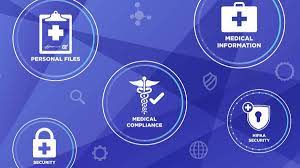
Study Identifies Cost-Effective Strategies for Deploying Large Language Models in Healthcare Efficient deployment of large language models (LLMs) at scale in healthcare can streamline clinical workflows and reduce costs by up to 17 times without compromising reliability, according to a study published in NPJ Digital Medicine by researchers at the Icahn School of Medicine at Mount Sinai. The research highlights the potential of LLMs to enhance clinical operations while addressing the financial and computational hurdles healthcare organizations face in scaling these technologies. To investigate solutions, the team evaluated 10 LLMs of varying sizes and capacities using real-world patient data. The models were tested on chained queries and increasingly complex clinical notes, with outputs assessed for accuracy, formatting quality, and adherence to clinical instructions. “Our study was driven by the need to identify practical ways to cut costs while maintaining performance, enabling health systems to confidently adopt LLMs at scale,” said Dr. Eyal Klang, director of the Generative AI Research Program at Icahn Mount Sinai. “We aimed to stress-test these models, evaluating their ability to manage multiple tasks simultaneously and identifying strategies to balance performance and affordability.” The team conducted over 300,000 experiments, finding that high-capacity models like Meta’s Llama-3-70B and GPT-4 Turbo 128k performed best, maintaining high accuracy and low failure rates. However, performance began to degrade as task volume and complexity increased, particularly beyond 50 tasks involving large prompts. The study further revealed that grouping tasks—such as identifying patients for preventive screenings, analyzing medication safety, and matching patients for clinical trials—enabled LLMs to handle up to 50 simultaneous tasks without significant accuracy loss. This strategy also led to dramatic cost savings, with API costs reduced by up to 17-fold, offering a pathway for health systems to save millions annually. “Understanding where these models reach their cognitive limits is critical for ensuring reliability and operational stability,” said Dr. Girish N. Nadkarni, co-senior author and director of The Charles Bronfman Institute of Personalized Medicine. “Our findings pave the way for the integration of generative AI in hospitals while accounting for real-world constraints.” Beyond cost efficiency, the study underscores the potential of LLMs to automate key tasks, conserve resources, and free up healthcare providers to focus more on patient care. “This research highlights how AI can transform healthcare operations. Grouping tasks not only cuts costs but also optimizes resources that can be redirected toward improving patient outcomes,” said Dr. David L. Reich, co-author and chief clinical officer of the Mount Sinai Health System. The research team plans to explore how LLMs perform in live clinical environments and assess emerging models to determine whether advancements in AI technology can expand their cognitive thresholds. Like Related Posts Who is Salesforce? Who is Salesforce? Here is their story in their own words. From our inception, we’ve proudly embraced the identity of Read more Salesforce Unites Einstein Analytics with Financial CRM Salesforce has unveiled a comprehensive analytics solution tailored for wealth managers, home office professionals, and retail bankers, merging its Financial Read more AI-Driven Propensity Scores AI plays a crucial role in propensity score estimation as it can discern underlying patterns between treatments and confounding variables Read more Tectonic’s Successful Salesforce Track Record Salesforce Technology Services Integrator – Tectonic has successfully delivered Salesforce in a variety of industries including Public Sector, Hospitality, Manufacturing, Read more

Read More
Google’s Gemini 1.5 Flash-8B

Google’s Gemini 1.5 Flash-8B

Google’s Gemini 1.5 Flash-8B: A Game-Changer in Speed and Affordability Google’s latest AI model, Gemini 1.5 Flash-8B, has taken the spotlight as the company’s fastest and most cost-effective offering to date. Building on the foundation of the original Flash model, 8B introduces key upgrades in pricing, speed, and rate limits, signaling Google’s intent to dominate the affordable AI model market. What Sets Gemini 1.5 Flash-8B Apart? Google has implemented several enhancements to this lightweight model, informed by “developer feedback and testing the limits of what’s possible,” as highlighted in their announcement. These updates focus on three major areas: 1. Unprecedented Price Reduction The cost of using Flash-8B has been slashed in half compared to its predecessor, making it the most budget-friendly model in its class. This dramatic price drop solidifies Flash-8B as a leading choice for developers seeking an affordable yet reliable AI solution. 2. Enhanced Speed The Flash-8B model is 40% faster than its closest competitor, GPT-4o, according to data from Artificial Analysis. This improvement underscores Google’s focus on speed as a critical feature for developers. Whether working in AI Studio or using the Gemini API, users will notice shorter response times and smoother interactions. 3. Increased Rate Limits Flash-8B doubles the rate limits of its predecessor, allowing for 4,000 requests per minute. This improvement ensures developers and users can handle higher volumes of smaller, faster tasks without bottlenecks, enhancing efficiency in real-time applications. Accessing Flash-8B You can start using Flash-8B today through Google AI Studio or via the Gemini API. AI Studio provides a free testing environment, making it a great starting point before transitioning to API integration for larger-scale projects. Comparing Flash-8B to Other Gemini Models Flash-8B positions itself as a faster, cheaper alternative to high-performance models like Gemini 1.5 Pro. While it doesn’t outperform the Pro model across all benchmarks, it excels in cost efficiency and speed, making it ideal for tasks requiring rapid processing at scale. In benchmark evaluations, Flash-8B surpasses the base Flash model in four key areas, with only marginal decreases in other metrics. For developers prioritizing speed and affordability, Flash-8B offers a compelling balance between performance and cost. Why Flash-8B Matters Gemini 1.5 Flash-8B highlights Google’s commitment to providing accessible AI solutions for developers without compromising on quality. With its reduced costs, faster response times, and higher request limits, Flash-8B is poised to redefine expectations for lightweight AI models, catering to a broad spectrum of applications while maintaining an edge in affordability. Like Related Posts Who is Salesforce? Who is Salesforce? Here is their story in their own words. From our inception, we’ve proudly embraced the identity of Read more Salesforce Unites Einstein Analytics with Financial CRM Salesforce has unveiled a comprehensive analytics solution tailored for wealth managers, home office professionals, and retail bankers, merging its Financial Read more AI-Driven Propensity Scores AI plays a crucial role in propensity score estimation as it can discern underlying patterns between treatments and confounding variables Read more Tectonic’s Successful Salesforce Track Record Salesforce Technology Services Integrator – Tectonic has successfully delivered Salesforce in a variety of industries including Public Sector, Hospitality, Manufacturing, Read more

Read More
gettectonic.com