Quip Archives - gettectonic.com
Agentic AI Race

Transforming Business Operations Through Autonomous Intelligence

Understanding Agentic AI Agentic AI represents a paradigm shift in artificial intelligence, moving beyond static automation to dynamic systems capable of independent decision-making and real-time adaptation. Unlike traditional rule-based automation, these AI agents can: According to Thadeous Goodwyn of Booz Allen Hamilton, agentic AI achieves objectives by breaking them into subtasks delegated to specialized AI models. This capability is accelerating rapidly due to advances in large language models and generative AI. 10 Transformative Use Cases of Agentic AI 1. Cybersecurity & Risk Management AI agents are revolutionizing security operations by: 2. Supply Chain Optimization Agentic AI transforms logistics by: 3. Advanced Customer Service Beyond basic chatbots, agentic AI enhances support by: 4. Call Center Automation Modern contact centers leverage agentic AI to: 5. Scientific Discovery & R&D In research applications, AI agents: 6. Defense Logistics Planning Military applications include: 7. Smart Manufacturing Agentic systems streamline production by: 8. Utility Infrastructure Management Energy providers use agentic AI for: 9. Multimedia Content Creation Beyond basic generation, agentic AI: 10. Knowledge Management Modern retrieval systems: Implementation Considerations While 26% of enterprises are actively exploring agentic AI (per Deloitte), adoption requires addressing: The Future of Autonomous Operations As noted by industry experts, agentic AI represents more than incremental improvement – it enables fundamentally new ways of working. Organizations that successfully implement these systems will gain: ✔ Enhanced operational resilience✔ Improved decision velocity✔ Greater process efficiency✔ New competitive advantages The transition requires careful planning but offers transformative potential across virtually every industry sector. As the technology matures, agentic AI will increasingly become the cornerstone of intelligent business operations. Like Related Posts AI Automated Offers with Marketing Cloud Personalization AI-Powered Offers Elevate the relevance of each customer interaction on your website and app through Einstein Decisions. Driven by a Read more Salesforce OEM AppExchange Expanding its reach beyond CRM, Salesforce.com has launched a new service called AppExchange OEM Edition, aimed at non-CRM service providers. Read more The Salesforce Story In Marc Benioff’s own words How did salesforce.com grow from a start up in a rented apartment into the world’s Read more Salesforce Jigsaw Salesforce.com, a prominent figure in cloud computing, has finalized a deal to acquire Jigsaw, a wiki-style business contact database, for Read more

Read More

AI-Powered Dynamic Scheduling

Revolutionizing Field Service: How Intelligent Scheduling Solves a $260,000/Hour Problem The High-Stakes World of Field Service Operations In today’s 24/7 service economy, every minute of technician downtime costs enterprises dearly. Aberdeen Group research reveals that unplanned equipment downtime costs manufacturers $260,000 per hour in lost productivity. Yet most field service organizations remain trapped in scheduling chaos: The consequences cascade through operations: missed SLAs, frustrated customers, burned-out technicians, and eroded profit margins. For global manufacturers maintaining critical infrastructure, these inefficiencies aren’t just costly—they threaten business continuity. The Scheduling Bottleneck Breaking Field Service Dispatchers face an impossible juggling act:✔ Matching 100+ technician skills to complex jobs✔ Optimizing routes across continents✔ Accommodating urgent priority tickets✔ Maintaining regulatory compliance Legacy systems—often spreadsheet-based—collapse under this complexity. The result? ✖ Wrong technicians dispatched✖ Critical jobs delayed by days✖ Fuel and overtime costs skyrocketing✖ Compliance risks from inaccurate logs The Solution: AI-Powered Dynamic Scheduling Enter Sandip Patel, a Salesforce Architect whose Custom Slot Scheduler for Field Service Lightning (FSL) is transforming global service operations. Built for manufacturing giant Saint-Gobain, this intelligent system: “Traditional scheduling is chess played with static pieces,” Patel explains. “We built a system where every piece moves dynamically in response to the game.” Measurable Results That Redefine Service Excellence Patel’s solution delivered transformational outcomes for Saint-Gobain: Metric Improvement Scheduling Accuracy ↑ 35% First-Time Fix Rate ↑ 28% Customer Satisfaction ↑ 22 points Technician Productivity ↑ 40% Overtime Costs ↓ 32% The system’s self-learning algorithms continuously improve, analyzing historical data to predict: The Future of Intelligent Field Service As the field service management market grows to 6 billion by 2026 (IDC), Patel’s work establishes a new benchmark. The principles apply across industries: “Where others see complexity, we see patterns,” says Patel, now adapting these concepts for healthcare at United Techno Solutions. “The future belongs to systems that think as fast as the field moves.” For enterprises drowning in scheduling chaos, the message is clear: intelligent automation isn’t optional—it’s the only way to survive in the service economy. The technology exists. The ROI is proven. The question is no longer “if” but “how fast” organizations can implement these solutions. Like Related Posts AI Automated Offers with Marketing Cloud Personalization AI-Powered Offers Elevate the relevance of each customer interaction on your website and app through Einstein Decisions. Driven by a Read more Salesforce OEM AppExchange Expanding its reach beyond CRM, Salesforce.com has launched a new service called AppExchange OEM Edition, aimed at non-CRM service providers. Read more The Salesforce Story In Marc Benioff’s own words How did salesforce.com grow from a start up in a rented apartment into the world’s Read more Salesforce Jigsaw Salesforce.com, a prominent figure in cloud computing, has finalized a deal to acquire Jigsaw, a wiki-style business contact database, for Read more

Read More
Datassential’s AI-Powered Salesforce Plugin is Reshaping Sales

Datassential’s AI-Powered Salesforce Plugin is Reshaping Sales

The Global Foodservice Industry’s Silent Revolution: How Datassential’s AI-Powered Salesforce Plugin is Reshaping Sales The foodservice industry is at an inflection point. In the wake of the pandemic, operators are moving beyond reactive sales tactics, demanding AI tools that proactively anticipate needs, automate workflows, and transform data into strategic insights. Enter Datassential’s Salesforce Plugin—a breakthrough solution that integrates AI-driven market intelligence directly into CRM workflows, effectively becoming the operating system for foodservice sales. Here’s why this innovation matters—and why it deserves investor attention. The Problem: Outdated Systems in a High-Stakes Industry Foodservice sales teams grapple with fragmented data, fierce competition, and staffing shortages, leaving traditional CRMs ill-equipped to deliver actionable insights. Key pain points include: The Solution: Datassential’s AI-Powered Salesforce Plugin Datassential’s plugin tackles these challenges with two game-changing features: The result? A Chicago sales rep can instantly pinpoint Midwest Mexican restaurants expanding their menus, while a Tokyo distributor identifies cafes adopting plant-based offerings—all within a few clicks. Why Investors Should Take Notice Risks to Monitor Yet Datassential’s food-specific data edge and first-mover status in AI-driven CRM tools create a defensible niche. The Investment Thesis: Data as the Ultimate Differentiator Datassential isn’t just selling a plugin—it’s building the data infrastructure layer for foodservice sales. The plugin: For investors, this represents a high-margin, scalable opportunity in a sector ripe for AI disruption. As foodservice embraces data-driven sales, Datassential’s ability to turn raw data into agentic workflows positions it as a critical player in the industry’s tech stack. The Bottom Line The shift to AI-powered sales is inevitable. Datassential’s Salesforce Plugin isn’t just a tool—it’s a strategic imperative for foodservice businesses aiming to thrive in an era of efficiency. Like Related Posts AI Automated Offers with Marketing Cloud Personalization AI-Powered Offers Elevate the relevance of each customer interaction on your website and app through Einstein Decisions. Driven by a Read more Salesforce OEM AppExchange Expanding its reach beyond CRM, Salesforce.com has launched a new service called AppExchange OEM Edition, aimed at non-CRM service providers. Read more The Salesforce Story In Marc Benioff’s own words How did salesforce.com grow from a start up in a rented apartment into the world’s Read more Salesforce Jigsaw Salesforce.com, a prominent figure in cloud computing, has finalized a deal to acquire Jigsaw, a wiki-style business contact database, for Read more

Read More
The AI Adoption Paradox

Dining and Virtual AI

Restaurants are increasingly adopting AI virtual assistants and bots to manage routine tasks like menu inquiries, loyalty program questions, and order tracking, allowing human staff to focus on complex service needs. Platforms like Salesforce Agentforce and Microsoft Copilot are integrated into customer-facing chat systems, apps, and call centers, handling common queries, updating loyalty credits, tracking deliveries, and escalating issues or creating internal tickets without human intervention. Some operators report a 50% reduction in simple inquiries, with guest satisfaction improving due to faster, consistent responses. Salesforce Agentforce, built on Service Cloud and Data Cloud, delivers a conversational concierge experience by analyzing customer history—past orders, loyalty status, and open cases—to provide instant answers or flag issues. For example, ezCater uses Agentforce for natural language order creation, while OpenTable scales global customer support, reducing reliance on human agents for basic tasks. Beyond chatbots, AI-powered operational tools are transforming restaurant efficiency. Computer vision systems, powered by platforms like NVIDIA NIM, Ultralytics, and Viso Suite, monitor dining areas, kitchens, and back-of-house spaces in real time. These systems actively analyze footage, detecting uncleared tables, long lines, or understaffed zones, and alerting staff to act—speeding up table turns and reducing wait times. In fast-casual settings, vision tools manage order queues and crowded pickup areas. In back-of-house, AI vision ensures food safety and equipment compliance, flagging open cooler doors or blocked pathways with automated alerts to managers or centralized teams. These systems reduce reliance on manual checks with real-time anomaly detection, integrating with facility management and workforce platforms for a cohesive response. Future applications could include predictive maintenance, labor forecasting based on traffic patterns, and training gap identification. As edge AI and APIs evolve, smart vision systems are becoming critical restaurant infrastructure. Smartbridge reports a global restaurant group processed over 6 million guest surveys using an Azure-based generative AI tool, automating sentiment analysis, ticket organization, and feedback summaries at scale. This helps chains quickly identify complaints and menu improvement opportunities. Behind the scenes, integrations rely on edge/cloud orchestration and API frameworks. Customer queries route through secure chat interfaces to Agentforce, pulling from CRM or ticket logs, while camera and sensor data feed into AI pipelines on AWS, Azure, or NVIDIA Jetson devices, triggering alerts in Slack, Jira, or ServiceNow. This enables instant responses to issues like spills, tech glitches, or guest requests without human triage. These virtual assistants form an invisible team, handling thousands of queries, freeing staff for hospitality, and moving restaurants toward “agentic AI” that proactively flags issues, prepares for busy periods, and manages inventory shortages. Virtual assistants are no longer just chatbots—they’re essential team members, enhancing operational efficiency, service consistency, and satisfaction for both customers and staff. Like Related Posts AI Automated Offers with Marketing Cloud Personalization AI-Powered Offers Elevate the relevance of each customer interaction on your website and app through Einstein Decisions. Driven by a Read more Salesforce OEM AppExchange Expanding its reach beyond CRM, Salesforce.com has launched a new service called AppExchange OEM Edition, aimed at non-CRM service providers. Read more The Salesforce Story In Marc Benioff’s own words How did salesforce.com grow from a start up in a rented apartment into the world’s Read more Salesforce Jigsaw Salesforce.com, a prominent figure in cloud computing, has finalized a deal to acquire Jigsaw, a wiki-style business contact database, for Read more

Read More
salesforce for manufacturing

Modern Procurement

Modern Procurement: A Strategic Lever for Business Success Procurement has always been complex, but today’s economic pressures—inflation, shifting tariffs, sustainability mandates, and compliance demands—make it more critical than ever. Many organizations still rely on fragmented processes and disconnected systems, leading to uncontrolled spending, compliance risks, and missed savings opportunities. The solution? A strategic, tech-driven approach to procurement. According to The Economist Impact, 38% of procurement leaders rank digital transformation as a top priority today—a figure expected to rise to 54% within five years. Empowering Team Buyers: The First Step to Smarter Procurement Departmental buyers play a crucial role in company spending, yet many lack the tools to make efficient, policy-compliant purchases. Modern e-procurement platforms, like Amazon Business, empower these users with: ✅ Guided buying to steer purchases toward preferred vendors✅ Built-in policy controls to enforce compliance✅ Streamlined workflows to reduce off-contract spending When equipped with the right tools, team buyers become agents of change—driving adoption, uncovering savings, and helping procurement operate more strategically. Fabiola Duenas, CEO of Forza Real Estate Group–Keller Williams Houston, shares how Amazon Business transformed her team’s purchasing: “Our agents now spend far less time sourcing items and managing expenses. Amazon Business provides a seamless, centralized platform—freeing up time to focus on clients rather than procurement headaches.” Three Strategies for Modernizing Procurement 1. Centralize Procurement for Greater Control Decentralized spending leads to maverick buying, inflated costs, and compliance gaps. By consolidating procurement on a single platform, businesses can: ✔ Standardize processes across departments✔ Enforce policy compliance with automated guardrails✔ Reduce tail spend by consolidating vendors Joseph Strumolo, Head of Global Source-to-Pay at Vacasa, explains how centralization drove savings: “By channeling all spend through Amazon Business and eliminating personal credit card use, we reduced costs by 7.7% while improving visibility and rebate eligibility.” 2. Automate to Free Up Strategic Focus Manual procurement processes—approval chasing, reorder tracking, invoice matching—waste time and introduce errors. Automation shifts the focus from tactical tasks to strategic decision-making. Heidi Banks, Senior Director at Jabil, highlights the impact of integrating Amazon Business with Coupa: “95% of our POs now route automatically, eliminating manual intervention. This efficiency gain allows procurement teams to focus on strategic sourcing rather than administrative work.” 3. Leverage Real-Time Analytics for Smarter Decisions Visibility into spending patterns, supplier performance, and compliance gaps is essential for data-driven procurement. Modern platforms provide: 📊 Real-time dashboards to track spending trends🔍 Anomaly detection to flag policy violations📈 Performance analytics to optimize supplier relationships Jabil saw immediate results: “After implementing Amazon Business’ Guided Buying, we saw a 4% increase in preferred vendor spending—and later drove 40% more spend to strategic suppliers.” Procurement: No Longer a Back-Office Function, but a Strategic Driver The role of procurement is evolving—from a cost center to a growth enabler. By embracing centralization, automation, and data-driven insights, businesses can: 🔹 Reduce risk with stronger compliance🔹 Cut costs through smarter spending🔹 Enhance agility in volatile markets The future of procurement is connected, intelligent, and strategic—and the time to modernize is now. Is your procurement function ready to drive business success? Like Related Posts AI Automated Offers with Marketing Cloud Personalization AI-Powered Offers Elevate the relevance of each customer interaction on your website and app through Einstein Decisions. Driven by a Read more Salesforce OEM AppExchange Expanding its reach beyond CRM, Salesforce.com has launched a new service called AppExchange OEM Edition, aimed at non-CRM service providers. Read more The Salesforce Story In Marc Benioff’s own words How did salesforce.com grow from a start up in a rented apartment into the world’s Read more Salesforce Jigsaw Salesforce.com, a prominent figure in cloud computing, has finalized a deal to acquire Jigsaw, a wiki-style business contact database, for Read more

Read More
Artificial Intelligence of Things

Artificial Intelligence of Things

AIoT, or the Artificial Intelligence of Things, refers to the integration of Artificial Intelligence (AI) with the Internet of Things (IoT). Welcome to New Word Wednesday. This combination leverages the data-collecting capabilities of IoT devices and the analytical power of AI to create intelligent systems that can make autonomous decisions and improve efficiency in various applications.  What is AIoT? Key Benefits of AIoT: Examples of AIoT in Action: AIoT represents a significant advancement in how we interact with technology, moving from simple data collection to intelligent systems that can learn, adapt, and make decisions on their own.  Like Related Posts AI Automated Offers with Marketing Cloud Personalization AI-Powered Offers Elevate the relevance of each customer interaction on your website and app through Einstein Decisions. Driven by a Read more Salesforce OEM AppExchange Expanding its reach beyond CRM, Salesforce.com has launched a new service called AppExchange OEM Edition, aimed at non-CRM service providers. Read more The Salesforce Story In Marc Benioff’s own words How did salesforce.com grow from a start up in a rented apartment into the world’s Read more Salesforce Jigsaw Salesforce.com, a prominent figure in cloud computing, has finalized a deal to acquire Jigsaw, a wiki-style business contact database, for Read more

Read More
Agentforce 3 and AI Agents

Agentforce 3 and AI Agents

Salesforce Lifts the Lid on AI Agents with Agentforce 3 No More Black Box AISalesforce has unveiled Agentforce 3, a suite of tools designed to build, test, and manage AI agents with full transparency. The key components—Agentforce Studio (an agent design and testing environment) and Agentforce Command Center (a monitoring dashboard)—will roll out in August, giving businesses unprecedented control over their AI workflows. Taking the Reins on AI Performance The Command Center introduces an observability dashboard that tracks:✔ Agent latency✔ Error rates✔ Escalation rates✔ Individual customer interactions This granular visibility allows businesses to identify failures, analyze root causes, and refine agent behavior—all in plain language. “You’ve got to be able to understand, monitor, and manage these agents before you let them loose on customers—let alone other agents,” said Rebecca Wettemann, Founder of Valoir. Interoperability on the Horizon Salesforce is also advancing AI agent collaboration with: These standards will enable cross-platform agent coordination, allowing one AI agent to orchestrate others—a vision shared by ServiceNow and other enterprise players. Early Adopters See Real-World Impact Goodyear is already customizing Agentforce to:🔹 Strengthen relationships with automakers & resellers🔹 Personalize consumer interactions (e.g., tire recommendations based on weather, location, and purchase history) “We’re shifting from transactional sales to lifetime customer value,” said Mamatha Chamarthi, Goodyear’s Chief Digital Officer. Governance & Security in a Multi-Agent Future Salesforce ensures secure interoperability with:✔ Policy-based data access controls for MCP/A2A agents✔ AgentExchange marketplace (already hosting MCP connections from AWS, Google Cloud, PayPal, and others) “Builders will be able to orchestrate dynamic, multi-agent experiences—safely,” said Gary Lerhaupt, Salesforce VP of Product Architecture. Challenges Ahead: The Ecosystem Factor Despite the push for interoperability, Salesforce still blocks rivals from searching Slack data—a potential hurdle for developer adoption. “Success hinges on open ecosystems,” noted Wettemann. “You need to get more players on board.” The Bottom Line With Agentforce 3, Salesforce is moving AI agents out of the lab and into the real world—equipping businesses with the tools to deploy, monitor, and optimize them at scale. The next frontier? Seamless cross-platform AI teamwork—but only if the industry plays nice. Key Takeaways: Like Related Posts AI Automated Offers with Marketing Cloud Personalization AI-Powered Offers Elevate the relevance of each customer interaction on your website and app through Einstein Decisions. Driven by a Read more Salesforce OEM AppExchange Expanding its reach beyond CRM, Salesforce.com has launched a new service called AppExchange OEM Edition, aimed at non-CRM service providers. Read more The Salesforce Story In Marc Benioff’s own words How did salesforce.com grow from a start up in a rented apartment into the world’s Read more Salesforce Jigsaw Salesforce.com, a prominent figure in cloud computing, has finalized a deal to acquire Jigsaw, a wiki-style business contact database, for Read more

Read More
They're Here - Agentic AI Agents

The Untapped Potential of AI for Frontline Workers

While much of the AI conversation focuses on knowledge workers, a quiet revolution is brewing for skilled labor and frontline professions—electricians, nurses, educators, and construction workers who keep society running. These roles face critical staffing shortages, yet they’re often overlooked in tech innovation. At Microsoft, we believe AI shouldn’t just disrupt—it should empower and uplift. That means designing AI tools that enhance, not replace, human expertise while creating new pathways for economic mobility. Why Frontline Workers Need AI Now More Than Ever 1. Solving the Skilled Labor Shortage Crisis The U.S. faces a paradox: demand for electricians, pipefitters, and ironworkers is soaring (especially with AI’s infrastructure needs), yet fewer people are entering these fields. AI can help by:✔ Simplifying apprenticeship pathways—streamlining forms, certifications, and training.✔ Making skilled trades more accessible—guiding new workers through complex processes. Imagine an AI assistant that helps an apprentice electrician navigate licensing requirements or instantly answers job-site questions—like a mentor in their pocket. 2. AI as a Safety Net, Not Just a Productivity Tool Frontline jobs are physically demanding and often dangerous. In the U.S. alone: AI can prevent accidents by:🔹 Real-time hazard detection (e.g., alerting construction workers to unstable structures).🔹 On-demand guidance (e.g., helping a nurse quickly reference best practices during emergencies). This isn’t about replacing human judgment—it’s about augmenting it to save lives. 3. Restoring Trust in Workplace Tech Many frontline workers are rightfully skeptical of new tech. Nurses, for example, were promised that Electronic Medical Records (EMRs) would help them—but instead, they got more admin work and less patient time. To avoid repeating this mistake, AI must be:✅ Co-designed with workers—not imposed top-down.✅ Focused on real needs—not just corporate efficiency.✅ Transparent and supportive—not another burden. How AI Can Transform Frontline Work 1. Rethinking “Jobs to Be Done” Traditional design focuses on tasks (e.g., “fill out a form”). But for frontline workers, AI should address deeper needs: 2. Multimodal AI for Real-World Scenarios While office workers might use AI for note-taking, frontline workers need:🎤 Voice-first interfaces—for hands-free operation (e.g., nurses dictating notes).👁 Visual recognition—to identify equipment faults or safety hazards.📲 Context-aware alerts—like warning a driver of black ice ahead. 3. End-to-End Career Pathways AI shouldn’t just assist with daily tasks—it should open doors to better jobs. Platforms like LinkedIn could:🔹 Highlight in-demand skilled trades.🔹 Map apprenticeship-to-career journeys.🔹 Connect workers with mentors and certifications. Microsoft’s Commitment: AI for Everyone Through Microsoft Elevate and the AI Economy Institute, we’re investing in: The Bottom Line The future of AI isn’t just about making office work easier—it’s about reinventing essential jobs to be safer, more fulfilling, and more accessible. By designing with—not for—frontline workers, we can ensure AI serves all of society, not just the privileged few. The next wave of AI innovation won’t happen in boardrooms. It’ll happen on construction sites, in hospitals, and in classrooms—where it’s needed most.  Like Related Posts AI Automated Offers with Marketing Cloud Personalization AI-Powered Offers Elevate the relevance of each customer interaction on your website and app through Einstein Decisions. Driven by a Read more Salesforce OEM AppExchange Expanding its reach beyond CRM, Salesforce.com has launched a new service called AppExchange OEM Edition, aimed at non-CRM service providers. Read more The Salesforce Story In Marc Benioff’s own words How did salesforce.com grow from a start up in a rented apartment into the world’s Read more Salesforce Jigsaw Salesforce.com, a prominent figure in cloud computing, has finalized a deal to acquire Jigsaw, a wiki-style business contact database, for Read more

Read More
AI evolves with tools like Agentforce and Atlas

How the Atlas Reasoning Engine Powers Agentforce

Autonomous, proactive AI agents form the core of Agentforce. But how do they operate? A closer look reveals the sophisticated mechanisms driving their functionality. The rapid pace of AI innovation—particularly in generative AI—continues unabated. With today’s technical advancements, the industry is swiftly transitioning from assistive conversational automation to role-based automation that enhances workforce capabilities. For artificial intelligence (AI) to achieve human-level performance, it must replicate what makes humans effective: agency. Humans process data, evaluate potential actions, and execute decisions. Equipping AI with similar agency demands exceptional intelligence and decision-making capabilities. Salesforce has leveraged cutting-edge developments in large language models (LLMs) and reasoning techniques to introduce Agentforce—a suite of ready-to-use AI agents designed for specialized tasks, along with tools for customization. These autonomous agents can think, reason, plan, and orchestrate with remarkable sophistication, marking a significant leap in AI automation for customer service, sales, marketing, commerce, and beyond. Agentforce: A Breakthrough in AI Reasoning Agentforce represents the first enterprise-grade conversational automation solution capable of proactive, intelligent decision-making at scale with minimal human intervention. Several key innovations enable this capability: Additional Differentiators of Agentforce Beyond the Atlas Reasoning Engine, Agentforce boasts several distinguishing features: The Future of Agentforce Though still in its early stages, Agentforce is already transforming businesses for customers like Wiley and Saks Fifth Avenue. Upcoming innovations include: The Third Wave of AI Agentforce heralds the third wave of AI, surpassing predictive AI and copilots. These agents don’t just react—they anticipate, plan, and reason autonomously, automating entire workflows while ensuring seamless human collaboration. Powered by the Atlas Reasoning Engine, they can be deployed in clicks to revolutionize any business function. The era of autonomous AI agents is here. Are you ready? Like Related Posts AI Automated Offers with Marketing Cloud Personalization AI-Powered Offers Elevate the relevance of each customer interaction on your website and app through Einstein Decisions. Driven by a Read more Salesforce OEM AppExchange Expanding its reach beyond CRM, Salesforce.com has launched a new service called AppExchange OEM Edition, aimed at non-CRM service providers. Read more The Salesforce Story In Marc Benioff’s own words How did salesforce.com grow from a start up in a rented apartment into the world’s Read more Salesforce Jigsaw Salesforce.com, a prominent figure in cloud computing, has finalized a deal to acquire Jigsaw, a wiki-style business contact database, for Read more

Read More
AI evolves with tools like Agentforce and Atlas

Salesforce Doubles Down on Agentic AI to Transform Partner Ecosystem

Salesforce is making a major push into agentic artificial intelligence with its newest offering, Agentforce for Partner Community, now integrated directly into the Salesforce Partner Community platform, according to Channel Futures. Lynne Zaledonis, EVP of Customer Success and Partner Marketing at Salesforce, hailed the tool as a “game-changing innovation” that enables consulting and systems integrator partners to tap into round-the-clock AI support, streamline operations, and accelerate case resolution through real-time conversational assistance. Unlike traditional chatbots, Agentforce doesn’t just fetch technical and programmatic answers—it can also execute actions, such as extending Trial Orgs. By tackling workflow inefficiencies and breaking down data silos, Salesforce aims to equip partners with the tools needed to guide clients through every stage of AI adoption, from initial assessment to full implementation. As consulting partners roll out Agentforce, Zaledonis noted that this shift toward AI-driven operations is reshaping business models and demanding new skill sets. To support partners in this transition, Salesforce is rolling out workshops, certifications, and strategic playbooks—helping them adapt, monetize, and spearhead the move toward an AI-powered future. Like Related Posts AI Automated Offers with Marketing Cloud Personalization AI-Powered Offers Elevate the relevance of each customer interaction on your website and app through Einstein Decisions. Driven by a Read more Salesforce OEM AppExchange Expanding its reach beyond CRM, Salesforce.com has launched a new service called AppExchange OEM Edition, aimed at non-CRM service providers. Read more The Salesforce Story In Marc Benioff’s own words How did salesforce.com grow from a start up in a rented apartment into the world’s Read more Salesforce Jigsaw Salesforce.com, a prominent figure in cloud computing, has finalized a deal to acquire Jigsaw, a wiki-style business contact database, for Read more

Read More
Streamline Data Collection from Connected Vehicles and Assets with AWS and Salesforce

Streamline Data Collection from Connected Vehicles and Assets with AWS and Salesforce

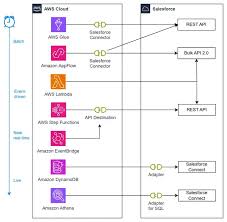
Unlock Real-Time Insights with AWS IoT and Salesforce Industry Clouds This guide explains how to gather, process, and distribute data from connected vehicles and industrial assets—such as manufacturing equipment or utility meters—into Salesforce Industry Cloud solutions using Amazon Web Services (AWS). Key AWS IoT Services for Data Collection By leveraging these services, businesses can integrate telemetry data into: Why This Integration Matters Strong customer relationships rely on real-time insights. Automakers, manufacturers, and utility providers can enhance customer interactions by unifying telemetry data with CRM workflows—enabling smarter marketing, sales, and service decisions. Prerequisites To integrate AWS IoT with Salesforce, you’ll need: AWS Services Salesforce Requirements Use Cases 1. Predictive Maintenance with AWS & Salesforce 2. In-Car Notifications 3. On-Demand Vehicle/Asset Health Insights 4. Data-Driven Customer Engagement Solution Architecture Data Flow Overview Implementation Steps 1. Set Up AWS IoT Rules 2. Configure Salesforce Event Handling 3. Enable Real-Time Analytics Conclusion By integrating AWS IoT with Salesforce Industry Clouds, businesses can:✔ Improve operational efficiency with predictive maintenance.✔ Enhance customer experiences through real-time alerts and diagnostics.✔ Drive data-driven decisions with unified analytics. Next Steps: Empower your teams with real-time IoT insights—start building today! Like Related Posts AI Automated Offers with Marketing Cloud Personalization AI-Powered Offers Elevate the relevance of each customer interaction on your website and app through Einstein Decisions. Driven by a Read more Salesforce OEM AppExchange Expanding its reach beyond CRM, Salesforce.com has launched a new service called AppExchange OEM Edition, aimed at non-CRM service providers. Read more The Salesforce Story In Marc Benioff’s own words How did salesforce.com grow from a start up in a rented apartment into the world’s Read more Salesforce Jigsaw Salesforce.com, a prominent figure in cloud computing, has finalized a deal to acquire Jigsaw, a wiki-style business contact database, for Read more

Read More
agentic revolution

The Agentic AI Revolution

The Agentic AI Revolution: Reskilling and Trust as Competitive Imperatives The rise of agentic AI—autonomous systems capable of independent decision-making—isn’t just another tech trend; it’s a fundamental shift in how businesses operate. With AI agents projected to unlock $6 trillion in digital labor value, companies that fail to adapt risk being outpaced by AI-driven competitors. To thrive in this new era, business leaders must focus on two critical pillars: 1. Reskilling for the Age of AI Collaboration The Urgent Skills Gap Key Competencies for the AI Era ✅ Human-AI Collaboration – Managing AI agents, prompt engineering, and oversight✅ Strategic Thinking – Shifting from routine tasks to big-picture planning✅ Leadership & Management – Overseeing AI “teams” and decision flows A Call to Action for Businesses “With AI handling routine coding, developers can now focus on system architecture and innovation—but only if we equip them for this shift.” 2. Trust: The Foundation of AI Adoption The Risks of Unchecked AI Building a Trusted AI Framework 🛡️ Guardrails & Escalation Protocols – Define when AI must defer to humans🔐 Data Protection – Ensure compliance with zero-retention LLM policies (e.g., Einstein Trust Layer)📊 Transparency Tools – Give employees visibility into AI decision logic Salesforce’s Approach: Agentforce The Path Forward: AI + Humans in Partnership Why This Matters Now Key Takeaways for Leaders Linda SaundersCountry Manager & Senior Director of Solution Engineering, Africa | Salesforce “The future belongs to businesses that combine AI’s efficiency with human ingenuity—guided by an unwavering commitment to trust.” Ready to lead in the agentic AI era? The AI revolution isn’t coming—it’s here. The question is: Will your organization be a disruptor or disrupted? Like Related Posts AI Automated Offers with Marketing Cloud Personalization AI-Powered Offers Elevate the relevance of each customer interaction on your website and app through Einstein Decisions. Driven by a Read more Salesforce OEM AppExchange Expanding its reach beyond CRM, Salesforce.com has launched a new service called AppExchange OEM Edition, aimed at non-CRM service providers. Read more The Salesforce Story In Marc Benioff’s own words How did salesforce.com grow from a start up in a rented apartment into the world’s Read more Salesforce Jigsaw Salesforce.com, a prominent figure in cloud computing, has finalized a deal to acquire Jigsaw, a wiki-style business contact database, for Read more

Read More
Time Series AI

Time Series AI

Key Aspects of Time Series AI 1. Time Series Data Time series data consists of sequential data points recorded at regular intervals, enabling the analysis of trends, seasonality, and patterns over time. This structured format is essential for forecasting, anomaly detection, and other AI-driven analyses. 2. AI Techniques for Time Series Analysis Multiple AI and machine learning techniques are applied to time series data, including: These techniques help in forecasting future values, detecting anomalies, classifying sequences, and imputing missing data. 3. Applications of Time Series AI Time series AI is widely used across industries for: 4. Real-World Examples 5. Benefits of Time Series AI By leveraging AI for time series analysis, businesses and organizations gain a competitive edge through smarter forecasting and automation. Like Related Posts AI Automated Offers with Marketing Cloud Personalization AI-Powered Offers Elevate the relevance of each customer interaction on your website and app through Einstein Decisions. Driven by a Read more Salesforce OEM AppExchange Expanding its reach beyond CRM, Salesforce.com has launched a new service called AppExchange OEM Edition, aimed at non-CRM service providers. Read more The Salesforce Story In Marc Benioff’s own words How did salesforce.com grow from a start up in a rented apartment into the world’s Read more Salesforce Jigsaw Salesforce.com, a prominent figure in cloud computing, has finalized a deal to acquire Jigsaw, a wiki-style business contact database, for Read more

Read More
AI Agents, Tech's Next Big Bet

Embracing “Intelligent Austerity”

Embracing “Intelligent Austerity”: How Scotland Can Lead the Way in Public Sector Innovation As the UK Government enforces a 15% reduction in operating costs across departments, the pressure to streamline workflows through generative AI has never been greater. While these targets have sparked concern in Westminster, Scotland’s legacy of innovation—from tidal energy to healthcare—positions it to redefine what austerity can achieve. Rather than resorting to blunt cuts that undermine services and hurt the most vulnerable constituents, Scotland has a unique opportunity to pioneer intelligent austerity: delivering significant cost savings and productivity gains without sacrificing the quality of essential public services. But how? A Smarter Approach to Public Services At Salesforce, we’re not just driving agentic transformation—we’re challenging governments to rethink efficiency. Our technology is already embedded across the UK public sector and beyond. With Agentforce, our goal isn’t to replace human workers but to empower them by eliminating repetitive, low-value tasks. When I speak with civil servants, I ask a simple question: “What parts of your day drain your productivity?” The answer is almost always the same: tedious administrative work that stifles innovation. The key to unlocking societal progress—whether in fighting child poverty, boosting the economy, or tackling climate change—lies in making small, daily efficiency gains. By automating routine tasks, we free up staff to focus on what they do best: high-impact, human-centric work. Agentforce serves as a practical blueprint for intelligent austerity, delivering lasting efficiencies while preserving—and even enhancing—the human touch in public services. Intelligent Austerity: Efficiency Without Sacrifice Traditional austerity often means deep, painful cuts that erode services and fuel public frustration. Intelligent austerity, by contrast, targets inefficiencies—like costly call centres and outdated administrative processes—while reinvesting savings where they matter most. Instead of lengthy, expensive IT overhauls that tie departments to consultants, we advocate for off-the-shelf AI solutions that deliver value in weeks, not years. These integrate seamlessly with existing systems, improving transparency, agility, and scalability from day one. The result? Departments can exceed cost-saving targets—even surpassing the 15% goal—without the downsides of traditional austerity. Agents in Action: Real-World Success Stories These examples prove that AI-driven transformation can counter fiscal pressures while improving service delivery—a win-win for both budgets and citizens. Scotland’s AI Opportunity Imagine every government department equipped with a 24/7 AI expert—an intelligent assistant capable of answering policy questions, processing documents, or even serving as a strategic advisor. Early AI adoption is like the first SatNav systems: helpful but imperfect. The real breakthrough comes when AI evolves into a collision avoidance system—actively preventing problems and enhancing decision-making. Our AI Agents Handbook outlines how Scotland can harness this potential. By adopting AI strategically, public services can achieve cost savings that are reinvested in key priorities—eradicating child poverty, growing the economy, and addressing the climate crisis. The Future: Smarter, More Agile Public Services AI isn’t about replacing humans—it’s about empowering them. With each small efficiency gain, departments become more agile, better equipped to deliver sustainable, high-quality services. Scotland has the chance to lead this shift, turning fiscal challenges into opportunities for innovation. Interested in learning more? Let’s discuss how AI Agents can transform your organization. Get in touch for a personalized consultation. Like Related Posts AI Automated Offers with Marketing Cloud Personalization AI-Powered Offers Elevate the relevance of each customer interaction on your website and app through Einstein Decisions. Driven by a Read more Salesforce OEM AppExchange Expanding its reach beyond CRM, Salesforce.com has launched a new service called AppExchange OEM Edition, aimed at non-CRM service providers. Read more The Salesforce Story In Marc Benioff’s own words How did salesforce.com grow from a start up in a rented apartment into the world’s Read more Salesforce Jigsaw Salesforce.com, a prominent figure in cloud computing, has finalized a deal to acquire Jigsaw, a wiki-style business contact database, for Read more

Read More
gettectonic.com