- gettectonic.com - Page 2
Scale Data and Analytics in the Cloud

Scale Data and Analytics in the Cloud

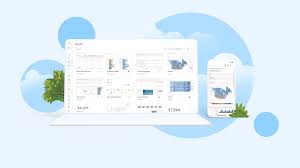
Winning in the Data Economy In the rapidly growing data economy, enterprises are eager to gain a competitive edge. This data economy, which revolves around the global supply and demand for data and data-driven applications, continues to expand as more organizations seek critical insights to drive their success. Scale Data and Analytics in the Cloud. The value of data isn’t a new concept. Companies acquired other companies for the sole purpose of obtaining their data – customers, prospects, etc. The value of actionable data is a bit newer. Whereas we once marketed to prospects based primarily on historical data, data-driven applications let us market at the right time on the right channel with the right message. To understand what it takes to excel in the new data economy, Tableau partner Snowflake surveyed business and technology leaders. Their research highlighted the characteristics of the leaders and laggards, emphasizing the importance of a strong data strategy for achieving successful outcomes. Industries like financial services, health and life sciences, and retail are still struggling to fully benefit from the data economy, often finding it challenging to unlock the full value of their data. Here are four key actions that can help organizations win in today’s data economy and achieve tangible results: 1. Create a Strong Data Culture A robust data culture is foundational for realizing the value of data. Organizations that prioritize becoming data-driven see significant benefits: Jennifer Belissent, Principal Data Strategist at Snowflake, emphasizes how a cloud-enabled data culture accelerates time-to-value by breaking down organizational silos. Tableau offers a playbook to help organizations build, expand, and mature their data capabilities. 2. Adopt an AI-Driven, Enterprise-Ready Analytics Platform Data leaders utilize AI-driven enterprise analytics platforms like Tableau, which provide trusted predictions and insights to scale decision-making. Traditional solutions often fall short in delivering speed to insight and self-service capabilities. Tableau, particularly with Tableau Cloud, offers an easy-to-scale solution that manages and analyzes data across various sources, supporting meaningful impact and agility. Tableau Cloud’s Advanced Management capabilities enhance security, usability, and scalability. Additionally, Tableau Accelerators—over 100 ready-to-use, in-product dashboard starters—support various industries, enabling comprehensive analysis and problem-solving. 3. Migrate to the Cloud Cloud adoption is accelerating as organizations pursue data-driven digital transformations. The cloud offers flexibility, agility, scalability, reduced IT overhead, and increased resilience and performance. Key considerations for cloud migration include: Whether opting for on-premise, hybrid, or full cloud migration, Tableau connects to data wherever it resides, fueling insights across the business. Tableau’s own journey to the cloud involved evaluating criteria, enhancing collaboration, and applying new data management processes, resulting in a unified source of truth. 4. Choose the Right Partners to Scale Cloud-Native Analytics Selecting partners that facilitate cloud-native analytics is crucial. Ideal partners should offer: Snowflake and Tableau exemplify these qualities, addressing data and organizational demands. Snowflake provides extensive data storage and processing, while Tableau offers intuitive, self-service analytics. This partnership has helped enterprises like Cart.com achieve significant revenue growth by embedding Tableau analytics in Snowflake’s platform. Embrace the Data Economy with Cloud-Native Analytics Regardless of where your organization stands in the data economy, taking steps to leverage cloud-native analytics can unlock numerous opportunities. Tableau continues to invest in its platform to help organizations thrive with data in the cloud, offering expert advice, solutions, and valuable partnerships. By adopting these strategies, your organization can become a leader in the data economy and achieve remarkable results. Like Related Posts Who is Salesforce? Who is Salesforce? Here is their story in their own words. From our inception, we’ve proudly embraced the identity of Read more Salesforce Marketing Cloud Transactional Emails Salesforce Marketing Cloud Transactional Emails are immediate, automated, non-promotional messages crucial to business operations and customer satisfaction, such as order Read more Salesforce Unites Einstein Analytics with Financial CRM Salesforce has unveiled a comprehensive analytics solution tailored for wealth managers, home office professionals, and retail bankers, merging its Financial Read more AI-Driven Propensity Scores AI plays a crucial role in propensity score estimation as it can discern underlying patterns between treatments and confounding variables Read more


Read More
Use Salesforce Einstein Copilot

Marketing GPT and Commerce GPT Announcement

Salesforce Introduces Marketing GPT and Commerce GPT to Revolutionize Personalized Campaigns and Shopping Experiences with Generative AI San Francisco — June 7, 2023 — Salesforce (NYSE: CRM), the global CRM leader, announced today at Connections its latest innovations, Marketing GPT and Commerce GPT, which combine generative AI with real-time data from Data Cloud. These groundbreaking products aim to transform how businesses engage with customers by delivering personalized experiences across every touchpoint. Significance: Generative AI is driving efficiency and productivity for businesses, with 60% of marketers acknowledging its transformative potential. However, concerns about accuracy and quality remain prevalent, highlighting the importance of trusted customer data for effective generative AI implementation. What’s new: Marketing GPT empowers marketers to create personalized, relevant experiences using generative AI and trusted first-party data from Data Cloud. With Marketing GPT and Data Cloud, marketers can: Commerce GPT enables companies to deliver customized shopping experiences throughout the buyer’s journey with auto-generated insights and recommendations based on unified real-time data from Data Cloud. With Commerce GPT and Data Cloud, brands can: Salesforce partners like DEPT®, Media.Monks, NeuraFlash, and Slalom are building a generative AI ecosystem with new accelerators, language models, and integrations to simplify Marketing GPT and Commerce GPT implementation for businesses. Soundbites: Availability: Like1 Related Posts Who is Salesforce? Who is Salesforce? Here is their story in their own words. From our inception, we’ve proudly embraced the identity of Read more Salesforce Marketing Cloud Transactional Emails Salesforce Marketing Cloud Transactional Emails are immediate, automated, non-promotional messages crucial to business operations and customer satisfaction, such as order Read more Salesforce Unites Einstein Analytics with Financial CRM Salesforce has unveiled a comprehensive analytics solution tailored for wealth managers, home office professionals, and retail bankers, merging its Financial Read more AI-Driven Propensity Scores AI plays a crucial role in propensity score estimation as it can discern underlying patterns between treatments and confounding variables Read more

Read More
public sector and tribal government

Subscription Models

In today’s business world, numerous companies are either adopting or considering the implementation of paid subscription models. A subscription model involves providing products or services to customers on a recurring basis, usually monthly or annually, in exchange for a regular and likely reduced fee. This approach helps companies establish predictable revenue streams, foster customer loyalty, and offer flexibility to customers. Successfully refreshing the pricing strategy for your subscription business requires two essential components: a clear picture of what success looks like and a customer-first approach. Recurring revenue serves as a cornerstone for growth and predictability in business operations. By incorporating Subscription Models, companies can initiate each quarter with a baseline revenue, providing a foundation for continued growth. Customers benefit from flexible payment options, such as pay-as-you-go, facilitating easier commitment to purchases. Subscription Models While building recurring revenue through subscriptions is advantageous, success is not guaranteed solely by its implementation. Traditional billing methods may hinder the full potential of subscription selling, necessitating collaboration between sales and finance teams to introduce new processes and technology to capture maximum value. The first step to refreshing your pricing strategy is to identify what’s not currently working. Signals of dysfunction, such as excessive discounts, constant promotions, and static price rates, indicate areas for improvement. A thorough review of these red flags helps identify the goal of your pricing refresh. Have a clear picture of the metric you are trying to move, whether it’s increasing customers in a particular segment or improving the upsell path. Paralysis of Analysis After the initial analysis stage, many companies find themselves in a state of paralysis. We call that paralysis of analysis. It’s crucial to be cautious with existing customers while applying new pricing to new customers. Set a timeline for when your new subscription pricing will be available to new customers and work backward from there. Pilot your new pricing with both new and existing customers, supporting both old and new pricing in your catalog for testing, iteration, and repetition. For new customers, test the right price point and packaging strategy, then roll it out to all new customers after the launch date. For existing customers, identify those who will benefit from the new pricing strategy and start with them. It’s imperative to pilot your new pricing with both new and existing customers, ensuring a smooth transition. Salesforce’s Next Best Action tool will help you automate this process. The adoption of recurring revenue models extends beyond technology companies. Michelin, for instance, successfully transitioned to a recurring revenue model by charging customers based on mileage instead of selling tires outright. This strategic shift increased profits and maintained Michelin’s competitive edge in the tire industry. This example underscores that any company, regardless of industry, can develop a subscription-based model for their existing lines of business. Recurring Revenue In a subscription model, customers are charged on a recurring basis for a product or service. They choose how long and how often they want to receive each offer, with the option to renew or cancel at any time. This approach creates a contract between the business and the customer, providing a steady and predictable revenue stream. It also has been proven to enhance customer loyalty and satisfaction. A subscription business model is one in which customers are charged a recurring fee for access to a product, replacing a one-time expense. This recurring fee is typically paid monthly or yearly, offering customers the flexibility to choose the frequency of their purchases. In some cases customers can even choose the delay period between shipments. Like Related Posts Who is Salesforce? Who is Salesforce? Here is their story in their own words. From our inception, we’ve proudly embraced the identity of Read more Salesforce Marketing Cloud Transactional Emails Salesforce Marketing Cloud Transactional Emails are immediate, automated, non-promotional messages crucial to business operations and customer satisfaction, such as order Read more Salesforce Unites Einstein Analytics with Financial CRM Salesforce has unveiled a comprehensive analytics solution tailored for wealth managers, home office professionals, and retail bankers, merging its Financial Read more AI-Driven Propensity Scores AI plays a crucial role in propensity score estimation as it can discern underlying patterns between treatments and confounding variables Read more
Read More
Salesforce Einstein and Einstein Automate

AI Fundamentals

The concept of Artificial Intelligence (AI) has long been a fascination for storytellers and sci-fi enthusiasts. However, for a considerable period, most individuals didn’t give AI much serious consideration, perceiving it as a distant futuristic sci-fi possibility. Nevertheless, researchers and computer scientists have been actively working to transform the dream of AI into a tangible reality, leading some to insist that we have already entered the Age of AI. The AI Fundamentals explained. While the extent of AI’s integration into our daily lives remains uncertain, it is evident that meaningful conversations about AI require a shared vocabulary and a solid foundation of core concepts. Presently, asking ten people to define artificial intelligence is likely to yield ten different answers. This insight attempts to establish a common understanding by exploring AI’s current capabilities and digging into the methodologies employed by computer scientists in creating remarkable AI systems. AI Fundamentals Defining AI proves challenging due to distorted perceptions influenced by science fiction narratives portraying AI as a potentially malevolent force. Additionally, our tendency to benchmark AI against human intelligence contributes to this challenge. And I don’t want AI to be able to write a blog post as well as me! Acknowledging the vast spectrum of intelligence in the animal kingdom, as well as the diversity in human intelligence, prompts a need to view artificial intelligence through a similar lens. As humans we may think we are a lot smarter than a bird. But I don’t know how to fly, do you? AI Capabilities Recognizing specific AI capabilities tailored to distinct tasks is crucial, dispelling the notion of a universally proficient AI, known as general AI, which remains a distant goal. AI currently exists in specialized forms, each excelling at particular jobs. Key AI capabilities fall into several categories: It’s safe to say, artificial intelligence encompasses computer abilities associated with human intuition, inference, and reasoning. Presently, AI skills are highly specialized, covering categories like numeric predictions and language processing. The evolving landscape of AI offers a glimpse into the transformative potential of this technology, emphasizing its current application in specific domains. Like1 Related Posts Who is Salesforce? Who is Salesforce? Here is their story in their own words. From our inception, we’ve proudly embraced the identity of Read more Salesforce Marketing Cloud Transactional Emails Salesforce Marketing Cloud Transactional Emails are immediate, automated, non-promotional messages crucial to business operations and customer satisfaction, such as order Read more Salesforce Unites Einstein Analytics with Financial CRM Salesforce has unveiled a comprehensive analytics solution tailored for wealth managers, home office professionals, and retail bankers, merging its Financial Read more AI-Driven Propensity Scores AI plays a crucial role in propensity score estimation as it can discern underlying patterns between treatments and confounding variables Read more

Read More
Salesforce Communications Cloud

Salesforce Communications Cloud

Salesforce’s Communications Cloud enables the delivery of digital-first journeys and seamless order processes, offering time and cost savings while enhancing operational efficiencies. In collaboration with Tectonic, this Salesforce tool empowers the creation of straightforward yet powerful digital experiences. It aids in streamlining product and service launches, adhering to industry standards, architectures, and leveraging predictive analytics to reduce churn. Communications Cloud Formerly Vlocity Built on the world’s leading CRM platform, Communications Cloud, formerly known as Vlocity for communications, empowers B2C, B2B, and wholesale communications service providers (CSPs) to transition to a catalog-driven digital BSS (digital business support system). With purpose-built industry functionality and the comprehensive capabilities of Sales Cloud and Service Cloud, service providers can swiftly adapt to changing customer expectations, achieve faster time-to-value, and integrate every aspect of their organization, from marketing and retail channels to customer care and operations. B2B, B2C, and Multi-Channel Salesforce Communications Cloud ensures businesses exceed customer expectations across B2B, B2C, and multiple channels. It seamlessly integrates with Salesforce Marketing, Sales, and Service Clouds, offering industry-specific functionality. Utilizing analytics and artificial intelligence (AI), it delivers personalized services, enabling omnichannel marketing across various channels. Get Help Today Collaborating with Tectonic ensures the seamless integration of Communications Cloud functionality with other Salesforce systems, promoting smooth data flow and cohesive organizational processes. For specific business operations, like number reservation systems or credit check applications, that are not directly supported by Salesforce Customer 360, OmniStudio and APIs can be employed to integrate third-party applications. This solution provides industry-standard APIs, including TMF620 and TMF645 APIs. Thereby automating processes for faster and more accurate service. Tailored Customer Interactions Communications Cloud allows tailoring customer interactions based on individual preferences, providing notifications about promotions, service activations, outages, billing information, product changes, and feedback opportunities. Each communication is tracked on the customer account. Thus enabling Einstein Analytics to monitor interactions for efficient and personalized service. Commercial and technical teams collaborate using a shared catalog to design and develop customer-specific offers. With reusable components in the shared catalog, teams can efficiently build, test, and connect offer elements, reducing time-to-market. Customers can order products and services through various channels, and Communications Cloud, being omnichannel, processes and stores information using a master data source. It ensures that products and services offered are relevant, correctly configured, priced, available, and deliverable before the order is placed. Integration with Marketing and Service Clouds facilitates order fulfillment, service scheduling, and customer communication. Call center interactions become opportunities to build relationships and make informed suggestions. What used to be complaints now enhancing the customer experience. In the communications industry, changes to plans and services, known as move, add, change, delete (MACD), are managed through Communications Cloud integration with Salesforce Service and Marketing clouds. Sales reps create MACD orders with industries CPQ, keeping customers informed of progress and scheduling relevant service appointments. Tectonic, as a Salesforce Consulting Partner, assists companies in utilizing Communications Cloud effectively. Through the discovery process, roles and responsibilities are mapped to determine how key employees can best leverage Salesforce Communications Cloud. Tectonic comprises a skilled team of Salesforce-certified Consultants, Developers, Analysts, and Project Managers. Specializing in innovative Salesforce solutions, the team brings custom Salesforce technology to various business aspects. Always ensuring strategic services align with specific needs. Like Related Posts Tectonic’s Successful Salesforce Track Record Salesforce Technology Services Integrator – Tectonic has successfully delivered Salesforce in a variety of industries including Public Sector, Hospitality, Manufacturing, Read more Demandbase Salesforce Integration The integration of Demandbase with Salesforce creates a seamless connection between Demandbase One and your Salesforce CRM, establishing a bidirectional Read more Box and Salesforce Integration What is Box and Salesforce integration? Together, Box and Salesforce integration bring you seamless solutions that make it easy for Read more Salesforce Integrations How do you make Salesforce even better? Integrate it with all the third party apps you already use. From productivity Read more

Read More
Benioff Dreams of AI Making Messaging Intelligent

Benioff Dreams of AI Making Messaging Intelligent

During the company’s recent earnings call, Salesforce CEO Marc Benioff spoke about the “revolutionary” impacts of generative AI, emphasizing the immense potential it holds for the tech industry. Benioff Dreams of AI Making Messaging Intelligent. Benioff highlighted Salesforce’s integration of OpenAI’s ChatGPT platform into Slack, the workplace messaging app owned by Salesforce. This integration aims to enhance Slack’s capabilities by enabling features such as conversation summarization, research assistance, and message drafting directly within the platform. Benioff expressed his vision for Slack to become intelligent itself, leveraging the wealth of data stored within the platform. He emphasized the transformative potential of generative AI in providing intelligent support to users, potentially revolutionizing customer service interactions and business operations. Salesforce’s clients, including Gucci, are already leveraging AI to enhance customer service experiences, reflecting the growing adoption of AI-driven solutions across various industries. Generative AI offers benefits such as time-saving automation of routine tasks, efficient research gathering, and concise information delivery, benefiting individuals in personal, professional, and academic contexts. However, concerns regarding the ethical implications of generative AI have also surfaced, including issues related to deepfake images, bias, and potential job displacement. Some advocate for stricter regulation and careful assessment of AI’s risks before further development. Benioff Dreams of AI Making Messaging Intelligent Despite these concerns, Benioff remains optimistic about the transformative potential of generative AI, describing it as a revolution that will reshape the world in unprecedented ways. He believes that we are only at the beginning of this AI revolution, with much more innovation and transformation yet to come. Like Related Posts Who is Salesforce? Who is Salesforce? Here is their story in their own words. From our inception, we’ve proudly embraced the identity of Read more Salesforce Marketing Cloud Transactional Emails Salesforce Marketing Cloud Transactional Emails are immediate, automated, non-promotional messages crucial to business operations and customer satisfaction, such as order Read more Salesforce Unites Einstein Analytics with Financial CRM Salesforce has unveiled a comprehensive analytics solution tailored for wealth managers, home office professionals, and retail bankers, merging its Financial Read more AI-Driven Propensity Scores AI plays a crucial role in propensity score estimation as it can discern underlying patterns between treatments and confounding variables Read more

Read More
Salesforce Sales Cloud

Salesforce Sales Cloud GPT

What is Salesforce Sales Cloud GPT? Salesforce’s Einstein GPT is a robust AI tool that seamlessly integrates both public and private AI models with CRM data. This unique synergy allows users to articulate natural-language queries directly within the Salesforce CRM environment, resulting in continuously adapted AI-generated content tailored to evolving customer information and requirements. Salesforce Sales Cloud GPT The suite encompasses a suite of powerful Artificial Intelligence (AI) products, including the Einstein service, the workplace-messaging app Slack, and the data analysis software Tableau. Notably, it unveils a compelling array of natural language tools slated for release in 2023, such as Sales GPT for personalized emails, Service GPT for service messages and chatbots, and Marketing GPT for refined audience targeting. Furthermore, the AI Cloud is meticulously crafted to host extensive language models from various providers such as AWS, Anthropic, and Cohere. Salesforce’s commitment to AI startups is further underscored by a substantial $500 million injection into its venture capital fund. Impact on Sales Cloud with AI and EinsteinGPT: Sales Cloud undergoes a transformative impact through AI, notably EinsteinGPT. Anchored in principles of Trust, Security, and Privacy, Salesforce introduces the Einstein Trust Layer within its AI Cloud offering to assuage privacy concerns. This layer ensures adaptability and transparency while upholding stringent standards for data privacy, security, and compliance. EinsteinGPT for Sales Cloud emerges as a game-changing innovation, serving as a personalized assistant within Salesforce CRM to streamline sales processes. Leveraging Generative AI, it transcends mere data analysis by generating novel content, ideas, and approaches. Key features encompass Einstein GPT, Einstein Conversation Insights, and Einstein Relationship Insights. Industries Experience Tangible Impact: Salesforce’s substantial investments in AI are reshaping the landscape of sales and customer engagement. As EinsteinGPT becomes an integral part of the platform, the anticipation of new and innovative use cases signals a significant leap forward in AI accessibility. Tectonic is please to announce our Sales Cloud Implementation Solutions. Like1 Related Posts Who is Salesforce? Who is Salesforce? Here is their story in their own words. From our inception, we’ve proudly embraced the identity of Read more Salesforce Marketing Cloud Transactional Emails Salesforce Marketing Cloud Transactional Emails are immediate, automated, non-promotional messages crucial to business operations and customer satisfaction, such as order Read more Salesforce Unites Einstein Analytics with Financial CRM Salesforce has unveiled a comprehensive analytics solution tailored for wealth managers, home office professionals, and retail bankers, merging its Financial Read more AI-Driven Propensity Scores AI plays a crucial role in propensity score estimation as it can discern underlying patterns between treatments and confounding variables Read more
Read More

Race to AI for CX

AI emerges as a transformative force revolutionizing the customer experience (CX) landscape in the dynamic world of global e-commerce. Its ability to handle extensive data and facilitate large-scale automation empowers brands to offer tailored and seamless CX journeys, fostering customer loyalty and satisfaction. The great race to AI for CX is upon us. In the era of rapid technological advancements, organizations worldwide are in a race to integrate AI-driven capabilities across their operations. The widespread adoption of AI is fueled by its recognition not just as a technological advancement but as a strategic imperative. Businesses invest in AI to enhance operational productivity, reduce costs, elevate customer experiences, and maintain competitiveness. AI’s impact on customer experience extends to substantial improvements in Customer Relationship Management (CRM) systems. Automation of tasks like data entry, lead scoring, and follow-up reminders, coupled with intelligent insights such as predicting high-converting leads, empowers sales teams to optimize their efforts. Considering the pivotal role customers play for every business, CRM has become a launchpad for AI-led transformations throughout enterprises. Businesses swiftly integrate AI-powered experiences into sales, marketing, service, and e-commerce use cases. However, for AI investments to meet expectations, they must be built on robust data practices and trust. Data readiness, reflecting an organization’s preparedness to access and use quality data across its business, is crucial for successful AI outcomes. Ensuring trust in AI, free from data-security concerns or incorrect outcomes, is equally essential. Many companies, lacking mature data practices for advanced AI capabilities like generative AI (genAI), express significant trust concerns; nevertheless, the imperative to progress prompts continued AI investments. The deployment of AI-powered chatbots enables customer service teams to deliver convenient, 24/7 support. These chatbots, exemplified by Zendesk bots, operate round the clock, offering real-time assistance even when support agents are offline. Generative AI-powered conversational bots enhance customer self-service, reduce resolution times, and improve satisfaction by maintaining case-specific tonality and context in real time. Personalized marketing, beyond being a trend, has become a cornerstone strategy for businesses aiming to establish profound connections with their audiences. Crafting messages that resonate personally not only captures attention but also cultivates conversations and fosters lasting brand loyalty. In a digital age where user experience can make or break a brand, strategic partnerships become crucial. The race to AI for CX is on and you can’t afford to be left behind. Enhancing digital user experiences often requires collaboration with specialized partners. Regpack, a versatile payment and registration solution, exemplifies this approach by collaborating with Webeo, specialists in B2B website personalization. This partnership resulted in a 565% increase in site conversion, a 302% rise in average time spent on the site, and a significant 30% drop in bounce rates. Webeo’s personalization software enabled Regpack to identify and adapt to the diverse needs of its clientele through advanced behavioral personalization techniques. Race to AI for CX AI’s impact on marketing extends beyond being an add-on tool, serving as a fundamental game-changer for crafting bespoke customer experiences. AI seamlessly bridges the digital and physical realms, particularly in ecommerce and retail sectors, dynamically adapting products and content based on consumer behavior. AI-driven technologies interpret vast data points, allowing brands to offer hyper-personalized interactions. Real-time data analysis and pattern recognition capabilities make AI a powerful tool for creating engaging and emotionally resonant personalized experiences. In essence, AI architects a new era in marketing, where experiences are not merely personalized but dynamically respond to evolving consumer desires and expectations. Leveraging AI, brands can create narratives that consumers feel intrinsically part of, fostering profound connections. For instance, Calian IT & Cyber Solutions employs personalized marketing tactics to understand and address the unique challenges and needs of each business they serve, fostering strong, long-term relationships with clients. The key takeaway for marketers is clear – the era of generic messaging is fading. A more nuanced, data-driven, and empathetic approach is emerging. Brands that embrace this shift, continuously innovate, and create experiences that customers feel a part of will thrive. As technology advances and consumer expectations evolve, mastering the art of personalization becomes crucial to redefine the marketing landscape. Key Strategies for Exceptional Customer Experience with AI: AI and Customer Experience (CX): AI impacts the entire customer journey, from predictive and prescriptive analytics to sentiment analysis, journey mapping assistance, orchestration, dynamic pricing, virtual try-ons, and augmented reality, providing an interactive and engaging shopping experience. AI and Employee Experience (EX): Efficiencies introduced by AI in employee tasks directly benefit customers. When repetitive tasks are automated, employees gain time for critical and value-added tasks, leading to increased productivity, reduced workload, fewer errors, and improved job satisfaction. Delivering Exceptional Customer Experience with AI: As customer expectations evolve, AI offers a scalable approach for brands to exceed expectations, resulting in memorable customer experiences shaped by clear communication, seamless journeys, and engaging personalized interactions. The transformative potential of AI for CX success is evident in its ability to reshape the marketing landscape. Like1 Related Posts Who is Salesforce? Who is Salesforce? Here is their story in their own words. From our inception, we’ve proudly embraced the identity of Read more Salesforce Marketing Cloud Transactional Emails Salesforce Marketing Cloud Transactional Emails are immediate, automated, non-promotional messages crucial to business operations and customer satisfaction, such as order Read more Salesforce Unites Einstein Analytics with Financial CRM Salesforce has unveiled a comprehensive analytics solution tailored for wealth managers, home office professionals, and retail bankers, merging its Financial Read more AI-Driven Propensity Scores AI plays a crucial role in propensity score estimation as it can discern underlying patterns between treatments and confounding variables Read more

Read More
Salesforce

Salesforce for Outlook Retirement Moved to 2024

Is Salesforce for Outlook retiring in June 2023? Salesforce for Outlook Retirement Moved. Tectonic looks forward to helping your organization prepare for Salesforce for Outlook retirement and decide which products you want to migrate to. We will help you plan and execute your move. The Tectonic Team Salesforce for Outlook Retirement Salesforce for Outlook product retirement has been rescheduled for June 2024. The action menu (also known as the New Record button in the Salesforce for Outlook side panel) stopped functioning in Summer ’21. Salesforce for Outlook has helped reps stay productive for a long time. What does Salesforce for Outlook do? Salesforce for Outlook It allows users to access and update Salesforce data directly from within Outlook, such as contacts, leads, and opportunities. Users can also schedule meetings, log calls and emails, and manage tasks without switching between platforms. Sync contacts, events, and tasks between your desktop-based version of Outlook and Salesforce. Select an email in Outlook to see related Salesforce records, like leads, contacts, tasks, and opportunities. And relate that email to the Salesforce records of your choice. Salesforce for Outlook is scheduled for full retirement in June 2024. What is replacing Salesforce for Outlook? Salesforce offers the following products to replace Salesforce for Outlook functionality: Outlook Integration (replaces the Salesforce side panel experience, where reps can see Salesforce records and use some Salesforce features directly from Outlook) Einstein Activity Capture (replaces contact and event sync) Tectonic looks forward to helping your organization prepare for Salesforce for Outlook retirement and decide which products you want to migrate to. We will help you plan and execute your move. Outlook Retirement Moved until June of 2024. Like Related Posts Who is Salesforce? Who is Salesforce? Here is their story in their own words. From our inception, we’ve proudly embraced the identity of Read more Salesforce Marketing Cloud Transactional Emails Salesforce Marketing Cloud Transactional Emails are immediate, automated, non-promotional messages crucial to business operations and customer satisfaction, such as order Read more Salesforce Unites Einstein Analytics with Financial CRM Salesforce has unveiled a comprehensive analytics solution tailored for wealth managers, home office professionals, and retail bankers, merging its Financial Read more AI-Driven Propensity Scores AI plays a crucial role in propensity score estimation as it can discern underlying patterns between treatments and confounding variables Read more
Read More
gettectonic.com