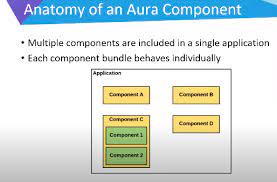
Aura components are fundamental building blocks of an application, designed for reusability and encapsulation of functionality within the Salesforce platform. They can range in scope from a single UI element to an entire application module.
Key Points:
- Self-Contained and Reusable Units: Aura components are encapsulated units of functionality that can be reused throughout an application. They enable modular development and maintenance.
- Limitations in Editions: Notably, creating Aura components is not supported in Starter and Pro Suite Editions of Salesforce.
- Prebuilt Components and Lightning Design System: The framework provides a library of prebuilt components. These components, styled according to the Lightning Design System, reside in the “lightning” namespace. They are commonly referred to as base Lightning components and serve as foundational elements for UI construction.
- Component Composition: Developers can assemble and configure these components to create new, composite components within their applications. Components are rendered in the browser as HTML DOM elements.
- Compositional Flexibility: Aura components support nesting, allowing components to contain other components, along with HTML, CSS, JavaScript, or any other web-enabled code. This flexibility facilitates the creation of sophisticated user interfaces.
- Encapsulation and Maintenance: Each component’s implementation details are encapsulated, ensuring that changes made by component authors do not disrupt the functionality of consuming applications. This separation allows developers consuming components to focus on building their applications without concern for internal component changes.
- Configuration via Attributes: Components expose named attributes that can be configured by developers using them in their applications. This attribute-based configuration simplifies customization and integration of components.
- Event-Driven Interaction: Components interact with their environment through event handling. They can listen for events emitted by other components or publish events to communicate changes or actions within the application.
In essence, Aura components empower developers to create modular, scalable applications within Salesforce, leveraging prebuilt components and adhering to the principles of encapsulation and event-driven architecture.

Who is Salesforce? Here is their story in their own words. From our inception, we've proudly embraced the identity of Read more

Salesforce Marketing Cloud Transactional Emails are immediate, automated, non-promotional messages crucial to business operations and customer satisfaction, such as order Read more

Salesforce has unveiled a comprehensive analytics solution tailored for wealth managers, home office professionals, and retail bankers, merging its Financial Read more

AI plays a crucial role in propensity score estimation as it can discern underlying patterns between treatments and confounding variables Read more