Certification Archives - gettectonic.com

AI-Powered Dynamic Scheduling

Revolutionizing Field Service: How Intelligent Scheduling Solves a $260,000/Hour Problem The High-Stakes World of Field Service Operations In today’s 24/7 service economy, every minute of technician downtime costs enterprises dearly. Aberdeen Group research reveals that unplanned equipment downtime costs manufacturers $260,000 per hour in lost productivity. Yet most field service organizations remain trapped in scheduling chaos: The consequences cascade through operations: missed SLAs, frustrated customers, burned-out technicians, and eroded profit margins. For global manufacturers maintaining critical infrastructure, these inefficiencies aren’t just costly—they threaten business continuity. The Scheduling Bottleneck Breaking Field Service Dispatchers face an impossible juggling act:✔ Matching 100+ technician skills to complex jobs✔ Optimizing routes across continents✔ Accommodating urgent priority tickets✔ Maintaining regulatory compliance Legacy systems—often spreadsheet-based—collapse under this complexity. The result? ✖ Wrong technicians dispatched✖ Critical jobs delayed by days✖ Fuel and overtime costs skyrocketing✖ Compliance risks from inaccurate logs The Solution: AI-Powered Dynamic Scheduling Enter Sandip Patel, a Salesforce Architect whose Custom Slot Scheduler for Field Service Lightning (FSL) is transforming global service operations. Built for manufacturing giant Saint-Gobain, this intelligent system: “Traditional scheduling is chess played with static pieces,” Patel explains. “We built a system where every piece moves dynamically in response to the game.” Measurable Results That Redefine Service Excellence Patel’s solution delivered transformational outcomes for Saint-Gobain: Metric Improvement Scheduling Accuracy ↑ 35% First-Time Fix Rate ↑ 28% Customer Satisfaction ↑ 22 points Technician Productivity ↑ 40% Overtime Costs ↓ 32% The system’s self-learning algorithms continuously improve, analyzing historical data to predict: The Future of Intelligent Field Service As the field service management market grows to 6 billion by 2026 (IDC), Patel’s work establishes a new benchmark. The principles apply across industries: “Where others see complexity, we see patterns,” says Patel, now adapting these concepts for healthcare at United Techno Solutions. “The future belongs to systems that think as fast as the field moves.” For enterprises drowning in scheduling chaos, the message is clear: intelligent automation isn’t optional—it’s the only way to survive in the service economy. The technology exists. The ROI is proven. The question is no longer “if” but “how fast” organizations can implement these solutions. Like Related Posts Who is Salesforce? Who is Salesforce? Here is their story in their own words. From our inception, we’ve proudly embraced the identity of Read more Salesforce Marketing Cloud Transactional Emails Salesforce Marketing Cloud Transactional Emails are immediate, automated, non-promotional messages crucial to business operations and customer satisfaction, such as order Read more Salesforce Unites Einstein Analytics with Financial CRM Salesforce has unveiled a comprehensive analytics solution tailored for wealth managers, home office professionals, and retail bankers, merging its Financial Read more AI-Driven Propensity Scores AI plays a crucial role in propensity score estimation as it can discern underlying patterns between treatments and confounding variables Read more

Read More
AWS Salesforce

AWS Doubles Down on Agentic AI with New Developer Tools at NYC Summit

At its AWS Summit New York City 2025 conference, Amazon Web Services unveiled a comprehensive suite of agent-based AI tools, signaling its strategic bet on what it calls “the next fundamental shift in enterprise AI.” Core Offerings: Building Blocks for Agentic Systems The cloud leader introduced Amazon Bedrock AgentCore, now in preview, which provides seven foundational services for deploying AI agents at scale: “This represents a step function change in what’s possible for AI agents,” said Swami Sivasubramanian, AWS VP for Agentic AI, during his keynote. The suite supports any AI framework or model while addressing critical enterprise requirements around security and scalability. Complementary AI Infrastructure Updates AWS also announced: The company is backing these technical investments with an additional $100 million for its Generative AI Innovation Center, focusing on hyperautomation use cases. Developer-Centric Approach Faces Mixed Reactions Analysts note AWS’s strategy differs from competitors by targeting professional developers rather than citizen developers: “It’s geared toward the hardcore professional developer,” said Jason Andersen of Moor Insights & Strategy, contrasting AWS’s CLI-heavy approach with Salesforce’s low-code solutions. However, Omdia’s Mark Beccue cautioned: “When talking about agents, you must have the complete story.” He suggested the developer focus might overlook key decision-makers. Ecosystem Expansion Notable ecosystem developments include: Early adopters like A&I Solutions President John Balsavage highlight observability tools as critical for improving agent accuracy beyond current 90% benchmarks. Challenges Ahead While AWS aims to simplify complex AI orchestration, analysts question whether it can: The summit also revealed AWS Academy is providing free certification exam vouchers to over 6,600 students, potentially growing its AI-skilled workforce. Meanwhile, Anthropic (an AWS partner) launched new analytics for its Claude Code assistant. Like Related Posts Who is Salesforce? Who is Salesforce? Here is their story in their own words. From our inception, we’ve proudly embraced the identity of Read more Salesforce Marketing Cloud Transactional Emails Salesforce Marketing Cloud Transactional Emails are immediate, automated, non-promotional messages crucial to business operations and customer satisfaction, such as order Read more Salesforce Unites Einstein Analytics with Financial CRM Salesforce has unveiled a comprehensive analytics solution tailored for wealth managers, home office professionals, and retail bankers, merging its Financial Read more AI-Driven Propensity Scores AI plays a crucial role in propensity score estimation as it can discern underlying patterns between treatments and confounding variables Read more

Read More
Data Governance for the AI Enterprise

A Strategic Approach to Governing Enterprise AI Systems

The Imperative of AI Governance in Modern Enterprises Effective data governance is widely acknowledged as a critical component of deploying enterprise AI applications. However, translating governance principles into actionable strategies remains a complex challenge. This article presents a structured approach to AI governance, offering foundational principles that organizations can adapt to their needs. While not exhaustive, this framework provides a starting point for managing AI systems responsibly. Defining Data Governance in the AI Era At its core, data governance encompasses the policies and processes that dictate how organizations manage data—ensuring proper storage, access, and usage. Two key roles facilitate governance: Traditional data systems operate within deterministic governance frameworks, where structured schemas and well-defined hierarchies enable clear rule enforcement. However, AI introduces non-deterministic challenges—unstructured data, probabilistic decision-making, and evolving models—requiring a more adaptive governance approach. Core Principles for Effective AI Governance To navigate these complexities, organizations should adopt the following best practices: Multi-Agent Architectures: A Governance Enabler Modern AI applications should embrace agent-based architectures, where multiple AI models collaborate to accomplish tasks. This approach draws from decades of distributed systems and microservices best practices, ensuring scalability and maintainability. Key developments facilitating this shift include: By treating AI agents as modular components, organizations can apply service-oriented governance principles, improving oversight and adaptability. Deterministic vs. Non-Deterministic Governance Models Traditional (Deterministic) Governance AI (Non-Deterministic) Governance Interestingly, human governance has long managed non-deterministic actors (people), offering valuable lessons for AI oversight. Legal systems, for instance, incorporate checks and balances—acknowledging human fallibility while maintaining societal stability. Mitigating AI Hallucinations Through Specialization Large language models (LLMs) are prone to hallucinations—generating plausible but incorrect responses. Mitigation strategies include: This mirrors real-world expertise—just as a medical specialist provides domain-specific advice, AI agents should operate within bounded competencies. Adversarial Validation for AI Governance Inspired by Generative Adversarial Networks (GANs), AI governance can employ: This adversarial dynamic improves quality over time, much like auditing processes in human systems. Knowledge Management: The Backbone of AI Governance Enterprise knowledge is often fragmented, residing in: To govern this effectively, organizations should: Ethics, Safety, and Responsible AI Deployment AI ethics remains a nuanced challenge due to: Best practices include: Conclusion: Toward Responsible and Scalable AI Governance AI governance demands a multi-layered approach, blending:✔ Technical safeguards (specialized agents, adversarial validation).✔ Process rigor (knowledge certification, human oversight).✔ Ethical foresight (bias mitigation, risk-aware automation). By learning from both software engineering and human governance paradigms, enterprises can build AI systems that are effective, accountable, and aligned with organizational values. The path forward requires continuous refinement, but with strategic governance, AI can drive innovation while minimizing unintended consequences. Like Related Posts Who is Salesforce? Who is Salesforce? Here is their story in their own words. From our inception, we’ve proudly embraced the identity of Read more Salesforce Unites Einstein Analytics with Financial CRM Salesforce has unveiled a comprehensive analytics solution tailored for wealth managers, home office professionals, and retail bankers, merging its Financial Read more AI-Driven Propensity Scores AI plays a crucial role in propensity score estimation as it can discern underlying patterns between treatments and confounding variables Read more Tectonic’s Successful Salesforce Track Record Salesforce Technology Services Integrator – Tectonic has successfully delivered Salesforce in a variety of industries including Public Sector, Hospitality, Manufacturing, Read more


Read More
They're Here - Agentic AI Agents

The Untapped Potential of AI for Frontline Workers

While much of the AI conversation focuses on knowledge workers, a quiet revolution is brewing for skilled labor and frontline professions—electricians, nurses, educators, and construction workers who keep society running. These roles face critical staffing shortages, yet they’re often overlooked in tech innovation. At Microsoft, we believe AI shouldn’t just disrupt—it should empower and uplift. That means designing AI tools that enhance, not replace, human expertise while creating new pathways for economic mobility. Why Frontline Workers Need AI Now More Than Ever 1. Solving the Skilled Labor Shortage Crisis The U.S. faces a paradox: demand for electricians, pipefitters, and ironworkers is soaring (especially with AI’s infrastructure needs), yet fewer people are entering these fields. AI can help by:✔ Simplifying apprenticeship pathways—streamlining forms, certifications, and training.✔ Making skilled trades more accessible—guiding new workers through complex processes. Imagine an AI assistant that helps an apprentice electrician navigate licensing requirements or instantly answers job-site questions—like a mentor in their pocket. 2. AI as a Safety Net, Not Just a Productivity Tool Frontline jobs are physically demanding and often dangerous. In the U.S. alone: AI can prevent accidents by:🔹 Real-time hazard detection (e.g., alerting construction workers to unstable structures).🔹 On-demand guidance (e.g., helping a nurse quickly reference best practices during emergencies). This isn’t about replacing human judgment—it’s about augmenting it to save lives. 3. Restoring Trust in Workplace Tech Many frontline workers are rightfully skeptical of new tech. Nurses, for example, were promised that Electronic Medical Records (EMRs) would help them—but instead, they got more admin work and less patient time. To avoid repeating this mistake, AI must be:✅ Co-designed with workers—not imposed top-down.✅ Focused on real needs—not just corporate efficiency.✅ Transparent and supportive—not another burden. How AI Can Transform Frontline Work 1. Rethinking “Jobs to Be Done” Traditional design focuses on tasks (e.g., “fill out a form”). But for frontline workers, AI should address deeper needs: 2. Multimodal AI for Real-World Scenarios While office workers might use AI for note-taking, frontline workers need:🎤 Voice-first interfaces—for hands-free operation (e.g., nurses dictating notes).👁 Visual recognition—to identify equipment faults or safety hazards.📲 Context-aware alerts—like warning a driver of black ice ahead. 3. End-to-End Career Pathways AI shouldn’t just assist with daily tasks—it should open doors to better jobs. Platforms like LinkedIn could:🔹 Highlight in-demand skilled trades.🔹 Map apprenticeship-to-career journeys.🔹 Connect workers with mentors and certifications. Microsoft’s Commitment: AI for Everyone Through Microsoft Elevate and the AI Economy Institute, we’re investing in: The Bottom Line The future of AI isn’t just about making office work easier—it’s about reinventing essential jobs to be safer, more fulfilling, and more accessible. By designing with—not for—frontline workers, we can ensure AI serves all of society, not just the privileged few. The next wave of AI innovation won’t happen in boardrooms. It’ll happen on construction sites, in hospitals, and in classrooms—where it’s needed most.  Like Related Posts Who is Salesforce? Who is Salesforce? Here is their story in their own words. From our inception, we’ve proudly embraced the identity of Read more Salesforce Marketing Cloud Transactional Emails Salesforce Marketing Cloud Transactional Emails are immediate, automated, non-promotional messages crucial to business operations and customer satisfaction, such as order Read more Salesforce Unites Einstein Analytics with Financial CRM Salesforce has unveiled a comprehensive analytics solution tailored for wealth managers, home office professionals, and retail bankers, merging its Financial Read more AI-Driven Propensity Scores AI plays a crucial role in propensity score estimation as it can discern underlying patterns between treatments and confounding variables Read more

Read More
Analytics tools like Einstein Analytics can identify patterns and trends in patient data, helping healthcare providers optimize workflows and improve the effectiveness of care delivery.

Zulekha Healthcare Group Accelerates Digital Transformation with Salesforce

Dubai, UAE – Zulekha Healthcare Group, one of the UAE’s largest private healthcare networks, is taking a major leap in digital innovation by adopting Salesforce Health Cloud and Marketing Cloud to enhance patient care and operational efficiency. A Legacy of Healthcare Excellence Founded in 1964, Zulekha Healthcare Group operates:🏥 Two multidisciplinary hospitals (Dubai & Sharjah)🏨 Two medical centers & five pharmacies⚕️ 285+ beds, 300+ doctors, and 600+ nursing staff🩺 30+ specialized medical disciplines The group also runs a smart medical fitness center, offering visa-related health assessments, vaccinations, and occupational health certifications—serving both residents and visitors in the UAE. Why Salesforce? Driving the Future of Patient-Centric Care With ambitious expansion plans, Zulekha sought a scalable, AI-powered CRM to: ✔ Unify patient data – Consolidating interactions from in-person visits, calls, emails, and messaging into a single 360° patient profile✔ Enhance engagement – Delivering personalized, automated communications via Marketing Cloud✔ Reduce missed appointments – Improving adherence to care plans through smarter scheduling and reminders✔ Boost operational efficiency – Streamlining workflows by integrating with existing ERP & EMR systems Leadership Perspectives: A Digital-First Vision Taher Shams, Managing Director, Zulekha Healthcare Group, emphasized: “Our mission is to make healthcare more accessible through innovation. Salesforce’s AI-driven solutions will help us elevate patient experiences, optimize operations, and reinforce our commitment to the UAE’s healthcare leadership.” Amit Khanna, SVP & GM, Salesforce Health, added: “Personalized care starts with deeper patient insights. We’re proud to partner with Zulekha and explore how AI can further enhance engagement and treatment outcomes.” The Road Ahead: AI, Growth & Seamless Care The integration positions Zulekha to leverage predictive analytics, automation, and AI—paving the way for:🔹 Smarter patient outreach🔹 Data-driven treatment plans🔹 Expansion across the UAE By embracing cloud-based, intelligent healthcare, Zulekha is setting a new standard for patient-first, digitally empowered care in the region. About Zulekha Healthcare GroupA pioneer in UAE healthcare, Zulekha Healthcare Group has served communities for nearly 60 years, offering specialized treatments, cutting-edge technology, and compassionate care across its network. Like Related Posts Who is Salesforce? Who is Salesforce? Here is their story in their own words. From our inception, we’ve proudly embraced the identity of Read more Salesforce Marketing Cloud Transactional Emails Salesforce Marketing Cloud Transactional Emails are immediate, automated, non-promotional messages crucial to business operations and customer satisfaction, such as order Read more Salesforce Unites Einstein Analytics with Financial CRM Salesforce has unveiled a comprehensive analytics solution tailored for wealth managers, home office professionals, and retail bankers, merging its Financial Read more AI-Driven Propensity Scores AI plays a crucial role in propensity score estimation as it can discern underlying patterns between treatments and confounding variables Read more

Read More
Whoever cracks reliable, scalable atomic power first could gain an insurmountable edge in the AI arms race.

How AI Can Strengthen Healthcare Cybersecurity

How AI Can Strengthen Healthcare Cybersecurity: Key Insights from H-ISAC As cyber threats grow more sophisticated, healthcare organizations must leverage artificial intelligence (AI) to enhance cybersecurity defenses—particularly in digital identity verification and fraud detection, according to a new Health Information Sharing and Analysis Center (H-ISAC) white paper. The Rising Threat: AI-Powered Cyberattacks Cybercriminals are increasingly using AI to craft advanced attacks, such as: H-ISAC warns that while attackers exploit AI for malicious purposes, healthcare Chief Information Security Officers (CISOs) should also focus on AI-driven defense strategies. 3 Key Ways AI Can Secure Healthcare Systems 1. AI-Powered Identity Verification Healthcare organizations can use AI to:✔ Analyze security features on identity documents (e.g., driver’s licenses, passports)✔ Detect deepfakes in remote job interviews and meetings using liveness detection✔ Flag suspicious applicants by cross-referencing IP addresses, device data, and known fraud databases “Fraud detection systems using AI can review an individual’s IP address, device information, and other metrics to spot anomalous behavior.” — H-ISAC 2. Automating Identity Governance & Access Control Managing hundreds of digital identities with varying access levels is a major challenge. AI can streamline Identity Governance and Administration (IGA) by:✔ Automating access certifications (reducing manual review burdens)✔ Customizing role-based access controls based on job functions✔ Ensuring compliance with regulatory requirements (e.g., HIPAA) “For managers overseeing large groups, AI-driven automation can save hours of manual access reviews.” 3. Phishing & Social Engineering Defense AI enhances threat detection by:✔ Identifying phishing emails with unnatural language patterns✔ Detecting fraudulent callers in healthcare call centers✔ Blocking social engineering attempts before breaches occur The Bottom Line: AI as a Cybersecurity Force Multiplier “AI is here to stay. Attackers will continue to leverage it for harm, but defenders can use the same technology to protect critical systems.” — H-ISAC Key Takeaways for Healthcare CISOs ✅ Deploy AI-driven identity verification to combat deepfakes & fraud.✅ Automate IGA processes to improve compliance & efficiency.✅ Use AI-enhanced monitoring to detect phishing & social engineering. By adopting AI-powered cybersecurity tools, healthcare organizations can stay ahead of evolving threats while safeguarding sensitive patient data. Like Related Posts Who is Salesforce? Who is Salesforce? Here is their story in their own words. From our inception, we’ve proudly embraced the identity of Read more Salesforce Marketing Cloud Transactional Emails Salesforce Marketing Cloud Transactional Emails are immediate, automated, non-promotional messages crucial to business operations and customer satisfaction, such as order Read more Salesforce Unites Einstein Analytics with Financial CRM Salesforce has unveiled a comprehensive analytics solution tailored for wealth managers, home office professionals, and retail bankers, merging its Financial Read more AI-Driven Propensity Scores AI plays a crucial role in propensity score estimation as it can discern underlying patterns between treatments and confounding variables Read more

Read More
AI evolves with tools like Agentforce and Atlas

Salesforce Doubles Down on Agentic AI to Transform Partner Ecosystem

Salesforce is making a major push into agentic artificial intelligence with its newest offering, Agentforce for Partner Community, now integrated directly into the Salesforce Partner Community platform, according to Channel Futures. Lynne Zaledonis, EVP of Customer Success and Partner Marketing at Salesforce, hailed the tool as a “game-changing innovation” that enables consulting and systems integrator partners to tap into round-the-clock AI support, streamline operations, and accelerate case resolution through real-time conversational assistance. Unlike traditional chatbots, Agentforce doesn’t just fetch technical and programmatic answers—it can also execute actions, such as extending Trial Orgs. By tackling workflow inefficiencies and breaking down data silos, Salesforce aims to equip partners with the tools needed to guide clients through every stage of AI adoption, from initial assessment to full implementation. As consulting partners roll out Agentforce, Zaledonis noted that this shift toward AI-driven operations is reshaping business models and demanding new skill sets. To support partners in this transition, Salesforce is rolling out workshops, certifications, and strategic playbooks—helping them adapt, monetize, and spearhead the move toward an AI-powered future. Like Related Posts Who is Salesforce? Who is Salesforce? Here is their story in their own words. From our inception, we’ve proudly embraced the identity of Read more Salesforce Marketing Cloud Transactional Emails Salesforce Marketing Cloud Transactional Emails are immediate, automated, non-promotional messages crucial to business operations and customer satisfaction, such as order Read more Salesforce Unites Einstein Analytics with Financial CRM Salesforce has unveiled a comprehensive analytics solution tailored for wealth managers, home office professionals, and retail bankers, merging its Financial Read more AI-Driven Propensity Scores AI plays a crucial role in propensity score estimation as it can discern underlying patterns between treatments and confounding variables Read more

Read More
Sales Enablement

Salesforce’s Top Sales Enablement Tools

The 9 Best Sales Enablement Tools for 2025 Based on original research by Erin Hueffner, Writer at Salesforce Sales enablement software has become a must-have for high-performing sales teams. According to the Salesforce State of Sales report, adoption surged 48% in 2024, with 75% of reps crediting these tools for helping them meet quotas. But with so many options, how do you choose the right one? Below, we break down the top 9 sales enablement platforms—ranked by features, user ratings, and real-world impact. What Is Sales Enablement Software? Sales enablement tools help teams:✅ Train & onboard reps faster✅ Organize sales content (playbooks, case studies, scripts)✅ Track performance with CRM-linked analytics✅ Coach sellers with AI-driven insights The best platforms combine learning (LMS), content management (CMS), and CRM integration to drive measurable ROI. Who Uses Sales Enablement Tools? Key Benefits of Sales Enablement Software 🔹 Faster onboarding – Reduce ramp time for new hires.🔹 Higher win rates – AI recommends best-performing content.🔹 Larger deal sizes – Data reveals upselling opportunities.🔹 Shorter sales cycles – Right content at the right time. The 9 Best Sales Enablement Tools for 2025 (Ranked by G2 & Capterra ratings, features, and real-world impact) 1. Salesforce Sales Cloud Best for: End-to-end CRM-powered enablement⭐ Rating: 4.4/5 (G2) | ✅ Top Feature: AI-powered coaching (Agentforce) 2. Seismic Best for: Enterprise content & training unification⭐ Rating: 4.5/5 (G2) | ✅ Top Feature: AI-generated learning paths 3. Highspot Best for: AI-driven content recommendations⭐ Rating: 4.6/5 (Capterra) | ✅ Top Feature: Highspot Copilot (AI coaching) 4. Mindtickle Best for: Data-backed sales coaching⭐ Rating: 4.7/5 (G2) | ✅ Top Feature: AI role-play simulations 5. HubSpot Sales Hub Best for: SMBs needing CRM + enablement⭐ Rating: 4.3/5 (G2) | ✅ Top Feature: Conversation intelligence 6. Showpad Best for: Visual, interactive sales content⭐ Rating: 4.5/5 (G2) | ✅ Top Feature: AI-powered pitch coaching 7. Demodesk Best for: Virtual sales teams⭐ Rating: 4.6/5 (Capterra) | ✅ Top Feature: AI meeting summaries 8. ClientPoint Best for: Proposal & contract automation⭐ Rating: 4.4/5 (Capterra) | ✅ Top Feature: AI assistant (Meg) 9. Lessonly by Seismic Best for: Rapid sales training⭐ Rating: 4.5/5 (G2) | ✅ Top Feature: Microlearning modules Key Features to Look For 🔎 AI-powered coaching (e.g., call analysis, role-play feedback)📂 Smart content management (searchable, version-controlled libraries)📊 CRM integration (tie training to deal outcomes)📈 Predictive analytics (flag at-risk deals & skill gaps) How to Choose the Right Tool Final Verdict Sales enablement tools are no longer optional—they’re competitive necessities. The right platform can:✔ Cut ramp time by 50%+✔ Boost win rates by 20%✔ Reduce content search time by 80% Top Pick for 2025? Need AI coaching? Mindtickle & Demodesk lead the pack. Ready to enable your team? The right tool could be the difference between missing quota and smashing targets. Like Related Posts Who is Salesforce? Who is Salesforce? Here is their story in their own words. From our inception, we’ve proudly embraced the identity of Read more Salesforce Marketing Cloud Transactional Emails Salesforce Marketing Cloud Transactional Emails are immediate, automated, non-promotional messages crucial to business operations and customer satisfaction, such as order Read more Salesforce Unites Einstein Analytics with Financial CRM Salesforce has unveiled a comprehensive analytics solution tailored for wealth managers, home office professionals, and retail bankers, merging its Financial Read more AI-Driven Propensity Scores AI plays a crucial role in propensity score estimation as it can discern underlying patterns between treatments and confounding variables Read more

Read More
Salesforce Instance Refresh Maintenance

Why Salesforce is the Key to Cloud Transformation

Cloud transformation is essential for businesses aiming to scale, boost efficiency, and enhance customer experiences. As a leading cloud platform, Salesforce plays a pivotal role in this transition—connecting cloud ecosystems, optimizing operations, and ensuring seamless customer interactions. But to unlock its full potential, organizations need the right Salesforce experts to drive the transformation successfully. The Role of Salesforce in Cloud Transformation As a cloud-native platform, Salesforce provides automation, AI-driven insights, and deep integration across business functions. It acts as the central hub, linking sales, marketing, customer service, and back-end operations. During cloud migration, Salesforce ensures:✅ Customer data remains accessible and secure✅ Workflows stay optimized for efficiency✅ AI-powered insights drive smarter decision-making Without experienced Salesforce professionals, businesses risk data silos, inefficient processes, and failed integrations—leading to costly delays and operational setbacks. Challenges in Hiring Salesforce Experts 1. Talent Shortages & High Demand The growing reliance on Salesforce has created a ultra-competitive hiring landscape. Roles like Salesforce Developers, Architects, and Administrators are in high demand, making it challenging for companies to attract and retain top talent. 2. The Need for More Than Just Technical Skills Many organizations focus solely on coding expertise, but cloud transformation demands professionals who understand business processes, data architecture, and integration strategies. A developer who codes without considering business goals may create solutions that don’t align with the organization’s needs. 3. Integration Complexities Salesforce rarely operates in isolation—it must integrate with ERP systems, marketing automation tools, and other cloud platforms. Poorly planned integrations can lead to inefficiencies and disrupt transformation efforts, underscoring the need for specialists who can manage system connectivity effectively. Strategies for Hiring the Right Salesforce Experts 1. Clearly Define Roles & Responsibilities Before hiring, identify the specific expertise required. For example: 2. Prioritize Certifications & Hands-On Experience Look for candidates with certifications like: Additionally, hands-on experience with cloud integrations, API development, and data migration is crucial for success. 3. Assess Problem-Solving Abilities Cloud transformation is complex, often presenting unexpected challenges. A structured hiring process should include scenario-based questions and technical assessments to evaluate candidates’ ability to handle real-world Salesforce challenges. 4. Explore Contract & Full-Time Hiring Models Given the talent shortage, companies may need a mix of contract and full-time hires: 5. Align Hiring with Cloud Strategy Salesforce experts must collaborate with cloud engineers and IT teams to ensure seamless integration. When hiring, prioritize candidates who understand system architecture and can align Salesforce capabilities with long-term business goals. Building a Strong Salesforce Team for Cloud Transformation Hiring the right Salesforce experts is critical for a smooth and effective cloud transformation. By defining roles, prioritizing experience, and assessing real-world skills, businesses can build teams that drive long-term success. Salesforce managed services is an alternative to the talent shortage. If your organization is looking to strengthen its Salesforce talent strategy, partnering with experts like Tectonic can bridge hiring gaps. Tectonic delivers top-tier Salesforce talent to power your digital transformation. With a vast network of vetted professionals and data-driven recruitment strategies, we help companies secure skilled experts—fast without increasing headcount. Let’s build your Salesforce dream team. Like Related Posts Who is Salesforce? Who is Salesforce? Here is their story in their own words. From our inception, we’ve proudly embraced the identity of Read more Salesforce Marketing Cloud Transactional Emails Salesforce Marketing Cloud Transactional Emails are immediate, automated, non-promotional messages crucial to business operations and customer satisfaction, such as order Read more Salesforce Unites Einstein Analytics with Financial CRM Salesforce has unveiled a comprehensive analytics solution tailored for wealth managers, home office professionals, and retail bankers, merging its Financial Read more AI-Driven Propensity Scores AI plays a crucial role in propensity score estimation as it can discern underlying patterns between treatments and confounding variables Read more

Read More
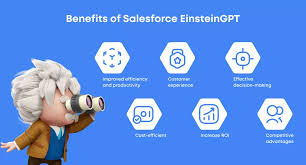
What is Einstein Used for in Salesforce?

Unlocking the Full Potential of Salesforce Einstein

Unlocking the Full Potential of Salesforce Einstein: A Strategic Guide Moving Beyond Basic AI Features While standard Einstein features provide value, the true competitive advantage comes from custom AI solutions tailored to your unique business processes. Here’s how leading organizations are pushing Einstein’s capabilities further: Custom AI Model Development Real-World Custom Implementations: Cross-Functional AI Strategy Department-Specific AI Roadmaps Team Key Use Cases Success Metrics Sales Deal stagnation alertsOptimal contact timing 20% reduction in stalled deals Service Case severity predictionAuto-routing 15% faster resolution Marketing Content engagement scoringChurn risk segmentation 30% higher campaign ROI Operations Inventory demand forecastingResource allocation 25% waste reduction Implementation Tip: Start with one high-impact department before enterprise rollout. Technical Implementation Framework Data Preparation Checklist Model Selection Guide Pro Tip: Use Einstein’s AutoML to test multiple approaches before custom development. Overcoming Adoption Challenges Trust-Building Playbook Skills Development Plan Advanced Integration Patterns Combine Einstein With: Example Architecture: Measuring AI Success Key Performance Indicators: Continuous Improvement Cycle: Getting Started with Advanced Einstein *”Companies that customize AI solutions see 3-5x greater ROI than those using only out-of-the-box features.”* – Forrester Research Transform your Einstein implementation from basic scoring to strategic advantage with tailored AI solutions. Like Related Posts Who is Salesforce? Who is Salesforce? Here is their story in their own words. From our inception, we’ve proudly embraced the identity of Read more Salesforce Marketing Cloud Transactional Emails Salesforce Marketing Cloud Transactional Emails are immediate, automated, non-promotional messages crucial to business operations and customer satisfaction, such as order Read more Salesforce Unites Einstein Analytics with Financial CRM Salesforce has unveiled a comprehensive analytics solution tailored for wealth managers, home office professionals, and retail bankers, merging its Financial Read more AI-Driven Propensity Scores AI plays a crucial role in propensity score estimation as it can discern underlying patterns between treatments and confounding variables Read more

Read More
Can Tech Companies Use Generative AI for Good?

AI and the Future of IT Careers

AI and the Future of IT Careers: Jobs That Remain Secure As AI technology advances, concerns about job security in the IT sector continue to grow. AI excels at handling repetitive, high-speed tasks and has made significant strides in software development and error prediction. However, while AI offers exciting possibilities, the demand for human expertise remains strong—particularly in roles that require interpersonal skills, strategic thinking, and decision-making. So, which IT jobs are most secure from AI displacement? To answer this question, industry experts shared their insights: Their forecasts highlight the IT roles most resistant to AI replacement. In all cases, professionals should enhance their AI knowledge to stay competitive in an evolving landscape. Top AI-Resistant IT Roles 1. Business Analyst Role Overview:Business analysts act as a bridge between IT and business teams, identifying technology opportunities and facilitating collaboration to optimize solutions. Why AI Won’t Replace It:While AI can process vast amounts of data quickly, it lacks emotional intelligence, relationship-building skills, and the ability to interpret nuanced human communication. Business analysts leverage these soft skills to understand software needs and drive successful implementations. How to Stay Competitive:Develop strong data analysis, business intelligence (BI), communication, and presentation skills to enhance your value in this role. 2. Cybersecurity Engineer Role Overview:Cybersecurity engineers protect organizations from evolving security threats, including AI-driven cyberattacks. Why AI Won’t Replace It:As AI tools become more sophisticated, cybercriminals will exploit them to develop advanced attack strategies. Human expertise is essential to adapt defenses, investigate threats, and implement security measures AI alone cannot handle. How to Stay Competitive:Continuously update your cybersecurity knowledge, obtain relevant certifications, and develop a strong understanding of business security needs. 3. End-User Support Professional Role Overview:These professionals assist employees with technical issues and provide hands-on training to ensure smooth software adoption. Why AI Won’t Replace It:Technology adoption is becoming increasingly complex, requiring personalized support that AI cannot yet replicate. Human interaction remains crucial for troubleshooting and user training. How to Stay Competitive:Pursue IT certifications, strengthen customer service skills, and gain experience in enterprise software environments. 4. Data Analyst Role Overview:Data analysts interpret business and product data, generate insights, and predict trends to guide strategic decisions. Why AI Won’t Replace It:AI can analyze data, but human oversight is needed to ensure accuracy, recognize context, and derive meaningful insights. Companies will continue to rely on professionals who can interpret and act on data effectively. How to Stay Competitive:Specialize in leading BI platforms, gain hands-on experience with data visualization tools, and develop strong analytical thinking skills. 5. Data Governance Professional Role Overview:These professionals set policies for data usage, access, and security within an organization. Why AI Won’t Replace It:As AI handles increasing amounts of data, the need for governance professionals grows to ensure ethical and compliant data management. How to Stay Competitive:Obtain a degree in computer science or business administration and seek training in data privacy, security, and governance frameworks. 6. Data Privacy Professional Role Overview:Data privacy professionals ensure compliance with data protection regulations and safeguard personal information. Why AI Won’t Replace It:With AI collecting vast amounts of personal data, organizations require human experts to manage legal compliance and maintain trust. How to Stay Competitive:Develop expertise in privacy laws, cybersecurity, and regulatory compliance through certifications and training programs. 7. IAM Engineer (Identity and Access Management) Role Overview:IAM engineers develop and implement systems that regulate user access to sensitive data. Why AI Won’t Replace It:The growing complexity of digital identities and security protocols requires human oversight to manage, audit, and secure access rights. How to Stay Competitive:Pursue a computer science degree, gain experience in authentication frameworks, and build expertise in programming and operating systems. 8. IT Director Role Overview:IT directors oversee technology strategies, manage teams, and align IT initiatives with business goals. Why AI Won’t Replace It:Leadership, motivation, and strategic decision-making are human-driven capabilities that AI cannot replicate. How to Stay Competitive:Develop strong leadership, business acumen, and team management skills to effectively align IT with organizational success. 9. IT Product Manager Role Overview:Product managers oversee tech adoption, service management, and organizational change strategies. Why AI Won’t Replace It:Effective product management requires a human touch, particularly in change management and stakeholder communication. How to Stay Competitive:Pursue project management training and certifications while gaining experience in software development and enterprise technology. Staying AI-Proof: Learning AI Expert Insights on Future IT Careers Final Thoughts As AI continues to reshape the IT landscape, the key to job security lies in adaptability. Professionals who develop AI-related skills and focus on roles that require human judgment, creativity, and leadership will remain indispensable in the evolving workforce. Like1 Related Posts Who is Salesforce? Who is Salesforce? Here is their story in their own words. From our inception, we’ve proudly embraced the identity of Read more Salesforce Unites Einstein Analytics with Financial CRM Salesforce has unveiled a comprehensive analytics solution tailored for wealth managers, home office professionals, and retail bankers, merging its Financial Read more AI-Driven Propensity Scores AI plays a crucial role in propensity score estimation as it can discern underlying patterns between treatments and confounding variables Read more Tectonic’s Successful Salesforce Track Record Salesforce Technology Services Integrator – Tectonic has successfully delivered Salesforce in a variety of industries including Public Sector, Hospitality, Manufacturing, Read more

Read More
Salesforce Launches Nature-Focused AI Accelerator to Power Environmental Nonprofits

Salesforce Launches Nature-Focused AI Accelerator to Power Environmental Nonprofits

San Francisco, April 2025 – Salesforce has unveiled a groundbreaking nature-focused AI accelerator, empowering mission-driven organizations to scale their impact in forest conservation, regenerative agriculture, water access, and corporate sustainability. The new initiative, part of Salesforce’s Agents for Impact program, leverages agentic AI—an advanced form of autonomous artificial intelligence capable of independent decision-making, learning, and real-time action—to help nonprofits overcome resource barriers and amplify their environmental efforts. Why AI for Nature? Climate change and biodiversity loss demand urgent, scalable solutions. Yet, many nonprofits struggle with limited staffing, funding, and technical expertise. According to Salesforce research: “To fully harness nature’s potential for global resilience, we need innovation that matches the scale of the challenge,” says Sunya Norman, SVP of Impact at Salesforce. “Agentic AI enables nonprofits to achieve more with fewer resources—transforming how we protect and restore our planet.” Meet the AI-Powered Nonprofits Salesforce’s accelerator supports five organizations deploying AI for measurable environmental impact: 🌳 Forest Stewardship Council (FSC) 🌾 Rare 💧 Global Water Center ⚖️ Fair Trade USA 🏢 Ceres Beyond the Accelerator: Salesforce’s Broader Sustainability Push The Agents for Impact program aligns with Salesforce’s commitment to responsible AI development. Recently, the company: “Transparency, like the AI Energy Score, is critical,” says Ariane Thomas, Global Tech Director of Sustainability at L’Oréal. “By sharing energy data, we can collectively reduce AI’s environmental footprint.” The Future of AI for Good This accelerator marks a major leap in using AI to protect ecosystems, support farmers, and drive corporate sustainability. With Salesforce’s support, nonprofits can now scale their impact like never before—proving that technology and nature can work hand in hand. Ready to see AI drive real environmental change? Learn more about Salesforce’s Agents for Impact program.  Like Related Posts Who is Salesforce? Who is Salesforce? Here is their story in their own words. From our inception, we’ve proudly embraced the identity of Read more Salesforce Marketing Cloud Transactional Emails Salesforce Marketing Cloud Transactional Emails are immediate, automated, non-promotional messages crucial to business operations and customer satisfaction, such as order Read more Salesforce Unites Einstein Analytics with Financial CRM Salesforce has unveiled a comprehensive analytics solution tailored for wealth managers, home office professionals, and retail bankers, merging its Financial Read more AI-Driven Propensity Scores AI plays a crucial role in propensity score estimation as it can discern underlying patterns between treatments and confounding variables Read more

Read More
gettectonic.com