Consulting Archives - gettectonic.com

Revolutionizing Healthcare with Salesforce Einstein AI

Imagine reducing patient no-shows by 30%, cutting administrative workload in half, and delivering hyper-personalized care—all powered by AI. This isn’t the future of healthcare; it’s what leading providers are achieving today with Salesforce Einstein. Why Healthcare Needs AI Now More Than Ever With rising patient expectations and staffing shortages, healthcare organizations must work smarter—not harder. Salesforce Einstein integrates predictive analytics, intelligent automation, and AI-driven insights directly into clinical and administrative workflows to: ✔ Prevent patient risks before they escalate✔ Automate repetitive tasks wasting staff time✔ Personalize care at scale✔ Forecast operational needs with precision But success depends on strategic implementation—which is where Salesforce healthcare consultants make the difference. How Salesforce Einstein Transforms Healthcare 1. Predictive Patient Risk Scoring 🔍 Identifies high-risk patients (readmissions, no-shows, sepsis) using real-time EHR, claims, and behavioral data. ✅ Proven Impact: Cleveland Clinic reduced missed appointments by 25% using AI-driven reminders. 2. Intelligent Workflow Automation 🤖 Auto-assigns cases, schedules follow-ups, and verifies insurance—freeing staff for patient care. ✅ Proven Impact: A multi-location practice cut case handling time by 40% with smart routing. 3. AI-Powered Virtual Assistants 💬 Chatbots handle 80% of routine queries (appointments, billing, FAQs), escalating only complex issues. ✅ Proven Impact: Johns Hopkins reduced call center wait times by 50%. 4. Real-Time Clinical Decision Support ⚠️ Alerts care teams to critical changes (e.g., abnormal labs, medication conflicts) for faster intervention. ✅ Proven Impact: A hospital network improved early sepsis detection by 35%. 5. Hyper-Personalized Patient Engagement 📲 Tailors communications (SMS, email, portal) based on individual preferences and behaviors. ✅ Proven Impact: Mayo Clinic boosted care plan adherence by 20% with personalized journeys. Real-World Success Stories Organization Use Case Result Kaiser Permanente AI-driven staffing forecasts 15% fewer overtime hours Belle Medical Geo-targeted patient promotions 30% higher campaign conversion Johns Hopkins AI triage for patient inquiries 50% faster case resolution The Key to Maximizing ROI? Expert Implementation Salesforce Einstein’s power comes from strategic deployment. The right consulting partner ensures: 🔹 Seamless integration with EHRs, telehealth, and legacy systems🔹 HIPAA-compliant AI workflows🔹 Change management for staff adoption🔹 Ongoing optimization based on real-world performance Tectonic’s healthcare-specialized Salesforce consultants have helped providers: Ready to Transform Your Healthcare Organization? ⚡ Book a free consultation to discover how Salesforce Einstein can: Let’s build a smarter, AI-powered healthcare system—together. Contact Tectonic today! Like Related Posts AI Automated Offers with Marketing Cloud Personalization AI-Powered Offers Elevate the relevance of each customer interaction on your website and app through Einstein Decisions. Driven by a Read more Salesforce OEM AppExchange Expanding its reach beyond CRM, Salesforce.com has launched a new service called AppExchange OEM Edition, aimed at non-CRM service providers. Read more The Salesforce Story In Marc Benioff’s own words How did salesforce.com grow from a start up in a rented apartment into the world’s Read more Salesforce Jigsaw Salesforce.com, a prominent figure in cloud computing, has finalized a deal to acquire Jigsaw, a wiki-style business contact database, for Read more

Read More
AI evolves with tools like Agentforce and Atlas

Salesforce Doubles Down on Agentic AI to Transform Partner Ecosystem

Salesforce is making a major push into agentic artificial intelligence with its newest offering, Agentforce for Partner Community, now integrated directly into the Salesforce Partner Community platform, according to Channel Futures. Lynne Zaledonis, EVP of Customer Success and Partner Marketing at Salesforce, hailed the tool as a “game-changing innovation” that enables consulting and systems integrator partners to tap into round-the-clock AI support, streamline operations, and accelerate case resolution through real-time conversational assistance. Unlike traditional chatbots, Agentforce doesn’t just fetch technical and programmatic answers—it can also execute actions, such as extending Trial Orgs. By tackling workflow inefficiencies and breaking down data silos, Salesforce aims to equip partners with the tools needed to guide clients through every stage of AI adoption, from initial assessment to full implementation. As consulting partners roll out Agentforce, Zaledonis noted that this shift toward AI-driven operations is reshaping business models and demanding new skill sets. To support partners in this transition, Salesforce is rolling out workshops, certifications, and strategic playbooks—helping them adapt, monetize, and spearhead the move toward an AI-powered future. Like Related Posts AI Automated Offers with Marketing Cloud Personalization AI-Powered Offers Elevate the relevance of each customer interaction on your website and app through Einstein Decisions. Driven by a Read more Salesforce OEM AppExchange Expanding its reach beyond CRM, Salesforce.com has launched a new service called AppExchange OEM Edition, aimed at non-CRM service providers. Read more The Salesforce Story In Marc Benioff’s own words How did salesforce.com grow from a start up in a rented apartment into the world’s Read more Salesforce Jigsaw Salesforce.com, a prominent figure in cloud computing, has finalized a deal to acquire Jigsaw, a wiki-style business contact database, for Read more

Read More
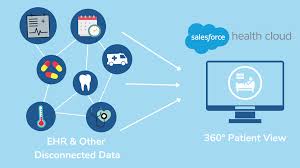
Transforming Healthcare with Salesforce CRM For healthcare providers, adopting a CRM platform like Salesforce Health Cloud is invaluable for managing vast amounts of patient data effectively. Health Cloud empowers healthcare professionals to create personalized, one-to-one patient journeys, enabling a deep understanding of each patient’s needs, medical history, and preferences. This approach not only fosters a patient-friendly experience but also builds a strong rapport, ensuring that patients feel valued and understood. Health Cloud also facilitates seamless collaboration among healthcare providers across different departments. When patients require support from multiple professionals, the platform ensures coordinated, comprehensive care that considers their complete medical history. This collaborative approach strengthens patient trust and streamlines operations, demonstrating a provider’s commitment to patient-centered care. As healthcare organizations strive to meet rising patient expectations, Salesforce is at the forefront of driving transformative changes. Leveraging Salesforce cloud solutions allows providers to manage patient data efficiently, deliver higher-quality care, and turn industry challenges into opportunities for improvement. Salesforce CRM has significantly boosted patient engagement and satisfaction within the healthcare sector. By automating repetitive, manual tasks, Salesforce CRM enables healthcare professionals to devote more time to patient care. Tools like Patient Management Software

Healthcare’s Trust Crisis

Healthcare’s Trust Crisis: How Medical Misinformation Is Winning Over Young Patients New data from Edelman’s 2025 Trust and Health Report reveals a troubling shift: Patients—especially young adults—are increasingly dismissing medical professionals in favor of advice from family, friends, and social media influencers. The result? A growing medical misinformation epidemic that puts patient safety at risk. Young Patients Are Turning Away from Doctors—With Dangerous Consequences Even more alarming? 45% of young patients believe that “someone who’s done their own research can know as much as a doctor.” (Only 22% of adults over 55 agree.) The High Cost of Misinformation While social media and personal networks may feel more relatable, they lack the rigorous training of medical professionals—leading to dangerous misconceptions. Richard Edelman, CEO of Edelman, warns: “Personal experiences on social media now rival the believability of data from doctors and government. We must flood the digital space with fact-based, easy-to-understand health information—before misinformation does more harm.” Who Do Patients Actually Trust? While doctors remain the #1 trusted source (82%), patients also crave human connection: Jennifer Hauser, Edelman’s Global Health Co-Chair, explains: “Patients don’t just want textbook answers—they want to feel seen and understood. Credentials matter, but emotional trust matters just as much.” How Healthcare Can Fight Back To regain trust, medical professionals must:✅ Speak in plain language—not medical jargon.✅ Leverage relatable storytellers (like survivors or patient advocates) to share accurate info.✅ Meet patients where they are—using social media, influencers, and community voices to counter misinformation. The Bottom Line The battle against medical misinformation isn’t just about facts vs. falsehoods—it’s about who communicates them. If healthcare doesn’t adapt, trust will keep eroding, and patient safety will pay the price. The time to act is now. Like Related Posts AI Automated Offers with Marketing Cloud Personalization AI-Powered Offers Elevate the relevance of each customer interaction on your website and app through Einstein Decisions. Driven by a Read more Salesforce OEM AppExchange Expanding its reach beyond CRM, Salesforce.com has launched a new service called AppExchange OEM Edition, aimed at non-CRM service providers. Read more The Salesforce Story In Marc Benioff’s own words How did salesforce.com grow from a start up in a rented apartment into the world’s Read more Salesforce Jigsaw Salesforce.com, a prominent figure in cloud computing, has finalized a deal to acquire Jigsaw, a wiki-style business contact database, for Read more

Read More
digital transformation for tourism

Digital Transformation for Tourism

The digital revolution is in full swing, with individuals and businesses increasingly interacting through social networks and digital devices. In this new era, consumers have grown more discerning, leveraging mobile technology to make informed decisions about products, services, and trusted providers. As mobile apps become integral to daily life, organizations are compelled to reinvent their customer value propositions and operating models through digital transformation to remain competitive in today’s market. Digital transformation has become a critical priority across industries, with the tourism sector standing out as a prime example of significant disruption driven by digital technologies. According to McKinsey & Company, the tourism industry has been undergoing a digital revolution for over a decade, transforming how travelers plan, book, and experience their trips. This shift has led to changing consumer behaviors, with travelers now demanding more personalized and seamless experiences. The push toward digital adoption in tourism is accelerating. A Skift survey found that 83% of respondents view digital transformation as a top priority. Tourism businesses are increasingly investing in technology to enhance customer experiences, optimize operations, and drive revenue growth. To boost enterprise agility, companies must make strategic decisions across five key dimensions of their operating models: One of the most notable impacts of digital transformation is the revolution in the booking process. Travelport Digital estimates that over 700 million people will book trips online by 2023, marking a 15% increase from previous years. Key statistics highlight this global shift in traveler preferences: Mobile apps have become essential tools for travelers, enabling them to research, plan, and book trips seamlessly. In the hospitality and tourism sector, key digital transformation trends include: Emerging technologies like cognitive computing, omnichannel models, and advanced personalization are further reshaping the future of the industry. Artificial intelligence (AI) and machine learning are increasingly used to tailor travel experiences based on consumer preferences and behaviors, as noted by GlobalData. AI also improves operational efficiency, with chatbots handling customer inquiries effectively. Augmented reality (AR) and virtual reality (VR) are enhancing customer experiences by allowing travelers to explore destinations virtually before booking. Meanwhile, social media continues to play a pivotal role in promoting tourism businesses and reaching new audiences. In conclusion, digital transformation is no longer optional for tourism businesses—it is a necessity to remain competitive. The adoption of digital technologies has fundamentally reshaped the travel experience, and businesses must embrace this evolution to meet changing consumer expectations and maintain relevance in an increasingly digital world. Like1 Related Posts AI Automated Offers with Marketing Cloud Personalization AI-Powered Offers Elevate the relevance of each customer interaction on your website and app through Einstein Decisions. Driven by a Read more Salesforce OEM AppExchange Expanding its reach beyond CRM, Salesforce.com has launched a new service called AppExchange OEM Edition, aimed at non-CRM service providers. Read more The Salesforce Story In Marc Benioff’s own words How did salesforce.com grow from a start up in a rented apartment into the world’s Read more Salesforce Jigsaw Salesforce.com, a prominent figure in cloud computing, has finalized a deal to acquire Jigsaw, a wiki-style business contact database, for Read more

Read More

Salesforce Development Services

Salesforce has become one of the leading platforms to change the business-to-customer relationships and experience. Salesforce development services don’t just offer Salesforce solutions and software implementation; they help you adopt a customized functionality that enriches delivery and profit. Salesforce, by definition, is a powerful platform that enables a business to adopt CRM-driven leads and expansion in the industry. At Tectonic, we believe that a decision to opt for Salesforce services is just the beginning of a battle to beat the competition. This is where Tectonic comes in with custom coding and the finest Salesforce development services; we help you figure out everything from configurations and complications to legacy data systems and more. We are made up of a team of Salesforce experts, development professionals, and years of experience in strategic consulting, planning, integration, implementation, deployment, and delivery of business-changing and success-driven services. Why choose Tectonic’s Salesforce Development services? Tectonic, with its years of expertise and experience in technical services and strategic consulting, has the most efficient and organized set of professionals to help your business understand and embed everything-Salesforce. Tectonic understands innovation and change can be overwhelming and sound too complex, and it is our business to handle that for you while delivering a profitable and growing system that expands your reach in the industry. And remains scalable over time. The industry has moved from traditional on-premises CRM to cloud-based CRM to address scalability, change management, and time-to-market needs of businesses. For companies looking for SaaS offerings on the cloud, Salesforce is an undisputed leader. Also, companies looking to build customized business applications can capitalize on Force.com as a platform as a service (PaaS). Implement innovative Salesforce solutions that streamline your operations, boost your productivity, and drive sustainable growth. Work with our team of certified Salesforce developers who bring extensive experience and in-depth knowledge to every project. At Tectonic we focus on industries where we have expertise to help you get the most impactful Salesforce development. Get customized Salesforce development services from Tectonic designed to meet your unique business needs, ensuring seamless integration and enhanced functionality. Build and deploy scalable Salesforce platforms that adapt as your business grows and evolves, keeping you ahead of the competition. Collaborate with Tectonic to unlock the full potential of Salesforce, where development is turning challenges into opportunities for success. Like1 Related Posts AI Automated Offers with Marketing Cloud Personalization AI-Powered Offers Elevate the relevance of each customer interaction on your website and app through Einstein Decisions. Driven by a Read more Salesforce OEM AppExchange Expanding its reach beyond CRM, Salesforce.com has launched a new service called AppExchange OEM Edition, aimed at non-CRM service providers. Read more The Salesforce Story In Marc Benioff’s own words How did salesforce.com grow from a start up in a rented apartment into the world’s Read more Salesforce Jigsaw Salesforce.com, a prominent figure in cloud computing, has finalized a deal to acquire Jigsaw, a wiki-style business contact database, for Read more

Read More
Dementia Care and Telemedicine

Dementia Care and Telemedicine

How 3 Health Systems Are Leveraging Telemedicine for Dementia Care Telemedicine is expanding access to dementia care, particularly for rural and elderly patients, though challenges like technology barriers and sustainability remain. Dementia—an umbrella term for cognitive and memory disorders—affects millions of Americans directly and indirectly. By 2060, nearly 1 million people in the U.S. are projected to develop dementia. While no cure exists, the growing prevalence underscores the need for accessible and effective care solutions. Telehealth has emerged as a critical tool in meeting this demand. The rapid adoption of virtual care during the COVID-19 pandemic transformed dementia care delivery. A 2024 study found that telehealth use surged among dementia patients, particularly those with long travel distances to clinics and the oldest age groups. For health systems like the University of Mississippi Medical Center (UMMC), telemedicine has been a game-changer. “COVID-19 changed things almost overnight,” said Dr. Kim Tarver, associate professor of medicine and director of clinical services at UMMC’s MIND Center. “We have patients who travel three hours to see us. Being able to communicate without requiring a clinic visit every time is incredibly helpful.” UMMC is among several health systems integrating telehealth into dementia care, though challenges like technology access and financial sustainability persist. Telehealth’s Role in Dementia Care: Benefits and Applications Dementia care is uniquely suited for telehealth. Virtual visits allow for evaluations, treatment adjustments, and follow-ups while offering privacy and flexibility that in-person visits cannot. At UMMC, clinicians conduct cognitive assessments like the Montreal Cognitive Assessment (MoCA) remotely. A nurse guides patients through the test via screen-sharing, while caregivers assist with physical exam components when needed. “I’ll ask the caregiver to perform parts of the exam, like cerebellar function tests, while I observe via video,” Tarver explained. Though in-person visits are still used for verification, virtual assessments have proven comparably accurate. Telemedicine also enables family members to discuss concerns privately—especially valuable when patients are unaware of or resistant to acknowledging their condition. Extending Dementia Care Through Virtual Workforce Solutions Health systems are also using telehealth to expand their dementia care workforce. At the University of California, San Francisco (UCSF), unlicensed but trained care navigators support families, handling routine assessments and triaging complex cases to specialists. “Navigators manage caseloads of families, consulting licensed experts only when needed,” said Dr. Katherine Possin, a neurology professor at UCSF. “This extends the reach of our limited dementia specialist workforce.” Similarly, Banner Health’s Dementia Care Partners program employs health coaches (Certified Nursing Assistants) to conduct initial assessments and provide ongoing support, reducing clinician workload. “If I train 30 people who each support 3,000 patients, the impact multiplies rapidly,” said Dr. Ganesh Gopalakrishna of Banner Alzheimer’s Institute. Banner also uses Project ECHO, a telehealth-based training model, to educate community providers—from physicians to elder care attorneys—on dementia care best practices. Overcoming Telehealth Challenges in Dementia Care Despite its benefits, implementing telehealth in dementia care presents hurdles: The Future of Telehealth in Dementia Care Despite obstacles, providers see immense value in virtual dementia care—reducing caregiver burden, preventing unnecessary hospitalizations, and improving patients’ quality of life. “I hope telehealth becomes the standard of care,” Possin said. As health systems refine their approaches, telemedicine promises to play an increasingly vital role in dementia care—bridging gaps in access and delivering support to patients and families when they need it most. Tectonic can help you transform telehealth in your organization. Contact us today. Like Related Posts AI Automated Offers with Marketing Cloud Personalization AI-Powered Offers Elevate the relevance of each customer interaction on your website and app through Einstein Decisions. Driven by a Read more Salesforce OEM AppExchange Expanding its reach beyond CRM, Salesforce.com has launched a new service called AppExchange OEM Edition, aimed at non-CRM service providers. Read more The Salesforce Story In Marc Benioff’s own words How did salesforce.com grow from a start up in a rented apartment into the world’s Read more Salesforce Jigsaw Salesforce.com, a prominent figure in cloud computing, has finalized a deal to acquire Jigsaw, a wiki-style business contact database, for Read more

Read More
The AI Adoption Paradox

The AI Adoption Paradox

The AI Adoption Paradox: Why Society Struggles to Keep Up with Rapid Innovation Public discourse around artificial intelligence (AI) oscillates between extremes. Is AI overhyped, or is it truly a civilization-altering force? Are foundation models intelligent, or merely sophisticated statistical tools? Is artificial general intelligence (AGI) imminent, or is the concept fundamentally flawed? Most observers land somewhere in the middle: AI is impressive but exaggerated, useful but not truly “intelligent,” and AGI remains distant. Yet, to some, these debates miss the point entirely. AI is already reshaping industries, automating workflows, and demonstrating capabilities that resemble human reasoning. The real question isn’t whether AI is transformative—it’s why adoption lags so far behind innovation. The Slow March of Progress In 2014, while working on an outsourcing initiative, one observer questioned why certain tasks required human labor at all. A video by CGP Grey, “Humans Need Not Apply,” crystallized the idea that automation would eventually render many jobs obsolete. A decade later, AI and robotics have advanced dramatically—yet daily life remains largely unchanged. McKinsey Global Institute (MGI) projected in 2015 that automation would gain traction by 2025. OpenAI’s release of ChatGPT in late 2022 accelerated that timeline, yet adoption remains sluggish. Despite 300 million weekly ChatGPT users, only 10 million pay for the service—less than 0.3% of the global workforce. Even with AI embedded in countless applications, the predicted 15% automation of baseline work has yet to materialize. The Bottlenecks: Design, Enterprise Hesitation, and Human Resistance 1. Clunky Interfaces Stifle Mass Adoption AI’s biggest hurdle may be poor user experience. OpenAI’s breakthrough wasn’t just GPT-3—it was ChatGPT’s accessible interface, which brought AI to the masses. Yet, two years later, the platform remains largely unchanged. Most users treat it like a search engine, unaware of its full potential. Model naming conventions further confuse consumers. What is “Gemini 1.5 Flash”? Is “Opus” better than “Haiku”? If AI companies want mass adoption, they must simplify branding and prioritize intuitive design. 2. Enterprises: Caught Between Disruption and Inertia While venture funding for AI startups surged to $101 billion in 2024, most investment flows into B2B companies selling to legacy firms—the very organizations AI could eventually displace. Many enterprises remain hesitant, citing hallucinations, security risks, and integration challenges. Employees, meanwhile, bypass restrictions, uploading sensitive data to third-party AI tools—deepening management’s distrust. The result? A widening gap between AI’s capabilities and its real-world implementation. 3. Human Stubbornness: The Biggest Roadblock The final barrier is psychological. Many professionals treat AI as an abstract concept rather than a practical tool. Consulting firms, for example, may sprinkle AI buzzwords into presentations but resist hands-on experimentation. Mastery requires practice—yet few invest the time needed to harness AI effectively. The Path Forward AI’s potential is undeniable, but its impact hinges on overcoming adoption inertia. Companies must: For individuals, the imperative is clear: Those who embrace AI will outpace those who don’t. The technology is here—the only question is who will use it first, and who will be left behind. As the saying goes: You don’t need to outrun the bear—just the other humans. Like Related Posts AI Automated Offers with Marketing Cloud Personalization AI-Powered Offers Elevate the relevance of each customer interaction on your website and app through Einstein Decisions. Driven by a Read more Salesforce OEM AppExchange Expanding its reach beyond CRM, Salesforce.com has launched a new service called AppExchange OEM Edition, aimed at non-CRM service providers. Read more The Salesforce Story In Marc Benioff’s own words How did salesforce.com grow from a start up in a rented apartment into the world’s Read more Salesforce Jigsaw Salesforce.com, a prominent figure in cloud computing, has finalized a deal to acquire Jigsaw, a wiki-style business contact database, for Read more

Read More
AI Agents and Work

Maximizing Generative AI in Learning and Development

Maximizing Generative AI in Learning and DevelopmentHow organisations can harness the power of generative AI to enhance learning and development with strategic integration, best practices, and a culture of continuous growth CREDIT: This is an edited version of an article originally published on Vistage Organisations are increasingly recognising the value of generative AI in learning and development. While your employees may already be using it, they may not yet be maximising its potential due to limited resources or understanding. This article offers strategies for organisations to more effectively leverage generative AI and amplify its impact on their teams. A global survey of 14,000 workers by Salesforce in late 2023 revealed that 28% were already using generative AI at work, with over half doing so without formal approval. Similarly, a 2023 McKinsey report echoed these findings, and these numbers are likely even higher now. A recent study by Harvard Business School and Boston Consulting Group (BCG) highlighted the transformative impact of AI, showing that consultants using generative AI completed tasks 22% faster and produced 40% higher quality work compared to those not using it. Unlocking AI Insights Begin by conducting an internal survey to better understand how your employees are using generative AI. Gather data on the tools they use, how often they use them, and how these tools enhance their work. Frame the survey as an opportunity to learn about their experiences rather than as an evaluation or compliance check. Once you’ve analysed the results, identify employees who are using generative AI in creative and effective ways. These individuals—often informal leaders—can provide valuable insights into the practical applications of AI, as well as the challenges they face and how they overcome them. Fostering a Learning Culture Incorporating generative AI into your organisation’s learning and development strategy helps employees tap into the knowledge of early adopters while aligning AI use with broader organisational goals. Cultivate a culture that prioritises continuous learning and upskilling to stay ahead in the rapidly evolving AI landscape. Regularly update training materials to reflect new advancements in AI. Provide opportunities for employees to attend conferences, webinars, and other educational events to stay current. Encourage peer learning by fostering a culture where employees are motivated to share their experiences, tips, and best practices with one another. Developing Best Practices Leverage the expertise of your AI pioneers to establish best practices that are tailored to your organisation’s needs. Create a collaborative environment where these early adopters can share their experiences and insights, and involve them in the development of formal training programs. This ensures that the content is both relevant and practical for your workforce. Pilot these best practices with a small, controlled group of employees before rolling them out more broadly. This allows you to gather feedback, refine the practices, and address any issues. Additionally, create comprehensive guides, FAQs, and video tutorials to give employees easy access to the information they need. Tracking the progress and outcomes of your AI-related learning initiatives is essential. Use data to customise learning experiences and promote a growth mindset among employees. By integrating generative AI into your learning and development strategy, you can tap into internal expertise to drive innovation and improve efficiency across the organisation. Like Related Posts AI Automated Offers with Marketing Cloud Personalization AI-Powered Offers Elevate the relevance of each customer interaction on your website and app through Einstein Decisions. Driven by a Read more Salesforce OEM AppExchange Expanding its reach beyond CRM, Salesforce.com has launched a new service called AppExchange OEM Edition, aimed at non-CRM service providers. Read more The Salesforce Story In Marc Benioff’s own words How did salesforce.com grow from a start up in a rented apartment into the world’s Read more Salesforce Jigsaw Salesforce.com, a prominent figure in cloud computing, has finalized a deal to acquire Jigsaw, a wiki-style business contact database, for Read more

Read More
Agentic AI is Here

On Premise Gen AI

In 2025, enterprises transitioning generative AI (GenAI) into production after years of experimentation are increasingly considering on-premises deployment as a cost-effective alternative to the cloud. Since OpenAI ignited the AI revolution in late 2022, organizations have tested large language models powering GenAI services on platforms like AWS, Microsoft Azure, and Google Cloud. These experiments demonstrated GenAI’s potential to enhance business operations while exposing the substantial costs of cloud usage. To avoid difficult conversations with CFOs about escalating cloud expenses, CIOs are exploring on-premises AI as a financially viable solution. Advances in software from startups and packaged infrastructure from vendors such as HPE and Dell are making private data centers an attractive option for managing costs. A survey conducted by Menlo Ventures in late 2024 found that 47% of U.S. enterprises with at least 50 employees were developing GenAI solutions in-house. Similarly, Informa TechTarget’s Enterprise Strategy Group reported a rise in enterprises considering on-premises and public cloud equally for new applications—from 37% in 2024 to 45% in 2025. This shift is reflected in hardware sales. HPE reported a 16% revenue increase in AI systems, reaching $1.5 billion in Q4 2024. During the same period, Dell recorded a record .6 billion in AI server orders, with its sales pipeline expanding by over 50% across various customer segments. “Customers are seeking diverse AI-capable server solutions,” noted David Schmidt, senior director of Dell’s PowerEdge server line. While heavily regulated industries have traditionally relied on on-premises systems to ensure data privacy and security, broader adoption is now driven by the need for cost control. Fortune 2000 companies are leading this trend, opting for private infrastructure over the cloud due to more predictable expenses. “It’s not unusual to see cloud bills exceeding 0,000 or even million per month,” said John Annand, an analyst at Info-Tech Research Group. Global manufacturing giant Jabil primarily uses AWS for GenAI development but emphasizes ongoing cost management. “Does moving to the cloud provide a cost advantage? Sometimes it doesn’t,” said CIO May Yap. Jabil employs a continuous cloud financial optimization process to maximize efficiency. On-Premises AI: Technology and Trends Enterprises now have alternatives to cloud infrastructure, including as-a-service solutions like Dell APEX and HPE GreenLake, which offer flexible pay-per-use pricing for AI servers, storage, and networking tailored for private data centers or colocation facilities. “The high cost of cloud drives organizations to seek more predictable expenses,” said Tiffany Osias, vice president of global colocation services at Equinix. Walmart exemplifies in-house AI development, creating tools like a document summarization app for its benefits help desk and an AI assistant for corporate employees. Startups are also enabling enterprises to build AI applications with turnkey solutions. “About 80% of GenAI requirements can now be addressed with push-button solutions from startups,” said Tim Tully, partner at Menlo Ventures. Companies like Ragie (RAG-as-a-service) and Lamatic.ai (GenAI platform-as-a-service) are driving this innovation. Others, like Squid AI, integrate custom AI agents with existing enterprise infrastructure. Open-source frameworks like LangChain further empower on-premises development, offering tools for creating chatbots, virtual assistants, and intelligent search systems. Its extension, LangGraph, adds functionality for building multi-agent workflows. As enterprises develop AI applications internally, consulting services will play a pivotal role. “Companies offering guidance on effective AI tool usage and aligning them with business outcomes will thrive,” Annand said. This evolution in AI deployment highlights the growing importance of balancing technological innovation with financial sustainability. Like Related Posts AI Automated Offers with Marketing Cloud Personalization AI-Powered Offers Elevate the relevance of each customer interaction on your website and app through Einstein Decisions. Driven by a Read more Salesforce OEM AppExchange Expanding its reach beyond CRM, Salesforce.com has launched a new service called AppExchange OEM Edition, aimed at non-CRM service providers. Read more The Salesforce Story In Marc Benioff’s own words How did salesforce.com grow from a start up in a rented apartment into the world’s Read more Salesforce Jigsaw Salesforce.com, a prominent figure in cloud computing, has finalized a deal to acquire Jigsaw, a wiki-style business contact database, for Read more

Read More
AI Leader Salesforce

Sales Leads and Lead Scoring

Sales teams often face a growing pile of leads, making it overwhelming to determine where to focus their energy. How do you prioritize effectively? Lead scoring is the answer. This methodology helps rank prospects based on their likelihood to convert into customers. By mastering lead scoring, sales teams can win more deals and drive revenue growth. What is Lead Scoring? Lead scoring is a strategy used by sales teams to evaluate and rank potential customers by assigning values based on their behavior, demographics, and interactions with the business. This process identifies high-quality leads and determines their likelihood of conversion. By implementing lead scoring, sales teams can focus their time and resources on the most promising prospects. Why is Lead Scoring Important? According to the Salesforce State of Sales Report, sales reps spend 25% of their workweek researching, prospecting, and prioritizing leads. These activities are essential for moving prospects through the sales funnel, yet balancing them with other responsibilities is a challenge. Lead scoring streamlines this process, enabling teams to be more productive by focusing on high-value leads. This improves conversion rates while helping sales leadership better forecast pipelines and revenue. For example, imagine a sales rep for a medical software company trying to close deals with 100 hospital leads. Pursuing them randomly wastes time. However, with lead scoring, they can identify the top 10 most promising leads based on specific criteria, saving time and increasing success rates. Key Components of an Effective Lead Scoring System 1. Data Categories 2. Implicit vs. Explicit Data 3. Quality Data A reliable lead scoring system depends on accurate and up-to-date data. Keeping CRM records current and synced ensures a dependable scoring process. 4. Rule Definition Define criteria based on your most successful customer profiles. Identify patterns of attributes and behaviors that consistently lead to conversion. Similarly, assess unconverted leads to understand traits that signal low potential. 5. Manual vs. Predictive Scoring Steps to Implement Lead Scoring Common Lead Scoring Mistakes to Avoid Tools and Software for Lead Scoring The right tools can make lead scoring more efficient: If you’re short on data, opt for tools that can leverage anonymized external datasets to build your scoring model, transitioning to your own data over time as you scale. Real-World Examples Lead Scoring: Your Path to Higher Conversions By effectively implementing lead scoring, your sales team can prioritize high-value leads, boost conversion rates, and achieve sustainable revenue growth. Whether you choose manual or predictive methods, the key is to focus on what drives success for your business. Take control of your sales pipeline—lead scoring will show you the way. Like Related Posts AI Automated Offers with Marketing Cloud Personalization AI-Powered Offers Elevate the relevance of each customer interaction on your website and app through Einstein Decisions. Driven by a Read more Salesforce OEM AppExchange Expanding its reach beyond CRM, Salesforce.com has launched a new service called AppExchange OEM Edition, aimed at non-CRM service providers. Read more The Salesforce Story In Marc Benioff’s own words How did salesforce.com grow from a start up in a rented apartment into the world’s Read more Salesforce Jigsaw Salesforce.com, a prominent figure in cloud computing, has finalized a deal to acquire Jigsaw, a wiki-style business contact database, for Read more

Read More
What is a CRM

Time to Modernize CRM

Enterprises Must Modernize CRM by 2026 to Unlock AI Potential, Says ISG By 2026, half of all enterprises will need to modernize their Customer Relationship Management (CRM) systems to harness the full power of AI, according to a new report from global technology research and advisory firm Information Services Group (ISG) (Nasdaq: III). The ISG Buyers Guides™ for Customer Relationship Management, produced by ISG Software Research, highlight the evolution of CRM from basic data repositories to sophisticated AI-powered platforms. Modern CRM systems now drive sales performance, improve customer engagement, and provide insights that empower both sales and service teams to meet business objectives. The Need for AI-Driven CRM “CRM systems ensure customer-facing teams have access to up-to-date information, but outdated systems often lead to inefficiencies,” says Stephen Hurrell, Director of Research, Office of Revenue, ISG Software Research. “AI-driven CRM technology is essential for delivering actionable insights, market intelligence, and effective engagement. Enterprises must continuously align their CRM strategies with evolving business needs to remain competitive.” Traditional CRM approaches often rely on fragmented customer interactions, consuming unnecessary resources and limiting growth. While some providers offer add-ons to enhance CRM functionality, their effectiveness depends on the quality of foundational data, such as customer profiles and activity records. Enterprises now face a pivotal decision: reimplement their existing CRM systems or transition to new platforms to unlock the capabilities of AI. For many enterprises migrating to Salesforce’s Agentforce will be the logical answer. Modern CRM Capabilities To address today’s demands, modern CRM systems should: In sales, AI-driven CRM systems offer insights on the best times and strategies for engagement. In service, these systems transform customer interactions into additional revenue streams through more integrated and proactive support. ISG’s Evaluation of CRM Providers The 2024 ISG Buyers Guides for Customer Relationship Management assessed 37 providers across eight CRM-related categories: Suite, Platform, Digital Commerce, Marketing, Partners, Sales, Sales Engagement, and Service. Top Providers by Category (Ranked in Order): Industry Challenges Despite advancements, many enterprises struggle with disconnected and overly customized CRM systems that are difficult to upgrade for AI and automation. “Today’s CRM platforms should be intelligent systems that optimize customer interactions and drive growth,” says Mark Smith, Partner, ISG Software Research. “Unfortunately, many enterprises face inefficiencies due to outdated deployments.” About the ISG Buyers Guides The ISG Buyers Guides are the culmination of over a year of market research and provide insights to help enterprises make informed software investments. These reports are independent of vendor influence and serve as a valuable resource for selecting CRM providers and optimizing business technology strategies. To learn more about the ISG Buyers Guides for Customer Relationship Management and access detailed rankings and insights, visit the ISG Software Research website. About ISG Software Research ISG Software Research, formerly Ventana Research, provides authoritative insights into the business and IT software landscape. It offers consulting, research, and educational services for enterprises and software providers, supporting informed decision-making and software selection through methodologies like the ISG Software Research Value Index. Like Related Posts AI Automated Offers with Marketing Cloud Personalization AI-Powered Offers Elevate the relevance of each customer interaction on your website and app through Einstein Decisions. Driven by a Read more Salesforce OEM AppExchange Expanding its reach beyond CRM, Salesforce.com has launched a new service called AppExchange OEM Edition, aimed at non-CRM service providers. Read more The Salesforce Story In Marc Benioff’s own words How did salesforce.com grow from a start up in a rented apartment into the world’s Read more Salesforce Jigsaw Salesforce.com, a prominent figure in cloud computing, has finalized a deal to acquire Jigsaw, a wiki-style business contact database, for Read more

Read More
AI Agents Set to Break Through in 2025

AI Agents Set to Break Through in 2025

2025: The Year AI Agents Transform Work and Life Despite years of hype around artificial intelligence, its true disruptive impact has so far been limited. However, industry experts believe that’s about to change in 2025 as autonomous AI agents prepare to enter and reshape nearly every facet of our lives. Since OpenAI’s ChatGPT took the world by storm in late 2022, billions of dollars have been funneled into the AI sector. Big tech and startups alike are racing to harness the transformative potential of the technology. Yet, while millions now interact with AI chatbots daily, turning them into tools that deliver tangible business value has proven challenging. A recent study by Boston Consulting Group revealed that only 26% of companies experimenting with AI have progressed beyond proof of concept to derive measurable value. This lag reflects the limitations of current AI tools, which serve primarily as copilots—capable of assisting but requiring constant oversight and remaining prone to errors. AI Agents Set to Break Through in 2025 The status quo, however, is poised for a radical shift. Autonomous AI agents—capable of independently analyzing information, making decisions, and taking action—are expected to emerge as the industry’s next big breakthrough. “For the first time, technology isn’t just offering tools for humans to do work,” Salesforce CEO Marc Benioff wrote in Time. “It’s providing intelligent, scalable digital labor that performs tasks autonomously. Instead of waiting for human input, agents can analyze information, make decisions, and adapt as they go.” At their core, AI agents leverage the same large language models (LLMs) that power tools like ChatGPT. But these agents take it further, acting as reasoning engines that develop step-by-step strategies to execute tasks. Armed with access to external data sources like customer records or financial databases and equipped with software tools, agents can achieve goals independently. While current LLMs still face reasoning limitations, advancements are on the horizon. New models like OpenAI’s “o1” and DeepSeek’s “R1” are specialized for reasoning, sparking hope that 2025 will see agents grow far more capable. Big Tech and Startups Betting Big Major players are already gearing up for this new era. Startups are also eager to carve out their share of the market. According to Pitchbook, funding deals for agent-focused ventures surged by over 80% in 2024, with the median deal value increasing nearly 50%. Challenges to Overcome Despite the enthusiasm, significant hurdles remain. 2025: A Turning Point Despite these challenges, many experts believe 2025 will mark the mainstream adoption of AI agents. A New World of Work No matter the pace, it’s clear that AI agents will dominate the industry’s focus in 2025. If the technology delivers on its promise, the workplace could undergo a profound transformation, enabling entirely new ways of working and automating tasks that once required human intervention. The question isn’t if agents will redefine the way we work—it’s how fast. By the end of 2025, the shift could be undeniable. Like Related Posts AI Automated Offers with Marketing Cloud Personalization AI-Powered Offers Elevate the relevance of each customer interaction on your website and app through Einstein Decisions. Driven by a Read more Salesforce OEM AppExchange Expanding its reach beyond CRM, Salesforce.com has launched a new service called AppExchange OEM Edition, aimed at non-CRM service providers. Read more The Salesforce Story In Marc Benioff’s own words How did salesforce.com grow from a start up in a rented apartment into the world’s Read more Salesforce Jigsaw Salesforce.com, a prominent figure in cloud computing, has finalized a deal to acquire Jigsaw, a wiki-style business contact database, for Read more

Read More
salesforce government digital transformation

Salesforce Drives Digital Transformation in Governmental Agencies

How Salesforce Drives Digital Transformation in Governmental Agencies in 2025 In the evolving digital age, government agencies face an increasing demand to modernize their services, improve citizen engagement, and deliver seamless digital experiences. These organizations require transformational technologies that not only streamline internal operations but also adopt a citizen-first approach. Salesforce emerges as a key enabler of this transformation, empowering government agencies with tools to build unified, transparent platforms while fostering efficiency and enhancing citizen interaction. Leveraging Salesforce Commerce Cloud and Salesforce CRM, agencies can overcome common challenges and embrace a more digitally enabled public sector. Let’s explore the pressing challenges government agencies face and how Salesforce provides practical, scalable solutions to address them. 1. Citizen Engagement and Accessibility: Bridging the Digital Divide Challenge: Citizens now expect government services to be as user-friendly and accessible as private-sector experiences. Lengthy response times, disconnected platforms, and inconsistent experiences across digital and physical touchpoints erode trust and hinder accessibility. Solution: 2. Data Security and Compliance: Safeguarding Citizen Trust Challenge: Handling sensitive citizen data requires robust security and strict compliance with regulations like GDPR, CCPA, and other local data privacy laws. Solution: 3. Legacy Systems and Integration: Modernizing Infrastructure Challenge: Legacy systems often limit agility, making it difficult to integrate new technologies and slowing the pace of digital transformation. Solution: 4. Budget Constraints: Implementing Cost-Effective Solutions Challenge: Budget limitations often hinder the adoption of new technologies, especially those requiring significant upfront investment. Solution: 5. Efficient Service Delivery: Streamlining Workflows Challenge: Paper-heavy, bureaucratic processes delay service delivery and frustrate both staff and citizens. Solution: 6. Data-Driven Decision-Making: Analytics for Informed Policies Challenge: Generating actionable insights from vast amounts of data is challenging, affecting policymaking and government efficiency. Solution: 7. Enhancing Collaboration: A Unified Workforce Challenge: Siloed departments hinder collaboration and reduce overall productivity, making it difficult to provide cohesive citizen services. Solution: 8. Real-Time Responsiveness: Meeting Citizen Expectations Challenge: Citizens expect real-time support and proactive communication from government agencies. Delays lead to frustration and diminished trust. Solution: Transforming Government Services with Salesforce Salesforce Commerce Cloud and Salesforce CRM are tailored to address public sector challenges in 2025. By leveraging these tools, government agencies can: Salesforce offers a clear path to a digitally empowered future, enabling government agencies to meet today’s demands while laying the foundation for innovation. Ready to Transform?If your agency is ready to embrace digital transformation, streamline operations, and enhance citizen services, Salesforce can help you get there. Let’s discuss how Salesforce solutions, supported by expert implementation, can drive meaningful change for your organization and your citizens. Like1 Related Posts AI Automated Offers with Marketing Cloud Personalization AI-Powered Offers Elevate the relevance of each customer interaction on your website and app through Einstein Decisions. Driven by a Read more Salesforce OEM AppExchange Expanding its reach beyond CRM, Salesforce.com has launched a new service called AppExchange OEM Edition, aimed at non-CRM service providers. Read more The Salesforce Story In Marc Benioff’s own words How did salesforce.com grow from a start up in a rented apartment into the world’s Read more Salesforce Jigsaw Salesforce.com, a prominent figure in cloud computing, has finalized a deal to acquire Jigsaw, a wiki-style business contact database, for Read more

Read More
gettectonic.com