Data Types Archives - gettectonic.com
How Graph Databases and AI Agents Are Redefining Modern Data Strategy

How Graph Databases and AI Agents Are Redefining Modern Data Strategy

The Data Tightrope: How Graph Databases and AI Agents Are Redefining Modern Data Strategy The Data Leader’s Dilemma: Speed vs. Legacy Today’s data leaders face an impossible balancing act: The gap between expectation and reality is widening. Businesses demand faster insights, deeper connections, and decisions that can’t wait—yet traditional databases weren’t built for this dynamic world. The Problem with Traditional Databases Relational databases force data into predefined tables, stripping away context and relationships. Need to analyze new connections? Prepare for:✔ Schema redesigns✔ Costly ETL pipelines✔ Slow, complex joins Result: Data becomes siloed, insights are delayed, and innovation stalls. Graph Databases: The Flexible Future of Data What Makes Graphs Different? Unlike rigid tables, graph databases store data as: Example: An e-commerce graph instantly reveals: No joins. No schema redesigns. Just direct, real-time traversal. Why Graphs Are Winning Now The Next Leap: AI-Powered, Self-Evolving Graphs Static graphs are powerful—but AI agents make them intelligent. How AI Agents Supercharge Graphs From Static Data to Living Knowledge Traditional graphs:❌ Manually updated❌ Fixed structure❌ Limited to known queries AI-augmented graphs:✅ Self-learning (adds/removes connections dynamically)✅ Adapts to new questions✅ Gets smarter with every query The Business Impact: Smarter, Faster, Cheaper 1. Break Down Silos Without Rebuilding Pipelines 2. Autonomous Decision-Making 3. Democratized Intelligence The Future: Graphs as Invisible Infrastructure In 2–3 years, AI-powered graphs will be as essential as cloud storage—ubiquitous, self-maintaining, and silently powering:✔ Hyper-personalized customer experiences✔ Real-time risk mitigation✔ Cross-functional insights How to Start Today The Bottom Line Static data is dead. The future belongs to dynamic, self-learning graphs powered by AI. The question isn’t if you’ll adopt this approach—it’s how fast you can start. → Innovators will leverage graphs as competitive moats.→ Laggards will drown in unconnected data. Like Related Posts Who is Salesforce? Who is Salesforce? Here is their story in their own words. From our inception, we’ve proudly embraced the identity of Read more Salesforce Unites Einstein Analytics with Financial CRM Salesforce has unveiled a comprehensive analytics solution tailored for wealth managers, home office professionals, and retail bankers, merging its Financial Read more AI-Driven Propensity Scores AI plays a crucial role in propensity score estimation as it can discern underlying patterns between treatments and confounding variables Read more Tectonic’s Successful Salesforce Track Record Salesforce Technology Services Integrator – Tectonic has successfully delivered Salesforce in a variety of industries including Public Sector, Hospitality, Manufacturing, Read more

Read More
Salesforce Field Service

Field Service Mobile Data Capture

Field Service Mobile Data Capture Using Discovery Framework Offline-Capable Dynamic Forms for Field Teams Transform field service operations with intelligent, structured data collection powered by Salesforce’s Discovery Framework. This solution enables: ✔ Offline functionality – Capture data without internet connectivity✔ Dynamic forms – Build responsive question flows in Flow Builder✔ Centralized question bank – Reuse and version assessment questions✔ Full audit trail – Track all form submissions and revisions Solution Capabilities Key Features Implementation Guide Prerequisites Setup Process Technical Considerations Supported Data Types Discovery Framework Type Flow Component Use Case Example Single-Select Picklist Radio Buttons Equipment Condition Multi-Select Picklist Checkbox Group Required Repairs Number Input Field Measurement Reading Date Date Picker Service Completion Text Text Area Customer Feedback Error Handling Mobile User Experience Field technicians can: Best Practices “Since implementing Discovery Framework forms, our first-time fix rate improved by 28% because technicians now capture complete information upfront,” reports Jessica Tan, Field Ops Director at Contoso Industrial. Like Related Posts Who is Salesforce? Who is Salesforce? Here is their story in their own words. From our inception, we’ve proudly embraced the identity of Read more Salesforce Marketing Cloud Transactional Emails Salesforce Marketing Cloud Transactional Emails are immediate, automated, non-promotional messages crucial to business operations and customer satisfaction, such as order Read more Salesforce Unites Einstein Analytics with Financial CRM Salesforce has unveiled a comprehensive analytics solution tailored for wealth managers, home office professionals, and retail bankers, merging its Financial Read more AI-Driven Propensity Scores AI plays a crucial role in propensity score estimation as it can discern underlying patterns between treatments and confounding variables Read more


Read More
Why Domain-Specific AI Models Are Outperforming Generic LLMs in Enterprise Applications

Why Domain-Specific AI Models Are Outperforming Generic LLMs in Enterprise Applications

The Rise of Domain-Specific Language Models (DSLMs) Businesses are increasingly turning to smaller, industry-focused generative AI models rather than large language models (LLMs) like GPT-4 or Gemini, according to analysts at the Gartner Tech Growth and Innovation Conference. Domain-specific language models (DSLMs)—trained on niche datasets—deliver higher accuracy, lower costs, and better efficiency for specialized industries than general-purpose LLMs. Key Advantages of DSLMs Over LLMs ✔ Industry-Specific Expertise – Fine-tuned for legal, medical, or financial jargon✔ Lower Training Costs – Smaller datasets mean reduced compute expenses✔ Faster Performance – Optimized for real-time enterprise applications✔ Reduced Hallucinations – More precise outputs due to constrained scope Gartner predicts that over 60% of enterprise generative AI models will be domain-specific by 2028, signaling a major shift away from one-size-fits-all LLMs. Why Businesses Are Shifting to DSLMs 1. Cost Efficiency & Faster Deployment 2. Higher Accuracy for Niche Use Cases 3. Regulatory & Compliance Benefits Real-World DSLM Success Stories 1. Legal Document Automation (IBM & German Courts) 2. Healthcare Diagnostics & Imaging 3. Financial & Compliance Reporting The Future: Multimodal & Industry-Tailored AI Gartner analyst Danielle Casey predicts DSLMs will evolve to support multiple data types (text, images, voice) based on industry needs: “The future of enterprise AI isn’t bigger models—it’s smarter, specialized ones.” Key Takeaways for Businesses 🔹 DSLMs outperform LLMs in accuracy & cost for niche applications🔹 Early adopters (legal, healthcare, finance) are already seeing ROI🔹 Multimodal DSLMs will dominate industry-specific AI by 2028🔹 Regulatory-friendly AI is easier to achieve with domain-focused training Next Steps for Enterprises The shift to smaller, specialized AI is accelerating—businesses that adapt now will gain a competitive edge in efficiency and accuracy. Like Related Posts Who is Salesforce? Who is Salesforce? Here is their story in their own words. From our inception, we’ve proudly embraced the identity of Read more Salesforce Unites Einstein Analytics with Financial CRM Salesforce has unveiled a comprehensive analytics solution tailored for wealth managers, home office professionals, and retail bankers, merging its Financial Read more AI-Driven Propensity Scores AI plays a crucial role in propensity score estimation as it can discern underlying patterns between treatments and confounding variables Read more Tectonic’s Successful Salesforce Track Record Salesforce Technology Services Integrator – Tectonic has successfully delivered Salesforce in a variety of industries including Public Sector, Hospitality, Manufacturing, Read more

Read More
Unlocking Sales Potential with Data Activation

Unlocking Sales Potential with Data Activation

Selling has never been easy — and it’s not getting any simpler. Sales representatives are under constant pressure to research markets, navigate gatekeepers, and craft compelling pitches to win over decision-makers. But in today’s market, that’s not enough. Nearly 90% of business buyers expect personalized, insightful interactions — and delivering on that expectation requires more than persuasive messaging. It demands access to accurate, real-time data. The challenge? Sales reps often struggle to find the information they need. Instead of focusing on closing deals, they waste time chasing down customer data, piecing together fragmented insights, or working off outdated information. In fact: The root cause? Data silos. Data Silos are Crippling Sales Efficiency In most companies, critical customer data is scattered across: This fragmented data structure creates massive blind spots for sales teams. Consider this: The impact is costly — missed opportunities, slower deal cycles, and lost revenue. Without a unified approach to data management, sales teams remain limited by incomplete information, preventing them from delivering personalized, high-impact customer experiences. The Answer: Data Activation The solution isn’t just unifying your data — it’s activating it. Data activation means making your customer data accessible, actionable, and visible within your CRM so your sales team can use it in real-time. It eliminates the need to toggle between systems, request data from other teams, or work from static spreadsheets. Instead, activated data flows directly into the workflows and tools that your sales reps use every day — giving them everything they need to engage, sell, and close deals faster. Here’s what data activation looks like in practice: Data activation ensures that every team member works from the same, real-time, unified view of the customer — eliminating data silos and transforming sales productivity. Why Data Activation is a Game-Changer for Sales By bringing your unified data directly into your CRM, your sales team gains immediate access to valuable insights that drive better outcomes. Here are some powerful data types that become actionable through data activation: 1. Web Engagement Data Understand customer behavior based on their interactions with your website. Track which products or services they’ve browsed, downloaded, or engaged with — allowing your sales team to tailor conversations and offers accordingly. Use case: 2. Marketing Campaign Data Eliminate disjointed outreach by giving your sales team visibility into marketing campaigns. Sales reps can instantly see which emails, ads, or events a prospect engaged with — ensuring their outreach feels relevant, not redundant. Use case: 3. Consumption Data Track product usage, subscriptions, and consumption patterns from your ERP or product database. This data empowers sales reps to identify upsell and cross-sell opportunities or proactively prevent churn. Use case: 4. Unstructured Data (Emails, Call Logs, Chat Transcripts) Unlock insights from past customer interactions by analyzing emails, call center transcripts, chat logs, and even social media comments. Sales teams can use this data to understand sentiment, previous objections, and overall engagement history. Use case: 5. Billing and Subscription Data Integrate billing, purchase, and subscription information directly into your CRM. This allows sales reps to track contract renewals, upcoming billing cycles, or outstanding invoices — enabling more proactive and strategic outreach. Use case: 6. Third-Party Data for Enhanced Lead Scoring Enhance your lead scoring models with third-party data, such as firmographic information, buying intent signals, or demographic insights. This helps your team prioritize high-quality leads and drive faster conversions. Use case: Why Third-Party Data Tools Fall Short Many organizations attempt to solve their data challenges by investing in third-party data platforms like Snowflake, Databricks, or Redshift. While these tools excel at aggregating data, they introduce a new problem — they still create a data silo. The data sits outside of your CRM, meaning: This is why true data activation matters. It doesn’t just unify your data — it embeds it directly into your sales reps’ day-to-day tools, making insights instantly actionable. The Competitive Advantage of Data Activation By embracing data activation, your organization gains three major competitive advantages: ✅ 1. Increased Sales Productivity Sales reps no longer waste time tracking down information or switching between systems. With all customer data at their fingertips, they can spend more time building relationships and closing deals. ✅ 2. Enhanced Personalization at Scale With access to web behavior, campaign engagement, and product usage data, your team can personalize every interaction — at scale. This drives higher conversion rates and better customer experiences. ✅ 3. Smarter Forecasting and Planning By integrating billing, subscription, and past purchase data, sales managers gain accurate revenue forecasting and better visibility into growth opportunities. Activate Your Data. Unlock Your Revenue. The future of sales is not about more tools — it’s about better data accessibility. Data activation eliminates silos, unlocks powerful insights, and delivers real-time, actionable data directly into your CRM. This empowers your sales team to: The result? Faster sales, higher revenue, and exceptional customer experiences. Ready to activate your data and supercharge your sales performance? Start by bringing all your data — web, marketing, subscription, and service — directly into your CRM. Your sales team will thank you — and your revenue will show it. Like1 Related Posts Who is Salesforce? Who is Salesforce? Here is their story in their own words. From our inception, we’ve proudly embraced the identity of Read more Salesforce Marketing Cloud Transactional Emails Salesforce Marketing Cloud Transactional Emails are immediate, automated, non-promotional messages crucial to business operations and customer satisfaction, such as order Read more Salesforce Unites Einstein Analytics with Financial CRM Salesforce has unveiled a comprehensive analytics solution tailored for wealth managers, home office professionals, and retail bankers, merging its Financial Read more AI-Driven Propensity Scores AI plays a crucial role in propensity score estimation as it can discern underlying patterns between treatments and confounding variables Read more

Read More
Rule-Based vs. Machine Learning Deduplication Approaches

Rule-Based vs. Machine Learning Deduplication Approaches

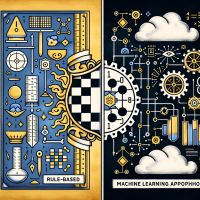
Choosing the Right Tool for Salesforce Deduplication: Rule-Based vs. Machine Learning Approaches When you browse Salesforce AppExchange for a deduplication solution, you’re presented with two primary options: rule-based deduplication tools or machine learning-powered applications. Both have their strengths, but understanding their methods will help you make an informed decision. Below, we’ll explore these approaches and their pros and cons to guide your choice. Why Salesforce’s Built-in Deduplication Falls Short Salesforce, while a powerful CRM, doesn’t excel at large-scale deduplication. Its native tools are limited to basic, rule-based matching, which may struggle with complexities like typos, inconsistent formatting, or unstructured data. Additionally, Salesforce’s deduplication features lack the scalability required for organizations dealing with large datasets or multiple data sources (e.g., third-party integrations, legacy systems). Businesses often need supplemental tools to address overlapping records or inconsistencies effectively. How Rule-Based Deduplication Works Popular rule-based tools on AppExchange, such as Cloudingo, DemandTools, DataGroomr, and Duplicate Check, require users to create filters that define what constitutes a duplicate. For example: Ultimately, the user manually defines the rules, deciding how duplicates are identified and handled. Benefits of Rule-Based Deduplication Drawbacks of Rule-Based Deduplication How Machine Learning-Based Deduplication Works Machine learning (ML)-powered tools rely on algorithms to identify patterns and relationships in data, detecting duplicates that may not be apparent through rigid rules. Key Features of ML Deduplication Techniques Used Benefits of ML-Based Deduplication Drawbacks of ML-Based Deduplication When to Choose Rule-Based vs. Machine Learning Deduplication Choose Rule-Based Deduplication If: Choose Machine Learning-Based Deduplication If: Selecting the Right Deduplication Tool When evaluating tools on AppExchange, consider these factors: Tectonic’s Closing Thoughts Rule-based and machine learning-based deduplication each serve distinct purposes. The right choice depends on your data’s complexity, the resources available, and your organization’s goals. Whether you’re seeking a quick, transparent solution or a powerful, scalable tool, AppExchange offers options to meet your needs and help maintain a clean Salesforce data environment. Like Related Posts Who is Salesforce? Who is Salesforce? Here is their story in their own words. From our inception, we’ve proudly embraced the identity of Read more Salesforce Marketing Cloud Transactional Emails Salesforce Marketing Cloud Transactional Emails are immediate, automated, non-promotional messages crucial to business operations and customer satisfaction, such as order Read more Salesforce Unites Einstein Analytics with Financial CRM Salesforce has unveiled a comprehensive analytics solution tailored for wealth managers, home office professionals, and retail bankers, merging its Financial Read more AI-Driven Propensity Scores AI plays a crucial role in propensity score estimation as it can discern underlying patterns between treatments and confounding variables Read more

Read More
Unlocking the Future of AI with Phidata

Unlocking the Future of AI with Phidata

Unlocking the Future of AI with Phidata: Build Smarter, Faster, and Better In a world where artificial intelligence is at the core of innovation, developing intelligent systems that can understand, reason, and act is no longer a luxury—it’s a necessity. Yet, creating these systems from the ground up can feel daunting, even for experienced developers. Enter Phidata, a revolutionary platform that simplifies the process of building intelligent multi-modal agents and workflows. Phidata isn’t just a framework—it’s a transformative toolkit for crafting AI systems that think critically, collaborate effectively, and solve complex problems. Whether you’re a developer, data scientist, or AI enthusiast, Phidata empowers you to create agents with memory, knowledge, and advanced reasoning capabilities, all while seamlessly integrating cutting-edge tools. Here’s your guide to this groundbreaking platform. Why Phidata Stands Out Phidata reimagines how developers design and deploy AI agents by blending simplicity with robust functionality. Here’s what makes it a game-changer: Elegantly Simple Development Phidata’s intuitive design enables you to create powerful agents with minimal code. Clean, concise, and efficient, it’s as simple as writing a “Hello World!” script to set up an agent capable of performing tasks like web searches or data analysis. Unmatched Flexibility From integrating diverse tools to customizing agent instructions, Phidata equips your AI to tackle complex, real-world challenges effortlessly. Whether you’re building agents for financial forecasting, content creation, or automated research, Phidata has you covered. Multi-Modal Intelligence Phidata agents can seamlessly interact with multiple data types, including text, images, audio, and video. This multi-modal capability ensures adaptability across industries and use cases, from visual data analysis to language translation. Collaborative Multi-Agent Workflows Why settle for a single-agent approach when you can create teams of intelligent agents? Phidata enables collaborative multi-agent workflows, where agents work together to achieve shared objectives—like a team of digital coworkers, each bringing their unique expertise to the table. Intuitive User Interface Phidata’s sleek, user-friendly interface makes interacting with your agents effortless. Say goodbye to frustrating debugging and focus on what matters: building innovative solutions. Built-In Reasoning and Knowledge (RAG) Phidata integrates structured reasoning and knowledge retrieval directly into its framework. This ensures your agents deliver organized, insightful responses tailored to your needs—whether for decision-making or customer engagement. Real-Time Monitoring and Debugging Track your agents’ performance with Phidata’s built-in monitoring and debugging tools. Fine-tune their behavior, optimize workflows, and ensure peak performance at all times. Transform Possibilities Into Reality Phidata opens the door to limitless possibilities, empowering you to: Whether you’re automating workflows, analyzing data, or designing innovative applications, Phidata redefines what’s possible with AI. Take the leap into the future of intelligent systems and start building smarter today with Phidata. Like Related Posts Who is Salesforce? Who is Salesforce? Here is their story in their own words. From our inception, we’ve proudly embraced the identity of Read more Salesforce Marketing Cloud Transactional Emails Salesforce Marketing Cloud Transactional Emails are immediate, automated, non-promotional messages crucial to business operations and customer satisfaction, such as order Read more Salesforce Unites Einstein Analytics with Financial CRM Salesforce has unveiled a comprehensive analytics solution tailored for wealth managers, home office professionals, and retail bankers, merging its Financial Read more AI-Driven Propensity Scores AI plays a crucial role in propensity score estimation as it can discern underlying patterns between treatments and confounding variables Read more

Read More
Gen AI Unleased With Vector Database

Knowledge Graphs and Vector Databases

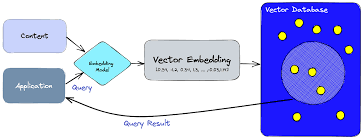
The Role of Knowledge Graphs and Vector Databases in Retrieval-Augmented Generation (RAG) In the dynamic AI landscape, Retrieval-Augmented Generation (RAG) systems are revolutionizing data retrieval by combining artificial intelligence with external data sources to deliver contextual, relevant outputs. Two core technologies driving this innovation are Knowledge Graphs and Vector Databases. While fundamentally different in their design and functionality, these tools complement one another, unlocking new potential for solving complex data problems across industries. Understanding Knowledge Graphs: Connecting the Dots Knowledge Graphs organize data into a network of relationships, creating a structured representation of entities and how they interact. These graphs emphasize understanding and reasoning through data, offering explainable and highly contextual results. How They Work Strengths Limitations Applications Vector Databases: The Power of Similarity In contrast, Vector Databases thrive in handling unstructured data such as text, images, and audio. By representing data as high-dimensional vectors, they excel at identifying similarities, enabling semantic understanding. How They Work Strengths Limitations Applications Combining Knowledge Graphs and Vector Databases: A Hybrid Approach While both technologies excel independently, their combination can amplify RAG systems. Knowledge Graphs bring reasoning and structure, while Vector Databases offer rapid, similarity-based retrieval, creating hybrid systems that are more intelligent and versatile. Example Use Cases Knowledge Graphs vs. Vector Databases: Key Differences Feature Knowledge Graphs Vector Databases Data Type Structured Unstructured Core Strength Relational reasoning Similarity-based retrieval Explainability High Low Scalability Limited for large datasets Efficient for massive datasets Flexibility Schema-dependent Schema-free Challenges in Implementation Future Trends: The Path to Convergence As AI evolves, the distinction between Knowledge Graphs and Vector Databases is beginning to blur. Emerging trends include: This convergence is paving the way for smarter, more adaptive systems that can handle both structured and unstructured data seamlessly. Conclusion Knowledge Graphs and Vector Databases represent two foundational technologies in the realm of Retrieval-Augmented Generation. Knowledge Graphs excel at reasoning through structured relationships, while Vector Databases shine in unstructured data retrieval. By combining their strengths, organizations can create hybrid systems that offer unparalleled insights, efficiency, and scalability. In a world where data continues to grow in complexity, leveraging these complementary tools is essential. Whether building intelligent healthcare systems, enhancing recommendation engines, or powering semantic search, the synergy between Knowledge Graphs and Vector Databases is unlocking the next frontier of AI innovation, transforming how industries harness the power of their data. Like Related Posts Who is Salesforce? Who is Salesforce? Here is their story in their own words. From our inception, we’ve proudly embraced the identity of Read more Salesforce Unites Einstein Analytics with Financial CRM Salesforce has unveiled a comprehensive analytics solution tailored for wealth managers, home office professionals, and retail bankers, merging its Financial Read more AI-Driven Propensity Scores AI plays a crucial role in propensity score estimation as it can discern underlying patterns between treatments and confounding variables Read more Tectonic’s Successful Salesforce Track Record Salesforce Technology Services Integrator – Tectonic has successfully delivered Salesforce in a variety of industries including Public Sector, Hospitality, Manufacturing, Read more
Read More
MOIRAI-MoE

MOIRAI-MoE

MOIRAI-MoE represents a groundbreaking advancement in time series forecasting by introducing a flexible, data-driven approach that addresses the limitations of traditional models. Its sparse mixture of experts architecture achieves token-level specialization, offering significant performance improvements and computational efficiency. By dynamically adapting to the unique characteristics of time series data, MOIRAI-MoE sets a new standard for foundation models, paving the way for future innovations and expanding the potential of zero-shot forecasting across diverse industries.

Read More
gettectonic.com