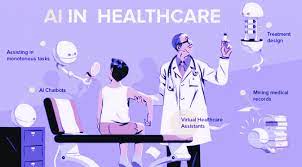
Generative AI Archives - gettectonic.com - Page 2
AI evolves with tools like Agentforce and Atlas

AI Development Agents: The New Productivity Powerhouse for Tech Teams

The New Productivity Powerhouse for Tech Teams The Rise of AI in Software Development Tech companies are rapidly adopting AI-powered developer agents to supercharge productivity and accelerate generative AI integration. These intelligent systems are transforming key workflows—from code generation to large-scale system migrations—delivering unprecedented efficiency gains. How AI Agents Are Revolutionizing Development According to Anupam Mishra, Director of Developer Programs at AWS India and South Asia, AI agents are now handling:✔ Moderate-complexity coding tasks✔ Automated test case generation✔ Security vulnerability detection✔ Legacy system modernization Real-World Impact: AWS Case Studies At the AWS Summit Bengaluru 2025, Mishra revealed staggering results from AI-assisted development: 1. 4X Faster .NET to Linux Migration 2. 83% Faster Java Version Upgrades 3. $260M Annual Savings from AI Automation Why AI Development Agents Are a Game-Changer ✅ Faster time-to-market – Automate repetitive coding tasks✅ Lower costs – Reduce manual debugging & refactoring✅ Enhanced security – Proactively detect vulnerabilities✅ Seamless legacy modernization – Accelerate cloud migrations The Future of AI-Assisted Development As AI agents grow more sophisticated, expect:🔹 Autonomous feature development🔹 Self-healing code that fixes bugs in real time🔹 AI-powered DevOps pipelines “We’re entering an era where AI doesn’t just assist developers—it collaborates with them,” says Mishra. “The best developers won’t be replaced by AI—they’ll be the ones using it best.” Like Related Posts Who is Salesforce? Who is Salesforce? Here is their story in their own words. From our inception, we’ve proudly embraced the identity of Read more Salesforce Unites Einstein Analytics with Financial CRM Salesforce has unveiled a comprehensive analytics solution tailored for wealth managers, home office professionals, and retail bankers, merging its Financial Read more AI-Driven Propensity Scores AI plays a crucial role in propensity score estimation as it can discern underlying patterns between treatments and confounding variables Read more Tectonic’s Successful Salesforce Track Record Salesforce Technology Services Integrator – Tectonic has successfully delivered Salesforce in a variety of industries including Public Sector, Hospitality, Manufacturing, Read more


Read More
AI Interface Paradox

AI Interface Paradox

The AI Interface Paradox: Why the Search Box is Failing Generative AI The Google Legacy: How Search Conditioned Our Digital Behavior Google’s revolutionary insight wasn’t algorithmic—it was psychological. By stripping away all complexity from search interfaces (remember AltaVista’s cluttered filters?), they created what became the most ingrained digital behavior pattern of the internet age: This elegant simplicity made Google the gateway to the internet. But it also created an unshakable mental model that now hampers AI adoption. The Cognitive Dissonance of AI Interfaces Today’s AI tools present users with a cruel irony: The exact same empty text box that promised effortless answers now demands programming-like precision. The Fundamental Mismatch Google Search Generative AI Works with fragments (“weather paris”) Requires structured prompts (“Act as a meteorologist…”) Delivers finished results Needs iterative refinement Single interaction Requires multi-turn conversations Predictable outcomes Wildly variable quality This explains why: Why the Search Metaphor Fails AI 1. The Blank Canvas Problem The same empty box is asked to handle: Without interface cues, users experience choice paralysis—like being handed a single blank sheet of paper when you need both a spreadsheet and a paintbrush. 2. The Conversation Illusion Elizabeth Laraki’s Madrid itinerary struggle reveals the flaw: human collaboration isn’t linear. We: Current chat UIs force all interaction through a sequential text tunnel, losing the richness of real collaboration. 3. The Hidden Grammar Requirement Effective prompting requires skills most users lack: This creates a participation gap where only power users benefit. Blueprint for the Post-Search Interface Emerging solutions point to five key principles for next-gen AI interfaces: 1. Context-Aware Launchpads Instead of blank slates, interfaces should offer: Example: Notion AI’s “/” command menu that suggests context-appropriate actions. 2. Adaptive Input Modalities Task Type Optimal Input Visual design Image upload + text Data analysis File import + natural language Creative writing Voice dictation Programming Code snippet + comments 3. Collaborative Workspaces Moving beyond chat streams to: Example: Vercel’s v0 design mode that blends generation with direct manipulation. 4. Guided Co-Creation Instead of silent processing, interfaces should: 5. Specialized Agents Ecosystem A shift from monolithic AI to: The Coming Interface Revolution The companies that crack this will do for AI what Google did for search—not by improving what exists, but by reimagining interaction from first principles. Early signs suggest: As NN/g’s research confirms, the future belongs to outcome-oriented interfaces that adapt to goals rather than forcing users through static workflows. What This Means for Adoption Until interfaces evolve, we’ll remain in the “early adopter phase” where: The breakthrough will come when AI interfaces stop pretending to be search boxes and start embracing their true nature—dynamic collaboration spaces. When that happens, we’ll see the real AI revolution begin. Like Related Posts Who is Salesforce? Who is Salesforce? Here is their story in their own words. From our inception, we’ve proudly embraced the identity of Read more Salesforce Unites Einstein Analytics with Financial CRM Salesforce has unveiled a comprehensive analytics solution tailored for wealth managers, home office professionals, and retail bankers, merging its Financial Read more AI-Driven Propensity Scores AI plays a crucial role in propensity score estimation as it can discern underlying patterns between treatments and confounding variables Read more Tectonic’s Successful Salesforce Track Record Salesforce Technology Services Integrator – Tectonic has successfully delivered Salesforce in a variety of industries including Public Sector, Hospitality, Manufacturing, Read more

Read More
New Slack Innovations

Slack News from Salesforce

Starting today, we’re updating Slack plans and pricing to expand access to AI, Agentforce, and Salesforce for organizations of all sizes. With these changes, customers will benefit from native AI, access to digital labor, deeper CRM integrations, and enterprise-grade security so they can grow faster with Slack. Since our last pricing adjustment in 2022, Slack has evolved into a unified work operating system and conversational interface for all your enterprise apps, data, and agents. Now more than ever, AI, data, and security are integral to Slack and essential for bringing AI agents successfully into the digital employee experience. We are committed to giving every team an onramp to AI-powered productivity in Slack — and every organization a secure foundation to grow with digital labor. That’s why we’re simplifying our pricing and bringing innovations into the core Slack experience across all our plans. Slack users gain new features across every plan We’re integrating AI features across all paid plans, adding summarization and huddle notes to the Pro plan, while supercharging our Business+ plan with a range of AI features including workflow generation, recaps, translation, and search. Our new Enterprise+ plan unlocks AI-powered enterprise search and evolved task management capabilities across your organization. Additionally, AI agents from Agentforce and partner AI apps can now be deployed in all paid plans. Every Salesforce customer will get Slack (Free Plan) with access to Salesforce integrations in Slack, so every team can collaborate around CRM data with Salesforce Channels in Slack or from Salesforce. Business+ and Enterprise+ teams will gain premium Salesforce features to forecast revenue, swarm deals, coordinate approvals, and respond to real-time event triggers. We’re enhancing security across all plans, bringing session duration controls and native device management to all of our plans — including Free, and adding SAML-based SSO for Salesforce customers — giving every team a trusted foundation to securely connect their people, data, AI, and agents. What’s changing with Slack pricing Slack is the work operating system for the agentic era These plan additions reflect our rapid pace of innovation over the last 18 months to deliver the most comprehensive work operating system for the era of AI and digital labor. Together, we are reinventing work for the age of digital labor. Humans are at the center — connected in conversation, amplified by AI, with instant access to contextual data — all built on a strong foundation of security and trust. For more information on these updates, visit the Slack Plans page or contact your account representative. Like Related Posts Who is Salesforce? Who is Salesforce? Here is their story in their own words. From our inception, we’ve proudly embraced the identity of Read more Salesforce Marketing Cloud Transactional Emails Salesforce Marketing Cloud Transactional Emails are immediate, automated, non-promotional messages crucial to business operations and customer satisfaction, such as order Read more Salesforce Unites Einstein Analytics with Financial CRM Salesforce has unveiled a comprehensive analytics solution tailored for wealth managers, home office professionals, and retail bankers, merging its Financial Read more AI-Driven Propensity Scores AI plays a crucial role in propensity score estimation as it can discern underlying patterns between treatments and confounding variables Read more

Read More

AdventHealth Pioneers AI-Powered Denials Prevention Strategy

Transforming Denials Management from Reactive to Proactive While many health systems struggle with claim denial rates as high as 20%, AdventHealth is taking an innovative approach—using artificial intelligence to prevent denials before they occur. The Florida-based health system has implemented AI-driven tools that analyze medical documentation for potential issues prior to claim submission, creating a more efficient revenue cycle and better patient experience. “By identifying documentation gaps early, we’re able to address them before they become claim denials,” said Dr. Christopher Riccard, Vice President of Hospital Medicine and Clinical Documentation Integrity at AdventHealth. “This proactive approach helps us reduce delays and confusion for patients while protecting our revenue stream.” The High Cost of Claim Denials Claim denials represent more than just an administrative headache: “Denials don’t just hurt hospitals—they impact patients directly,” Riccard emphasized. “Our goal is to ensure accurate, timely billing so patients understand their financial responsibility without unnecessary delays.” How AI Prevents Denials Before They Happen AdventHealth’s partnership with Iodine Software has yielded a cutting-edge solution: Key results include: Building an Intelligent Revenue Cycle Ecosystem AdventHealth views AI-powered denials prevention as just the beginning. The health system is exploring broader applications of AI across the revenue cycle: Emerging Technologies in Action Human-Centered Implementation Riccard stresses that technology alone isn’t the solution: “Success requires thoughtful integration into existing workflows. We worked closely with our clinical teams to ensure these tools actually solve real problems rather than create new ones.” The Future of Revenue Cycle Management AdventHealth’s strategy represents a paradigm shift in healthcare finance: As Riccard notes: “Our ultimate goal is creating a self-correcting revenue cycle that supports both financial health and patient experience—where potential issues are identified and resolved almost before they emerge.” The health system’s approach demonstrates how AI, when implemented strategically, can transform one of healthcare’s most persistent challenges into an opportunity for improvement across clinical, financial, and patient experience domains. Like Related Posts Who is Salesforce? Who is Salesforce? Here is their story in their own words. From our inception, we’ve proudly embraced the identity of Read more Salesforce Unites Einstein Analytics with Financial CRM Salesforce has unveiled a comprehensive analytics solution tailored for wealth managers, home office professionals, and retail bankers, merging its Financial Read more AI-Driven Propensity Scores AI plays a crucial role in propensity score estimation as it can discern underlying patterns between treatments and confounding variables Read more Tectonic’s Successful Salesforce Track Record Salesforce Technology Services Integrator – Tectonic has successfully delivered Salesforce in a variety of industries including Public Sector, Hospitality, Manufacturing, Read more

Read More
Whoever cracks reliable, scalable atomic power first could gain an insurmountable edge in the AI arms race.

The Nuclear Power Revival

The Nuclear Power Revival: How Big Tech is Fueling AI with Small Modular Reactors From Meltdowns to Megawatts: Nuclear’s Second Act Following two catastrophic nuclear accidents—Three Mile Island (1979) and Chernobyl (1986)—public trust in atomic energy plummeted. But today, an unlikely force is driving its resurgence: artificial intelligence. As generative AI explodes in demand, tech giants face an unprecedented energy crisis. Data centers, already consuming 2-3% of U.S. electricity, could devour 9% by 2030 (Electric Power Research Institute). With aging power grids struggling to keep up, cloud providers are taking matters into their own hands—by turning to small modular reactors (SMRs). Why AI Needs Nuclear Power The Energy Crisis No One Saw Coming Enter Small Modular Reactors (SMRs) The global SMR market for data centers is projected to hit 8M by 2033, growing at 48.72% annually (Research and Markets). The Big Four Tech Players Going Nuclear 1. Microsoft: Reviving Three Mile Island 2. Google: Betting on Next-Gen SMRs 3. Amazon: Three-Pronged Nuclear Push 4. Oracle: Plans Under Wraps The Startups Building Tomorrow’s Nuclear Tech Company Backer/Notable Feature Innovation Oklo Sam Altman (OpenAI) Rural SMRs targeting 2027 launch TerraPower Bill Gates Sodium-cooled fast reactors NuScale First U.S.-approved SMR design Factory-built, modular light-water reactors Last Energy 80+ microreactors planned in Europe/Texas 20MW units for data centers Deep Atomic Swiss startup MK60 reactor with dedicated cooling power Valar Atomics “Gigasite” assembly lines On-site SMR production Newcleo Lead-cooled fast reactors Higher safety via liquid metal cooling Challenges Ahead The Bottom Line As AI’s hunger for power grows exponentially, Big Tech is bypassing traditional utilities to build its own nuclear future. While risks remain, SMRs offer a scalable, clean solution—potentially rewriting energy economics in the AI era. The race is on: Whoever cracks reliable, scalable atomic power first could gain an insurmountable edge in the AI arms race. Like Related Posts Who is Salesforce? Who is Salesforce? Here is their story in their own words. From our inception, we’ve proudly embraced the identity of Read more Salesforce Unites Einstein Analytics with Financial CRM Salesforce has unveiled a comprehensive analytics solution tailored for wealth managers, home office professionals, and retail bankers, merging its Financial Read more AI-Driven Propensity Scores AI plays a crucial role in propensity score estimation as it can discern underlying patterns between treatments and confounding variables Read more Tectonic’s Successful Salesforce Track Record Salesforce Technology Services Integrator – Tectonic has successfully delivered Salesforce in a variety of industries including Public Sector, Hospitality, Manufacturing, Read more

Read More
Salesforce’s AI Evolution

AI-Powered Sales Enablement

AI-Powered Sales Enablement: The Future of High-Performance Selling The AI Revolution in Sales Artificial intelligence is fundamentally transforming sales organizations, with adoption rates skyrocketing 76% since 2018. Top-performing sales teams are 2.8X more likely to leverage AI than underperformers, and for good reason – AI-powered enablement delivers measurable results: 5 Game-Changing AI Applications for Sales Teams 1. Intelligent Content Delivery The Problem: 73% of sales content goes unused because reps can’t find it during critical moments. AI Solution: Context-aware AI agents surface battlecards, case studies and competitive intelligence in real-time during calls based on: Impact: Deere & Company reduced sales cycles by 22% after implementing AI-powered content recommendations. 2. Conversational Intelligence The Problem: 68% of deals stall due to poor discovery and misaligned follow-ups. AI Solution: NLP-powered tools that: Impact: SAP saw 31% more deals progressing to next stages after implementation. 3. Predictive Deal Guidance The Problem: Complex B2B deals often veer off course without visibility. AI Solution: AI that: Impact: A Fortune 500 tech firm increased win rates by 19% using predictive deal scoring. 4. Automated Coaching The Problem: Only 26% of sales training is applied on the job. AI Solution: Personalized coaching platforms that: Impact: Cisco reduced new hire ramp time by 40% with AI coaching. 5. Marketing-Sales Feedback Loop The Problem: 82% of marketing content misses the mark for sales teams. AI Solution: AI that: Impact: A SaaS company improved content ROI by 300% with AI-driven insights. Implementing AI for Maximum Impact Getting Started Critical Success Factors The Future of AI in Sales As generative AI matures, we’ll see: “The sales organizations that will dominate this decade aren’t those with the most reps, but those that best leverage AI to amplify human potential.” – Gartner Sales Practice Ready to transform your sales enablement? Contact Tectonic today! Like Related Posts Who is Salesforce? Who is Salesforce? Here is their story in their own words. From our inception, we’ve proudly embraced the identity of Read more Salesforce Marketing Cloud Transactional Emails Salesforce Marketing Cloud Transactional Emails are immediate, automated, non-promotional messages crucial to business operations and customer satisfaction, such as order Read more Salesforce Unites Einstein Analytics with Financial CRM Salesforce has unveiled a comprehensive analytics solution tailored for wealth managers, home office professionals, and retail bankers, merging its Financial Read more AI-Driven Propensity Scores AI plays a crucial role in propensity score estimation as it can discern underlying patterns between treatments and confounding variables Read more

Read More
Building the Foundation for AI Success

Building the Foundation for AI Success

The Data Imperative: Building the Foundation for AI Success The AI Revolution Demands a Data-First Approach As enterprises race to deploy generative AI, AI agents, and Model Context Protocol (MCP) systems, one critical truth emerges: AI is only as powerful as the data that fuels it. Why Data Platforms Are the Unsung Heroes of AI Modern data platforms solve five existential challenges for AI adoption: 1. Unified Data Fabric 2. Real-Time Performance at Scale 3. Context-Aware Intelligence 4. Governance Without Friction 5. Rapid AI Experimentation Model Context Protocol (MCP): The Nervous System for AI What Makes MCP Revolutionary Traditional AI Integration MCP Approach Custom APIs per system Standardized protocol Months of development Plug-and-play connectivity Brittle point-to-point links Adaptive ecosystem How MCP Transforms AI Capabilities The Strategic Imperative Organizations leading the AI race share three traits: “The AI winners won’t have better algorithms—they’ll have better data systems.”— MIT Technology Review, 2025 AI Predictions Next Steps for Enterprises: The future belongs to organizations that build data moats—not just models. Like Related Posts Who is Salesforce? Who is Salesforce? Here is their story in their own words. From our inception, we’ve proudly embraced the identity of Read more Salesforce Unites Einstein Analytics with Financial CRM Salesforce has unveiled a comprehensive analytics solution tailored for wealth managers, home office professionals, and retail bankers, merging its Financial Read more AI-Driven Propensity Scores AI plays a crucial role in propensity score estimation as it can discern underlying patterns between treatments and confounding variables Read more Tectonic’s Successful Salesforce Track Record Salesforce Technology Services Integrator – Tectonic has successfully delivered Salesforce in a variety of industries including Public Sector, Hospitality, Manufacturing, Read more

Read More
AI Agents and Open APIs

The Future of AI Agents

The Future of AI Agents: A Symphony of Digital Intelligence Forget simple chatbots—tomorrow’s AI agents will be force multipliers, seamlessly integrating into our workflows, anticipating needs, and orchestrating complex tasks with near-human intuition. Powered by platforms like Agentforce (Salesforce’s AI agent builder), these agents will evolve in five transformative ways: 1. Beyond Text: Multimodal AI That Sees, Hears, and Understands Today’s AI agents mostly process text, but the future belongs to multimodal AI—agents that interpret images, audio, and video, unlocking richer, real-world applications. How? Neural networks convert voice, images, and video into tokens that LLMs understand. Salesforce AI Research’s xGen-MM-Vid is already pioneering video comprehension. Soon, agents will respond to spoken commands, like:“Analyze Q2 sales KPIs—revenue growth, churn, CAC—summarize key insights, and recommend two fixes.”This isn’t just about speed; it’s about uncovering hidden patterns in data that humans might miss. 2. Agent-to-Agent (A2A) Collaboration: The Rise of AI Teams Today’s AI agents work solo. Tomorrow, specialized agents will collaborate like a well-oiled team, multiplying efficiency. Human oversight remains critical—not for micromanagement, but for ethics, strategy, and alignment with human goals. 3. Orchestrator Agents: The AI “Managers” of Tomorrow Teams need leaders—enter orchestrator agents, which coordinate specialized AIs like a restaurant GM oversees staff. Example: A customer service request triggers: The orchestrator integrates all inputs into a seamless, on-brand response. Why it matters: Orchestrators make AI systems scalable and adaptable. New tools? Just plug them in—no rebuilds required. 4. Smarter Reasoning: AI That Thinks Like You Today’s AI follows basic commands. Tomorrow’s will analyze, infer, and strategize like a human colleague. Example: A marketing AI could: Key Advances: As Anthropic’s Jared Kaplan notes, future agents will know when deep reasoning is needed—and when it’s overkill. 5. Infinite Memory: AI That Never Forgets Current AI has the memory of a goldfish—each interaction starts from scratch. Future agents will retain context across sessions, like a human recalling notes. Impact: The Bottom Line The next generation of AI agents won’t just assist—they’ll augment human potential, turning complex workflows into effortless collaborations. With multimodal perception, team intelligence, advanced reasoning, and infinite memory, they’ll redefine productivity across industries. The future isn’t just AI—it’s AI working for you, with you, and ahead of you. Like Related Posts Who is Salesforce? Who is Salesforce? Here is their story in their own words. From our inception, we’ve proudly embraced the identity of Read more Salesforce Marketing Cloud Transactional Emails Salesforce Marketing Cloud Transactional Emails are immediate, automated, non-promotional messages crucial to business operations and customer satisfaction, such as order Read more Salesforce Unites Einstein Analytics with Financial CRM Salesforce has unveiled a comprehensive analytics solution tailored for wealth managers, home office professionals, and retail bankers, merging its Financial Read more AI-Driven Propensity Scores AI plays a crucial role in propensity score estimation as it can discern underlying patterns between treatments and confounding variables Read more

Read More

The Rise of AI Agents

The Rise of AI Agents: How Autonomous AI is Reshaping Business As artificial intelligence advances, so does the terminology around it. The term “AI agent” is gaining traction as generative AI becomes deeply embedded in business operations. Unlike traditional AI tools that follow rigid scripts, AI agents are autonomous programs capable of learning, adapting, and executing tasks with minimal human intervention. Why AI Agents Are Booming The rapid expansion of large language models (LLMs) has slashed the cost of developing AI agents, fueling a surge in startups specializing in industry-specific AI solutions. According to Stripe’s 2024 research, AI startups achieved record revenue growth last year, signaling a shift from generic AI tools (like ChatGPT) to verticalized AI agents tailored for specific sectors. In their annual letter, Stripe co-founders Patrick and John Collison noted: “Just as SaaS evolved from horizontal platforms (Salesforce) to vertical solutions (Toast), AI is following the same path. Industry-specific AI agents ensure businesses fully harness LLMs by integrating contextual data and workflows.” AI Agents in Action: Industry Success Stories From manufacturing to finance, AI agents are already delivering tangible benefits: David Lodge, VP of Engineering at IBS Software, explains: “Fragmented systems limit AI’s potential. Unifying CRM, PMS, and loyalty data into a single platform is critical for AI to drive real transformation.” Hospitality’s AI Revolution: Breaking Down Data Silos Hotels like Wyndham and IHG have partnered with Salesforce to consolidate millions of guest records, enabling AI agents to deliver hyper-personalized service. In February 2025, Apaleo launched an AI Agent Marketplace for hospitality, allowing hotels to integrate AI solutions without costly system overhauls. Case Study: mk Hotels The Future: Autonomous Agents Redefining Workflows In September 2024, Salesforce introduced Agentforce, a platform for building secure, data-grounded AI agents that automate complex workflows. Jan Erik Aase, Partner at ISG, predicts: “The shift to agent-driven enterprises isn’t just technological—it’s cultural. As AI agents grow smarter, they’ll redefine customer interactions and decision-making.” Key Takeaways The AI agent revolution is here—and businesses that embrace it will lead the next wave of productivity and innovation. Like Related Posts Who is Salesforce? Who is Salesforce? Here is their story in their own words. From our inception, we’ve proudly embraced the identity of Read more Salesforce Marketing Cloud Transactional Emails Salesforce Marketing Cloud Transactional Emails are immediate, automated, non-promotional messages crucial to business operations and customer satisfaction, such as order Read more Salesforce Unites Einstein Analytics with Financial CRM Salesforce has unveiled a comprehensive analytics solution tailored for wealth managers, home office professionals, and retail bankers, merging its Financial Read more AI-Driven Propensity Scores AI plays a crucial role in propensity score estimation as it can discern underlying patterns between treatments and confounding variables Read more

Read More
health and life sciences

Top Ways AI is Transforming Patient Portal Messaging

Healthcare providers are drowning in patient messages—but AI-powered patient portals can help. By automating responses, improving clarity, and streamlining workflows, AI is easing clinician burnout while enhancing patient communication. Here’s how AI is making an impact: 1. Smart Triage: Routing Messages to the Right Person Not every message needs a physician’s attention—some are billing questions, others require nursing input. AI can: Example: 2. AI-Drafted Responses: Saving Clinicians Time Generative AI can craft clear, empathetic, and clinically accurate responses to common patient queries. Key Findings: Caveat: 3. Simplifying Medical Jargon for Better Patient Understanding Many patients struggle with complex medical terms in portal messages. AI can: Example:NYU Langone used GPT-4 to rewrite discharge summaries, making them easier to understand while scoring higher on patient education metrics. 4. Helping Patients Write Better Messages AI doesn’t just assist providers—it can guide patients to ask clearer questions, reducing back-and-forth. How it works: Vanderbilt’s study found AI-generated prompts made patient messages more concise and actionable. 5. Ethical AI Use: Transparency & Human Oversight While AI boosts efficiency, best practices matter:✅ Always review AI responses before sending.✅ Edit for tone—patients value empathy and a personal touch.✅ Consider disclosing AI use—studies (like Duke’s 2025 review) show it doesn’t harm satisfaction. “AI can reduce burnout while maintaining trust—if used responsibly.”—Dr. Anand Chowdhury, Duke University The Future of AI in Patient Portals As AI evolves, expect: The Bottom Line:AI won’t replace clinicians—but it can free them from repetitive tasks, allowing more time for meaningful patient care. Ready to explore AI for your patient portal? Start with triage automation and AI-assisted drafting, then scale as trust in the technology grows. Like Related Posts Who is Salesforce? Who is Salesforce? Here is their story in their own words. From our inception, we’ve proudly embraced the identity of Read more Salesforce Unites Einstein Analytics with Financial CRM Salesforce has unveiled a comprehensive analytics solution tailored for wealth managers, home office professionals, and retail bankers, merging its Financial Read more AI-Driven Propensity Scores AI plays a crucial role in propensity score estimation as it can discern underlying patterns between treatments and confounding variables Read more Tectonic’s Successful Salesforce Track Record Salesforce Technology Services Integrator – Tectonic has successfully delivered Salesforce in a variety of industries including Public Sector, Hospitality, Manufacturing, Read more

Read More
AI evolves with tools like Agentforce and Atlas

How the Atlas Reasoning Engine Powers Agentforce

Autonomous, proactive AI agents form the core of Agentforce. But how do they operate? A closer look reveals the sophisticated mechanisms driving their functionality. The rapid pace of AI innovation—particularly in generative AI—continues unabated. With today’s technical advancements, the industry is swiftly transitioning from assistive conversational automation to role-based automation that enhances workforce capabilities. For artificial intelligence (AI) to achieve human-level performance, it must replicate what makes humans effective: agency. Humans process data, evaluate potential actions, and execute decisions. Equipping AI with similar agency demands exceptional intelligence and decision-making capabilities. Salesforce has leveraged cutting-edge developments in large language models (LLMs) and reasoning techniques to introduce Agentforce—a suite of ready-to-use AI agents designed for specialized tasks, along with tools for customization. These autonomous agents can think, reason, plan, and orchestrate with remarkable sophistication, marking a significant leap in AI automation for customer service, sales, marketing, commerce, and beyond. Agentforce: A Breakthrough in AI Reasoning Agentforce represents the first enterprise-grade conversational automation solution capable of proactive, intelligent decision-making at scale with minimal human intervention. Several key innovations enable this capability: Additional Differentiators of Agentforce Beyond the Atlas Reasoning Engine, Agentforce boasts several distinguishing features: The Future of Agentforce Though still in its early stages, Agentforce is already transforming businesses for customers like Wiley and Saks Fifth Avenue. Upcoming innovations include: The Third Wave of AI Agentforce heralds the third wave of AI, surpassing predictive AI and copilots. These agents don’t just react—they anticipate, plan, and reason autonomously, automating entire workflows while ensuring seamless human collaboration. Powered by the Atlas Reasoning Engine, they can be deployed in clicks to revolutionize any business function. The era of autonomous AI agents is here. Are you ready? Like Related Posts Who is Salesforce? Who is Salesforce? Here is their story in their own words. From our inception, we’ve proudly embraced the identity of Read more Salesforce Marketing Cloud Transactional Emails Salesforce Marketing Cloud Transactional Emails are immediate, automated, non-promotional messages crucial to business operations and customer satisfaction, such as order Read more Salesforce Unites Einstein Analytics with Financial CRM Salesforce has unveiled a comprehensive analytics solution tailored for wealth managers, home office professionals, and retail bankers, merging its Financial Read more AI-Driven Propensity Scores AI plays a crucial role in propensity score estimation as it can discern underlying patterns between treatments and confounding variables Read more

Read More

Moving Beyond Large Language Models

The Future of Generative AI: Moving Beyond Large Language Models Why LLMs Aren’t Enough Large Language Models (LLMs) like GPT-4, Claude, and Llama have revolutionized AI with their ability to generate human-like text. But they come with critical limitations: These flaws make LLMs unreliable for high-stakes applications like legal research, medical diagnosis, or real-time decision-making. So, what comes next? Emerging Alternatives to LLMs While LLMs won’t disappear, the next wave of AI will likely combine them with smarter, more efficient models. 1. Logical Reasoning Systems Potential Hybrid Approach:LLMs generate responses → Logical AI verifies accuracy. 2. Real-Time Learning Models (e.g., AIGO) 3. Liquid Learning Networks (LLNs) 4. Small Language Models (SLMs) The Future: Hybrid AI Systems The most powerful AI won’t rely on just one model—it will combine the best of each: This hybrid approach could finally deliver AI that’s both smart and reliable. What’s Next? The AI revolution isn’t over—it’s just getting started. Like Related Posts Who is Salesforce? Who is Salesforce? Here is their story in their own words. From our inception, we’ve proudly embraced the identity of Read more Salesforce Unites Einstein Analytics with Financial CRM Salesforce has unveiled a comprehensive analytics solution tailored for wealth managers, home office professionals, and retail bankers, merging its Financial Read more AI-Driven Propensity Scores AI plays a crucial role in propensity score estimation as it can discern underlying patterns between treatments and confounding variables Read more Tectonic’s Successful Salesforce Track Record Salesforce Technology Services Integrator – Tectonic has successfully delivered Salesforce in a variety of industries including Public Sector, Hospitality, Manufacturing, Read more

Read More
The Promise of AI in Health Outcomes

10 AI Healthcare Trends Shaping the Future

10 AI Healthcare Trends Shaping the Future (2025 & Beyond) Artificial intelligence is transforming healthcare at an unprecedented pace. With a projected 49% CAGR through 2030 (MarketsandMarkets) and generative AI accelerating innovation, hospitals, clinics, and insurers are integrating AI into clinical workflows, diagnostics, and operations. Here are the 10 biggest AI healthcare trends to watch: 1. AI Chatbots for Patient Engagement “AI chatbots cut our call center volume by 30% while improving response times.” —Jordan Archer, COO, Tryon Medical Partners 2. AI-Powered Clinical Documentation 3. Unstructured Data Analysis 4. AI Radiology & Imaging Assistants 5. Robotic Surgery & Automation 6. AI in Physical Therapy 7. AI-Generated Fitness & Wellness Plans 8. Automated Revenue Cycle Management 9. Predictive Supply Chain Optimization 10. AI-Driven Business Strategy Challenges: Equity & Adoption While AI offers immense potential, smaller clinics and rural hospitals risk falling behind due to: “We must ensure equitable access—AI shouldn’t just benefit large health systems.” —Dr. Margaret Lozovatsky, AMA The Future of AI in Healthcare ✅ 2025-2030: AI becomes standard in EHRs, diagnostics, and surgery✅ Generative AI drafts treatment plans, research papers, and insurance appeals✅ Regulatory frameworks evolve to ensure safety & fairness Bottom Line: AI isn’t replacing doctors—it’s empowering them to work smarter, faster, and more precisely. Which trend will impact your organization most? Like Related Posts Who is Salesforce? Who is Salesforce? Here is their story in their own words. From our inception, we’ve proudly embraced the identity of Read more Salesforce Unites Einstein Analytics with Financial CRM Salesforce has unveiled a comprehensive analytics solution tailored for wealth managers, home office professionals, and retail bankers, merging its Financial Read more AI-Driven Propensity Scores AI plays a crucial role in propensity score estimation as it can discern underlying patterns between treatments and confounding variables Read more Tectonic’s Successful Salesforce Track Record Salesforce Technology Services Integrator – Tectonic has successfully delivered Salesforce in a variety of industries including Public Sector, Hospitality, Manufacturing, Read more

Read More
Potential of GenAI in Healthcare

Generative AI Adoption Accelerates in Healthcare, Survey Reveals

Healthcare leaders are increasingly embracing generative AI to enhance administrative efficiency and clinical productivity, according to a new McKinsey & Company survey. The latest findings, based on Q4 2024 responses from 150 executives across payers, health systems, and healthcare technology firms, highlight rapid adoption and shifting investment priorities. Key Survey Insights Growing Adoption of Gen AI Partnerships Drive Implementation Top Use Cases: Efficiency & Engagement ROI Expectations Are High Strategic Recommendations McKinsey’s report emphasizes that successful gen AI integration requires: “As generative AI gains momentum, healthcare leaders must position their organizations for long-term success by prioritizing high-impact use cases and strategic partnerships,” the authors noted. The findings underscore generative AI’s expanding role in transforming healthcare operations, with early adopters already seeing measurable benefits. Like Related Posts Who is Salesforce? Who is Salesforce? Here is their story in their own words. From our inception, we’ve proudly embraced the identity of Read more Salesforce Unites Einstein Analytics with Financial CRM Salesforce has unveiled a comprehensive analytics solution tailored for wealth managers, home office professionals, and retail bankers, merging its Financial Read more AI-Driven Propensity Scores AI plays a crucial role in propensity score estimation as it can discern underlying patterns between treatments and confounding variables Read more Tectonic’s Successful Salesforce Track Record Salesforce Technology Services Integrator – Tectonic has successfully delivered Salesforce in a variety of industries including Public Sector, Hospitality, Manufacturing, Read more

Read More
Agentic AI Race

The Evolution Beyond AI Agents

The Evolution Beyond AI Agents: What Comes Next? The Rapid Progression of AI Terminology The landscape of artificial intelligence has undergone a remarkable transformation in just three years. What began with ChatGPT and generative AI as the dominant buzzwords quickly evolved into discussions about copilots, and most recently, agentic AI emerged as 2024‘s defining concept. This accelerated terminology cycle mirrors fashion industry trends more than traditional technology adoption curves. Major players including Adobe, Qualtrics, Oracle, OpenAI, and Deloitte have recently launched agentic AI platforms, joining earlier entrants like Microsoft, AWS, and Salesforce. This rapid market saturation suggests the industry may already be approaching the next conceptual shift before many organizations have fully implemented their current AI strategies. Examining the Staying Power of Agentic AI Industry analysts present diverging views on the longevity of the agentic AI concept. Brandon Purcell, a Forrester Research analyst, acknowledges the pattern of fleeting AI trends while recognizing agentic AI’s potential for greater staying power. He cites three key factors that may extend its relevance: Klaasjan Tukker, Adobe’s Senior Director of Product Marketing, draws parallels to mature technologies that have become invisible infrastructure. He predicts agentic AI will follow a similar trajectory, becoming so seamlessly integrated that users will interact with it as unconsciously as they use navigation apps or operate modern vehicles. The Automotive Sector as an AI Innovation Catalyst The automotive industry provides compelling examples of advanced AI applications that transcend current “agentic” capabilities. Modern autonomous vehicles demonstrate sophisticated AI behaviors including: These implementations suggest that what the tech industry currently labels as “agentic” may represent only an intermediate step toward more autonomous, context-aware systems. The Definitional Challenges of Agentic AI The technology sector faces significant challenges in establishing common definitions for emerging AI concepts. Adobe’s framework describes agents as systems possessing three core attributes: However, as Scott Brinker of HubSpot notes, the term “agentic” risks becoming overused and diluted as vendors apply it inconsistently across various applications and functionalities. Interoperability as the Critical Success Factor For agentic AI systems to deliver lasting value, industry observers emphasize the necessity of cross-platform compatibility. Phil Regnault of PwC highlights the reality that enterprise environments typically combine solutions from multiple vendors, creating integration challenges for AI implementations. Three critical layers require standardization: Without such standards, organizations risk creating new AI silos that mirror the limitations of legacy systems. The Future Beyond Agentic AI While agentic AI continues its maturation process, the technology sector’s relentless innovation cycle suggests the next conceptual breakthrough may emerge sooner than expected. Historical naming patterns for AI advancements indicate several possibilities: As these technologies evolve, they may shed specialized branding in favor of more utilitarian terminology, much as “software bots” became normalized after their initial hype cycle. The automotive parallel suggests that truly transformative AI implementations may become so seamlessly integrated that their underlying technology becomes invisible to end users—the ultimate measure of technological maturity. Until that point, the industry will likely continue its rapid cycle of innovation and rebranding, searching for the next paradigm that captures the imagination as powerfully as “agentic AI” has in 2024. Like Related Posts Who is Salesforce? Who is Salesforce? Here is their story in their own words. From our inception, we’ve proudly embraced the identity of Read more Salesforce Marketing Cloud Transactional Emails Salesforce Marketing Cloud Transactional Emails are immediate, automated, non-promotional messages crucial to business operations and customer satisfaction, such as order Read more Salesforce Unites Einstein Analytics with Financial CRM Salesforce has unveiled a comprehensive analytics solution tailored for wealth managers, home office professionals, and retail bankers, merging its Financial Read more AI-Driven Propensity Scores AI plays a crucial role in propensity score estimation as it can discern underlying patterns between treatments and confounding variables Read more

Read More
gettectonic.com