Generative AI Archives - gettectonic.com - Page 3
salesforce service assistant

Salesforce Service Assistant

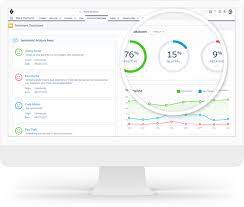
Salesforce Service Assistant is a new skill within Agentforce. It’s an AI-powered agent designed to assist human service reps in resolving cases and improving customer experiences. Service Assistant leverages Agentforce’s generative AI capabilities and is grounded in unique data from Salesforce. It helps agents by generating case summaries and actionable resolution steps.  In simpler terms: Salesforce has created a new AI assistant called “Service Assistant” that’s part of their Agentforce platform. This assistant helps service reps handle cases more efficiently by using AI to analyze data and provide guidance. Here’s a more in depth look at what Service Assistant does: Like Related Posts Who is Salesforce? Who is Salesforce? Here is their story in their own words. From our inception, we’ve proudly embraced the identity of Read more Salesforce Marketing Cloud Transactional Emails Salesforce Marketing Cloud Transactional Emails are immediate, automated, non-promotional messages crucial to business operations and customer satisfaction, such as order Read more Salesforce Unites Einstein Analytics with Financial CRM Salesforce has unveiled a comprehensive analytics solution tailored for wealth managers, home office professionals, and retail bankers, merging its Financial Read more AI-Driven Propensity Scores AI plays a crucial role in propensity score estimation as it can discern underlying patterns between treatments and confounding variables Read more

Read More
Financial Services Cloud and Core

AgentForce for Financial Services

Salesforce Revolutionizes Financial Services with AI-Powered Agentforce Platform AI Agents Take on Banking, Insurance, and Advisory Roles Salesforce has launched a suite of prebuilt AI agent templates designed to automate critical functions across financial services—from loan processing to insurance underwriting and wealth management. Embedded within Financial Services Cloud, these AI assistants aim to reduce administrative burdens, enhance customer experiences, and boost operational efficiency for banks, insurers, and investment firms. Key Features of Agentforce for Financial Services ✔ Prebuilt AI agents for loan officers, financial advisors, and insurance agents✔ 24/7 automated customer service (balance inquiries, claims processing, policy quotes)✔ Meeting intelligence (automated note-taking, follow-ups, and data-driven insights)✔ Regulatory compliance baked into every AI action✔ Seamless integration with core banking and CRM systems How AI Agents Transform Financial Workflows 1. Financial Advisors: Smarter, Faster Client Interactions 2. Banking & Insurance: Instant, Accurate Customer Service 3. Digital Loan Officers: Faster Approvals, Fewer Delays Why Financial Firms Need Specialized AI Agents Traditional customer service struggles with:❌ Long hold times❌ Repetitive data entry❌ Inconsistent compliance checks Agentforce AI solves these pain points by:✅ Reducing manual work (80%+ of routine tasks automated)✅ Improving accuracy (data-driven decisions, no human errors)✅ Ensuring compliance (built-in regulatory safeguards) Real-World Impact: “Agentforce has already transformed our service operations. The speed of deployment and immediate productivity gains have us exploring AI for claims and procurement next.”— Matt Brasch, VP of Digital Operations, Cumberland Mutual LLC The Future of AI in Finance Salesforce emphasizes that AI won’t replace human experts—it will empower them. By offloading repetitive tasks, financial professionals can focus on:✔ High-value client relationships✔ Complex decision-making✔ Strategic business growth Coming Next: Final Takeaway Salesforce’s Agentforce for Financial Services marks a major leap in AI-driven banking and insurance automation. Firms adopting this technology can expect:🔹 Faster customer service🔹 Higher advisor productivity🔹 Stronger compliance🔹 Increased revenue per employee Ready to deploy AI agents in your financial workflows? Contact Tectonic. Like Related Posts Who is Salesforce? Who is Salesforce? Here is their story in their own words. From our inception, we’ve proudly embraced the identity of Read more Salesforce Marketing Cloud Transactional Emails Salesforce Marketing Cloud Transactional Emails are immediate, automated, non-promotional messages crucial to business operations and customer satisfaction, such as order Read more Salesforce Unites Einstein Analytics with Financial CRM Salesforce has unveiled a comprehensive analytics solution tailored for wealth managers, home office professionals, and retail bankers, merging its Financial Read more AI-Driven Propensity Scores AI plays a crucial role in propensity score estimation as it can discern underlying patterns between treatments and confounding variables Read more

Read More

Grok 3 Model Explained

Grok 3 Model Explained: Everything You Need to Know xAI has introduced its latest large language model (LLM), Grok 3, expanding its capabilities with advanced reasoning, knowledge retrieval, and text summarization. In the competitive landscape of generative AI (GenAI), LLMs and their chatbot services have become essential tools for users and organizations. While OpenAI’s ChatGPT (powered by the GPT series) pioneered the modern GenAI era, alternatives like Anthropic’s Claude, Google Gemini, and now Grok (developed by Elon Musk’s xAI) offer diverse choices. The term grok originates from Robert Heinlein’s 1961 sci-fi novel Stranger in a Strange Land, meaning to deeply understand something. Grok is closely tied to X (formerly Twitter), where it serves as an integrated AI chatbot, though it’s also available on other platforms. What Is Grok 3? Grok 3 is xAI’s latest LLM, announced on February 17, 2025, in a live stream featuring CEO Elon Musk and the engineering team. Musk, known for founding Tesla, SpaceX, and acquiring Twitter (now X), launched xAI on March 9, 2023, with the mission to “understand the universe.” Grok 3 is the third iteration of the model, built using Rust and Python. Unlike Grok 1 (partially open-sourced under Apache 2.0), Grok 3 is proprietary. Key Innovations in Grok 3 Grok 3 excels in advanced reasoning, positioning it as a strong competitor against models like OpenAI’s o3 and DeepSeek-R1. What Can Grok 3 Do? Grok 3 operates in two core modes: 1. Think Mode 2. DeepSearch Mode Core Capabilities ✔ Advanced Reasoning – Multi-step problem-solving with self-correction.✔ Content Summarization – Text, images, and video summaries.✔ Text Generation – Human-like writing for various use cases.✔ Knowledge Retrieval – Accesses real-time web data (especially in DeepSearch mode).✔ Mathematics – Strong performance on benchmarks like AIME 2024.✔ Coding – Writes, debugs, and optimizes code.✔ Voice Mode – Supports spoken responses. Previous Grok Versions Model Release Date Key Features Grok 1 Nov. 3, 2023 Humorous, personality-driven responses. Grok 1.5 Mar. 28, 2024 Expanded context (128K tokens), better problem-solving. Grok 1.5V Apr. 12, 2024 First multimodal version (image understanding). Grok 2 Aug. 14, 2024 Full multimodal support, image generation via Black Forest Labs’ FLUX. Grok 3 vs. GPT-4o vs. DeepSeek-R1 Feature Grok 3 GPT-4o DeepSeek-R1 Release Date Feb. 17, 2025 May 24, 2024 Jan. 20, 2025 Developer xAI (USA) OpenAI (USA) DeepSeek (China) Reasoning Advanced (Think mode) Limited Strong Real-Time Data DeepSearch (web access) Training data cutoff Training data cutoff License Proprietary Proprietary Open-source Coding (LiveCodeBench) 79.4 72.9 64.3 Math (AIME 2024) 99.3 87.3 79.8 How to Use Grok 3 1. On X (Twitter) 2. Grok.com 3. Mobile App (iOS/Android) Same subscription options as Grok.com. 4. API (Coming Soon) No confirmed release date yet. Final Thoughts Grok 3 is a powerful reasoning-focused LLM with real-time search capabilities, making it a strong alternative to GPT-4o and DeepSeek-R1. With its DeepSearch and Think modes, it offers advanced problem-solving beyond traditional chatbots. Will it surpass OpenAI and DeepSeek? Only time—and benchmarks—will tell.  Like Related Posts Who is Salesforce? Who is Salesforce? Here is their story in their own words. From our inception, we’ve proudly embraced the identity of Read more Salesforce Unites Einstein Analytics with Financial CRM Salesforce has unveiled a comprehensive analytics solution tailored for wealth managers, home office professionals, and retail bankers, merging its Financial Read more AI-Driven Propensity Scores AI plays a crucial role in propensity score estimation as it can discern underlying patterns between treatments and confounding variables Read more Tectonic’s Successful Salesforce Track Record Salesforce Technology Services Integrator – Tectonic has successfully delivered Salesforce in a variety of industries including Public Sector, Hospitality, Manufacturing, Read more

Read More
Salesforce prompt builder

Mastering Agentforce

Mastering Agentforce: How to Supercharge Salesforce with AI-Powered Prompts Unlocking the Power of Agentforce Salesforce’s Agentforce is transforming how businesses automate marketing and sales—using generative AI to handle repetitive tasks, respond to prospect behavior in real time, and drive smarter strategies with less effort. But to fully leverage Agentforce, you need to master prompt engineering—the art of crafting effective AI instructions. (Don’t let the term “engineering” intimidate you—it simply means writing clear, structured prompts!) AI Prompts 101: The Key to Personalized Automation An AI prompt is a detailed instruction that guides Salesforce’s large language model (LLM) to generate relevant, business-specific responses. Why Prompts Matter Introducing Salesforce Prompt Builder Prompt Builder is Agentforce’s central hub for creating, managing, and applying reusable prompt templates across your AI Agents. How It Works 3 Types of Prompt Templates Step-by-Step: How to Use Prompt Builder 1. Get Access 2. Open Prompt Builder 3. Craft Your Prompt Every effective prompt should include:✅ Who’s involved? (Roles, relationships, data)Example: “You are a marketer named {!user.firstname} writing to {!account.name}, a potential customer.” ✅ Context (Tone, style, language)Example: “Write a professional yet conversational email in British English.” ✅ Goal (What should the AI accomplish?)Example: “Persuade {!account.name} to book a 15-minute intro call.” ✅ Constraints (Word limits, data boundaries)Example: “Keep under 300 words. Avoid jargon and unsupported claims.” 📌 Pro Tip: Draft prompts in a separate doc first for easy editing. 4. Test & Refine Before going live:✔ Verify responses match your goals & brand voice.✔ Check for bias, errors, or inconsistencies.✔ Fine-tune by adding more context or rephrasing. 5. Deploy Activate your prompt for use in: Why This Changes Everything With Agentforce + Prompt Builder, Salesforce users can:🚀 Scale hyper-personalized outreach without manual work.🤖 Automate repetitive tasks while maintaining brand consistency.📈 Drive higher ROI with AI that adapts to real-time data. Ready to transform your Salesforce automation? Start engineering smarter prompts today! Like Related Posts Who is Salesforce? Who is Salesforce? Here is their story in their own words. From our inception, we’ve proudly embraced the identity of Read more Salesforce Marketing Cloud Transactional Emails Salesforce Marketing Cloud Transactional Emails are immediate, automated, non-promotional messages crucial to business operations and customer satisfaction, such as order Read more Salesforce Unites Einstein Analytics with Financial CRM Salesforce has unveiled a comprehensive analytics solution tailored for wealth managers, home office professionals, and retail bankers, merging its Financial Read more AI-Driven Propensity Scores AI plays a crucial role in propensity score estimation as it can discern underlying patterns between treatments and confounding variables Read more

Read More

Once Upon a Time in Data Land

Once Upon a Time in Data Land: Building the Artificial Intelligence-Ready Warehouse In the early days of data, businesses simply wanted to know what had already happened in the past. Questions like “How many units shipped?” or “What were last month’s sales?” drove the first major digital settlements—the Digitally Filed Data Warehouse. Looking back this seems like the aluminum carport you can have erected in your driveway. The Meticulously Organized Library (The Digitally Filed Data Warehouse Era) Imagine a grand, meticulously organized library. Data from sales, finance, and inventory wasn’t just dumped inside—it went through ETL (Extract, Transform, Load), where it was cleaned, standardized, and structured into predefined formats. Need quarterly sales figures? They were always in the same place, ready for reliable reporting. But then, the world outside got messy. Suddenly, businesses weren’t just dealing with neat rows and columns—they faced website clicks, customer emails, sensor data, social media streams, images, and videos. The rigid Digitally Filed Data Warehouse struggled to adapt. Trying to force unstructured data through ETL was like trying to shelve a waterfall—slow, expensive, and often impossible. The Everything Shed (The Rise of the AI-Powered Warehouse) Enter the AI-Powered Warehouse—a vast, flexible storage space built for raw, unstructured data. Instead of forcing structure upfront, it embraced “store first, organize later” (schema-on-read). Data scientists could explore everything, from tweets to video transcripts, without constraints. But freedom had a cost. Without governance, many AI-Powered Warehouses became “data swamps”—cluttered, unreliable, and slow. Finding clean, trustworthy data was a treasure hunt, and building reliable AI pipelines was a challenge. Organizing the Shed (The AI-Ready Warehouse Paradigm) The solution? Structure without sacrifice. The AI-Ready Warehouse kept the flexibility of raw storage but added intelligence on top. Technologies like Delta Lake, Apache Iceberg, and Apache Hudi introduced:✔ ACID transactions (no more corrupted data)✔ Data versioning (“time travel” to past states)✔ Schema enforcement (order without rigidity)✔ Performance optimizations (speed at scale) A key innovation was the Medallion Architecture, organizing data by quality: This hybrid approach unified BI dashboards, analytics, and machine learning—all on the same foundation. The AI Factory (The Modern AI-Functioning Warehouse) Just as businesses adapted, AI evolved. Generative AI, autonomous agents, and real-time decision-making demanded more than batch-processed data. The AI-Ready Warehouse transformed into a fully integrated AI factory, built for: 🔹 Real-Time & Streaming Data 🔹 Seamless MLOps Integration 🔹 Vector Databases & Embeddings 🔹 Robust AI Governance Why This Matters for AI Agents Autonomous AI agents don’t just analyze data—they act on it. The AI-Functioning Warehouse gives them:✔ Context: Real-time data + historical insights✔ Consistency: Features match training data✔ Memory: Logged actions for continuous learning The Future: An AI-Native Data Ecosystem The journey from Digitally Filed Data Warehouse to AI-Powered Warehouse to AI-Functioning Warehouse reflects a shift from static reporting to dynamic intelligence. For businesses embracing AI, the question is no longer “Do we need a data strategy?” but “Is our data foundation AI-ready?” The answer will separate the leaders from the laggards in the age of AI. Next Steps: The future belongs to those who build not just for data, but for AI. Like Related Posts Who is Salesforce? Who is Salesforce? Here is their story in their own words. From our inception, we’ve proudly embraced the identity of Read more Salesforce Unites Einstein Analytics with Financial CRM Salesforce has unveiled a comprehensive analytics solution tailored for wealth managers, home office professionals, and retail bankers, merging its Financial Read more AI-Driven Propensity Scores AI plays a crucial role in propensity score estimation as it can discern underlying patterns between treatments and confounding variables Read more Tectonic’s Successful Salesforce Track Record Salesforce Technology Services Integrator – Tectonic has successfully delivered Salesforce in a variety of industries including Public Sector, Hospitality, Manufacturing, Read more
Read More
AI Adoption Not Even Across the Board

State of AI Adoption in 2024

The State of AI Adoption in 2024: Trends, Impacts, and Industry Shifts AI Goes Mainstream: Adoption Reaches Tipping Point The AI revolution has transitioned from experimentation to enterprise-wide implementation, with adoption rates accelerating across industries. Current data reveals a watershed moment in business technology: Key Adoption Metrics Sector-by-Sector Breakdown Early Adopter Industries (60%+ adoption) Emerging Adopters (30-50% adoption) Late Adopters (<30%) Geographic Note: Colorado, Florida and Utah lead U.S. adoption while Mississippi and Maine trail significantly. The Generative AI Boom The 2023-2024 period saw explosive growth in specific technologies: Proven Business Impact Organizations report tangible benefits from AI integration: The Global Perspective While U.S. adoption lags at 33% (Exploding Topics), international markets show stronger uptake: The Road Ahead Three critical trends emerging: “We’ve passed the inflection point where AI advantage separates market leaders from laggards.”— AI Strategy Report 2024 Organizations that accelerate adoption while addressing ethical, security and workforce challenges will define the next era of competitive advantage. The question is no longer if to adopt AI, but how fast to scale impact. Like Related Posts Who is Salesforce? Who is Salesforce? Here is their story in their own words. From our inception, we’ve proudly embraced the identity of Read more Salesforce Unites Einstein Analytics with Financial CRM Salesforce has unveiled a comprehensive analytics solution tailored for wealth managers, home office professionals, and retail bankers, merging its Financial Read more AI-Driven Propensity Scores AI plays a crucial role in propensity score estimation as it can discern underlying patterns between treatments and confounding variables Read more Tectonic’s Successful Salesforce Track Record Salesforce Technology Services Integrator – Tectonic has successfully delivered Salesforce in a variety of industries including Public Sector, Hospitality, Manufacturing, Read more

Read More
Natural Language Processing Explained

Exploring 3 Types of Natural Language Processing in Healthcare

Healthcare generates vast amounts of unstructured, text-based data—primarily in the form of clinical notes stored in electronic health records (EHRs). While this data holds immense potential for improving patient outcomes, extracting meaningful insights from it remains a challenge. Natural language processing (NLP) offers a solution by enabling healthcare stakeholders to analyze and interpret this data efficiently. NLP technologies can support population health management, clinical decision-making, and medical research by transforming unstructured text into actionable insights. Despite the excitement around NLP in healthcare—particularly amid clinician burnout and EHR inefficiencies—its two core components, natural language understanding (NLU) and natural language generation (NLG), receive less attention. This insight explores NLP, NLU, and NLG, highlighting their differences and healthcare applications. Understanding NLP, NLU, and NLG While related, these three concepts serve distinct purposes: Healthcare Applications NLP technologies offer diverse benefits across clinical, administrative, and research settings: 1. NLP in Clinical and Operational Use Cases Real-World Examples: 2. NLU for Research & Chatbots While less widely adopted than NLP, NLU shows promise in: 3. NLG for Generative AI in Healthcare Challenges & Barriers to Adoption Despite their potential, NLP technologies face several hurdles: 1. Data Quality & Accessibility 2. Bias & Fairness Concerns 3. Regulatory & Privacy Issues 4. Performance & Clinical Relevance The Future of NLP in Healthcare Despite these challenges, NLP, NLU, and NLG hold tremendous potential to revolutionize healthcare by:✔ Enhancing clinical decision-making✔ Streamlining administrative workflows✔ Accelerating medical research As the technology matures, addressing data, bias, and regulatory concerns will be key to unlocking its full impact. Like Related Posts Who is Salesforce? Who is Salesforce? Here is their story in their own words. From our inception, we’ve proudly embraced the identity of Read more Salesforce Marketing Cloud Transactional Emails Salesforce Marketing Cloud Transactional Emails are immediate, automated, non-promotional messages crucial to business operations and customer satisfaction, such as order Read more Salesforce Unites Einstein Analytics with Financial CRM Salesforce has unveiled a comprehensive analytics solution tailored for wealth managers, home office professionals, and retail bankers, merging its Financial Read more AI-Driven Propensity Scores AI plays a crucial role in propensity score estimation as it can discern underlying patterns between treatments and confounding variables Read more

Read More
Does Salesforce Have Artificial Intelligence?

AI Goes Mainstream

AI Goes Mainstream: How Small Businesses Are Harnessing Autonomous Agents for Growth Artificial intelligence is no longer just for big corporations. As generative AI tools have become more accessible, small and medium-sized businesses (SMBs) are rapidly adopting AI—with 75% now investing in AI solutions, according to recent data. High-growth SMBs are nearly twice as likely to embrace AI than those struggling to stay afloat. The shift from generative AI to agentic AI—where AI systems autonomously make decisions and take action—is unlocking even greater potential for SMBs. “We’re entering a new era of productivity that will transform businesses of all sizes, especially SMBs,” says Adam Evans, EVP & GM of Salesforce AI, who leads Agentforce, a platform that embeds AI agents into business workflows. “With autonomous AI, small teams can scale like never before.” A serial entrepreneur who sold two AI startups to Salesforce, Evans understands the challenges SMBs face. “Small businesses are always stretched thin. Agentforce gives them a 24/7 digital workforce across sales, service, and marketing—unlocking unlimited capacity.” Here’s how forward-thinking SMBs are using AI to drive growth: 1. Automated Marketing at Scale Many SMBs have tiny (or even one-person) marketing teams. AI-powered agents can:✅ Generate campaign briefs in seconds✅ Identify high-value audience segments✅ Create personalized content and customer journeys✅ Optimize campaigns in real time based on performance “Agentforce doesn’t just set up campaigns—it continuously refines them, ensuring maximum impact,” says Evans. 2. Hyper-Personalized Sales Outreach Generic sales emails don’t cut it anymore. AI agents can now craft bespoke outreach by:📊 Pulling CRM data on past interactions🏢 Analyzing prospect company profiles📑 Applying a business’s best sales playbooks “The AI synthesizes all this to write emails tailored to each lead’s role, industry, and interests,” Evans explains. 3. AI-Powered Shopping Assistants Imagine an AI personal shopper that:🛍️ Guides customers to the perfect product💬 Answers questions via chat (on websites, WhatsApp, etc.)🤝 Upsells and cross-sells intelligently “Agentforce acts as a 24/7 sales rep, helping convert browsers into buyers while freeing up human teams for high-touch relationships,” says Evans. The Bottom Line With AI handling repetitive tasks, SMBs can:✔ Compete with larger players despite smaller teams✔ Deliver enterprise-grade personalization✔ Turn data into actionable insights instantly “The businesses that thrive will be those that deploy AI agents to handle routine work while humans focus on strategy and creativity,” Evans predicts. “This isn’t the future—it’s happening right now.” For SMBs, the message is clear: AI adoption is no longer optional. It’s the key to staying relevant, efficient, and competitive. Like Related Posts Who is Salesforce? Who is Salesforce? Here is their story in their own words. From our inception, we’ve proudly embraced the identity of Read more Salesforce Marketing Cloud Transactional Emails Salesforce Marketing Cloud Transactional Emails are immediate, automated, non-promotional messages crucial to business operations and customer satisfaction, such as order Read more Salesforce Unites Einstein Analytics with Financial CRM Salesforce has unveiled a comprehensive analytics solution tailored for wealth managers, home office professionals, and retail bankers, merging its Financial Read more AI-Driven Propensity Scores AI plays a crucial role in propensity score estimation as it can discern underlying patterns between treatments and confounding variables Read more

Read More
Time Series AI

Time Series AI

Key Aspects of Time Series AI 1. Time Series Data Time series data consists of sequential data points recorded at regular intervals, enabling the analysis of trends, seasonality, and patterns over time. This structured format is essential for forecasting, anomaly detection, and other AI-driven analyses. 2. AI Techniques for Time Series Analysis Multiple AI and machine learning techniques are applied to time series data, including: These techniques help in forecasting future values, detecting anomalies, classifying sequences, and imputing missing data. 3. Applications of Time Series AI Time series AI is widely used across industries for: 4. Real-World Examples 5. Benefits of Time Series AI By leveraging AI for time series analysis, businesses and organizations gain a competitive edge through smarter forecasting and automation. Like Related Posts Who is Salesforce? Who is Salesforce? Here is their story in their own words. From our inception, we’ve proudly embraced the identity of Read more Salesforce Unites Einstein Analytics with Financial CRM Salesforce has unveiled a comprehensive analytics solution tailored for wealth managers, home office professionals, and retail bankers, merging its Financial Read more AI-Driven Propensity Scores AI plays a crucial role in propensity score estimation as it can discern underlying patterns between treatments and confounding variables Read more Tectonic’s Successful Salesforce Track Record Salesforce Technology Services Integrator – Tectonic has successfully delivered Salesforce in a variety of industries including Public Sector, Hospitality, Manufacturing, Read more
Read More
ai

Fireflies.ai Launches Domain-Specific Mini Apps to Automate Meeting Insights

Khosla Ventures-backed Fireflies.ai, an AI-powered note-taking platform, unveiled a suite of domain-specific “mini apps” on Wednesday, designed to automatically extract actionable insights from meeting transcripts. With the rise of automatic speech recognition (ASR) and generative AI, meeting intelligence startups—such as Otter, Read AI, Circleback, Krisp, and Granola—have seen rapid growth. Fireflies.ai is no exception, with co-founder and CEO Krish Ramineni reporting an 8x increase in users and achieving profitability. To accelerate its expansion, the startup is rolling out over 200 mini apps tailored to various roles and use cases, including: While competitors like Circleback require manual prompting to generate insights from transcripts, Fireflies.ai’s mini apps eliminate the need for user input, streamlining the process. “The time it takes to derive insights post-meeting is significant,” Ramineni told TechCrunch. “These apps close that gap by automating actions immediately after meetings, boosting productivity.” Users can also integrate outputs with platforms like Salesforce, HubSpot, Asana, Jira, Slack, and Microsoft Teams. For instance, a meeting summary can be automatically shared with a manager via Slack once the discussion concludes. Fireflies.ai allows users to deploy mini apps per meeting and even build custom apps for specialized needs. The company plans to introduce team-sharing capabilities in the future. Beyond mini apps, Fireflies.ai is enhancing meeting intelligence with pre-meeting briefs on participants and organizations. The startup is also testing “digital twins”—AI avatars that can attend meetings and respond to basic queries, similar to experiments by Zoom and others. This expansion underscores Fireflies.ai’s push to automate workflows and maximize efficiency in professional collaboration. Like Related Posts Who is Salesforce? Who is Salesforce? Here is their story in their own words. From our inception, we’ve proudly embraced the identity of Read more Salesforce Marketing Cloud Transactional Emails Salesforce Marketing Cloud Transactional Emails are immediate, automated, non-promotional messages crucial to business operations and customer satisfaction, such as order Read more Salesforce Unites Einstein Analytics with Financial CRM Salesforce has unveiled a comprehensive analytics solution tailored for wealth managers, home office professionals, and retail bankers, merging its Financial Read more AI-Driven Propensity Scores AI plays a crucial role in propensity score estimation as it can discern underlying patterns between treatments and confounding variables Read more

Read More
Real-World AI

AI in the Travel Industry

AI in Travel: How the Industry is Transforming with Intelligent Technology The travel sector has long been at the forefront of AI adoption, with airlines, hotels, and cruise lines leveraging advanced analytics for decades to optimize pricing and operations. Now, as artificial intelligence evolves—particularly with the rise of generative AI—the industry is entering a new era of smarter automation, hyper-personalization, and seamless customer experiences. “AI and generative AI have emerged as truly disruptive forces,” says Kartikey Kaushal, Senior Analyst at Everest Group. “They’re reshaping how travel businesses operate, compete, and serve customers.” According to Everest Group, AI adoption in travel is growing at 14-16% annually, driven by demand for efficiency and enhanced customer engagement. But as adoption accelerates, the industry must balance automation with the human touch that travelers still value. 10 Key AI Use Cases in Travel & Tourism 1. Dynamic Pricing Optimization Travel companies pioneered AI-driven dynamic pricing, adjusting fares based on demand, competitor rates, weather, and events. Now, AI takes it further with hyper-personalized pricing—tracking user behavior (like repeated searches) to offer tailored deals. 2. Customer Sentiment Analysis AI evaluates traveler emotions through voice tone, reviews, and social media, enabling real-time adjustments. Hotels and airlines use sentiment tracking to improve service before complaints escalate. 3. Automated Office Tasks Travel agencies use generative AI (like ChatGPT) to draft emails, marketing content, and customer onboarding materials, freeing staff for high-value interactions. 4. Self-Service & Customer Empowerment AI-powered chatbots, itinerary builders, and booking tools let travelers plan trips independently. Some even bring AI-generated plans to agents for refinement—blending automation with human expertise. 5. Operational Efficiency & Asset Management Airlines and cruise lines deploy AI for:✔ Predictive maintenance (reducing downtime)✔ Route optimization (cutting fuel costs)✔ Staff scheduling (improving productivity) 6. AI-Powered Summarization Booking platforms use generative AI to summarize hotel reviews, local attractions, and FAQs—delivering concise, personalized travel insights. 7. Frictionless Travel Experiences From contactless hotel check-ins to AI-driven real-time recommendations (restaurants, shows, transport), AI minimizes hassles and enhances convenience. 8. AI Agents for Problem-Solving Agentic AI autonomously resolves disruptions—like rebooking flights, rerouting luggage, and updating hotels—without human intervention. 9. Enhanced Personalization Without “Creepiness” AI tailors recommendations based on past behavior but must avoid overstepping. The challenge? “A customer segment of one”—balancing customization with privacy. 10. Risk & Compliance Management AI helps navigate data privacy laws (GDPR, CCPA) and detects fraud, but companies must assign clear accountability for AI-driven decisions. Challenges in AI Adoption for Travel The Future: AI + Human Collaboration The most successful travel companies will blend AI efficiency with human empathy, ensuring technology enhances—not replaces—the art of travel. “The goal isn’t full automation,” says McKinsey’s Alex Cosmas. “It’s using AI to make every journey smoother, smarter, and more personal.” As AI evolves, so will its role in travel—ushering in an era where smarter algorithms and human expertise work together to create unforgettable experiences. What’s Next? The journey has just begun. Like1 Related Posts Who is Salesforce? Who is Salesforce? Here is their story in their own words. From our inception, we’ve proudly embraced the identity of Read more Salesforce Marketing Cloud Transactional Emails Salesforce Marketing Cloud Transactional Emails are immediate, automated, non-promotional messages crucial to business operations and customer satisfaction, such as order Read more Salesforce Unites Einstein Analytics with Financial CRM Salesforce has unveiled a comprehensive analytics solution tailored for wealth managers, home office professionals, and retail bankers, merging its Financial Read more AI-Driven Propensity Scores AI plays a crucial role in propensity score estimation as it can discern underlying patterns between treatments and confounding variables Read more

Read More
AI Agents, Tech's Next Big Bet

Embracing “Intelligent Austerity”

Embracing “Intelligent Austerity”: How Scotland Can Lead the Way in Public Sector Innovation As the UK Government enforces a 15% reduction in operating costs across departments, the pressure to streamline workflows through generative AI has never been greater. While these targets have sparked concern in Westminster, Scotland’s legacy of innovation—from tidal energy to healthcare—positions it to redefine what austerity can achieve. Rather than resorting to blunt cuts that undermine services and hurt the most vulnerable constituents, Scotland has a unique opportunity to pioneer intelligent austerity: delivering significant cost savings and productivity gains without sacrificing the quality of essential public services. But how? A Smarter Approach to Public Services At Salesforce, we’re not just driving agentic transformation—we’re challenging governments to rethink efficiency. Our technology is already embedded across the UK public sector and beyond. With Agentforce, our goal isn’t to replace human workers but to empower them by eliminating repetitive, low-value tasks. When I speak with civil servants, I ask a simple question: “What parts of your day drain your productivity?” The answer is almost always the same: tedious administrative work that stifles innovation. The key to unlocking societal progress—whether in fighting child poverty, boosting the economy, or tackling climate change—lies in making small, daily efficiency gains. By automating routine tasks, we free up staff to focus on what they do best: high-impact, human-centric work. Agentforce serves as a practical blueprint for intelligent austerity, delivering lasting efficiencies while preserving—and even enhancing—the human touch in public services. Intelligent Austerity: Efficiency Without Sacrifice Traditional austerity often means deep, painful cuts that erode services and fuel public frustration. Intelligent austerity, by contrast, targets inefficiencies—like costly call centres and outdated administrative processes—while reinvesting savings where they matter most. Instead of lengthy, expensive IT overhauls that tie departments to consultants, we advocate for off-the-shelf AI solutions that deliver value in weeks, not years. These integrate seamlessly with existing systems, improving transparency, agility, and scalability from day one. The result? Departments can exceed cost-saving targets—even surpassing the 15% goal—without the downsides of traditional austerity. Agents in Action: Real-World Success Stories These examples prove that AI-driven transformation can counter fiscal pressures while improving service delivery—a win-win for both budgets and citizens. Scotland’s AI Opportunity Imagine every government department equipped with a 24/7 AI expert—an intelligent assistant capable of answering policy questions, processing documents, or even serving as a strategic advisor. Early AI adoption is like the first SatNav systems: helpful but imperfect. The real breakthrough comes when AI evolves into a collision avoidance system—actively preventing problems and enhancing decision-making. Our AI Agents Handbook outlines how Scotland can harness this potential. By adopting AI strategically, public services can achieve cost savings that are reinvested in key priorities—eradicating child poverty, growing the economy, and addressing the climate crisis. The Future: Smarter, More Agile Public Services AI isn’t about replacing humans—it’s about empowering them. With each small efficiency gain, departments become more agile, better equipped to deliver sustainable, high-quality services. Scotland has the chance to lead this shift, turning fiscal challenges into opportunities for innovation. Interested in learning more? Let’s discuss how AI Agents can transform your organization. Get in touch for a personalized consultation. Like Related Posts Who is Salesforce? Who is Salesforce? Here is their story in their own words. From our inception, we’ve proudly embraced the identity of Read more Salesforce Marketing Cloud Transactional Emails Salesforce Marketing Cloud Transactional Emails are immediate, automated, non-promotional messages crucial to business operations and customer satisfaction, such as order Read more Salesforce Unites Einstein Analytics with Financial CRM Salesforce has unveiled a comprehensive analytics solution tailored for wealth managers, home office professionals, and retail bankers, merging its Financial Read more AI-Driven Propensity Scores AI plays a crucial role in propensity score estimation as it can discern underlying patterns between treatments and confounding variables Read more

Read More
gettectonic.com