
Navigating The Challenges as AI Empowers Marketers
Use Cases for AI in Marketing. What is AI in marketing? AI marketing is when marketers use artificial intelligence to gather insights into their customers and produce better content. Marketing assets guided by AI are personalized and optimized for the customer journey. This can look like chatbots, targeted advertising, and content generation.
Marketers encounter diverse challenges shaped by industry, organizational size, and customer dynamics. Despite these variations, they converge on four crucial pillars essential for success: understanding customers, personalizing interactions, engaging across the entire customer journey, and swiftly and accurately analyzing results.
Establishing a cohesive customer profile across all touchpoints requires the identification of customers across diverse devices and channels. AI proves invaluable by employing probability models to match actions with identities.
AI goes beyond by unveiling previously undiscovered audience insights and segments. When dealing with expansive audience datasets, traditional business intelligence tools may falter, but AI excels at clustering data for analysis and pinpointing overlaps in audiences or segments.

As marketers accumulate new data points from interactions, content, and conversations, the sheer volume and speed can overwhelm conventional analysis methods. Here, AI steps in to augment data and attributes through capabilities like natural language processing and image recognition.
Additionally, manual lead scoring and rule-based approaches can introduce biases. AI intervenes with predictive lead scoring, offering insights into customer journeys and enhancing accuracy.
Generative AI could help SMEs create more personalized and effective marketing strategies through utilizing capabilities like SD, DL, and IoT. For example, SMEs might use Generative AI to generate personalized product or service suggestions for certain customers. As a result, customer engagement and retention can rise.
Marketers are using gen AI to analyze competitor moves, assess consumer sentiment, and test new product opportunities. Rapid generation of response-ready product concepts can improve the efficiency of successful products, increase testing accuracy, and accelerate time to market.

AI-driven content marketing tools can analyze vast amounts of data to identify trending topics, customer pain points, and content preferences. This allows manufacturers to create more relevant and engaging content that resonates with their target audience, driving better lead generation and brand awareness.
Leveraging AI in these capacities empowers marketers to delve deeper into customer understanding, facilitating the delivery of enhanced experiences and an overall boost in marketing effectiveness.
Salesforce Marketing Cloud Transactional Emails are immediate, automated, non-promotional messages crucial to business operations and customer satisfaction, such as order Read more

Salesforce has unveiled a comprehensive analytics solution tailored for wealth managers, home office professionals, and retail bankers, merging its Financial Read more
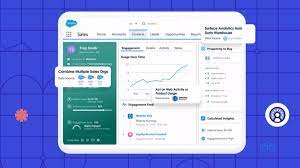
AI plays a crucial role in propensity score estimation as it can discern underlying patterns between treatments and confounding variables Read more

Salesforce Technology Services Integrator - Tectonic has successfully delivered Salesforce in a variety of industries including Public Sector, Hospitality, Manufacturing, Read more