Salesforce Einstein Archives - gettectonic.com - Page 3
Life of a Salesforce Admin in the AI Era

Life of a Salesforce Admin in the AI Era

The life of Salesforce admins is rapidly evolving as artificial intelligence (AI) becomes integral to business operations. Let’s examine the Life of a Salesforce Admin in the AI Era. By 2025, the Salesforce admin’s role will expand beyond managing CRM systems to include leveraging AI tools to enhance efficiency, boost productivity, and maintain security. While this future offers exciting opportunities, it also comes with new responsibilities that require admins to adapt and learn. So, what will Salesforce admins need to succeed in this AI-driven landscape? The Salesforce Admin’s Role in 2025 In 2025, Salesforce admins will be at the forefront of digital transformation, helping organizations harness the full potential of the Salesforce ecosystem and AI-powered tools. These AI tools will automate processes, predict trends, and improve overall efficiency. Many professionals are already enrolling in Salesforce Administrator courses focused on AI and automation, equipping them with the essential skills to thrive in this new era. Key Responsibilities in Life of a Salesforce Admin in the AI Era 1. AI Integration and Optimization Admins will be responsible for integrating AI tools like Salesforce Einstein AI into workflows, ensuring they’re properly configured and tailored to the organization’s needs. Core tasks include: 2. Automating Processes with AI AI will revolutionize automation, making complex workflows more efficient. Admins will need to: 3. Data Management and Predictive Analytics Admins will leverage AI to manage data and generate predictive insights. Key responsibilities include: 4. Enhancing Security and Compliance AI-powered security tools will help admins proactively protect systems. Responsibilities include: 5. Supporting AI-Driven Customer Experiences Admins will deploy AI tools that enhance customer interactions. Their responsibilities include: 6. Continuous Learning and Upskilling As AI evolves, so too must Salesforce admins. Key learning areas include: 7. Collaboration with Cross-Functional Teams Admins will work closely with IT, marketing, and sales teams to deploy AI solutions organization-wide. Their collaborative efforts will include: Skills Required for Future Salesforce Admins 1. AI and Machine Learning Proficiency Admins will need to understand how AI models like Einstein AI function and how to deploy them. While not requiring full data science expertise, a solid grasp of AI concepts—such as predictive analytics and machine learning—will be essential. 2. Advanced Data Management and Analysis Managing large datasets and ensuring data accuracy will be critical as admins work with AI tools. Proficiency in data modeling, SQL, SOQL, and ETL processes will be vital for handling AI-powered data management. 3. Automation and Process Optimization AI-enhanced automation will become a key responsibility. Admins must master tools like Salesforce Flow and Einstein Automate to build intelligent workflows and ensure smooth process automation. 4. Security and Compliance Expertise With AI-driven security protocols, admins will need to stay updated on data privacy regulations and deploy tools that ensure compliance and prevent data breaches. 5. Collaboration and Leadership Admins will lead the implementation of AI tools across departments, requiring strong collaboration and leadership skills to align AI-driven solutions with business objectives. Advanced Certifications for AI-Era Admins To stay competitive, Salesforce admins will need to pursue advanced certifications. Key certifications include: Tectonic’s Thoughts The Salesforce admin role is transforming as AI becomes an essential part of the platform. By mastering AI tools, optimizing processes, ensuring security, and continuously upskilling, Salesforce admins can become pivotal players in driving digital transformation. The future is bright for those who embrace the AI-powered Salesforce landscape and position themselves at the forefront of innovation. Like Related Posts Who is Salesforce? Who is Salesforce? Here is their story in their own words. From our inception, we’ve proudly embraced the identity of Read more Salesforce Marketing Cloud Transactional Emails Salesforce Marketing Cloud Transactional Emails are immediate, automated, non-promotional messages crucial to business operations and customer satisfaction, such as order Read more Salesforce Unites Einstein Analytics with Financial CRM Salesforce has unveiled a comprehensive analytics solution tailored for wealth managers, home office professionals, and retail bankers, merging its Financial Read more AI-Driven Propensity Scores AI plays a crucial role in propensity score estimation as it can discern underlying patterns between treatments and confounding variables Read more

Read More
Deploying Salesforce Einstein Copilot

Deploying Salesforce Einstein Copilot

Best Practices for Safely Deploying Salesforce Einstein Copilot When deploying Salesforce Einstein Copilot, following best practices ensures a secure, efficient, and effective integration of AI into your workflows. Here are the key steps to safely deploy Einstein Copilot: By adhering to these best practices, you can ensure a smooth, secure, and successful deployment of Salesforce Einstein Copilot, enhancing your team’s productivity while maintaining data integrity and security. Like1 Related Posts Who is Salesforce? Who is Salesforce? Here is their story in their own words. From our inception, we’ve proudly embraced the identity of Read more Salesforce Marketing Cloud Transactional Emails Salesforce Marketing Cloud Transactional Emails are immediate, automated, non-promotional messages crucial to business operations and customer satisfaction, such as order Read more Salesforce Unites Einstein Analytics with Financial CRM Salesforce has unveiled a comprehensive analytics solution tailored for wealth managers, home office professionals, and retail bankers, merging its Financial Read more AI-Driven Propensity Scores AI plays a crucial role in propensity score estimation as it can discern underlying patterns between treatments and confounding variables Read more

Read More
Einstein Copilot for Healthcare

Einstein Copilot for Healthcare

Einstein Copilot for Healthcare – Salesforce has introduced a new AI-powered healthcare assistant within its CRM system, marking its latest move to expand into the healthcare industry. As AI development accelerates, tech giants like Microsoft, Google, Amazon Web Services, and Salesforce are capitalizing on the opportunity to integrate AI and cloud technologies into healthcare to streamline administrative and operational tasks. Salesforce’s healthcare-specific AI tool, Einstein Copilot, is a conversational assistant that leverages an organization’s private data to provide relevant responses. Einstein Copilot enables healthcare providers and care teams to digitally capture and summarize information from both clinical and nonclinical sources, update patient records, and automate manual workflows. Key Features of Einstein Copilot Providers can use Einstein Copilot to generate patient summaries that include medications, diagnoses, social determinants, assessments, clinical service requests, and care gaps. A care manager can also ask the assistant to find an in-network provider based on location, specialty, and insurance coverage, and auto-fill referral forms using natural language prompts. The AI assistant can also trigger workflows for tasks such as sending referrals, scheduling appointments, and updating care plans. Salesforce expects Einstein Copilot to be HIPAA-compliant by summer 2024, with Copilot: Health Actions slated for general availability in winter 2024. Digitizing Health Assessments Salesforce is adding a feature called Assessment Generation that allows healthcare organizations to digitize standardized health assessments. These can be automatically populated into Salesforce Health Cloud, filled out electronically, and tracked for progress over time. Reducing Administrative Waste Salesforce cites research from McKinsey & Co. showing that administrative costs account for nearly a quarter of U.S. healthcare spending, with a potential savings of up to $320 billion. By integrating AI and CRM tools, Salesforce aims to reduce the operational burden on healthcare providers and improve patient outcomes. Amit Khanna, Senior Vice President and General Manager for Health at Salesforce, highlighted the value of these innovations: “These new data, AI, and CRM features reduce the administrative and operational burden for healthcare providers, leading to better outcomes for patients. With Salesforce’s trusted AI, healthcare organizations excited about generative AI—but wary of clinical and security concerns—can confidently integrate these innovations into their workflows.” Early Adopters and Impact Healthcare providers including Baptist Health South Florida and HarmonyCares are already leveraging Salesforce to personalize patient interactions and create unified patient views. HarmonyCares, which operates across 14 states with over 150 primary care providers, has used Salesforce’s AI-driven field service platform to streamline patient scheduling. The company reported a 50% increase in self-scheduling efficiency since adopting the platform and plans to expand its use of Salesforce Health Cloud for care management and engagement. Kristin Darby, Chief Information Officer at HarmonyCares, emphasized the benefits of AI in healthcare: “AI will dramatically improve our ability to quickly synthesize patient needs and preferences, enabling us to offer a more personalized experience with greater accuracy.” However, the integration of AI in healthcare is not without skepticism. A recent survey revealed that 69% of individuals are uncomfortable with AI being used to diagnose them, though more than half are open to its use in nonclinical tasks like scheduling and billing. Salesforce’s Healthcare Journey Salesforce first launched Health Cloud in 2015 to help providers manage patients by aggregating data from electronic medical records, devices, and wearables. In 2022, the company expanded this offering with Customer 360 for Health, a unified platform that combines real-time data from Data Cloud, Einstein AI, and automation tools like Flow to streamline processes such as prior authorizations, intake, and patient scheduling. Like Related Posts Who is Salesforce? Who is Salesforce? Here is their story in their own words. From our inception, we’ve proudly embraced the identity of Read more Salesforce Marketing Cloud Transactional Emails Salesforce Marketing Cloud Transactional Emails are immediate, automated, non-promotional messages crucial to business operations and customer satisfaction, such as order Read more Salesforce Unites Einstein Analytics with Financial CRM Salesforce has unveiled a comprehensive analytics solution tailored for wealth managers, home office professionals, and retail bankers, merging its Financial Read more AI-Driven Propensity Scores AI plays a crucial role in propensity score estimation as it can discern underlying patterns between treatments and confounding variables Read more

Read More
Revolution Customer Service with Agentforce

Revolution Customer Service with Agentforce

Agentforce stole the spotlight at Dreamforce, but it’s not just about replacing human workers. Equally significant for Service Cloud was the focus on how AI can be leveraged to make agents, dispatchers, and field service technicians more productive and proactive. Join a conversation to unpack the latest Sales Cloud innovations, with a spotlight on Agentforce for sales followed by a Q&A with Salesblazers. During the Dreamforce Service Cloud keynote, GM Kishan Chetan emphasized the dramatic shift over the past year, with AI moving from theoretical to practical applications. He challenged customer service leaders to embrace AI agents, highlighting that AI-driven solutions can transform customer service from delivering “good” benefits to achieving exponential growth. He noted that AI agents are capable of handling common customer requests like tech support, scheduling, and general inquiries, as well as more complex tasks such as de-escalation, billing inquiries, and even cross-selling and upselling. In practice, research by Valoir shows that most Service Cloud customers are still in the early stages of AI adoption, particularly with generative AI. While progress has accelerated recently, most companies are only seeing incremental gains in individual productivity rather than the exponential improvements highlighted at Dreamforce. To achieve those higher-level returns, customers must move beyond simple automation and summarization to AI-driven transformation, powered by Agentforce. Chetan and his team outlined four key steps to make this transition. “Agentforce represents the Third Wave of AI—advancing beyond copilots to a new era of highly accurate, low-hallucination intelligent agents that actively drive customer success. Unlike other platforms, Agentforce is a revolutionary and trusted solution that seamlessly integrates AI across every workflow, embedding itself deeply into the heart of the customer journey. This means anticipating needs, strengthening relationships, driving growth, and taking proactive action at every touchpoint,” said Marc Benioff, Chair and CEO, Salesforce. “While others require you to DIY your AI, Agentforce offers a fully tailored, enterprise-ready platform designed for immediate impact and scalability. With advanced security features, compliance with industry standards, and unmatched flexibility. Our vision is bold: to empower one billion agents with Agentforce by the end of 2025. This is what AI is meant to be.” In contrast to now-outdated copilots and chatbots that rely on human requests and strugglewith complex or multi-step tasks, Agentforce offers a new level of sophistication by operating autonomously, retrieving the right data on demand, building action plans for any task, and executing these plans without requiring human intervention. Like a self-driving car, Agentforce uses real-time data to adapt to changing conditions and operates independently within an organizations’ customized guardrails, ensuring every customer interaction is informed, relevant, and valuable. And when desired, Agentforce seamlessly hands off to human employees with a summary of the interaction, an overview of the customer’s details, and recommendations for what to do next. Deploy AI agents across channelsAgentforce Service Agent is more than a chatbot—it’s an autonomous AI agent capable of handling both simple and complex requests, understanding text, video, and audio. Customers were invited to build their own Service Agents during Dreamforce, and many took up the challenge. Service-related agents are a natural fit, as research shows Service Cloud customers are generally more prepared for AI adoption due to the volume and quality of customer data available in their CRM systems. Turn insights into actionLaunching in October 2024, Customer Experience Intelligence provides an omnichannel supervisor Wall Board that allows supervisors to monitor conversations in real time, complete with sentiment scores and organized metrics by topics and regions. Supervisors can then instruct Service Agent to dive into root causes, suggest proactive messaging, or even offer discounts. This development represents the next stage of Service Intelligence, combining Data Cloud, Tableau, and Einstein Conversation Mining to give supervisors real-time insights. It mirrors capabilities offered by traditional contact center vendors like Verint, which also blend interaction, sentiment, and other data in real time—highlighting the convergence of contact centers and Service Cloud service operations. Empower teams to become trusted advisorsSalesforce continues to navigate the delicate balance between digital and human agents, especially within Service Cloud. The key lies in the intelligent handoff of customer data when escalating from a digital agent to a human agent. Service Planner guides agents step-by-step through issue resolution, powered by Unified Knowledge. The demo also showcased how Service Agent can merge Commerce and Service by suggesting agents offer complimentary items from a customer’s shopping cart. Enable field teams to be proactiveSalesforce also announced improvements in field service, designed to help dispatchers and field service agents operate more proactively and efficiently. Agentforce for Dispatchers enhances the ability to address urgent appointments quickly. Asset Service Prediction leverages AI to forecast asset failures and upcoming service needs, while AI-generated prework briefs provide field techs with asset health scores and critical information before they arrive on site. Setting a clear roadmap for adopting Agentforce across these four areas is an essential step toward helping customers realize more than just incremental gains in their service operations. Equally important will be helping customers develop a data strategy that harnesses the power of Data Cloud and Salesforce’s partner ecosystem, enabling a truly data-driven service experience. Investments in capabilities like My Service Journeys will also be critical in guiding customers through the process of identifying which AI features will deliver the greatest returns for their specific needs. Agentforce leverages Salesforce’s generative AI, like Einstein GPT, to automate routine tasks, provide real-time insights, and offer personalized recommendations, enhancing efficiency and enabling agents to deliver exceptional customer experiences. Agentforce is not just another traditional chatbot; it is a next-generation, AI-powered solution that understands complex queries and acts autonomously to enhance operational efficiency. Unlike conventional chatbots, Agentforce is intelligent and adaptive, capable of managing a wide range of customer issues with precision. It offers 24/7 support, responds in a natural, human-like manner, and seamlessly escalates to human agents when needed and redefining customer service by delivering faster, smarter, and more effective support experiences. Like1 Related Posts Who is Salesforce? Who is Salesforce? Here is their story in their own words. From our inception,

Read More
Salesforce Einstein Conversation Mining

Salesforce Einstein Conversation Mining

What Is Salesforce Einstein Conversation Mining? Imagine truly understanding your customers—knowing what drives their satisfaction, common reasons for support requests, and more. That’s the power of Einstein Conversation Mining (ECM). This AI-powered tool leverages customer interactions—via chats, emails, or calls—to uncover valuable insights. By analyzing these conversations, ECM helps businesses identify patterns, track sentiment, and prioritize what matters most to their customers. Take Your Salesforce Flows to the Next Level Einstein Conversation Mining employs advanced natural language processing (NLP) and machine learning to: Far from being tech for tech’s sake, ECM provides actionable insights that empower service and sales teams to: Key Features and Benefits Einstein Conversation Mining transforms customer conversations into strategic insights. Here’s how: 1. Automatic Call Transcriptions Converts spoken interactions into text, eliminating manual note-taking. These transcripts are analyzed to ensure critical details are captured and actionable. 2. Sentiment Analysis Automatically detects customer emotions (positive, negative, or neutral), enabling teams to address frustrations or identify upsell opportunities. 3. Topic Identification Highlights key topics from interactions, allowing teams to focus on areas of interest or concern and prioritize impactful actions. 4. Actionable Insights Provides AI-driven recommendations for the next steps, enabling more personalized and proactive customer interactions. 5. Trend Analysis Identifies recurring issues or successful strategies, helping teams refine processes and maintain effective practices. 6. Conversation Summarization Generates concise summaries of calls, streamlining the review process and saving time. 7. Customizable Dashboards Tailored reporting ensures teams can focus on the metrics that matter most, driving data-informed decisions. How Does Einstein Conversation Mining Work? Here’s an example of how ECM transforms customer interactions into insights: Scenario: Rescheduling an Appointment Setting Up Einstein Conversation Mining ECM is available on Performance, Unlimited, and Developer Editions of Salesforce. Reporting and Dashboards To generate actionable reports: Considerations and Best Practices Before implementing ECM, keep these in mind: ECM vs. Einstein Conversation Insights (ECI) Why Einstein Conversation Mining Matters In today’s competitive landscape, personalized customer service is critical. Einstein Conversation Mining equips teams to: Despite limitations, ECM’s AI-driven insights enable businesses to work smarter, improve processes, and deliver exceptional customer experiences. Transform Your Customer Interactions Today Embrace Einstein Conversation Mining to turn customer conversations into your greatest asset! Like Related Posts Who is Salesforce? Who is Salesforce? Here is their story in their own words. From our inception, we’ve proudly embraced the identity of Read more Salesforce Marketing Cloud Transactional Emails Salesforce Marketing Cloud Transactional Emails are immediate, automated, non-promotional messages crucial to business operations and customer satisfaction, such as order Read more Salesforce Unites Einstein Analytics with Financial CRM Salesforce has unveiled a comprehensive analytics solution tailored for wealth managers, home office professionals, and retail bankers, merging its Financial Read more AI-Driven Propensity Scores AI plays a crucial role in propensity score estimation as it can discern underlying patterns between treatments and confounding variables Read more
Read More
Discharge Planning

Discharge Planning

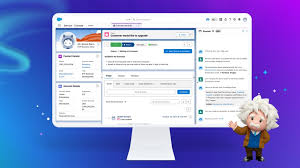
Discharge planning is crucial for smoothly transitioning patients from hospital care to the next stage of their recovery. This process requires collaboration among patients, caregivers, and providers to create a personalized plan that ensures continuity of care after hospitalization. Effective discharge planning must consider the patient’s care needs, preferences, and concerns. When done well, it helps prevent readmissions and alleviates strain on both patients and hospitals. However, balancing clinical judgment with patient data can challenge care teams already burdened with heavy workloads. Jean Halpin, COO at Grant Medical Center, shared how the organization has integrated AI tools to predict discharge dates and automate parts of the discharge planning process, helping to streamline patient care. Challenges of Effective Discharge Planning Halpin emphasized that a streamlined discharge process is essential for reducing wait times and improving patient engagement. Yet, various factors influence how quickly patients are discharged, particularly in emergency rooms where delays can affect overall patient flow. “Most of the wait time we experience as patients boils down to a lengthy discharge process that isn’t effectively moving patients,” Halpin explained. “It’s a domino effect. Someone waiting in the ER for a bed is delayed because another patient hasn’t been discharged when they should have been.” To address these inefficiencies, Grant Medical Center implemented the Qventus Inpatient Solution. This tool integrates with electronic health records (EHRs) to analyze patient data—such as clinical notes, history, and labs—and provides recommendations on discharge timing. These insights have helped reduce ER wait times and improved patient flow. Integrating AI into Clinical Workflows Adopting AI in healthcare comes with integration challenges, particularly ensuring that tools enhance, rather than hinder, clinicians’ workflows. Halpin noted that the Qventus tool minimizes disruptions by seamlessly pulling EHR data to generate an estimated discharge date, allowing care teams to focus on patient care without extra administrative burdens. “As a patient’s health changes, the [discharge] date can fluctuate, but AI uses its data to predict the most accurate day based on similar cases,” Halpin explained. “The care teams can then review the date and determine whether they agree, without having to sift through records to develop their own recommendation.” Halpin also highlighted the value of AI in reducing the administrative load. Tasks like coordinating discharges to rehab facilities, ordering tests, and prescribing medication consume significant time, and automating these functions allows care teams to focus more on direct patient care. Embracing AI to Alleviate Healthcare Worker Burdens For healthcare systems adopting AI, accurately assessing its impact is critical. At Grant Medical Center, leadership is measuring success by evaluating employee satisfaction, patient outcomes, and administrative improvements—such as time and cost savings. “By improving our patient flow, we reduced unnecessary stays by nearly 1,400 days. Patients are happy to go home on time, and our care teams can focus on working at the top of their license,” said Halpin. Despite the benefits, Halpin stressed that implementing AI requires thoughtful onboarding to ensure staff are comfortable with the new tools. Training and support are key to making the transition seamless and enabling teams to see how AI can enhance their workflows. “Health system leaders should embrace advancements that help alleviate burdens for workers,” she said. “Once teams understand the tool, they can prioritize patient care while AI handles the time-consuming admin tasks.” Halpin concluded that embracing AI in discharge planning not only improves operational efficiency but also empowers healthcare teams to deliver better, more focused care. Like Related Posts Who is Salesforce? Who is Salesforce? Here is their story in their own words. From our inception, we’ve proudly embraced the identity of Read more Salesforce Unites Einstein Analytics with Financial CRM Salesforce has unveiled a comprehensive analytics solution tailored for wealth managers, home office professionals, and retail bankers, merging its Financial Read more AI-Driven Propensity Scores AI plays a crucial role in propensity score estimation as it can discern underlying patterns between treatments and confounding variables Read more Tectonic’s Successful Salesforce Track Record Salesforce Technology Services Integrator – Tectonic has successfully delivered Salesforce in a variety of industries including Public Sector, Hospitality, Manufacturing, Read more
Read More
Agentforce Unveiled

Agentforce Unveiled

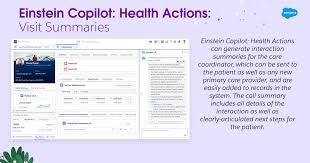
Salesforce Unveils ‘Agentforce’ to Empower a Billion AI Agents by 2025 Salesforce has introduced Agentforce, a revolutionary suite of autonomous AI agents aimed at transforming service, sales, marketing, and commerce sectors. With Agentforce, companies can rapidly scale their operations, boost efficiency, and elevate customer satisfaction by leveraging intelligent agents that handle routine tasks and complex workflows. The Agentforce Atlas Reasoning Engine powers these agents, autonomously analyzing data, making decisions, and completing tasks. This engine enables organizations to easily build, customize, and deploy their own agents using intuitive low-code tools. In addition, the Agentforce Partner Network allows customers to integrate pre-built agents from industry leaders like AWS, Google, IBM, and Workday, offering even more flexibility. Real-world impact Companies like OpenTable, Saks, and Wiley are already deploying Agentforce within their existing systems to enhance workforce capabilities and scale operations. Agentforce works autonomously, retrieving the right data on demand, building action plans, and executing them without human intervention. However, when needed, it can seamlessly hand off tasks to human employees, providing an overview of interactions, customer details, and suggested next steps. For example, Wiley has reported a 40% increase in case resolution after implementing Agentforce to handle routine inquiries. During busy seasons, like back-to-school, Agentforce has helped Wiley streamline operations, freeing up employees to handle more complex cases. Saks is also leveraging Agentforce to elevate its personalized customer experiences, empowering employees with real-time insights to deliver exceptional service. A new era of AI-driven customer success Salesforce CEO Marc Benioff is confident that Agentforce represents the third wave of AI, surpassing traditional chatbots and copilots with its fully autonomous capabilities. “Agentforce is a revolutionary and trusted solution that seamlessly integrates AI across every workflow, embedding itself deeply into the heart of the customer journey. This means anticipating needs, strengthening relationships, driving growth, and taking proactive action at every touchpoint,” Benioff said. Unlike its predecessors, Agentforce operates independently, adapting to changing conditions using real-time data. Whether responding to a customer service inquiry, qualifying sales leads, or optimizing marketing campaigns, Agentforce makes timely, relevant decisions based on an organization’s custom settings. When more human oversight is required, the platform provides detailed summaries and recommendations to assist employees in making informed decisions. Agentforce’s scalability and future Salesforce’s ambitious goal is to empower one billion AI agents by the end of 2025. This bold vision stems from the understanding that 41% of employee time is often spent on repetitive, low-impact work, according to the Salesforce Trends in AI Report. By automating these tasks, Agentforce allows employees to focus on more strategic, high-value initiatives, creating a hybrid workforce that is more effective and adaptable. Benioff noted, “While others require you to DIY your AI, Agentforce offers a fully tailored, enterprise-ready platform designed for immediate impact and scalability. Our vision is bold, and this is what AI is meant to be.” As businesses worldwide continue to explore AI’s potential, Agentforce positions Salesforce as a leader in the next wave of AI innovation, where autonomous agents enhance every facet of business operations. With over 1,000 agents already active, the future of work is a dynamic blend of human expertise and AI-powered agents, enabling organizations to thrive in an increasingly competitive landscape. Like Related Posts Who is Salesforce? Who is Salesforce? Here is their story in their own words. From our inception, we’ve proudly embraced the identity of Read more Salesforce Marketing Cloud Transactional Emails Salesforce Marketing Cloud Transactional Emails are immediate, automated, non-promotional messages crucial to business operations and customer satisfaction, such as order Read more Salesforce Unites Einstein Analytics with Financial CRM Salesforce has unveiled a comprehensive analytics solution tailored for wealth managers, home office professionals, and retail bankers, merging its Financial Read more AI-Driven Propensity Scores AI plays a crucial role in propensity score estimation as it can discern underlying patterns between treatments and confounding variables Read more
Read More
Spotlight on Agentforce

Spotlight on Agentforce

Agentforce stole the spotlight at Dreamforce, but it’s not just about replacing human workers. Equally significant for Service Cloud was the focus on how AI can be leveraged to make agents, dispatchers, and field service technicians more productive and proactive. During the Dreamforce Service Cloud keynote, GM Kishan Chetan emphasized the dramatic shift over the past year, with AI moving from theoretical to practical applications. He challenged customer service leaders to embrace AI agents, highlighting that AI-driven solutions can transform customer service from delivering “good” benefits to achieving exponential growth. He noted that AI agents are capable of handling common customer requests like tech support, scheduling, and general inquiries, as well as more complex tasks such as de-escalation, billing inquiries, and even cross-selling and upselling. In practice, research by Valoir shows that most Service Cloud customers are still in the early stages of AI adoption, particularly with generative AI. While progress has accelerated recently, most companies are only seeing incremental gains in individual productivity rather than the exponential improvements highlighted at Dreamforce. To achieve those higher-level returns, customers must move beyond simple automation and summarization to AI-driven transformation, powered by Agentforce. Chetan and his team outlined four key steps to make this transition. Deploy AI agents across channelsAgentforce Service Agent is more than a chatbot—it’s an autonomous AI agent capable of handling both simple and complex requests, understanding text, video, and audio. Customers were invited to build their own Service Agents during Dreamforce, and many took up the challenge. Service-related agents are a natural fit, as research shows Service Cloud customers are generally more prepared for AI adoption due to the volume and quality of customer data available in their CRM systems. Turn insights into actionLaunching in October 2024, Customer Experience Intelligence provides an omnichannel supervisor Wall Board that allows supervisors to monitor conversations in real time, complete with sentiment scores and organized metrics by topics and regions. Supervisors can then instruct Service Agent to dive into root causes, suggest proactive messaging, or even offer discounts. This development represents the next stage of Service Intelligence, combining Data Cloud, Tableau, and Einstein Conversation Mining to give supervisors real-time insights. It mirrors capabilities offered by traditional contact center vendors like Verint, which also blend interaction, sentiment, and other data in real time—highlighting the convergence of contact centers and Service Cloud service operations. Empower teams to become trusted advisorsSalesforce continues to navigate the delicate balance between digital and human agents, especially within Service Cloud. The key lies in the intelligent handoff of customer data when escalating from a digital agent to a human agent. Service Planner guides agents step-by-step through issue resolution, powered by Unified Knowledge. The demo also showcased how Service Agent can merge Commerce and Service by suggesting agents offer complimentary items from a customer’s shopping cart. Enable field teams to be proactiveSalesforce also announced improvements in field service, designed to help dispatchers and field service agents operate more proactively and efficiently. Agentforce for Dispatchers enhances the ability to address urgent appointments quickly. Asset Service Prediction leverages AI to forecast asset failures and upcoming service needs, while AI-generated prework briefs provide field techs with asset health scores and critical information before they arrive on site. Setting a clear roadmap for adopting Agentforce across these four areas is an essential step toward helping customers realize more than just incremental gains in their service operations. Equally important will be helping customers develop a data strategy that harnesses the power of Data Cloud and Salesforce’s partner ecosystem, enabling a truly data-driven service experience. Investments in capabilities like My Service Journeys will also be critical in guiding customers through the process of identifying which AI features will deliver the greatest returns for their specific needs. Like Related Posts Who is Salesforce? Who is Salesforce? Here is their story in their own words. From our inception, we’ve proudly embraced the identity of Read more Salesforce Marketing Cloud Transactional Emails Salesforce Marketing Cloud Transactional Emails are immediate, automated, non-promotional messages crucial to business operations and customer satisfaction, such as order Read more Salesforce Unites Einstein Analytics with Financial CRM Salesforce has unveiled a comprehensive analytics solution tailored for wealth managers, home office professionals, and retail bankers, merging its Financial Read more AI-Driven Propensity Scores AI plays a crucial role in propensity score estimation as it can discern underlying patterns between treatments and confounding variables Read more

Read More
Predictive Analytics

Predictive Analytics in Salesforce

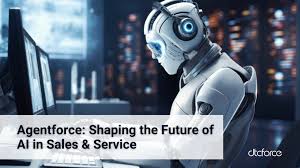
Predictive Analytics in Salesforce: Enhancing Decision-Making with AI In an ever-changing business environment, companies seek tools to forecast trends and anticipate challenges, enabling them to remain competitive. Predictive analytics, powered by Salesforce’s AI capabilities, offers a cutting-edge solution for these needs. In this guide, we’ll explore how predictive analytics works and how Salesforce empowers businesses to make smarter, data-driven decisions. What is Predictive Analytics? Predictive analytics uses historical data, statistical modeling, and machine learning to forecast future outcomes. With the vast amount of data organizations generate—ranging from transaction logs to multimedia—unifying this information can be challenging due to data silos. These silos hinder the development of accurate predictive models and limit Salesforce’s ability to deliver actionable insights. The result? Missed opportunities, inefficiencies, and impersonal customer experiences. When organizations implement proper integrations and data management practices, predictive analytics can harness this data to uncover patterns and predict future events. Techniques such as logistic regression, linear regression, neural networks, and decision trees help businesses gain actionable insights that enhance planning and decision-making. Einstein Prediction Builder A key component of the Salesforce Einstein Suite, Einstein Prediction Builder enables users to create custom AI models with minimal coding or data science expertise. Using in-house data, businesses can anticipate trends, forecast customer behavior, and predict outcomes with tailored precision. Key Features of Einstein Prediction Builder Note: Einstein Prediction Builder requires an Enterprise or Unlimited Edition subscription to access. Predictive Model Types in Salesforce Salesforce employs various predictive models tailored to specific needs: Building Custom Predictions Salesforce supports custom predictions tailored to unique business needs, such as forecasting regional sales or calculating appointment attendance rates. Tips for Building Predictions Prescriptive Analytics: Turning Predictions into Actions Predictive insights are only as valuable as the actions they inspire. Einstein Next Best Action bridges this gap by providing context-specific recommendations based on predictions. How Einstein Next Best Action Works Data Quality: The Foundation of Accurate Predictions The effectiveness of predictive analytics depends on the quality of your data. Poor data—whether due to errors, duplicates, or inconsistencies—can skew results and undermine trust. Best Practices for Data Quality Modern tools like DataGroomr can automate data validation and cleaning, ensuring that predictions are based on trustworthy information. Empowering Smarter Decisions with Predictive Analytics Salesforce’s AI-driven predictive analytics transforms decision-making by providing actionable insights from historical data. Businesses can anticipate trends, improve operational efficiency, and deliver personalized customer experiences. As predictive analytics continues to evolve, companies leveraging these tools will gain a competitive edge in an increasingly dynamic marketplace. Embrace the power of predictive analytics in Salesforce to make faster, more strategic decisions and drive sustained success. Like1 Related Posts Who is Salesforce? Who is Salesforce? Here is their story in their own words. From our inception, we’ve proudly embraced the identity of Read more Salesforce Marketing Cloud Transactional Emails Salesforce Marketing Cloud Transactional Emails are immediate, automated, non-promotional messages crucial to business operations and customer satisfaction, such as order Read more Salesforce Unites Einstein Analytics with Financial CRM Salesforce has unveiled a comprehensive analytics solution tailored for wealth managers, home office professionals, and retail bankers, merging its Financial Read more AI-Driven Propensity Scores AI plays a crucial role in propensity score estimation as it can discern underlying patterns between treatments and confounding variables Read more
Read More
Salesforce Continues to Push the Boundaries of AI Innovation

Salesforce Continues to Push the Boundaries of AI Innovation

In a strategic move to enhance its AI capabilities, Salesforce has announced the acquisition of Zoomin, a leader in unstructured data management solutions. This acquisition, expected to finalize in the fourth quarter of Salesforce’s fiscal year 2025, aligns with the company’s mission to dominate the enterprise AI landscape through its Agentforce platform. The acquisition further highlights Salesforce’s commitment to advancing AI-driven customer experiences and operational efficiency. Financial details of the transaction were not disclosed, but Salesforce confirmed that it would not affect previous earnings guidance. Previously, in discussions around Service Cloud’s push for Unified Knowledge, there were concerns about relying on partners like Zoomin. This acquisition addresses those concerns by filling a critical gap in Salesforce’s product offerings and adding new functionalities to Data Cloud. Strengthening Data Cloud for AI Zoomin’s technology will enhance Salesforce’s Data Cloud by providing improved support for managing unstructured data—a cornerstone of modern AI systems. This is a critical step in Salesforce’s AI strategy, particularly for the Agentforce platform, as it enables more comprehensive, context-aware AI capabilities. Rahul Auradkar, Salesforce’s EVP & GM of Unified Data Services & Einstein, stressed the importance of this acquisition. “Unstructured data is the key to unlocking AI’s full potential in customer interactions,” Auradkar said. “With Zoomin’s technology, we’re not just improving data management—we’re revolutionizing how AI agents understand and use information to deliver personalized experiences.” The integration of Zoomin’s Unified Knowledge technology directly addresses a key challenge in AI: managing and understanding unstructured data to create smarter AI agents. By strengthening its data foundation, Salesforce is positioning itself to deliver more sophisticated AI applications across its platform. Agentforce: A New AI Frontier Salesforce’s recently launched Agentforce platform aims to revolutionize enterprise AI with autonomous AI agents capable of advanced decision-making and task automation. By incorporating Zoomin’s technology, Agentforce will gain the ability to process and utilize unstructured data more effectively, setting it apart from competitors like Microsoft’s Copilot, which often requires significant user input and prompt engineering. The enhanced Agentforce platform will deliver a host of benefits, from improved customer service automation to more accurate sales forecasting and personalized marketing campaigns. By tapping into unstructured data, Salesforce is paving the way for AI-driven insights and actions previously unattainable with traditional approaches. A Natural Progression from Partnership to Acquisition Zoomin’s relationship with Salesforce began in 2018 as an AppExchange partner, followed by an investment from Salesforce Ventures in 2019. This acquisition marks a natural progression in their partnership, promising a smooth integration into Salesforce’s ecosystem. Zoomin CEO Gal Oron shared his enthusiasm: “Joining forces with Salesforce is a natural next step for us. Our shared vision is to make AI truly intelligent by giving it access to the vast amount of unstructured data that exists in enterprises. Together, we’ll help businesses unlock the full potential of their data and AI investments.” Implications Across the Business Spectrum The integration of Zoomin’s technology is expected to have broad implications, especially in customer service, where AI agents can use unstructured data to deliver more personalized and efficient responses. Beyond customer service, this technology is poised to impact sales, marketing, and overall business operations, enabling deeper insights into customer behavior and more targeted campaigns. Kishan Chetan, EVP and GM of Salesforce Service Cloud, highlighted the potential: “With Unified Knowledge, we’re not just improving AI—we’re transforming how businesses understand and serve their customers. Imagine AI agents that can grasp the full context of a customer’s history, preferences, and needs in real time. That’s the power we’re unlocking.” A Strategic Response to the AI Arms Race Salesforce’s acquisition of Zoomin comes amid an increasingly competitive enterprise AI landscape. By bolstering its embedded AI capabilities through strategic acquisitions, Salesforce is solidifying its position as a leader in enterprise AI, while addressing key challenges faced by rivals like Microsoft and Google. Zoomin’s expertise in processing large volumes of technical content and generating insights based on user behavior will be instrumental in helping Salesforce deliver cutting-edge, AI-driven solutions. These advancements will improve everything from customer service to digital transformation initiatives across industries. With this acquisition, Salesforce continues to push the boundaries of AI innovation, cementing its leadership in the rapidly evolving enterprise AI market. Like Related Posts Who is Salesforce? Who is Salesforce? Here is their story in their own words. From our inception, we’ve proudly embraced the identity of Read more Salesforce Marketing Cloud Transactional Emails Salesforce Marketing Cloud Transactional Emails are immediate, automated, non-promotional messages crucial to business operations and customer satisfaction, such as order Read more Salesforce Unites Einstein Analytics with Financial CRM Salesforce has unveiled a comprehensive analytics solution tailored for wealth managers, home office professionals, and retail bankers, merging its Financial Read more AI-Driven Propensity Scores AI plays a crucial role in propensity score estimation as it can discern underlying patterns between treatments and confounding variables Read more

Read More
Salesforce Einstein Copilot Security

Salesforce Einstein Copilot Security

Salesforce Einstein Copilot Security: How It Works and Key Risks to Mitigate for a Safe Rollout With the official rollout of Salesforce Einstein Copilot, this conversational AI assistant is set to transform how sales, marketing, and customer service teams interact with both customers and internal documentation. Einstein Copilot understands natural language queries, streamlining daily tasks such as answering questions, generating insights, and performing actions across Salesforce to boost productivity. Salesforce Einstein Copilot Security However, alongside the productivity gains, it’s essential to address potential risks and ensure a secure implementation. This Tectonic insight covers: Einstein Copilot Use Cases Einstein Copilot enables users to: All of these actions can be performed with simple, natural language prompts, improving efficiency and outcomes. How Einstein Copilot Works Here’s a simplified breakdown of how Einstein Copilot processes prompts: The Einstein Trust Layer Salesforce has built the Einstein Trust Layer to ensure customer data is secure. Customer data processed by Einstein Copilot is encrypted, and no data is retained on the backend. Sensitive data, such as PII (Personally Identifiable Information), PCI (Payment Card Information), and PHI (Protected Health Information), is masked to ensure privacy. Additionally, the Trust Layer reduces biased, toxic, and unethical outputs by leveraging toxic language detection. Importantly, Salesforce guarantees that customer data will not be used to train the AI models behind Einstein Copilot or be shared with third parties. The Shared Responsibility Model Salesforce’s security approach is based on a shared responsibility model: This collaborative model ensures a higher level of security and trust between Salesforce and its customers. Best Practices for Securing Einstein Copilot Rollout Prepare Your Salesforce Org for Einstein Copilot To ensure a smooth rollout, it’s critical to assess your Salesforce security posture and ready your data. Tools like Salesforce Shield can help organizations by: By following these steps, you can utilize the power of Einstein Copilot while ensuring the security and integrity of your data. Like1 Related Posts Who is Salesforce? Who is Salesforce? Here is their story in their own words. From our inception, we’ve proudly embraced the identity of Read more Salesforce Marketing Cloud Transactional Emails Salesforce Marketing Cloud Transactional Emails are immediate, automated, non-promotional messages crucial to business operations and customer satisfaction, such as order Read more Salesforce Unites Einstein Analytics with Financial CRM Salesforce has unveiled a comprehensive analytics solution tailored for wealth managers, home office professionals, and retail bankers, merging its Financial Read more AI-Driven Propensity Scores AI plays a crucial role in propensity score estimation as it can discern underlying patterns between treatments and confounding variables Read more

Read More
Salesforce AI Evolves with the Generative AI Landscape

Salesforce AI Evolves with the Generative AI Landscape

Salesforce AI: Powering Customer Relationship Management Salesforce is a leading CRM solution that has long delivered cutting-edge cloud technologies to manage customer relationships effectively. In recent months, the platform has further advanced with the integration of generative AI and AI-powered features, primarily through its AI engine, Einstein. Salesforce AI Evolves with the Generative AI Landscape. To explore how AI operates within the Salesforce ecosystem and how various business teams can leverage these innovations, this guide delves into Salesforce’s AI capabilities, products, and features. Salesforce AI: Transforming CRM Capabilities Salesforce remains a top choice in the CRM software market, offering one of the most comprehensive solutions for managing relationships across departments, industries, and initiatives. Through dedicated cloud platforms, Salesforce enables teams to oversee marketing, sales, customer service, e-commerce, and more, with tools focused on delivering enhanced customer experiences supported by powerful data analytics. With the introduction of generative AI, Salesforce has significantly elevated its native automation, workflow management, data analytics, and assistive capabilities for customer lifecycle management. Einstein Copilot exemplifies this innovation, aiding internal users with tasks such as outreach, analysis, and improving external user experiences. What is Salesforce Einstein? Salesforce Einstein is an AI-driven suite of tools integrated natively into various Salesforce Cloud applications, including Sales Cloud, Marketing Cloud, Service Cloud, and Commerce Cloud. It also operates through assistive technologies like Einstein Copilot. Einstein is built on a multitenant platform and incorporates numerous automated machine learning features to unify organizational data with CRM capabilities. Designed to make intelligent, data-driven decisions, Einstein requires no additional installation, offering a seamless user experience when paired with a compatible subscription plan. 7 Key Features of Salesforce Einstein 7 Applications of Salesforce Einstein Future Trends in Salesforce AI Bottom Line: Salesforce AI Evolves with the Generative AI Landscape Salesforce continues to enhance its AI-powered features, keeping pace with advancements in generative and predictive AI. Whether new to the platform or a seasoned user, Salesforce offers innovative, AI-centric solutions to streamline customer relationship management and business operations. Like1 Related Posts Who is Salesforce? Who is Salesforce? Here is their story in their own words. From our inception, we’ve proudly embraced the identity of Read more Salesforce Marketing Cloud Transactional Emails Salesforce Marketing Cloud Transactional Emails are immediate, automated, non-promotional messages crucial to business operations and customer satisfaction, such as order Read more Salesforce Unites Einstein Analytics with Financial CRM Salesforce has unveiled a comprehensive analytics solution tailored for wealth managers, home office professionals, and retail bankers, merging its Financial Read more AI-Driven Propensity Scores AI plays a crucial role in propensity score estimation as it can discern underlying patterns between treatments and confounding variables Read more

Read More
gettectonic.com