BERT Archives - gettectonic.com
The Rise of Conceptual AI

The Rise of Conceptual AI

The Rise of Conceptual AI: How Meta’s Large Concept Models Are Redefining Intelligence Beyond Tokens: The Next Evolution of AI Meta’s groundbreaking Large Concept Models (LCMs) represent a quantum leap in artificial intelligence, moving beyond the limitations of traditional language models to operate at the level of human-like conceptual understanding. Unlike conventional LLMs that process words as discrete tokens, LCMs work with semantic concepts—enabling unprecedented coherence, multimodal fluency, and cross-linguistic capabilities. How LCMs Differ From Traditional AI The Token vs. Concept Paradigm Feature Traditional LLMs (GPT, BERT) Meta’s LCMs Processing Unit Words/subwords (tokens) Full sentences/concepts Context Window Limited by token sequence length Holistic conceptual understanding Multimodality Text-focused Native text, speech, & emerging vision support Language Support Per-model limitations 200+ languages in unified space Output Coherence Degrades over long sequences Maintains narrative flow Key Innovation: The SONAR embedding space—a multidimensional framework where concepts from text, speech, and eventually images share a common mathematical representation. Inside the LCM Architecture: A Technical Breakdown 1. Conceptual Processing Pipeline 2. Benchmark Dominance Transformative Applications Enterprise Use Cases Consumer Impact Challenges on the Frontier 1. Computational Intensity 2. The Interpretability Gap 3. Expanding the Sensory Horizon The Road Ahead Meta’s research suggests LCMs could achieve human-parity in contextual understanding by 2027. Early adopters in legal and healthcare sectors already report: “Our contract review time dropped from 40 hours to 3—with better anomaly detection than human lawyers.”— Fortune 100 Legal Operations Director Why This Matters LCMs don’t just generate text—they understand and reason with concepts. This shift enables: ✅ True compositional creativity (novel solutions from combined concepts)✅ Self-correcting outputs (maintains thesis-like coherence)✅ Generalizable intelligence (skills transfer across domains) Next Steps for Organizations: “We’re not teaching AI language—we’re teaching it to think.”— Meta AI Research Lead Like Related Posts Who is Salesforce? Who is Salesforce? Here is their story in their own words. From our inception, we’ve proudly embraced the identity of Read more Salesforce Unites Einstein Analytics with Financial CRM Salesforce has unveiled a comprehensive analytics solution tailored for wealth managers, home office professionals, and retail bankers, merging its Financial Read more AI-Driven Propensity Scores AI plays a crucial role in propensity score estimation as it can discern underlying patterns between treatments and confounding variables Read more Tectonic’s Successful Salesforce Track Record Salesforce Technology Services Integrator – Tectonic has successfully delivered Salesforce in a variety of industries including Public Sector, Hospitality, Manufacturing, Read more

Read More

Rise and Limits of GPT Models

The Rise and Limits of GPT Models: What They Can’t Do (And What Comes Next) GPT Models: The Engines of Modern AI GPT models have revolutionized AI, offering speed, flexibility, and generative power that older architectures like RNNs couldn’t match. Without their development—starting with GPT-1 (2018) and BERT (2018)—today’s AI landscape, especially generative AI, wouldn’t exist. Yet, despite their dominance, GPT models have fundamental flaws—hallucinations, reasoning gaps, and context constraints—that make them unsuitable for some critical tasks. So, what can’t GPT models do well? Which limitations can be fixed, and which are unavoidable? How GPT Models Work (And Why They’re Different) GPT models are transformer-based, meaning they process data in parallel (unlike sequential RNNs). This allows them to:✔ Analyze entire sentences at once✔ Generate coherent, context-aware responses✔ Scale efficiently with more data But this architecture also introduces key weaknesses. The 3 Biggest Limitations of GPT Models 1. Hallucinations: When AI Makes Things Up Why it happens: Can it be fixed? 2. Struggles with Long-Form Data Why it happens: Can it be fixed? 3. They Can’t Really “Reason” Why it happens: Can it be fixed? The Future: Can GPT Models Improve? Option 1: Patch the Transformer But these are band-aids, not true fixes. Option 2: Move Beyond Transformers New architectures are emerging: The Bottom Line ✅ GPT models are here to stay (for now)❌ But they’ll never be perfect at reasoning or long-context tasks🚀 The next AI breakthrough may come from a totally new architecture What’s next? Keep an eye on Mamba, Megalodon, and neurosymbolic AI—they might just dethrone transformers. Like Related Posts Who is Salesforce? Who is Salesforce? Here is their story in their own words. From our inception, we’ve proudly embraced the identity of Read more Salesforce Unites Einstein Analytics with Financial CRM Salesforce has unveiled a comprehensive analytics solution tailored for wealth managers, home office professionals, and retail bankers, merging its Financial Read more AI-Driven Propensity Scores AI plays a crucial role in propensity score estimation as it can discern underlying patterns between treatments and confounding variables Read more Tectonic’s Successful Salesforce Track Record Salesforce Technology Services Integrator – Tectonic has successfully delivered Salesforce in a variety of industries including Public Sector, Hospitality, Manufacturing, Read more

Read More
Smart Communications Partners with Salesforce

Smart Communications Partners with Salesforce

Smart Communications Partners with Salesforce to Revolutionize Digital Customer Experience MANILA, Philippines — Smart Communications, the leading mobile services provider under PLDT Inc., has partnered with Salesforce to launch a next-generation digital storefront powered by Salesforce Commerce Cloud. This strategic collaboration will transform how over 50 million prepaid and postpaid subscribers in the Philippines discover, purchase, and manage telecom services—all through a seamless, AI-driven digital experience. A Unified Digital Storefront for Seamless Transactions Smart’s new platform will enable customers to: “This transformation positions Smart for long-term success in the Philippines’ competitive telecom market,” said Abraham Cuevas, Country Manager at Salesforce Philippines. AI, Automation & Scalability at the Core The solution leverages Salesforce AI, MuleSoft, and Service Cloud to:🔹 Personalize offers using customer data insights.🔹 Streamline order fulfillment with automated workflows.🔹 Integrate seamlessly with Smart’s existing CRM and backend systems. “Salesforce Commerce Cloud’s robust architecture empowers our customers with unmatched convenience,” said Gilbert Gaw, SVP of IT & Transformation at Smart & PLDT. Future Expansion: Enterprise & Beyond Smart is also exploring extending this platform to its enterprise segment, further enhancing B2B sales and support. Why It Matters:With rising digital adoption in the Philippines, this partnership ensures Smart stays ahead by delivering frictionless, scalable, and intelligent customer experiences. Like Related Posts Who is Salesforce? Who is Salesforce? Here is their story in their own words. From our inception, we’ve proudly embraced the identity of Read more Salesforce Marketing Cloud Transactional Emails Salesforce Marketing Cloud Transactional Emails are immediate, automated, non-promotional messages crucial to business operations and customer satisfaction, such as order Read more Salesforce Unites Einstein Analytics with Financial CRM Salesforce has unveiled a comprehensive analytics solution tailored for wealth managers, home office professionals, and retail bankers, merging its Financial Read more AI-Driven Propensity Scores AI plays a crucial role in propensity score estimation as it can discern underlying patterns between treatments and confounding variables Read more

Read More
Far Beyond Keywords

Far Beyond Keywords

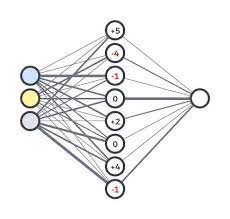
Far Beyond Keywords: The Next Era of Intelligent Search with NLP & Vector Embeddings Traditional search has served us well—scalable systems can scan structured data in seconds using keywords, tags, or schemas. But 90% of enterprise data is unstructured: emails, support tickets, PDFs, audio, and video. Keyword search fails here because human language is nuanced—we use metaphors, synonyms, and context that rigid keyword matching can’t grasp. To search unstructured data effectively, we need AI-powered semantic understanding—not just pattern matching. How Neural Networks Understand Language Modern NLP models rely on neural networks (NNs), which aren’t magic—they’re pattern-recognition engines trained on vast text datasets. Here’s how they learn: From Words to Semantic Search To search entire documents, we: Why It’s Better Than Keyword Search ✅ Finds conceptually related content (e.g., “sustainability” matches “eco-friendly initiatives”).✅ Ignores exact phrasing—understands intent.✅ Faster at scale—vector math outperforms text scanning. Scaling Semantic Search with Vector Databases Storing millions of vectors requires specialized vector databases (e.g., Pinecone, Milvus), optimized for: 🔹 Low-latency retrieval – Nearest-neighbor search in milliseconds.🔹 Horizontal scaling – Partition data across clusters.🔹 Incremental updates – Only re-embed modified text.🔹 GPU acceleration – 2-3x faster queries vs. CPU. Real-World Impact Frameworks like AgoraWiki apply these principles to deliver: The Future of Search As NLP advances, semantic search will become smarter, faster, and more contextual—transforming how enterprises unlock insights from unstructured data. Ready to move beyond keywords? Explore AI-powered search solutions today. Like Related Posts Who is Salesforce? Who is Salesforce? Here is their story in their own words. From our inception, we’ve proudly embraced the identity of Read more Salesforce Unites Einstein Analytics with Financial CRM Salesforce has unveiled a comprehensive analytics solution tailored for wealth managers, home office professionals, and retail bankers, merging its Financial Read more AI-Driven Propensity Scores AI plays a crucial role in propensity score estimation as it can discern underlying patterns between treatments and confounding variables Read more Tectonic’s Successful Salesforce Track Record Salesforce Technology Services Integrator – Tectonic has successfully delivered Salesforce in a variety of industries including Public Sector, Hospitality, Manufacturing, Read more
Read More

Grok 3 Model Explained

Grok 3 Model Explained: Everything You Need to Know xAI has introduced its latest large language model (LLM), Grok 3, expanding its capabilities with advanced reasoning, knowledge retrieval, and text summarization. In the competitive landscape of generative AI (GenAI), LLMs and their chatbot services have become essential tools for users and organizations. While OpenAI’s ChatGPT (powered by the GPT series) pioneered the modern GenAI era, alternatives like Anthropic’s Claude, Google Gemini, and now Grok (developed by Elon Musk’s xAI) offer diverse choices. The term grok originates from Robert Heinlein’s 1961 sci-fi novel Stranger in a Strange Land, meaning to deeply understand something. Grok is closely tied to X (formerly Twitter), where it serves as an integrated AI chatbot, though it’s also available on other platforms. What Is Grok 3? Grok 3 is xAI’s latest LLM, announced on February 17, 2025, in a live stream featuring CEO Elon Musk and the engineering team. Musk, known for founding Tesla, SpaceX, and acquiring Twitter (now X), launched xAI on March 9, 2023, with the mission to “understand the universe.” Grok 3 is the third iteration of the model, built using Rust and Python. Unlike Grok 1 (partially open-sourced under Apache 2.0), Grok 3 is proprietary. Key Innovations in Grok 3 Grok 3 excels in advanced reasoning, positioning it as a strong competitor against models like OpenAI’s o3 and DeepSeek-R1. What Can Grok 3 Do? Grok 3 operates in two core modes: 1. Think Mode 2. DeepSearch Mode Core Capabilities ✔ Advanced Reasoning – Multi-step problem-solving with self-correction.✔ Content Summarization – Text, images, and video summaries.✔ Text Generation – Human-like writing for various use cases.✔ Knowledge Retrieval – Accesses real-time web data (especially in DeepSearch mode).✔ Mathematics – Strong performance on benchmarks like AIME 2024.✔ Coding – Writes, debugs, and optimizes code.✔ Voice Mode – Supports spoken responses. Previous Grok Versions Model Release Date Key Features Grok 1 Nov. 3, 2023 Humorous, personality-driven responses. Grok 1.5 Mar. 28, 2024 Expanded context (128K tokens), better problem-solving. Grok 1.5V Apr. 12, 2024 First multimodal version (image understanding). Grok 2 Aug. 14, 2024 Full multimodal support, image generation via Black Forest Labs’ FLUX. Grok 3 vs. GPT-4o vs. DeepSeek-R1 Feature Grok 3 GPT-4o DeepSeek-R1 Release Date Feb. 17, 2025 May 24, 2024 Jan. 20, 2025 Developer xAI (USA) OpenAI (USA) DeepSeek (China) Reasoning Advanced (Think mode) Limited Strong Real-Time Data DeepSearch (web access) Training data cutoff Training data cutoff License Proprietary Proprietary Open-source Coding (LiveCodeBench) 79.4 72.9 64.3 Math (AIME 2024) 99.3 87.3 79.8 How to Use Grok 3 1. On X (Twitter) 2. Grok.com 3. Mobile App (iOS/Android) Same subscription options as Grok.com. 4. API (Coming Soon) No confirmed release date yet. Final Thoughts Grok 3 is a powerful reasoning-focused LLM with real-time search capabilities, making it a strong alternative to GPT-4o and DeepSeek-R1. With its DeepSearch and Think modes, it offers advanced problem-solving beyond traditional chatbots. Will it surpass OpenAI and DeepSeek? Only time—and benchmarks—will tell.  Like Related Posts Who is Salesforce? Who is Salesforce? Here is their story in their own words. From our inception, we’ve proudly embraced the identity of Read more Salesforce Unites Einstein Analytics with Financial CRM Salesforce has unveiled a comprehensive analytics solution tailored for wealth managers, home office professionals, and retail bankers, merging its Financial Read more AI-Driven Propensity Scores AI plays a crucial role in propensity score estimation as it can discern underlying patterns between treatments and confounding variables Read more Tectonic’s Successful Salesforce Track Record Salesforce Technology Services Integrator – Tectonic has successfully delivered Salesforce in a variety of industries including Public Sector, Hospitality, Manufacturing, Read more
Read More
Salesforce sfr-guard

SFR-Guard

Responsible AI isn’t just about regulatory requirements. SFR-Guard assist in aligning technology with your company’s values and mission. From the Salesforce 360 Blog – https://www.salesforce.com/blog/sfr-guard-ensuring-llm-safety-and-integrity-in-crm-applications/ Securing the Future of AI: Salesforce’s SFR-Guard for Safe, Trusted Generative AI The Critical Need for AI Safety in the Age of Autonomous Agents As generative AI becomes deeply embedded in business workflows—from CRM interactions to code generation—ensuring these systems operate safely and ethically is paramount. At Salesforce AI Research, we’re pioneering advanced guardrail technologies that protect users while maintaining AI’s transformative potential. Understanding the Risks: Why LLM Agents Need Protection Modern AI agents act as autonomous assistants capable of: Three key threat vectors emerge: Introducing SFR-Guard: Salesforce’s AI Safety Framework Our SFR-Guard model family provides enterprise-grade protection specialized for CRM workflows, outperforming alternatives: Model Parameters Fine-Grained Detection Explanations Severity Levels Public Benchmark Private CRM Benchmark SFR-Guard 0.05B-8B ✅ ✅ ✅ 83.3 93.0 GPT-4o Unknown ✅ ✅ ✅ 78.7 84.5 LlamaGuard 3 8B ✅ ❌ ❌ 71.3 71.0 Key Innovations Deep Dive: How SFR-Guard Works Toxicity Detection Matrix Category Examples Hate Speech Racial/ethnic slurs Identity Attacks Targeted harassment Violence Threats or glorification Physical Harm Dangerous instructions Sexual Content Explicit material Profanity Obscene language Prompt Injection Protection Attack Type Defense Strategy Role-Play/Jailbreaks DAN attack prevention Privilege Escalation Policy enforcement Prompt Leakage Sensitive data masking Adversarial Suffixes Encoding detection Privacy Attacks PII redaction Malicious Code Secure code generation The Future of Trusted AI at Salesforce Our ongoing research spans: Experience safer AI today: SFR-Guard technologies power Salesforce’s Trust Layer, Security Checks, and Guardrails – ensuring your Agentforce deployments remain both powerful and protected. “In the AI era, trust isn’t a feature—it’s the foundation.”— Salesforce AI Research Like Related Posts Who is Salesforce? Who is Salesforce? Here is their story in their own words. From our inception, we’ve proudly embraced the identity of Read more Salesforce Marketing Cloud Transactional Emails Salesforce Marketing Cloud Transactional Emails are immediate, automated, non-promotional messages crucial to business operations and customer satisfaction, such as order Read more Salesforce Unites Einstein Analytics with Financial CRM Salesforce has unveiled a comprehensive analytics solution tailored for wealth managers, home office professionals, and retail bankers, merging its Financial Read more AI-Driven Propensity Scores AI plays a crucial role in propensity score estimation as it can discern underlying patterns between treatments and confounding variables Read more

Read More
Speed to Launch of Agentforce

Speed to Launch of Agentforce

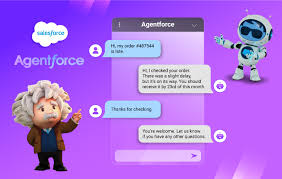
Agentforce isn’t just another AI platform that requires months of customization. At most customers, they quickly saw its power, launching transformative generative AI experiences in just days—no AI engineers needed. For companies with larger admin teams, the benefits can be even greater. Unlike other platforms, Agentforce places a strong emphasis on data privacy, building on the trust that Salesforce is known for, making these virtual assistants invaluable. We began with employee-facing use cases, saving our team several hours per week. Now, with Agentforce, we’re seeing even more opportunities to drive efficiencies and better serve our customers. “We’re excited to leverage Agentforce to completely overhaul recruitment and enrollment at Unity Environmental University. Instead of traditional forms or chatbots, our students will soon engage with an autonomous recruitment agent directly on our website, offering personalized support throughout the college application process.”– Dr. Melik Khoury, President & CEO, Unity Environmental University “For first-generation college students, the 1:385 coach-to-student ratio makes personalized guidance challenging. By integrating Agentforce into our platform, we’re deploying cutting-edge solutions to better support students. These agents enable our coaches to focus on high-touch, personalized experiences while handling vital tasks like sharing deadlines and answering common questions—24/7.”– Siva Kumari, CEO, College Possible “Agentforce offers organizations a unique opportunity to move beyond incremental improvements and achieve exponential ROI. By automating customer interactions, improving outcomes, and reducing costs, it integrates data, flows, and user interfaces to mitigate risks and accelerate value creation. This agent-based platform approach allows businesses to harness AI’s full potential, revolutionizing customer engagement and paving the way for exponential growth.”– Rebecca Wettemann, CEO and Principal Analyst, Valoir “Autonomous agents powered by Salesforce’s Agentforce are revolutionizing customer experiences by providing fast, accurate, and personalized support around the clock. With advanced AI making decisions and taking actions autonomously, businesses can resolve customer issues more efficiently, fostering deeper interactions and enhancing satisfaction. This innovation enables companies to reallocate human resources to more complex tasks, boosting individual productivity and scaling business growth. Agentforce is setting new standards for seamless sales, service, marketing, and commerce interactions, reinforcing its leadership in customer experience.”– Michael Fauscette, CEO and Chief Analyst, Arion Research LLC “The best way to predict the future is to invent it.” — Alan Kay, Computer Science Pioneer Technology progresses in what biologists call punctuated equilibrium, with new capabilities slowly emerging from labs and tinkerers until a breakthrough shifts the axis of possibility. These pioneering feats create new paradigms, unleashing waves of innovation—much like the Apple Macintosh, the iPhone, and the Salesforce Platform, which revolutionized the enterprise software-as-a-service (SaaS) model and sparked an entire industry. The Age of Agentforce Begins At Dreamforce 2024, Salesforce Futures reflected on the launch of Agentforce, inspired by visions like the Apple Knowledge Navigator. In 2023, we used this inspiration to craft our Salesforce 2030 film, which showcased the collaboration between humans and autonomous AI agents. Now, with Agentforce, we’re witnessing that vision come to life. Agentforce is a suite of customizable AI agents and tools built on the Salesforce Platform, offering an elegant solution to the complexity of AI deployment. It addresses the challenges of integrating data, models, infrastructure, and applications into a unified system. With powerful tools like Agent Builder and Model Builder, organizations can easily create, customize, and deploy AI agents. Salesforce’s Atlas Reasoning Engine empowers these agents to handle both routine and complex tasks autonomously. A New Era of AI Innovation At Dreamforce 2024, over 10,000 attendees raced to build their own agents using the “Agent Builder” experience, turning verbal instructions into fully functioning agents in under 15 minutes. This wasn’t just another chatbot—it’s a new breed of AI that could transform how businesses operate and deliver superior customer experiences. Companies like Saks, OpenTable, and Wiley have quickly embraced this technology. As Mick Costigan and David Berthy of Salesforce Futures explain, “When we see signals like this, it pushes us toward the future. Soon, we’ll see complex, multi-agent systems solving higher-order challenges, both in the enterprise and in consumer devices.” Shaping the Future Agentforce isn’t just a product—it’s a platform for experimentation. With hundreds of thousands of Salesforce customers soon gaining access, the full potential of these tools will unfold in ways we can’t yet imagine. As with every major technological shift, the real magic will lie in how people use it. Every interaction, every agent deployed, and every problem solved will shape the future in unexpected ways. Platform Evolution Adam Evans, Salesforce SVP of Product, notes that Agentforce builds on the company’s transformation over the past four years, following the pattern of Salesforce’s original disruption of enterprise software. Unlike traditional solutions, Agentforce eliminates the need for customers to build their own AI infrastructure, providing a ready-to-use solution. At the core of Agentforce is the Atlas Reasoning Engine, delivering results that are twice as relevant and 33% more accurate than competing solutions. This engine integrates Salesforce Data Cloud, Flow for automation, and the Einstein Trust Layer for governance. Early Customer Results Early Agentforce deployments highlight how organizations are using autonomous agents to enhance, rather than replace, human workers: George Pokorny, Senior VP of Global Customer Success at OpenTable, shared, “Just saving two minutes on a ten-minute call lets our service reps focus on strengthening customer relationships, thanks to seamless integration with Service Cloud, giving us a unified view of diner preferences and history.” Like Related Posts Who is Salesforce? Who is Salesforce? Here is their story in their own words. From our inception, we’ve proudly embraced the identity of Read more Salesforce Marketing Cloud Transactional Emails Salesforce Marketing Cloud Transactional Emails are immediate, automated, non-promotional messages crucial to business operations and customer satisfaction, such as order Read more Salesforce Unites Einstein Analytics with Financial CRM Salesforce has unveiled a comprehensive analytics solution tailored for wealth managers, home office professionals, and retail bankers, merging its Financial Read more AI-Driven Propensity Scores AI plays a crucial role in propensity score estimation as it can discern underlying patterns between treatments and confounding variables Read more

Read More
Enhancing OR Efficiency with Ambient Sensor Technology

Enhancing OR Efficiency with Ambient Sensor Technology

Implementing ambient sensors in ORs can be challenging, as clinicians may feel uneasy about being recorded. Schwartz noted that emphasizing the benefits of the technology—such as improved accuracy and streamlined communication—has been essential in gaining clinician acceptance. DeDominico highlighted that the AI’s ability to send clinicians relevant updates, such as when a patient is ready for surgery, has increased clinician satisfaction by reducing unnecessary waiting.

Read More
Cyber Insurance

Cyber Insurance

Navigating Cyber Insurance in an Evolving Threat Landscape The rapidly shifting cyberthreat landscape presents unique challenges for healthcare organizations and underwriters navigating cyber insurance coverage decisions. Cyber liability insurance plays a crucial role in shielding healthcare providers from the mounting costs associated with data breaches and cyberattacks, which now average $9.77 million per incident in the healthcare sector, according to IBM. The Challenges of Retaining Cyber Insurance Healthcare, among other heavily targeted sectors, faces difficulties in securing and maintaining affordable cyber insurance. The constantly evolving threat landscape impacts risk profiles, which drives up premiums and complicates coverage retention. Although year-over-year premium growth plateaued in the U.S. in 2023, 79% of respondents in a Delinea survey still reported increased insurance costs, with 67% experiencing premium hikes between 50% and 100%. As high-profile healthcare cyberattacks and increasing cyber risks persist, navigating the insurance landscape remains a significant challenge. Additionally, the lag in processing claims makes it difficult to anticipate how underwriters will respond to these changing threats. How the Evolving Threat Landscape Impacts Cyber Insurance Obtaining adequate cyber insurance coverage can be challenging in today’s risk-heavy environment. Unlike traditional insurance, where risks remain static, cyber risks constantly evolve to counteract security controls. “Cyber insurance risk adjusters face a unique challenge; unlike fires, which aren’t actively trying to burn you in new ways, cyberthreats are constantly adapting to bypass existing protections,” said Christopher Henderson, senior director of threat operations at Huntress. This continuous adaptation often means that by the time underwriting is complete, a risk assessment may already be outdated. Shifts in the threat landscape are driving changes in cyber insurance questionnaires. While in 2023 insurers focused on remote access tools, vulnerability management, and administrative access controls, the focus in 2024 shifted to include multifactor authentication (MFA) and identity-based attack prevention. This shift highlights the need for organizations to adapt to new requirements in cyber insurance as cybercriminals add new tactics to their playbooks. Adapting Insurance to Emerging Threats As cyberthreat tactics evolve, insurers may adjust policy terms to keep pace with the latest risks. Henderson suggests that insurers could move toward shorter underwriting cycles, possibly even six-month periods, to better align with the rapidly shifting cyber landscape. Mitigating Risk and Controlling Cyber Costs Several factors influence cyber insurance premiums, including organizational size and security posture. For healthcare providers, adhering to industry standards like SOC 2 and ISO 27001 can demonstrate compliance with best practices, improving coverage terms and potentially lowering premiums. Healthcare organizations using the NIST Cybersecurity Framework (CSF) as their primary security standard reported lower premium increases compared to those without this framework, according to a 2024 report by KLAS Research, Censinet, and the American Hospital Association. Henderson emphasizes the importance of layering new strategies with proven, traditional ones: “While staying vigilant against newer tactics like social engineering and identity-based attacks, maintaining consistent, auditable identity verification and MFA protocols remains crucial.” Despite upfront costs, cyber insurance can significantly reduce financial impact during cybersecurity incidents. For example, a 2024 Sophos report found that organizations with cyber insurance saw an average ransomware recovery cost of $2.94 million compared to $3.48 million for those without coverage. Navigating cyber insurance can be complex for healthcare organizations, but careful attention to risks and proactive security measures can help them secure the right coverage at sustainable rates. Like Related Posts Who is Salesforce? Who is Salesforce? Here is their story in their own words. From our inception, we’ve proudly embraced the identity of Read more Salesforce Unites Einstein Analytics with Financial CRM Salesforce has unveiled a comprehensive analytics solution tailored for wealth managers, home office professionals, and retail bankers, merging its Financial Read more AI-Driven Propensity Scores AI plays a crucial role in propensity score estimation as it can discern underlying patterns between treatments and confounding variables Read more Tectonic’s Successful Salesforce Track Record Salesforce Technology Services Integrator – Tectonic has successfully delivered Salesforce in a variety of industries including Public Sector, Hospitality, Manufacturing, Read more
Read More
Where LLMs Fall Short

Where LLMs Fall Short

Large Language Models (LLMs) have transformed natural language processing, showcasing exceptional abilities in text generation, translation, and various language tasks. Models like GPT-4, BERT, and T5 are based on transformer architectures, which enable them to predict the next word in a sequence by training on vast text datasets. How LLMs Function LLMs process input text through multiple layers of attention mechanisms, capturing complex relationships between words and phrases. Here’s an overview of the process: Tokenization and Embedding Initially, the input text is broken down into smaller units, typically words or subwords, through tokenization. Each token is then converted into a numerical representation known as an embedding. For instance, the sentence “The cat sat on the mat” could be tokenized into [“The”, “cat”, “sat”, “on”, “the”, “mat”], each assigned a unique vector. Multi-Layer Processing The embedded tokens are passed through multiple transformer layers, each containing self-attention mechanisms and feed-forward neural networks. Contextual Understanding As the input progresses through layers, the model develops a deeper understanding of the text, capturing both local and global context. This enables the model to comprehend relationships such as: Training and Pattern Recognition During training, LLMs are exposed to vast datasets, learning patterns related to grammar, syntax, and semantics: Generating Responses When generating text, the LLM predicts the next word or token based on its learned patterns. This process is iterative, where each generated token influences the next. For example, if prompted with “The Eiffel Tower is located in,” the model would likely generate “Paris,” given its learned associations between these terms. Limitations in Reasoning and Planning Despite their capabilities, LLMs face challenges in areas like reasoning and planning. Research by Subbarao Kambhampati highlights several limitations: Lack of Causal Understanding LLMs struggle with causal reasoning, which is crucial for understanding how events and actions relate in the real world. Difficulty with Multi-Step Planning LLMs often struggle to break down tasks into a logical sequence of actions. Blocksworld Problem Kambhampati’s research on the Blocksworld problem, which involves stacking and unstacking blocks, shows that LLMs like GPT-3 struggle with even simple planning tasks. When tested on 600 Blocksworld instances, GPT-3 solved only 12.5% of them using natural language prompts. Even after fine-tuning, the model solved only 20% of the instances, highlighting the model’s reliance on pattern recognition rather than true understanding of the planning task. Performance on GPT-4 Temporal and Counterfactual Reasoning LLMs also struggle with temporal reasoning (e.g., understanding the sequence of events) and counterfactual reasoning (e.g., constructing hypothetical scenarios). Token and Numerical Errors LLMs also exhibit errors in numerical reasoning due to inconsistencies in tokenization and their lack of true numerical understanding. Tokenization and Numerical Representation Numbers are often tokenized inconsistently. For example, “380” might be one token, while “381” might split into two tokens (“38” and “1”), leading to confusion in numerical interpretation. Decimal Comparison Errors LLMs can struggle with decimal comparisons. For example, comparing 9.9 and 9.11 may result in incorrect conclusions due to how the model processes these numbers as strings rather than numerically. Examples of Numerical Errors Hallucinations and Biases Hallucinations LLMs are prone to generating false or nonsensical content, known as hallucinations. This can happen when the model produces irrelevant or fabricated information. Biases LLMs can perpetuate biases present in their training data, which can lead to the generation of biased or stereotypical content. Inconsistencies and Context Drift LLMs often struggle to maintain consistency over long sequences of text or tasks. As the input grows, the model may prioritize more recent information, leading to contradictions or neglect of earlier context. This is particularly problematic in multi-turn conversations or tasks requiring persistence. Conclusion While LLMs have advanced the field of natural language processing, they still face significant challenges in reasoning, planning, and maintaining contextual accuracy. These limitations highlight the need for further research and development of hybrid AI systems that integrate LLMs with other techniques to improve reasoning, consistency, and overall performance. Like Related Posts Who is Salesforce? Who is Salesforce? Here is their story in their own words. From our inception, we’ve proudly embraced the identity of Read more Salesforce Unites Einstein Analytics with Financial CRM Salesforce has unveiled a comprehensive analytics solution tailored for wealth managers, home office professionals, and retail bankers, merging its Financial Read more AI-Driven Propensity Scores AI plays a crucial role in propensity score estimation as it can discern underlying patterns between treatments and confounding variables Read more Tectonic’s Successful Salesforce Track Record Salesforce Technology Services Integrator – Tectonic has successfully delivered Salesforce in a variety of industries including Public Sector, Hospitality, Manufacturing, Read more

Read More
Road for AI Regulation

Road for AI Regulation

The concept of artificial intelligence, or synthetic minds capable of thinking and reasoning like humans, has been around for centuries. Ancient cultures often expressed ideas and pursued goals similar to AI, and in the early 20th century, science fiction brought these notions to modern audiences. Works like The Wizard of Oz and films such as Metropolis resonated globally, laying the groundwork for contemporary AI discussions.

Read More
Transform Customer Experience

Transform Customer Experience

In today’s AI-driven business environment, customer experience (CX) has evolved from being a buzzword to a critical factor in determining success. It’s no longer enough for businesses to offer high-quality products or excellent service alone—today’s customers are always online, engaged, and seeking the most convenient, relevant, and enjoyable experiences. This is where Salesforce Data Cloud becomes a game-changer, providing the tools needed to meet modern customer expectations. Transforming Customer Experience with Salesforce Data Cloud Salesforce enables businesses to collect, integrate, and leverage critical customer information within its ecosystem, offering an all-encompassing view of each customer. This unified customer data allows organizations to forecast visitor trends, assess marketing impact, and predict customer behavior. As data-driven decision-making becomes increasingly central to business strategy, Salesforce Data Cloud and its Customer Data Platform (CDP) features provide a significant competitive edge—whether in e-commerce, fintech, or B2B industries. Data Cloud is more than just your traditional CDP. It’s the only data platform native to the world‘s #1 AI CRM. This means that marketers can quickly access and easily action on unified data – from across the entire business – to drive growth and increase customer lifetime value. Data Cloud’s Role in Enhancing CX By unifying data in one place, Salesforce Data Cloud enables organizations to access real-time customer insights. This empowers them to track customer activity across channels like email, social media, and online sales, facilitating targeted marketing strategies. Businesses can analyze customer behavior and deliver personalized messaging, aligning marketing, sales, and customer service efforts to ensure consistency. With these capabilities, Salesforce customers can elevate the CX by delivering the right content, at the right time, to the right audience, ultimately driving customer satisfaction and growth. New Features of Salesforce Data Cloud Salesforce continues to evolve, introducing cutting-edge features that reshape customer interaction: To fully maximize these features, partnering with a Salesforce Data Cloud consultant can help businesses unlock the platform’s full potential and refine their customer engagement strategies. Agentic AI Set to Supercharge Business Processes Salesforce’s vision extends beyond customer relationship management with the integration of Agentic AI through its Customer 360 platform. According to theCUBE Research analysts, this signals a shift toward using AI agents to automate complex business processes. These AI agents, built on Salesforce’s vast data resources, promise to revolutionize how companies operate, offering customized, AI-driven business tools. “If they can pull this off, where it becomes a more dynamic app platform, more personalized, really focused on those processes all the way back to the data, it’s going to be a clear win for them,” said Strechay. “They’re sitting on cloud; they’re sitting on IaaS. That’s a huge win from that perspective.” AI agents create a network of microservices that think and act independently, involving human intervention only when necessary. This division of labor allows businesses to capture expertise in routine tasks while freeing human workers to focus on more complex decision-making. However, the success of these AI agents depends on access to accurate and reliable data. As Gilbert explained, “Agents can call on other agents, and when they’re not confident of a step in a process or an outcome, they can then bounce up to an inbox for a human to supervise.” The goal isn’t to eliminate humans but to capture their expertise for simpler processes. Empowering Developers and Citizen Creators At the core of this AI-driven transformation is Salesforce’s focus on developers. The platform’s low-code tools allow businesses to easily customize AI agents and automate business processes, empowering both experienced developers and citizen creators. With simple language commands or goal-setting, companies can build and train these AI agents, streamlining operations. “It’s always going to be about good data—that’s the constant,” Bertrand said. “The second challenge is how to train agents and humans to work together effectively. While some entry-level jobs may be replaced, AI will continue to evolve, creating new opportunities in the future.” Is Salesforce Data Cloud the Right Fit for Your Business? Salesforce Data Cloud offers comprehensive capabilities for businesses of all sizes, but it’s essential to assess whether it aligns with your specific needs. The platform is particularly valuable for: For businesses that fit these scenarios, working with Salesforce’s partner ecosystem or a Data Cloud consultant can help ensure successful integration and optimization. What’s New in Salesforce’s Latest Release? The latest Salesforce Spring Release introduced several exciting features, further enhancing Salesforce Data Cloud: These updates reflect Salesforce’s commitment to providing innovative, data-driven solutions that enhance customer experiences and drive business success. Like Related Posts Who is Salesforce? Who is Salesforce? Here is their story in their own words. From our inception, we’ve proudly embraced the identity of Read more Salesforce Marketing Cloud Transactional Emails Salesforce Marketing Cloud Transactional Emails are immediate, automated, non-promotional messages crucial to business operations and customer satisfaction, such as order Read more Salesforce Unites Einstein Analytics with Financial CRM Salesforce has unveiled a comprehensive analytics solution tailored for wealth managers, home office professionals, and retail bankers, merging its Financial Read more AI-Driven Propensity Scores AI plays a crucial role in propensity score estimation as it can discern underlying patterns between treatments and confounding variables Read more

Read More
Customer Engagement with AI

Customer Engagement with AI

Funlab Explores AI to Boost Customer Engagement in Leisure Venues In a push to enhance customer experiences across its “leisure-tainment” venues, Funlab has begun experimenting with artificial intelligence. Speaking at a Salesforce Agentforce event in Sydney, Funlab’s Head of Customer Relationships and Retention, Tracy Tanti, shared that the company is “excited to be able to start experimenting” with AI. Agentforce, a Salesforce platform designed to create autonomous agents for supporting employees and customers, serves as a key part of Funlab’s AI exploration efforts. According to Tanti, Funlab has a range of AI-focused projects on its roadmap, with the goal of blending digital experiences into real-life interactions and supporting both venue and corporate teams with AI-driven tools. Reflecting the company’s dedication to careful planning, Tanti described how Salesforce connected Funlab with another customer, Norths Collective, to discuss its own AI implementation journey. Robert Lopez, Chief Marketing and Innovation Officer at Norths Collective, has seen success with enhanced personalization and analytics, which have contributed to increased membership and engagement. Tanti noted that Norths Collective’s transformation work would provide valuable insights for Funlab as it optimizes its data in preparation for AI adoption. Currently, Funlab is in a post-digital transformation phase, refining its processes to deliver more connected and personalized guest experiences throughout the customer lifecycle. With ongoing expansion into the U.S. market—including recent openings of Holey Moley venues—Funlab is also focusing on building robust support infrastructure and engaging local audiences through Salesforce. Tanti highlighted the company’s vision for the U.S. to become a significant portion of total revenues and emphasized how Salesforce will help Funlab nurture a strong customer database in this new market. Additionally, Funlab is leveraging Salesforce to grow its event and function sales, which are projected to reach 39% of total online revenue by year’s end, up from 23% earlier this year. This expansion underscores Funlab’s commitment to using AI and data-driven insights to fuel growth and deepen customer engagement across all its markets and venues. Like Related Posts Who is Salesforce? Who is Salesforce? Here is their story in their own words. From our inception, we’ve proudly embraced the identity of Read more Salesforce Marketing Cloud Transactional Emails Salesforce Marketing Cloud Transactional Emails are immediate, automated, non-promotional messages crucial to business operations and customer satisfaction, such as order Read more Salesforce Unites Einstein Analytics with Financial CRM Salesforce has unveiled a comprehensive analytics solution tailored for wealth managers, home office professionals, and retail bankers, merging its Financial Read more AI-Driven Propensity Scores AI plays a crucial role in propensity score estimation as it can discern underlying patterns between treatments and confounding variables Read more
Read More
Veeam Latest Acquisition

Veeam Latest Acquisition

Veeam continues its acquisition strategy with the purchase of Alcion, bolstering its capabilities in AI and as-a-service offerings. This acquisition follows Veeam’s investment in Microsoft 365 backup-as-a-service provider Alcion last year, and brings in a team of AI and security specialists. Analysts and Veeam executives see this move as a key step in expanding Veeam’s as-a-service offerings. Earlier this year, the company launched Veeam Data Cloud, a backup-as-a-service solution for Microsoft 365 and Azure workloads. “After years of resisting, Veeam has fully embraced the as-a-service model,” said Christophe Bertrand, an analyst at TheCube Research. Veeam Latest Acquisition The acquisition, which closed in mid-September, marks the second time Veeam has purchased a company founded by Niraj Tolia and Vaibhav Kamra. In 2020, Veeam acquired Kasten, their Kubernetes backup provider. A year ago, Veeam led a million funding round for Alcion, which has since developed AI-driven data protection solutions. Veeam has been active in acquisitions, joining a broader trend in the data protection market. Recently, Commvault acquired Clumio, Cohesity merged with Veritas, and Veeam itself bought Cirrus from CT4, which later became part of the Veeam Data Cloud. Earlier this year, Veeam also acquired Coveware, an incident response vendor. “Veeam hasn’t traditionally been an acquisition-heavy company, but that has changed in recent years,” said Rick Vanover, Veeam’s VP of product strategy. “I expect this trend to continue.” Alcion’s Role at Veeam This acquisition strengthens Veeam’s expertise in the fast-growing as-a-service market. Alcion’s team of fewer than 50 employees, including founders Niraj Tolia and Vaibhav Kamra, joins Veeam, with Tolia stepping in as Veeam’s new CTO. Tolia will lead product strategy and engineering for Veeam Data Cloud, succeeding Danny Allan, who recently became CTO at cybersecurity company Snyk. Alcion, which has hundreds of customers, will offer those customers the opportunity to transition to Veeam Data Cloud. However, Veeam has not finalized the future of Alcion’s product or established a timeline for its integration. “This acquisition brings incredible talent and thought leadership to Veeam, especially from Niraj and the Alcion team,” said Brandt Urban, Veeam’s senior VP of worldwide cloud sales. “Their expertise will help us rapidly enhance Veeam Data Cloud, adding more capabilities and expanding workload coverage.” Analysts, like Bertrand, expect Veeam to broaden its data protection offerings for additional SaaS platforms beyond Microsoft 365, looking toward collaboration and DevOps tools as potential areas for growth. AI and Security at the Forefront Alcion’s AI-powered features allow administrators to optimize backups, detect malware, and respond proactively to threats. According to Krista Case, an analyst at The Futurum Group, Alcion uses AI strategically to adapt backup schedules based on data modification patterns, trigger backups when potential threats are identified, and recommend the best recovery points. “When practitioners talk about cyber resilience, they’re focused on minimizing data loss and downtime—Alcion’s AI capabilities directly address these concerns,” said Case. Veeam has also been integrating AI into its existing products, offering inline malware detection and an Intelligent Diagnostics service. A forthcoming Copilot feature for Microsoft 365 backups will further enhance AI-driven data protection. Veeam Latest Acquisition “AI is a real asset when applied thoughtfully—it’s not just hype,” said Bertrand, adding that users are more interested in AI’s ability to drive outcomes, like detecting threats that could otherwise go unnoticed. Veeam executives echoed the importance of delivering clear, tangible AI benefits. “We keep user outcomes front and center because, otherwise, AI becomes an expensive experiment,” Vanover said. Like Related Posts Who is Salesforce? Who is Salesforce? Here is their story in their own words. From our inception, we’ve proudly embraced the identity of Read more Salesforce Unites Einstein Analytics with Financial CRM Salesforce has unveiled a comprehensive analytics solution tailored for wealth managers, home office professionals, and retail bankers, merging its Financial Read more AI-Driven Propensity Scores AI plays a crucial role in propensity score estimation as it can discern underlying patterns between treatments and confounding variables Read more Tectonic’s Successful Salesforce Track Record Salesforce Technology Services Integrator – Tectonic has successfully delivered Salesforce in a variety of industries including Public Sector, Hospitality, Manufacturing, Read more

Read More
gettectonic.com