Customer Engagement Archives - gettectonic.com
Content Marketing Lessons

Marketing Cloud Next Explained

Marketing Cloud Next: The Future of AI-Powered, Unified Marketing In today’s hyper-connected world, marketers face relentless challenges: siloed data, complex integrations, and limited AI-driven personalization. These barriers don’t just slow them down—they prevent real, meaningful customer connections. Marketing Cloud Next Explained to address these challenges. What if there was a natively integrated, AI-powered platform that could break through these obstacles? Introducing Marketing Cloud Next Marketing Cloud Next is a revolutionary module built directly on Salesforce Core, eliminating the need for clunky integrations. It unifies CRM data, AI-driven insights, and real-time customer profiles—giving marketers a single source of truth to power hyper-personalized campaigns. Why It’s a Game-Changer ✅ Native on Salesforce Core – No middleware, no syncing delays. Real-time access to Accounts, Contacts, Opportunities, and Custom Objects—all within your marketing platform. ✅ AI-Powered by Agentforce – Not just AI for show, but AI that works: ✅ Real-Time Data Cloud Integration – Activate unified customer profiles with zero ETL (Extract, Transform, Load), ensuring every interaction is personalized with the latest data. Core Capabilities: Smarter, Faster, More Impactful Marketing 1. AI-Driven Campaign Creation 2. Advanced Segmentation & Automation 3. Omnichannel Engagement 4. Real-Time Analytics & ROI Tracking The Bottom Line: Faster, Simpler, Higher ROI 🚀 Launch campaigns in weeks, not months – Cut through complexity with native integration.💡 Boost engagement with AI personalization – Drive higher conversions & loyalty.📈 Increase revenue with data-driven marketing – Turn insights into growth. Marketing Cloud Next isn’t just another tool—it’s the future of customer engagement. Ready to transform your marketing? Let’s talk. Like Related Posts AI Automated Offers with Marketing Cloud Personalization AI-Powered Offers Elevate the relevance of each customer interaction on your website and app through Einstein Decisions. Driven by a Read more Salesforce OEM AppExchange Expanding its reach beyond CRM, Salesforce.com has launched a new service called AppExchange OEM Edition, aimed at non-CRM service providers. Read more The Salesforce Story In Marc Benioff’s own words How did salesforce.com grow from a start up in a rented apartment into the world’s Read more Salesforce Jigsaw Salesforce.com, a prominent figure in cloud computing, has finalized a deal to acquire Jigsaw, a wiki-style business contact database, for Read more

Read More
PepsiCo Pioneers Enterprise AI with Salesforce Agentforce

PepsiCo Pioneers Enterprise AI with Salesforce Agentforce

A Global First: PepsiCo Deploys Salesforce Agentforce at Scale PepsiCo has made history as the first major food and beverage company to implement Salesforce Agentforce AI agents across its global operations. This landmark partnership signals a transformative shift in how enterprises leverage AI for customer engagement, sales, and supply chain optimization. The announcement follows Salesforce’s Agentforce World Tour, where demonstrations in Tel Aviv, London, Zurich, Seoul, and Melbourne drew thousands of business leaders eager to explore AI’s potential. Now, with PepsiCo’s adoption, Agentforce moves from concept to real-world enterprise deployment. Why PepsiCo Chose Agentforce PepsiCo—a $92 billion market leader—isn’t just experimenting with AI; it’s reinventing its operations. The company will deploy Agentforce across: ✅ Customer Support – AI-powered, hyper-personalized interactions✅ Sales Optimization – Real-time inventory insights via Consumer Goods Cloud✅ Data-Driven Decision Making – Unified customer profiles via Salesforce Data Cloud Ramon Laguarta, PepsiCo Chairman & CEO, explains: “AI is reshaping our business in ways that were once unimaginable. This collaboration unlocks smarter decision-making, fuels innovation, and powers sustainable growth.” The AI + Human Collaboration Model Salesforce and PepsiCo emphasize augmentation over automation—where AI agents enhance, not replace, human roles. Marc Benioff, Salesforce CEO, highlights the vision: “PepsiCo is reimagining work by uniting human expertise with AI intelligence. This is the future of digital labor.” Athina Kanioura, PepsiCo’s Chief Strategy Officer, adds: With Agentforce, we’re building an enterprise where humans and AI collaborate—driving efficiency, resilience, and readiness for the future.” Addressing AI’s Impact on Jobs At the London Agentforce Tour, Zahra Bahrololoumi (Salesforce UK & Ireland CEO) clarified: “Our goal is to boost human productivity, not eliminate jobs. Some tasks are best handled by AI, others require human judgment.” A Blueprint for Enterprise AI Adoption PepsiCo’s deployment is a watershed moment for AI in consumer goods: 🔹 Scale: Impacts billions of daily product interactions across 200+ countries🔹 Integration: Combines Data Cloud, Consumer Goods Cloud, and Agentforce AI🔹 Innovation: Moves beyond automation to AI-driven decision intelligence What’s Next? If successful, PepsiCo’s implementation could accelerate global AI adoption—proving that enterprise-ready AI isn’t just theoretical. The Bigger Picture: AI’s Role in the Future of Business PepsiCo’s bold move underscores a critical shift: Will your business be next? 📈 Explore how Agentforce can transform your operations – Contact Salesforce AI Experts Like Related Posts AI Automated Offers with Marketing Cloud Personalization AI-Powered Offers Elevate the relevance of each customer interaction on your website and app through Einstein Decisions. Driven by a Read more Salesforce OEM AppExchange Expanding its reach beyond CRM, Salesforce.com has launched a new service called AppExchange OEM Edition, aimed at non-CRM service providers. Read more The Salesforce Story In Marc Benioff’s own words How did salesforce.com grow from a start up in a rented apartment into the world’s Read more Salesforce Jigsaw Salesforce.com, a prominent figure in cloud computing, has finalized a deal to acquire Jigsaw, a wiki-style business contact database, for Read more

Read More
CaixaBank and Salesforce Partner to Revolutionize Banking with AI-Powered Personalization

The AI Personalization Revolution

The AI Personalization Revolution: Crafting Hyper-Relevant Experiences Beyond One-Size-Fits-All: The New Era of Customer Engagement Modern businesses are abandoning generic content in favor of AI-powered hyper-personalization—delivering unique experiences tailored to individual preferences, behaviors, and contexts. When executed ethically, this approach drives: How AI Personalization Works: The Technology Stack Core Machine Learning Techniques Technique Application Impact Collaborative Filtering “Customers like you also bought…” recommendations 30% lift in cross-sell revenue Reinforcement Learning Dynamic content optimization 45% improvement in engagement Deep Neural Networks Emotion/personality-aware customization 2X brand affinity Data Signals Powering Personalization Four Transformative Applications 1. Next-Gen Recommendation Engines 2. Ethical Dynamic Pricing 3. Conversational AI with Memory 4. Predictive Personalization The Privacy-Personalization Paradox Balancing Act: Our Framework for Ethical AI: Industry-Specific Implementations Healthcare Education Financial Services Travel Implementation Roadmap The Future of Personalization Emerging innovations will bring: “The winners in the next decade will be companies that master responsible personalization—using AI to amplify human uniqueness rather than exploit it.”— Tectonic AI Ethics Board Like Related Posts AI Automated Offers with Marketing Cloud Personalization AI-Powered Offers Elevate the relevance of each customer interaction on your website and app through Einstein Decisions. Driven by a Read more Salesforce OEM AppExchange Expanding its reach beyond CRM, Salesforce.com has launched a new service called AppExchange OEM Edition, aimed at non-CRM service providers. Read more The Salesforce Story In Marc Benioff’s own words How did salesforce.com grow from a start up in a rented apartment into the world’s Read more Salesforce Jigsaw Salesforce.com, a prominent figure in cloud computing, has finalized a deal to acquire Jigsaw, a wiki-style business contact database, for Read more

Read More
The Power of Sales Automation

The Power of Sales Automation

The Power of Sales Automation: Key Benefits & Tools Sales automation streamlines repetitive tasks, allowing sales teams to focus on high-impact activities while improving accuracy, scalability, and customer engagement. Here’s how automation transforms sales operations: Key Benefits of Sales Automation ✅ Increased EfficiencyAutomation eliminates manual tasks, enabling sales teams to work smarter—not harder—and prioritize strategic efforts like closing deals. ✅ Boosted ProductivityBy handling routine processes, automation frees up time for sales reps to engage in relationship-building and revenue-driving activities. ✅ Enhanced Customer ExperienceAutomated follow-ups, personalized messaging, and timely responses create a seamless and positive buyer journey. ✅ Reduced ErrorsMinimizes human mistakes in data entry, follow-ups, and reporting, ensuring more reliable sales operations. ✅ Accurate ForecastingReal-time data and AI-driven insights improve sales predictions, helping teams make smarter decisions. ✅ Effortless ScalabilityGrow your sales operations without proportionally increasing overhead, making expansion more cost-effective. Common Sales Automation Tasks 🔹 Lead GenerationAutomated tools identify and qualify leads through social media, web forms, and AI-driven prospecting. 🔹 Email MarketingPersonalized drip campaigns nurture leads and keep prospects engaged at every stage. 🔹 Sales Call SchedulingAI-powered schedulers book meetings and send reminders, reducing back-and-forth emails. 🔹 Data ManagementCRM automation ensures customer records stay updated, improving sales team efficiency. 🔹 Quote GenerationInstant, customized quotes speed up the sales cycle and reduce manual work. 🔹 Sales ForecastingAI analyzes trends and historical data to predict future performance with greater accuracy. Top Sales Automation Tools 📌 CRM SystemsThe backbone of sales automation, centralizing customer data and streamlining workflows (e.g., Salesforce, HubSpot). 📌 Sales Engagement PlatformsAutomate outreach with sequenced emails, calls, and follow-ups (e.g., Outreach, SalesLoft). 📌 Lead Generation ToolsAI-powered solutions to find and qualify prospects (e.g., LinkedIn Sales Navigator, ZoomInfo). 📌 Email Marketing SoftwareDesign and deploy automated campaigns (e.g., Mailchimp, ActiveCampaign). 📌 AI-Powered Sales AssistantsAdvanced tools that predict customer needs, personalize interactions, and automate complex tasks (e.g., Conversica, Gong). The Future of Sales: Smarter, Faster, More Efficient Sales automation isn’t just about cutting costs—it’s about empowering teams to sell more effectively. By leveraging AI and automation, businesses can enhance productivity, improve customer relationships, and scale operations seamlessly. Is your sales team ready to automate? Like Related Posts AI Automated Offers with Marketing Cloud Personalization AI-Powered Offers Elevate the relevance of each customer interaction on your website and app through Einstein Decisions. Driven by a Read more Salesforce OEM AppExchange Expanding its reach beyond CRM, Salesforce.com has launched a new service called AppExchange OEM Edition, aimed at non-CRM service providers. Read more The Salesforce Story In Marc Benioff’s own words How did salesforce.com grow from a start up in a rented apartment into the world’s Read more Salesforce Jigsaw Salesforce.com, a prominent figure in cloud computing, has finalized a deal to acquire Jigsaw, a wiki-style business contact database, for Read more

Read More
Salesforce prompt builder

Mastering Agentforce

Mastering Agentforce: How to Supercharge Salesforce with AI-Powered Prompts Unlocking the Power of Agentforce Salesforce’s Agentforce is transforming how businesses automate marketing and sales—using generative AI to handle repetitive tasks, respond to prospect behavior in real time, and drive smarter strategies with less effort. But to fully leverage Agentforce, you need to master prompt engineering—the art of crafting effective AI instructions. (Don’t let the term “engineering” intimidate you—it simply means writing clear, structured prompts!) AI Prompts 101: The Key to Personalized Automation An AI prompt is a detailed instruction that guides Salesforce’s large language model (LLM) to generate relevant, business-specific responses. Why Prompts Matter Introducing Salesforce Prompt Builder Prompt Builder is Agentforce’s central hub for creating, managing, and applying reusable prompt templates across your AI Agents. How It Works 3 Types of Prompt Templates Step-by-Step: How to Use Prompt Builder 1. Get Access 2. Open Prompt Builder 3. Craft Your Prompt Every effective prompt should include:✅ Who’s involved? (Roles, relationships, data)Example: “You are a marketer named {!user.firstname} writing to {!account.name}, a potential customer.” ✅ Context (Tone, style, language)Example: “Write a professional yet conversational email in British English.” ✅ Goal (What should the AI accomplish?)Example: “Persuade {!account.name} to book a 15-minute intro call.” ✅ Constraints (Word limits, data boundaries)Example: “Keep under 300 words. Avoid jargon and unsupported claims.” 📌 Pro Tip: Draft prompts in a separate doc first for easy editing. 4. Test & Refine Before going live:✔ Verify responses match your goals & brand voice.✔ Check for bias, errors, or inconsistencies.✔ Fine-tune by adding more context or rephrasing. 5. Deploy Activate your prompt for use in: Why This Changes Everything With Agentforce + Prompt Builder, Salesforce users can:🚀 Scale hyper-personalized outreach without manual work.🤖 Automate repetitive tasks while maintaining brand consistency.📈 Drive higher ROI with AI that adapts to real-time data. Ready to transform your Salesforce automation? Start engineering smarter prompts today! Like Related Posts AI Automated Offers with Marketing Cloud Personalization AI-Powered Offers Elevate the relevance of each customer interaction on your website and app through Einstein Decisions. Driven by a Read more Salesforce OEM AppExchange Expanding its reach beyond CRM, Salesforce.com has launched a new service called AppExchange OEM Edition, aimed at non-CRM service providers. Read more The Salesforce Story In Marc Benioff’s own words How did salesforce.com grow from a start up in a rented apartment into the world’s Read more Salesforce Jigsaw Salesforce.com, a prominent figure in cloud computing, has finalized a deal to acquire Jigsaw, a wiki-style business contact database, for Read more

Read More
Streamline Data Collection from Connected Vehicles and Assets with AWS and Salesforce

Streamline Data Collection from Connected Vehicles and Assets with AWS and Salesforce

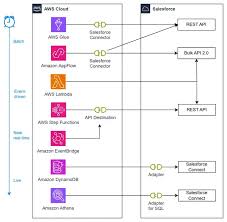
Unlock Real-Time Insights with AWS IoT and Salesforce Industry Clouds This guide explains how to gather, process, and distribute data from connected vehicles and industrial assets—such as manufacturing equipment or utility meters—into Salesforce Industry Cloud solutions using Amazon Web Services (AWS). Key AWS IoT Services for Data Collection By leveraging these services, businesses can integrate telemetry data into: Why This Integration Matters Strong customer relationships rely on real-time insights. Automakers, manufacturers, and utility providers can enhance customer interactions by unifying telemetry data with CRM workflows—enabling smarter marketing, sales, and service decisions. Prerequisites To integrate AWS IoT with Salesforce, you’ll need: AWS Services Salesforce Requirements Use Cases 1. Predictive Maintenance with AWS & Salesforce 2. In-Car Notifications 3. On-Demand Vehicle/Asset Health Insights 4. Data-Driven Customer Engagement Solution Architecture Data Flow Overview Implementation Steps 1. Set Up AWS IoT Rules 2. Configure Salesforce Event Handling 3. Enable Real-Time Analytics Conclusion By integrating AWS IoT with Salesforce Industry Clouds, businesses can:✔ Improve operational efficiency with predictive maintenance.✔ Enhance customer experiences through real-time alerts and diagnostics.✔ Drive data-driven decisions with unified analytics. Next Steps: Empower your teams with real-time IoT insights—start building today! Like Related Posts AI Automated Offers with Marketing Cloud Personalization AI-Powered Offers Elevate the relevance of each customer interaction on your website and app through Einstein Decisions. Driven by a Read more Salesforce OEM AppExchange Expanding its reach beyond CRM, Salesforce.com has launched a new service called AppExchange OEM Edition, aimed at non-CRM service providers. Read more The Salesforce Story In Marc Benioff’s own words How did salesforce.com grow from a start up in a rented apartment into the world’s Read more Salesforce Jigsaw Salesforce.com, a prominent figure in cloud computing, has finalized a deal to acquire Jigsaw, a wiki-style business contact database, for Read more

Read More
Real-World AI

AI in the Travel Industry

AI in Travel: How the Industry is Transforming with Intelligent Technology The travel sector has long been at the forefront of AI adoption, with airlines, hotels, and cruise lines leveraging advanced analytics for decades to optimize pricing and operations. Now, as artificial intelligence evolves—particularly with the rise of generative AI—the industry is entering a new era of smarter automation, hyper-personalization, and seamless customer experiences. “AI and generative AI have emerged as truly disruptive forces,” says Kartikey Kaushal, Senior Analyst at Everest Group. “They’re reshaping how travel businesses operate, compete, and serve customers.” According to Everest Group, AI adoption in travel is growing at 14-16% annually, driven by demand for efficiency and enhanced customer engagement. But as adoption accelerates, the industry must balance automation with the human touch that travelers still value. 10 Key AI Use Cases in Travel & Tourism 1. Dynamic Pricing Optimization Travel companies pioneered AI-driven dynamic pricing, adjusting fares based on demand, competitor rates, weather, and events. Now, AI takes it further with hyper-personalized pricing—tracking user behavior (like repeated searches) to offer tailored deals. 2. Customer Sentiment Analysis AI evaluates traveler emotions through voice tone, reviews, and social media, enabling real-time adjustments. Hotels and airlines use sentiment tracking to improve service before complaints escalate. 3. Automated Office Tasks Travel agencies use generative AI (like ChatGPT) to draft emails, marketing content, and customer onboarding materials, freeing staff for high-value interactions. 4. Self-Service & Customer Empowerment AI-powered chatbots, itinerary builders, and booking tools let travelers plan trips independently. Some even bring AI-generated plans to agents for refinement—blending automation with human expertise. 5. Operational Efficiency & Asset Management Airlines and cruise lines deploy AI for:✔ Predictive maintenance (reducing downtime)✔ Route optimization (cutting fuel costs)✔ Staff scheduling (improving productivity) 6. AI-Powered Summarization Booking platforms use generative AI to summarize hotel reviews, local attractions, and FAQs—delivering concise, personalized travel insights. 7. Frictionless Travel Experiences From contactless hotel check-ins to AI-driven real-time recommendations (restaurants, shows, transport), AI minimizes hassles and enhances convenience. 8. AI Agents for Problem-Solving Agentic AI autonomously resolves disruptions—like rebooking flights, rerouting luggage, and updating hotels—without human intervention. 9. Enhanced Personalization Without “Creepiness” AI tailors recommendations based on past behavior but must avoid overstepping. The challenge? “A customer segment of one”—balancing customization with privacy. 10. Risk & Compliance Management AI helps navigate data privacy laws (GDPR, CCPA) and detects fraud, but companies must assign clear accountability for AI-driven decisions. Challenges in AI Adoption for Travel The Future: AI + Human Collaboration The most successful travel companies will blend AI efficiency with human empathy, ensuring technology enhances—not replaces—the art of travel. “The goal isn’t full automation,” says McKinsey’s Alex Cosmas. “It’s using AI to make every journey smoother, smarter, and more personal.” As AI evolves, so will its role in travel—ushering in an era where smarter algorithms and human expertise work together to create unforgettable experiences. What’s Next? The journey has just begun. Like1 Related Posts AI Automated Offers with Marketing Cloud Personalization AI-Powered Offers Elevate the relevance of each customer interaction on your website and app through Einstein Decisions. Driven by a Read more Salesforce OEM AppExchange Expanding its reach beyond CRM, Salesforce.com has launched a new service called AppExchange OEM Edition, aimed at non-CRM service providers. Read more The Salesforce Story In Marc Benioff’s own words How did salesforce.com grow from a start up in a rented apartment into the world’s Read more Salesforce Jigsaw Salesforce.com, a prominent figure in cloud computing, has finalized a deal to acquire Jigsaw, a wiki-style business contact database, for Read more

Read More
Salesforce Platform

How Agentic Automation Builds Lasting Customer Relationships

Why Agentic Automation?Customers now engage with brands across 8+ channels, demanding consistency and personalization at every touchpoint. Yet: 73% of customers expect better personalization as tech evolves (Salesforce “State of the AI Connected Customer”) 1 .Only 31% of marketers feel confident unifying customer data (Salesforce “State of Marketing”) 43% still use fragmented personalization, mixing mass messaging with targeted efforts Traditional automation falls short—but AI-powered agents bridge the gap, acting as intelligent assistants that autonomously execute tasks, personalize interactions, and optimize campaigns in real time. What is Agentic Automation?Agents are AI systems that understand, decide, and act—handling everything from customer service queries to full campaign orchestration. Unlike rule-based automation, they:✅ Learn & adapt based on real-time data✅ Multitask (e.g., draft emails, adjust ad spend, qualify leads simultaneously)✅ Work across silos, unifying data for seamless customer journeys The 5 Key Attributes of an AgentRole – What it’s designed to do (e.g., optimize social campaigns, nurture leads) Trusted Data – Access to CRM, engagement history, brand guidelines 2 .Actions – Skills like content generation, A/B testing, performance tracking Channels – Where it operates (email, social, chat, ads) Guardrails – Ethical limits, compliance rules, brand voice guidelines Example: A social media agent can: Analyze past performance & trends Generate post ideas aligned with brand voice Schedule content & adjust targeting in real time Escalate sensitive issues to humans How Agents Transform the Customer Lifecycle1. Awareness: Smarter Campaign CreationAutonomously generates audience segments, ad copy, and campaign briefs Optimizes spend by pausing low-performing ads & reallocating budgets Personalizes content based on real-time engagement data 2. Conversion: Automated Lead NurturingEngages website visitors with dynamic recommendations Scores & routes leads to sales teams based on intent signals Orchestrates follow-ups via email, SMS, or chat 3. Engagement: Hyper-Personalized ExperiencesRecommends products/content based on browsing history A/B tests messaging across channels Adjusts journeys in real time (e.g., swaps promo offers if a customer hesitates) 4. Retention & Loyalty: Proactive Relationship-BuildingIdentifies at-risk customers & triggers re-engagement offers Handles service inquiries (returns, tech support) via chat/SMS Escalates complex issues to human agents seamlessly The Marketer’s Advantage: From Tactical to StrategicAgents don’t replace marketers—they amplify their impact:🔹 Eliminate grunt work (e.g., manual reporting, repetitive follow-ups)🔹 Break down data silos, unifying CRM, ads, and service history🔹 Make real-time decisions (e.g., pausing ads, adjusting discounts)🔹 Scale 1:1 personalization without added headcount Example: An agent can: Draft a win-back email for a lapsing customer Sync it with their past purchases & service tickets Send it via their preferred channel (email/SMS) Track opens/clicks & trigger a follow-up if ignored Getting Started: Building Your Agent FoundationUnify Your Data – Integrate CRM, marketing tools, and service platforms. Define Key Roles – Start with one high-impact use case (e.g., lead nurturing). Set Guardrails – Ensure brand compliance, privacy, and ethical AI use. Test & Refine – Use feedback loops to improve accuracy and relevance. “Agents are like a tireless, data-driven marketing assistant—freeing you to focus on strategy while they handle execution.” The Future: AI + Human CollaborationThe next era of marketing isn’t about choosing between automation and human touch—it’s about combining them. Agents will: Handle routine interactions, letting teams focus on high-value creativity Predict customer needs before they arise Drive unprecedented efficiency (e.g., 275K+ hours saved annually at Salesforce) Ready to transform your marketing? Start small, scale fast, and let agents turn data into lasting relationships. Key Takeaway: Agentic automation isn’t just efficiency—it’s smarter, faster, and more personal customer engagement at scale. Like Related Posts AI Automated Offers with Marketing Cloud Personalization AI-Powered Offers Elevate the relevance of each customer interaction on your website and app through Einstein Decisions. Driven by a Read more Salesforce OEM AppExchange Expanding its reach beyond CRM, Salesforce.com has launched a new service called AppExchange OEM Edition, aimed at non-CRM service providers. Read more The Salesforce Story In Marc Benioff’s own words How did salesforce.com grow from a start up in a rented apartment into the world’s Read more Salesforce Jigsaw Salesforce.com, a prominent figure in cloud computing, has finalized a deal to acquire Jigsaw, a wiki-style business contact database, for Read more

Read More
CaixaBank and Salesforce Partner to Revolutionize Banking with AI-Powered Personalization

CaixaBank and Salesforce Partner to Revolutionize Banking with AI-Powered Personalization

Barcelona – CaixaBank, Spain’s leading digital bank, has deepened its collaboration with Salesforce to redefine customer experience through AI-driven personalization and data intelligence. The partnership will integrate Salesforce’s Agentforce AI assistants and Data Cloud solutions into CaixaBank’s operations, enhancing efficiency, decision-making, and customer engagement. Transforming Banking with AI Assistants and Real-Time Data Under the agreement, CaixaBank will deploy Salesforce’s Agentforce—a suite of AI-powered virtual assistants designed to: Additionally, Salesforce Data Cloud will enable real-time data unification, ensuring secure, instant access to customer insights for hyper-personalized interactions. Use Case: AI-Powered Remote Contracting Assistant A flagship implementation is CaixaBank’s Remote Contracting Support Assistant, which leverages generative AI to: The assistant will soon evolve into an Agentforce AI agent, autonomously suggesting products, scheduling follow-ups, and promoting tailored offers. Why This Matters CaixaBank’s AI Leadership With 100+ dedicated AI specialists, CaixaBank is a pioneer in generative AI for finance, already deploying cognitive assistants and now scaling transformative use cases. Looking Ahead: The partnership will expand Salesforce’s role as CaixaBank’s centralized platform for sales and service, with further AI integrations underway. Key Takeaways:🔹 Agentforce AI automates service and empowers advisors.🔹 Data Cloud unlocks real-time, secure customer insights.🔹 Remote Contracting Assistant cuts wait times to <2 minutes.🔹 CaixaBank cements its status as Spain’s top digital bank. Like Related Posts AI Automated Offers with Marketing Cloud Personalization AI-Powered Offers Elevate the relevance of each customer interaction on your website and app through Einstein Decisions. Driven by a Read more Salesforce OEM AppExchange Expanding its reach beyond CRM, Salesforce.com has launched a new service called AppExchange OEM Edition, aimed at non-CRM service providers. Read more The Salesforce Story In Marc Benioff’s own words How did salesforce.com grow from a start up in a rented apartment into the world’s Read more Salesforce Jigsaw Salesforce.com, a prominent figure in cloud computing, has finalized a deal to acquire Jigsaw, a wiki-style business contact database, for Read more

Read More

Supercharge Salesforce Agentforce with OpenText AI-Powered Insights

The future of intelligent customer engagement is here. OpenText and Salesforce are revolutionizing AI-driven workflows with deep content integration, empowering sales and service teams to work smarter, faster, and with greater accuracy. AI in Sales & Service: The Need for Trusted Data AI is transforming business operations:✅ 83% of AI-powered sales teams report revenue growth✅ 93% of service teams achieve time and cost savings But success depends on trusted data. With 98% of sales leaders emphasizing the need for accurate, secure, and compliant information, OpenText Content Cloud provides the foundation for reliable AI—seamlessly integrated with Salesforce. OpenText + Salesforce: AI Innovation Leaders Since 2016, OpenText has enhanced Salesforce with powerful content management solutions. Now, we’re taking it further with GenAI-powered automation:✔ OpenText™ Content Aviator delivers AI-driven insights from unstructured data (contracts, emails, documents)✔ Selected as a launch partner for the Agentforce Partner Network✔ First-to-market solution on Salesforce’s new AgentExchange—making AI agent deployment faster than ever Key Use Cases 🔹 Sales Teams – Summarize customer buying trends, auto-generate upsell recommendations🔹 Customer Service – Instantly resolve claims by extracting key details from documents🔹 Claims Processing – Automate approvals with AI-powered document analysis How It Works: AI Insights → Agentforce Actions OpenText Content Aviator for Agentforce unlocks hidden insights from unstructured content stored in OpenText Content Management, then feeds them directly into Salesforce Agentforce to trigger smart, automated actions. Key Benefits 🚀 Accelerate Sales Cycles – Auto-summarize contracts, identify upsell opportunities🎯 Enhance Customer Service – Resolve cases faster with AI-generated insights✍ Reduce Manual Work – Auto-update Salesforce records, eliminating errors📧 Personalize at Scale – Draft tailored email responses using AI insights Now Available ✔ Integrated with OpenText Content Management CE 25.1✔ Coming soon to OpenText Core Content SaaS (CE 25.3) OpenText Content Aviator and Salesforce Agentforce integration provides AI-driven insights for Sales and Customer Service teams, enhancing productivity and accelerating processes. This integration enables users to discover, summarize, and translate business workspace content directly within Agentforce, eliminating the need to switch applications. Essentially, it leverages AI to extract valuable insights from unstructured data like documents, contracts, and emails, and then uses those insights to drive data-driven actions within Agentforce What’s Next? The Future of AI-to-AI Integration This is just the beginning. OpenText is expanding AI-driven automation across the entire content lifecycle, with upcoming innovations including:🔹 More AI agents for sales, service, and operations🔹 Industry-specific solutions (banking, insurance, healthcare)🔹 Bi-directional AI – Blending insights from multiple AI systems for smarter decision-making OpenText™ Content Aviator puts AI into the hands of business users to leverage conversational search, discover content, or even summarize a document or workspace, offering new ways to interact with content and extract knowledge. Content Aviator enables organizations to combine the power of generative AI and large language models (LLMs) with OpenText content services platforms, including OpenText™ Core Content Management, OpenText™ Documentum™ Content Management (CM) and OpenText™ Content Management (Extended ECM), to make document management, knowledge discovery, and business process automation more efficient, effective and intelligent. Get Started Today ✅ Explore OpenText Content Aviator for Agentforce on Salesforce AgentExchange✅ Discover all OpenText-Salesforce integrations on the Salesforce AppExchange Unlock the power of AI-driven content intelligence—and transform the way your teams work. Contact Tectonic today to leverage AI-driven content intelligence. Like1 Related Posts AI Automated Offers with Marketing Cloud Personalization AI-Powered Offers Elevate the relevance of each customer interaction on your website and app through Einstein Decisions. Driven by a Read more Salesforce OEM AppExchange Expanding its reach beyond CRM, Salesforce.com has launched a new service called AppExchange OEM Edition, aimed at non-CRM service providers. Read more The Salesforce Story In Marc Benioff’s own words How did salesforce.com grow from a start up in a rented apartment into the world’s Read more Salesforce Jigsaw Salesforce.com, a prominent figure in cloud computing, has finalized a deal to acquire Jigsaw, a wiki-style business contact database, for Read more

Read More

AI Agents Explained

AI agents represent a transformative technological advancement that is reshaping business dynamics, going beyond simple automation to address more complex challenges. This insight provides an in-depth exploration of AI agents, covering their functions, operations, and types, such as reflex, goal-based, utility-based, and learning agents. The commercial advantages of AI agents, including cost-effectiveness, scalability, and efficiency, are highlighted, with examples and applications across various industries to demonstrate their impact on business operations and customer experiences. What Are AI Agents? AI agents are sophisticated computer programs designed to autonomously make decisions based on inputs, enabling them to execute tasks independently. These agents are particularly adept at managing operations in uncertain environments, positioning them as critical steps toward artificial general intelligence—where machines can perform any intellectual task comparable to humans. Modern AI agents offer flexible solutions that significantly enhance business efficiency and customer service. How AI Agents Operate AI agents function as more than just tools; they are dynamic participants redefining how organizations interact with both digital and physical environments. Their core functions include learning, reasoning, and planning, which empower them to make informed decisions and take actions in complex scenarios. For companies aiming to fully leverage these capabilities, AI agents are indispensable. Components of AI Agents AI agents consist of several key components that enable them to function effectively in their environments. These components are crucial for developing intelligent agents capable of operating independently across various contexts: Types of AI Agents Understanding the different types of AI agents is crucial for businesses to select the most appropriate agent for their specific needs: Benefits of AI Agents for Businesses Incorporating AI agents into business operations can deliver numerous benefits, significantly impacting the bottom line. AI agents are revolutionizing corporate operations by enhancing customer experiences and operational efficiency, helping businesses thrive and stay competitive in today’s economy. Key benefits include: Applications of AI Agents AI agents are versatile tools with applications across various sectors: Examples of AI Agents AI agents are revolutionizing various industries with specialized applications: Future Trends in AI Agents The evolution of AI agents continues to shape industries, with future trends expected to redefine their capabilities and applications: AI Agents Transforming Customer Experience (CX) AI agents are key drivers in transforming customer experience (CX), offering more personalized, efficient, and seamless interactions. The integration of natural language processing (NLP) in AI agents enhances automation and personalization in customer engagements. Chatbots and voice assistants provide quick, accurate responses, strengthening brand presence and customer loyalty. AI agents also gather and analyze customer data to offer tailored services, predict customer needs, and provide proactive support. Conclusion AI agents are powerful tools for businesses, offering numerous benefits and applications across industries. They enhance customer experiences, streamline operations, and enable intelligent decision-making. Organizations should stay informed about the different types, benefits, applications, and examples of AI agents to fully leverage their potential for growth and innovation. Tectonic, a leading AI development company, provides customized solutions to meet the unique needs of clients across various industries. Their expertise includes integrating AI-powered chatbots, implementing predictive analytics, and exploring generative AI for creative content generation. Businesses can partner with Tectonic to embark on their AI journey and unlock new opportunities for success. Like Related Posts AI Automated Offers with Marketing Cloud Personalization AI-Powered Offers Elevate the relevance of each customer interaction on your website and app through Einstein Decisions. Driven by a Read more Salesforce OEM AppExchange Expanding its reach beyond CRM, Salesforce.com has launched a new service called AppExchange OEM Edition, aimed at non-CRM service providers. Read more The Salesforce Story In Marc Benioff’s own words How did salesforce.com grow from a start up in a rented apartment into the world’s Read more Salesforce Jigsaw Salesforce.com, a prominent figure in cloud computing, has finalized a deal to acquire Jigsaw, a wiki-style business contact database, for Read more

Read More
Unlocking Efficiency with Salesforce Marketing Cloud Automation

Unlocking Efficiency with Salesforce Marketing Cloud Automation

Revolutionizing Marketing with Automation Salesforce Marketing Cloud automation is like having a personal assistant dedicated to your campaigns. It handles repetitive tasks, freeing you to focus on strategy and big-picture goals. Imagine designing a seamless customer journey without manually sending emails or determining the perfect timing—this is the power of advanced workflows in marketing. These tools streamline processes, enhance efficiency, and improve engagement. The Game-Changing Impact of Automation When I first started using Salesforce Marketing Cloud, it was a revelation. The automation tools allowed me to set up campaigns that practically ran themselves—like having an extra set of hands. For example, I created email sequences that responded to customer actions automatically. This meant engaging with customers at the right moments without lifting a finger. One standout experience was setting up a journey for free trial sign-ups. The system sent a welcome email, followed by usage-based tips. If a customer didn’t engage, an alternative path triggered a different message. This intelligent automation boosted engagement and conversions—marketing at its smartest. Transforming Marketing Operations: Doing More with Less Marketing Operations (Marketing Ops) is about maximizing impact with minimal effort. Advanced workflows reallocate resources effectively, shifting focus from task management to strategic growth. It’s like upgrading from a bicycle to a car—suddenly, you’re covering more ground, faster. Marketing Ops teams juggle campaign tracking, performance analysis, and strategy refinement. Automating these processes with Salesforce Marketing Cloud reduces mundane tasks, fostering innovation and continuous campaign optimization. For more insights on streamlining workflows, explore our guide on optimizing marketing automation. Beyond Emails: Personalization at Scale Automation isn’t just about sending emails—it’s about crafting personalized customer experiences. By intelligently segmenting your audience, you can ensure the right message reaches the right person at the right time, significantly increasing engagement. Of course, automation isn’t foolproof. Data accuracy is crucial. I once encountered a typo in a data field that misspelled a customer’s name—an embarrassing but valuable lesson in the importance of clean data. Always double-check your sources! Real-World Applications of Marketing Cloud Automation Automation enhances marketing efficiency across various scenarios: For more segmentation tips to improve email ROI, explore our in-depth guide. Getting Started: Small Steps, Big Impact If you’re wondering where to begin, the good news is that Salesforce Marketing Cloud scales with your needs. Start with a single campaign and gradually expand. As you become more comfortable, you’ll discover new ways to optimize automation. Leverage online resources—there are countless tutorials and guides available. And don’t hesitate to experiment—some of the best strategies emerge from trial and error. I remember my first attempt at automation. It wasn’t perfect, but the lessons I learned about timing and engagement refined future campaigns. It’s like learning to ride a bike—wobbly at first, but soon you’re cruising. Leveraging Analytics for Smarter Marketing Salesforce Marketing Cloud Engagement provides deep insights into customer engagement. Tracking these metrics enables data-driven decisions, optimizing experiences and increasing conversion rates. This is where the magic happens—understanding your audience to craft campaigns that truly resonate. And here’s a little secret: competition is fierce. Every company is competing for your customer’s attention. By optimizing Marketing Ops and leveraging advanced workflows, you gain a strategic edge. It’s like being the first to know about a secret sale. Conclusion: Embracing the Future of Marketing Automation Salesforce Marketing Cloud automation opens the door to endless possibilities. By implementing these workflows, marketing becomes more efficient, impactful, and personalized. Remember, you’re not just sending messages—you’re crafting experiences. That’s where true marketing magic lies. Ready to elevate your marketing game? Let’s talk. Like1 Related Posts AI Automated Offers with Marketing Cloud Personalization AI-Powered Offers Elevate the relevance of each customer interaction on your website and app through Einstein Decisions. Driven by a Read more Salesforce OEM AppExchange Expanding its reach beyond CRM, Salesforce.com has launched a new service called AppExchange OEM Edition, aimed at non-CRM service providers. Read more The Salesforce Story In Marc Benioff’s own words How did salesforce.com grow from a start up in a rented apartment into the world’s Read more Salesforce Jigsaw Salesforce.com, a prominent figure in cloud computing, has finalized a deal to acquire Jigsaw, a wiki-style business contact database, for Read more

Read More
B2B Customer Service with Agentforce

Agents are the Future of Customer Engagement

Agentic Customer Engagement is Here There was a time when customer service meant going into a brick and mortar building and talking to a person face to face. It was time consuming and did not guarantee a solution. The mail order business brought on the need for the 800 number to contact a merchant. The dot com boom brought customer engagement opportunities directly to our homes. Ios and Android apps brought customer engagement to our fingertips. Yet we still were dependent upon the availability of humans or at least chatbots. Customer service often repressed customer engagement, not enhanced it. Agents, like Salesforce Agentforce, brought 24 7 customer engagement to us no matter where we are, when it is, or how complicated our issue is. And agents improved customer service! What’s next? Robots and drones who deliver our items and answer our questions? Who knows. AI bots are transforming client relationships and customer service. To achieve unparalleled efficiency, these intelligent systems plan and automate difficult activities, make deft decisions, and blend in seamlessly with current workflows. Yes, it’s widely believed that AI agents will play a crucial role in the future of customer engagement, offering personalized, efficient, and consistent experiences across various channels.  Here’s why AI agents are poised to be a key driver in customer engagement: AI agents are becoming smarter every day, using machine learning and natural language processing to predict customer needs, handle complex queries with empathy and offer real-time, personalized assistance. How AI Agents Are Redefining Customer Engagement Marketing is undergoing a seismic transformation. Tectonic shift, if you will. The past decade was dominated by complex tech stacks and data integration—now, AI is shifting the focus back to what truly matters: crafting impactful content and campaigns. Welcome to the era of agentic customer engagement and marketing. The Rise of Marketing Agents Unlike traditional customer service agents handling one-to-one interactions, marketing agents amplify human expertise to engage audiences at scale—whether targeting broad segments or hyper-personalized personas. They ensure consistent, high-quality messaging across every channel while automating the intricate backend work of delivering the right content to the right customer at the right time. This shift is powered by rapid AI advancements: How Agentic Engagement Amplifies Marketing Marketing agents don’t replace human creativity—they extend it. Once strategists set guidelines, approve messaging, and define brand voice, agents execute with precision across channels. At Typeface, for example, AI securely learns brand tones and styles to generate on-brand imagery, text, and videos—ensuring every asset aligns with the company’s identity. Key Capabilities of Marketing Agents The Human-Agent Partnership AI agents don’t replace marketers—they empower them. Humans bring creativity, emotional intelligence, and strategic decision-making; agents handle execution, data processing, and scalability. Marketers will evolve into “agent wranglers”, setting objectives, monitoring performance, and ensuring alignment with business goals. Meanwhile, agents will work in interconnected ecosystems—where a content agent’s blog post triggers a social agent’s promotion, while a performance agent optimizes distribution, and a brand agent tracks reception. Preparing for the Agent Era To stay ahead, businesses should:✅ Start small, think big – Pilot agents in low-risk areas before scaling.✅ Train teams – Ensure marketers understand agent management.✅ Build governance frameworks – Define oversight and intervention protocols.✅ Strengthen data infrastructure – Clean, structured data fuels agent effectiveness.✅ Maintain human oversight – Regularly audit agent outputs for quality and alignment. Work with a Salesforce partner like Tectonic to prepare for the Agent Era. The Future is Agentic The age of AI-driven marketing isn’t coming—it’s here. Companies that embrace agentic engagement will unlock unprecedented efficiency, personalization, and impact. The question isn’t if you’ll adopt AI agents—it’s how soon. Ready to accelerate your strategy? Discover how Agentforce (Salesforce’s agentic layer) can cut deployment time by 16x while boosting accuracy by 70%. The future of marketing isn’t just automated—it’s autonomous, adaptive, and agentic. Are you prepared? The Future of Customer Experience: AI-Driven Efficiency and Innovation Businesses have long understood the connection between operational efficiency and superior customer experience (CX). However, the rapid advancement of AI-powered technologies, including next-generation hardware and virtual agents, is transforming this connection into a measurable driver of value creation. Increasingly well-documented use cases for generative AI (GenAI) demonstrate that companies can simultaneously deliver a vastly superior customer experience at a significantly lower cost-to-serve, resulting in substantial financial gains. From Customer Journeys to Autonomous Customer Missions To achieve this ideal balance, companies are shifting from traditional customer journeys—where users actively manage their own experiences via apps—to a more comprehensive approach driven by trusted autonomous agents. These agents are designed to complete specific tasks with minimal human involvement, creating an entirely new paradigm for customer engagement. While early implementations may be rudimentary, the convergence of hardware and AI will lead to sophisticated, seamless experiences far beyond current capabilities. AI-Enabled Internal and External Transformation AI is already driving transformation both internally and externally. Internally, it streamlines processes, enhances employee experiences, and significantly boosts productivity. In customer service operations, for example, GenAI has driven productivity improvements of 15% to 30%, with some companies targeting up to 80% efficiency gains. Externally, AI is reshaping customer interactions, making them more personalized, efficient, and intuitive. Virtual co-pilots assist customers by answering inquiries, processing returns, and curating tailored offers—freeing human employees to focus on complex issues that require nuanced decision-making. Linking Operational Efficiency to Customer Experience Leading organizations are demonstrating how AI-driven efficiencies translate into enhanced CX. Despite these gains, companies must raise the bar even further to fully capitalize on AI’s potential. The convergence of next-generation hardware with AI-driven automation presents an unprecedented opportunity to redefine customer engagement. From App-Driven Experiences to Autonomous Agents At Dreamforce 2024, Salesforce CEO Marc Benioff highlighted that service employees waste over 40% of their time on repetitive, low-value tasks. Similarly, customers face friction in making significant purchases or planning events. Google research indicates that travelers may engage in over 700 digital touchpoints when planning a trip—a fragmented and often frustrating experience. Imagine instead a network of proprietary and third-party agents seamlessly executing customer missions—such as purchasing a car or planning a vacation—without requiring constant user input. These AI agents


Read More
data cloud and data silos

Unify Your Data Silos

Unify Your Data Silos: Deliver Connected, Personalized Experiences 🔹 65% of customers expect businesses to tailor experiences to their evolving needs. (State of Data and Analytics Report, 2023) Have you ever received a marketing promotion for something you just bought? Or had to repeat your purchase history before getting help from customer service? These disjointed experiences frustrate customers and result from data silos that prevent a unified view of the customer journey. With enterprises using over 1,000 applications on average, data ecosystems are highly complex. Many businesses attempt to centralize data in lakes, warehouses, or lakehouses, yet 73% of enterprise data remains unused for analytics (Forrester). Why? Because much of this data stays locked in backend systems, failing to power the real-time applications and workflows that drive customer engagement and business success. Break Down Data Silos to Create Seamless Customer Experiences By unifying your data, you can personalize every interaction—from online reviews and service records to browsing history and purchases. And by securely activating this data within your CRM and AI-driven workflows, you can deliver smarter, faster, and more impactful customer experiences. Unlock Business Growth with Unified Data When your teams have access to a complete, real-time customer profile, they can turn insights into action across every touchpoint: ✅ Sales Teams receive real-time guidance during calls, offering tailored recommendations based on customer behavior.✅ Service Agents proactively address issues with instant alerts and AI-powered resolutions.✅ Marketers deliver personalized, cross-channel messaging, adapting dynamically to customer actions.✅ Retailers optimize shopping experiences by responding in real time to cart abandonment and browsing patterns.✅ IT Teams build real-time apps to detect fraud, assess economic trends, and enhance security. Checklist: Build a 360° View of Your Customer ✅ Basic Data: Demographics, job title, email, and IP address.✅ Interaction Data: Email opens, website visits, CTRs, customer service calls, and social media activity.✅ Behavioral & Attitudinal Data: Purchase history, order values, survey feedback, and online reviews. Turn Raw Data Into Actionable Insights with Data Cloud Data Cloud transforms fragmented data into a single, trusted source of truth, deeply integrated with the Salesforce Platform. It enables organizations to: ✔ Connect and unify all customer data without complex data pipelines.✔ Activate insights in real-time across sales, service, and marketing workflows.✔ Power trusted AI solutions using all enterprise data for better decision-making. See How Formula 1 Uses Data to Drive Fan Engagement 📺 Watch how F1 personalizes fan experiences “With over 500 million fans worldwide, we needed personalized journeys and always-on capabilities.”— Matthew Kemp, Senior CRM & Customer Operations Manager, F1 Checklist: Unite Your Data for Better Customer Experiences ✔ Make data easy to store, manage, and analyze from any source.✔ Think holistically about behavioral, interaction, and attitudinal data.✔ Use a platform that transforms raw data into actionable insights.✔ Audit your systems for data silos causing disconnected experiences.✔ Ensure data is accessible in everyday workflows with trusted solutions like Data Cloud. 📊 Data-driven businesses don’t just manage customer experiences—they revolutionize them. 🚀 Like1 Related Posts AI Automated Offers with Marketing Cloud Personalization AI-Powered Offers Elevate the relevance of each customer interaction on your website and app through Einstein Decisions. Driven by a Read more Salesforce OEM AppExchange Expanding its reach beyond CRM, Salesforce.com has launched a new service called AppExchange OEM Edition, aimed at non-CRM service providers. Read more The Salesforce Story In Marc Benioff’s own words How did salesforce.com grow from a start up in a rented apartment into the world’s Read more Salesforce Jigsaw Salesforce.com, a prominent figure in cloud computing, has finalized a deal to acquire Jigsaw, a wiki-style business contact database, for Read more

Read More
Outsourcing Salesforce Admin for Small Businesses: Why It’s Smart and Cost-Effective Time is one of the most valuable assets for small businesses. Between juggling projects and tight deadlines, it’s easy for essential but complex systems like Salesforce to become overwhelming. Often, a single employee—a manager, receptionist, or clerk—takes on the role of the unofficial Salesforce Admin, handling technical issues alongside their primary duties. While this may work in the short term, it can quickly lead to inefficiencies, stress, and burnout. Outsourcing Salesforce administration is a strategic solution that brings expert help to the table. What Does It Mean to Outsource Salesforce Admin Work? Outsourcing involves hiring external specialists to manage specific functions, allowing your team to focus on core business activities. For small businesses using Salesforce, this can mean partnering with experienced Solution Implementation partners to set up a solid CRM foundation, followed by outsourcing ongoing management and support. When technical issues occur—such as login problems or a process breakdown—an external support team can be transformative. Instead of burdening your internal team with troubleshooting, outsourcing enables immediate, expert support, resulting in smoother, more efficient operations. Firms like StarrData can help with both initial setup and ongoing admin support, so your team can focus on growth. The Benefits of Outsourcing Your Salesforce Admin Expert Support: Outsourcing gives you access to certified Salesforce Admins with specialized knowledge and skills. These experts stay updated on Salesforce’s latest releases and best practices, enabling them to handle everything from routine tasks, like user management and field modifications, to complex projects like data migrations and custom code troubleshooting. This level of expertise alleviates the burden on your team while enhancing your Salesforce system’s effectiveness. Cost-Effectiveness: Hiring a full-time Salesforce Admin can be costly, especially in regions where salaries may exceed $100,000 annually. In addition to salary, you’ll need to consider benefits, onboarding, and training costs. For many small businesses, these expenses outweigh their Salesforce needs. Outsourcing offers a cost-effective alternative, providing expert support at a fraction of the cost of a full-time hire, allowing you to pay only for the services you need. Flexibility: Outsourcing provides flexibility, allowing you to tailor support to your unique needs, whether you need occasional help or a dedicated team. You can scale services up or down based on business demands, such as needing extra help for user management and report generation during busy seasons. Scalability: As your business grows, so do your Salesforce needs. An outsourced team can adapt to your evolving requirements, providing additional resources and expertise without the time and expense of hiring new staff. This scalability is essential for small businesses aiming to remain agile and competitive. Enhanced Focus for Internal Admins: If your organization already has a Salesforce Admin, outsourcing can complement their work. By delegating routine issues to an external team, your internal Admin can focus on high-impact tasks like system optimization, customizations, and critical troubleshooting—boosting productivity and job satisfaction. Continuity and Reliability: Outsourcing offers continuity, ensuring uninterrupted service during high-demand periods or when your internal Admin is unavailable. With a dedicated team ready to handle urgent issues, you can maintain operational efficiency and customer satisfaction without downtime. Getting Started with Outsourcing Salesforce Admin Work If you’re considering outsourcing your Salesforce admin, start by researching potential partners specializing in Salesforce support. Companies like StarrData offer STaaS (StarrData Team as a Service) and Admin contracts tailored to small business needs. Set up consultations with potential partners to discuss your specific requirements and determine how their services can fit into your workflows. Clear communication during this phase is crucial to ensure alignment with your business objectives. Conclusion Outsourcing Salesforce admin work is a smart move for small businesses looking to increase productivity and streamline operations. By leveraging external expertise, you can focus on growth while ensuring your Salesforce system remains a reliable, efficient tool for your business. This strategic choice reduces the burden on your team and provides access to specialized skills that can drive your business forward.

Salesforce and Ather Energy Partner

Salesforce and Ather Energy Partner to Revolutionize EV Dealership Operations Salesforce has joined forces with IPO-bound electric two-wheeler manufacturer Ather Energy to introduce a cutting-edge automotive dealer management system aimed at enhancing dealership operations and customer experiences across India. As part of the collaboration, Ather Energy—operating over 350 dealerships—has developed “Ather Dealer Central,” a next-generation dealer management system (DMS) built on the Salesforce platform. This AI-powered solution seamlessly integrates lead management, customer relationship management (CRM), and dealership functions into a unified mobile app, enabling real-time decision-making and improved customer satisfaction. “Our collaboration with Salesforce and the launch of ‘Ather Dealer Central’ redefines how EV dealerships operate. This intelligent platform connects every aspect of the dealer ecosystem, offering unprecedented insights, mobility, and efficiency to enhance customer service,” said Ravneet S. Phokela, Chief Business Officer, Ather Energy. The partnership leverages Salesforce’s advanced AI capabilities to streamline sales, support services, and dealership operations, providing a smarter and more connected retail experience. “As India’s EV market continues to evolve, customer experience will be a key driver of growth. Consumers are looking for seamless, personalized interactions when making eco-conscious choices. Our collaboration with Ather Energy demonstrates how technology can transform mobility, helping businesses deliver smarter, more connected experiences,” said Mankiran Chowhan, Vice President – Financial Services and Consumer Industries, Salesforce India. This announcement comes as Ather Energy prepares to file an updated draft red herring prospectus (DRHP) this week, ahead of its anticipated IPO in April—potentially at a revised valuation. Salesforce continues to expand its AI-driven offerings, recently launching Agentforce to help businesses build and manage autonomous AI agents for sales, customer service, and marketing. Additionally, last week, Salesforce announced a partnership with Pothys Swarna Mahal, the jewellery division of Chennai-based Pothys Group, to integrate AI-powered solutions for enhanced customer engagement and personalized shopping experiences. Like1 Related Posts AI Automated Offers with Marketing Cloud Personalization AI-Powered Offers Elevate the relevance of each customer interaction on your website and app through Einstein Decisions. Driven by a Read more Salesforce OEM AppExchange Expanding its reach beyond CRM, Salesforce.com has launched a new service called AppExchange OEM Edition, aimed at non-CRM service providers. Read more The Salesforce Story In Marc Benioff’s own words How did salesforce.com grow from a start up in a rented apartment into the world’s Read more Salesforce Jigsaw Salesforce.com, a prominent figure in cloud computing, has finalized a deal to acquire Jigsaw, a wiki-style business contact database, for Read more

Read More
gettectonic.com