Sales Cloud Einstein Archives - gettectonic.com
Salesforce Sales Cloud Einstein

Salesforce Sales Cloud Einstein

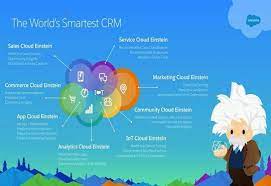
Transforming Sales with Salesforce Sales Cloud Einstein In today’s data-driven business world, artificial intelligence (AI) is revolutionizing sales and customer relationship strategies. As the leading customer relationship management (CRM) platform, Salesforce introduces Sales Cloud Einstein, an AI-powered solution embedded within its Sales Cloud platform. This tool empowers businesses to streamline workflows, predict sales outcomes, and optimize customer engagement. This comprehensive insight explores the features, benefits, and costs of Sales Cloud Einstein, helping you determine how it can elevate your company’s sales performance. Key Features of Salesforce Sales Cloud Einstein Sales Cloud Einstein is packed with powerful AI-driven features, enabling sales teams to work smarter and close deals faster. Here are the key features: 1. Einstein Lead Scoring Automatically scores leads based on their likelihood to convert, using historical CRM data and patterns detected by AI. Key Metrics Impact Engagement history Prioritizes leads with recent activity Lead source Scores leads based on successful origins Demographics Highlights high-performing attributes like industry 2. Einstein Opportunity Scoring Assigns scores to opportunities in the pipeline, predicting their likelihood to close. Factor Impact on Scoring Stage progression Higher scores for quickly advancing deals Deal size Larger deals with strong progression rank higher Customer engagement Consistent interactions improve scores 3. Einstein Forecasting Delivers accurate sales forecasts by analyzing historical data, pipeline trends, and anomalies. Metric Value Added Pipeline health Predicts future revenue Win rate analysis Estimates likelihood of success Historical trends Enhances accuracy over time 4. Einstein Activity Capture Automatically logs customer interactions—emails, meetings, and calls—into Salesforce, reducing manual data entry. 5. Einstein Insights Provides actionable recommendations for the next best actions to close deals, using engagement history and deal data. 6. Einstein Email Insights Highlights key action items from emails using natural language processing (NLP). 7. Einstein Automated Contacts Detects and adds new contacts to Salesforce from emails and interactions, keeping records up to date. Benefits of Salesforce Sales Cloud Einstein Sales Cloud Einstein delivers a wide range of benefits: Costs of Salesforce Sales Cloud Einstein Sales Cloud Einstein is available as an add-on for Sales Cloud Enterprise or included in the Unlimited edition. Edition Cost (per user/month) Einstein Features Sales Cloud Enterprise $150 – $175 Lead Scoring, Opportunity Scoring, Activity Capture Sales Cloud Unlimited $300+ Full Einstein capabilities Add-On Pricing for Enterprise Edition: Feature Estimated Cost (per user/month) Einstein Forecasting $50 – $100 Einstein Activity Capture Available as an add-on Custom solutions (e.g., Einstein Discovery) may involve additional costs depending on the project scope and licensing requirements. Is Sales Cloud Einstein Right for Your Business? Sales Cloud Einstein is ideal if you: Final Thoughts Salesforce Sales Cloud Einstein is a game-changing tool that leverages AI to transform sales processes. With its powerful features and benefits, Einstein empowers businesses to boost productivity, enhance customer engagement, and drive revenue growth. Ready to integrate Einstein into your operations? Contact us for a personalized consultation and see how AI can elevate your sales performance. Like Related Posts AI Automated Offers with Marketing Cloud Personalization AI-Powered Offers Elevate the relevance of each customer interaction on your website and app through Einstein Decisions. Driven by a Read more Salesforce OEM AppExchange Expanding its reach beyond CRM, Salesforce.com has launched a new service called AppExchange OEM Edition, aimed at non-CRM service providers. Read more The Salesforce Story In Marc Benioff’s own words How did salesforce.com grow from a start up in a rented apartment into the world’s Read more Salesforce Jigsaw Salesforce.com, a prominent figure in cloud computing, has finalized a deal to acquire Jigsaw, a wiki-style business contact database, for Read more

Read More
Artificial Intelligence and Sales Cloud

Artificial Intelligence and Sales Cloud

Artificial Intelligence and Sales Cloud AI enhances the sales process at every stage, making it more efficient and effective. Salesforce’s AI technology—Einstein—streamlines data entry and offers predictive analysis, empowering sales teams to maximize every opportunity. Artificial Intelligence and Sales Cloud explained. Artificial Intelligence and Sales Cloud Sales Cloud integrates several AI-driven features powered by Einstein and machine learning. To get the most out of these tools, review which features align with your needs and check the licensing requirements for each one. Einstein and Data Usage in Sales Cloud Einstein thrives on data. To fully leverage its capabilities within Sales Cloud, consult the data usage table to understand which types of data Einstein features rely on. Setting Up Einstein Opportunity Scoring in Sales Cloud Einstein Opportunity Scoring, part of the Sales Cloud Einstein suite, is available to eligible customers at no additional cost. Simply activate Einstein, and the system will handle the rest, offering predictive insights to improve your sales pipeline. Managing Access to Einstein Features in Sales Cloud Sales Cloud users can access Einstein Opportunity Scoring through the Sales Cloud Einstein For Everyone permission set. Ensure the right team members have access by reviewing the permissions, features included, and how to manage assignments. Einstein Copilot Setup for Sales Einstein Copilot helps sales teams stay organized by guiding them through deal management, closing strategies, customer communications, and sales forecasting. Each Copilot action corresponds to specific topics designed to optimize the sales process. Like1 Related Posts AI Automated Offers with Marketing Cloud Personalization AI-Powered Offers Elevate the relevance of each customer interaction on your website and app through Einstein Decisions. Driven by a Read more Salesforce OEM AppExchange Expanding its reach beyond CRM, Salesforce.com has launched a new service called AppExchange OEM Edition, aimed at non-CRM service providers. Read more The Salesforce Story In Marc Benioff’s own words How did salesforce.com grow from a start up in a rented apartment into the world’s Read more Salesforce Jigsaw Salesforce.com, a prominent figure in cloud computing, has finalized a deal to acquire Jigsaw, a wiki-style business contact database, for Read more

Read More
Sales Cloud Einstein

Manage Sales Cloud Users Access to Einstein Features

In order to Manage Sales Cloud Users Access to Einstein Features, follow these steps. Duplicate the Sales Cloud Einstein For Everyone permission set, activate the permission, and allocate it to users. Navigate to Setup and enter “Permission Sets” in the Quick Find. Then, choose Permission Sets. Locate and click on the Sales Cloud Einstein For Everyone permission set. Click on “Manage Assignments.” Sales Cloud Einstein Features Einstein performs the tasks of cleansing, unifying, and updating activity data across Salesforce, email, and the calendar. This functionality enables Einstein to automatically search for contacts and opportunities by analyzing information related to emails and events. What’s covered in Sales Cloud Einstein? Sales Cloud Einstein functions as an in-house data science department, learning from your sales team‘s activities and CRM data. It assists in identifying top leads, streamlining opportunity conversions, and facilitating customer retention. Sales Cloud Einstein also encompasses the Sales Analytics app and Inbox. How can users be added to Einstein Activity Capture? In Setup, search for “Permission Sets” in the Quick Find. Then, select Permission Sets. Click on the Standard Einstein Activity Capture permission set. Use “Manage Assignments” to assign the permission set to a maximum of 100 users. What advantages does Einstein Sales Cloud offer? In Sales Cloud, Einstein AI optimizes daily business processes, leading to significant profit rate increases by understanding both current and potential customers. Salesforce provides valuable data sources for Einstein, including access to emails, calendars, tweets, and, importantly, customer data. How do I deactivate Einstein Activity Capture for a user? Utilize the Quick Find search bar on the left-hand side and search for “Einstein Activity Capture.” Under the Einstein Activity Capture section in the search results, select “Settings.” Turn off the Einstein Activity Capture settings and press Save to confirm the change. Is Sales Cloud Einstein a part of Sales Cloud? Salesforce Einstein is the world’s first “generative AI” designed for CRM. It seamlessly integrates into various Salesforce products within the Customer 360 portfolio, including Marketing Cloud and Sales Cloud. Like1 Related Posts AI Automated Offers with Marketing Cloud Personalization AI-Powered Offers Elevate the relevance of each customer interaction on your website and app through Einstein Decisions. Driven by a Read more Salesforce OEM AppExchange Expanding its reach beyond CRM, Salesforce.com has launched a new service called AppExchange OEM Edition, aimed at non-CRM service providers. Read more The Salesforce Story In Marc Benioff’s own words How did salesforce.com grow from a start up in a rented apartment into the world’s Read more Salesforce Jigsaw Salesforce.com, a prominent figure in cloud computing, has finalized a deal to acquire Jigsaw, a wiki-style business contact database, for Read more
Read More
Einstein Predicted Email Engagement

Salesforce Einstein Predicted Email Engagement

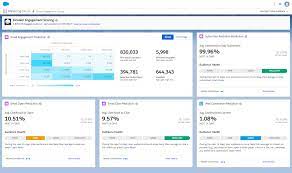
Access Einstein predicted email engagement data is on the email dashboard, categorizing contacts into personas based on engagement thresholds. Utilize detail pages to dig into prediction specifics and assess your audience health. Einstein Engagement Scoring is a feature that anticipates how a contact will engage with a brand and the likelihood of them making a purchase. This analysis relies on the contact’s email engagement data from the past 90 days, encompassing metrics like the number of emails sent, clicks, opens, etc. Einstein Predictive Email Engagement Scoring Einstein Predictive Email, specifically the Engagement Scoring aspect, foresees consumer engagement with email and MobilePush messaging. Leveraging customer data and machine learning, it creates predictive model. By assigning scores to contacts it indicates their likelihood to engage with emails and interact with push notifications. Salesforce Marketing Cloud introduces the Einstein Split activity in Journey Builder. Thus enabling marketers to target segments based on predicted email engagement scores. Different decision splits, such as Persona Split, Web Conversion Likelihood Split, Click Likelihood Split, Subscription Likelihood Split, and Open Likelihood Split, allow precise targeting based on various engagement factors. Email Engagement The email engagement heat map classifies subscribers into personas based on predicted email engagement: The clickTime Comparison feature illustrates changes in subscriber personas over time, providing insights into messaging resonance. For instance, an increase of 10,000 subscribers may show a 5,000 increase in the Loyalist bucket, with 70% transitioning from the Selective Subscriber persona. To utilize Einstein Engagement Scoring for Persona changes over time, a minimum of 14 days of active subscriber evaluation in each business unit is required. Einstein Engagement Scoring Einstein Engagement Scoring utilizes existing customer data and machine learning capabilities in Marketing Cloud to predict the probability of a contact engaging with marketing content. This is including emails and push messages. The generated scores indicate the likelihood of the contact opening or clicking emails and engaging with push notifications. Like2 Related Posts Salesforce Unveils Einstein: AI Built into Every Cloud The Next Era of CRM Intelligence Salesforce is taking AI beyond standalone features—introducing Einstein, an embedded AI layer across its Read more 50 Advantages of Salesforce Sales Cloud According to the Salesforce 2017 State of Service report, 85% of executives with service oversight identify customer service as a Read more Salesforce Artificial Intelligence Is artificial intelligence integrated into Salesforce? Salesforce Einstein stands as an intelligent layer embedded within the Lightning Platform, bringing robust Read more Salesforce’s Quest for AI for the Masses The software engine, Optimus Prime (not to be confused with the Autobot leader), originated in a basement beneath a West Read more

Read More
Salesforce Einstein and Einstein Automate

Einstein Automated Contacts in Salesforce

In September 2016, Salesforce announced the integration of artificial intelligence (AI) into its products – the launch of Einstein, the set of AI technologies that was supposed to add an intelligent layer wherever possible in the entire Salesforce platform.  Streamline your data entry process even further with Einstein Automated Contacts. Leveraging email and event activity, it identifies new contacts and opportunity contact roles for addition to Sales Cloud. Users can decide whether Einstein suggests the new data, allowing quick manual addition with a few clicks, or if it should be added automatically. Opportunity Contact roles play a crucial role in documenting individuals involved on the prospect’s side of a deal. Historically, adding Opportunity Contact roles to Opportunities has been a source of frustration, particularly for marketers aiming to showcase Campaign Influence. It automatically adds the contacts to the salesforce by reviewing the appointments and emails for picking up new contacts. Admins have the flexibility to retain control over automatic contact capture or delegate decision-making to users, typically the sales team. If the admin opts for user involvement, the sales team member can choose to accept Einstein’s suggestion for adding a new contact. Alternatively, the Salesforce Admin can entrust Einstein to autonomously associate Opportunity Contact roles in the background. While this may seem like a huge trust to place in AI and automation, especially if you’re not convinced, exploring Einstein Attribution provides insight into the complexities of uniting Contacts and Opportunities. The functionality offered by Einstein Automated Contacts is a valuable resource for marketers, whether or not they use Einstein Attribution. This feature is part of Sales Cloud Einstein, available at an additional cost. It is available for Salesforce Enterprise, Performance, and Unlimited editions. Einstein Automated Contacts scans activities to find new data; for instance, the title on suggested contacts is derived from email signatures. Admins can determine whether suggestions appear in the Einstein Insights component or if data is added automatically, with notifications alerting users to new additions in Salesforce based on the type of data. You can create reports and dashboards related to contact suggestions and opportunity contact role suggestions. Sales reps spend most of their time creating contact data. Einstein Automated Contact takes away this problem from the Sales reps and identifies contacts based on the activities. Thanks to Einstein Activity Capture! Depending on the settings configured by the admin, Einstein can either create the data or suggest new data. Eventually, all the data goes to Salesforce, which saves a considerable amount of time to focus on the deals rather than spending time on these kinds of elementary tasks. After integrating Artificial Intelligence in the form of Einstein, the world №1 CRM Salesforce became the most intelligent one and has taken technologies to another level. Salesforce Einstein AI in Sales Cloud helps the sales team to understand their current and potential customers, close more deals, provide better service, and increase productivity. Like Related Posts Salesforce Unveils Einstein: AI Built into Every Cloud The Next Era of CRM Intelligence Salesforce is taking AI beyond standalone features—introducing Einstein, an embedded AI layer across its Read more 50 Advantages of Salesforce Sales Cloud According to the Salesforce 2017 State of Service report, 85% of executives with service oversight identify customer service as a Read more Salesforce Artificial Intelligence Is artificial intelligence integrated into Salesforce? Salesforce Einstein stands as an intelligent layer embedded within the Lightning Platform, bringing robust Read more Salesforce’s Quest for AI for the Masses The software engine, Optimus Prime (not to be confused with the Autobot leader), originated in a basement beneath a West Read more

Read More
Salesforce Einstein and Einstein Automate

Lead Conversion at the Speed of Einstein

The primary challenges faced by businesses today revolve around lead generation and conversion. Lead conversion with Einstein is fast. Tectonic proudly offers comprehensive solutions for both challenges through the implementation and customization of Salesforce Einstein Lead Scoring. Salesforce Einstein Lead Scoring, a pivotal feature within Sales Cloud Einstein, leverages artificial intelligence to empower sales representatives in converting leads more efficiently. By analyzing historical sales data, Einstein Lead Scoring determines the likelihood of a lead converting into an opportunity. This predictive intelligence enables sales teams to segment and prioritize leads for faster conversion. Tectonic and Lead Conversion with Einstein Let Tectonic’s’ customization and implementation services ensure that your company maximizes the value derived from Sales Cloud Einstein, setting your sales representatives up for success. The factors influencing lead conversion, as predicted by Einstein Lead Scoring, are conveniently displayed on each lead record in Salesforce, aiding sales reps in quick preparation for calls and interactions. Lead Conversion with Einstein Einstein Lead Scoring models are uniquely built for each customer and organization, analyzing standard and custom fields through various predictive models. The machine learning behind Einstein continuously improves accuracy by updating models monthly. This ensures that leads are scored every hour using the latest model, promptly adapting to any changes in lead data. Truly, the power of Einstein Lead Scoring lies in its ability to discover insights, predict lead conversion likelihood, and provide automatic insights into the newly determined score. Studies indicate that AI-powered companies spend less time prospecting and more time actively growing revenue. Einstein Lead Scoring allows your company to focus more on selling and less on prospecting, leading to faster lead conversion and shorter sales cycles. Tectonic assists in automating sales and marketing processes, integrating the capabilities of Einstein Lead Scoring into your business. With zero setup requirements, custom lead score-driven workflows, and smart lead lists. Einstein Lead Scoring ensures that your sales teams work smarter and faster. The Lead Score Your Lead Score field added by Einstein Lead Scoring in your Salesforce org lets sales and marketing teams prioritize leads. This is based on similarities to prior converted leads. Through data science and machine learning, Einstein Lead Scoring offers a faster and more accurate solution. When compared to traditional rules-based lead scoring. Your Salesforce admin, or Tectonic’s Salesforce team, can set up Einstein Lead Scoring to score all leads together. Or group them into segments based on field criteria. The dashboard provides key lead score metrics. By offering insights into average lead score by lead source, conversion rate by lead score, and lead score distribution across converted and lost opportunities. Sales Cloud Einstein Sales Cloud Einstein, with Einstein Lead Scoring, is a ready-to-use set of tools that learn from Salesforce CRM data and activities, continuously enhancing its predictions. Because Sales Cloud Einstein includes additional features such as Salesforce Inbox and Einstein Activity Capture. Einstein Opportunity Insights offers smart reminders or tasks for nurturing customer relationships. Einstein Lead Scoring helps prioritize leads for conversion. Incorporating Sales Cloud Einstein and Einstein Lead Scoring into your sales and marketing strategy can yield a great return. Your Salesforce investment will fill your opportunity pipeline. Contact Tectonic for a free consultation to explore how Sales Cloud Einstein can accelerate lead conversion for your business. Like1 Related Posts AI Automated Offers with Marketing Cloud Personalization AI-Powered Offers Elevate the relevance of each customer interaction on your website and app through Einstein Decisions. Driven by a Read more Salesforce OEM AppExchange Expanding its reach beyond CRM, Salesforce.com has launched a new service called AppExchange OEM Edition, aimed at non-CRM service providers. Read more The Salesforce Story In Marc Benioff’s own words How did salesforce.com grow from a start up in a rented apartment into the world’s Read more Salesforce Jigsaw Salesforce.com, a prominent figure in cloud computing, has finalized a deal to acquire Jigsaw, a wiki-style business contact database, for Read more

Read More
Salesforce Sales Cloud

Planning for Einstein Sales Cloud

Salesforce Sales Cloud is a powerful catalyst for your organization’s business expansion, representing a significant investment in the growth of your enterprise. By incorporating Sales Cloud Einstein with your Sales Cloud instance, along with your sales and marketing teams, can operate at an enhanced level of efficiency. The key to success lies in meticulous planning for the implementation of Sales Cloud Einstein. The enormous potential of the Einstein Platform is a potential gamechanger. Launched in 2016, during the Dreamforce conference, Einstein is a solution that combines AI, CRM data, and processes assisted with analytical techniques. It optimizes the capabilities of the entire Salesforce platform. By offering multiple functions and tools based on machine learning and deep learning in order to make processes more intelligent. Planning for Einstein Sales Cloud shortens your time to success. In the pre-enablement phase, a comprehensive understanding of your business challenges and priorities is imperative. Armed with this knowledge, you can identify the specific Sales Cloud Einstein features that align with your organizational goals. Ensuring alignment across your teams facilitates the measurement of success throughout the implementation process. Identifying challenges within the organization, such as data overload, time constraints, vague processes, and difficulty in recognizing opportunities at risk, sets the stage for a strategic implementation. Beginning with a small, diverse group of users allows you to test and fine-tune the selected Sales Cloud Einstein features. A Partner for Planning for Einstein Sales Cloud Leverage Salesforce or your implementation partner’s tools to ensure the richness, utility, and cleanliness of your CRM data. Transitioning into the enablement stage involves setting up Sales Cloud Einstein in your sandbox org, activating chosen features, and testing compatibility with existing architecture, workflows, and Lightning components. Effective communication with users is crucial during this stage, outlining the goals and features of Sales Cloud Einstein. Providing SMART goals—specific, measurable, achievable, relevant, and time-bound—facilitates the measurement of implementation success. Key performance indicators may include lead conversion rate increases, closed-won rate increases, opportunity pipeline growth, or reduced time to close opportunities. As you prepare to go live in your Salesforce org, assign Sales Cloud Einstein licenses to a diverse user group, including power users, a pilot group, and representatives from various departments. A successful post-enablement stage involves gathering feedback from users, measuring return on investment (ROI), and expanding user groups. Essential stages for a successful Sales Cloud Einstein implementation encompass: Planning for Sales Cloud Einstein Plan your Sales Cloud Einstein rollout in three stages: pre-enablement, enablement, and post-enablement. For those without an implementation partner, Salesforce’s setup guide offers a step-by-step walkthrough of the above stages. Like1 Related Posts AI Automated Offers with Marketing Cloud Personalization AI-Powered Offers Elevate the relevance of each customer interaction on your website and app through Einstein Decisions. Driven by a Read more Salesforce OEM AppExchange Expanding its reach beyond CRM, Salesforce.com has launched a new service called AppExchange OEM Edition, aimed at non-CRM service providers. Read more The Salesforce Story In Marc Benioff’s own words How did salesforce.com grow from a start up in a rented apartment into the world’s Read more Salesforce Jigsaw Salesforce.com, a prominent figure in cloud computing, has finalized a deal to acquire Jigsaw, a wiki-style business contact database, for Read more

Read More
Einstein Opportunity Scoring Boosts Sales

Einstein Opportunity Scoring Boosts Sales

Your business thrives on seizing the right opportunities to drive more deals. Identifying these pivotal sales chances is crucial for prioritizing and capitalizing on prospects to secure successful outcomes. Enter Einstein Opportunity Scoring Boosts Sales. Enter Salesforce’s Einstein Opportunity Scoring system, designed to gauge the likelihood of an opportunity’s success, ranging from scores of 1 to 99, powered by artificial intelligence analysis. These scores offer a clear indication of each opportunity’s potential, empowering you to prioritize effectively and maximize your business’s deal closure rates. So, how does this innovative system function? In today’s digital age, Salesforce’s Einstein Opportunity Scoring leverages AI to analyze past opportunities, scrutinizing both closed-won and closed-lost instances to identify key factors influencing scores. These factors encompass various opportunity details, historical data, and product information, culminating in accurate scoring models refreshed every few hours to ensure precision. Moreover, you have the flexibility to customize your scoring model to align with specific business needs, modifying criteria by adding or removing records or custom fields. This adaptability extends further with regular scoring model updates every 10 days, reflecting the dynamic nature of the business landscape. Accessing this feature is simple—users with a Sales Cloud Einstein license can leverage Einstein Opportunity Scoring. And even if you lack this specific license or the Sales Cloud Einstein product suite, fret not, as this feature gradually rolls out to all customers, irrespective of license status. What advantages does Opportunity Scoring offer your business? Firstly, the opportunity scorecard presents a comprehensive overview of each deal, highlighting positive and negative influencing factors, aiding in focused deal analysis. Additionally, the system offers actionable suggestions for score improvement, ensuring optimal deal management. Furthermore, Opportunity Scoring aids in opportunity tracking, preventing deal slippage, and facilitating informed decision-making. Sales representatives can leverage low opportunity scores to seek guidance from sales managers, ultimately boosting deal conversion rates. To maximize the effectiveness of Einstein Opportunity Scoring, continuous improvement is key. Ensure proper opportunity segregation, timely entry of opportunities, and accurate data updates to enhance scoring accuracy and increase deal success rates. In instances where scores may not appear, reasons could range from initial feature setup time to opportunity closure or admin exclusion. Meeting specific data requirements, including closed-won and closed-lost opportunities, and regular updates, ensures robust scoring outcomes. In conclusion, harness the power of Salesforce’s Einstein Opportunity Scoring to unlock valuable insights and predictive capabilities, driving sales success and propelling your business forward. For further insights into Einstein Opportunity Scoring, explore our blogs section for comprehensive information. Like Related Posts AI Automated Offers with Marketing Cloud Personalization AI-Powered Offers Elevate the relevance of each customer interaction on your website and app through Einstein Decisions. Driven by a Read more Salesforce OEM AppExchange Expanding its reach beyond CRM, Salesforce.com has launched a new service called AppExchange OEM Edition, aimed at non-CRM service providers. Read more The Salesforce Story In Marc Benioff’s own words How did salesforce.com grow from a start up in a rented apartment into the world’s Read more Salesforce Jigsaw Salesforce.com, a prominent figure in cloud computing, has finalized a deal to acquire Jigsaw, a wiki-style business contact database, for Read more

Read More
Salesforce AI

Einstein Opportunity Scoring

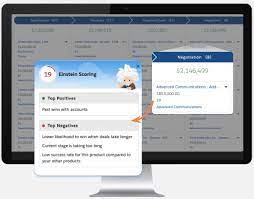
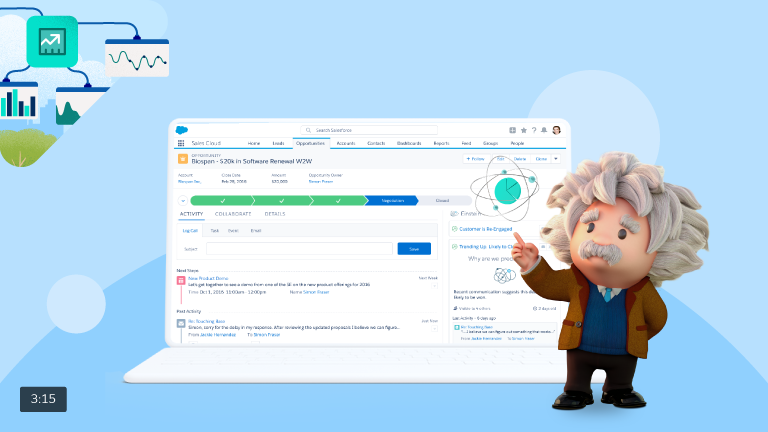
Let Salesforce’s artificial intelligence help you and your team focus on the right opportunities so you can close more deals with Einstein Opportunity Scoring. Each opportunity in Salesforce is given a score, from 1 to 99, which is available on opportunity records and list views. Sales reps use these opportunity scores to identify top opportunities. If you use Collaborative Forecasts, opportunity scores are also available on the forecasts page. Plus, use scores with reports, Process Builder, and workflows. Einstein Opportunity Scoring is available to users with or without a Sales Cloud Einstein license. Opportunity scores tell you the likelihood that an opportunity will be closed won. For each opportunity score, Einstein shows the factors that have contributed the most to the score, both positively and negatively. Einstein uses your team’s past closed opportunities, won and lost, to create a predictive scoring model.  This model helps identify which opportunities are most likely to result in a win. Einstein Opportunity Scoring in Lightning In Lightning Experience, the score is shown on the compact layout of opportunity records or on the Details tab. Hover over the score to see a list of factors that contribute to the score. For example, a score could be relatively high because the opportunity is moving quickly through the stages compared to other opportunities. In Salesforce Classic, the score is shown on the record detail of opportunity records. The contributing factors are shown. You can add the Opportunity Score field to any of your opportunity list views. If you don’t see the score on public list views, ask your Salesforce admin to add it. In Lightning Experience, hover over the score in the list view to see the factors that contribute to the score. In Salesforce Classic, the contributing factors aren’t available from the list views. Instead, navigate to the opportunity record detail page. The opportunity score can be calculated using a variety of factors, such as market demand, competitive landscape, the potential ROI, and the resources required to pursue the opportunity. Einstein Opportunity Scoring provides an unbiased, objective prediction on the likelihood of a deal closing, based on data patterns from previously closed deals. Then, take the guesswork out of forecasting. Einstein Forecasting uses AI technology to bring more certainty and visibility to your forecasts. Improve forecasting accuracy, get forecast predictions, and track how sales teams are doing. What is the difference between Einstein Lead Scoring and opportunity scoring? Einstein Opportunity Scoring is part of Sales Cloud Einstein Scoring, which also includes Einstein Lead Scoring. In the hierarchy, Einstein Lead Scoring comes under Salesforce’s Sales Cloud Einstein model. Opportunity scores tell the salesperson the likelihood of an opportunity to be won. Like1 Related Posts Salesforce Unveils Einstein: AI Built into Every Cloud The Next Era of CRM Intelligence Salesforce is taking AI beyond standalone features—introducing Einstein, an embedded AI layer across its Read more 50 Advantages of Salesforce Sales Cloud According to the Salesforce 2017 State of Service report, 85% of executives with service oversight identify customer service as a Read more Salesforce Artificial Intelligence Is artificial intelligence integrated into Salesforce? Salesforce Einstein stands as an intelligent layer embedded within the Lightning Platform, bringing robust Read more Salesforce’s Quest for AI for the Masses The software engine, Optimus Prime (not to be confused with the Autobot leader), originated in a basement beneath a West Read more

Read More
Salesforce Sales Cloud

Salesforce Sales Cloud Explained

Salesforce Sales Cloud is Salesforce’s premier product, originating with the company’s birth in 1999, and currently commands the largest market share among all available Customer Relationship Management (CRM) solutions. With a core mission to expedite the sales cycle, Sales Cloud furnishes companies with an array of tools for efficient management of leads, opportunities, businesses, and individual contacts. While it predominantly caters to Business-to-Business (B2B) enterprises, Sales Cloud encompasses features like quoting, product management, and forecasting tailored to meet the needs of sales managers. In addition to its foundational features, Sales Cloud offers a suite of add-on products that further enhance its capabilities. These include Sales Cloud Einstein, Inbox, Salesforce Maps, Lightning Dialer, Lightning Scheduler, Salesforce Engage, Einstein Sales Analytics, and Revenue Analytics. These supplementary products provide advanced functionalities and analytics, elevating the overall sales experience for businesses utilizing Sales Cloud. What does Salesforce do? It helps teams work better together. Your business may use a single Customer 360 app, or a combination of many. By improving team communications, automating repetitive tasks, and surfacing more insights with the help of AI, our customers drive greater business success. Connect the dots between marketing and sales. Bring all your customer data together in one place to inform campaign strategy, audiences, and content. Use generative AI to create personalized messages and send them to prospects right where they are most likely to engage with them. When customers click on your ad or website, an automated message is sent to sales, notifying the team of a new lead. Tectonic is please to announce our Sales Cloud Implementation Solutions. Content updated July 2025. Like1 Related Posts AI Automated Offers with Marketing Cloud Personalization AI-Powered Offers Elevate the relevance of each customer interaction on your website and app through Einstein Decisions. Driven by a Read more Salesforce OEM AppExchange Expanding its reach beyond CRM, Salesforce.com has launched a new service called AppExchange OEM Edition, aimed at non-CRM service providers. Read more The Salesforce Story In Marc Benioff’s own words How did salesforce.com grow from a start up in a rented apartment into the world’s Read more Salesforce Jigsaw Salesforce.com, a prominent figure in cloud computing, has finalized a deal to acquire Jigsaw, a wiki-style business contact database, for Read more

Read More
Sales Cloud Einstein Forecasting

Sales Cloud Einstein Forecasting

Salesforce, the global leader in CRM, recently unveiled the next generation of Sales Cloud Einstein, Sales Cloud Einstein Forecasting, incorporating AI into every phase of the sales cycle, from pipeline building and deal closing to business growth. The new Einstein Forecasting tool enhances visibility and intelligence, enabling sales leaders to more accurately predict sales revenue at each stage. Additionally, Einstein Opportunity Scoring prioritizes high-value opportunities, and Einstein Email Insights identifies critical emails, allowing sales reps to sell faster and smarter. Introducing Einstein Forecasting Einstein Forecasting revolutionizes business predictability, benefiting everyone from the head of sales to the CFO. Traditional forecasting methods, often reliant on incomplete spreadsheets and outdated systems, result in inaccurate projections, underperformance, and business disconnection. In fact, less than half of deals close as forecasted, leading to missed quotas and revenue shortfalls. Sales Cloud Einstein Forecasting Einstein Forecasting is a fully automated, out-of-the-box solution utilizing a company’s historical CRM data to eliminate guesswork. By combining data mining and machine learning, it analyzes factors like seasonality and historical performance to deliver highly accurate, individualized sales forecasts. Its self-learning algorithms assess individual and team forecasting behaviors, adjusting for optimism or pessimism to provide unbiased analysis. Moreover, Einstein translates forecast data into human language, helping sales leaders understand pipeline expectations and reasons. For example, a regional manager for a trucking company can use a dashboard to see if the team is on track or if any deals are in jeopardy of not closing or being lost. This foresight allows for timely intervention. Similarly, a CFO considering expansion can use Einstein Forecasting to predict funding availability for new regions. Enhancing Sales Reps’ Efficiency with AI In addition to Einstein Forecasting, Salesforce introduced Einstein Opportunity Scoring and Einstein Email Insights to keep sales reps focused on vital deals. Einstein Opportunity Scoring Einstein Opportunity Scoring identifies, surfaces, and prioritizes the most valuable deals within Sales Cloud, such as those with large deal sizes and significant executive engagement. It monitors deals in progress, flagging high-value deals at risk, allowing reps to concentrate on building the pipeline and closing deals efficiently. For instance, sales reps can focus on the most promising deals instead of spending hours sifting through opportunities. Einstein Email Insights Einstein Email Insights acts as a personal email assistant for sales reps, powered by natural language processing (NLP). It identifies crucial emails and recommends actions or responses, helping reps prioritize their inbox and quickly address customer needs. This proactive approach ensures that deals continue moving forward, from scheduling meetings to sending quotes. For example, a sales rep returning from a day of meetings can quickly find and address important emails without sifting through their inbox. Benefits of Einstein Forecasting Einstein Forecasting leverages AI technology to bring certainty and visibility to forecasts, enhancing accuracy, predicting outcomes, and tracking team performance. Salesforce Einstein Celebrates One Year of Innovation Since its launch in September 2016, Salesforce Einstein has brought AI capabilities to every business user, transforming customer experiences across the Customer Success Platform. Today, Einstein delivers over 475 million daily predictions, enabling companies like U.S. Bank, Room&Board, FareCompare, Silverline, and Black Diamond to operate smarter and more productively. Additionally, Einstein Platform Services empower developers to build AI-powered CRM apps using computer vision and NLP, with over 7,000 developers already creating Einstein-powered apps. Under Chief Scientist Dr. Richard Socher, Salesforce Research has published 10 academic papers, advancing deep learning technology for Salesforce customers. Einstein Predictions Enabling Einstein Forecasting displays the Einstein prediction column on the forecasts page, showing median predicted amounts for each manager’s team based on opportunities within the Best Case and Commit forecast categories. Predictions may not appear if there is insufficient historical data or a large prediction range. Predictions are typically in US dollars unless multiple currencies are used, in which case amounts are converted based on the static conversion rate set by the Salesforce admin. Selecting a prediction value reveals detailed information in the side panel, including the prediction range, a breakdown of wins from existing and new deals, and top factors contributing to the prediction. The Forecast Changes Chart offers a visualization of predicted closings within a forecast period, highlighting key performance indicators. New Salesforce AI Innovation Fund To foster next-generation AI solutions, Salesforce Ventures announced a $50 million Salesforce AI Innovation Fund. Fast-growing AI startups Highspot, Squirro, and TalkIQ are the first recipients, accelerating their development of transformative AI solutions on Salesforce. Additionally, Salesforce Ventures has invested in All Turtles, an AI startup studio partnering with founding teams to create AI-centric products. Salesforce will collaborate with All Turtles to co-create advanced AI solutions on the Salesforce platform. Like1 Related Posts AI Automated Offers with Marketing Cloud Personalization AI-Powered Offers Elevate the relevance of each customer interaction on your website and app through Einstein Decisions. Driven by a Read more Salesforce OEM AppExchange Expanding its reach beyond CRM, Salesforce.com has launched a new service called AppExchange OEM Edition, aimed at non-CRM service providers. Read more The Salesforce Story In Marc Benioff’s own words How did salesforce.com grow from a start up in a rented apartment into the world’s Read more Salesforce Jigsaw Salesforce.com, a prominent figure in cloud computing, has finalized a deal to acquire Jigsaw, a wiki-style business contact database, for Read more

Read More
gettectonic.com