

11Jan
Salesforce LinkedIn Navigator
Utilizing LinkedIn Sales Navigator for Salesforce expedites the process of converting cold prospect information into closed deals.
Utilizing LinkedIn Sales Navigator for Salesforce expedites the process of converting cold prospect information into closed deals.
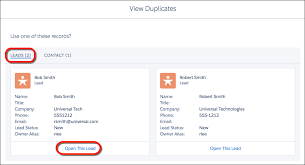
What is a duplicate checker in Salesforce? Salesforce finds and handles duplicates using a combination of matching rules and duplicate rules. Duplicate rules and duplicate jobs specify matching rules that determine how duplicates are identified. Duplicate sets and reports list the duplicates found. Some tools for checking and catching duplicate Salesforce records include: Duplicate Check is a fully on-platform duplicate management tool for Salesforce, empowering users to manage their data and sieve out duplicate records with unparalleled ease. While incredibly complex in its logic, it’s also bewilderingly simple to set up and use – you don’t even need an Admin to set it up! The Matching Method allows you to configure the kind of match the field values are required to have before they’re considered a match. An exact match means the two fields must be identical, character for character. A Fuzzy match means the field values need to be similar – not identical, but close. One way is to use the Duplicate Management feature in Salesforce. This feature can be found in the Setup menu under Data Management. Duplicate Management can be used to find and merge duplicate records. Another way to find duplicate records is to use the Salesforce Data Export Service. This is just a drop in the bucket. When selecting a duplicate record management tool, look at your specific business needs. How do I prevent duplicates in Salesforce? Block sales reps from creating duplicate leads. In the Standard Lead Duplicate Rule, select Block instead of Allow. With the Standard Lead Duplicate Rule set to block duplicates, a rep can click to view duplicates of leads but can’t save a new lead. If you are looking at a duplicate checker solution as a part of a Salesforce implementation, reach out to Tectonic today. Content updated June 2023. Like Related Posts Who is Salesforce? Who is Salesforce? Here is their story in their own words. From our inception, we’ve proudly embraced the identity of Read more Salesforce Marketing Cloud Transactional Emails Salesforce Marketing Cloud Transactional Emails are immediate, automated, non-promotional messages crucial to business operations and customer satisfaction, such as order Read more Salesforce Unites Einstein Analytics with Financial CRM Salesforce has unveiled a comprehensive analytics solution tailored for wealth managers, home office professionals, and retail bankers, merging its Financial Read more AI-Driven Propensity Scores AI plays a crucial role in propensity score estimation as it can discern underlying patterns between treatments and confounding variables Read more
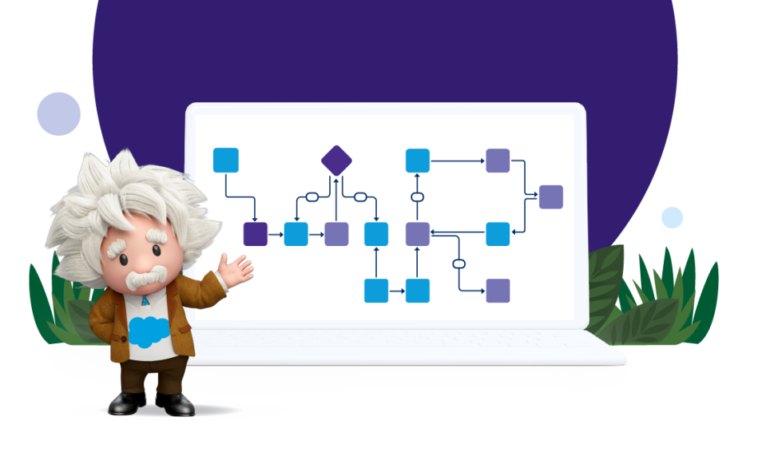
Introducing Einstein Automate, a comprehensive workflow automation solution by Salesforce, empowering individuals and businesses to boost productivity. With AI-infused bots, flows, and components, the new Flow Orchestrator transforms intricate processes into dynamic, industry-relevant experiences. Moreover, the new MuleSoft Composer for Salesforce enables every member of an organization to seamlessly integrate data from multiple systems into Salesforce, without the need for writing code. Leveraging pre-built resources from AppExchange and OmniStudio further accelerates the implementation of automation initiatives. Recognizing the digital imperative faced by organizations today, Einstein Automate offers automation capabilities tailored for every business function and industry. This solution enables individuals across companies to construct intelligent workflows and integrate data across systems effortlessly, using clicks instead of code. The Flow Orchestrator, a low-code workflow development tool, empowers users to compose workflows automating complex, multi-user processes and approvals. AI-generated next steps and recommendations expedite projects and processes, identifying bottlenecks and streamlining operations. Discover over 700 automation solutions on the new Einstein Automate collection page on Salesforce AppExchange, including solutions for robotic process automation (RPA), Einstein Bots, Flow Templates, Actions and Components, MuleSoft Connectors, Process Libraries, and partner solutions. These pre-built solutions allow organizations to implement automation quickly, without the need to build from scratch. OmniStudio provides businesses with no-code tools and pre-built guided experiences to deliver digital-first and industry-specific experiences to customers across multiple devices and channels. With features like dynamic, guided screen flows and the ability to gather data from any document, image, or legacy system, OmniStudio enhances user experience and boosts productivity. Einstein Next Best Action automatically presents recommendations and flow actions to users, while Einstein Recommendation Builder enables personalized recommendations. With updates across various features like Article Answers, External Services, and Model Sharing, Salesforce continues to enhance the capabilities of its automation tools, ensuring seamless integration and improved efficiency across the platform. Content updated August 2023. Like1 Related Posts Who is Salesforce? Who is Salesforce? Here is their story in their own words. From our inception, we’ve proudly embraced the identity of Read more Salesforce Marketing Cloud Transactional Emails Salesforce Marketing Cloud Transactional Emails are immediate, automated, non-promotional messages crucial to business operations and customer satisfaction, such as order Read more Salesforce Unites Einstein Analytics with Financial CRM Salesforce has unveiled a comprehensive analytics solution tailored for wealth managers, home office professionals, and retail bankers, merging its Financial Read more AI-Driven Propensity Scores AI plays a crucial role in propensity score estimation as it can discern underlying patterns between treatments and confounding variables Read more

Both Journey Builder and Automation Studio are robust tools available to Marketing Cloud customers. However, determining when to use each one and how they complement each other can sometimes be confusing. Automation Studio primarily focuses on ETL (Extract, Transform, Load) processes in marketing automation. It enables marketers to integrate data from various systems and automate tasks for segmentation and email campaign deployment. With Automation Studio, marketers can create highly advanced automated segmentation using data filters and queries, making it ideal for repetitive processes. It also allows users to execute SQL queries to retrieve and store data extension information. On the other hand, Journey Builder is a user-friendly, drag-and-drop tool designed for creating personalized, engagement-based customer journeys. It facilitates individualized, multi-channel communications at scale and provides goal and success measurements for monitoring and management. Unlike Automation, Journey Builder offers more opportunities for testing strategies and optimizing messages based on real-time engagement and interaction. One key difference between the two tools is that Journey Builder offers built-in goal reporting, providing real-time insights into campaign performance and customer engagement. Another distinction is that while Automation Studio relies on batch processing, Journey Builder allows individuals to enter journeys on an individual level, enabling real-time monitoring and action based on customer behavior. To decide which tool to use, consider the following questions: In many cases, it’s not a matter of choosing between Journey Builder vs Automation Studio but rather leveraging both tools together. By combining the powerful segmentation capabilities of Automation Studio with the personalized journey creation features of Journey Builder, marketers can deliver highly targeted and personalized messaging to their customers. Automation Studio is best for complex segmentation at scale, while Journey Builder guides customers through customized journeys based on Marketing Cloud data. Ultimately, using both tools together allows marketers to create seamless, personalized experiences for their customers. Like1 Related Posts Who is Salesforce? Who is Salesforce? Here is their story in their own words. From our inception, we’ve proudly embraced the identity of Read more Salesforce Marketing Cloud Transactional Emails Salesforce Marketing Cloud Transactional Emails are immediate, automated, non-promotional messages crucial to business operations and customer satisfaction, such as order Read more Salesforce Unites Einstein Analytics with Financial CRM Salesforce has unveiled a comprehensive analytics solution tailored for wealth managers, home office professionals, and retail bankers, merging its Financial Read more AI-Driven Propensity Scores AI plays a crucial role in propensity score estimation as it can discern underlying patterns between treatments and confounding variables Read more
Digital Business Support Systems (BSS) play a critical role in managing essential functions such as billing, rating and charging, customer experience, CRM, fulfillment, and revenue management within communications service providers (CSPs). However, the scope of a comprehensive digital BSS stack extends beyond these core functionalities to enable, monetize, and manage new digital services and partnerships. This transformation is particularly crucial for CSPs transitioning into digital service providers (DSPs), especially in anticipation of the 5G era. Let’s delve into how a robust digital BSS transformation solution can drive profitability. Anticipating Customer Churn Telecom companies can leverage advanced analytics across BSS, OSS, CRM, and other systems to extract actionable insights from customer usage, transactions, complaints, billing, and social media data. Predictive modeling identifies potential churners, enabling targeted offers, promotions, and services aimed at retaining and nurturing loyal customers. Personalizing Customer Experiences Today’s digital consumers expect personalized interactions. Implementing a digital BSS stack empowers telecom companies to capture and utilize interaction data for tailored customer engagements. Whether resolving network issues, rewarding loyalty, or suggesting relevant offers, AI and deep learning algorithms ensure real-time responses that enhance customer satisfaction and increase ARPU (Average Revenue Per User). Innovating Service Offerings Cloud-based services are increasingly popular among consumers and businesses. A robust BSS solution allows operators to seamlessly integrate these services with traditional offerings, fostering innovation and boosting ARPU. Driving Agility and Efficiency A cloud-based BSS solution enhances business agility to support emerging technologies such as IoT and M2M systems. It streamlines partnership management and product launches in complex market landscapes, enabling providers to swiftly seize new opportunities. Retaining Profitable Customers Customer acquisition costs highlight the importance of retaining profitable customers. Integrated BSS and OSS applications provide telecom companies with comprehensive insights into customer behavior, facilitating convergent billing, tiered pricing models, and targeted incentives that enhance customer loyalty and lifetime value. Boosting Average Revenue Per User (ARPU) Telecom companies strive to increase ARPU by introducing compelling new services. Integration of customer-facing BSS systems with service delivery mechanisms accelerates provisioning and enables the launch of innovative offerings that drive revenue growth. In conclusion, a modernized and robust BSS infrastructure is indispensable for telecom companies looking to differentiate their services, elevate customer experiences, and capitalize on evolving market dynamics. By harnessing advanced analytics, embracing cloud-based solutions, and integrating diverse systems, telcos can unlock growth opportunities and enhance profitability in a competitive marketplace. Like Related Posts Who is Salesforce? Who is Salesforce? Here is their story in their own words. From our inception, we’ve proudly embraced the identity of Read more Salesforce Marketing Cloud Transactional Emails Salesforce Marketing Cloud Transactional Emails are immediate, automated, non-promotional messages crucial to business operations and customer satisfaction, such as order Read more Salesforce Unites Einstein Analytics with Financial CRM Salesforce has unveiled a comprehensive analytics solution tailored for wealth managers, home office professionals, and retail bankers, merging its Financial Read more AI-Driven Propensity Scores AI plays a crucial role in propensity score estimation as it can discern underlying patterns between treatments and confounding variables Read more

Customers embark on a journey from initial discovery to becoming repeat buyers, progressing through seven essential sales pipeline stages: Throughout the sales pipeline stages, sales leaders can identify opportunities to better engage customers and enhance the likelihood of successful purchases. Contact Tectonic today to discover how Salesforce can help fill your sales pipeline. Like Related Posts Who is Salesforce? Who is Salesforce? Here is their story in their own words. From our inception, we’ve proudly embraced the identity of Read more Salesforce Marketing Cloud Transactional Emails Salesforce Marketing Cloud Transactional Emails are immediate, automated, non-promotional messages crucial to business operations and customer satisfaction, such as order Read more Salesforce Unites Einstein Analytics with Financial CRM Salesforce has unveiled a comprehensive analytics solution tailored for wealth managers, home office professionals, and retail bankers, merging its Financial Read more AI-Driven Propensity Scores AI plays a crucial role in propensity score estimation as it can discern underlying patterns between treatments and confounding variables Read more


