AI Chatbots Archives - gettectonic.com
Role of Trusted Data in AI Success

AI Revolutionizes Telemedicine

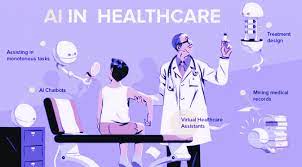
AI Revolutionizes Telemedicine: Transforming Virtual Care Delivery The Rapid Adoption of AI in Healthcare The healthcare industry is experiencing an AI transformation, with physician adoption rates skyrocketing from 38% in 2023 to 66% in 2024, according to the American Medical Association. Telemedicine—remote healthcare delivered via telecommunications—has emerged as a prime beneficiary of AI innovation. Market analysts project 26% annual growth in AI telemedicine investments, surpassing $156 billion by 2033. “AI is enabling earlier and more frequent medical interventions, often preventing hospitalizations,” said Dr. Elizabeth Krupinski, Director of the Southwest Telehealth Resource Center and Professor at Emory University. “We’re seeing AI enhance both the quality and accessibility of virtual care.” Key AI Applications Reshaping Telemedicine 1. Virtual Health Assistants & Chatbots 2. Intelligent Triage & Symptom Analysis 3. Medical Imaging & Diagnostics 4. Personalized Treatment Planning 5. Remote Patient Monitoring 6. Mental Health Support Operational & Administrative Benefits Challenges & Considerations While promising, AI adoption presents hurdles: The Future of AI in Telemedicine Industry experts anticipate groundbreaking advancements: “We’re still in the early stages,” notes Krupinski. “The next decade will reveal AI’s full potential to improve outcomes while making healthcare more accessible and efficient.” As adoption grows, maintaining rigorous oversight will be crucial to ensure AI systems remain accurate, equitable, and patient-centered. The transformation of telemedicine through AI represents not just technological progress, but a fundamental shift toward more proactive, personalized, and preventive care. Like Related Posts AI Automated Offers with Marketing Cloud Personalization AI-Powered Offers Elevate the relevance of each customer interaction on your website and app through Einstein Decisions. Driven by a Read more Salesforce OEM AppExchange Expanding its reach beyond CRM, Salesforce.com has launched a new service called AppExchange OEM Edition, aimed at non-CRM service providers. Read more The Salesforce Story In Marc Benioff’s own words How did salesforce.com grow from a start up in a rented apartment into the world’s Read more Salesforce Jigsaw Salesforce.com, a prominent figure in cloud computing, has finalized a deal to acquire Jigsaw, a wiki-style business contact database, for Read more

Read More
The Promise of AI in Health Outcomes

10 AI Healthcare Trends Shaping the Future

10 AI Healthcare Trends Shaping the Future (2025 & Beyond) Artificial intelligence is transforming healthcare at an unprecedented pace. With a projected 49% CAGR through 2030 (MarketsandMarkets) and generative AI accelerating innovation, hospitals, clinics, and insurers are integrating AI into clinical workflows, diagnostics, and operations. Here are the 10 biggest AI healthcare trends to watch: 1. AI Chatbots for Patient Engagement “AI chatbots cut our call center volume by 30% while improving response times.” —Jordan Archer, COO, Tryon Medical Partners 2. AI-Powered Clinical Documentation 3. Unstructured Data Analysis 4. AI Radiology & Imaging Assistants 5. Robotic Surgery & Automation 6. AI in Physical Therapy 7. AI-Generated Fitness & Wellness Plans 8. Automated Revenue Cycle Management 9. Predictive Supply Chain Optimization 10. AI-Driven Business Strategy Challenges: Equity & Adoption While AI offers immense potential, smaller clinics and rural hospitals risk falling behind due to: “We must ensure equitable access—AI shouldn’t just benefit large health systems.” —Dr. Margaret Lozovatsky, AMA The Future of AI in Healthcare ✅ 2025-2030: AI becomes standard in EHRs, diagnostics, and surgery✅ Generative AI drafts treatment plans, research papers, and insurance appeals✅ Regulatory frameworks evolve to ensure safety & fairness Bottom Line: AI isn’t replacing doctors—it’s empowering them to work smarter, faster, and more precisely. Which trend will impact your organization most? Like Related Posts AI Automated Offers with Marketing Cloud Personalization AI-Powered Offers Elevate the relevance of each customer interaction on your website and app through Einstein Decisions. Driven by a Read more Salesforce OEM AppExchange Expanding its reach beyond CRM, Salesforce.com has launched a new service called AppExchange OEM Edition, aimed at non-CRM service providers. Read more The Salesforce Story In Marc Benioff’s own words How did salesforce.com grow from a start up in a rented apartment into the world’s Read more Salesforce Jigsaw Salesforce.com, a prominent figure in cloud computing, has finalized a deal to acquire Jigsaw, a wiki-style business contact database, for Read more

Read More
Biggest Mistakes Universities Make When Using Salesforce

Biggest Mistakes Universities Make When Using Salesforce

The Biggest Mistakes Universities Make When Using Salesforce (And How to Fix Them) Many universities invest in Salesforce for higher education to improve student engagement, streamline operations, and boost fundraising—but struggle to see meaningful results. Without the right strategy, institutions face scattered data, low adoption, and inefficiencies, turning Salesforce into just another system to manage rather than a transformative tool. The good news? These challenges are avoidable. In this insight, we’ll explore the most common Salesforce mistakes in higher education and how to fix them—helping your university maximize ROI and create a seamless experience for students, staff, and alumni. Salesforce Education Cloud: A Quick Overview Salesforce Education Cloud is a powerful CRM platform designed for universities, colleges, and K-12 schools. It helps institutions: Yet, many institutions fail to leverage its full potential due to poor implementation, lack of training, or misaligned strategies. 11 Common Salesforce Mistakes in Higher Ed (And How to Solve Them) 1. No Clear Strategy or Goals Problem: Jumping into Salesforce without a plan leads to disconnected teams, wasted resources, and unclear ROI. Solution:✔ Define university-wide objectives (e.g., improving student retention, increasing alumni donations).✔ Establish a governance team to align Salesforce with institutional goals.✔ Prioritize key initiatives and track measurable outcomes. 2. Lack of Stakeholder Buy-In Problem: Without leadership and faculty support, adoption stalls or becomes siloed. Solution:✔ Engage decision-makers early in planning.✔ Assign cross-functional champions to drive adoption.✔ Provide training & clear value propositions for each department. 3. No Clear Ownership Problem: When no one “owns” Salesforce, data decays, processes break, and updates lag. Solution:✔ Form a centralized Salesforce admin team.✔ Assign department leads to oversee usage.✔ Define clear roles & accountability for system maintenance. 4. Siloed Implementation Problem: Departments use Salesforce separately, creating data fragmentation. Solution:✔ Use Education Data Architecture (EDA) for a unified student view.✔ Integrate with Student Information Systems (SIS).✔ Ensure admissions, advising, and alumni teams share data seamlessly. 5. Poor Data Governance Problem: Inconsistent data entry leads to duplicates, errors, and unreliable reports. Solution:✔ Standardize data entry rules across teams.✔ Use Salesforce duplicate management tools.✔ Create real-time dashboards for accurate insights. 6. Underusing Self-Service Portals Problem: Over-reliance on staff for basic tasks (e.g., FAQs, event sign-ups). Solution:✔ Deploy Experience Cloud for student/alumni self-service.✔ Implement AI chatbots (Einstein Copilot) for instant support.✔ Build a knowledge base for common inquiries. 7. Inadequate Training & Support Problem: Staff avoid Salesforce because they don’t know how to use it. Solution:✔ Offer ongoing training programs.✔ Assign in-house Salesforce super-users.✔ Provide resources for new features & updates.✔ Employ a dedicated Salesforce Solutions Provider..✔ Utilize a Salesforce Managed Services Provider. 8. Ignoring Mobile Optimization Problem: Students expect mobile access—but many portals are desktop-only. Solution:✔ Enable the Salesforce Mobile App.✔ Use push notifications for deadlines & events.✔ Ensure responsive design for all student portals. 9. Misaligned Reporting & KPIs Problem: Departments track different metrics, making progress hard to measure. Solution:✔ Standardize university-wide KPIs (e.g., enrollment rates, alumni engagement).✔ Use Salesforce dashboards for real-time insights.✔ Align reports with strategic goals. 10. Not Using AI & Automation Problem: Manual processes slow down admissions, student support, and fundraising. Solution:✔ Use Einstein AI to predict at-risk students.✔ Automate student communications & follow-ups.✔ Deploy AI chatbots for instant responses.✔ Integrate Salesforce Agentforce. 11. Falling Behind on Salesforce Updates Problem: Missing out on new AI features, automations, and best practices. Solution:✔ Follow Salesforce Trailhead & webinars.✔ Attend Education Summit & industry events.✔ Assign a team to evaluate & implement new tools. Maximizing Salesforce ROI in Higher Education By avoiding these mistakes, universities can:✅ Improve student engagement & retention✅ Streamline admissions & operations✅ Boost alumni fundraising✅ Make data-driven decisions The key? Strategy, training, integration, and innovation. Is your university getting the most out of Salesforce? Let’s optimize your approach. Like Related Posts AI Automated Offers with Marketing Cloud Personalization AI-Powered Offers Elevate the relevance of each customer interaction on your website and app through Einstein Decisions. Driven by a Read more Salesforce OEM AppExchange Expanding its reach beyond CRM, Salesforce.com has launched a new service called AppExchange OEM Edition, aimed at non-CRM service providers. Read more The Salesforce Story In Marc Benioff’s own words How did salesforce.com grow from a start up in a rented apartment into the world’s Read more Salesforce Jigsaw Salesforce.com, a prominent figure in cloud computing, has finalized a deal to acquire Jigsaw, a wiki-style business contact database, for Read more

Read More
Agentic AI Race

Salesforce Unveils Blueprint for the Agentic AI Era

A Roadmap for AI Maturity: From Chatbots to Autonomous Agents Salesforce has introduced a new Agentic Maturity Model, providing businesses with a structured framework to evolve from basic AI chatbots to fully autonomous, collaborative AI agents. With 84% of CIOs believing AI will be as transformative as the internet—yet struggling with deployment—this model offers a clear pathway to scale AI effectively. The Four Stages of Agentic AI Maturity Salesforce’s model defines four progressive stages of AI agent sophistication: 1️⃣ Chatbots & Co-Pilots (Stage 0 → 1) 2️⃣ Information Retrieval Agents (Stage 1 → 2) 3️⃣ Simple Orchestration (Single Domain) → Complex Orchestration (Multiple Domains) (Stage 2 → 3) 4️⃣ Multi-Agent Orchestration (Stage 3 → 4) Why This Model Matters Many businesses deploy AI quickly but struggle to scale due to:🔹 Unclear governance🔹 Data silos🔹 Security concerns🔹 Lack of human-AI collaboration strategies Shibani Ahuja, SVP of Enterprise IT Strategy at Salesforce, emphasizes: “Scaling AI effectively requires a phased approach. This framework helps organizations progress toward higher maturity—balancing innovation with security and operational readiness.” Key Recommendations for Advancement ✅ Start with high-impact use cases where chatbots fall short.✅ Build governance early—define testing, security, and accountability.✅ Prepare data ecosystems for AI interoperability.✅ Foster human-AI collaboration—agents should augment, not replace, teams. The Future: AI That Works Like a Well-Oiled Team The ultimate vision? AI agents that: Salesforce’s model provides the playbook to get there—helping businesses move from experimentation to enterprise-wide AI transformation. Next Step: Assess where your organization stands—and start climbing the maturity ladder. Contact Tectonic today. Like Related Posts AI Automated Offers with Marketing Cloud Personalization AI-Powered Offers Elevate the relevance of each customer interaction on your website and app through Einstein Decisions. Driven by a Read more Salesforce OEM AppExchange Expanding its reach beyond CRM, Salesforce.com has launched a new service called AppExchange OEM Edition, aimed at non-CRM service providers. Read more The Salesforce Story In Marc Benioff’s own words How did salesforce.com grow from a start up in a rented apartment into the world’s Read more Salesforce Jigsaw Salesforce.com, a prominent figure in cloud computing, has finalized a deal to acquire Jigsaw, a wiki-style business contact database, for Read more

Read More
MuleSoft B2B and B2C With AI

AI in B2B Marketing

AI in B2B Marketing: The Game-Changer You Can’t Afford to Ignore The B2B marketing landscape is undergoing an AI revolution. While some businesses are already leveraging artificial intelligence to drive unprecedented growth, others risk falling behind. Here’s why AI isn’t just the future—it’s the present competitive edge in B2B marketing. The AI Imperative in B2B Marketing AI is no longer optional—it’s the key to smarter targeting, hyper-efficient campaigns, and data-driven decision-making. 6 Ways AI is Transforming B2B Marketing 1. Hyper-Personalization at Scale AI analyzes behavioral data, past interactions, and firmographics to deliver bespoke content for each prospect.✅ Example: HubSpot’s AI recommends next-best content based on engagement history, boosting conversions by 30%+. 2. Predictive Lead Scoring & Analytics AI identifies high-intent leads and predicts churn risks before they happen.📊 Impact: Companies using AI lead scoring see 50%+ higher win rates (Gartner).✅ Example: Marketo’s AI prioritizes leads with the highest conversion potential, optimizing sales efforts. 3. AI-Powered Content Creation From SEO-optimized blogs to personalized email sequences, AI generates high-quality content in minutes.🛠 Tools: Jasper, ContentBot, and ChatGPT streamline B2B content production. 4. Conversational AI & Chatbots AI chatbots handle lead qualification, FAQs, and meeting scheduling—24/7.💡 Stat: AI chatbots will drive B+ in B2B sales by 2024 (Juniper Research).✅ Example: Drift’s AI engages visitors in real-time, cutting response times by 90%. 5. Automated Social Media Optimization AI determines the best posting times, hashtags, and content types for maximum engagement.📱 Tools: Hootsuite AI and Sprout Social analyze trends to boost engagement by 40%. 6. Smarter Ad Targeting & Budget Optimization AI adjusts bidding strategies, audience segments, and creatives in real-time.📈 Result: Businesses using AI-driven ads see 20-30% lower CAC. The Future: AI as Your Marketing Co-Pilot The Bottom Line B2B marketers who ignore AI will lose to competitors who embrace it. The question isn’t if you should adopt AI—it’s how fast you can integrate it into your strategy. 🚀 Next Steps: AI isn’t replacing marketers—it’s empowering them to work smarter, faster, and more effectively. Ready to transform your B2B marketing with AI? Like Related Posts AI Automated Offers with Marketing Cloud Personalization AI-Powered Offers Elevate the relevance of each customer interaction on your website and app through Einstein Decisions. Driven by a Read more Salesforce OEM AppExchange Expanding its reach beyond CRM, Salesforce.com has launched a new service called AppExchange OEM Edition, aimed at non-CRM service providers. Read more The Salesforce Story In Marc Benioff’s own words How did salesforce.com grow from a start up in a rented apartment into the world’s Read more Salesforce Jigsaw Salesforce.com, a prominent figure in cloud computing, has finalized a deal to acquire Jigsaw, a wiki-style business contact database, for Read more

Read More
Rise of Agentic Commerce

Rise of Agentic Commerce

The Rise of Agentic Commerce: How AI Agents Are Reshaping Ecommerce As online retailers experiment with agentic AI to enhance ecommerce, shoppers are already engaging with AI-driven experiences through subscriptions. Meanwhile, businesses are deploying AI agents behind the scenes to streamline their digital storefronts. In 2025, ecommerce platforms aren’t just pitching AI-powered recommendation engines—they’re embracing full-fledged agentic AI solutions. These intelligent agents are changing the way both retailers and consumers interact with digital shopping environments. Tech Giants and Startups Lead the Charge Agentic AI is becoming a key component in the ecommerce tech stack, joining machine learning, AI-powered search, and generative AI. Major players like Google and Meta have already integrated these capabilities, while Amazon and OpenAI are leveraging subscription models to attract users. Startups, as well as integrations for platforms like Shopify and Adobe’s Magento, are also fueling this AI-driven shift. Salesforce made a significant push for agentic AI at its 2024 Dreamforce event, showcasing its Agentforce capabilities. Luxury retailer Saks was an early adopter, using Agentforce to enhance personalization. Just months later, OpenAI introduced its Operator agent, with eBay, Etsy, and Instacart among its first users. But what exactly is agentic commerce, and how does it reshape online shopping? What Is Agentic Commerce? Agentic commerce refers to the use of AI agents in ecommerce. These agents, built on large language models (LLMs), go beyond chatbot-style interactions. They make decisions and execute actions autonomously, transforming how both consumers and merchants engage with online retail. For shoppers, this means AI-powered assistance throughout the learning, discovery, and purchasing journey. For retailers, agentic AI helps automate backend operations, streamlining tasks that previously required manual intervention. Consumers have already embraced AI chatbots in shopping experiences. Salesforce reported that AI-driven interactions boosted retail revenue during the 2024 holiday season. Adobe Analytics echoed this trend in a March 2025 survey, revealing that AI-assisted shopping led to higher engagement. “Online shoppers are seeing the benefits of AI-powered chat interfaces, which reduce the time needed to receive personalized information,” said Vivek Pandya, lead analyst at Adobe Digital Insights. “In Adobe’s survey, 92% of shoppers who used AI said it enhanced their experience, and 87% were more likely to use AI for larger or complex purchases.” Retailers are taking note. A February 2025 survey by Digital Commerce 360 found that AI investment is a top priority, with only 11.11% of ecommerce businesses planning to forgo AI implementation this year. AI-Powered Agents in Action Tech companies are responding to this growing demand. Adobe recently introduced its Experience Platform Agent Orchestrator, designed to manage AI agents across Adobe’s ecosystem and third-party platforms. Adobe’s research underscores the increasing role of AI in shaping customer engagement strategies. “This shift is redefining how businesses approach customer interactions,” Pandya noted. “AI agents are taking on more complex tasks and delivering highly personalized recommendations.” Retailers are already putting agentic commerce to the test. OpenAI’s Operator agent, for example, can autonomously navigate a web browser—searching, typing, and clicking to complete purchases. Users can ask Operator to order groceries, select gifts, or book tickets, streamlining transactions through AI-driven automation. Currently, Operator is available only to OpenAI’s ChatGPT Pro subscribers at $200 per month. However, OpenAI plans to expand access as it refines the technology. “We have a lot of work ahead, but we’re eager to put these tools into people’s hands,” said OpenAI CEO Sam Altman during an Operator demo. “More AI agents will be rolling out in the coming weeks and months.” The Subscription Model for AI-Powered Shopping Amazon is also bringing agentic AI to ecommerce with Alexa+. Priced at $19.99 per month—or free for Amazon Prime members—Alexa+ allows users to make purchases through Amazon.com, Whole Foods, Ticketmaster, and other retailers via voice commands. As these AI-powered tools gain traction, the pressure is on developers to deliver value that justifies their price tags. Whether through subscriptions or seamless integrations, the future of ecommerce is rapidly shifting toward intelligent, automated experiences. Like1 Related Posts AI Automated Offers with Marketing Cloud Personalization AI-Powered Offers Elevate the relevance of each customer interaction on your website and app through Einstein Decisions. Driven by a Read more Salesforce OEM AppExchange Expanding its reach beyond CRM, Salesforce.com has launched a new service called AppExchange OEM Edition, aimed at non-CRM service providers. Read more The Salesforce Story In Marc Benioff’s own words How did salesforce.com grow from a start up in a rented apartment into the world’s Read more Salesforce Jigsaw Salesforce.com, a prominent figure in cloud computing, has finalized a deal to acquire Jigsaw, a wiki-style business contact database, for Read more

Read More
Shift From AI Agents to AI Agent Tool Use

AI Agent Dilemma

The AI Agent Dilemma: Hype, Confusion, and Competing Definitions Silicon Valley is all in on AI agents. OpenAI CEO Sam Altman predicts they will “join the workforce” this year. Microsoft CEO Satya Nadella envisions them replacing certain knowledge work. Meanwhile, Salesforce CEO Marc Benioff has set an ambitious goal: making Salesforce the “number one provider of digital labor in the world” through its suite of AI-driven agentic services. But despite the enthusiasm, there’s little consensus on what an AI agent actually is. In recent years, tech leaders have hailed AI agents as transformative—just as AI chatbots like OpenAI’s ChatGPT redefined information retrieval, agents, they claim, will revolutionize work. That may be true. But the problem lies in defining what an “agent” really is. Much like AI buzzwords such as “multimodal,” “AGI,” or even “AI” itself, the term “agent” is becoming so broad that it risks losing all meaning. This ambiguity puts companies like OpenAI, Microsoft, Salesforce, Amazon, and Google in a tricky spot. Each is investing heavily in AI agents, but their definitions—and implementations—differ wildly. An Amazon agent is not the same as a Google agent, leading to confusion and, increasingly, customer frustration. Even industry insiders are growing weary of the term. Ryan Salva, senior director of product at Google and former GitHub Copilot leader, openly criticizes the overuse of “agents.” “I think our industry has stretched the term ‘agent’ to the point where it’s almost nonsensical,” Salva told TechCrunch. “[It is] one of my pet peeves.” A Definition in Flux The struggle to define AI agents isn’t new. Former TechCrunch reporter Ron Miller raised the question last year: What exactly is an AI agent? The challenge is that every company building them has a different answer. That confusion only deepened this past week. OpenAI published a blog post defining agents as “automated systems that can independently accomplish tasks on behalf of users.” Yet in its developer documentation, it described agents as “LLMs equipped with instructions and tools.” Adding to the inconsistency, OpenAI’s API product marketing lead, Leher Pathak, stated on X (formerly Twitter) that she sees “assistants” and “agents” as interchangeable—further muddying the waters. Microsoft attempts to make a distinction, describing agents as “the new apps” for an AI-powered world, while reserving “assistant” for more general task helpers like email drafting tools. Anthropic takes a broader approach, stating that agents can be “fully autonomous systems that operate independently over extended periods” or simply “prescriptive implementations that follow predefined workflows.” Salesforce, meanwhile, has perhaps the widest-ranging definition, describing agents as AI-driven systems that can “understand and respond to customer inquiries without human intervention.” It categorizes them into six types, from “simple reflex agents” to “utility-based agents.” Why the Confusion? The nebulous nature of AI agents is part of the problem. These systems are still evolving, and major players like OpenAI, Google, and Perplexity have only just begun rolling out their first versions—each with vastly different capabilities. But history also plays a role. Rich Villars, GVP of worldwide research at IDC, points out that tech companies have “a long history” of using flexible definitions for emerging technologies. “They care more about what they are trying to accomplish on a technical level,” Villars told TechCrunch, “especially in fast-evolving markets.” Marketing is another culprit. Andrew Ng, founder of DeepLearning.ai, argues that the term “agent” once had a clear technical meaning—until marketers and a few major companies co-opted it. The Double-Edged Sword of Ambiguity The lack of a standardized definition presents both opportunities and challenges. Jim Rowan, head of AI at Deloitte, notes that while the ambiguity allows companies to tailor agents to specific needs, it also leads to “misaligned expectations” and difficulty in measuring value and ROI. “Without a standardized definition, at least within an organization, it becomes challenging to benchmark performance and ensure consistent outcomes,” Rowan explains. “This can result in varied interpretations of what AI agents should deliver, potentially complicating project goals and results.” While a clearer framework for AI agents would help businesses maximize their investments, history suggests that the industry is unlikely to agree on a single definition—just as it never fully defined “AI” itself. For now, AI agents remain both a promising innovation and a marketing-driven enigma. Like Related Posts AI Automated Offers with Marketing Cloud Personalization AI-Powered Offers Elevate the relevance of each customer interaction on your website and app through Einstein Decisions. Driven by a Read more Salesforce OEM AppExchange Expanding its reach beyond CRM, Salesforce.com has launched a new service called AppExchange OEM Edition, aimed at non-CRM service providers. Read more The Salesforce Story In Marc Benioff’s own words How did salesforce.com grow from a start up in a rented apartment into the world’s Read more Salesforce Jigsaw Salesforce.com, a prominent figure in cloud computing, has finalized a deal to acquire Jigsaw, a wiki-style business contact database, for Read more

Read More
understand ai chatbots

Understand AI Chatbots

AI chatbots are software programs that use artificial intelligence (AI) and natural language processing (NLP) to simulate human-like conversations with users. They can understand and respond to text or voice input, helping with various tasks like customer service, sales, and information retrieval.  How they work: What they can do: Benefits of using AI chatbots: Like Related Posts AI Automated Offers with Marketing Cloud Personalization AI-Powered Offers Elevate the relevance of each customer interaction on your website and app through Einstein Decisions. Driven by a Read more Salesforce OEM AppExchange Expanding its reach beyond CRM, Salesforce.com has launched a new service called AppExchange OEM Edition, aimed at non-CRM service providers. Read more The Salesforce Story In Marc Benioff’s own words How did salesforce.com grow from a start up in a rented apartment into the world’s Read more Salesforce Jigsaw Salesforce.com, a prominent figure in cloud computing, has finalized a deal to acquire Jigsaw, a wiki-style business contact database, for Read more

Read More
Healthcare Cloud Computing

Member Experience in Healthcare

Member Experience in Healthcare: Why It Matters for Payers In today’s consumer-driven healthcare market, member experience is no longer a nice-to-have—it’s a competitive necessity for health payers. With rising consumer expectations and fierce competition during open enrollment, payers must prioritize seamless, digital-first interactions to attract, retain, and satisfy members—while also protecting their bottom line. What Is Member Experience for Health Payers? Member experience refers to how health plan beneficiaries interact with their insurers—from finding providers and filing claims to accessing customer support and digital tools. A positive experience means:✔ Ease of use (intuitive portals, quick claims processing)✔ Transparency (clear benefits, no surprise denials)✔ Responsive support (fast resolutions via phone, chat, or AI)✔ Personalized engagement (tailored recommendations, proactive outreach) Poor experiences, on the other hand, lead to frustration, distrust, and member churn. Why Member Experience Matters More Than Ever 1. Consumers Are Voting With Their Wallets 2. Payers Lag Behind Other Industries 3. Better Experience = Better Business Outcomes Investing in member experience drives:✅ Higher retention & acquisition (loyalty = lower marketing costs)✅ Reduced call center volume (AI & self-service cut costs)✅ Fewer claim disputes & appeals (transparency builds trust) What Do Members Actually Want? According to Accenture & Bain, top member demands include:🔹 Easy access to plan information (no digging through PDFs)🔹 Fast, omnichannel support (chat, phone, portal—all synced)🔹 Frictionless digital tools (mobile apps, AI chatbots, e-billing)🔹 Transparent claims & approvals (no surprise denials) Members who rate their plan as “very easy to use” are 2X more likely to stay. How Can Payers Improve Member Experience? 1. Boost Digital Maturity 2. Fix Pain Points First 3. Measure What Matters Key KPIs to track:📊 Net Promoter Score (NPS) – Would members recommend you?📊 First Call Resolution (FCR) – Are issues solved quickly?📊 Claims Processing Time – How fast are claims paid?📊 Retention Rate – Are members renewing? The Bottom Line Health payers can no longer afford slow, confusing, or frustrating member experiences. With consumer expectations rising, the winners will be those who: The future belongs to payers that treat members like valued customers—not just policyholders. “Member experience isn’t just about satisfaction—it’s about loyalty, retention, and growth. Payers that get it right will outperform those stuck in legacy models.”—Bain & Company, 2024 Ready to transform your member experience? Contact Tectonic, your health and life sciences partner. Like Related Posts AI Automated Offers with Marketing Cloud Personalization AI-Powered Offers Elevate the relevance of each customer interaction on your website and app through Einstein Decisions. Driven by a Read more Salesforce OEM AppExchange Expanding its reach beyond CRM, Salesforce.com has launched a new service called AppExchange OEM Edition, aimed at non-CRM service providers. Read more The Salesforce Story In Marc Benioff’s own words How did salesforce.com grow from a start up in a rented apartment into the world’s Read more Salesforce Jigsaw Salesforce.com, a prominent figure in cloud computing, has finalized a deal to acquire Jigsaw, a wiki-style business contact database, for Read more

Read More
Enhancing Healthcare Delivery Through Digital Transformation

Enhancing Healthcare Delivery Through Digital Transformation

Improving healthcare delivery remains a critical focus for hospitals and health systems as they grapple with challenges like chronic disease management and health equity. Central to this effort is the effective use of data from patients’ journeys, necessitating digital transformation through technologies such as electronic health records (EHRs), wearable devices, and artificial intelligence (AI). While these technologies offer significant benefits, they also present challenges that can complicate digital transformation efforts. Dr. Sowmya Viswanathan, Chief Physician Executive at BayCare, recently shared insights on these challenges and BayCare’s strategies for overcoming them in an interview with Healthtech Analytics. The Digital Transformation Landscape The healthcare digital transformation landscape is distinctive, marked by slow technology adoption. The COVID-19 pandemic accelerated the use of remote patient monitoring and telehealth, demonstrating the advantages of new technologies in reducing administrative workload and automating routine tasks. Dr. Viswanathan observed, “Exploring AI’s potential to streamline administrative workflows and personalize patient care highlighted its value. Integrating AI into health systems to improve interoperability received strong support from physicians and nurses.” AI holds promise for enhancing productivity and reducing clinician burnout. However, healthcare organizations face several hurdles in adopting AI: BayCare’s Approach to AI-Driven Transformation Despite these challenges, BayCare is committed to harnessing AI and digital transformation to enhance patient care and operational efficiency. Dr. Viswanathan stated, “We are dedicated to continuously evaluating AI technology for its potential to reduce healthcare costs and improve outcomes.” BayCare’s approach focuses on complementing human efforts with AI tools rather than replacing them. The health system has invested in various AI initiatives, including voice-based AI assistants for primary care visit summaries, generative AI chatbots for COVID-19 triage, and sepsis identification technology. Evaluating AI tools involves assessing their impact on patient outcomes, operational efficiency, and patient satisfaction. BayCare aims to improve clinical outcomes and measure the effects of new technologies before committing to further investments. “We assess a tool’s value by comparing its costs with its potential benefits,” Dr. Viswanathan explained. “Patient satisfaction and financial performance are key indicators.” Strategic partnerships and stakeholder engagement are vital for successful digital transformation. “Partnerships help us track progress, gather feedback, and adjust our strategies as needed,” Dr. Viswanathan concluded. “Clear goals and defined outcomes are essential for ensuring pilot projects deliver a return on investment.” Future Directions and the Role of AI The Center for Digital Health and Artificial Intelligence at Johns Hopkins Carey Business School recently hosted the 14th Annual Conference on Health IT and Analytics, bringing together leading researchers, policymakers, and industry experts to discuss the future of digital health and AI. Ritu Agarwal, co-director of CDHAI and conference co-chair, highlighted the conference’s role in advancing understanding of health IT and analytics strategies. “CHITA serves as a critical platform for fostering collaboration among academia, government, and industry to drive impactful innovations in business and policy.” Gordon Gao, co-director of CDHAI and CHITA conference co-chair, emphasized the need for equity considerations in AI design. “Without intentional design informed by diverse perspectives, we risk amplifying societal biases and exacerbating health disparities.” Innovations and Insights The conference featured 70 research presentations on topics such as telemedicine, algorithmic bias, health disparities, online platforms, and AI implementation in clinical settings. Joan Horenstein, managing director at Accenture Federal Services, underscored the importance of data-driven design in realizing AI’s potential. “Data domain-driven design is incredibly powerful and adaptable,” she said. “Capabilities that enhance data understanding and anomaly detection are crucial.” David Sontag, Professor of Electrical Engineering and Computer Science at MIT and CEO of Layer Health, discussed the use of Large Language Models (LLMs) to improve patient-clinician interactions. “We have a unique opportunity to enhance patients’ understanding of their health data,” Sontag noted, focusing on simplicity and patient validation. A panel discussion on human capital explored AI’s impact on healthcare labor markets and education. Laurie Buis from the University of Michigan emphasized the need for thoughtful transformation of clinical processes and roles. “Understanding how to train people for new technologies and processes is crucial for realizing AI’s full potential,” she said. Looking Ahead Aneesh Chopra, president of CareJourney and former U.S. CTO, reflected on progress made in digitizing medical records and improving data interoperability. Chopra envisions a future where generative AI provides hyper-personalized healthcare guidance, akin to TurboTax’s approach to taxes. However, he cautioned that diminishing public trust could hinder the sharing of personal data essential for AI innovation. “It is crucial for system designers to restore trust,” Chopra stressed. As AI and digital health continue to evolve, forums like CHITA are instrumental in addressing the potential and challenges ahead. By fostering collaboration and sharing cutting-edge research, CHITA is paving the way for a future where technology and data enhance healthcare access, experience, and outcomes for all. AI’s Transformative Potential in Healthcare AI is emerging as a transformative force in healthcare, with potential applications spanning clinical decision-making, hospital management, medical image analysis, and patient monitoring through wearables. This review explores AI’s impact on various healthcare domains, examining case studies and discussing the challenges and solutions associated with AI integration. AI’s ability to enhance diagnostics, optimize operations, and refine patient care highlights its transformative potential. However, careful validation, ethical considerations, and ongoing monitoring are essential to ensure AI’s accuracy and effectiveness. AI is set to complement rather than replace the human element in healthcare, empowering physicians and improving patient outcomes. By prioritizing ethical standards, equity, and a patient-centered approach, AI can drive meaningful advancements in healthcare. Content updated February 2025. Like Related Posts AI Automated Offers with Marketing Cloud Personalization AI-Powered Offers Elevate the relevance of each customer interaction on your website and app through Einstein Decisions. Driven by a Read more Salesforce OEM AppExchange Expanding its reach beyond CRM, Salesforce.com has launched a new service called AppExchange OEM Edition, aimed at non-CRM service providers. Read more The Salesforce Story In Marc Benioff’s own words How did salesforce.com grow from a start up in a rented apartment into the world’s Read more Salesforce Jigsaw Salesforce.com, a prominent figure in cloud computing, has finalized a

Read More
The Autonomous Customer Service Revolution

The Autonomous Customer Service Revolution

The Autonomous Customer Service Revolution: Strategies for Future-Ready Businesses The New Era of Customer Experience Today’s consumers demand instant, personalized service across all channels – a standard that 88% say directly influences their repurchase decisions. Autonomous customer service, powered by cutting-edge AI, is emerging as the transformative solution to meet these expectations while driving operational efficiency. Defining Autonomous Customer Service Unlike traditional AI-assisted service, autonomous systems leverage: “Digital agents represent a quantum leap beyond conventional self-service,” explains Yacov Salomon, SVP of Engineering for Service Cloud. “We’re witnessing a fundamental transformation in how businesses engage customers.” How Autonomous Systems Operate The Human-AI Collaboration Model Contrary to replacement fears, autonomous AI enhances human roles by: “These systems excel at specific tasks with machine precision,” notes Salomon, “while enabling human agents to focus on creative problem-solving and emotional intelligence.” Strategic Advantages Benefit Impact 24/7 Global Availability 40% reduction in after-hours support costs Instant Resolution 3-5x faster response times Personalized Engagement 25% increase in CSAT scores Operational Scalability 10x inquiry capacity without added staff Predictive Insights 15-30% improvement in first-contact resolution Implementation Roadmap Service Cloud: The Autonomous Advantage Salesforce’s AI-powered solution delivers: Einstein Copilot for Service Trusted AI Infrastructure The Next Frontier Emerging innovations will bring: “Customer service is becoming the new growth engine,” predicts Salomon. “Autonomous AI creates revenue opportunities while delivering exceptional experiences at scale.” Getting Started Businesses can immediately: The autonomous revolution isn’t coming—it’s here. Organizations that strategically implement these solutions today will define the customer experience standards of tomorrow. Like Related Posts AI Automated Offers with Marketing Cloud Personalization AI-Powered Offers Elevate the relevance of each customer interaction on your website and app through Einstein Decisions. Driven by a Read more Salesforce OEM AppExchange Expanding its reach beyond CRM, Salesforce.com has launched a new service called AppExchange OEM Edition, aimed at non-CRM service providers. Read more The Salesforce Story In Marc Benioff’s own words How did salesforce.com grow from a start up in a rented apartment into the world’s Read more Salesforce Jigsaw Salesforce.com, a prominent figure in cloud computing, has finalized a deal to acquire Jigsaw, a wiki-style business contact database, for Read more

Read More
gettectonic.com