Agent Builder Archives - gettectonic.com - Page 3
AI All Grown Up

AI All Grown Up

If you thought Salesforce had fully embraced AI, think again. The company has much more in store. AI All Grown Up and Salesforce is the educator! Alongside the announcement of the new Agentforce platform, Salesforce has teased plans to offer free premium instructor-led courses and AI certifications throughout 2025, reflecting a bold commitment to fostering AI skills and expertise. We’ve talked quite a bit over the last year about the need for AI education, and lo and behold here comes Salesforce to the rescue! AI All Grown Up Ah, they grow up so fast. Once just a baby cradeled in our arms with endless possibilities and potential. It was just like a year or so ago we heard of ChatGPT. Prior to that most people’s main exposure to artificial intelligence was their smart phones, which today we realize weren’t reall that smart. Generative, predictive and agentic AI have barreled down the pipeline increasing our vocabulary, and understanding, of what artificial intelligence can do. From generative content to sounds and images, AI continued to amaze us. Then predictive AI did our calculations faster than we could have imagined. Then agentic AI did nearly everything imaginable. AI All Grown Up. Like a very proud mentor of the process, I want to talk about Salesforce’s major contribution. Addressing the AI Skills Gap: Salesforce’s $50 Million Investment As the veritable plethora of AI tools rapidly expands, Salesforce is taking proactive steps to address the growing AI skills gap by investing $50 million into workforce upskilling initiatives. The company aims to ensure that businesses and individuals are prepared to utilize their new wave of AI tools effectively. While the full details have yet to be released, Salesforce has revealed that its premium AI courses and certifications will be made available for free via Trailhead by the end of 2025. This could mean certifications such as AI Associate and AI Specialist, which currently cost $75 and $200 respectively, may soon be offered at no cost. Gratis. Free, Salesforce has also mentioned “premium instructor-led training,” sparking speculation that AI-focused, instructor-led Trailhead Academy courses could become accessible to everyone in the Salesforce ecosystem. Expanding AI Education with Global AI Centers Salesforce’s AI upskilling push is part of a broader initiative to establish “AI Centers” across the globe. Following the opening of its first center in London in June, Salesforce is planning to launch additional AI hubs in cities like Chicago, Tokyo, Sydney, and even a pop-up center in San Francisco. These centers will host in-person premium courses and serve as gathering spaces for industry experts, partners, and customers. This initiative benefits not only the Salesforce ecosystem by increasing AI knowledge where expertise is scarce, but also aligns with Salesforce’s strategy of bringing AI-driven solutions to market through new products like Copilot Studio, Data Cloud, and the newly launched Agentforce platform. Agentforce: Salesforce’s Third Wave of AI On August 28, 2024, Salesforce introduced Agentforce, a suite of autonomous AI agents that marks a significant leap in how businesses engage with customers. Described as the “Third Wave of AI,” Agentforce goes beyond traditional chatbots, providing intelligent agents capable of driving customer success with minimal human intervention. What is Agentforce? Agentforce is a comprehensive platform designed for organizations to build, customize, and deploy autonomous AI agents across various business functions, such as customer service, sales, marketing, and commerce. These agents operate independently, accessing data, crafting action plans, and executing tasks without needing constant human oversight. It is like Artificial Intelligence just graduated highschool and is off to a world of new adventures and growth opportunities at college or university! Key Features of Agentforce: The Technology Behind Agentforce At the core of Agentforce is the Atlas Reasoning Engine, a system designed to mimic human reasoning. Here’s how it works: Customization Tools: Agent Builder Agentforce provides tools like Agent Builder, a low-code platform for customizing out-of-the-box agents or creating new ones for specific business needs. With this tool, users can: The Agentforce Partner Network Salesforce’s partner ecosystem plays a key role in Agentforce’s versatility, with contributions from companies like AWS, Google, IBM, and Workday. Together, they’ve developed over 20 agent actions available through the Salesforce AppExchange. As proud parents we watch our Artificial Intelligence child venture into the world making friends along the way. Learning social skills. Benefits and Impact of Agentforce Early Adopters and Success Stories Several companies are already benefiting from Agentforce: Availability and Pricing of Salesforce’s AI All Grown Up Agentforce for Service and Sales will be generally available on October 25, 2024, with some components of the Atlas Reasoning Engine launching in February 2025. Pricing starts at $2 per conversation, with volume discounts available. The Future of AI and Work Salesforce’s ambitious vision is to empower one billion AI agents with Agentforce by the end of 2025. This reflects their belief that the future of work will involve a hybrid workforce, where humans and AI agents collaborate to drive customer success. AI All Grown Up and We Couldn’t Be Prouder Our amazing AI child has graduated college and ventured out into the workforce. Agentforce vs. Einstein Bots: What’s the Difference? Conclusion Agentforce represents a major leap forward in AI-powered customer engagement. By providing autonomous, intelligent agents capable of managing complex tasks, Salesforce is positioning itself at the forefront of AI innovation. As businesses continue to explore ways to improve efficiency and customer satisfaction, Agentforce could redefine how organizations interact with customers and streamline their operations. If this is the Third Wave of AI, what will the fourth wave bring? Written by Tectonic’s Solutions Architect, Shannan Hearne Like Related Posts Who is Salesforce? Who is Salesforce? Here is their story in their own words. From our inception, we’ve proudly embraced the identity of Read more Salesforce Marketing Cloud Transactional Emails Salesforce Marketing Cloud Transactional Emails are immediate, automated, non-promotional messages crucial to business operations and customer satisfaction, such as order Read more Salesforce Unites Einstein Analytics with Financial CRM Salesforce has unveiled a comprehensive analytics solution tailored for wealth

Read More

Agentforce Autonomous Agents

Agentforce: Transforming Business Operations with Autonomous Agents Agentforce empowers organizations to create and manage autonomous agents that streamline tasks across various business departments. These include Sales Agents, Service Agents, Marketing Agents, Commerce Agents, and Platform Agents—truly delivering on the vision of “an Agentforce in every app.” But how does Agentforce work, and what are the building blocks for configuring these agents? Salesforce emphasizes that Agentforce is built with clicks, not code, making it highly accessible to users. This claim was validated by many attendees at the ‘Agentforce Launchpad’ during Dreamforce, who noted that the tool is as declarative and user-friendly as Salesforce promised. The Building Blocks of Agentforce 1. Agent Builder The journey begins with the Agent Builder within Agentforce Studio. This configuration tool allows users to define their agent’s attributes, such as the avatar, name, and description, using natural language inputs—essentially describing the agent in conversational terms. Salesforce describes it as: “If you can dream it, Agentforce can do it.” The Agent Builder interface comprises: Salesforce also provides out-of-the-box agents, such as Sales Agents, which can be enabled via guided setup. 2. Agent Topics Topics are the foundational building blocks that determine an agent’s scope of work. For example, a topic like “Order Management” grants the agent access to data such as order histories and product specifications. In the Dreamforce keynote, Saks’ service agent demonstrated the importance of topics by resolving customer queries tied to its assigned topics. However, queries outside the defined topics were flagged as “guardrails,” ensuring the agent stayed within its designated scope. 3. Topic Actions Actions, tied to topics, define what an agent can do. These actions are often flows, such as querying a CRM database or triggering automated processes. Users can assign existing actions or create new ones by referencing Apex, Flow, prompts, or MuleSoft APIs. For example, integrating external data sources requires defining a new Agentforce action tied to a MuleSoft API. This allows the agent to query data just as human users would. Testing Agents with the Atlas Reasoning Engine Agentforce’s Atlas Reasoning Engine powers agents with advanced capabilities. Users can test agents within the Agent Builder interface, following the reasoning process step-by-step: Once configured, agents are ready to operate across their assigned communication channels (e.g., email, WhatsApp, voice). Omni Supervisor: Real-Time Agent Monitoring Omni Supervisor, originally a Service Cloud feature, now extends to monitoring agents. It provides insights into overall trends, allows real-time oversight of interactions, and even enables listening to recent conversations. The Role of Data Cloud in Agentforce Data powers Agentforce, enabling agents to provide highly contextual responses. The Data Cloud processes both structured data (e.g., Salesforce records) and unstructured data (e.g., emails, voice memos) using its Vector Database for advanced processing. 1. Retrieval Augmented Generation (RAG) Salesforce employs RAG to enhance the accuracy of agent responses. RAG integrates the Atlas Reasoning Engine with Data Cloud, creating a feedback loop. Data Cloud enriches user prompts by retrieving relevant data, making agent responses more contextual and informed. 2. New Data Streams To enhance Agentforce capabilities, data can be ingested into the platform in three ways: For instance, connecting an order management system like Snowflake is streamlined via Salesforce’s prebuilt connectors. 3. Data Graphs Data Graphs visualize relationships between Data Model Objects (DMOs), enabling users to ensure all necessary data is available for optimal agent performance. Real-time Data Graphs enhance identity resolution, segmentation, and action execution for seamless data flow. Inside Prompt Builder Prompt Builder allows users to create or refine prompts that power Agentforce actions. Low-code tools guide users through the process, offering features such as previewing results and assessing feedback toxicity ratings. Search Index in RAG The Search Index is a critical component of RAG. It retrieves relevant data from Data Cloud to enhance agent reasoning. Search parameters can be configured in three ways: Tectonic’s Thoughts Agentforce, powered by Data Cloud and advanced AI tools like the Atlas Reasoning Engine, represents a new era of automation and efficiency for businesses. Whether through Sales, Service, or Marketing Agents, organizations can leverage this technology to streamline operations, personalize customer experiences, and achieve better outcomes. With over 5,200 customers implementing Agentforce in their sandboxes within the first two days of Dreamforce, the platform is already proving its transformative potential. By 2025 over a billion agents had been created! Agentforce isn’t just about improving efficiency; it’s about redefining what’s possible for business operations. Content updated January 2025. Like Related Posts Who is Salesforce? Who is Salesforce? Here is their story in their own words. From our inception, we’ve proudly embraced the identity of Read more Salesforce Marketing Cloud Transactional Emails Salesforce Marketing Cloud Transactional Emails are immediate, automated, non-promotional messages crucial to business operations and customer satisfaction, such as order Read more Salesforce Unites Einstein Analytics with Financial CRM Salesforce has unveiled a comprehensive analytics solution tailored for wealth managers, home office professionals, and retail bankers, merging its Financial Read more AI-Driven Propensity Scores AI plays a crucial role in propensity score estimation as it can discern underlying patterns between treatments and confounding variables Read more

Read More
AI Agents and Work

AI Agents and Work

With AI tools becoming increasingly prevalent in workplaces worldwide, the focus has shifted from their novelty to optimizing productivity and effectiveness. AI Agents and Work. At Dreamforce 2024, AI agents were a hot topic, particularly with the launch of Salesforce’s new Agentforce platform. However, Slack also made its mark in the AI space, keen to demonstrate its role in transforming the future of work. TechRadar Pro sat down with Slack CEO Denise Dresser to explore how AI is reshaping the platform and why businesses should embrace this transformation. “Work is Broken” “Work, fundamentally, is broken,” Dresser stated, explaining that many workers spend too much time on what she describes as “the work of work.” This often involves switching between disconnected enterprise apps and navigating through data silos just to access the basic information needed to perform their jobs. Dresser emphasized that AI is poised to relieve much of this burden. She highlighted the “incredible wave” of AI adoption across industries, with over 13,000 AI-powered apps built on Slack. “We’re really investing in ensuring AI works for every worker, driving more productivity,” she said, noting that we’re in one of the most significant periods of change in the workplace, full of both opportunity and questions. Slack’s AI-Powered Enhancements With the support of its parent company, Salesforce, Slack has fully embraced AI, offering a broad range of tools designed to improve productivity. Dresser pointed to Slack’s summarization tools, which streamline workflows by surfacing important items from channels and conversations—tools she finds invaluable in her own workday. In addition, Slack’s Huddles—quick, impromptu meetings—now come with AI enhancements, including a new canvas sidebar that generates summaries, notes, and action items in real-time from a live transcript. Slack AI is also integrated into Workflow Builder, allowing users to automate processes using natural language, eliminating the resistance that some workers may feel toward adopting AI. “Slack is the natural place for work,” Dresser said, explaining that the future of work will involve searching, collaborating, and taking action all within the flow of daily tasks. “That vision has never been more true, and never been more real, because this moment is here.” The Era of AI Agents AI agents represent another major step forward for Slack. Dresser noted that third-party integrations with tools like Adobe, Box, and Workday will help facilitate seamless conversations across multiple apps without the need to switch between them. “The era of agents is a big idea, and it’s happening now,” she remarked. However, Dresser stressed the importance of ensuring a smooth transition, noting that onboarding customers effectively will be key to fulfilling this vision. “We think that’s the future.” Looking Ahead: AI at the Core of Work With the technology now in place, the responsibility lies with workers and managers to leverage AI to enhance their daily routines. “What we focus on is making sure we build a product that people love,” Dresser said, adding, “there’s really no one in the world that can offer the breadth of product that can operate across your entire business at the scale we can.” Dresser concluded with optimism about the future of work: “We’re really excited about this innovation meeting this moment. I don’t think there could be a better time for us, and we’re very optimistic about what’s ahead.” Slack’s AI-powered future is designed to break down barriers, streamline workflows, and make work more efficient for everyone. Like1 Related Posts Who is Salesforce? Who is Salesforce? Here is their story in their own words. From our inception, we’ve proudly embraced the identity of Read more Salesforce Marketing Cloud Transactional Emails Salesforce Marketing Cloud Transactional Emails are immediate, automated, non-promotional messages crucial to business operations and customer satisfaction, such as order Read more Salesforce Unites Einstein Analytics with Financial CRM Salesforce has unveiled a comprehensive analytics solution tailored for wealth managers, home office professionals, and retail bankers, merging its Financial Read more AI-Driven Propensity Scores AI plays a crucial role in propensity score estimation as it can discern underlying patterns between treatments and confounding variables Read more

Read More
AI evolves with tools like Agentforce and Atlas

AI Evolves With Agentforce and Atlas

Not long ago, financial services companies were still struggling with the challenge of customer data trapped in silos. Though it feels like a distant issue, this problem remains for many large organizations unable to integrate different divisions that deal separately with the same customers. Salesforce AI evolves with tools like Agentforce and Atlas. The solution is a concept known as a “single source of truth.” This theme took center stage at Dreamforce 2024 in San Francisco, hosted by Salesforce (NYSE). The event showcased Salesforce’s latest AI innovations, including Agentforce, which is set to revolutionize customer engagement through its advanced AI capabilities. Agentforce, which becomes generally available on October 25, enables businesses to deploy autonomous AI agents to manage a wide variety of tasks. These agents differ from earlier Salesforce-based AI tools by leveraging Atlas, a cutting-edge reasoning engine that allows the bots to think like human beings. Unlike generative AI models, which might write an email based on prompts, Agentforce’s AI agents can answer complex, high-order questions such as, “What should I do with all my customers?” The agents break down these queries into actionable steps—whether that’s sending emails, making phone calls, or texting customers—thanks to the deep capabilities of Atlas. Atlas is at the heart of what makes these AI agents so powerful. It combines multiple large language models (LLMs), large action models (LAMs), and retrieval-augmented generation (RAG) modules, along with REST APIs and connectors to various datasets. This robust system processes user queries through multiple layers, checking for validity and then expanding the query into manageable chunks for processing. Once a query passes through the chit-chat detector—which filters out non-relevant inputs—it enters the evaluation phase, where the AI determines if it has enough data to provide a meaningful answer. If not, the system loops back to the user for more information in a process Salesforce calls the agentic loop. The fewer loops required, the more efficient the AI becomes, making the experience seamless for users. Phil Mui, Senior Vice President of Salesforce AI Research, explained that the AI agents created via Agentforce are powered by the Atlas reasoning engine, which makes use of several key tools like a re-ranker, a refiner, and a response synthesizer. These tools ensure that the AI retrieves, ranks, and synthesizes relevant information to generate high-quality, natural language responses for the user. But Salesforce’s AI agents don’t stop at automation—they also emphasize trust. Before responses reach users, they go through additional checks for toxicity detection, bias prevention, and personally identifiable information (PII) masking. This ensures that the output is both accurate and safe. The potential of Agentforce is massive. According to Wedbush, Salesforce’s AI strategy could generate over $4 billion annually by 2025. Wedbush analysts recently increased their price target for Salesforce stock to $325, reflecting the strong customer reception of Agentforce’s AI ecosystem. While some analysts, such as Yiannis Zourmpanos from Seeking Alpha, have expressed caution due to Salesforce’s high valuation and slower revenue growth, the company’s continued focus on AI and multi-cloud solutions places it in a strong position for the future. Robin Fisher, Salesforce’s head of growth markets for Europe, the Middle East, and Africa, highlighted two major takeaways from Dreamforce for African businesses: the Data Cloud and AI. Data Cloud provides a 360-degree view of the customer, consolidating data into a single source of truth without requiring full data migration. Meanwhile, Agentforce’s autonomous AI agents will drive operational efficiency across industries, especially in markets like Africa. Zuko Mdwaba, Salesforce’s managing director for South Africa, added that the company’s decade-long AI journey is culminating in its most advanced AI offerings yet. This new wave of AI, he said, is transforming not just customer engagement but also internal operations, empowering employees to focus on more strategic tasks while AI handles repetitive ones. The future is clear: as AI evolves with tools like Agentforce and Atlas, businesses across sectors, from banking to retail, are poised to harness the transformative power of autonomous technology and data-driven insights, finally breaking free from the silos of the past. Like1 Related Posts Who is Salesforce? Who is Salesforce? Here is their story in their own words. From our inception, we’ve proudly embraced the identity of Read more Salesforce Marketing Cloud Transactional Emails Salesforce Marketing Cloud Transactional Emails are immediate, automated, non-promotional messages crucial to business operations and customer satisfaction, such as order Read more Salesforce Unites Einstein Analytics with Financial CRM Salesforce has unveiled a comprehensive analytics solution tailored for wealth managers, home office professionals, and retail bankers, merging its Financial Read more AI-Driven Propensity Scores AI plays a crucial role in propensity score estimation as it can discern underlying patterns between treatments and confounding variables Read more

Read More
Salesforce Continues to Push the Boundaries of AI Innovation

Salesforce Continues to Push the Boundaries of AI Innovation

In a strategic move to enhance its AI capabilities, Salesforce has announced the acquisition of Zoomin, a leader in unstructured data management solutions. This acquisition, expected to finalize in the fourth quarter of Salesforce’s fiscal year 2025, aligns with the company’s mission to dominate the enterprise AI landscape through its Agentforce platform. The acquisition further highlights Salesforce’s commitment to advancing AI-driven customer experiences and operational efficiency. Financial details of the transaction were not disclosed, but Salesforce confirmed that it would not affect previous earnings guidance. Previously, in discussions around Service Cloud’s push for Unified Knowledge, there were concerns about relying on partners like Zoomin. This acquisition addresses those concerns by filling a critical gap in Salesforce’s product offerings and adding new functionalities to Data Cloud. Strengthening Data Cloud for AI Zoomin’s technology will enhance Salesforce’s Data Cloud by providing improved support for managing unstructured data—a cornerstone of modern AI systems. This is a critical step in Salesforce’s AI strategy, particularly for the Agentforce platform, as it enables more comprehensive, context-aware AI capabilities. Rahul Auradkar, Salesforce’s EVP & GM of Unified Data Services & Einstein, stressed the importance of this acquisition. “Unstructured data is the key to unlocking AI’s full potential in customer interactions,” Auradkar said. “With Zoomin’s technology, we’re not just improving data management—we’re revolutionizing how AI agents understand and use information to deliver personalized experiences.” The integration of Zoomin’s Unified Knowledge technology directly addresses a key challenge in AI: managing and understanding unstructured data to create smarter AI agents. By strengthening its data foundation, Salesforce is positioning itself to deliver more sophisticated AI applications across its platform. Agentforce: A New AI Frontier Salesforce’s recently launched Agentforce platform aims to revolutionize enterprise AI with autonomous AI agents capable of advanced decision-making and task automation. By incorporating Zoomin’s technology, Agentforce will gain the ability to process and utilize unstructured data more effectively, setting it apart from competitors like Microsoft’s Copilot, which often requires significant user input and prompt engineering. The enhanced Agentforce platform will deliver a host of benefits, from improved customer service automation to more accurate sales forecasting and personalized marketing campaigns. By tapping into unstructured data, Salesforce is paving the way for AI-driven insights and actions previously unattainable with traditional approaches. A Natural Progression from Partnership to Acquisition Zoomin’s relationship with Salesforce began in 2018 as an AppExchange partner, followed by an investment from Salesforce Ventures in 2019. This acquisition marks a natural progression in their partnership, promising a smooth integration into Salesforce’s ecosystem. Zoomin CEO Gal Oron shared his enthusiasm: “Joining forces with Salesforce is a natural next step for us. Our shared vision is to make AI truly intelligent by giving it access to the vast amount of unstructured data that exists in enterprises. Together, we’ll help businesses unlock the full potential of their data and AI investments.” Implications Across the Business Spectrum The integration of Zoomin’s technology is expected to have broad implications, especially in customer service, where AI agents can use unstructured data to deliver more personalized and efficient responses. Beyond customer service, this technology is poised to impact sales, marketing, and overall business operations, enabling deeper insights into customer behavior and more targeted campaigns. Kishan Chetan, EVP and GM of Salesforce Service Cloud, highlighted the potential: “With Unified Knowledge, we’re not just improving AI—we’re transforming how businesses understand and serve their customers. Imagine AI agents that can grasp the full context of a customer’s history, preferences, and needs in real time. That’s the power we’re unlocking.” A Strategic Response to the AI Arms Race Salesforce’s acquisition of Zoomin comes amid an increasingly competitive enterprise AI landscape. By bolstering its embedded AI capabilities through strategic acquisitions, Salesforce is solidifying its position as a leader in enterprise AI, while addressing key challenges faced by rivals like Microsoft and Google. Zoomin’s expertise in processing large volumes of technical content and generating insights based on user behavior will be instrumental in helping Salesforce deliver cutting-edge, AI-driven solutions. These advancements will improve everything from customer service to digital transformation initiatives across industries. With this acquisition, Salesforce continues to push the boundaries of AI innovation, cementing its leadership in the rapidly evolving enterprise AI market. Like Related Posts Who is Salesforce? Who is Salesforce? Here is their story in their own words. From our inception, we’ve proudly embraced the identity of Read more Salesforce Marketing Cloud Transactional Emails Salesforce Marketing Cloud Transactional Emails are immediate, automated, non-promotional messages crucial to business operations and customer satisfaction, such as order Read more Salesforce Unites Einstein Analytics with Financial CRM Salesforce has unveiled a comprehensive analytics solution tailored for wealth managers, home office professionals, and retail bankers, merging its Financial Read more AI-Driven Propensity Scores AI plays a crucial role in propensity score estimation as it can discern underlying patterns between treatments and confounding variables Read more
Read More
Salesforce AI Evolves with the Generative AI Landscape

Salesforce AI Evolves with the Generative AI Landscape

Salesforce AI: Powering Customer Relationship Management Salesforce is a leading CRM solution that has long delivered cutting-edge cloud technologies to manage customer relationships effectively. In recent months, the platform has further advanced with the integration of generative AI and AI-powered features, primarily through its AI engine, Einstein. Salesforce AI Evolves with the Generative AI Landscape. To explore how AI operates within the Salesforce ecosystem and how various business teams can leverage these innovations, this guide delves into Salesforce’s AI capabilities, products, and features. Salesforce AI: Transforming CRM Capabilities Salesforce remains a top choice in the CRM software market, offering one of the most comprehensive solutions for managing relationships across departments, industries, and initiatives. Through dedicated cloud platforms, Salesforce enables teams to oversee marketing, sales, customer service, e-commerce, and more, with tools focused on delivering enhanced customer experiences supported by powerful data analytics. With the introduction of generative AI, Salesforce has significantly elevated its native automation, workflow management, data analytics, and assistive capabilities for customer lifecycle management. Einstein Copilot exemplifies this innovation, aiding internal users with tasks such as outreach, analysis, and improving external user experiences. What is Salesforce Einstein? Salesforce Einstein is an AI-driven suite of tools integrated natively into various Salesforce Cloud applications, including Sales Cloud, Marketing Cloud, Service Cloud, and Commerce Cloud. It also operates through assistive technologies like Einstein Copilot. Einstein is built on a multitenant platform and incorporates numerous automated machine learning features to unify organizational data with CRM capabilities. Designed to make intelligent, data-driven decisions, Einstein requires no additional installation, offering a seamless user experience when paired with a compatible subscription plan. 7 Key Features of Salesforce Einstein 7 Applications of Salesforce Einstein Future Trends in Salesforce AI Bottom Line: Salesforce AI Evolves with the Generative AI Landscape Salesforce continues to enhance its AI-powered features, keeping pace with advancements in generative and predictive AI. Whether new to the platform or a seasoned user, Salesforce offers innovative, AI-centric solutions to streamline customer relationship management and business operations. Like1 Related Posts Who is Salesforce? Who is Salesforce? Here is their story in their own words. From our inception, we’ve proudly embraced the identity of Read more Salesforce Marketing Cloud Transactional Emails Salesforce Marketing Cloud Transactional Emails are immediate, automated, non-promotional messages crucial to business operations and customer satisfaction, such as order Read more Salesforce Unites Einstein Analytics with Financial CRM Salesforce has unveiled a comprehensive analytics solution tailored for wealth managers, home office professionals, and retail bankers, merging its Financial Read more AI-Driven Propensity Scores AI plays a crucial role in propensity score estimation as it can discern underlying patterns between treatments and confounding variables Read more

Read More
Dreamforce 24 Insights

Dreamforce 24 Insights

Three Key Insights You Might Have Missed from Dreamforce ’24 In today’s digital-driven world, interconnected systems are commonplace and essential, making platform integration and unified operations critical. As AI becomes more central, technologies like Salesforce Agentforce AI are drawing increased attention. At Dreamforce ’24, automation and AI were the event’s stars, particularly Salesforce’s plans for Agentforce AI. Dreamforce 24 Insights. Here are three key insights from Dreamforce ’24 that you might have missed: 1. Salesforce’s Automation Plans Could Reshape Its Future Salesforce has a solid reputation for business automation, but now, with agentic systems entering the picture, the company is looking at a transformative opportunity. John Furrier of theCUBE noted during Dreamforce, “Salesforce is positioned to use generative AI to simplify complexity and reduce the steps required to get things done.” As Salesforce integrates generative AI, the emphasis on securing and utilizing data becomes paramount. Christophe Bertrand of theCUBE pointed out that many organizations are not fully utilizing their data. The introduction of Agentforce AI, which aims to leverage this untapped potential, could bring automation to new heights and fundamentally transform how businesses operate. 2. Salesforce Agentforce AI Aims to Integrate Seamlessly Into Business Workflows A major focus of Dreamforce was Salesforce’s new AI offering—Agentforce. According to Muralidhar Krishnaprasad, Salesforce’s CTO, this represents the next stage of AI for the company. While earlier efforts focused on predictive AI (Einstein) and generative AI copilots, Agentforce moves toward more autonomous AI agents. “Our platform will be one of the most comprehensive for agent development,” Krishnaprasad explained. He highlighted that Agentforce will allow businesses to deploy AI agents across various functions—advertising, sales, service, and analytics—creating a seamless AI-driven ecosystem within the Salesforce platform. David Schmaier, president and CPO of Salesforce, added that Agentforce will transform customer interactions by integrating AI agents with Salesforce Data Cloud to deliver more personalized and efficient experiences. 3. Strategic Partnerships Are Streamlining Business and Enhancing Customer Solutions At Dreamforce, partnerships played a key role in Salesforce’s strategy for the future. A collaboration between Salesforce and AWS is streamlining procurement for joint customers through AWS Marketplace. This partnership allows companies to optimize their spend management and simplify the purchasing process for Salesforce products. IBM is also leveraging Agentforce to drive new outcomes through watsonx Orchestrate, as Nick Otto, IBM’s head of global strategic partnerships, explained. Automation and orchestration have been focal points for both IBM and Salesforce. Another partnership with Canva showcased AI-driven data autofill capabilities that integrate with Salesforce CRM. This allows sales teams to create personalized presentations at scale, automating workflows and increasing efficiency, as noted by Canva’s Chief Customer Officer, Rob Giglio. These insights from Dreamforce ’24 highlight the growing importance of AI, automation, and strategic partnerships in shaping the future of business operations with Salesforce at the forefront. Like Related Posts Who is Salesforce? Who is Salesforce? Here is their story in their own words. From our inception, we’ve proudly embraced the identity of Read more Salesforce Marketing Cloud Transactional Emails Salesforce Marketing Cloud Transactional Emails are immediate, automated, non-promotional messages crucial to business operations and customer satisfaction, such as order Read more Salesforce Unites Einstein Analytics with Financial CRM Salesforce has unveiled a comprehensive analytics solution tailored for wealth managers, home office professionals, and retail bankers, merging its Financial Read more AI-Driven Propensity Scores AI plays a crucial role in propensity score estimation as it can discern underlying patterns between treatments and confounding variables Read more
Read More
Is Agentforce Different?

Is Agentforce Different?

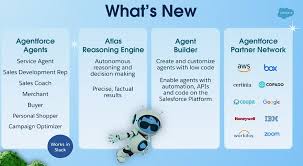
The Salesforce hype machine is in full swing, with product announcements like Chatter, Einstein GPT, and Data Cloud, all positioned as revolutionary tools that promise to transform how we work. Is Agentforce Different? However, it’s often difficult to separate fact from fiction in the world of Salesforce. The cloud giant thrives on staying ahead of technological advancements, which means reinventing itself every year with new releases and updates. You could even say three times per year with the major releases. Why Enterprises Need Multiple Salesforce Orgs Over the past decade, Salesforce product launches have been hit or miss—primarily miss. Offerings like IoT Cloud, Work.com, and NFT Cloud have faded into obscurity. This contrasts sharply with Salesforce’s earlier successes, such as Service Cloud, the AppExchange, Force.com, Salesforce Lightning, and Chatter, which defined its first decade in business. One notable exception is Data Cloud. This product has seen significant success and now serves as the cornerstone of Salesforce’s future AI and data strategy. With Salesforce’s growth slowing quarter over quarter, the company must find new avenues to generate substantial revenue. Artificial Intelligence seems to be their best shot at reclaiming a leadership position in the next technological wave. Is Agentforce Different? While Salesforce has been an AI leader for over a decade, the hype surrounding last year’s Dreamforce announcements didn’t deliver the growth the company was hoping for. The Einstein Copilot Studio—comprising Copilot, Prompt Builder, and Model Builder—hasn’t fully lived up to expectations. This can be attributed to a lack of AI readiness among enterprises, the relatively basic capabilities of large language models (LLMs), and the absence of fully developed use cases. In Salesforce’s keynote, it was revealed that over 82 billion flows are launched weekly, compared to just 122,000 prompts executed. While Flow has been around for years, this stat highlights that the use of AI-powered prompts is still far from mainstream—less than one prompt per Salesforce customer per week, on average. When ChatGPT launched at the end of 2022, many predicted the dawn of a new AI era, expecting a swift and dramatic transformation of the workplace. Two years later, it’s clear that AI’s impact has yet to fully materialize, especially when it comes to influencing global productivity and GDP. However, Salesforce’s latest release feels different. While AI Agents may seem new to many, this concept has been discussed in AI circles for decades. Marc Benioff’s recent statements during Dreamforce reflect a shift in strategy, including a direct critique of Microsoft’s Copilot product, signaling the intensifying AI competition. This year’s marketing strategy around Agentforce feels like it could be the transformative shift we’ve been waiting for. While tools like Salesforce Copilot will continue to evolve, agents capable of handling service cases, answering customer questions, and booking sales meetings instantly promise immediate ROI for organizations. Is the Future of Salesforce in the Hands of Agents? Despite the excitement, many questions remain. Are Salesforce customers ready for agents? Can organizations implement this technology effectively? Is Agentforce a real breakthrough or just another overhyped concept? Agentforce may not be vaporware. Reports suggest that its development was influenced by Salesforce’s acquisition of Airkit.AI, a platform that claims to resolve 90% of customer queries. Salesforce has even set up dedicated launchpads at Dreamforce to help customers start building their own agents. Yet concerns remain, especially regarding Salesforce’s complexity, technical debt, and platform sprawl. These issues, highlighted in this year’s Salesforce developer report, cannot be overlooked. Still, it’s hard to ignore Salesforce’s strategic genius. The platform has matured to the point where it offers nearly every functionality an organization could need, though at times the components feel a bit disconnected. For instance: Salesforce is even hinting at usage-based pricing, with a potential $2 charge per conversation—an innovation that could reshape their pricing model. Will Agents Be Salesforce’s Key to Future Growth? With so many unknowns, only time will tell if agents will be the breakthrough Salesforce needs to regain the momentum of its first two decades. Regardless, agents appear to be central to the future of AI. Leading organizations like Copado are also launching their own agents, signaling that this trend will define the next phase of AI innovation. In today’s macroeconomic environment, where companies are overstretched and workforce demands are high, AI’s ability to streamline operations and improve customer service has never been more critical. Whoever cracks customer service AI first could lead the charge in the inevitable AI spending boom. We’re all waiting to see if Salesforce has truly cracked the AI code. But one thing is certain: the race to dominate AI in customer service has begun. And Salsesforce may be at the forefront. Like Related Posts Who is Salesforce? Who is Salesforce? Here is their story in their own words. From our inception, we’ve proudly embraced the identity of Read more Salesforce Marketing Cloud Transactional Emails Salesforce Marketing Cloud Transactional Emails are immediate, automated, non-promotional messages crucial to business operations and customer satisfaction, such as order Read more Salesforce Unites Einstein Analytics with Financial CRM Salesforce has unveiled a comprehensive analytics solution tailored for wealth managers, home office professionals, and retail bankers, merging its Financial Read more AI-Driven Propensity Scores AI plays a crucial role in propensity score estimation as it can discern underlying patterns between treatments and confounding variables Read more
Read More
Agentforce Advances Copilot and Prompt Builder

Agentforce Advances Copilot and Prompt Builder

Agentforce was the highlight of the week in San Francisco during Salesforce’s annual Dreamforce conference—and for good reason! Agentforce Advances Copilot and Prompt Builder and that is truly exciting. Agentforce represents a groundbreaking solution that promises to transform how individuals and organizations interact with their CRM. However, as with any major product announcement, it raises many questions. This was evident during Dreamforce, where admins and developers, eager to dive into Agentforce, had numerous queries. Here’s an in-depth look at what Agentforce is, how it operates, and how organizations can leverage it to automate processes and drive value today. Agentforce Advances Copilot and Prompt Builder Many Dreamforce attendees who anticipated hearing more about Einstein Copilot were surprised by the introduction of Agents just before the event. However, understanding the distinctions between the legacy Einstein Copilot and the new Agentforce is crucial. Agentforce Advances Copilot and Prompt Builder. Agentforce Agents are essentially a rebranding of Copilot Agents but with an essential enhancement: they expand the functionality of Copilot to create autonomous agents capable of tasks such as summarizing or generating content and taking specific actions. Here are some key changes in terminology: Just like Einstein Copilot, Agents use user input—an “utterance”—entered into the Agentforce chat interface. The agent translates this utterance into a series of actions based on configurable instructions, and then executes the plan, providing a response. Understanding Agents: Topics A key difference between Einstein Copilot and Agentforce is the addition of “Topics.” Topics allow for greater flexibility and support a broader range of actions. They organize tasks by business function, helping Agents first determine the appropriate topic and then identify the necessary actions. This topic layer reduces confusion and ensures the correct action is taken. With this structure, Agentforce can support many more custom actions compared to Copilot’s 15-20, significantly expanding capabilities. Understanding Agents: Actions Actions in Agentforce function similarly to those in Einstein Copilot. These are the tasks an agent executes once it has identified the right plan. Out-of-the-box actions are available right away, providing a quick win for organizations looking to implement standard actions like opportunity summarization or sales emails. For more customized use cases, organizations can create bespoke actions using Apex, Flows, Prompts, or Service Catalog items (currently in beta). Understanding Agents: Prompts Whenever an LLM is used, prompts are necessary to provide the right input. Thoughtfully engineered prompts are essential for getting accurate, useful responses from LLMs. This is a key part of leveraging Agent Actions effectively, ensuring better results, reducing errors, and driving productive agent behavior. Prompt Builder plays a crucial role, allowing users to build, test, and refine prompts for Agent Actions, creating a seamless experience between generative AI and Salesforce workflows. How Generative AI and Agentforce Enhance CRM GenAI tools like Agentforce offer exciting enhancements to Salesforce organizations in several ways: However, these benefits are realized only when CRM users adopt and adapt to AI-assisted workflows. Organizations must prioritize change management and training, as most users will need to adjust to this new AI-powered way of working. If your company has already embraced AI, then you are halfway there. If AI hasn’t been introduced to the workforce you need to get started yesterday. Getting Started with Agentforce With all the buzz around Dreamforce, it’s no surprise that many organizations are eager to start using Agentforce. Fortunately, there are immediate opportunities to leverage these tools. The recommended approach is to begin with standard Agent actions, testing out-of-the-box features like opportunity summarization or creating close plans. From there, organizations can make incremental tweaks to customize actions for their specific needs. We have all come to expect that just as quickly as we include agentic ai into our processes and flows, Salesforce will add additional features and capabilities. As teams become more familiar with developing and deploying Agent actions, more complex use cases will become manageable, transforming the traditional point-and-click Salesforce experience into a more intelligent, agent-driven platform. Already I find myself asking, “is this an agent person or an ai-agent”? The day is coming, no doubt, when the question will be reversed. Tectonic’s AI Experts Can Help Interested in learning more about Agentforce or need guidance on getting started? Tectonic specializes in AI and analytics solutions within CRM, helping organizations unlock significant productivity gains through AI-based tools that optimize business processes. We are excited to enable you to enable Agentforce to Advance Copilot and Prompt Builder By Tectonic’s Solutions Architect, Shannan Hearne Like1 Related Posts Who is Salesforce? Who is Salesforce? Here is their story in their own words. From our inception, we’ve proudly embraced the identity of Read more Salesforce Marketing Cloud Transactional Emails Salesforce Marketing Cloud Transactional Emails are immediate, automated, non-promotional messages crucial to business operations and customer satisfaction, such as order Read more Salesforce Unites Einstein Analytics with Financial CRM Salesforce has unveiled a comprehensive analytics solution tailored for wealth managers, home office professionals, and retail bankers, merging its Financial Read more AI-Driven Propensity Scores AI plays a crucial role in propensity score estimation as it can discern underlying patterns between treatments and confounding variables Read more

Read More
Salesforce AI Agents Explained

Salesforce AI Agents Explained

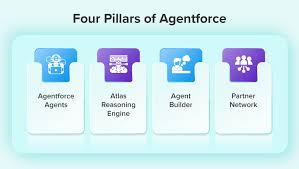
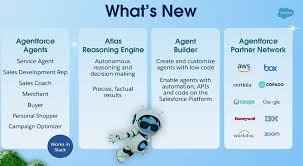
Salesforce’s AI Agents: Revolutionizing Enterprise Sales and Service for the Future In the rapidly evolving landscape of artificial intelligence (AI), Salesforce continues to lead the charge, transforming enterprise operations with cutting-edge AI agents. With the introduction of Agentforce, Salesforce is not just enhancing sales and service departments but reshaping business processes across sectors. This comprehensive exploration highlights how Salesforce’s AI agents are changing the game, offering enterprise-level executives insights into their revolutionary potential. Salesforce AI Agents Explained. AI Agents: Beyond Autonomous Vehicles A fitting analogy to grasp the progression of AI agents is the evolution of autonomous vehicles. Just as self-driving cars advance from basic driver assistance to full autonomy, AI agents evolve from simple automation to more complex decision-making. Salesforce’s Chief Product Officer, David Schmaier, draws this comparison: “In the autonomous driving world, we have levels of autonomy, from level zero to level five. AI agents for enterprises follow a similar path.” At the core of this evolution is what Salesforce defines as the “agentic” phase of AI. Unlike generative AI that follows instructions to create content, agentic AI autonomously determines and takes actions based on broader goals. Schmaier notes, “We’re at the point where AI not only creates content but takes strategic actions. It’s like having an infinite pool of interns handling mundane tasks so human employees can focus on higher-value activities.” Agentforce: Salesforce’s Next-Generation AI Platform Agentforce is the latest addition to Salesforce’s AI arsenal, unveiled during their Q2 ’25 earnings call and now positioned as a significant milestone in AI development. With Agentforce, organizations can build and manage autonomous agents for tasks across various business functions—not just customer service. This versatility is highlighted by Marc Benioff, Salesforce’s CEO, who described the energy around Agentforce during a recent briefing as “palpable.” Agentforce builds on Salesforce’s data management, security, and customization expertise, uniting these capabilities into an AI framework. Schmaier explains, “It’s about creating trusted, enterprise-ready agents, not just deploying a large language model. We’ve developed over 100 out-of-the-box use cases, from sales account summaries to service reply recommendations, all customizable and easy to deploy.” Agentforce “In Every App” A key announcement is the integration of Agentforce in every app across Salesforce’s product suite, including Sales, Service, Marketing, and Commerce Agents. The Atlas reasoning engine, Agent Builder, and a partner network were also introduced to further enhance its capabilities. The Atlas Reasoning Engine acts as the “brain” behind Agentforce, autonomously generating plans and refining them based on actions it needs to perform, such as running business processes or engaging customers through preferred channels. What Makes an AI Agent? Salesforce AI Agents Explained Building an AI agent with Agentforce requires five key elements: These components leverage existing Salesforce infrastructure, making it easier for businesses to deploy agents through Agent Builder, which is part of the new Agentforce Studio. Agents vs. Chatbots Unlike traditional chatbots, which provide pre-programmed responses, Salesforce’s AI agents use large language models (LLMs) and generative AI to interpret and autonomously execute customer requests based on CRM data. This distinction allows AI agents to perform tasks that go beyond simple queries, driving efficiency in customer service, sales, and other business areas. Practical Applications: Sales, Service, and Marketing Salesforce’s AI agents offer tangible business benefits. For instance, Sales Agent, available as both a Sales Development Representative (SDR) and Sales Coach, automates lead nurturing and inquiry management. It utilizes CRM data to deliver personalized pitches, handle objections, and even suggest meeting times—freeing sales teams to focus on more strategic tasks. In customer service, AI agents manage routine inquiries, allowing human representatives to address more complex customer needs. In marketing, AI agents generate data-driven insights to personalize campaigns, improving customer engagement and conversion rates. The Security and Trust Foundation Security and trust remain core to Salesforce’s approach to AI. The Einstein Trust Layer ensures that data protection, privacy, and ethical guidelines are maintained throughout AI interactions. Schmaier emphasizes, “Our platform defines what data agents can access and how they use it, adhering to strict data integrity standards.” The Trust Layer also prevents AI from training on customer data without consent, ensuring transparency and security. A Partnership Between Humans and AI-Salesforce AI Agents Explained Salesforce’s vision emphasizes the synergy between human employees and AI agents. As Schmaier points out, “AI agents handle routine tasks and deliver insights, allowing employees to focus on more creative and strategic work.” This human-AI partnership boosts productivity and innovation, ultimately improving business outcomes. The Future of AI in Business As AI technology advances, Salesforce is already working on next-generation capabilities for Agentforce, including predictive analytics and more sophisticated autonomous agents. Schmaier forecasts, “These agents will handle a wider range of tasks and provide deeper insights and recommendations.” With Agentforce launching in October 2024, businesses can expect significant returns on investment, thanks to its cost-efficient model starting at $2 per conversation. In summary, Salesforce’s Agentforce is a game-changing innovation, blending AI and human intelligence to transform sales, service, and marketing. As more details unfold, it’s clear that Agentforce will redefine the future of business operations—driving efficiency, personalization, and strategic success. Like1 Related Posts Who is Salesforce? Who is Salesforce? Here is their story in their own words. From our inception, we’ve proudly embraced the identity of Read more Salesforce Marketing Cloud Transactional Emails Salesforce Marketing Cloud Transactional Emails are immediate, automated, non-promotional messages crucial to business operations and customer satisfaction, such as order Read more Salesforce Unites Einstein Analytics with Financial CRM Salesforce has unveiled a comprehensive analytics solution tailored for wealth managers, home office professionals, and retail bankers, merging its Financial Read more AI-Driven Propensity Scores AI plays a crucial role in propensity score estimation as it can discern underlying patterns between treatments and confounding variables Read more
Read More
Winter 25 Release Notes

Winter 25 Release Notes

The Winter ’25 release is available through the pre-release program. On August 30, 2024, Sandboxes will be upgraded, providing your organization with the Winter ’25 release experience. Set Up Your Pay Now Store Quickly and Easily Use the streamlined automated setup to get your Pay Now store up and running effortlessly. The guided process walks you through each step needed to configure your store. This feature is available in Salesforce Payments for Enterprise, Unlimited, and Developer editions. How to Set Up: Gain Insight into How User Permissions Are Granted Simplify user management with visibility into the profiles, permission sets, and permission set groups that grant permissions to a user. The User Access Summary now provides detailed information about a user’s assigned object, field, user, and custom permissions. Previously, identifying the source of a user’s permissions required multiple steps, but now you can access this information with just a few clicks. This change applies to Lightning Experience in all editions. How to Use: See How Object Access Is Granted in Object Manager Quickly view the permission sets, permission set groups, and profiles that grant access to an object, along with the level of access provided. The read-only Object Access Summary in Object Manager allows for quick checks during troubleshooting, reviews, or when deciding how to grant user access. This update is available in Lightning Experience across all editions. How to Access: Improve Performance for List Views on Custom and Standard Objects To enhance performance and meet the latest accessibility standards, list views for both custom and standard objects now render using Lightning Web Components (LWC) instead of Aura. LWC, Salesforce’s latest framework, delivers data faster and enables new features for list views. Previously, only custom object list views in sandboxes used LWC. This update applies to Lightning Experience in all editions. How to Use: Configure Record Highlights in Lightning App Builder Enhance your Lightning pages with the new Dynamic Highlights Panel, which lets you configure important fields directly within the Lightning App Builder. Previously, this was only possible through compact layouts in Setup. The Dynamic Highlights Panel can hold up to 12 fields and adjusts responsively to browser size. This feature is available in Group, Professional, Enterprise, Performance, Unlimited, and Developer editions. How to Implement: Make Record Fields Stand Out with Conditional Formatting Highlight key information on record pages using conditional formatting in Lightning App Builder. On Dynamic Forms-enabled pages, you can assign custom icons and colors to fields based on defined criteria, such as field values or other conditions on the page. This feature is available on a rolling basis starting in early September 2024 for Group, Professional, Enterprise, Performance, Unlimited, and Developer editions. How to Use: Save Time with New Messaging Components for Enhanced Bots (Generally Available) Empower customers and save service agents’ time with the new messaging components for enhanced bots. These include authentication, custom, form, and payment messaging components, which can handle more complex use cases on enhanced Apple Messages for Business channels. The form component is also available for Messaging for In-App and Web. These updates apply to Lightning Experience and Salesforce Classic in Enterprise, Performance, Unlimited, and Developer editions, with bot setup available only in Lightning Experience. How to Implement: Enhance Your LWR Site Experience by Curating Data Providers on a Page (Beta) Enhance LWR site pages by adding and configuring data providers in Experience Builder. This feature allows you to access data from different sources, such as Apex or Record data providers, directly within your site page and its components. This change is available in Professional, Enterprise, Unlimited, and Developer editions for LWR sites accessed through Lightning Experience. A community license is required to use this feature. How to Use: To configure data providers on an LWR Site page in Experience Builder: Enabling or Disabling Modernized Record Experience in Aura Sites You can now use upgraded record components based on Lightning web component technology to see stylistic changes in your Aura sites. These updates, previously limited to sandbox environments, are now available in production environments for the Create Record Form, Record Banner, and Record Detail components. This update is applicable to Aura sites accessed through Lightning Experience and Salesforce Classic in Enterprise, Performance, Unlimited, and Developer editions. When you enable the Use Lightning web components on your record pages in Aura sites setting, the Create Record Form, Record Banner, and Record Detail components display minor style changes. Some key updates include: Daily Summary of Service Appointments Requiring Immediate Attention Boost dispatcher productivity by using Einstein Copilot Field Service actions to get a daily summary of service appointments needing immediate attention, such as those with rule violations, overlaps, SLA risks, or emergencies. Each category in the summary is converted into a filter in the appointment list for quick resolution. Customize the summary to include additional categories. This feature is available in Lightning Experience in the Einstein 1 Field Service Edition with the Field Service Managed Package installed. To use this feature: Assigning Opportunity Splits to Territories Sales teams can now assign opportunity splits and opportunity product splits to territories, enabling them to report on how territories contribute to overall sales. Previously, splits could only be associated with the parent opportunity’s territory. Now, teams can also forecast based on split amounts across territories. This update applies to Lightning Experience in Enterprise, Performance, Unlimited, and Developer editions. To enable this feature: Strategic Planning with Account Plan Enhance your strategic planning with Account Plans by nurturing existing relationships and growing key accounts. Use Account Plans to research and analyze accounts, set objectives with actionable metrics, and monitor growth and development from a single repository within Salesforce. This feature applies to Lightning Experience in Enterprise, Performance, and Unlimited editions and in Einstein 1 Sales Edition. This feature will be rolled out to production environments after the Winter ’25 release and will be available to all customers by October 29, 2024. It is accessible in sandboxes only after its production release. To use Account Plans: Forecast Submissions Forecast submissions

Read More
Understanding AI Agents

Understanding AI Agents

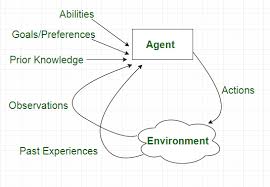
Understanding AI Agents: A Comprehensive Guide Artificial Intelligence (AI) has come a long way, offering systems that automate tasks and provide intelligent, responsive solutions. One key concept within AI is the AI agent—an autonomous system capable of perceiving its environment and taking actions to achieve specific goals. This guide explores AI agents, their types, working mechanisms, and how to build them using platforms like Microsoft Autogen and Google Vertex AI Agent Builder. It also highlights how companies like LeewayHertz and Markovate can assist in the development of AI agents. What is an AI Agent? AI agents are systems designed to interact with their environment autonomously. They process inputs, make decisions, and execute actions based on predefined rules or learned experiences. These agents range from simple rule-based systems to complex machine learning models that adapt over time. Types of AI Agents AI agents can be classified based on complexity and functionality: How AI Agents Work The working mechanism of an AI agent involves four key components: Architectural Blocks of an Autonomous AI Agent An autonomous AI agent typically includes: Building an AI Agent: The Basics Building an AI agent involves several essential steps: Microsoft Autogen: A Platform Overview Microsoft Autogen is a powerful tool for building AI agents, offering a range of features that simplify the development, training, and deployment process. Its user-friendly interface allows developers to create custom agents quickly. Key Steps to Building AI Agents with Autogen: Benefits of Autogen: Vertex AI Agent Builder: Enabling No-Code AI Development Google’s Vertex AI Agent Builder simplifies AI agent development through a no-code platform, making it accessible to users without extensive programming experience. Its drag-and-drop functionality allows for quick and efficient AI agent creation. Key Features of Vertex AI Agent Builder: Conclusion AI agents play a critical role in automating decision-making and performing tasks independently. Platforms like Microsoft Autogen and Google Vertex AI Agent Builder make the development of these agents more accessible, providing powerful tools for both novice and experienced developers. By leveraging these technologies and partnering with companies like LeewayHertz and Markovate, businesses can build custom AI agents that enhance automation, decision-making, and operational efficiency. Whether you’re starting from scratch or looking to integrate AI capabilities into your existing systems, the right tools can make the process seamless and effective. How do you think these tools stack up next to Salesforce AI Agents? Comment below. Content updated October 2024. Like Related Posts Who is Salesforce? Who is Salesforce? Here is their story in their own words. From our inception, we’ve proudly embraced the identity of Read more Salesforce Unites Einstein Analytics with Financial CRM Salesforce has unveiled a comprehensive analytics solution tailored for wealth managers, home office professionals, and retail bankers, merging its Financial Read more AI-Driven Propensity Scores AI plays a crucial role in propensity score estimation as it can discern underlying patterns between treatments and confounding variables Read more Tectonic’s Successful Salesforce Track Record Salesforce Technology Services Integrator – Tectonic has successfully delivered Salesforce in a variety of industries including Public Sector, Hospitality, Manufacturing, Read more

Read More
gettectonic.com