Campaign Attribution in Salesforce Archives - gettectonic.com
The Gap Between Marketing Technology and Measurable Results

The Gap Between Marketing Technology and Measurable Results

Despite advancements in marketing tech, many organizations struggle to tie efforts to tangible outcomes. Tools like Salesforce offer robust campaign tracking, yet converting data into actionable insights remains elusive. Operational inefficiencies, disjointed workflows, and inconsistent data inputs stall progress. Without tackling these root issues, even top-tier CRMs fail to provide the unified view marketers need to gauge impact and ROI. The Problem with Rigid Campaign Structures Tracking engagement is key to optimizing touchpoints and boosting conversions. Salesforce treats campaigns as customizable objects, but its top-down rigidity often curbs flexibility. A common approach starts with broad initiatives (e.g., a Q1 marketing push), then splits into channels (social, email), and drills down to specific campaigns. This structure aids organization but hampers dynamic analysis. Marketers must adapt creatively to regain agility. Why Attribution Reporting Falls Short Customer journeys rarely follow a straight line. A prospect might click an email, browse the website, and convert via another source—or engage with a social post, vanish, and return weeks later to buy. Rigid frameworks leave these touchpoints disconnected, obscuring the full journey. A true 360-degree view demands linking every interaction to map and refine the customer path. Breaking Down Data Silos Salesforce’s one-to-many data model struggles with complex many-to-many relationships. For instance, an email with multiple CTAs shouldn’t be locked into a single campaign. The fix? Systems that dismantle data barriers, tracking interactions across the entire journey. Content poses another hurdle—often reused but forced into duplication or oversimplification in rigid setups. Centralizing assets and linking them dynamically cuts redundancy and sharpens performance insights. A Better Approach: Automation & Dynamic Modeling Many marketers lack visibility into content performance, yet proving ROI hinges on it. High-quality content demands resources, but without tracking, teams stumble blindly, missing what drives success. Manual campaign setup adds strain—creating campaigns, adding UTMs, and coordinating teams is time-consuming and error-prone. Automating UTM generation and campaign creation slashes effort while ensuring accurate engagement data. Flexible data models empower multi-angle analysis, dodging confirmation bias and revealing deeper audience insights. Maximizing ROI Without New Tools Rather than adding platforms, marketers should maximize existing tools. With the right strategy, Salesforce can manage complex attribution without pricey integrations. Automation handles the grunt work—logging every touchpoint, attributing influence accurately, and closing reporting gaps. The payoff? Less manual labor, clearer insights, and a seamless view of performance. This isn’t just about efficiency—it’s about harnessing data to refine strategies, boost ROI, and turn content into measurable impact. Turn to Tectonic for help. Like Related Posts Who is Salesforce? Who is Salesforce? Here is their story in their own words. From our inception, we’ve proudly embraced the identity of Read more Salesforce Marketing Cloud Transactional Emails Salesforce Marketing Cloud Transactional Emails are immediate, automated, non-promotional messages crucial to business operations and customer satisfaction, such as order Read more Salesforce Unites Einstein Analytics with Financial CRM Salesforce has unveiled a comprehensive analytics solution tailored for wealth managers, home office professionals, and retail bankers, merging its Financial Read more AI-Driven Propensity Scores AI plays a crucial role in propensity score estimation as it can discern underlying patterns between treatments and confounding variables Read more


Read More
Salesforce’s Marketing Intelligence

Salesforce’s Marketing Intelligence

Introducing Salesforce’s Marketing Intelligence: The Future of Marketing Analytics For the past dozen years, many marketers have been enamored with a powerful marketing analytics tool—Datorama, now known as Salesforce Marketing Cloud Intelligence (MCI). Regarded as one of the most seamless solutions for unifying data across multiple sources, MCI was built by marketers for marketers. It enables users to effortlessly combine data, generate reports, and build dashboards using plain language and pre-built data models. Whether for simple smart-lens dashboards or complex automated reporting triggered by specific events, MCI has been a game-changer. To the delight of marketers everywhere, Salesforce announced on March 18, 2025, a new evolution of the tool: Marketing Intelligence (MI). Built on the Salesforce Platform, MI takes the best of MCI and integrates it with Data Cloud’s unified architecture while introducing agentic AI features that deliver actionable, conversational insights. So, without further ado, let’s explore this exciting new tool. What Is Marketing Intelligence? Marketing Intelligence (MI) is a new Salesforce application designed to simplify marketing data management, deliver trustworthy insights, and maximize marketing ROI. Built on Data Cloud and deeply connected to the Salesforce ecosystem, MI is fully extensible—equipping marketers with everything they need to create powerful, meaningful dashboards with minimal effort. Data Cloud for Marketers, Made Easy One of the standout features of MCI has always been its AI-powered data mapping, which auto-populates based on past usage and logical predictions. Additionally, many APIs come with prebuilt models, reducing the need for manual configuration. These capabilities have helped marketers transition smoothly into data modeling and dashboarding without requiring deep technical expertise. Happily, MI retains and enhances these features. Users can upload a TotalConnect file (a flat file of their choice) or connect via API—with options like Google Ads available at launch and more integrations coming soon. Selecting a connection like Google Ads pulls in formatted data, ready for quick mapping, allowing users to build dashboards in just three clicks. Clean, Intuitive Dashboards MI’s dashboards are sleek, fast-loading, and prebuilt—yet fully customizable. A major upgrade over MCI is the inclusion of generative AI summaries, which analyze campaigns and highlight what’s working (and what isn’t). This feature represents the future of dashboarding: not just displaying data trends but explaining them in plain language and suggesting next steps. Marketers can even ask their AI agent to take action based on these insights, streamlining optimization like never before. This functionality is particularly valuable in large implementations where different users extract different insights from the same dashboard. Instead of manually interpreting data, marketers can now ask their AI agent for recommendations—saving time and reducing guesswork. Harmonized Data Across Channels The core goal of any marketing analytics tool—whether Data Cloud, MCI, or MI—is to unify cross-channel data into actionable insights. Beyond standardized API mapping, MI harmonizes fields across datasets and uses a semantic model to logically connect data (e.g., aligning campaign names across paid media, CRM, and other tools—even when naming conventions differ). For Existing MCI Users: What’s New? Many longtime MCI users may wonder: Can a new version really live up to the original? The answer? Absolutely. Here’s why: 1. Normalization, Simplified In MCI, joining messy and clean data often requires manual effort—using formulas or restructuring campaigns. MI changes that. With Einstein AI-powered normalization, users can automatically standardize data without manual adjustments, making cross-channel reporting smoother than ever. 2. Semantic Modeling Flexibility While MCI offers prebuilt data models, MI introduces semantic modeling, allowing users to define custom relationships across datasets. This means greater flexibility in structuring data, adding fields, and evolving models as business needs change—all while maintaining seamless integration with Salesforce objects. 3. ROI & Attribution, Supercharged The best MCI implementations tie cost/engagement data to real ROI. MI takes this further by integrating with Sales Cloud objects, enabling clearer ROI visualization. Additionally, attribution modeling is now more robust, with support for first- and last-touch attribution—helping marketers validate performance and optimize spend. For New Users: Why Choose MI? 1. Best-in-Class Data Harmonization MCI has long been the gold standard for unifying marketing data. Now, MI enhances this with Data Cloud integration, AI normalization, and three-click setup—making it the ultimate solution for marketers. 2. Smarter, Faster Visualizations While MCI offers strong visualization options, MI improves on two key pain points: 3. Unmatched Customization Want to dynamically rename campaigns, merge traffic sources, or filter data based on custom logic? MI makes it possible with pattern extraction, semantic-layer calculated fields, and Einstein normalization—giving marketers unprecedented control. A New Era for Marketing Analytics Marketing Intelligence launched on March 18, 2025 (requiring Data Cloud and MI licenses). Marketers eager to explore this next-generation tool should contact their Salesforce account executive. MI represents a leap forward in intelligent dashboarding, streamlining marketing data in ways MCI only hinted at. For data-driven marketers, the future is here—and it’s more powerful than ever. Like1 Related Posts Who is Salesforce? Who is Salesforce? Here is their story in their own words. From our inception, we’ve proudly embraced the identity of Read more Salesforce Marketing Cloud Transactional Emails Salesforce Marketing Cloud Transactional Emails are immediate, automated, non-promotional messages crucial to business operations and customer satisfaction, such as order Read more Salesforce Unites Einstein Analytics with Financial CRM Salesforce has unveiled a comprehensive analytics solution tailored for wealth managers, home office professionals, and retail bankers, merging its Financial Read more AI-Driven Propensity Scores AI plays a crucial role in propensity score estimation as it can discern underlying patterns between treatments and confounding variables Read more
Read More
Influence vs. Attribution

Influence vs. Attribution

Influence vs. Attribution: Understanding Marketing’s Full Impact Key Distinction: Influence: The Big-Picture View What it measures: Why it matters: Example:A prospect interacts with: Attribution: The Conversion Detective What it measures: Why it matters: Example:Same journey as above: Key Differences Metric Scope Focus Flexibility Influence Entire journey Holistic impact Fixed (total value) Attribution Single source Direct conversion Model-dependent Why Both Matter Bottom line: Use attribution to refine campaigns, but rely on influence to build a seamless buyer journey. (Tip: Combine both in reporting to balance immediate wins with pipeline health.) Content updated March 2025. Like1 Related Posts Who is Salesforce? Who is Salesforce? Here is their story in their own words. From our inception, we’ve proudly embraced the identity of Read more Salesforce Marketing Cloud Transactional Emails Salesforce Marketing Cloud Transactional Emails are immediate, automated, non-promotional messages crucial to business operations and customer satisfaction, such as order Read more Salesforce Unites Einstein Analytics with Financial CRM Salesforce has unveiled a comprehensive analytics solution tailored for wealth managers, home office professionals, and retail bankers, merging its Financial Read more AI-Driven Propensity Scores AI plays a crucial role in propensity score estimation as it can discern underlying patterns between treatments and confounding variables Read more

Read More

Attribution with Google Tag Manager and Custom Code

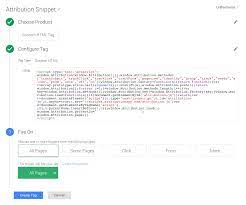
Utilizing Google Tag Manager with Custom Code If you’re already using Google Tag Manager (GTM) on your website, you can leverage it to store UTM parameters in a browser cookie. This stored data can then be extracted and populated into hidden form fields, which are sent to Salesforce upon form submission. Attribution with Google Tag Manager and Custom Code. Here’s a step-by-step guide to the process: Attribution with Google Tag Manager and Custom Code Pros: Cons: Limitations: Implementing Attribution Snippets with GTM Across All Pages To implement attribution snippets using GTM, follow these steps: Adding Attributes in Google Tag Manager: Adding a Custom HTML Tag in GTM: Adding Code to GTM: Optimizing GTM Performance Differentiating GTM and Google Analytics Testing GTM Code Employ a Tag Debugger: Attribution with Google Tag Manager and Custom Code Changes Is your business ready for the changes coming to Google’s data measurement infrastructure? You probably rely on Google Analytics as a marvelous tool to understand your customers and better target their needs across both your web and mobile app platforms. But with changes on the way from Google, particularly with some legacy mobile app tracking and measurement platforms, the stability of your analytics might be at risk if you’re not prepared. What’s changing? The current version of Google Tag Manager (version 4, or “Legacy”) for mobile apps will no longer be supported by Google as of March 2020. But, limitations on the functionality of GTM version 4 have already begun. Due to these limitations and hard dates for deprecation, everyone will need to upgrade to Google Tag Manager version 5. This requires the implementation of new GTM and Firebase Software Development Kits and a switch from the current GTM in-app, data layer approach to the new Firebase, event-based, data collection process. When will service be affected? Here are the key dates and milestones shared by Google, subject to change (though unlikely): Will analytics measurement be affected? Yes, for your mobile applications in particular. For your business to maintain uninterrupted Google Analytics tracking, you must make changes in the app source code. You’ll have to migrate the current data layer code in-app to Firebase-syntax data collection code, install a new Firebase SDK (if not already in place), create new GTM v5 containers, and test the new set-up for reliability to avoid any interruptions. InfoTrust can provide you with assistance to make this process as painless as possible. Please note, if you are already using Firebase Analytics and/or the newer version of Google Tag Manager for mobile apps, v5 (Firebase powered events and data collection), there is nothing to worry about and you are already in the safe zone. These dates are only meant to deprecate the measurement tracking for **Google Tag Manager v4 Legacy Containers** in mobile apps. This DOES NOT mean you have to move to Firebase Analytics and it DOES NOT mean GA for mobile apps is going away. Simply the means of collecting data in the app, if using GTM, is going through an upgraded version. You will need to update your source code to use the new GTM v5 SDK and Firebase event code, as described later but feel free to continue using GA as normal (if deployed in the new GTM v5 Firebase-powered containers). Benefits of Switching It’s not all bad news. Though the migration to GTM v5 will take some work, there are some major advantages. Most importantly, switching ensures uninterupted information flow to Google Analytics, so you never lose touch with your customers. Also, this isn’t just a cosmetic change; the switch to version 5 comes with more tags, new GTM capabilities, and new Firebase analytics UI capabilities. Why InfoTrust? If you’re still using version 4 of Google Tag Manager, this could be a complex project that requires input from many different parts of your business from IT to software development to analytics to marketing. Migrating platforms may be a little annoying, but it’s much less annoying than losing access to the key analytics tools or data you rely on to understand your customers and make strategic business decisions. Switching prevents headaches later and unlocks useful new features now. InfoTrust can help your organization come up with a solid migration plan, help work with your engineers to fully test and configure all the reporting + data measurement, and partner with your team to make the most out of the data collection and mobile application data you will continue to capture. If you have any questions about any aspect of this process, don’t think twice about reaching out. We’d love to help. InfoTrust is here to make sure you’re data confident. Like1 Related Posts Who is Salesforce? Who is Salesforce? Here is their story in their own words. From our inception, we’ve proudly embraced the identity of Read more Salesforce Marketing Cloud Transactional Emails Salesforce Marketing Cloud Transactional Emails are immediate, automated, non-promotional messages crucial to business operations and customer satisfaction, such as order Read more Salesforce Unites Einstein Analytics with Financial CRM Salesforce has unveiled a comprehensive analytics solution tailored for wealth managers, home office professionals, and retail bankers, merging its Financial Read more AI-Driven Propensity Scores AI plays a crucial role in propensity score estimation as it can discern underlying patterns between treatments and confounding variables Read more
Read More
gettectonic.com