
Databricks Connect Archives - gettectonic.com
Databricks Tools

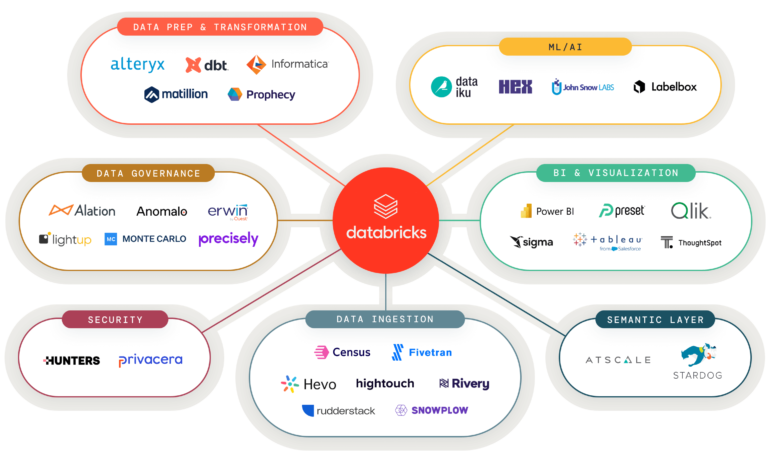
Databricks Launches Lakeflow Connect to Simplify Enterprise Data Ingestion

San Francisco, [April 2, 2025] – Databricks has taken a major step toward streamlining enterprise data integration with the general availability of Lakeflow Connect, its new low-code/no-code connector system. The initial release features preconfigured integrations with Salesforce and Workday, with plans to expand support to additional SaaS platforms, databases, and file sources in the coming months. Simplifying the Data Ingestion Challenge Data ingestion—the process of moving data from source systems into analytics environments—has long been a complex, resource-intensive task for enterprises. Traditional approaches require stitching together multiple tools (such as Apache Kafka or CDC solutions) and maintaining custom pipelines, often leading to scalability issues and high operational overhead. Lakeflow Connect aims to eliminate these pain points by providing: “Customers need this data, but before Lakeflow Connect, they were forced to rely on third-party tools that often failed at scale—or build custom solutions,” said Michael Armbrust, Distinguished Software Engineer at Databricks. “Now, ingestion is point-and-click within Databricks.” Why Salesforce and Workday First? The choice of initial connectors reflects the growing demand for real-time, structured data to power AI and generative AI applications. According to Kevin Petrie, Analyst at BARC U.S., more than 90% of AI leaders are experimenting with structured data, and nearly two-thirds use real-time feeds for model training. “Salesforce and Workday provide exactly the type of data needed for real-time ML and GenAI,” Petrie noted. “Databricks is smart to simplify access in this way.” Competitive Differentiation While other vendors offer connector solutions (e.g., Qlik’s Connector Factory), Lakeflow Connect stands out through: “Serverless compute is quietly important,” said Donald Farmer, Principal at TreeHive Strategy. “It’s not just about scalability—rapid startup times are critical for reducing pipeline latency.” The Road Ahead Databricks has already outlined plans to expand Lakeflow Connect with connectors for: Though the company hasn’t committed to a timeline, Armbrust hinted at upcoming announcements at the Data + AI Summit in June. Broader Vision: Democratizing Data Engineering Beyond ingestion, Databricks is focused on unifying the data engineering lifecycle. “Historically, you needed deep Spark or Scala expertise to build production-grade pipelines,” Armbrust said. “Now, we’re enabling SQL users—or even UI-only users—to achieve the same results.” Looking further ahead, Petrie suggested Databricks could enhance cross-team collaboration for agentic AI development, integrating Lakeflow with Mosaic AI and MLflow to bridge data, model, and application lifecycles. The Bottom LineLakeflow Connect marks a strategic move by Databricks to reduce friction in data pipelines—addressing a key bottleneck for enterprises scaling AI initiatives. As the connector ecosystem grows, it could further solidify Databricks’ position as an end-to-end platform for data and AI. For more details, visit Databricks.com. Key Takeaways:✅ Now Available: Salesforce & Workday connectors✅ Serverless, governed, and scalable ingestion✅ Future integrations with Google Analytics, ServiceNow, and more✅ June previews expected at Data + AI Summit Like Related Posts Who is Salesforce? Who is Salesforce? Here is their story in their own words. From our inception, we’ve proudly embraced the identity of Read more Salesforce Marketing Cloud Transactional Emails Salesforce Marketing Cloud Transactional Emails are immediate, automated, non-promotional messages crucial to business operations and customer satisfaction, such as order Read more Salesforce Unites Einstein Analytics with Financial CRM Salesforce has unveiled a comprehensive analytics solution tailored for wealth managers, home office professionals, and retail bankers, merging its Financial Read more AI-Driven Propensity Scores AI plays a crucial role in propensity score estimation as it can discern underlying patterns between treatments and confounding variables Read more

Read More
Account Planning With Salesforce

CRM Analytics Limits

When using CRM Analytics, keep these limits in mind. API Call Limits These limits apply to all supported editions. API Call Limit Maximum concurrent CRM Analytics API calls per org 100 Maximum CRM Analytics API calls per user per hour 10,000 Dataset Row Storage Allocations per License In Salesforce org, your total row storage limit for all registered datasets combined depends on your license combination. Each license allocates a different number of rows. Baseline Row Allocation Allocated Rows CRM Analytics Plus 10 billion CRM Analytics Growth 100 million Sales Analytics 25 million Service Analytics 25 million Event Monitoring Analytics 50 million B2B Marketing Analytics 25 million CRM Analytics for Financial Services Cloud 25 million CRM Analytics for Health Cloud 25 million Extra Data Rows license 100 million Your total row storage limit is a combination of your active licenses. For example: Because the CRM Analytics Plus license includes the Sales Analytics and Service Analytics licenses, your total row allocation remains 10 billion. Similarly, the CRM Analytics Growth license includes the Sales Analytics and the Service Analytics licenses, so your total row allocation remains 100 million. However, if you obtain another Sales Analytics or Services Analytics license, your row limit increases by 25 million for each added license. Dataset Row Limits Each dataset supports up to 2 billion rows. If your Salesforce org has less than 2 billion allocated rows, each dataset supports up to your org’s allocated rows. Dataset Field Limits Value Limit Maximum number of fields in a dataset 5,000 (including up to 1,000 date fields) Maximum number of decimal places for each value in a numeric field in a dataset (overflow limit) 17 decimal placesWhen a value exceeds the maximum number of decimal places, it overflows. Both 100,000,000,000,000,000 and 10,000,000,000,000,000.0 overflow because they use more than 17 decimal places. A number also overflows if it’s greater (or less) than the maximum (or minimum) supported value. 36,028,797,018,963,968 overflows because its value is greater than 36,028,797,018,963,967. -36,028,797,018,963,968 overflows because it’s less than -36,028,797,018,963,967.When a number overflows, the resulting behavior in CRM Analytics is unpredictable. Sometimes CRM Analytics throws an error. Sometimes it replaces a numeric value with a null value. And sometimes mathematical calculations, such as sums or averages, return incorrect results. Occasionally, CRM Analytics handles numbers up to 19 digits without overflowing because they are within the maximum value for a 64-bit signed integer (263 – 1). But numbers of these lengths aren’t guaranteed to process.As a best practice, stick with numbers that are 17 decimal places or fewer. If numbers that would overflow are necessary, setting lower precision and scale on the dataset containing the large numbers sometimes prevents overflow. If your org hasn’t enabled the handling of numeric values, the maximum number of decimal places for each value in a numeric field in a dataset is 16. All orgs created after Spring ’17 have Null Measure Handling enabled. Maximum value for each numeric field in a dataset, including decimal places 36,028,797,018,963,967For example, if three decimal places are used, the maximum value is 36,028,797,018,963.967 Minimum value for each numeric field in a dataset, including decimal places -36,028,797,018,963,968For example, if five decimal places are used, the minimum value is -36,028,797,018,9.63968 Maximum number of characters in a field 32,000 Data Sync Limits If you extract more than 100 objects in your dataflows, contact Salesforce Customer Support before you enable data sync. Value Limit Maximum number of concurrent data sync runs 3 Maximum number of objects that can be enabled for data sync, including local and remote objects 100 Maximum amount of time each data sync job can run for local objects 24 hours Maximum amount of time each data sync job can run for remote objects 12 hours Data sync limits for each job:Marketo Connector (Beta)NetSuite ConnectorZendesk Connector Up to 100,000 rows or 500 MB per object, whichever limit is reached first Data sync limits for each job:Amazon Athena ConnectorAWS RDS Oracle ConnectorDatabricks ConnectorGoogle Analytics ConnectorGoogle Analytics Core Reporting V4 ConnectorOracle Eloqua ConnectorSAP HANA Cloud ConnectorSAP HANA Connector Up to 10 million rows or 5 GB per object, whichever limit is reached first Data sync limits for each job*:AWS RDS Aurora MySQL ConnectorAWS RDS Aurora PostgresSQL ConnectorAWS RDS MariaDB ConnectorAWS RDS MySQL ConnectorAWS RDS PostgreSQL ConnectorAWS RDS SQL Server ConnectorGoogle Cloud Spanner ConnectorMicrosoft Azure Synapse Analytics ConnectorMicrosoft Dynamics CRM ConnectorSalesforce External ConnectorSalesforce Contacts Connector for Marketing Cloud EngagementSalesforce OAuth 2.0 Connector for Marketing Cloud Engagement Up to 20 million rows or 10 GB per object, whichever limit is reached first Data sync limits for each job*:Amazon Redshift ConnectorAmazon S3 ConnectorCustomer 360 Global Profile Data Connector (Beta)Google BigQuery for Legacy SQL ConnectorGoogle BigQuery Standard SQL ConnectorHeroku Postgres ConnectorMicrosoft Azure SQL Database ConnectorSnowflake Input Connector Up to 100 million rows or 50 GB per object, whichever limit is reached first *When using these connectors, Salesforce Government Cloud org data is protected in transit with advanced encryption and can sync up to 10 million rows or 5 GB for each connected object, whichever limit is reached first. Note When using a Salesforce local input connection, CRM Analytics bulk API usage doesn’t count towards Salesforce bulk API limits. Use of the external Salesforce connection and output connection impacts your limits. The dataflow submits a separate bulk API call to extract data from each Salesforce object. The dataflow uses a batch size of 100,000–250,000, depending on whether the dataflow or the bulk API chunks the data. As a result, to extract 1 million rows from an object, the dataflow creates 4–10 batches. Recipe and Dataflow Limits Important In Winter ‘24, recipe runs over 2 minutes are counted against the limit. Previously, the recipe run counts weren’t correct. For more information, see Known Issue – Recipe runs are not counting towards the daily maximum run limit. Value Limit Maximum amount of time each recipe or dataflow can run 48 hours Maximum number of recipes 1,000 Maximum number of dataflows definitions (with data sync enabled) 100 Maximum number of dataflow and recipe runs in a rolling

Read More
gettectonic.com