Emotional Intelligence Archives - gettectonic.com
Why Domain-Specific AI Models Are Outperforming Generic LLMs in Enterprise Applications

Salesforce Hits One Million AI Agent-Customer Conversations, Revealing Key Insights

Since launching AI agents on the Salesforce Help site in October 2024, Salesforce has facilitated over one million AI-powered customer interactions. The platform, which receives more than 60 million annual visits, offers users a streamlined, intuitive support experience. These AI agents have handled everything from routine queries like “How do I cook spaghetti?” to unconventional requests such as “Only answer in hip-hop lyrics.” Through these interactions, Salesforce has gained a crucial insight: For AI to excel in customer service, it must combine intelligence with empathy—mirroring the best qualities of human support teams. 3 Best Practices for AI-Powered Customer Service 1. Content is King, Variety is Queen An AI agent’s effectiveness depends entirely on the quality, accuracy, and diversity of its data. Salesforce’s AI agents leverage 740,000+ structured and unstructured content pieces, including: However, not all content is useful. Salesforce discovered outdated materials, conflicting terminology, and poorly formatted data. To address this, the company implemented continuous content reviews with human experts, ensuring AI responses remain accurate, relevant, and context-aware. Key Takeaway: AI agents must integrate structured data (CRM records, transaction history) with unstructured data (customer interactions, forums) to deliver personalized, intelligent responses. Salesforce’s zero-copy network enables seamless data access without duplication, enhancing efficiency. 2. A Smart AI Agent Needs a Dynamic Brain and a Caring Heart AI agents must learn and adapt continuously, not rely on static scripts. Salesforce’s “knowledge cycle” includes: But intelligence alone isn’t enough—empathy matters. Early restrictions (e.g., blocking competitor mentions) sometimes backfired. Salesforce shifted to high-level guidance (e.g., “Prioritize Salesforce’s best interests”), allowing AI to navigate nuance. Key Learnings: 3. Prioritize Empathy from the Start The best technical answer falls flat without emotional intelligence. Salesforce trains its AI agents to lead with empathy, especially in high-stress scenarios like outages. Example: Instead of jumping to troubleshooting, AI agents now: This approach builds trust and reassurance, proving AI can be both smart and compassionate. The Future: A Hybrid Workforce of Humans & AI Salesforce’s journey highlights that AI success requires balance: Final Lesson: “Go fast, but don’t hurry.” AI adoption demands experimentation, iteration, and a commitment to both efficiency and humanity. The result? Better experiences for customers, employees, and partners alike. Like Related Posts Who is Salesforce? Who is Salesforce? Here is their story in their own words. From our inception, we’ve proudly embraced the identity of Read more Salesforce Marketing Cloud Transactional Emails Salesforce Marketing Cloud Transactional Emails are immediate, automated, non-promotional messages crucial to business operations and customer satisfaction, such as order Read more Salesforce Unites Einstein Analytics with Financial CRM Salesforce has unveiled a comprehensive analytics solution tailored for wealth managers, home office professionals, and retail bankers, merging its Financial Read more AI-Driven Propensity Scores AI plays a crucial role in propensity score estimation as it can discern underlying patterns between treatments and confounding variables Read more

Read More
Agentic AI: The Next Frontier in Intelligent Automation

Agentic AI Revolution in Customer Service

The Agentic AI Revolution in Customer Service: Lessons from Salesforce’s Million-Interaction Milestone From Chatbot Frustration to AI Partnership The agentic AI arms race has exploded onto the customer service scene in less than a year, with Salesforce emerging as a pioneer by deploying its Agentforce solution across its help portal. The results? Over 1 million customer interactions handled – and counting. But as Salesforce’s journey reveals, success with AI agents requires more than just advanced technology—it demands a fundamental shift in customer service philosophy. Breaking the “Deflection” Mindset Bernard Slowey, SVP of Digital Customer Success at Salesforce, calls out the industry’s problematic approach: “That word ‘deflection’ breaks my heart. When companies focus on driving out costs by keeping customers away from humans, they make stupid decisions.” Unlike traditional chatbots designed as “first line of defense,” Agentforce was built to:✔ Accelerate resolutions through intelligent assistance✔ Maintain human availability when needed✔ Enhance rather than replace the service experience Key Lessons from a Million Conversations 1. The Heart Matters as Much as the Brain Early versions focused on factual accuracy but lacked emotional intelligence. Salesforce: Result: Abandonment rates dropped from 26% to 8-9% 2. The Content Imperative Agent performance depends entirely on data quality. Salesforce encountered: 3. Knowing When to Step Aside The system now: The Human-AI Balance Sheet Metric Before Agentforce After Optimization Customer Abandonment 26% 8-9% Human Handoff Rate 1% 5-8% Support Engineer Capacity Static Reallocated to higher-value work The Road Ahead for Agentic AI As Slowey notes: “AI does some things amazingly well; it doesn’t create relationships. We’re entering an era of digital and human collaboration.” For companies ready to move beyond the chatbot dark ages, Salesforce’s million-interaction milestone proves agentic AI can work—when implemented with both technological rigor and human-centric design. Like Related Posts Who is Salesforce? Who is Salesforce? Here is their story in their own words. From our inception, we’ve proudly embraced the identity of Read more Salesforce Marketing Cloud Transactional Emails Salesforce Marketing Cloud Transactional Emails are immediate, automated, non-promotional messages crucial to business operations and customer satisfaction, such as order Read more Salesforce Unites Einstein Analytics with Financial CRM Salesforce has unveiled a comprehensive analytics solution tailored for wealth managers, home office professionals, and retail bankers, merging its Financial Read more AI-Driven Propensity Scores AI plays a crucial role in propensity score estimation as it can discern underlying patterns between treatments and confounding variables Read more

Read More
Can Tech Companies Use Generative AI for Good?

AI and the Future of IT Careers

AI and the Future of IT Careers: Jobs That Remain Secure As AI technology advances, concerns about job security in the IT sector continue to grow. AI excels at handling repetitive, high-speed tasks and has made significant strides in software development and error prediction. However, while AI offers exciting possibilities, the demand for human expertise remains strong—particularly in roles that require interpersonal skills, strategic thinking, and decision-making. So, which IT jobs are most secure from AI displacement? To answer this question, industry experts shared their insights: Their forecasts highlight the IT roles most resistant to AI replacement. In all cases, professionals should enhance their AI knowledge to stay competitive in an evolving landscape. Top AI-Resistant IT Roles 1. Business Analyst Role Overview:Business analysts act as a bridge between IT and business teams, identifying technology opportunities and facilitating collaboration to optimize solutions. Why AI Won’t Replace It:While AI can process vast amounts of data quickly, it lacks emotional intelligence, relationship-building skills, and the ability to interpret nuanced human communication. Business analysts leverage these soft skills to understand software needs and drive successful implementations. How to Stay Competitive:Develop strong data analysis, business intelligence (BI), communication, and presentation skills to enhance your value in this role. 2. Cybersecurity Engineer Role Overview:Cybersecurity engineers protect organizations from evolving security threats, including AI-driven cyberattacks. Why AI Won’t Replace It:As AI tools become more sophisticated, cybercriminals will exploit them to develop advanced attack strategies. Human expertise is essential to adapt defenses, investigate threats, and implement security measures AI alone cannot handle. How to Stay Competitive:Continuously update your cybersecurity knowledge, obtain relevant certifications, and develop a strong understanding of business security needs. 3. End-User Support Professional Role Overview:These professionals assist employees with technical issues and provide hands-on training to ensure smooth software adoption. Why AI Won’t Replace It:Technology adoption is becoming increasingly complex, requiring personalized support that AI cannot yet replicate. Human interaction remains crucial for troubleshooting and user training. How to Stay Competitive:Pursue IT certifications, strengthen customer service skills, and gain experience in enterprise software environments. 4. Data Analyst Role Overview:Data analysts interpret business and product data, generate insights, and predict trends to guide strategic decisions. Why AI Won’t Replace It:AI can analyze data, but human oversight is needed to ensure accuracy, recognize context, and derive meaningful insights. Companies will continue to rely on professionals who can interpret and act on data effectively. How to Stay Competitive:Specialize in leading BI platforms, gain hands-on experience with data visualization tools, and develop strong analytical thinking skills. 5. Data Governance Professional Role Overview:These professionals set policies for data usage, access, and security within an organization. Why AI Won’t Replace It:As AI handles increasing amounts of data, the need for governance professionals grows to ensure ethical and compliant data management. How to Stay Competitive:Obtain a degree in computer science or business administration and seek training in data privacy, security, and governance frameworks. 6. Data Privacy Professional Role Overview:Data privacy professionals ensure compliance with data protection regulations and safeguard personal information. Why AI Won’t Replace It:With AI collecting vast amounts of personal data, organizations require human experts to manage legal compliance and maintain trust. How to Stay Competitive:Develop expertise in privacy laws, cybersecurity, and regulatory compliance through certifications and training programs. 7. IAM Engineer (Identity and Access Management) Role Overview:IAM engineers develop and implement systems that regulate user access to sensitive data. Why AI Won’t Replace It:The growing complexity of digital identities and security protocols requires human oversight to manage, audit, and secure access rights. How to Stay Competitive:Pursue a computer science degree, gain experience in authentication frameworks, and build expertise in programming and operating systems. 8. IT Director Role Overview:IT directors oversee technology strategies, manage teams, and align IT initiatives with business goals. Why AI Won’t Replace It:Leadership, motivation, and strategic decision-making are human-driven capabilities that AI cannot replicate. How to Stay Competitive:Develop strong leadership, business acumen, and team management skills to effectively align IT with organizational success. 9. IT Product Manager Role Overview:Product managers oversee tech adoption, service management, and organizational change strategies. Why AI Won’t Replace It:Effective product management requires a human touch, particularly in change management and stakeholder communication. How to Stay Competitive:Pursue project management training and certifications while gaining experience in software development and enterprise technology. Staying AI-Proof: Learning AI Expert Insights on Future IT Careers Final Thoughts As AI continues to reshape the IT landscape, the key to job security lies in adaptability. Professionals who develop AI-related skills and focus on roles that require human judgment, creativity, and leadership will remain indispensable in the evolving workforce. Like1 Related Posts Who is Salesforce? Who is Salesforce? Here is their story in their own words. From our inception, we’ve proudly embraced the identity of Read more Salesforce Unites Einstein Analytics with Financial CRM Salesforce has unveiled a comprehensive analytics solution tailored for wealth managers, home office professionals, and retail bankers, merging its Financial Read more AI-Driven Propensity Scores AI plays a crucial role in propensity score estimation as it can discern underlying patterns between treatments and confounding variables Read more Tectonic’s Successful Salesforce Track Record Salesforce Technology Services Integrator – Tectonic has successfully delivered Salesforce in a variety of industries including Public Sector, Hospitality, Manufacturing, Read more

Read More
B2B Customer Service with Agentforce

Agents are the Future of Customer Engagement

Agentic Customer Engagement is Here There was a time when customer service meant going into a brick and mortar building and talking to a person face to face. It was time consuming and did not guarantee a solution. The mail order business brought on the need for the 800 number to contact a merchant. The dot com boom brought customer engagement opportunities directly to our homes. Ios and Android apps brought customer engagement to our fingertips. Yet we still were dependent upon the availability of humans or at least chatbots. Customer service often repressed customer engagement, not enhanced it. Agents, like Salesforce Agentforce, brought 24 7 customer engagement to us no matter where we are, when it is, or how complicated our issue is. And agents improved customer service! What’s next? Robots and drones who deliver our items and answer our questions? Who knows. AI bots are transforming client relationships and customer service. To achieve unparalleled efficiency, these intelligent systems plan and automate difficult activities, make deft decisions, and blend in seamlessly with current workflows. Yes, it’s widely believed that AI agents will play a crucial role in the future of customer engagement, offering personalized, efficient, and consistent experiences across various channels.  Here’s why AI agents are poised to be a key driver in customer engagement: AI agents are becoming smarter every day, using machine learning and natural language processing to predict customer needs, handle complex queries with empathy and offer real-time, personalized assistance. How AI Agents Are Redefining Customer Engagement Marketing is undergoing a seismic transformation. Tectonic shift, if you will. The past decade was dominated by complex tech stacks and data integration—now, AI is shifting the focus back to what truly matters: crafting impactful content and campaigns. Welcome to the era of agentic customer engagement and marketing. The Rise of Marketing Agents Unlike traditional customer service agents handling one-to-one interactions, marketing agents amplify human expertise to engage audiences at scale—whether targeting broad segments or hyper-personalized personas. They ensure consistent, high-quality messaging across every channel while automating the intricate backend work of delivering the right content to the right customer at the right time. This shift is powered by rapid AI advancements: How Agentic Engagement Amplifies Marketing Marketing agents don’t replace human creativity—they extend it. Once strategists set guidelines, approve messaging, and define brand voice, agents execute with precision across channels. At Typeface, for example, AI securely learns brand tones and styles to generate on-brand imagery, text, and videos—ensuring every asset aligns with the company’s identity. Key Capabilities of Marketing Agents The Human-Agent Partnership AI agents don’t replace marketers—they empower them. Humans bring creativity, emotional intelligence, and strategic decision-making; agents handle execution, data processing, and scalability. Marketers will evolve into “agent wranglers”, setting objectives, monitoring performance, and ensuring alignment with business goals. Meanwhile, agents will work in interconnected ecosystems—where a content agent’s blog post triggers a social agent’s promotion, while a performance agent optimizes distribution, and a brand agent tracks reception. Preparing for the Agent Era To stay ahead, businesses should:✅ Start small, think big – Pilot agents in low-risk areas before scaling.✅ Train teams – Ensure marketers understand agent management.✅ Build governance frameworks – Define oversight and intervention protocols.✅ Strengthen data infrastructure – Clean, structured data fuels agent effectiveness.✅ Maintain human oversight – Regularly audit agent outputs for quality and alignment. Work with a Salesforce partner like Tectonic to prepare for the Agent Era. The Future is Agentic The age of AI-driven marketing isn’t coming—it’s here. Companies that embrace agentic engagement will unlock unprecedented efficiency, personalization, and impact. The question isn’t if you’ll adopt AI agents—it’s how soon. Ready to accelerate your strategy? Discover how Agentforce (Salesforce’s agentic layer) can cut deployment time by 16x while boosting accuracy by 70%. The future of marketing isn’t just automated—it’s autonomous, adaptive, and agentic. Are you prepared? The Future of Customer Experience: AI-Driven Efficiency and Innovation Businesses have long understood the connection between operational efficiency and superior customer experience (CX). However, the rapid advancement of AI-powered technologies, including next-generation hardware and virtual agents, is transforming this connection into a measurable driver of value creation. Increasingly well-documented use cases for generative AI (GenAI) demonstrate that companies can simultaneously deliver a vastly superior customer experience at a significantly lower cost-to-serve, resulting in substantial financial gains. From Customer Journeys to Autonomous Customer Missions To achieve this ideal balance, companies are shifting from traditional customer journeys—where users actively manage their own experiences via apps—to a more comprehensive approach driven by trusted autonomous agents. These agents are designed to complete specific tasks with minimal human involvement, creating an entirely new paradigm for customer engagement. While early implementations may be rudimentary, the convergence of hardware and AI will lead to sophisticated, seamless experiences far beyond current capabilities. AI-Enabled Internal and External Transformation AI is already driving transformation both internally and externally. Internally, it streamlines processes, enhances employee experiences, and significantly boosts productivity. In customer service operations, for example, GenAI has driven productivity improvements of 15% to 30%, with some companies targeting up to 80% efficiency gains. Externally, AI is reshaping customer interactions, making them more personalized, efficient, and intuitive. Virtual co-pilots assist customers by answering inquiries, processing returns, and curating tailored offers—freeing human employees to focus on complex issues that require nuanced decision-making. Linking Operational Efficiency to Customer Experience Leading organizations are demonstrating how AI-driven efficiencies translate into enhanced CX. Despite these gains, companies must raise the bar even further to fully capitalize on AI’s potential. The convergence of next-generation hardware with AI-driven automation presents an unprecedented opportunity to redefine customer engagement. From App-Driven Experiences to Autonomous Agents At Dreamforce 2024, Salesforce CEO Marc Benioff highlighted that service employees waste over 40% of their time on repetitive, low-value tasks. Similarly, customers face friction in making significant purchases or planning events. Google research indicates that travelers may engage in over 700 digital touchpoints when planning a trip—a fragmented and often frustrating experience. Imagine instead a network of proprietary and third-party agents seamlessly executing customer missions—such as purchasing a car or planning a vacation—without requiring constant user input. These AI agents

Read More
collaboration between humans and AI

The Synergy of AI and Human Expertise in Modern Customer Service

The Balanced Approach to Customer Support In today’s demanding service landscape, businesses face a critical challenge: meeting rising customer expectations while maintaining operational efficiency. Research reveals that 77% of customers demand immediate interaction when contacting companies, while 65% expect organizations to adapt dynamically to their evolving needs. The solution lies not in choosing between artificial intelligence and human representatives, but in strategically combining their complementary strengths. The AI Advantage in Customer Service Artificial intelligence brings transformative capabilities to customer support operations: 1. Operational Efficiency 2. Intelligent Insights 3. Proactive Engagement Platforms like Salesforce’s Agentforce demonstrate AI’s potential, combining around-the-clock availability with continuous learning capabilities that adapt to changing customer needs while operating within established business parameters. The Irreplaceable Human Element While AI excels at efficiency, human representatives provide essential qualities that technology cannot replicate: 1. Emotional Intelligence 2. Complex Problem-Solving 3. Relationship Building The Power of Collaborative Service The most effective customer service strategies integrate AI and human capabilities through: 1. Intelligent Assistance ToolsPlatforms like Service Assistant demonstrate this synergy by: 2. Optimized Workflows 3. Continuous Improvement Implementing an Integrated Service Strategy Organizations can develop this balanced approach through: 1. Strategic Technology Deployment 2. Workforce Development 3. Performance Measurement The Future of Customer Service The most successful service organizations will be those that: By harmonizing artificial intelligence with human expertise, businesses can deliver the responsive, personalized service that modern customers demand while maintaining the authentic connections that build lasting loyalty. This balanced approach represents not just the present of customer service, but its future. Like Related Posts Who is Salesforce? Who is Salesforce? Here is their story in their own words. From our inception, we’ve proudly embraced the identity of Read more Salesforce Marketing Cloud Transactional Emails Salesforce Marketing Cloud Transactional Emails are immediate, automated, non-promotional messages crucial to business operations and customer satisfaction, such as order Read more Salesforce Unites Einstein Analytics with Financial CRM Salesforce has unveiled a comprehensive analytics solution tailored for wealth managers, home office professionals, and retail bankers, merging its Financial Read more AI-Driven Propensity Scores AI plays a crucial role in propensity score estimation as it can discern underlying patterns between treatments and confounding variables Read more

Read More
being ai-driven

The Impact of AI on Jobs

The Impact of AI on Jobs: A Historical and Transformative Perspective For centuries, people have feared losing jobs to technological advancements. From the introduction of the printing press in 1440 to the widespread adoption of assembly lines in manufacturing, history has followed a familiar pattern: a wave of panic followed by a surge of innovation. Today, with AI in the spotlight, headlines warn of job-stealing robots. Yet, AI is not here to take jobs; it’s revealing new ones—and at an unprecedented pace. A Paradigm Shift: AI as a Job Creator Contrary to popular belief, AI is reshaping the job market for the better. Rather than replacing workers, it amplifies human potential, pushing society toward work that is creative, strategic, and uniquely human. Instead of asking, “Will AI take my job?” the better question is, “What new opportunities can AI unlock?” The answers are exciting and transformative. Lessons from the Past Technological disruption is far from new. The printing press, the weaving loom, and even the internet all provoked fears of mass unemployment. Yet, each time, these innovations sparked transformation rather than devastation. Consider the ATM, introduced in the 1960s. Initially, bank tellers feared redundancy. However, rather than replacing tellers, ATMs automated routine tasks, freeing human workers to focus on customer service and financial advising. In fact, the number of bank tellers increased in the decades following ATM adoption. AI follows the same trajectory. By handling repetitive tasks like sorting emails or managing schedules, AI frees workers to focus on areas requiring emotional intelligence, creativity, and problem-solving. AI: A Partner, Not a Competitor AI excels in areas that humans struggle with, such as processing vast datasets, recognizing patterns, and executing repetitive tasks with precision. However, it lacks empathy, context, and abstract thinking—traits that remain uniquely human. For example, IBM Watson can analyze millions of medical journals to suggest treatment options. Yet, a doctor’s role remains indispensable, as patients need empathy, understanding, and a human touch. Similarly, legal AI tools like CaseText can streamline research, but building persuasive arguments and negotiating terms require skills no algorithm can match. Rather than replacing professionals, AI enhances their productivity, enabling them to focus on higher-value tasks. The Birth of Entirely New Industries AI is not only reshaping existing jobs but also creating new roles and industries. The rise of generative AI has introduced positions like prompt engineers, who design effective queries to maximize AI’s output. Similarly, the need for unbiased algorithms has created the field of data ethics, where specialists ensure AI systems prioritize equity and fairness. These roles underscore an important reality: AI doesn’t eliminate opportunities—it redefines them. Addressing Ethical Challenges AI’s reliance on data is both its strength and its vulnerability. Algorithms trained on biased data can perpetuate harmful stereotypes, as seen in Amazon’s failed hiring algorithm, which penalized women. This challenge has given rise to data ethicists tasked with auditing algorithms and designing fair systems, further showcasing how AI disruption creates new fields and opportunities. Augmentation Over Replacement Fear of AI stems from misunderstanding its role. Machines are adept at repetitive and analytical tasks, but they lack the nuanced understanding required for roles in fields like art, music, and medicine. AI tools such as Adobe Sensei or AIVA enhance creativity, allowing artists and musicians to experiment, iterate, and push boundaries. Just as the printing press democratized writing rather than ending it, AI empowers workers to focus on what makes us uniquely human. A Future Worth Working Toward AI represents a profound shift in how society views work. It is not a destroyer of jobs but a catalyst for transformation. By automating inefficiencies and reinforcing human strengths, AI unlocks opportunities yet to be imagined. Rather than fearing the rise of AI, embracing its potential can lead to a future where work is more meaningful, creative, and impactful—an evolution worth striving for. Like Related Posts Who is Salesforce? Who is Salesforce? Here is their story in their own words. From our inception, we’ve proudly embraced the identity of Read more Salesforce Marketing Cloud Transactional Emails Salesforce Marketing Cloud Transactional Emails are immediate, automated, non-promotional messages crucial to business operations and customer satisfaction, such as order Read more Salesforce Unites Einstein Analytics with Financial CRM Salesforce has unveiled a comprehensive analytics solution tailored for wealth managers, home office professionals, and retail bankers, merging its Financial Read more AI-Driven Propensity Scores AI plays a crucial role in propensity score estimation as it can discern underlying patterns between treatments and confounding variables Read more

Read More
RAGate

RAGate

RAGate: Revolutionizing Conversational AI with Adaptive Retrieval-Augmented Generation Building Conversational AI systems is challenging.It’s not just feasible; it’s complex, resource-intensive, and time-consuming. The difficulty lies in creating systems that can not only understand and generate human-like responses but also adapt effectively to conversational nuances, ensuring meaningful engagement with users. Retrieval-Augmented Generation (RAG) has already transformed Conversational AI by combining the internal knowledge of large language models (LLMs) with external knowledge sources. By leveraging RAG with business data, organizations empower their customers to ask natural language questions and receive insightful, data-driven answers. The challenge?Not every query requires external knowledge. Over-reliance on external sources can disrupt conversational flow, much like consulting a book for every question during a conversation—even when internal knowledge is sufficient. Worse, if no external knowledge is available, the system may respond with “I don’t know,” despite having relevant internal knowledge to answer. The solution?RAGate — an adaptive mechanism that dynamically determines when to use external knowledge and when to rely on internal insights. Developed by Xi Wang, Procheta Sen, Ruizhe Li, and Emine Yilmaz and introduced in their July 2024 paper on Adaptive Retrieval-Augmented Generation for Conversational Systems, RAGate addresses this balance with precision. What Is Conversational AI? At its core, conversation involves exchanging thoughts, emotions, and information, guided by tone, context, and subtle cues. Humans excel at this due to emotional intelligence, socialization, and cultural exposure. Conversational AI aims to replicate these human-like interactions by leveraging technology to generate natural, contextually appropriate, and engaging responses. These systems adapt fluidly to user inputs, making the interaction dynamic—like conversing with a human. Internal vs. External Knowledge in AI Systems To understand RAGate’s value, we need to differentiate between two key concepts: Limitations of Traditional RAG Systems RAG integrates LLMs’ natural language capabilities with external knowledge retrieval, often guided by “guardrails” to ensure responsible, domain-specific responses. However, strict reliance on external knowledge can lead to: How RAGate Enhances Conversational AI RAGate, or Retrieval-Augmented Generation Gate, adapts dynamically to determine when external knowledge retrieval is necessary. It enhances response quality by intelligently balancing internal and external knowledge, ensuring conversational relevance and efficiency. The mechanism: Traditional RAG vs. RAGate: An Example Scenario: A healthcare chatbot offers advice based on general wellness principles and up-to-date medical research. This adaptive approach improves response accuracy, reduces latency, and enhances the overall conversational experience. RAGate Variants RAGate offers three implementation methods, each tailored to optimize performance: Variant Approach Key Feature RAGate-Prompt Uses natural language prompts to decide when external augmentation is needed. Lightweight and simple to implement. RAGate-PEFT Employs parameter-efficient fine-tuning (e.g., QLoRA) for better decision-making. Fine-tunes the model with minimal resource requirements. RAGate-MHA Leverages multi-head attention to interactively assess context and retrieve external knowledge. Optimized for complex conversational scenarios. RAGate Varients How to Implement RAGate Key Takeaways RAGate represents a breakthrough in Conversational AI, delivering adaptive, contextually relevant, and efficient responses by balancing internal and external knowledge. Its potential spans industries like healthcare, education, finance, and customer support, enhancing decision-making and user engagement. By intelligently combining retrieval-augmented generation with nuanced adaptability, RAGate is set to redefine the way businesses and individuals interact with AI. Like Related Posts Who is Salesforce? Who is Salesforce? Here is their story in their own words. From our inception, we’ve proudly embraced the identity of Read more Salesforce Unites Einstein Analytics with Financial CRM Salesforce has unveiled a comprehensive analytics solution tailored for wealth managers, home office professionals, and retail bankers, merging its Financial Read more AI-Driven Propensity Scores AI plays a crucial role in propensity score estimation as it can discern underlying patterns between treatments and confounding variables Read more Tectonic’s Successful Salesforce Track Record Salesforce Technology Services Integrator – Tectonic has successfully delivered Salesforce in a variety of industries including Public Sector, Hospitality, Manufacturing, Read more

Read More
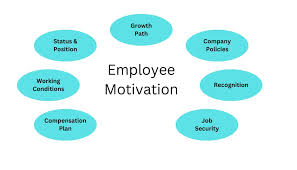
Employees Have Different Motivations

Employees Have Different Motivations

The workforce has undergone significant changes over the last two years. Today’s employees have different motivations, seeking more flexibility and purpose, while also expecting more from corporate leaders. Employees Have Different Motivations. Similarly, customers now demand high levels of personalization and exceptional experiences. How can C-suite executives keep up with these evolving expectations? Our research highlights emerging priorities for corporate leaders in these challenging times. In a recent webinar, we asked two Inc. 5000 CEOs about shifting priorities and the critical role of enhancing employee experiences to meet rising customer demands. The message was clear: efficient growth starts with your employees. Focusing on employee satisfaction, providing clear paths for growth, establishing strong values, and investing in the right tools are key drivers of success. However, for some leaders, old habits hinder progress. Today’s executives must not only be digitally proficient but also agile, with strong emotional intelligence to manage change and new relationships effectively. A prime example of this disconnect is seen in employee engagement. Salesforce’s recent report, The Experience Advantage, found that while 71% of C-suite executives believe their employees are engaged, only 51% of employees agree. Similarly, 70% of executives think their employees are happy, but only 44% of employees share that sentiment. How can companies enable their leaders to succeed in this era of heightened expectations? Let’s explore the top priorities for CEOs today. Top Priorities for Corporate Leaders In a world where CEOs are accountable to more stakeholders than ever, they must navigate an increasingly complex landscape. They’re expected to speak on social issues, advocate for sustainability, and ensure stability in times of rapid change. Adaptability is crucial for success. Here are some current top priorities for corporate leaders: At Salesforce, they’ve found success by operating with startup-style values—centering consumer trust, fostering constant innovation, and setting clear, simple goals. Marc Benioff’s V2MOM framework exemplifies this alignment in action. The New Skills Leaders Need After reviewing research and interviewing business leaders, several trends have emerged. The most successful executives today share the following traits: A 2021 IBM Institute for Business Value survey of 3,000 global CEOs revealed similar trends, highlighting purposeful agility and making technology a priority. The study found that 56% of CEOs emphasized the need for operational flexibility, and 61% were focused on empowering remote work. Key technologies driving results over the next few years include the Internet of Things (79%), cloud computing (74%), and AI (52%). A major shift on leader agendas is the growing focus on employee experience. As Salesforce’s chief growth evangelist, Tiffani Bova, noted, “Employees are now the most important stakeholder to long-term success.” Providing seamless, consumer-like experiences for employees is now essential for business growth. Our research also uncovered a key gap: 73% of C-suite executives don’t know how to use employee data to drive change. This disconnect between leadership perception and actual employee experience is undermining growth. Emotional Intelligence (EQ) Matters To close this gap, sharpening leaders’ emotional intelligence is essential. Last year, we conducted interviews with 10 CEOs across various sectors. Many revealed plans to replace C-suite team members with more digitally savvy and emotionally intelligent leaders better equipped to manage the modern workforce. Summit Leadership Partners’ 2020 research found that 80-90% of top-performing executives excelled because of their high EQ. In fact, EQ is twice as predictive of performance as technical skills or IQ. The Changing Role of Key Executives Who do CEOs rely on most? A decade ago, IBM’s Institute for Business Value found that 47% of CEOs considered the chief innovation officer critical. Today, only 4% of CEOs agree. The chief marketing officer and chief strategy officer roles have also seen significant declines in perceived importance. The positions that have gained prominence include the chief technology officer (CTO) and chief information officer (CIO), now ranked third in importance after the chief financial officer (CFO) and chief operating officer (COO). As Jeff McElfresh, COO of AT&T, observed, “Not all leaders are comfortable managing in a distributed model. We’ve got work to do to unlock the potential.” The rise in job titles related to the future of work—up 60% since the pandemic—reflects this shift, with hybrid work models becoming more common. Diversity Drives Innovation and Profitability Diversity in leadership has become essential for driving revenue and innovation. McKinsey’s 2020 report Diversity Wins found that companies with more gender-diverse executive teams were 25% more likely to achieve above-average profitability. Similarly, those with greater ethnic diversity outperformed their peers by 36%. Diverse management teams also deliver 19% higher revenues from innovation compared to less-diverse teams, according to research from BCG. As diversity becomes increasingly tied to executive compensation, companies must support a diverse leadership pipeline by developing inclusive talent strategies. Moving Forward To thrive in today’s business world, corporate leaders must plan for change, ensure all executives have both digital literacy and emotional intelligence, and redistribute power to drive success. The healthiest C-suites will include diverse leaders in key positions like COO, CFO, and CIO/CTO. Aligning the business around common goals—like those in Salesforce’s V2MOM framework—and eliminating barriers for employees are key to staying ahead. Innovation must remain a top priority. By investing in the right tools and connected platforms, companies can reduce costs and drive sustainable growth. Reach out to Tectonic for assistance in making the innovations that recognizes Employees Have Different Motivations. Like Related Posts Who is Salesforce? Who is Salesforce? Here is their story in their own words. From our inception, we’ve proudly embraced the identity of Read more Salesforce Marketing Cloud Transactional Emails Salesforce Marketing Cloud Transactional Emails are immediate, automated, non-promotional messages crucial to business operations and customer satisfaction, such as order Read more Salesforce Unites Einstein Analytics with Financial CRM Salesforce has unveiled a comprehensive analytics solution tailored for wealth managers, home office professionals, and retail bankers, merging its Financial Read more AI-Driven Propensity Scores AI plays a crucial role in propensity score estimation as it can discern underlying patterns between treatments and confounding variables Read more

Read More
More Cool AI Tools

Demystifying AI: Separating Fact from Fiction

1. The Consciousness Conundrum Myth: AI possesses human-like intelligence and consciousnessReality: Today’s AI, including advanced generative models, operates through pattern recognition—not genuine understanding. These systems process language statistically, without consciousness or emotional experience. Key Insight: AI can write poetry but doesn’t feel inspiration; it analyzes medical images without comprehending suffering. 2. The Future of Work Myth: AI will make human workers obsoleteReality: While AI automates 40-50% of repetitive tasks (McKinsey), it’s creating more jobs than it eliminates. The World Economic Forum predicts AI will generate 97 million new roles by 2025 focused on AI management, training, and ethical oversight. 3. The Bias Blind Spot Myth: AI delivers perfectly objective decisionsReality: A 2023 Stanford study found commercial AI systems exhibit demographic biases at alarming rates. For example: Solution: Regular bias audits and diverse training datasets are essential. 4. Emotional Intelligence Limits Myth: AI experiences human emotionsReality: While sentiment analysis achieves 85-90% accuracy in detecting emotions from text (MIT Tech Review), these systems simulate empathy without experiencing it—like a sophisticated mood ring. 5. The AGI Mirage Myth: Superintelligent AI is imminentReality: Current narrow AI excels at specific tasks but lacks the generalized reasoning of a five-year-old. OpenAI’s GPT-4 scores ~158 on IQ tests (human average: 100), yet fails at basic physical reasoning that toddlers master. 6. Transparency Spectrum Myth: All AI decisions are unexplainableReality: Tools like LIME and SHAP now visualize how models weigh factors in: Emerging Standard: The EU AI Act mandates explainability for high-risk applications. 7. Cost Realities Myth: AI implementation requires massive investmentReality: Cloud-based AI services now offer: 8. The Creativity Gap Myth: AI can replace human ingenuityReality: While AI generates plausible ideas, humans dominate in: 9. The Human-AI Partnership Myth: AI systems are autonomousReality: Every successful AI implementation requires: 10. ROI Realities Myth: AI guarantees business successReality: A 2024 Gartner survey found only 53% of AI projects move past pilot stage. Success factors include: Moving Forward Wisely Understanding these realities helps organizations: “The greatest danger of artificial intelligence isn’t that it will rebel against us, but that we’ll attribute superhuman capabilities to what is ultimately sophisticated pattern matching.”—Adapted from Pedro Domingos, “The Master Algorithm” Like Related Posts Who is Salesforce? Who is Salesforce? Here is their story in their own words. From our inception, we’ve proudly embraced the identity of Read more Salesforce Unites Einstein Analytics with Financial CRM Salesforce has unveiled a comprehensive analytics solution tailored for wealth managers, home office professionals, and retail bankers, merging its Financial Read more AI-Driven Propensity Scores AI plays a crucial role in propensity score estimation as it can discern underlying patterns between treatments and confounding variables Read more Tectonic’s Successful Salesforce Track Record Salesforce Technology Services Integrator – Tectonic has successfully delivered Salesforce in a variety of industries including Public Sector, Hospitality, Manufacturing, Read more

Read More
The Autonomous Customer Service Revolution

The Autonomous Customer Service Revolution

The Autonomous Customer Service Revolution: Strategies for Future-Ready Businesses The New Era of Customer Experience Today’s consumers demand instant, personalized service across all channels – a standard that 88% say directly influences their repurchase decisions. Autonomous customer service, powered by cutting-edge AI, is emerging as the transformative solution to meet these expectations while driving operational efficiency. Defining Autonomous Customer Service Unlike traditional AI-assisted service, autonomous systems leverage: “Digital agents represent a quantum leap beyond conventional self-service,” explains Yacov Salomon, SVP of Engineering for Service Cloud. “We’re witnessing a fundamental transformation in how businesses engage customers.” How Autonomous Systems Operate The Human-AI Collaboration Model Contrary to replacement fears, autonomous AI enhances human roles by: “These systems excel at specific tasks with machine precision,” notes Salomon, “while enabling human agents to focus on creative problem-solving and emotional intelligence.” Strategic Advantages Benefit Impact 24/7 Global Availability 40% reduction in after-hours support costs Instant Resolution 3-5x faster response times Personalized Engagement 25% increase in CSAT scores Operational Scalability 10x inquiry capacity without added staff Predictive Insights 15-30% improvement in first-contact resolution Implementation Roadmap Service Cloud: The Autonomous Advantage Salesforce’s AI-powered solution delivers: Einstein Copilot for Service Trusted AI Infrastructure The Next Frontier Emerging innovations will bring: “Customer service is becoming the new growth engine,” predicts Salomon. “Autonomous AI creates revenue opportunities while delivering exceptional experiences at scale.” Getting Started Businesses can immediately: The autonomous revolution isn’t coming—it’s here. Organizations that strategically implement these solutions today will define the customer experience standards of tomorrow. Like Related Posts Who is Salesforce? Who is Salesforce? Here is their story in their own words. From our inception, we’ve proudly embraced the identity of Read more Salesforce Marketing Cloud Transactional Emails Salesforce Marketing Cloud Transactional Emails are immediate, automated, non-promotional messages crucial to business operations and customer satisfaction, such as order Read more Salesforce Unites Einstein Analytics with Financial CRM Salesforce has unveiled a comprehensive analytics solution tailored for wealth managers, home office professionals, and retail bankers, merging its Financial Read more AI-Driven Propensity Scores AI plays a crucial role in propensity score estimation as it can discern underlying patterns between treatments and confounding variables Read more

Read More
gettectonic.com