
Enterprise AI Archives - gettectonic.com - Page 4
Smartsheet and AWS Collaborate

Smartsheet and AWS Collaborate

Smartsheet and AWS Collaborate to Enhance AI-Driven Decision-Making with New Amazon Q Business Connector October 8, 2024 — During its annual ENGAGE customer conference, Smartsheet (NYSE: SMAR), the enterprise work management platform, announced a partnership with AWS to introduce a new connector that integrates Smartsheet data with Amazon Q Business. This generative AI-powered assistant can answer questions, provide summaries, generate content, and securely complete tasks using data from customers’ enterprise systems. This integration will allow Amazon Q Business users to access insights about their projects and processes managed in Smartsheet, facilitating a cohesive search experience that empowers employees to make informed, data-driven decisions. Smartsheet and AWS Collaborate. As organizations increasingly recognize the importance of data-driven decisions, data silos remain a major hurdle. Research from Salesforce in 2024 indicates that only about 28% of business applications are interconnected. The new connector aims to address this issue by securely merging Smartsheet data with other sources integrated into Amazon Q Business, such as Salesforce, Slack, Microsoft Teams, and AWS. This will benefit over 13 million Smartsheet users globally, including around 85% of the 2024 Fortune 500 companies, allowing them to access their work management data, including sheets, conversations, and files, through AWS’s generative AI-powered assistant. This integration enhances decision-making, productivity, and efficiency. Smartsheet and AWS Collaborate “The Smartsheet connector furthers our strategy to securely integrate Smartsheet with leading enterprise AI tools, allowing customers to work seamlessly across their business applications,” said Ben Canning, SVP of Product Experiences at Smartsheet. “By combining our flexible data model with Amazon Q Business, we’re unlocking access to work management data for our mutual customers, enabling them to focus on achieving business outcomes without worrying about data storage.” For instance, service operations managers can utilize the new connector to manage complex projects more effectively. By posing specific questions to the Amazon Q Business assistant, teams can gain insights from various data sources, including sheets, conversations, and attachments in Smartsheet. The AI assistant conducts thorough searches while respecting access permissions, saving time and enhancing project oversight. This streamlined approach improves client retention, accuracy, and overall service quality. “Generative AI presents a unique opportunity for organizations to transform their internal workflows. The key is securely accessing their own data, regardless of its location or format,” stated Dilip Kumar, Vice President of Amazon Q Business at AWS. “Many enterprises use Smartsheet as their primary collaboration hub, storing billions of rows of data. Allowing Amazon Q Business users to interact with their Smartsheet data in a simple, secure manner boosts productivity, analysis, and decision-making.” “Generative AI is driving a significant shift in how enterprise knowledge is stored, accessed, and utilized,” noted Dion Hinchcliffe, VP of the CIO Practice at The Futurum Group. “This transition offers a chance to redefine what’s possible in data management. A strategic, informed approach to adopting this technology is crucial. By integrating work management data into Amazon Q Business, Smartsheet and AWS are creating a unified AI search experience across their knowledge base, unlocking the true potential of their data.” Empowering Teams to Achieve More with Generative AI Smartsheet is collaborating with industry leaders like AWS to develop AI capabilities that help enterprises manage their critical tasks more strategically and efficiently. Earlier this year, Smartsheet implemented Amazon Q Business internally to enhance knowledge management and boost employee productivity in the cloud. The Smartsheet connector exemplifies how both organizations are delivering powerful AI tools that revolutionize team workflows. Smartsheet continues to integrate generative AI throughout its platform, designed with practicality, transparency, and customer needs in mind. Smartsheet’s AI tools enable organizations to swiftly extract insights from data, create automated processes, generate text and summaries, and accomplish more with the AI assistant. Through the end of December, Smartsheet is offering its entire suite of AI tools to all customers, allowing everyone to leverage AI’s capabilities within the platform. The Smartsheet connector is currently available to Amazon Q Business customers in public preview. About Smartsheet Smartsheet is a modern enterprise work management platform trusted by millions globally, including approximately 85% of the 2024 Fortune 500 companies. As a pioneering leader in its category, Smartsheet delivers powerful solutions that drive performance and foster innovation. Visit www.smartsheet.com for more information. Like Related Posts Who is Salesforce? Who is Salesforce? Here is their story in their own words. From our inception, we’ve proudly embraced the identity of Read more Salesforce Marketing Cloud Transactional Emails Salesforce Marketing Cloud Transactional Emails are immediate, automated, non-promotional messages crucial to business operations and customer satisfaction, such as order Read more Salesforce Unites Einstein Analytics with Financial CRM Salesforce has unveiled a comprehensive analytics solution tailored for wealth managers, home office professionals, and retail bankers, merging its Financial Read more AI-Driven Propensity Scores AI plays a crucial role in propensity score estimation as it can discern underlying patterns between treatments and confounding variables Read more

Read More
Salesforce Continues to Push the Boundaries of AI Innovation

Salesforce Continues to Push the Boundaries of AI Innovation

In a strategic move to enhance its AI capabilities, Salesforce has announced the acquisition of Zoomin, a leader in unstructured data management solutions. This acquisition, expected to finalize in the fourth quarter of Salesforce’s fiscal year 2025, aligns with the company’s mission to dominate the enterprise AI landscape through its Agentforce platform. The acquisition further highlights Salesforce’s commitment to advancing AI-driven customer experiences and operational efficiency. Financial details of the transaction were not disclosed, but Salesforce confirmed that it would not affect previous earnings guidance. Previously, in discussions around Service Cloud’s push for Unified Knowledge, there were concerns about relying on partners like Zoomin. This acquisition addresses those concerns by filling a critical gap in Salesforce’s product offerings and adding new functionalities to Data Cloud. Strengthening Data Cloud for AI Zoomin’s technology will enhance Salesforce’s Data Cloud by providing improved support for managing unstructured data—a cornerstone of modern AI systems. This is a critical step in Salesforce’s AI strategy, particularly for the Agentforce platform, as it enables more comprehensive, context-aware AI capabilities. Rahul Auradkar, Salesforce’s EVP & GM of Unified Data Services & Einstein, stressed the importance of this acquisition. “Unstructured data is the key to unlocking AI’s full potential in customer interactions,” Auradkar said. “With Zoomin’s technology, we’re not just improving data management—we’re revolutionizing how AI agents understand and use information to deliver personalized experiences.” The integration of Zoomin’s Unified Knowledge technology directly addresses a key challenge in AI: managing and understanding unstructured data to create smarter AI agents. By strengthening its data foundation, Salesforce is positioning itself to deliver more sophisticated AI applications across its platform. Agentforce: A New AI Frontier Salesforce’s recently launched Agentforce platform aims to revolutionize enterprise AI with autonomous AI agents capable of advanced decision-making and task automation. By incorporating Zoomin’s technology, Agentforce will gain the ability to process and utilize unstructured data more effectively, setting it apart from competitors like Microsoft’s Copilot, which often requires significant user input and prompt engineering. The enhanced Agentforce platform will deliver a host of benefits, from improved customer service automation to more accurate sales forecasting and personalized marketing campaigns. By tapping into unstructured data, Salesforce is paving the way for AI-driven insights and actions previously unattainable with traditional approaches. A Natural Progression from Partnership to Acquisition Zoomin’s relationship with Salesforce began in 2018 as an AppExchange partner, followed by an investment from Salesforce Ventures in 2019. This acquisition marks a natural progression in their partnership, promising a smooth integration into Salesforce’s ecosystem. Zoomin CEO Gal Oron shared his enthusiasm: “Joining forces with Salesforce is a natural next step for us. Our shared vision is to make AI truly intelligent by giving it access to the vast amount of unstructured data that exists in enterprises. Together, we’ll help businesses unlock the full potential of their data and AI investments.” Implications Across the Business Spectrum The integration of Zoomin’s technology is expected to have broad implications, especially in customer service, where AI agents can use unstructured data to deliver more personalized and efficient responses. Beyond customer service, this technology is poised to impact sales, marketing, and overall business operations, enabling deeper insights into customer behavior and more targeted campaigns. Kishan Chetan, EVP and GM of Salesforce Service Cloud, highlighted the potential: “With Unified Knowledge, we’re not just improving AI—we’re transforming how businesses understand and serve their customers. Imagine AI agents that can grasp the full context of a customer’s history, preferences, and needs in real time. That’s the power we’re unlocking.” A Strategic Response to the AI Arms Race Salesforce’s acquisition of Zoomin comes amid an increasingly competitive enterprise AI landscape. By bolstering its embedded AI capabilities through strategic acquisitions, Salesforce is solidifying its position as a leader in enterprise AI, while addressing key challenges faced by rivals like Microsoft and Google. Zoomin’s expertise in processing large volumes of technical content and generating insights based on user behavior will be instrumental in helping Salesforce deliver cutting-edge, AI-driven solutions. These advancements will improve everything from customer service to digital transformation initiatives across industries. With this acquisition, Salesforce continues to push the boundaries of AI innovation, cementing its leadership in the rapidly evolving enterprise AI market. Like Related Posts Who is Salesforce? Who is Salesforce? Here is their story in their own words. From our inception, we’ve proudly embraced the identity of Read more Salesforce Marketing Cloud Transactional Emails Salesforce Marketing Cloud Transactional Emails are immediate, automated, non-promotional messages crucial to business operations and customer satisfaction, such as order Read more Salesforce Unites Einstein Analytics with Financial CRM Salesforce has unveiled a comprehensive analytics solution tailored for wealth managers, home office professionals, and retail bankers, merging its Financial Read more AI-Driven Propensity Scores AI plays a crucial role in propensity score estimation as it can discern underlying patterns between treatments and confounding variables Read more

Read More
Introducing the New Nonprofit Cloud

Salesforce Transforming Nonprofit Operations with AI

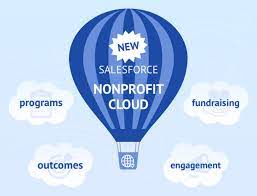
Salesforce Enhances Nonprofit Cloud with Generative AI Capabilities On August 6, 2024, Salesforce announced that its Nonprofit Cloud is now equipped with generative AI capabilities powered by the Einstein 1 Platform. This integration represents the first time Salesforce’s Industry Cloud portfolio has incorporated the Einstein 1 Platform, signaling a broader commitment to embedding AI tools across its product offerings. The update aims to revolutionize nonprofit operations by providing AI-powered tools for personalized donor engagement, operational efficiency, and funding discovery. Key features include AI-generated fundraising proposals and program summaries, which provide concise insights into grant details, donor histories, and program outcomes. Transforming Nonprofit Operations with AI The integration of generative AI into Nonprofit Cloud aligns with Salesforce’s strategy to empower nonprofits to navigate challenges such as donor fatigue, increased operational costs, and rising service demands. Notable enhancements include: Additionally, Salesforce launched Data Cloud for Nonprofits, enabling a unified, real-time view of donor, volunteer, and program data. This innovation breaks down data silos, empowering nonprofits to create tailored outreach strategies and assess program performance effectively. Four Pillars of AI Success Salesforce’s enhancements to Nonprofit Cloud embody its “four-pillar” approach to enterprise AI success: Key Innovations in Nonprofit Cloud Salesforce introduced three groundbreaking innovations to address nonprofit-specific challenges: These features, coupled with Nonprofit Cloud Einstein 1 Edition (which bundles Nonprofit Cloud, Data Cloud, Einstein, Experience Cloud, and Slack), provide nonprofits with comprehensive tools to drive impact. Nonprofit Adoption and Impact Nonprofits are already experiencing the transformative potential of AI. According to Salesforce’s Nonprofit Trends Report, organizations leveraging these AI tools have seen: Julie Fleshman, CEO of the Pancreatic Cancer Action Network, shared her organization’s success with Nonprofit Cloud: “Salesforce has been instrumental in helping us connect patients with specialized healthcare providers and clinical trials, advancing our mission and saving valuable time.” Nonprofit Cloud vs. NPSP While Nonprofit Cloud offers a unified, scalable platform with AI-driven insights and advanced donor management tools, the Nonprofit Success Pack (NPSP) serves as a free, open-source solution for smaller organizations. Here’s a quick comparison: Feature Nonprofit Cloud NPSP Functionality Comprehensive CRM with advanced tools Free app with basic CRM functionality Integration Seamless with other Salesforce products Requires additional configuration Ease of Use User-friendly and designed for nonprofits May require technical expertise Cost Subscription-based Free with optional paid add-ons Scalability Built for growing organizations Requires customization for growth Ideal Users Large and mid-sized nonprofits Small nonprofits Maximizing Fundraising with Nonprofit Cloud Nonprofit Cloud offers nonprofits flexibility and efficiency in managing their fundraising efforts, helping them overcome challenges like donor fatigue and retention. Its advanced features include: By leveraging these tools, nonprofits can improve engagement, strengthen donor relationships, and make data-driven decisions, ultimately amplifying their impact. The Tectonic Role Tectonic has been instrumental in implementing Salesforce Nonprofit Cloud for multiple organizations, ensuring they harness its full potential to optimize operations, engage donors, and achieve their missions. With Salesforce’s AI-driven enhancements and Tectonic’s expertise, nonprofits are poised to navigate challenges, unlock new opportunities, and amplify their societal impact. Like Related Posts Who is Salesforce? Who is Salesforce? Here is their story in their own words. From our inception, we’ve proudly embraced the identity of Read more Salesforce Marketing Cloud Transactional Emails Salesforce Marketing Cloud Transactional Emails are immediate, automated, non-promotional messages crucial to business operations and customer satisfaction, such as order Read more Salesforce Unites Einstein Analytics with Financial CRM Salesforce has unveiled a comprehensive analytics solution tailored for wealth managers, home office professionals, and retail bankers, merging its Financial Read more AI-Driven Propensity Scores AI plays a crucial role in propensity score estimation as it can discern underlying patterns between treatments and confounding variables Read more

Read More
Where Will the Data Scientists Go

Where Will the Data Scientists Go

What Is to Become of the Data Scientist Role? This question frequently arises among executives, particularly as they navigate the changing roles of data teams, such as those at DataRobot. Where Will the Data Scientists Go may not be as relevant as what new places can they go with AI? The short answer? While tools may evolve, the core of data science remains steadfast. As the field of data science continues to expand, the role of the data scientist becomes increasingly vital. The need will grow, even as the role changes. Trust in AI is dependant upon human oversight. Beyond the Hype of Consumer AI The surge in consumer AI products has raised concerns among data scientists about the implications for their careers. However, these technologies are built on data and generate vast amounts of new data, presenting numerous opportunities. The real transformative potential lies in enterprise-scale automation. Enterprise-Scale Automation: The Data Scientist’s Domain Enterprise-scale automation involves creating large-scale, reliable systems. Data scientists are crucial in this effort, as they bring expertise in data exploration and systematic inference. They are uniquely positioned to identify automation opportunities, design testing and monitoring strategies, and collaborate with cross-functional teams to bring AI solutions from concept to implementation. As automation grows, the role of the data scientist is essential in ensuring these systems function effectively and safely, particularly in environments without human oversight. New Skills for Data Scientists: The Guardians of AI Applications Data scientists will need to acquire new skills to manage automation at scale, including securing the systems they build. Generative AI introduces new risks, such as potential vulnerabilities to prompt injections or other security threats. Governance and ensuring positive business impacts will become increasingly important, requiring a data science mindset. Building Great Data Teams in the Age of AI The future of data science will not be about automation replacing data scientists but about the evolution of roles and skills. Data scientists need to focus on the core foundations of their discipline rather than the specific tools they use, as tools will continue to evolve. Teams must be built intentionally, encompassing a range of skills and personalities necessary for successful enterprise automation. Business Leaders: Navigating the AI Landscape Business leaders will need to excel in decision-making, understanding the problems they aim to solve, and selecting the appropriate tools and teams. They will also need to manage evolving regulations, particularly those related to the design and deployment of AI systems. Data Scientists: Precision Thinkers at the Forefront Contrary to the belief that AI could replace coding skills, the essence of data science lies in precise thinking and clear communication. Data scientists excel in translating business needs into data-driven decisions and AI applications, ensuring that solutions are not only technically sound but also aligned with business objectives. This skill set will be crucial in the era of AI, as data scientists will play a key role in optimizing workflows, designing AI safety nets, and protecting their organization’s brand and reputation. The Evolving Role of Data Science The demand for precise, data-literate thinkers will only grow with the rise of enterprise AI systems. Whether they are called data scientists or another name, professionals who delve deeply into data and provide critical insights will remain essential in navigating the complexities of modern technology and business landscapes. Like Related Posts Who is Salesforce? Who is Salesforce? Here is their story in their own words. From our inception, we’ve proudly embraced the identity of Read more Salesforce Marketing Cloud Transactional Emails Salesforce Marketing Cloud Transactional Emails are immediate, automated, non-promotional messages crucial to business operations and customer satisfaction, such as order Read more Salesforce Unites Einstein Analytics with Financial CRM Salesforce has unveiled a comprehensive analytics solution tailored for wealth managers, home office professionals, and retail bankers, merging its Financial Read more AI-Driven Propensity Scores AI plays a crucial role in propensity score estimation as it can discern underlying patterns between treatments and confounding variables Read more
Read More
Einstein 1 Unveiled

Salesforce Einstein 1 Platform

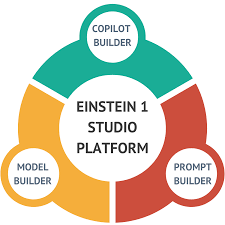
Welcome to the dawn of a bold new era in enterprise Artificial Intelligence, where the world demands a platform unlike any other. Enter Salesforce Einstein 1, the pinnacle of innovation, designed to navigate terabytes of disparate data seamlessly, offer freedom in AI model selection, and integrate directly into your workflow—all while upholding customer trust. Einstein 1 Platform serves as the nexus of your data, AI, CRM, development, and security needs, consolidating them into a singular, robust framework. This empowers IT, administrators, and developers alike with an adaptable AI platform, facilitating rapid development of transformative applications and automation. Within Einstein 1 lies an array of artificial intelligence tools, reflecting the modular architecture of the core Salesforce platform. From standardized to custom solutions, Einstein 1 caters to diverse needs. Examples include out-of-the-box AI features like sales email generation in Sales Cloud and service replies in Service Cloud. Since its unveiling as Genie, now Data Cloud, at Dreamforce ‘22, Salesforce has propelled this product to the forefront of its mission. The conversation has shifted from Customer 360 to encompass AI + CRM + Data—a strategic pivot poised for success in 2024 and beyond. But what does this transformation entail? Data Cloud has been a focal point of Salesforce’s narrative, hailed as a groundbreaking CDP innovation. The recent Q4 earnings call unveiled remarkable achievements: Gartner’s endorsement further solidifies Salesforce’s position, elevating it as a leader in the Magic Quadrant, surpassing rivals like Twilio and Adobe. This achievement is remarkable given Salesforce’s relatively recent CDP certification from the CDP Institute. However, understanding the significance of Data Cloud amidst a sea of CRM solutions may elude many. Yet, the resurgence of data underscores its importance. CRMs, while pivotal for sales, support, and marketing functions, fall short in managing the breadth of modern data collection, storage, and dissemination. Enter the CDP—a dedicated platform for aggregating customer data across every touchpoint throughout the customer lifecycle. Unlike CRMs, which traditionally served as the single source of truth, CDPs offer a comprehensive view, ingesting data from myriad sources. Two key attributes distinguish CDPs and Data Cloud: Yet, amidst this data revolution, the role of artificial intelligence cannot be understated. Einstein 1, formerly known as Salesforce Customer 360, epitomizes this synergy between AI, CRM, and Data. Einstein 1 boasts a diverse array of AI tools, from pre-built features to customizable solutions housed within the Einstein 1 Studio. This enables users to craft tailored AI functionality, seamlessly integrated with Salesforce’s ecosystem. Moreover, Salesforce’s agnostic approach to LLMs empowers users to harness the full potential of AI. Whether leveraging Salesforce’s proprietary LLM or integrating third-party or proprietary models, Einstein 1 ensures flexibility and innovation. As AI continues to permeate every facet of business and personal life, Salesforce’s strategic focus on Data Cloud and Einstein could propel the company to unprecedented growth. In the ever-evolving landscape of enterprise AI, Salesforce remains at the forefront, poised to redefine the future of customer engagement and business intelligence. Like Related Posts Who is Salesforce? Who is Salesforce? Here is their story in their own words. From our inception, we’ve proudly embraced the identity of Read more Salesforce Marketing Cloud Transactional Emails Salesforce Marketing Cloud Transactional Emails are immediate, automated, non-promotional messages crucial to business operations and customer satisfaction, such as order Read more Salesforce Unites Einstein Analytics with Financial CRM Salesforce has unveiled a comprehensive analytics solution tailored for wealth managers, home office professionals, and retail bankers, merging its Financial Read more AI-Driven Propensity Scores AI plays a crucial role in propensity score estimation as it can discern underlying patterns between treatments and confounding variables Read more

Read More
What is Salesforce Einstein 1

Salesforce Revolutionizes Enterprise AI

Salesforce Revolutionizes Enterprise AI with Unstructured Data Capabilities for Data Cloud and Einstein Copilot At World Tour NYC, Salesforce unveiled groundbreaking AI innovations that transform how businesses leverage their most valuable – yet often untapped – data assets. The introduction of unstructured data capabilities for Data Cloud and Einstein Copilot Search marks a significant leap forward in making AI more accurate, transparent, and secure for enterprise use. The Power of Retrieval-Augmented Generation (RAG) At the heart of these advancements is Retrieval-Augmented Generation (RAG), an AI framework that combines Salesforce’s data management strengths with cutting-edge large language model (LLM) technology. RAG enables companies to: How RAG Transforms Enterprise AI Breaking Down the Technology Stack Salesforce’s implementation creates an end-to-end solution for trusted enterprise AI: ![RAG Architecture Diagram](https://example.com/salesforce-rag-architecture.png) Real-World Applications Across Industries Sales Teams Service Teams Enterprise-Wide Benefits Why This Matters Now With 90% of enterprise data being unstructured, these capabilities unlock tremendous value: ✅ 71% reduction in AI security concerns (data stays protected)✅ 50% faster response generation with proper context✅ Verifiable outputs with source citations build trust “RAG allows us to use standardized LLMs while maintaining customer relevancy and domain specificity,” noted a Salesforce architect. “It’s the perfect balance of power and control.” Getting Started Companies can begin leveraging these capabilities by: The future of enterprise AI isn’t just about bigger models – it’s about smarter connections to your data. With these innovations, Salesforce continues to lead in delivering practical, trusted AI solutions for business. NOTE: Einstein 1 Platform is now Salesforce Platform. Content updated April 2025. Like Related Posts Who is Salesforce? Who is Salesforce? Here is their story in their own words. From our inception, we’ve proudly embraced the identity of Read more Salesforce Marketing Cloud Transactional Emails Salesforce Marketing Cloud Transactional Emails are immediate, automated, non-promotional messages crucial to business operations and customer satisfaction, such as order Read more Salesforce Unites Einstein Analytics with Financial CRM Salesforce has unveiled a comprehensive analytics solution tailored for wealth managers, home office professionals, and retail bankers, merging its Financial Read more AI-Driven Propensity Scores AI plays a crucial role in propensity score estimation as it can discern underlying patterns between treatments and confounding variables Read more

Read More
Salesforce

Salesforce Platform Explained

The Salesforce Platform, formerly known as Force.com, serves as the foundational framework that spans the Sales and Service Clouds, offering robust capabilities for tailoring standard Salesforce products. Within this platform, you have the flexibility to construct custom data tables using custom objects, initiate automation through Flow, and design personalized user interfaces utilizing the Lightning App Builder. Salesforce is a CRM platform and also a centralized platform for managing customer accounts, sales leads, activities, customer support cases, and more. Users can access Salesforce through a web browser, mobile app, or desktop application. Salesforce provides users comprehensive tools to manage customer data, automate processes, analyze data and insights, and create personalized customer experiences. Salesforce also offers a variety of solutions for customer service, marketing automation, commerce, app development, and more. For those seeking a wholly unique experience, the option to acquire Salesforce Platform licenses, considerably more economical than, for instance, Sales Cloud licenses, allows you to develop entirely customized applications on the Salesforce platform. What is Salesforce used for? Salesforce is used for streamlining sales, service, and marketing activities via industry-specific products. With seamless software integration. It offers solutions for various needs such as Sales Cloud, Service Cloud, Marketing Cloud, Community Cloud, Field Services, CPQ and Billing etc. Is the Salesforce platform just CRM? Salesforce has completely changed the idea of traditional CRM. It merged all the features of a traditional CRM with a bunch of new unique tools and capabilities. Thus offering its users MUCH more than ever before. Top Salesforce customers in the USA are U.S. Bank, Amazon Web Services, American Express, Walmart, and T-Mobile. Overall, more than 59% of Salesforce clients come from the USA, as for the end of 2022. Salesforce Platform Pricing – click here. The Salesforce Platform is now Einstein 1. The bold new future of enterprise AI requires a new type of platform. One that can handle terabytes of disconnected data, have the freedom to choose your AI models, and connect directly into the flow of work, all while maintaining customer trust. The Einstein 1 Platform unifies your data, AI, CRM, development, and security into a single, comprehensive platform. It empowers IT, admins, and developers with an extensible AI platform, facilitating fast development of generative apps and automation. Accelerate development and maximize your developers and admins time across workflows, app customization and configurations. Keep your data safe and sound by securing your Salesforce org with Salesforce’s portfolio of security and privacy products. Activate all your customer data across Salesforce applications at every touch point using relevant insights and contextual data in the flow of work. Content updated December 2023. Like1 Related Posts Who is Salesforce? Who is Salesforce? Here is their story in their own words. From our inception, we’ve proudly embraced the identity of Read more Salesforce Marketing Cloud Transactional Emails Salesforce Marketing Cloud Transactional Emails are immediate, automated, non-promotional messages crucial to business operations and customer satisfaction, such as order Read more Salesforce Unites Einstein Analytics with Financial CRM Salesforce has unveiled a comprehensive analytics solution tailored for wealth managers, home office professionals, and retail bankers, merging its Financial Read more AI-Driven Propensity Scores AI plays a crucial role in propensity score estimation as it can discern underlying patterns between treatments and confounding variables Read more

Read More
gettectonic.com