

Governance Archives - gettectonic.com - Page 6
Proper Programmers Desk

Rise of Citizen Development

The Rise of Citizen Development: How Low-Code is Democratizing App Creation From IT-Exclusive to Democratized Development Gone are the days when software development was the sole domain of IT specialists. Today, the demand for rapid, agile application development has broken down traditional barriers, empowering non-technical employees to build powerful business apps—without writing a single line of code. This shift is fueled by citizen development, a movement where business users collaborate with IT to create applications using low-code and no-code platforms. With intuitive drag-and-drop interfaces, pre-built templates, and AI-assisted automation, these tools enable employees across departments—from marketing to HR to operations—to turn ideas into functional apps in record time. The Citizen Developer Boom: By the Numbers Why Businesses Are Embracing Citizen Development 1. Relieving IT Bottlenecks IT teams are overwhelmed with app requests while managing infrastructure, security, and maintenance. Citizen development:✔ Reduces IT backlog by letting business users build their own solutions.✔ Frees IT to focus on high-value, complex projects. 2. Faster, More Relevant App Delivery Business users understand their needs best. When they lead app development:✔ Development cycles shrink—no more waiting for IT prioritization.✔ Solutions better fit real-world use cases, improving adoption and ROI. 3. Bridging the Digital Skills Gap Low-code platforms eliminate the need for deep coding expertise, allowing:✔ Employees at all skill levels to contribute to digital transformation.✔ Faster innovation without costly developer hiring or training. Choosing the Right Low-Code Platform Not all low-code solutions are equal. The best platforms offer: ✅ Cloud-native architecture – Enables real-time collaboration and remote access.✅ Seamless data integration – Connects to live databases for accurate, dynamic apps.✅ Cross-platform compatibility – Build once, deploy everywhere (web, mobile, desktop).✅ Intuitive UX – Drag-and-drop builders, templates, and guided workflows.✅ Built-in governance – Ensures security and compliance without stifling creativity. Salesforce Lightning Platform: The Ultimate Citizen Development Engine Built on the world’s #1 CRM, Salesforce Lightning Platform empowers businesses to: The Future is Low-Code With 76% of companies actively exploring minimal-code development, the line between IT and business is blurring. Citizen development isn’t just a trend—it’s the future of agile innovation. Like Related Posts Who is Salesforce? Who is Salesforce? Here is their story in their own words. From our inception, we’ve proudly embraced the identity of Read more Salesforce Marketing Cloud Transactional Emails Salesforce Marketing Cloud Transactional Emails are immediate, automated, non-promotional messages crucial to business operations and customer satisfaction, such as order Read more Salesforce Unites Einstein Analytics with Financial CRM Salesforce has unveiled a comprehensive analytics solution tailored for wealth managers, home office professionals, and retail bankers, merging its Financial Read more AI-Driven Propensity Scores AI plays a crucial role in propensity score estimation as it can discern underlying patterns between treatments and confounding variables Read more


Read More
spring 25

Spring 25 Revealed

Spring ’25 Salesforce Release: What’s New and How to Prepare As winter lingers, the Salesforce Ohana is already embracing the promise of spring—a season of renewal, growth, and transformation. The Salesforce Spring ’25 Release brings fresh innovations designed to enhance productivity, streamline integrations, and optimize your CRM experience. With powerful AI enhancements, security updates, and UI improvements, this release is set to elevate the way you work. Let’s explore the key updates and how you can prepare to make the most of these enhancements. 1. Changes to Einstein Activity Capture Permissions What’s New?Salesforce is refining access to Einstein Activity Capture (EAC), ensuring more controlled and secure usage. Sales Engagement Basic Users will no longer have default access to EAC and must be assigned the Standard Einstein Activity Capture permission set to continue using the feature. Why It Matters:This update enhances security by limiting access to users with the appropriate permissions, improving governance over activity data. How to Prepare: 2. Transition to ICU Locale Formats What’s New?Salesforce is shifting from Oracle’s JDK Locale formats to ICU Locale Formats for handling date, currency, and numeric data. Why It Matters:ICU formats provide better internationalization and localization, improving accuracy and consistency across different regions. How to Prepare: 3. Introduction of LWC Stacked Modals What’s New?Lightning Web Components (LWC) now support stacked modals, allowing multiple modal windows to remain open simultaneously. Why It Matters:This improves the user experience by enabling seamless navigation between modal windows without losing context. How to Prepare: 4. Secure Redirection for Flows What’s New?Salesforce now requires that retURL parameters used in Flow redirections be explicitly added to the trusted URLs list. Why It Matters:This security enhancement mitigates risks associated with unauthorized redirections, protecting user data. How to Prepare: 5. Rollbacks for Apex Action Exceptions in REST API What’s New?Salesforce now enforces automatic rollbacks for exceptions occurring during Apex actions invoked via REST API. Why It Matters:This update ensures data integrity by preventing incomplete or failed operations from saving partial updates. How to Prepare: Final Thoughts The Spring ’25 release brings vital enhancements to permissions, security, UI, and API reliability. By proactively testing and preparing, you can ensure a seamless transition while unlocking the full potential of these updates. Stay ahead of the curve and leverage these improvements to create a more efficient, secure, and innovative Salesforce environment. Like Related Posts Who is Salesforce? Who is Salesforce? Here is their story in their own words. From our inception, we’ve proudly embraced the identity of Read more Salesforce Marketing Cloud Transactional Emails Salesforce Marketing Cloud Transactional Emails are immediate, automated, non-promotional messages crucial to business operations and customer satisfaction, such as order Read more Salesforce Unites Einstein Analytics with Financial CRM Salesforce has unveiled a comprehensive analytics solution tailored for wealth managers, home office professionals, and retail bankers, merging its Financial Read more AI-Driven Propensity Scores AI plays a crucial role in propensity score estimation as it can discern underlying patterns between treatments and confounding variables Read more

Read More
Achieving AI Success Starts with Data Maturity

Achieving AI Success Starts with Data Maturity

True AI success depends on data maturity. But what does that mean in practice? Organizations with high data maturity: The Path to Data Maturity Reaching data maturity requires a strategic commitment to: ✅ Develop a unified data strategy that aligns business and data teams toward common goals.✅ Implement strong data management and governance to ensure accuracy and trust.✅ Leverage advanced data solutions to transform raw data into actionable insights.✅ Prioritize security and compliance to protect data from breaches.✅ Foster a data-driven culture where every employee has the skills to analyze and act on insights. See How John Lewis & Partners Unlocks AI + Data-Driven Personalization “Investing in Salesforce has enabled us to make decisions faster and develop deeper relationships with our customers by providing a more personalized, convenient, and seamless customer experience.” — Libby Hickey, Tableau Product Manager, John Lewis & Partners Assess Your Data Maturity Ready to accelerate your data transformation? 📊 Take the free assessment to: Start your data maturity journey today. Contact Tectonic. Like Related Posts Who is Salesforce? Who is Salesforce? Here is their story in their own words. From our inception, we’ve proudly embraced the identity of Read more Salesforce Marketing Cloud Transactional Emails Salesforce Marketing Cloud Transactional Emails are immediate, automated, non-promotional messages crucial to business operations and customer satisfaction, such as order Read more Salesforce Unites Einstein Analytics with Financial CRM Salesforce has unveiled a comprehensive analytics solution tailored for wealth managers, home office professionals, and retail bankers, merging its Financial Read more AI-Driven Propensity Scores AI plays a crucial role in propensity score estimation as it can discern underlying patterns between treatments and confounding variables Read more

Read More
AI Data Cloud and Integration

It is Time to Implement Data Cloud

With Salesforce Data Cloud you can: With incomplete data your 360-degree customer view is limited and often leads to multiple sales reps working on the same lead. Slow access to the right leads at the right time leads to missed opportunties and delayed closings. If your team cannot trust the data due to siloes and inaccuracies, they avoid using it. It is Time to Implement Data Cloud. Unified Connect and harmonize data from all your Salesforce applications and external data systems. Then activate your data with insights and automation across every customer touchpoint. Powerful With Data Cloud and Agentforce, you can create the most intelligent agents possible, giving them access to the exact data they need to deliver any employee or customer experience. Secure Securely connect your data to any large language model (LLM) without sacrificing data governance and security thanks to the Einstein 1 trust layer. Open Data Cloud is fully open and extensible – bring your own data lake or model to reduce complexity and leverage what’s already been built. Plus, share out to popular destinations like Snowflake, Google Ads, or Meta Ads. Salesforce Data Cloud is the only hyperscale data engine native to Salesforce. It is more than a CDP. It goes beyond a data lake. You can do more with Data Cloud. Your Agentforce journey begins with Data Cloud. Agents need the right data to work. With Data Cloud, you can create the most intelligent agents possible, giving them access to the exact data they need to deliver any employee or customer experience. Use any data in your organization with Agentforce in a safe and secure manner thanks to the Einstein 1 Trust Layer. Datablazers are Salesforce community members who are passionate about driving business growth with data and AI powered by Data Cloud. Sign up to join a growing group of members to learn, connect, and grow with Data Cloud. Join today. The path to AI success begins and ends with quality data. Business, IT, and analytics decision makers with high data maturity were 2x more likely than low-maturity leaders to have the quality data needed to use AI effectively, according to our State of Data and Analytics report. “What’s data maturity?” you might wonder. Hang tight, we’ll explain in chapter 1 of this guide. Data-leading companies also experience: Your data strategy isn’t just important, it’s critical in getting you to the head of the market with new AI technology by your side. That’s why this Salesforce guide is based on recent industry findings and provides best practices to help your company get the most from your data. Tectonic will be sharing a focus on the 360 degree customer view with Salesforce Data Cloud in our insights. Stay tuned. It is Time to Implement Data Cloud Like Related Posts Who is Salesforce? Who is Salesforce? Here is their story in their own words. From our inception, we’ve proudly embraced the identity of Read more Salesforce Marketing Cloud Transactional Emails Salesforce Marketing Cloud Transactional Emails are immediate, automated, non-promotional messages crucial to business operations and customer satisfaction, such as order Read more Salesforce Unites Einstein Analytics with Financial CRM Salesforce has unveiled a comprehensive analytics solution tailored for wealth managers, home office professionals, and retail bankers, merging its Financial Read more AI-Driven Propensity Scores AI plays a crucial role in propensity score estimation as it can discern underlying patterns between treatments and confounding variables Read more
Read More
multi-channel campaigns

Understanding AI Agent Capabilities

AI agents vary widely in their autonomy and complexity. Some tasks require only basic tool use and response generation, while others demand advanced reasoning and independent decision-making. Recognizing these capability levels helps determine when to use simpler, predictable systems versus fully autonomous agents. The Core Capabilities of AI Agents Three fundamental capabilities distinguish AI agents from basic AI tools: Reasoning and Planning Tool Use Memory and Learning The AI Agent Spectrum The evolution from simple AI tools to fully autonomous agents follows a progression of increasing complexity: Not every problem demands the highest level of autonomy. In many cases, tool-using models or orchestrated systems are more practical and cost-effective. Balancing Capability with Control As AI agents become more autonomous, striking the right balance between capability and oversight is critical. Key factors to consider include: Security and Governance Reliability and Trust Cost and Resource Optimization Understanding where your needs fall on this spectrum is essential for effective AI deployment. Not every task requires a fully autonomous agent—sometimes, a simpler, well-structured system is the smarter, more cost-efficient choice. Like Related Posts Who is Salesforce? Who is Salesforce? Here is their story in their own words. From our inception, we’ve proudly embraced the identity of Read more Salesforce Unites Einstein Analytics with Financial CRM Salesforce has unveiled a comprehensive analytics solution tailored for wealth managers, home office professionals, and retail bankers, merging its Financial Read more AI-Driven Propensity Scores AI plays a crucial role in propensity score estimation as it can discern underlying patterns between treatments and confounding variables Read more Tectonic’s Successful Salesforce Track Record Salesforce Technology Services Integrator – Tectonic has successfully delivered Salesforce in a variety of industries including Public Sector, Hospitality, Manufacturing, Read more

Read More
The Future of AI in Salesforce

The Future of AI in Salesforce

The Future of AI in Salesforce: Smarter, Predictive, and Deeply Integrated Artificial Intelligence (AI) is revolutionizing the Salesforce ecosystem, reshaping customer interactions, automating workflows, and driving revenue growth. As we move into 2025 and beyond, AI within Salesforce will become even more intelligent, predictive, and seamlessly embedded across the platform. Let’s explore the key advancements defining the next era of AI in Salesforce. 1. Next-Gen Einstein AI: A Smarter CRM Assistant Salesforce Einstein continues to evolve, equipping businesses with powerful AI-driven capabilities: 2. AI-Powered Revenue Intelligence & Forecasting AI is transforming revenue intelligence, helping sales teams make data-driven decisions: 3. AI-Driven Sales & Service Automation AI-powered automation will streamline workflows and improve efficiency: 4. Hyper-Personalization with AI & Data Cloud Salesforce Data Cloud and AI will power personalized customer experiences at scale: 5. AI-Optimized Lead Generation & Marketing Automation AI will continue to enhance lead generation and marketing strategies: 6. AI & Low-Code/No-Code Innovation Salesforce is democratizing AI with accessible low-code and no-code tools: 7. Ethical AI & Governance: Building Trust in AI Salesforce remains committed to ethical, transparent, and bias-free AI: Conclusion As AI becomes deeply embedded in every Salesforce cloud, businesses will experience faster automation, smarter decision-making, and hyper-personalized customer engagement. From AI-powered sales forecasting to generative AI-driven content, the future of Salesforce AI is set to redefine CRM strategies in 2025 and beyond. Like Related Posts Who is Salesforce? Who is Salesforce? Here is their story in their own words. From our inception, we’ve proudly embraced the identity of Read more Salesforce Marketing Cloud Transactional Emails Salesforce Marketing Cloud Transactional Emails are immediate, automated, non-promotional messages crucial to business operations and customer satisfaction, such as order Read more Salesforce Unites Einstein Analytics with Financial CRM Salesforce has unveiled a comprehensive analytics solution tailored for wealth managers, home office professionals, and retail bankers, merging its Financial Read more AI-Driven Propensity Scores AI plays a crucial role in propensity score estimation as it can discern underlying patterns between treatments and confounding variables Read more

Read More
The Event-Driven Paradigm for Next-Generation AI Agents

The Event-Driven Paradigm for Next-Generation AI Agents

The Infrastructure Imperative for AI Evolution The enterprise landscape stands at an inflection point where AI agents promise autonomous decision-making and adaptive workflows at scale. However, the critical barrier to realizing this potential isn’t model sophistication—it’s architectural. True agentic systems require: These requirements fundamentally represent an infrastructure challenge that demands event-driven architecture (EDA) as the foundational framework for agent deployment and scaling. The Three Waves of AI Evolution First Wave: Predictive Models Characterized by: These deterministic systems excelled at specialized tasks but proved rigid and unscalable across business functions. Second Wave: Generative Models Marked by breakthroughs in: However, these models remained constrained by: Third Wave: Agentic Systems Emerging capabilities include: This evolution shifts focus from model architecture to system architecture, where EDA becomes the critical enabler. The Compound AI Advantage Modern agent systems combine multiple architectural components: This compound approach overcomes the limitations of standalone models through: Event-Driven Architecture: The Nervous System for Agents Core EDA Principles for AI Systems Implementation Benefits Architectural Patterns for Agentic Systems 1. Reflective Processing <img src=”reflection-pattern.png” width=”400″ alt=”Reflection design pattern diagram”> Agents employ meta-cognition to: 2. Dynamic Tool Orchestration <img src=”tool-use-pattern.png” width=”400″ alt=”Tool use design pattern diagram”> Capabilities include: 3. Hierarchical Planning <img src=”planning-pattern.png” width=”400″ alt=”Planning design pattern diagram”> Features: 4. Collaborative Multi-Agent Systems <img src=”multi-agent-pattern.png” width=”400″ alt=”Multi-agent collaboration diagram”> Enables: The Enterprise Integration Challenge Critical Success Factors Implementation Roadmap Phase 1: Foundation Phase 2: Capability Expansion Phase 3: Optimization The Competitive Imperative Enterprise readiness data reveals: Early adopters of event-driven agent architectures gain: The transition to agentic operations represents not just technological evolution but fundamental business transformation. Organizations that implement EDA foundations today will dominate the AI-powered enterprise landscape of tomorrow. Those failing to adapt risk joining the legacy systems they currently maintain—as historical footnotes in the annals of digital transformation. Like Related Posts Who is Salesforce? Who is Salesforce? Here is their story in their own words. From our inception, we’ve proudly embraced the identity of Read more Salesforce Unites Einstein Analytics with Financial CRM Salesforce has unveiled a comprehensive analytics solution tailored for wealth managers, home office professionals, and retail bankers, merging its Financial Read more AI-Driven Propensity Scores AI plays a crucial role in propensity score estimation as it can discern underlying patterns between treatments and confounding variables Read more Tectonic’s Successful Salesforce Track Record Salesforce Technology Services Integrator – Tectonic has successfully delivered Salesforce in a variety of industries including Public Sector, Hospitality, Manufacturing, Read more

Read More
Navigating the New Era of Agentic Customer Engagement

Navigating the New Era of Agentic Customer Engagement

Marketing is undergoing a seismic shift—from the tech-stack heavy approaches of the past decade to AI-driven, agentic customer engagement. No longer bogged down by complex integrations and data wrangling, marketers can now focus on what truly matters: creating meaningful, personalized customer experiences at scale. Welcome to the age of AI marketing agents—intelligent systems that learn from human expertise, then execute strategies autonomously. Unlike traditional customer service bots (which handle 1:1 interactions), marketing agents amplify human-approved content, campaigns, and branding across millions of touchpoints, ensuring consistency and precision at every step. Why Agentic Engagement is the Future The rapid evolution of AI has unlocked unprecedented capabilities: For marketers, this means:✔ Hyper-personalization at scale✔ Faster time-to-market for campaigns✔ Data-driven decision-making with AI-powered insights✔ More time for creativity & strategy (less manual execution) How AI Agents Enhance Marketing Marketing agents don’t replace humans—they augment them. Here’s how: 1. Agentic Content 2. Agentic Campaign Planning 3. Agentic Branding 4. Agentic Creative 5. Agentic Optimization The Human-Agent Partnership The best outcomes happen when human creativity meets AI efficiency: The Agent-to-Agent Ecosystem Imagine: This interconnected system creates a self-optimizing marketing engine. How to Prepare for the Agentic Future 1. Start Small, Scale Smart 2. Upskill Your Team 3. Strengthen Data Infrastructure 4. Establish Governance 5. Keep Humans in the Loop The Bottom Line Agentic engagement isn’t just another tech trend—it’s a fundamental shift in marketing. Companies that embrace it will:🚀 Launch campaigns faster🎯 Deliver hyper-relevant experiences📈 Drive higher ROI with AI-powered optimization The future belongs to marketers who harness AI agents as force multipliers—freeing teams to focus on strategy, storytelling, and innovation. Ready to step into the agentic era? Start experimenting today. Like Related Posts Who is Salesforce? Who is Salesforce? Here is their story in their own words. From our inception, we’ve proudly embraced the identity of Read more Salesforce Marketing Cloud Transactional Emails Salesforce Marketing Cloud Transactional Emails are immediate, automated, non-promotional messages crucial to business operations and customer satisfaction, such as order Read more Salesforce Unites Einstein Analytics with Financial CRM Salesforce has unveiled a comprehensive analytics solution tailored for wealth managers, home office professionals, and retail bankers, merging its Financial Read more AI-Driven Propensity Scores AI plays a crucial role in propensity score estimation as it can discern underlying patterns between treatments and confounding variables Read more

Read More
$15 Million to AI Training for U.S. Government Workforce

AI Adoption in the Federal Government

AI Adoption in the Federal Government: A New Era Under the Trump Administration With a new administration in Washington and a $500 billion AI infrastructure initiative underway, the U.S. federal government may be entering a phase of accelerated AI adoption. Federal AI Expansion AI adoption grew under the Biden administration, with agencies leveraging it for fraud detection, workflow automation, and data analysis. However, experts predict that the Trump administration will further expand federal AI use. “Trump and his advisers have spoken about ‘unleashing AI,’ signaling a push for broader adoption within government agencies,” said Darrell West, a senior fellow at the Brookings Institution’s Center for Technology Innovation. As the administration scales back AI safety regulations and deepens ties with major tech firms, federal AI usage is expected to rise. However, ensuring transparency and educating the public remain crucial for building trust in government AI applications. AI Governance Framework The foundation for federal AI governance was established under Trump’s first term, with executive orders EO 13859 (2019) and EO 13960 (2020). EO 13960 mandated an annual AI use case inventory, significantly expanding under Biden—from 710 cases in 2023 to 2,133 in 2024. Reggie Townsend, VP of Data Ethics at SAS and a National AI Advisory Committee (NAIAC) member, emphasized the importance of this transparency: “The inventory was a crucial first step in building public trust.” Biden’s EO 14110 (2023) introduced stronger AI guardrails, requiring agencies to designate chief AI officers, disclose safety-related AI use cases, and implement risk management guidelines. However, on his first day in office, Trump rescinded EO 14110, signaling a shift toward deregulation. AI Applications in Government The 2024 federal AI inventory reported 2,133 AI use cases across 41 agencies. The Department of Health and Human Services (HHS) led with 271 cases, reflecting a 66% increase from the previous year. Key applications include: Harvard Kennedy School adjunct lecturer Bruce Schneier anticipates even broader AI integration in government, from automating reports to drafting legislation and conducting audits. Despite growing interest, the federal government lags behind the private sector in AI adoption, especially for generative AI, due to concerns over bias, reliability, and transparency. AI Under a Second Trump Term Trump’s return to office in 2025 signals an AI policy shift favoring reduced oversight and enhanced global AI leadership. “Federal AI adoption will accelerate under Trump,” West said, citing efforts to integrate major tech figures into federal initiatives. Notably, Trump appointed xAI owner Elon Musk to lead the newly rebranded Department of Government Efficiency, formerly the U.S. Digital Service. This agency is tasked with modernizing federal technology, reducing costs, and driving deregulation. With EO 14110 rescinded, the scope of AI governance under Trump remains uncertain. “Will he eliminate all guardrails, or keep some protections? That’s something to watch,” West noted. Big Tech’s Role in Federal AI Trump’s inauguration underscored tech industry influence, with Elon Musk, Mark Zuckerberg, Jeff Bezos, and Sundar Pichai in attendance. Major tech firms, including Amazon, Google, and Microsoft, each contributed $1 million to the event, while OpenAI CEO Sam Altman made a personal $1 million donation. Some companies are aligning with the administration’s stance on AI and content moderation. Meta, for instance, has replaced its fact-checking services with a community-driven model similar to X’s Community Notes and relaxed its moderation policies. A deregulated AI landscape could benefit big tech, particularly in areas like AI safety standards and data copyright issues, while advancing the administration’s vision for U.S. AI dominance. AI’s Future in Government On his second day in office, Trump announced a $500 billion AI infrastructure investment, forming Stargate—a coalition of OpenAI, SoftBank, MGX, and Oracle—to expand AI infrastructure nationwide. “This will be the largest AI infrastructure project in history,” Trump declared, emphasizing the need for AI leadership against global competitors like China. However, West warned that accelerated adoption must be managed carefully: “It’s critical that AI is implemented fairly, with privacy and security safeguards in place.” Building AI Literacy Effective AI deployment requires education within federal agencies. “Many government workers lack AI expertise, making it difficult to procure and implement AI solutions effectively,” West said. NAIAC’s Townsend advocates for structured AI training, tailored to different federal roles. Public AI literacy is also crucial, with initiatives like the National AI Research Resource (NAIRR) promoting equitable access to AI education and development. “The public must be informed enough to hold the government accountable on AI issues,” Townsend concluded. As AI adoption accelerates, striking a balance between innovation, oversight, and public trust will define the next phase of federal AI policy. Like Related Posts Who is Salesforce? Who is Salesforce? Here is their story in their own words. From our inception, we’ve proudly embraced the identity of Read more Salesforce Unites Einstein Analytics with Financial CRM Salesforce has unveiled a comprehensive analytics solution tailored for wealth managers, home office professionals, and retail bankers, merging its Financial Read more AI-Driven Propensity Scores AI plays a crucial role in propensity score estimation as it can discern underlying patterns between treatments and confounding variables Read more Tectonic’s Successful Salesforce Track Record Salesforce Technology Services Integrator – Tectonic has successfully delivered Salesforce in a variety of industries including Public Sector, Hospitality, Manufacturing, Read more

Read More
Agentforce Redefines Generative AI

The Rise of Agentic AI: Balancing Innovation and Trust

Agentic AI is transforming industries, and Salesforce’s Agentforce is proving to be a catalyst for both economic growth and workforce empowerment. For companies like Wiley, Agentforce has increased case resolutions by 40%, surpassing the performance of its previous chatbot and allowing employees to focus on more complex cases. However, a new Salesforce white paper emphasizes that simply deploying AI agents isn’t enough to drive productivity and build trust—they must operate within well-defined frameworks that ensure responsible AI adoption. “AI has the potential to enhance trust, efficiency, and effectiveness in our institutions,” said Eric Loeb, EVP of Global Government Affairs at Salesforce. “Salesforce research shows 90% of constituents are open to using AI agents for government services, drawn by benefits like 24/7 access, faster response times, and streamlined processes.” Key Considerations for Policymakers in the Age of AI Agents To strike a balance between risk and opportunity, the Salesforce white paper outlines critical areas policymakers must address: 🔹 Human-AI Collaboration – Employees must develop new skills to configure, manage, and oversee AI agents, ensuring they can be easily programmed and adapted for various tasks. 🔹 Reliability & Guardrails – AI agents must be engineered with fail-safes that enable clear handoffs to human workers and mechanisms to detect and correct AI hallucinations. 🔹 Cross-Domain Fluency – AI must be designed to interpret and act on data from diverse sources, making seamless enterprise-wide integrations essential. 🔹 Transparency & Explainability – Users must know when they’re interacting with AI, and regulators need visibility into how decisions are made to ensure compliance and accountability. 🔹 Data Governance & Privacy – AI agents often require access to sensitive information. Strong privacy and security safeguards are crucial to maintaining trust. 🔹 Security & AI Safety – AI systems must be resilient against adversarial attacks that attempt to manipulate or deceive them into producing inaccurate outputs. 🔹 Ethical AI Use – Companies should establish clear ethical guidelines to govern AI behavior, ensuring responsible deployment and human-AI collaboration. 🔹 Agent-to-Agent Interactions – Standardized protocols and security measures must be in place to ensure controlled, predictable AI behavior and auditability of decisions. Building an Agent-Ready Ecosystem While AI agents represent the next wave of enterprise innovation, policy frameworks must evolve to foster responsible adoption. Policymakers must look beyond AI development and equip the workforce with the skills needed to work alongside these digital assistants. “It’s no longer a question of whether AI agents should be part of the workforce—but how to optimize human and digital labor to achieve the best outcomes,” said Loeb. “Governments must implement policies that ensure AI agents are deployed responsibly, creating more meaningful and productive work environments.” Next Steps Salesforce’s white paper provides a roadmap for policymakers navigating the agentic AI revolution. By focusing on risk-based approaches, transparency, and robust safety measures, businesses and governments alike can unlock the full potential of AI agents—while ensuring trust, accountability, and innovation. Like Related Posts Who is Salesforce? Who is Salesforce? Here is their story in their own words. From our inception, we’ve proudly embraced the identity of Read more Salesforce Marketing Cloud Transactional Emails Salesforce Marketing Cloud Transactional Emails are immediate, automated, non-promotional messages crucial to business operations and customer satisfaction, such as order Read more Salesforce Unites Einstein Analytics with Financial CRM Salesforce has unveiled a comprehensive analytics solution tailored for wealth managers, home office professionals, and retail bankers, merging its Financial Read more AI-Driven Propensity Scores AI plays a crucial role in propensity score estimation as it can discern underlying patterns between treatments and confounding variables Read more

Read More
Data Cloud and Genpact

Unlock the Power of Your Data with Data Cloud

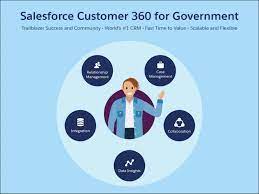
Seamlessly Connect, Unify, and Activate Your Data Data Cloud enables you to harness the full potential of your data—structured or unstructured—by integrating it across multiple sources. Key Capabilities: ✔ Connect All Data Sources – Ingest both batch and streaming data seamlessly.✔ Zero-Copy Data Federation – Access data without duplicating it.✔ Data Transformation & Governance – Standardize and secure your data.✔ Harmonize to a Common Data Model – Ensure consistency across datasets.✔ Identity Resolution – Unify data with advanced rulesets.✔ Advanced Analytics & Insights – Query, analyze, and extract business intelligence.✔ AI-Powered Predictions – Use AI to anticipate customer behavior.✔ Segmentation & Activation – Create targeted audience segments for personalized experiences.✔ Multi-Source Data Activation – Output data to multiple channels based on business needs.✔ Integration with Agentforce – Leverage data for AI-powered automation.✔ Continuous Optimization – Measure, refine, and enhance your data strategy. Designed for Every Role Data Cloud provides role-specific functionality, ensuring value across your organization. User Description Learn More Admins Enhance your admin skills with Data Cloud. Administer Data Cloud (Trailhead) Analysts Leverage Tableau to expand your analytics capabilities. Tableau Cloud Help Documentation Builders Develop applications using Data Cloud. ISVforce Guide Business Users Ingest data for diverse business needs. Salesforce Help Data Architects Map and model data effectively. Salesforce Architects Frameworks Developers Utilize APIs and SDKs to interact with Data Cloud. Data Cloud Developer Center Marketers Segment and activate audiences for cross-channel campaigns. Segmentation in Data Cloud (Trailhead) Partners Implement Data Cloud for customers. Partner Learning Camp Get Started with Data Cloud Customize Your Experience Data Cloud is built to scale, allowing you to tailor features to your business needs. While some features are included, others are available as add-ons or have adjustable limits. Work with your account executive to find the right solution. Available Editions: 📌 Data Cloud Starter – Get core Data Cloud functionality. 📌 Data Cloud + Tableau – Unlock powerful analytics with Tableau Enterprise. 📌 Marketing Use Cases – Leverage Segmentation and Activation for personalized marketing campaigns. 📌 Industry-Specific Solutions – Tailor Data Cloud for specialized needs. Better Together: Data & AI The best AI solutions are built on trusted, high-quality data. Data Cloud consolidates disparate data sources into unified customer and account profiles, fueling AI-driven automation and insights with Agentforce. Unlock the full potential of your data with Salesforce Data Cloud. Ready to get started? Learn more. Like Related Posts Who is Salesforce? Who is Salesforce? Here is their story in their own words. From our inception, we’ve proudly embraced the identity of Read more Salesforce Marketing Cloud Transactional Emails Salesforce Marketing Cloud Transactional Emails are immediate, automated, non-promotional messages crucial to business operations and customer satisfaction, such as order Read more Salesforce Unites Einstein Analytics with Financial CRM Salesforce has unveiled a comprehensive analytics solution tailored for wealth managers, home office professionals, and retail bankers, merging its Financial Read more AI-Driven Propensity Scores AI plays a crucial role in propensity score estimation as it can discern underlying patterns between treatments and confounding variables Read more
Read More
Salesforce Government Cloud

4 Warning Signs Your Government Agency Needs a Data Strategy Overhaul

The Critical Role of Data in Modern Government In an era where Spotify predicts your next favorite song and Amazon anticipates your orders, citizens now expect the same level of responsiveness from government services. Yet many agencies struggle with disjointed systems, inaccessible data, and slow insights – creating costly inefficiencies when they can least afford them. McKinsey estimates that better data utilization could unlock .2 trillion annually across public sectors. With AI advancements accelerating, here’s how to spot if your agency’s data strategy is falling behind: 🔴 Red Flag #1: Data Silos Are Strangling Your Operations 🔴 Red Flag #2: Insights Arrive Too Late to Matter 🔴 Red Flag #3: Data Doesn’t Connect to Mission Goals 🔴 Red Flag #4: Your Systems Can’t Adapt to New Demands The Path Forward: Building a Smarter Data Foundation Leading agencies are taking these steps to transform their data capabilities: “The best-performing agencies treat data like a strategic asset – not an IT afterthought.”– Public Sector Technology Director, Salesforce Your Next Move:Conduct a 30-day data health check to identify your biggest gaps. Start by interviewing frontline staff about their daily data frustrations – their pain points will reveal your most urgent priorities. Need help assessing your data readiness?  Contact the Public Sector team at Tectonic today. Like Related Posts Who is Salesforce? Who is Salesforce? Here is their story in their own words. From our inception, we’ve proudly embraced the identity of Read more Salesforce Marketing Cloud Transactional Emails Salesforce Marketing Cloud Transactional Emails are immediate, automated, non-promotional messages crucial to business operations and customer satisfaction, such as order Read more Salesforce Unites Einstein Analytics with Financial CRM Salesforce has unveiled a comprehensive analytics solution tailored for wealth managers, home office professionals, and retail bankers, merging its Financial Read more AI-Driven Propensity Scores AI plays a crucial role in propensity score estimation as it can discern underlying patterns between treatments and confounding variables Read more

Read More
Potential of GenAI in Healthcare

5 Key Use Cases for Generative AI in Healthcare Documentation

Generative AI (GenAI) holds significant promise for improving healthcare documentation, but clear regulations and standards are needed to maximize benefits while minimizing risks. Healthcare documentation encompasses medical histories, clinical notes, diagnostic results, treatment plans, prescriptions, and billing records. Studies show that clinicians spend more time on documentation than patient care—a major contributor to burnout. GenAI can help by automating electronic health record (EHR) data entry and drafting medical notes for clinician review. According to a February 2025 American Medical Association (AMA) survey, early GenAI adoption in healthcare focuses on administrative tasks that enhance documentation quality and efficiency. For example, Microsoft’s Dax Copilot saves clinicians five minutes per patient encounter, while Oracle Health Clinical AI Agent reduces documentation time by nearly 30%. Here are five key ways GenAI improves healthcare documentation: 1. Streamline Workflows GenAI reduces administrative burdens by automating documentation tasks, allowing clinicians to focus more on patient care. Key applications include: A JAMA Network Open (2024) study found AI-generated draft replies to patient messages reduced provider workload and emotional exhaustion, suggesting strong potential for workflow efficiency. 2. Improve Data Accuracy GenAI enhances documentation precision by identifying missing or inconsistent data. Applications include: By minimizing manual entry, GenAI helps prevent errors that lead to billing delays or compliance issues. 3. Optimize Medical Data Approximately 80% of healthcare data is unstructured (e.g., physician notes, scanned documents). GenAI transforms this into structured, usable formats by: This optimization improves interoperability and speeds up decision-making. 4. Reduce Clinician Burnout Physician burnout is often linked to excessive documentation. GenAI alleviates stress by: A UC San Diego (2024) study found that AI-assisted documentation helps clinicians engage more with patients, improving satisfaction and outcomes. 5. Enhance Patient Engagement GenAI improves patient interactions by: By reducing screen time during visits, GenAI helps clinicians build stronger patient relationships. Best Practices for GenAI in Healthcare Documentation To ensure safe and effective AI adoption:✔ Start with pilot programs – Test AI tools in controlled settings.✔ Train clinicians on AI review – Ensure staff can validate AI-generated content.✔ Notify patients about AI use – Maintain transparency in documentation.✔ Secure patient data – Encrypt and de-identify protected health information (PHI).✔ Maintain audit logs – Track AI-generated documentation for accuracy and compliance. Challenges & Future Outlook GenAI faces hurdles in data privacy, regulatory compliance, and liability. Until formal standards emerge, frameworks like the WHO’s AI Ethics Guidelines and Coalition for Health AI (CHAI) Assurance Standards can help guide responsible use. As multimodal AI models advance, GenAI will better adapt to clinician workflows. However, strong governance is essential to balance innovation with patient safety. Conclusion GenAI is transforming healthcare documentation by reducing burnout, improving accuracy, and enhancing patient engagement. By implementing best practices and robust governance, healthcare organizations can harness AI’s potential while mitigating risks. Content updated April 2025. Like Related Posts Who is Salesforce? Who is Salesforce? Here is their story in their own words. From our inception, we’ve proudly embraced the identity of Read more Salesforce Marketing Cloud Transactional Emails Salesforce Marketing Cloud Transactional Emails are immediate, automated, non-promotional messages crucial to business operations and customer satisfaction, such as order Read more Salesforce Unites Einstein Analytics with Financial CRM Salesforce has unveiled a comprehensive analytics solution tailored for wealth managers, home office professionals, and retail bankers, merging its Financial Read more AI-Driven Propensity Scores AI plays a crucial role in propensity score estimation as it can discern underlying patterns between treatments and confounding variables Read more
Read More
Rethinking Technology in Local Government

Rethinking Technology in Local Government

Rethinking Technology in Local Government: A Call to Action By Richard Young, Head of Local Government, Salesforce The latest survey from Salesforce and LGC underscores an urgent need for a technology transformation in local government. Legacy systems and fragmented infrastructure remain significant roadblocks to digital progress, with nearly half of respondents identifying them as barriers to adoption. Outdated, disconnected systems limit efficiency, frustrate staff and residents, and prevent seamless data sharing—ultimately hindering councils from delivering modern, responsive services. Breaking Down Silos: A Unified Approach To move beyond fragmented solutions, councils must embrace a connected digital ecosystem that integrates systems, data, and stakeholders. Salesforce enables this shift through: ✅ MuleSoft – Seamlessly integrates legacy and modern systems, allowing for real-time data sharing and eliminating silos.✅ Salesforce Customer 360 – Provides a single, unified view of residents, enabling personalized, consistent service delivery across all touchpoints. By adopting a resident-first approach, councils can streamline operations, enhance engagement, and deliver services more effectively. Overcoming Barriers to Digital Transformation While the benefits of modern technology are clear, our survey reveals significant challenges to implementation, including: Salesforce supports councils through these challenges by providing: 🎓 Comprehensive training programs – Equipping staff with the skills to confidently adopt new technology.🤝 Shared service models – Encouraging collaboration across councils to pool resources and scale best practices.🚀 The Government Innovators Network – A knowledge-sharing platform connecting public sector leaders and private technology partners to drive innovation. By focusing on incremental modernization and ROI-driven deployments, councils can maximize value while staying within budget constraints. Empowering Councils for the Future To truly future-proof local government, technology must be: ✔ User-friendly – Intuitive systems reduce friction, enabling both staff and residents to self-service with ease.✔ Scalable and secure – Protecting against cyber threats and evolving challenges.✔ Designed for impact – Fostering collaboration between public and private sectors to drive long-term innovation. Salesforce has already made a measurable impact: 🏛 A UK council integrated over 30 legacy systems, reducing administrative overhead by 40% and increasing resident satisfaction by 25%.🇦🇺 An Australian local authority centralized resident engagement, cutting service request response times by 50%. Across the globe, we are transforming council operations, governance, and resident experiences. A Connected Future Starts Now Now is the time for councils to rethink their approach to technology. By embracing scalable, integrated solutions, they can deliver better services, empower staff, and put residents at the heart of every decision. Together, we can reimagine local government—creating a more connected, efficient, and empowered future. Richard Young, Head of Local Government, Salesforce Like Related Posts Who is Salesforce? Who is Salesforce? Here is their story in their own words. From our inception, we’ve proudly embraced the identity of Read more Salesforce Marketing Cloud Transactional Emails Salesforce Marketing Cloud Transactional Emails are immediate, automated, non-promotional messages crucial to business operations and customer satisfaction, such as order Read more Salesforce Unites Einstein Analytics with Financial CRM Salesforce has unveiled a comprehensive analytics solution tailored for wealth managers, home office professionals, and retail bankers, merging its Financial Read more AI-Driven Propensity Scores AI plays a crucial role in propensity score estimation as it can discern underlying patterns between treatments and confounding variables Read more

Read More
gettectonic.com