
Household Accounts Archives - gettectonic.com
Agentforce 3 and AI Agents

Agentforce 3 to Accelerate Agentic AI Adoption

Salesforce Launches Agentforce 3 to Accelerate Agentic AI Adoption A few weeks ago, Salesforce introduced Agentforce 3, designed to deliver rapid time-to-value and address ROI concerns around agentic AI. As the technology rapidly evolves, Salesforce is leading the charge into the agent-first Service era, betting big on Agentforce’s potential to transform customer service by proactively resolving issues and educating users on new features. Salesforce customer 1-800 Accountant is already seeing the benefits, reporting measurable improvements in customer service efficiency. Here’s what both companies had to say. Customer Zero: Salesforce’s Own Agentforce Journey As its own first customer, Salesforce has a vested interest in ensuring Agentforce enhances its customer service operations. Bernard Slowey, SVP of Digital Customer Success, shared insights with analysts, noting that most self-service journeys for Salesforce customers begin on Google before landing on the company’s Help portal, which handles 2 million reactive support cases annually. Slowey posed a key question: “What if your service team had infinite capacity and complete knowledge?” To move toward this vision, Salesforce is deploying AI agents to absorb repetitive tasks, proactively engage customers, and seamlessly hand off complex issues to humans when needed. By July, Agentforce had already facilitated 1 million customer conversations with an 85% resolution rate. Early results show a 2% increase in Help portal traffic alongside a 5% reduction in case volume, signaling strong ROI. Salesforce tracks performance via scorecards comparing AI and human agents, ensuring smooth transitions when escalations are necessary. So far, customers aren’t frustrated when an AI agent can’t resolve an issue—validating the hybrid approach. Andy White, SVP of Business Technology, highlighted lessons from the rollout: Looking ahead, White emphasized Agentforce’s advantage over public LLMs: “We know who the customer is and can engage them proactively—before they even reach the portal.” For businesses starting their agentic AI journey, White advises: “Begin with a small, controlled use case—like a single customer service topic—before scaling.” 1-800 Accountant: Transforming Tax Season with Agentforce Ryan Teeples, CTO of 1-800 Accountant, shared how the firm—the largest U.S. accounting provider for small businesses—deployed Agentforce to handle high-volume, time-sensitive client queries during tax season. With a long-standing focus on automation, 1-800 Accountant saw agentic AI as the next logical step. Teeples explained: “Our accountants often lack time for client nurturing. Agentforce lets us automate communications while freeing them to focus on high-value advisory work.” Key outcomes: Employee reactions were mixed, but leadership emphasized that AI complements accountants by handling soft skills and routine tasks, allowing them to focus on deep expertise. ROI is clear—saved accountant hours translate directly into cost savings. Retention impact will be measured next tax season. Why It Matters:Agentic AI is proving its value in real-world customer service, with Salesforce and 1-800 Accountant demonstrating tangible efficiency gains, cost savings, and improved experiences. The key? Start small, measure rigorously, and keep humans in the loop. Like Related Posts Who is Salesforce? Who is Salesforce? Here is their story in their own words. From our inception, we’ve proudly embraced the identity of Read more Salesforce Marketing Cloud Transactional Emails Salesforce Marketing Cloud Transactional Emails are immediate, automated, non-promotional messages crucial to business operations and customer satisfaction, such as order Read more Salesforce Unites Einstein Analytics with Financial CRM Salesforce has unveiled a comprehensive analytics solution tailored for wealth managers, home office professionals, and retail bankers, merging its Financial Read more AI-Driven Propensity Scores AI plays a crucial role in propensity score estimation as it can discern underlying patterns between treatments and confounding variables Read more

Read More
Salesforce Automotive Cloud

Salesforce Automotive Cloud

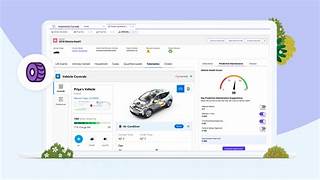
What is Salesforce Automotive Cloud? In September 2022, Salesforce introduced Automotive Cloud, a robust all-in-one platform tailored for the automotive industry. At first glance, it appears to be an ideal solution for businesses in this sector, but how well does it serve car dealerships? Drawing on experience both as a former auto dealership employee and in building Salesforce Dealership Management Systems (DMS), an in-depth exploration was undertaken to determine if this platform genuinely meets the needs of dealerships. What is a Dealership Management System (DMS)? A Dealership Management System (DMS) is a comprehensive software suite designed to manage the daily operations of a car dealership. It includes modules for sales, service, inventory management, vehicle lifecycle management, customer relationship management (CRM), and more. Essentially, it acts as the dealership’s corporate operating system, housing and processing customer data to generate valuable insights. What Does This Mean for Salesforce Consultants? Salesforce consultants with specialized expertise often find it easier to secure jobs and command higher rates compared to their generalist peers. This is especially true in niche areas like Automotive Cloud, where demand for specialized knowledge is high, and businesses are willing to invest in quality resources. In today’s uncertain economic climate, job security is a priority. Developing expertise in niche areas like Automotive Cloud can be a strategic move. As more car dealerships adopt this new technology, consultants with relevant experience will find ample opportunities to leverage their skills and meet the growing demand for DMS solutions. First Impressions of Automotive Cloud At first glance, Automotive Cloud offers a promising set of tools for managing various aspects of dealership operations, from sales and service to inventory management and CRM. However, initial impressions were mixed. Some features, like Vehicle Definitions, were initially overwhelming and unclear in their application. For example, while Automotive Cloud aggregates information about a specific vehicle model and its components (like engine, transmission, etc.), it lacks a CPQ (Configure Price Quote) feature. This omission is disappointing, as CPQ is crucial for configuring vehicles within the Salesforce interface. However, fear not, as third party CPQ tools are available. On the flip side, Automotive Cloud’s vehicle lifecycle management features are impressive. It allows for comprehensive tracking of a vehicle’s lifecycle, including purchase, maintenance, and decommissioning cycles. This is especially beneficial for dealerships, as much of their profit comes from post-sale services like warranty maintenance. What Salesforce Products Does It Use? A closer examination of the components within Automotive Cloud reveals that it is a mix of several Salesforce products, including: Additionally, Automotive Cloud includes customizations specifically designed for the automotive industry. For those interested in a more in-depth understanding, the Automotive Cloud documentation provides detailed explanations of the platform’s use cases. Automotive Cloud Data Model One of the first steps in exploring a new product is examining its data model, which provides insights into the product’s design and intended use. In Automotive Cloud, Salesforce focuses on several key dimensions: A Quick Overview of Capabilities Based on a thorough understanding of dealership operations, Automotive Cloud’s features most relevant to car dealers were evaluated: Is Salesforce Automotive Cloud Worth Learning for Car Dealers? The verdict is mixed. Automotive Cloud is not a perfect DMS for dealerships; it includes excessive features that may go unused while missing some critical functionalities. However, it is a great fit for auto manufacturers or distributors due to its built-in functionality for managing dealerships and manufacturing-related tasks. Is it worth learning? Absolutely. Automotive Cloud is a new offering from Salesforce, and currently, there isn’t an “Accredited Professional” badge available for it. By diving into Automotive Cloud early, Salesforce consultants can gain an edge over their peers and attract more employers. Moreover, Automotive Cloud combines multiple Salesforce Clouds, making it an excellent opportunity to learn Salesforce and familiarize oneself with complex data models. With its limited number of Flows and code, the learning curve is manageable, offering consultants a chance to build custom solutions that could become a selling point in their careers. Like1 Related Posts Who is Salesforce? Who is Salesforce? Here is their story in their own words. From our inception, we’ve proudly embraced the identity of Read more Salesforce Marketing Cloud Transactional Emails Salesforce Marketing Cloud Transactional Emails are immediate, automated, non-promotional messages crucial to business operations and customer satisfaction, such as order Read more Salesforce Unites Einstein Analytics with Financial CRM Salesforce has unveiled a comprehensive analytics solution tailored for wealth managers, home office professionals, and retail bankers, merging its Financial Read more AI-Driven Propensity Scores AI plays a crucial role in propensity score estimation as it can discern underlying patterns between treatments and confounding variables Read more
Read More
Viewing All Hard and Soft Credits for Household Accounts

Viewing All Hard and Soft Credits for Household Accounts

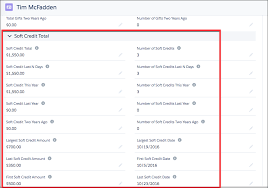
Subject: Inquiry About Viewing All Hard and Soft Credits for Household Accounts What’s the best way to view a complete list of all hard and soft credits associated with a household account? I understand that the NPSP customizable rollups allow us to aggregate soft credit totals based on the Opportunity Contact Roles for each contact in a household, which is useful but can sometimes be inaccurate due to data entry errors in assigning the correct roles. Additionally, filtered opportunity-related lists on the contact page can show different soft and hard credits assigned to individual contacts. While helpful, this can be confusing for users who prefer to see all information at the household account level and may overlook the contact details. What I’m looking for is a comprehensive list at the account level that includes all opportunities linked to every contact in a household, regardless of the Opportunity Contact Roll type. Essentially, I need to see every soft and hard credit received by all household members. I came across a post by Megan Moorehead from over three years ago titled “Soft Credit Opportunities Related List on Household.” She replied to her own post a couple of months later (on September 10, 2021), but I only partially understand her solution. Before I delve deeper into her suggestions, I wanted to check if there are any simpler or more recent out-of-the-box options added to NPSP. I’m flexible regarding how to obtain this full list of all hard and soft credits related to household members—it could be through a related list or a report. I believe this is a common need among many organizations, so any suggestions on how you’re generating this type of list would be greatly appreciated. Response: You’re correct that this isn’t available out of the box. The challenge arises because opportunities aren’t always directly tagged to the household. You might consider using a screen flow to gather opportunities from household members and display them on the account page in a data table. Alternatively, you could create a custom field on opportunities (populated by a record-triggered flow) called “Household,” which would link opportunities back to the household based on the contact’s association at the time of creation. This would allow for a separate related list on the account page. One thing to keep in mind: since soft credits are only assigned via Contact Roles, if the issue is that Contact Roles are missing, then Megan’s Mass Action Scheduler solution—or any solution—won’t help. Those opportunities will not appear in the household list, except for those where someone in the household received hard credit. Like Related Posts Who is Salesforce? Who is Salesforce? Here is their story in their own words. From our inception, we’ve proudly embraced the identity of Read more Salesforce Unites Einstein Analytics with Financial CRM Salesforce has unveiled a comprehensive analytics solution tailored for wealth managers, home office professionals, and retail bankers, merging its Financial Read more AI-Driven Propensity Scores AI plays a crucial role in propensity score estimation as it can discern underlying patterns between treatments and confounding variables Read more Tectonic’s Successful Salesforce Track Record Salesforce Technology Services Integrator – Tectonic has successfully delivered Salesforce in a variety of industries including Public Sector, Hospitality, Manufacturing, Read more
Read More
Financial Services Cloud and Core

Financial Services Cloud and Core

Remember When Salesforce First Launched Financial Services Cloud in 2016? The managed package introduced a standardized data model that transformed how banks, credit unions, and implementation partners utilized Salesforce. It was a game-changer! But Salesforce hasn’t stopped innovating. Since 2019, they’ve been enhancing the core platform to meet demands for greater performance and flexibility. Now, in 2024, Salesforce has rolled out its biggest core release yet: Financial Account Management Standard Objects. This strategic update could redefine how financial data is managed within Financial Services Cloud (FSC). Understanding these updates is essential for all FSC users. The introduction of standard objects signals a major shift in the platform. Staying informed ensures that your institution remains innovative and fully leverages Financial Services Cloud. Let’s explore what’s changing and why it matters. 1. A New Era for Financial Accounts Say goodbye to limitations and hello to flexibility! The core platform introduces a modern way to manage financial accounts: The elimination of financial account triggers is a huge win for performance. Salesforce’s new data model is designed to handle real-time integrations, which can be a game-changer for many institutions. But real-time integration isn’t necessary for everyone. Depending on your organization’s needs, you might find that a combination of batch integration, on-demand integration, and data visualization works best. If you’re dealing with slow nightly batch data loads due to financial account triggers, exploring the new standard objects could be the solution to your performance woes. 2. Core Offers Benefits for Everyone 3. The FSC Managed Package is Still Supported Salesforce has reassured customers that the FSC Managed Package will continue to be supported. However, with Core advancements, Salesforce is re-evaluating its long-term strategy to provide more streamlined and scalable solutions. While migration to Core isn’t mandatory, Salesforce’s ongoing focus on this new architecture suggests that aligning with the core platform may offer increasing benefits over time. To stay ahead of the curve and access the latest features, it’s wise to explore the potential advantages of migration. Tectonic can help assess your current environment, weigh the benefits of moving to Core, and develop a strategy that aligns with your business goals. 4. Exciting Core Enhancements Core introduces powerful new features that simplify financial data management, such as: 5. The Future Is Core, and You Need the Right Partner to Chart Your Course Salesforce’s shift toward Core highlights the platform’s future direction. While the managed package remains relevant for now, Core offers a more modern, flexible solution for managing financial data. To make the most of these changes and ensure a smooth transition, partnering with an experienced team like Tectonic is crucial. Transitioning to Core requires careful planning. Here’s a roadmap to guide you: Ready to Explore the Power of Core? Contact Tectonic today to learn how we can help guide your transition to Core and capture the full potential of these new features to drive your business forward. Like1 Related Posts Who is Salesforce? Who is Salesforce? Here is their story in their own words. From our inception, we’ve proudly embraced the identity of Read more Salesforce Marketing Cloud Transactional Emails Salesforce Marketing Cloud Transactional Emails are immediate, automated, non-promotional messages crucial to business operations and customer satisfaction, such as order Read more Salesforce Unites Einstein Analytics with Financial CRM Salesforce has unveiled a comprehensive analytics solution tailored for wealth managers, home office professionals, and retail bankers, merging its Financial Read more AI-Driven Propensity Scores AI plays a crucial role in propensity score estimation as it can discern underlying patterns between treatments and confounding variables Read more

Read More
gettectonic.com