

Lead Qualification Archives - gettectonic.com
The AI SDR Revolution

The AI SDR Revolution

The AI SDR Revolution: How AI is Transforming Sales Development The Problem: Sales Teams Are Drowning in Leads Your marketing team is crushing it—inbound leads are pouring in. But your Sales Development Representatives (SDRs) are overwhelmed, spending over two-thirds of their time on non-selling tasks like data entry, follow-ups, and lead qualification. The result? Missed opportunities, slower response times, and fewer deals closed. Enter the AI SDR—a game-changing solution that automates top-of-funnel sales tasks, letting human reps focus on what they do best: closing deals. What is an AI SDR? An AI-powered Sales Development Representative (SDR) automates repetitive sales tasks like:✅ Lead qualification (identifying high-intent prospects)✅ Automated outreach (personalized emails, follow-ups)✅ Meeting scheduling (booking demos directly into reps’ calendars)✅ CRM updates (logging interactions automatically) Unlike human SDRs, AI SDRs work 24/7, ensuring no lead slips through the cracks. How AI SDRs Work Human SDRs juggle: AI SDRs handle the same tasks—but autonomously—using:🔹 Machine Learning (ML) to analyze lead intent🔹 Natural Language Processing (NLP) to engage in human-like conversations🔹 Automation to execute tasks end-to-end Example: Agentforce AI SDRs Powered by Salesforce’s Customer 360, Data Cloud, and Einstein AI, these AI agents: AI SDR vs. Human SDR: Who Wins? Capability AI SDR Human SDR Response Time Instant Hours/Days Availability 24/7 Business hours Personalization Data-driven Relationship-driven Scalability Thousands of leads at once Limited by bandwidth Emotional IQ Rule-based High empathy The Best Approach? AI + Human Collaboration Salesforce data shows reps using AI see higher win rates and more closed deals. 5 Key Benefits of AI SDRs AI SDRs in Action: Real-World Results Case Study: VTT Technical Research Centre (Finland) The Future of AI SDRs 🚀 Greater Autonomy – Handling prospecting & research🎯 Hyper-Personalization – Leveraging Data Cloud for tailored messaging📞 Multimodal Engagement – Voice, video, and chat interactions 84% of sales leaders believe AI will dominate lead gen in the next 2 years. How to Implement AI SDRs Successfully Final Verdict: AI SDRs Are a Sales Superpower AI won’t replace SDRs—it will make them unstoppable. By automating grunt work, AI SDRs help teams:✔ Respond faster✔ Qualify smarter✔ Close more deals The question isn’t if you should adopt AI SDRs—it’s how soon can you start? Ready to supercharge your sales team? Explore AI SDR solutions today. Like Related Posts Who is Salesforce? Who is Salesforce? Here is their story in their own words. From our inception, we’ve proudly embraced the identity of Read more Salesforce Marketing Cloud Transactional Emails Salesforce Marketing Cloud Transactional Emails are immediate, automated, non-promotional messages crucial to business operations and customer satisfaction, such as order Read more Salesforce Unites Einstein Analytics with Financial CRM Salesforce has unveiled a comprehensive analytics solution tailored for wealth managers, home office professionals, and retail bankers, merging its Financial Read more AI-Driven Propensity Scores AI plays a crucial role in propensity score estimation as it can discern underlying patterns between treatments and confounding variables Read more

Read More
Return on Sales (ROS)

Return on Sales (ROS)

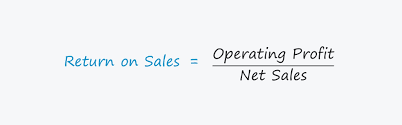
Return on Sales (ROS): Definition, Calculation & How to Improve It Want to know how efficiently your business converts sales into profit? Who doesn’t? Return on Sales (ROS) measures operational efficiency, helping you maximize earnings and identify wasteful spending. Even profitable businesses can struggle with cash flow if they overspend on marketing, R&D, or other expenses—leaving little profit despite high revenue. ROS answers: “How much profit do we keep from each dollar of sales?” Let’s break down what ROS is, how to calculate it, and strategies to improve it. What Is Return on Sales (ROS)? Return on Sales (ROS) is a profitability ratio that shows how much of your revenue turns into operating profit. Also called operating profit margin, it excludes interest and taxes, focusing purely on operational efficiency. Formula: ROS=(Operating ProfitNet Sales)×100ROS = (Net SalesOperating Profit​)×100 ROS vs. ROI vs. Net Profit Margin Metric What It Measures Key Difference ROS Profit from operations (before interest & taxes) Focuses on operational efficiency ROI (Return on Investment) Profit generated from an investment Measures effectiveness of capital spent (e.g., new equipment, marketing) Net Profit Margin Profit after all expenses (taxes, interest, etc.) Shows final profitability after all costs How to Calculate ROS Step-by-Step Formula Example Calculation Item Amount Revenue $10,000,000 Returns $1,000,000 COGS $2,000,000 Operating Expenses (SG&A) $4,000,000 Operating Profit $3,000,000 Net Sales $9,000,000 ROS = (3,000,0009,000,000)×100=∗∗33.3%∗∗ROS=(9,000,0003,000,000​)×100=∗∗33.3%∗∗ What Is a Good ROS? It depends on your industry. Here are average benchmarks: Industry Average ROS Healthcare 6-30%* Hotels 8-15% Manufacturing 6-8% Restaurants 3-7% Retail 2-5% Tech 10-20%+ *Higher for specialized services (e.g., surgical centers at 30%) Key Insight: If ROS declines as revenue grows, your costs may be rising too fast. 5 Ways to Improve Your ROS 1. Optimize Pricing Strategy 2. Reduce Costs 3. Boost Operational Efficiency 4. Improve Sales Process 5. Lower Customer Acquisition Cost (CAC) Why ROS Matters Pro Tip: Monitor ROS quarterly—if it drops, investigate rising costs or pricing issues. Summary ROS is a powerful metric for assessing how well your business turns sales into profit. By optimizing pricing, cutting costs, and improving efficiency, you can increase profitability and ensure sustainable growth. Like Related Posts Who is Salesforce? Who is Salesforce? Here is their story in their own words. From our inception, we’ve proudly embraced the identity of Read more Salesforce Marketing Cloud Transactional Emails Salesforce Marketing Cloud Transactional Emails are immediate, automated, non-promotional messages crucial to business operations and customer satisfaction, such as order Read more Salesforce Unites Einstein Analytics with Financial CRM Salesforce has unveiled a comprehensive analytics solution tailored for wealth managers, home office professionals, and retail bankers, merging its Financial Read more AI-Driven Propensity Scores AI plays a crucial role in propensity score estimation as it can discern underlying patterns between treatments and confounding variables Read more

Read More

Salesforce Custom Development

Salesforce Custom Development: Your Competitive Edge in 2025 The global custom software market is booming—projected to reach $146.18 billion by 2030, growing at 22.5% annually (Grand View Research). If your business is still relying on a generic, “one-size-fits-all” CRM setup, you’re likely missing out on growth, efficiency, and customer satisfaction. The solution? Custom Salesforce development. Beyond simple tweaks like adjusting page layouts or adding fields, true customization transforms Salesforce into a tailored business engine—giving your team superpowers, streamlining operations, and accelerating growth. Let’s explore why Salesforce custom development is a game-changer in 2025. What Is Salesforce Custom Development? Salesforce custom development means building unique features, automations, and integrations that align perfectly with your business needs. Instead of settling for out-of-the-box functionality, you enhance Salesforce to solve your specific challenges, such as: ✔ Developing custom apps on the Salesforce Platform✔ Building advanced workflows for sales, service, or operations✔ Integrating with third-party systems (ERPs, data warehouses, marketing tools)✔ Designing personalized dashboards & reports for real-time insights The result? A CRM that works the way your business does—not the other way around. Top 5 Benefits of Salesforce Custom Development 1. Tailored Workflows That Boost Efficiency Every business has unique processes—whether it’s lead qualification, customer onboarding, or support escalations. Custom workflows eliminate friction, improve adoption, and help teams work faster and smarter. 2. Automation That Saves Time (and Sanity) In 2025, manual work = lost opportunities. Custom development automates repetitive tasks—like follow-ups, data entry, and deal updates—freeing your team to focus on high-value work. 3. Real-Time Insights for Smarter Decisions Generic dashboards often miss the mark. Custom reports and visualizations align with your KPIs, helping leaders spot trends, risks, and opportunities faster. 4. Seamless Integrations for a Unified System Salesforce shouldn’t operate in a silo. Custom integrations with tools like HubSpot, QuickBooks, or SAP create a single source of truth, eliminating data silos and inefficiencies. 5. Hyper-Personalized Customer Experiences Custom development lets you deliver tailored interactions at scale—triggering behavior-based emails, dynamic portal content, or personalized support flows. The result? Happier, more loyal customers. Why Custom Development Matters More Than Ever The business landscape is more competitive than ever. Off-the-shelf CRM setups won’t cut it if you want to: ✔ Move faster than competitors✔ Make data-driven decisions with confidence✔ Deliver standout customer experiences With Salesforce’s evolving platform capabilities, the potential for customization is bigger and more accessible than ever—without blowing budgets or timelines. And the best part? Every team benefits—sales, marketing, service, and operations all work smarter with the right customizations. Is It Time for Custom Development? Ask yourself:🔹 Is your team wasting time on manual work?🔹 Are you fighting Salesforce limitations?🔹 Is reporting unclear or inconsistent?🔹 Do multiple systems fail to communicate?🔹 Is user adoption lagging? If you answered yes, custom development could be your competitive turning point. Avoiding Common Customization Pitfalls Custom development delivers huge rewards—but only if done right. Key tips: ✅ Start small, then scale (avoid over-engineering)✅ Document all customizations for future updates✅ Align changes with business goals✅ Test thoroughly before launch✅ Involve end users early And most importantly: Don’t go it alone. How Tectonic Can Help Custom development unlocks massive potential—but it requires expert execution. At Tectonic, we don’t just write code. We deeply understand your business, then build strategic Salesforce solutions that solve your biggest challenges. Our Salesforce-certified experts specialize in:✔ Complex automations✔ Smarter dashboards & reporting✔ Seamless third-party integrations Ready to transform your Salesforce experience? 📩 Contact Tectonic today. Final Thoughts Salesforce is powerful—but custom development makes it unstoppable. From tailored workflows to real-time insights, the benefits are too significant to ignore in 2025. Whether you’re scaling fast or streamlining operations, customization is your edge. And with the right partner, it’s easier than you think. Why settle for average? Build a CRM that works for you.  Like Related Posts Who is Salesforce? Who is Salesforce? Here is their story in their own words. From our inception, we’ve proudly embraced the identity of Read more Salesforce Marketing Cloud Transactional Emails Salesforce Marketing Cloud Transactional Emails are immediate, automated, non-promotional messages crucial to business operations and customer satisfaction, such as order Read more Salesforce Unites Einstein Analytics with Financial CRM Salesforce has unveiled a comprehensive analytics solution tailored for wealth managers, home office professionals, and retail bankers, merging its Financial Read more AI-Driven Propensity Scores AI plays a crucial role in propensity score estimation as it can discern underlying patterns between treatments and confounding variables Read more

Read More
Sales Pipeline

The Seven Stages of Sales Pipelines Explained

Customers embark on a journey from initial discovery to becoming repeat buyers, progressing through seven essential sales pipeline stages: Throughout the sales pipeline stages, sales leaders can identify opportunities to better engage customers and enhance the likelihood of successful purchases. Contact Tectonic today to discover how Salesforce can help fill your sales pipeline. Like Related Posts Who is Salesforce? Who is Salesforce? Here is their story in their own words. From our inception, we’ve proudly embraced the identity of Read more Salesforce Marketing Cloud Transactional Emails Salesforce Marketing Cloud Transactional Emails are immediate, automated, non-promotional messages crucial to business operations and customer satisfaction, such as order Read more Salesforce Unites Einstein Analytics with Financial CRM Salesforce has unveiled a comprehensive analytics solution tailored for wealth managers, home office professionals, and retail bankers, merging its Financial Read more AI-Driven Propensity Scores AI plays a crucial role in propensity score estimation as it can discern underlying patterns between treatments and confounding variables Read more
Read More

AI in Sales Enablement

automation, and personalization to enhance sales processes, increase customer engagement, and drive revenue growth. Companies are working with AI to improve analysis of all customer contact points to both identify leads and weigh lead quality. That includes ingesting information from web pages, email campaigns, phone calls, and much more.

Read More
gettectonic.com