Nodes Archives - gettectonic.com
How Graph Databases and AI Agents Are Redefining Modern Data Strategy

How Graph Databases and AI Agents Are Redefining Modern Data Strategy

The Data Tightrope: How Graph Databases and AI Agents Are Redefining Modern Data Strategy The Data Leader’s Dilemma: Speed vs. Legacy Today’s data leaders face an impossible balancing act: The gap between expectation and reality is widening. Businesses demand faster insights, deeper connections, and decisions that can’t wait—yet traditional databases weren’t built for this dynamic world. The Problem with Traditional Databases Relational databases force data into predefined tables, stripping away context and relationships. Need to analyze new connections? Prepare for:✔ Schema redesigns✔ Costly ETL pipelines✔ Slow, complex joins Result: Data becomes siloed, insights are delayed, and innovation stalls. Graph Databases: The Flexible Future of Data What Makes Graphs Different? Unlike rigid tables, graph databases store data as: Example: An e-commerce graph instantly reveals: No joins. No schema redesigns. Just direct, real-time traversal. Why Graphs Are Winning Now The Next Leap: AI-Powered, Self-Evolving Graphs Static graphs are powerful—but AI agents make them intelligent. How AI Agents Supercharge Graphs From Static Data to Living Knowledge Traditional graphs:❌ Manually updated❌ Fixed structure❌ Limited to known queries AI-augmented graphs:✅ Self-learning (adds/removes connections dynamically)✅ Adapts to new questions✅ Gets smarter with every query The Business Impact: Smarter, Faster, Cheaper 1. Break Down Silos Without Rebuilding Pipelines 2. Autonomous Decision-Making 3. Democratized Intelligence The Future: Graphs as Invisible Infrastructure In 2–3 years, AI-powered graphs will be as essential as cloud storage—ubiquitous, self-maintaining, and silently powering:✔ Hyper-personalized customer experiences✔ Real-time risk mitigation✔ Cross-functional insights How to Start Today The Bottom Line Static data is dead. The future belongs to dynamic, self-learning graphs powered by AI. The question isn’t if you’ll adopt this approach—it’s how fast you can start. → Innovators will leverage graphs as competitive moats.→ Laggards will drown in unconnected data. Like Related Posts Who is Salesforce? Who is Salesforce? Here is their story in their own words. From our inception, we’ve proudly embraced the identity of Read more Salesforce Unites Einstein Analytics with Financial CRM Salesforce has unveiled a comprehensive analytics solution tailored for wealth managers, home office professionals, and retail bankers, merging its Financial Read more AI-Driven Propensity Scores AI plays a crucial role in propensity score estimation as it can discern underlying patterns between treatments and confounding variables Read more Tectonic’s Successful Salesforce Track Record Salesforce Technology Services Integrator – Tectonic has successfully delivered Salesforce in a variety of industries including Public Sector, Hospitality, Manufacturing, Read more

Read More
Intelligent Adoption Framework

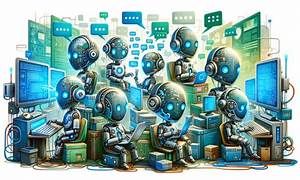
Exploring Open-Source Agentic AI Frameworks

Exploring Open-Source Agentic AI Frameworks: A Comparative Overview Most developers have heard of CrewAI and AutoGen, but fewer realize there are dozens of open-source agentic frameworks available—many released just in the past year. To understand how these frameworks work and how easy they are to use, several of the more popular options were briefly tested. This article explores what each one offers, comparing them to the more established CrewAI and AutoGen. The focus is on LangGraph, Agno, SmolAgents, Mastra, PydanticAI, and Atomic Agents, examining their features, design choices, and underlying philosophies. What Agentic AI Entails Agentic AI revolves around building systems that enable large language models (LLMs) to access accurate knowledge, process data, and take action. Essentially, it uses natural language to automate tasks and workflows. While natural language processing (NLP) for automation isn’t new, the key advancement is the level of autonomy now possible. LLMs can handle ambiguity, make dynamic decisions, and adapt to unstructured tasks—capabilities that were previously limited. However, just because LLMs understand language doesn’t mean they inherently grasp user intent or execute tasks reliably. This is where engineering comes into play—ensuring systems function predictably. For those new to the concept, deeper explanations of Agentic AI can be found here and here. The Role of Frameworks At their very core, agentic frameworks assist with prompt engineering and data routing to and from LLMs. They also provide abstractions that simplify development. Without a framework, developers would manually define system prompts, instructing the LLM to return structured responses (e.g., API calls to execute). The framework then parses these responses and routes them to the appropriate tools. Frameworks typically help in two ways: Additionally, they may assist with: However, some argue that full frameworks can be overkill. If an LLM misuses a tool or the system breaks, debugging becomes difficult due to abstraction layers. Switching models can also be problematic if prompts are tailored to a specific one. This is why some developers end up customizing framework components—such as create_react_agent in LangGraph—for finer control. Popular Frameworks The most well-known frameworks are CrewAI and AutoGen: LangGraph, while less mainstream, is a powerful choice for developers. It uses a graph-based approach, where nodes represent agents or workflows connected via edges. Unlike AutoGen, it emphasizes structured control over agent behavior, making it better suited for deterministic workflows. That said, some criticize LangGraph for overly complex abstractions and a steep learning curve. Emerging Frameworks Several newer frameworks are gaining traction: Common Features Most frameworks share core functionalities: Key Differences Frameworks vary in several areas: Abstraction vs. Control Frameworks differ in abstraction levels and developer control: They also vary in agent autonomy: Developer Experience Debugging challenges exist: Final Thoughts The best way to learn is to experiment. While this overview highlights key differences, factors like enterprise scalability and operational robustness require deeper evaluation. Some developers argue that agent frameworks introduce unnecessary complexity compared to raw SDK usage. However, for those building structured AI systems, these tools offer valuable scaffolding—if chosen wisely. Like Related Posts Who is Salesforce? Who is Salesforce? Here is their story in their own words. From our inception, we’ve proudly embraced the identity of Read more Salesforce Unites Einstein Analytics with Financial CRM Salesforce has unveiled a comprehensive analytics solution tailored for wealth managers, home office professionals, and retail bankers, merging its Financial Read more AI-Driven Propensity Scores AI plays a crucial role in propensity score estimation as it can discern underlying patterns between treatments and confounding variables Read more Tectonic’s Successful Salesforce Track Record Salesforce Technology Services Integrator – Tectonic has successfully delivered Salesforce in a variety of industries including Public Sector, Hospitality, Manufacturing, Read more

Read More
state space search in ai

State Space Search

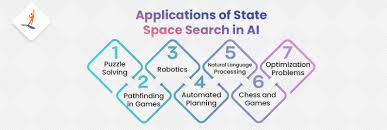
State space search is a problem-solving technique in AI where the focus is on exploring the space of all possible states to find a path to a desired goal state. It entails representing a problem as a graph or tree where nodes represent states and edges represent transitions between them. By systematically navigating this state space, AI systems can find solutions to complex tasks like puzzle-solving, robotics, and planning.  1. Representing Problems as State Spaces:  2. The Search Process: 3. Applications of State Space Search: Like Related Posts Who is Salesforce? Who is Salesforce? Here is their story in their own words. From our inception, we’ve proudly embraced the identity of Read more Salesforce Unites Einstein Analytics with Financial CRM Salesforce has unveiled a comprehensive analytics solution tailored for wealth managers, home office professionals, and retail bankers, merging its Financial Read more AI-Driven Propensity Scores AI plays a crucial role in propensity score estimation as it can discern underlying patterns between treatments and confounding variables Read more Tectonic’s Successful Salesforce Track Record Salesforce Technology Services Integrator – Tectonic has successfully delivered Salesforce in a variety of industries including Public Sector, Hospitality, Manufacturing, Read more

Read More
Large and Small Language Models

Architecture for Enterprise-Grade Agentic AI Systems

LangGraph: The Architecture for Enterprise-Grade Agentic AI Systems Modern enterprises need AI that doesn’t just answer questions—but thinks, plans, and acts autonomously. LangGraph provides the framework to build these next-generation agentic systems capable of: ✅ Multi-step reasoning across complex workflows✅ Dynamic decision-making with real-time tool selection✅ Stateful execution that maintains context across operations✅ Seamless integration with enterprise knowledge bases and APIs 1. LangGraph’s Graph-Based Architecture At its core, LangGraph models AI workflows as Directed Acyclic Graphs (DAGs): This structure enables:✔ Conditional branching (different paths based on data)✔ Parallel processing where possible✔ Guaranteed completion (no infinite loops) Example Use Case:A customer service agent that: 2. Multi-Hop Knowledge Retrieval Enterprise queries often require connecting information across multiple sources. LangGraph treats this as a graph traversal problem: python Copy # Neo4j integration for structured knowledge from langchain.graphs import Neo4jGraph graph = Neo4jGraph(url=”bolt://localhost:7687″, username=”neo4j”, password=”password”) query = “”” MATCH (doc:Document)-[:REFERENCES]->(policy:Policy) WHERE policy.name = ‘GDPR’ RETURN doc.title, doc.url “”” results = graph.query(query) # → Feeds into LangGraph nodes Hybrid Approach: 3. Building Autonomous Agents LangGraph + LangChain agents create systems that: python Copy from langchain.agents import initialize_agent, Tool from langchain.chat_models import ChatOpenAI # Define tools search_tool = Tool( name=”ProductSearch”, func=search_product_db, description=”Searches internal product catalog” ) # Initialize agent agent = initialize_agent( tools=[search_tool], llm=ChatOpenAI(model=”gpt-4″), agent=AgentType.ZERO_SHOT_REACT_DESCRIPTION ) # Execute response = agent.run(“Find compatible accessories for Model X-42”) 4. Full Implementation Example Enterprise Document Processing System: python Copy from langgraph.graph import StateGraph from langchain.embeddings import OpenAIEmbeddings from langchain.vectorstores import Pinecone # 1. Define shared state class DocProcessingState(BaseModel): query: str retrieved_docs: list = [] analysis: str = “” actions: list = [] # 2. Create nodes def retrieve(state): vectorstore = Pinecone.from_existing_index(“docs”, OpenAIEmbeddings()) state.retrieved_docs = vectorstore.similarity_search(state.query) return state def analyze(state): # LLM analysis of documents state.analysis = llm(f”Summarize key points from: {state.retrieved_docs}”) return state # 3. Build workflow workflow = StateGraph(DocProcessingState) workflow.add_node(“retrieve”, retrieve) workflow.add_node(“analyze”, analyze) workflow.add_edge(“retrieve”, “analyze”) workflow.add_edge(“analyze”, END) # 4. Execute agent = workflow.compile() result = agent.invoke({“query”: “2025 compliance changes”}) Why This Matters for Enterprises The Future:LangGraph enables AI systems that don’t just assist workers—but autonomously execute complete business processes while adhering to organizational rules and structures. “This isn’t chatbot AI—it’s digital workforce AI.” Next Steps: Like Related Posts Who is Salesforce? Who is Salesforce? Here is their story in their own words. From our inception, we’ve proudly embraced the identity of Read more Salesforce Unites Einstein Analytics with Financial CRM Salesforce has unveiled a comprehensive analytics solution tailored for wealth managers, home office professionals, and retail bankers, merging its Financial Read more AI-Driven Propensity Scores AI plays a crucial role in propensity score estimation as it can discern underlying patterns between treatments and confounding variables Read more Tectonic’s Successful Salesforce Track Record Salesforce Technology Services Integrator – Tectonic has successfully delivered Salesforce in a variety of industries including Public Sector, Hospitality, Manufacturing, Read more

Read More
salesforce nodes

Salesforce Nodes

Data Processing Engine: A Guide to Nodes and Transformations Introduction to Nodes In Data Processing Engine (DPE), nodes are the fundamental building blocks that enable you to construct sophisticated data processing workflows. Each node performs a specific operation—such as filtering, joining, or aggregating—allowing you to manipulate and analyze data efficiently. Availability & Permissions ✔ Editions: Professional, Enterprise, Unlimited, Developer✔ Access: Lightning Experience✔ Required Permissions: Core Node Types 1. Data Source Node 2. Transformation Nodes Apply logic to modify or enhance your data: 3. Advanced Nodes 4. Writeback Nodes Key Workflows Batch Data Transforms Joining Data Appending Datasets Pro Tips 🔹 Reference Nodes: Check dependencies before modifying a node to avoid downstream issues.🔹 Node Cloning: Copy/paste nodes across workflows for efficiency.🔹 Hierarchical Aggregation: Roll up multi-level data (e.g., sales team → region → global). Example Use Cases Permissions & Best Practices Next Steps ✔ Experiment: Build a simple transform (e.g., filter + append).✔ Explore: Use forecast nodes for predictive analytics.✔ Collaborate: Share reference node insights with your team. DPE’s modular node system empowers you to streamline ETL, reporting, and AI-driven analytics—all within Salesforce. Like Related Posts Who is Salesforce? Who is Salesforce? Here is their story in their own words. From our inception, we’ve proudly embraced the identity of Read more Salesforce Marketing Cloud Transactional Emails Salesforce Marketing Cloud Transactional Emails are immediate, automated, non-promotional messages crucial to business operations and customer satisfaction, such as order Read more Salesforce Unites Einstein Analytics with Financial CRM Salesforce has unveiled a comprehensive analytics solution tailored for wealth managers, home office professionals, and retail bankers, merging its Financial Read more AI-Driven Propensity Scores AI plays a crucial role in propensity score estimation as it can discern underlying patterns between treatments and confounding variables Read more

Read More
Python-Based Reasoning

Building Intelligent Order Management Workflows

Mastering LangGraph: Building Intelligent Order Management Workflows Introduction In this comprehensive guide, we will explore LangGraph—a robust library designed for orchestrating complex, multi-step workflows with Large Language Models (LLMs). We will apply it to a practical e-commerce use case: determining whether to place or cancel an order based on a user’s query. By the end of this tutorial, you will understand how to: We will walk through each step in detail, making it accessible to beginners and useful for those seeking to develop dynamic, intelligent workflows using LLMs. A dataset link is also provided for hands-on experimentation. Table of Contents 1. What Is LangGraph? LangGraph is a library that brings a graph-based approach to LangChain workflows. Traditional pipelines follow a linear progression, but real-world tasks often involve branching logic, loops (e.g., retrying failed steps), or human intervention. Key Features: 2. The Problem Statement: Order Management The workflow needs to handle two types of user queries: Since these operations require decision-making, we will use LangGraph to implement a structured, conditional workflow: 3. Environment Setup and Imports Explanation of Key Imports: 4. Data Loading and State Definition Load Inventory and Customer Data Define the Workflow State 5. Creating Tools and Integrating LLMs Define the Order Cancellation Tool Initialize LLM and Bind Tools 6. Defining Workflow Nodes Query Categorization Check Inventory Compute Shipping Costs Process Payment 7. Constructing the Workflow Graph 8. Visualizing and Testing the Workflow Like Related Posts Who is Salesforce? Who is Salesforce? Here is their story in their own words. From our inception, we’ve proudly embraced the identity of Read more Salesforce Marketing Cloud Transactional Emails Salesforce Marketing Cloud Transactional Emails are immediate, automated, non-promotional messages crucial to business operations and customer satisfaction, such as order Read more Salesforce Unites Einstein Analytics with Financial CRM Salesforce has unveiled a comprehensive analytics solution tailored for wealth managers, home office professionals, and retail bankers, merging its Financial Read more AI-Driven Propensity Scores AI plays a crucial role in propensity score estimation as it can discern underlying patterns between treatments and confounding variables Read more

Read More
Salesforce Labs

Salesforce ProVision

ProVision: Programmatic Generation of Multimodal Instruction Data for Enhanced Model Training The Challenge of Multimodal Instruction Data Recent advances in multimodal language models (MLMs) like GPT-4V and BLIP have enabled sophisticated image-based reasoning, such as answering complex queries like “How many students are raising their hands in this image?” However, training these models requires high-quality instruction data—paired visual content with corresponding questions and answers—which is difficult to generate at scale. Existing approaches face key limitations: Introducing ProVision: A Scalable, Programmatic Solution To address these challenges, we developed ProVision, a framework that automatically synthesizes multimodal instruction data using scene graphs and human-written Python programs. How It Works: Key Advantages Over Traditional Methods:✔ Interpretability – Rules-based generation ensures factual correctness.✔ Scalability – New data generators can be added to expand question types.✔ Flexibility – Works with both annotated and automatically generated scene graphs. ProVision-10M: A Large-Scale Multimodal Dataset Our framework integrates 24 single-image and 14 multi-image instruction generators, producing over 10 million high-quality Q&A pairs—publicly released as ProVision-10M. Performance Improvements in Fine-Tuning MLMs We evaluated ProVision-10M by incorporating it into: Results: Future Directions ProVision opens new possibilities for scalable, high-quality multimodal training data. Future work could: By enabling systematic, rule-based instruction synthesis, ProVision provides a cost-effective, transparent, and scalable alternative to traditional data generation methods—helping advance the next generation of multimodal AI. Like Related Posts Who is Salesforce? Who is Salesforce? Here is their story in their own words. From our inception, we’ve proudly embraced the identity of Read more Salesforce Marketing Cloud Transactional Emails Salesforce Marketing Cloud Transactional Emails are immediate, automated, non-promotional messages crucial to business operations and customer satisfaction, such as order Read more Salesforce Unites Einstein Analytics with Financial CRM Salesforce has unveiled a comprehensive analytics solution tailored for wealth managers, home office professionals, and retail bankers, merging its Financial Read more AI-Driven Propensity Scores AI plays a crucial role in propensity score estimation as it can discern underlying patterns between treatments and confounding variables Read more

Read More
Gen AI Unleased With Vector Database

Knowledge Graphs and Vector Databases

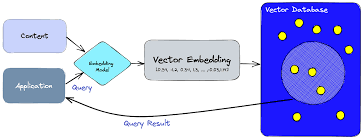
The Role of Knowledge Graphs and Vector Databases in Retrieval-Augmented Generation (RAG) In the dynamic AI landscape, Retrieval-Augmented Generation (RAG) systems are revolutionizing data retrieval by combining artificial intelligence with external data sources to deliver contextual, relevant outputs. Two core technologies driving this innovation are Knowledge Graphs and Vector Databases. While fundamentally different in their design and functionality, these tools complement one another, unlocking new potential for solving complex data problems across industries. Understanding Knowledge Graphs: Connecting the Dots Knowledge Graphs organize data into a network of relationships, creating a structured representation of entities and how they interact. These graphs emphasize understanding and reasoning through data, offering explainable and highly contextual results. How They Work Strengths Limitations Applications Vector Databases: The Power of Similarity In contrast, Vector Databases thrive in handling unstructured data such as text, images, and audio. By representing data as high-dimensional vectors, they excel at identifying similarities, enabling semantic understanding. How They Work Strengths Limitations Applications Combining Knowledge Graphs and Vector Databases: A Hybrid Approach While both technologies excel independently, their combination can amplify RAG systems. Knowledge Graphs bring reasoning and structure, while Vector Databases offer rapid, similarity-based retrieval, creating hybrid systems that are more intelligent and versatile. Example Use Cases Knowledge Graphs vs. Vector Databases: Key Differences Feature Knowledge Graphs Vector Databases Data Type Structured Unstructured Core Strength Relational reasoning Similarity-based retrieval Explainability High Low Scalability Limited for large datasets Efficient for massive datasets Flexibility Schema-dependent Schema-free Challenges in Implementation Future Trends: The Path to Convergence As AI evolves, the distinction between Knowledge Graphs and Vector Databases is beginning to blur. Emerging trends include: This convergence is paving the way for smarter, more adaptive systems that can handle both structured and unstructured data seamlessly. Conclusion Knowledge Graphs and Vector Databases represent two foundational technologies in the realm of Retrieval-Augmented Generation. Knowledge Graphs excel at reasoning through structured relationships, while Vector Databases shine in unstructured data retrieval. By combining their strengths, organizations can create hybrid systems that offer unparalleled insights, efficiency, and scalability. In a world where data continues to grow in complexity, leveraging these complementary tools is essential. Whether building intelligent healthcare systems, enhancing recommendation engines, or powering semantic search, the synergy between Knowledge Graphs and Vector Databases is unlocking the next frontier of AI innovation, transforming how industries harness the power of their data. Like Related Posts Who is Salesforce? Who is Salesforce? Here is their story in their own words. From our inception, we’ve proudly embraced the identity of Read more Salesforce Unites Einstein Analytics with Financial CRM Salesforce has unveiled a comprehensive analytics solution tailored for wealth managers, home office professionals, and retail bankers, merging its Financial Read more AI-Driven Propensity Scores AI plays a crucial role in propensity score estimation as it can discern underlying patterns between treatments and confounding variables Read more Tectonic’s Successful Salesforce Track Record Salesforce Technology Services Integrator – Tectonic has successfully delivered Salesforce in a variety of industries including Public Sector, Hospitality, Manufacturing, Read more

Read More
AI Assistants Using LangGraph

AI Assistants Using LangGraph

In the evolving world of AI, retrieval-augmented generation (RAG) systems have become standard for handling straightforward queries and generating contextually relevant responses. However, as demand grows for more sophisticated AI applications, there is a need for systems that move beyond simple retrieval tasks. Enter AI agents—autonomous entities capable of executing complex, multi-step processes, maintaining state across interactions, and dynamically adapting to new information. LangGraph, a powerful extension of the LangChain library, is designed to help developers build these advanced AI agents, enabling stateful, multi-actor applications with cyclic computation capabilities. AI Assistants Using LangGraph. In this insight, we’ll explore how LangGraph revolutionizes AI development and provide a step-by-step guide to building your own AI agent using an example that computes energy savings for solar panels. This example will demonstrate how LangGraph’s unique features enable the creation of intelligent, adaptable, and practical AI systems. What is LangGraph? LangGraph is an advanced library built on top of LangChain, designed to extend Large Language Model (LLM) applications by introducing cyclic computational capabilities. While LangChain allows for the creation of Directed Acyclic Graphs (DAGs) for linear workflows, LangGraph enhances this by enabling the addition of cycles—essential for developing agent-like behaviors. These cycles allow LLMs to continuously loop through processes, making decisions dynamically based on evolving inputs. LangGraph: Nodes, States, and Edges The core of LangGraph lies in its stateful graph structure: LangGraph redefines AI development by managing the graph structure, state, and coordination, allowing for the creation of sophisticated, multi-actor applications. With automatic state management and precise agent coordination, LangGraph facilitates innovative workflows while minimizing technical complexity. Its flexibility enables the development of high-performance applications, and its scalability ensures robust and reliable systems, even at the enterprise level. Step-by-step Guide Now that we understand LangGraph’s capabilities, let’s dive into a practical example. We’ll build an AI agent that calculates potential energy savings for solar panels based on user input. This agent can function as a lead generation tool on a solar panel seller’s website, providing personalized savings estimates based on key data like monthly electricity costs. This example highlights how LangGraph can automate complex tasks and deliver business value. Step 1: Import Necessary Libraries We start by importing the essential Python libraries and modules for the project. pythonCopy codefrom langchain_core.tools import tool from langchain_community.tools.tavily_search import TavilySearchResults from langchain_core.prompts import ChatPromptTemplate from langchain_core.runnables import Runnable from langchain_aws import ChatBedrock import boto3 from typing import Annotated from typing_extensions import TypedDict from langgraph.graph.message import AnyMessage, add_messages from langchain_core.messages import ToolMessage from langchain_core.runnables import RunnableLambda from langgraph.prebuilt import ToolNode Step 2: Define the Tool for Calculating Solar Savings Next, we define a tool to calculate potential energy savings based on the user’s monthly electricity cost. pythonCopy code@tool def compute_savings(monthly_cost: float) -> float: “”” Tool to compute the potential savings when switching to solar energy based on the user’s monthly electricity cost. Args: monthly_cost (float): The user’s current monthly electricity cost. Returns: dict: A dictionary containing: – ‘number_of_panels’: The estimated number of solar panels required. – ‘installation_cost’: The estimated installation cost. – ‘net_savings_10_years’: The net savings over 10 years after installation costs. “”” def calculate_solar_savings(monthly_cost): cost_per_kWh = 0.28 cost_per_watt = 1.50 sunlight_hours_per_day = 3.5 panel_wattage = 350 system_lifetime_years = 10 monthly_consumption_kWh = monthly_cost / cost_per_kWh daily_energy_production = monthly_consumption_kWh / 30 system_size_kW = daily_energy_production / sunlight_hours_per_day number_of_panels = system_size_kW * 1000 / panel_wattage installation_cost = system_size_kW * 1000 * cost_per_watt annual_savings = monthly_cost * 12 total_savings_10_years = annual_savings * system_lifetime_years net_savings = total_savings_10_years – installation_cost return { “number_of_panels”: round(number_of_panels), “installation_cost”: round(installation_cost, 2), “net_savings_10_years”: round(net_savings, 2) } return calculate_solar_savings(monthly_cost) Step 3: Set Up State Management and Error Handling We define utilities to manage state and handle errors during tool execution. pythonCopy codedef handle_tool_error(state) -> dict: error = state.get(“error”) tool_calls = state[“messages”][-1].tool_calls return { “messages”: [ ToolMessage( content=f”Error: {repr(error)}n please fix your mistakes.”, tool_call_id=tc[“id”], ) for tc in tool_calls ] } def create_tool_node_with_fallback(tools: list) -> dict: return ToolNode(tools).with_fallbacks( [RunnableLambda(handle_tool_error)], exception_key=”error” ) Step 4: Define the State and Assistant Class We create the state management class and the assistant responsible for interacting with users. pythonCopy codeclass State(TypedDict): messages: Annotated[list[AnyMessage], add_messages] class Assistant: def __init__(self, runnable: Runnable): self.runnable = runnable def __call__(self, state: State): while True: result = self.runnable.invoke(state) if not result.tool_calls and ( not result.content or isinstance(result.content, list) and not result.content[0].get(“text”) ): messages = state[“messages”] + [(“user”, “Respond with a real output.”)] state = {**state, “messages”: messages} else: break return {“messages”: result} Step 5: Set Up the LLM with AWS Bedrock We configure AWS Bedrock to enable advanced LLM capabilities. pythonCopy codedef get_bedrock_client(region): return boto3.client(“bedrock-runtime”, region_name=region) def create_bedrock_llm(client): return ChatBedrock(model_id=’anthropic.claude-3-sonnet-20240229-v1:0′, client=client, model_kwargs={‘temperature’: 0}, region_name=’us-east-1′) llm = create_bedrock_llm(get_bedrock_client(region=’us-east-1′)) Step 6: Define the Assistant’s Workflow We create a template and bind the tools to the assistant’s workflow. pythonCopy codeprimary_assistant_prompt = ChatPromptTemplate.from_messages( [ ( “system”, ”’You are a helpful customer support assistant for Solar Panels Belgium. Get the following information from the user: – monthly electricity cost Ask for clarification if necessary. ”’, ), (“placeholder”, “{messages}”), ] ) part_1_tools = [compute_savings] part_1_assistant_runnable = primary_assistant_prompt | llm.bind_tools(part_1_tools) Step 7: Build the Graph Structure We define nodes and edges for managing the AI assistant’s conversation flow. pythonCopy codebuilder = StateGraph(State) builder.add_node(“assistant”, Assistant(part_1_assistant_runnable)) builder.add_node(“tools”, create_tool_node_with_fallback(part_1_tools)) builder.add_edge(START, “assistant”) builder.add_conditional_edges(“assistant”, tools_condition) builder.add_edge(“tools”, “assistant”) memory = MemorySaver() graph = builder.compile(checkpointer=memory) Step 8: Running the Assistant The assistant can now be run through its graph structure to interact with users. python import uuidtutorial_questions = [ ‘hey’, ‘can you calculate my energy saving’, “my montly cost is $100, what will I save”]thread_id = str(uuid.uuid4())config = {“configurable”: {“thread_id”: thread_id}}_printed = set()for question in tutorial_questions: events = graph.stream({“messages”: (“user”, question)}, config, stream_mode=”values”) for event in events: _print_event(event, _printed) Conclusion By following these steps, you can create AI Assistants Using LangGraph to calculate solar panel savings based on user input. This tutorial demonstrates how LangGraph empowers developers to create intelligent, adaptable systems capable of handling complex tasks efficiently. Whether your application is in customer support, energy management, or other domains, LangGraph provides the Like Related Posts Who is Salesforce? Who is Salesforce? Here is their story in

Read More
AI Agent Workflows

AI Agent Workflows

AI Agent Workflows: The Ultimate Guide to Choosing Between LangChain and LangGraph Explore two transformative libraries—LangChain and LangGraph—both created by the same developer, designed to build Agentic AI applications. This guide dives into their foundational components, differences in handling functionality, and how to choose the right tool for your use case. Language Models as the Bridge Modern language models have unlocked revolutionary ways to connect users with AI systems and enable AI-to-AI communication via natural language. Enterprises aiming to harness Agentic AI capabilities often face the pivotal question: “Which tools should we use?” For those eager to begin, this question can become a roadblock. Why LangChain and LangGraph? LangChain and LangGraph are among the leading frameworks for crafting Agentic AI applications. By understanding their core building blocks and approaches to functionality, you’ll gain clarity on how each aligns with your needs. Keep in mind that the rapid evolution of generative AI tools means today’s truths might shift tomorrow. Note: Initially, this guide intended to compare AutoGen, LangChain, and LangGraph. However, AutoGen’s upcoming 0.4 release introduces a foundational redesign. Stay tuned for insights post-launch! Understanding the Basics LangChain LangChain offers two primary methods: Key components include: LangGraph LangGraph is tailored for graph-based workflows, enabling flexibility in non-linear, conditional, or feedback-loop processes. It’s ideal for cases where LangChain’s predefined structure might not suffice. Key components include: Comparing Functionality Tool Calling Conversation History and Memory Retrieval-Augmented Generation (RAG) Parallelism and Error Handling When to Choose LangChain, LangGraph, or Both LangChain Only LangGraph Only Using LangChain + LangGraph Together Final Thoughts Whether you choose LangChain, LangGraph, or a combination, the decision depends on your project’s complexity and specific needs. By understanding their unique capabilities, you can confidently design robust Agentic AI workflows. Like Related Posts Who is Salesforce? Who is Salesforce? Here is their story in their own words. From our inception, we’ve proudly embraced the identity of Read more Salesforce Marketing Cloud Transactional Emails Salesforce Marketing Cloud Transactional Emails are immediate, automated, non-promotional messages crucial to business operations and customer satisfaction, such as order Read more Salesforce Unites Einstein Analytics with Financial CRM Salesforce has unveiled a comprehensive analytics solution tailored for wealth managers, home office professionals, and retail bankers, merging its Financial Read more AI-Driven Propensity Scores AI plays a crucial role in propensity score estimation as it can discern underlying patterns between treatments and confounding variables Read more
Read More
Exploring Emerging LLM

Exploring Emerging LLM

Exploring Emerging LLM Agent Types and Architectures The Evolution Beyond ReAct AgentsThe shortcomings of first-generation ReAct agents have paved the way for a new era of LLM agents, bringing innovative architectures and possibilities. In 2024, agents have taken center stage in the AI landscape. Companies globally are developing chatbot agents, tools like MultiOn are bridging agents to external websites, and frameworks like LangGraph and LlamaIndex Workflows are helping developers build more structured, capable agents. However, despite their rising popularity within the AI community, agents are yet to see widespread adoption among consumers or enterprises. This leaves businesses wondering: How do we navigate these emerging frameworks and architectures? Which tools should we leverage for our next application? Having recently developed a sophisticated agent as a product copilot, we share key insights to guide you through the evolving agent ecosystem. What Are LLM-Based Agents? At their core, LLM-based agents are software systems designed to execute complex tasks by chaining together multiple processing steps, including LLM calls. These agents: The Rise and Fall of ReAct Agents ReAct (reason, act) agents marked the first wave of LLM-powered tools. Promising broad functionality through abstraction, they fell short due to their limited utility and overgeneralized design. These challenges spurred the emergence of second-generation agents, emphasizing structure and specificity. The Second Generation: Structured, Scalable Agents Modern agents are defined by smaller solution spaces, offering narrower but more reliable capabilities. Instead of open-ended design, these agents map out defined paths for actions, improving precision and performance. Key characteristics of second-gen agents include: Common Agent Architectures Agent Development Frameworks Several frameworks are now available to simplify and streamline agent development: While frameworks can impose best practices and tooling, they may introduce limitations for highly complex applications. Many developers still prefer code-driven solutions for greater control. Should You Build an Agent? Before investing in agent development, consider these criteria: If you answered “yes,” an agent may be a suitable choice. Challenges and Solutions in Agent Development Common Issues: Strategies to Address Challenges: Conclusion The generative AI landscape is brimming with new frameworks and fervent innovation. Before diving into development, evaluate your application needs and consider whether agent frameworks align with your objectives. By thoughtfully assessing the tools and architectures available, you can create agents that deliver measurable value while avoiding unnecessary complexity. Like Related Posts Who is Salesforce? Who is Salesforce? Here is their story in their own words. From our inception, we’ve proudly embraced the identity of Read more Salesforce Unites Einstein Analytics with Financial CRM Salesforce has unveiled a comprehensive analytics solution tailored for wealth managers, home office professionals, and retail bankers, merging its Financial Read more AI-Driven Propensity Scores AI plays a crucial role in propensity score estimation as it can discern underlying patterns between treatments and confounding variables Read more Tectonic’s Successful Salesforce Track Record Salesforce Technology Services Integrator – Tectonic has successfully delivered Salesforce in a variety of industries including Public Sector, Hospitality, Manufacturing, Read more

Read More
Granular Locking in Salesforce

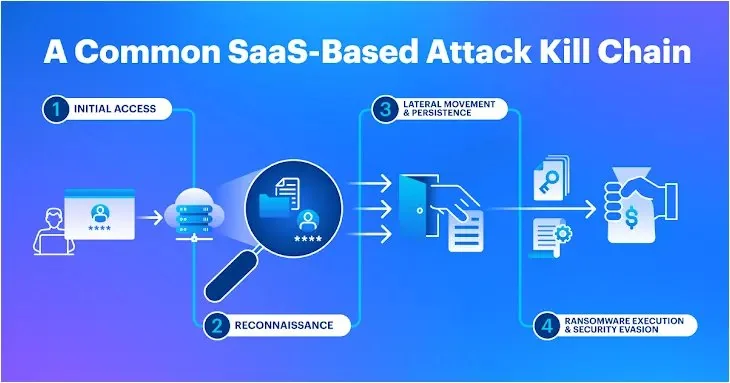
WithSecure Cloud Protection for Salesforce

WithSecure Cloud Protection for Salesforce: Comprehensive Cloud Security Solution WithSecure Cloud Protection for Salesforce is a robust, cloud-based security solution designed to enhance and extend the existing security features of the Salesforce platform. This solution thoroughly inspects content entering or leaving the Salesforce cloud, ensuring that files or URLs exchanged within a Salesforce organization are safeguarded against potential cyber threats targeting your company, partners, or customers. Key Features of WithSecure Cloud Protection for Salesforce 1. Salesforce Application and WithSecure Security Cloud Integration: 2. Real-time Threat Intelligence: 3. Impact on Salesforce Usage: Setting Up File Protection 1. Configuring File Protection Scan Settings: 2. Handling Disallowed Content: Setting Up URL Protection 1. Configuring URL Protection Scan Settings: WithSecure Cloud Protection for Salesforce delivers robust security enhancements without requiring additional software installations or network configurations. It ensures comprehensive protection against evolving cyber threats while seamlessly integrating into your existing Salesforce environment. Like Related Posts Who is Salesforce? Who is Salesforce? Here is their story in their own words. From our inception, we’ve proudly embraced the identity of Read more Salesforce Marketing Cloud Transactional Emails Salesforce Marketing Cloud Transactional Emails are immediate, automated, non-promotional messages crucial to business operations and customer satisfaction, such as order Read more Salesforce Unites Einstein Analytics with Financial CRM Salesforce has unveiled a comprehensive analytics solution tailored for wealth managers, home office professionals, and retail bankers, merging its Financial Read more AI-Driven Propensity Scores AI plays a crucial role in propensity score estimation as it can discern underlying patterns between treatments and confounding variables Read more
Read More
gettectonic.com