OpenAI Archives - gettectonic.com - Page 5
AI platform for automated task management

AI platform for automated task management

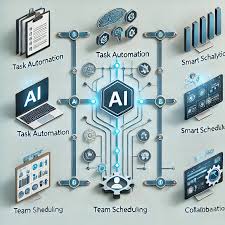
Salesforce Doubles Down on AI Innovation with Agentforce Salesforce, renowned for its CRM software used by over 150,000 businesses, including Amazon and Walmart, continues to push the boundaries of innovation. Beyond its flagship CRM, Salesforce also owns Slack, the popular workplace communication app. Now, the company is taking its AI capabilities to the next level with Agentforce—a platform that empowers businesses to build and deploy AI-powered digital agents for automating tasks such as creating sales reports and summarizing Slack conversations. What Problem Does Agentforce Solve? Salesforce has been leveraging AI for years, starting with the launch of Einstein in 2016. Einstein’s initial capabilities were limited to basic, scriptable tasks. However, the rise of generative AI created an opportunity to tackle more complex challenges, enabling tools to make smarter decisions and interpret natural language. This evolution led to a series of innovations—Einstein GPT, Einstein Copilot, and now Agentforce—a flexible platform offering prebuilt and customizable agents designed to meet diverse business needs. “Our customers wanted more. Some wanted to tweak the agents we offer, while others wanted to create their own,” said Tyler Carlson, Salesforce’s VP of Business Development. The Technology Behind Agentforce Agentforce is powered by Salesforce’s Atlas Reasoning Engine, developed in-house to drive smarter decision-making. The platform integrates with AI models from leading providers like OpenAI, Anthropic, Amazon, and Google, offering businesses a variety of tools to choose from. Slack, which Salesforce acquired in 2021, plays a pivotal role as a testing ground for these AI agents. Currently in beta, Agentforce’s Slack integration allows businesses to implement automations directly where employees work, enhancing usability. “Slack makes these tools easy to use and accessible,” Carlson noted. How Agentforce Stands Out Customizing AI for Business Needs With tools like Agentbuilder, businesses can create AI agents tailored to specific tasks. For instance, an agent could prioritize and sort incoming emails, respond to HR inquiries, or handle customer support using internal data. One standout example is Salesforce’s partnership with Workday to develop an AI-powered service agent for employee questions. Driving Results and Adoption Salesforce has already seen promising results from early trials, with Agentforce resolving 90% of customer inquiries autonomously. The company aims to expand adoption and functionality, allowing these agents to handle even larger workloads. “We’re building a bigger ecosystem of partners and skills,” Carlson emphasized. “By next year, we want Agentforce to be a must-have for businesses.” With Agentforce, Salesforce continues to cement its role as a leader in AI innovation, helping businesses work smarter, faster, and more effectively. Like Related Posts Who is Salesforce? Who is Salesforce? Here is their story in their own words. From our inception, we’ve proudly embraced the identity of Read more Salesforce Marketing Cloud Transactional Emails Salesforce Marketing Cloud Transactional Emails are immediate, automated, non-promotional messages crucial to business operations and customer satisfaction, such as order Read more Salesforce Unites Einstein Analytics with Financial CRM Salesforce has unveiled a comprehensive analytics solution tailored for wealth managers, home office professionals, and retail bankers, merging its Financial Read more AI-Driven Propensity Scores AI plays a crucial role in propensity score estimation as it can discern underlying patterns between treatments and confounding variables Read more

Read More
AI Agent Rivalry

AI Agent Rivalry

Microsoft and Salesforce’s AI Agent Rivalry Heats Up The battle for dominance in the AI agent space has escalated, with Salesforce CEO Marc Benioff intensifying his criticism of Microsoft’s AI solutions. Following remarks at Dreamforce 2024, Benioff took to X (formerly Twitter) to call out Microsoft for what he called “rebranding Copilot as ‘agents’ in panic mode.” The AI Agent rivalry winner may be determined not by flashy features but by delivering tangible, transformative outcomes for businesses navigating the complexities of AI adoption. AI Agent Rivalry. Benioff didn’t hold back, labeling Microsoft’s Copilot as “a flop”, citing issues like data leaks, inaccuracies, and requiring customers to build their own large language models (LLMs). In contrast, he touted Salesforce’s Agentforce as a solution that autonomously drives sales, service, marketing, analytics, and commerce without the complications he attributes to Microsoft’s offerings. Microsoft’s Copilot: A New UI for AI Microsoft recently unveiled new autonomous agent capabilities for Copilot Studio and Dynamics 365, positioning these agents as tools to enhance productivity across teams and functions. CEO Satya Nadella described Copilot as “the UI for AI” and emphasized its flexibility, allowing businesses to create, manage, and integrate agents seamlessly. Despite the fanfare, Benioff dismissed Copilot’s updates, likening it to “Clippy 2.0” and claiming it fails to deliver accuracy or transformational impact. Salesforce Expands Agentforce with Strategic Partnerships At Dreamforce 2024, Salesforce unveiled its Agentforce Partner Network, a global ecosystem featuring collaborators like AWS, Google Cloud, IBM, and Workday. The move aims to bolster the capabilities of Agentforce, Salesforce’s AI-driven platform that delivers tailored, autonomous business solutions. Agentforce allows businesses to deploy customizable agents without complex coding. With features like the Agent Builder, users can craft workflows and instructions in natural language, making the platform accessible to both technical and non-technical teams. Flexibility and Customization: Salesforce vs. Microsoft Both Salesforce and Microsoft emphasize AI’s transformative potential, but their approaches differ: Generative AI vs. Predictive AI Salesforce has doubled down on generative AI, with Einstein GPT producing personalized content using CRM data while also providing predictive analytics to forecast customer behavior and sales outcomes. Microsoft, on the other hand, combines generative and predictive AI across its ecosystem. Copilot not only generates content but also performs autonomous decision-making in Dynamics 365 and Azure, positioning itself as a comprehensive enterprise solution. The Rise of Multi-Agent AI Systems The competition between Microsoft and Salesforce reflects a broader trend in AI-driven automation. Companies like OpenAI are experimenting with frameworks like Swarm, which simplifies the creation of interconnected AI agents for tasks such as lead generation and marketing campaign development. Similarly, startups like DevRev are introducing conversational AI builders to design custom agents, offering enterprises up to 95% task accuracy without the need for coding. What Lies Ahead in the AI Agent Landscape? As Salesforce and Microsoft push the boundaries of AI integration, businesses are evaluating these tools for their flexibility, customization, and impact on operations. While Salesforce leads in CRM-focused AI, Microsoft’s integrated approach appeals to enterprises seeking cross-functional AI solutions. In the end, the winner may be determined not by flashy features but by delivering tangible, transformative outcomes for businesses navigating the complexities of AI adoption. AI Agent Rivalry. Like Related Posts Who is Salesforce? Who is Salesforce? Here is their story in their own words. From our inception, we’ve proudly embraced the identity of Read more Salesforce Marketing Cloud Transactional Emails Salesforce Marketing Cloud Transactional Emails are immediate, automated, non-promotional messages crucial to business operations and customer satisfaction, such as order Read more Salesforce Unites Einstein Analytics with Financial CRM Salesforce has unveiled a comprehensive analytics solution tailored for wealth managers, home office professionals, and retail bankers, merging its Financial Read more AI-Driven Propensity Scores AI plays a crucial role in propensity score estimation as it can discern underlying patterns between treatments and confounding variables Read more

Read More
Where LLMs Fall Short

LLM Economies

Throughout history, disruptive technologies have been the catalyst for major social and economic revolutions. The invention of the plow and irrigation systems 12,000 years ago sparked the Agricultural Revolution, while Johannes Gutenberg’s 15th-century printing press fueled the Protestant Reformation and helped propel Europe out of the Middle Ages into the Renaissance. In the 18th century, James Watt’s steam engine ushered in the Industrial Revolution. More recently, the internet has revolutionized communication, commerce, and information access, shrinking the world into a global village. Similarly, smartphones have transformed how people interact with their surroundings. Now, we stand at the dawn of the AI revolution. Large Language Models (LLMs) represent a monumental leap forward, with significant economic implications at both macro and micro levels. These models are reshaping global markets, driving new forms of currency, and creating a novel economic landscape. The reason LLMs are transforming industries and redefining economies is simple: they automate both routine and complex tasks that traditionally require human intelligence. They enhance decision-making processes, boost productivity, and facilitate cost reductions across various sectors. This enables organizations to allocate human resources toward more creative and strategic endeavors, resulting in the development of new products and services. From healthcare to finance to customer service, LLMs are creating new markets and driving AI-driven services like content generation and conversational assistants into the mainstream. To truly grasp the engine driving this new global economy, it’s essential to understand the inner workings of this disruptive technology. These posts will provide both a macro-level overview of the economic forces at play and a deep dive into the technical mechanics of LLMs, equipping you with a comprehensive understanding of the revolution happening now. Why Now? The Connection Between Language and Human Intelligence AI did not begin with ChatGPT’s arrival in November 2022. Many people were developing machine learning classification models in 1999, and the roots of AI go back even further. Artificial Intelligence was formally born in 1950, when Alan Turing—considered the father of theoretical computer science and famed for cracking the Nazi Enigma code during World War II—created the first formal definition of intelligence. This definition, known as the Turing Test, demonstrated the potential for machines to exhibit human-like intelligence through natural language conversations. The test involves a human evaluator who engages in conversations with both a human and a machine. If the evaluator cannot reliably distinguish between the two, the machine is considered to have passed the test. Remarkably, after 72 years of gradual AI development, ChatGPT simulated this very interaction, passing the Turing Test and igniting the current AI explosion. But why is language so closely tied to human intelligence, rather than, for example, vision? While 70% of our brain’s neurons are devoted to vision, OpenAI’s pioneering image generation model, DALL-E, did not trigger the same level of excitement as ChatGPT. The answer lies in the profound role language has played in human evolution. The Evolution of Language The development of language was the turning point in humanity’s rise to dominance on Earth. As Yuval Noah Harari points out in his book Sapiens: A Brief History of Humankind, it was the ability to gossip and discuss abstract concepts that set humans apart from other species. Complex communication, such as gossip, requires a shared, sophisticated language. Human language evolved from primitive cave signs to structured alphabets, which, along with grammar rules, created languages capable of expressing thousands of words. In today’s digital age, language has further evolved with the inclusion of emojis, and now with the advent of GenAI, tokens have become the latest cornerstone in this progression. These shifts highlight the extraordinary journey of human language, from simple symbols to intricate digital representations. In the next post, we will explore the intricacies of LLMs, focusing specifically on tokens. But before that, let’s delve into the economic forces shaping the LLM-driven world. The Forces Shaping the LLM Economy AI Giants in Competition Karl Marx and Friedrich Engels argued that those who control the means of production hold power. The tech giants of today understand that AI is the future means of production, and the race to dominate the LLM market is well underway. This competition is fierce, with industry leaders like OpenAI, Google, Microsoft, and Facebook battling for supremacy. New challengers such as Mistral (France), AI21 (Israel), and Elon Musk’s xAI and Anthropic are also entering the fray. The LLM industry is expanding exponentially, with billions of dollars of investment pouring in. For example, Anthropic has raised $4.5 billion from 43 investors, including major players like Amazon, Google, and Microsoft. The Scarcity of GPUs Just as Bitcoin mining requires vast computational resources, training LLMs demands immense computing power, driving a search for new energy sources. Microsoft’s recent investment in nuclear energy underscores this urgency. At the heart of LLM technology are Graphics Processing Units (GPUs), essential for powering deep neural networks. These GPUs have become scarce and expensive, adding to the competitive tension. Tokens: The New Currency of the LLM Economy Tokens are the currency driving the emerging AI economy. Just as money facilitates transactions in traditional markets, tokens are the foundation of LLM economics. But what exactly are tokens? Tokens are the basic units of text that LLMs process. They can be single characters, parts of words, or entire words. For example, the word “Oscar” might be split into two tokens, “os” and “car.” The performance of LLMs—quality, speed, and cost—hinges on how efficiently they generate these tokens. LLM providers price their services based on token usage, with different rates for input (prompt) and output (completion) tokens. As companies rely more on LLMs, especially for complex tasks like agentic applications, token usage will significantly impact operational costs. With fierce competition and the rise of open-source models like Llama-3.1, the cost of tokens is rapidly decreasing. For instance, OpenAI reduced its GPT-4 pricing by about 80% over the past year and a half. This trend enables companies to expand their portfolio of AI-powered products, further fueling the LLM economy. Context Windows: Expanding Capabilities

Read More
AI Won't Hurt Salesforce

AI Won’t Hurt Salesforce

Marc Benioff Dismisses AI Threats, Sets Sights on a Billion AI Agents in One Year Salesforce CEO Marc Benioff has no doubts about the transformative potential of AI for enterprise software, particularly Salesforce itself. At the core of his vision are AI agents—autonomous software bots designed to handle routine tasks, freeing up human workers to focus on more strategic priorities. “What if your workforce had no limits? That’s a question we couldn’t even ask over the past 25 years of Salesforce—or the 45 years I’ve been in software,” Benioff said during an appearance on TechCrunch’s Equity podcast. The Billion-Agent Goal Benioff revealed that Salesforce’s recently launched Agentforce platform is already being adopted by “hundreds of customers” and aims to deploy a billion AI agents within a year. These agents are designed to handle tasks across industries—from enhancing customer experiences at retail brands like Gucci to assisting patients with follow-ups in healthcare. To illustrate, Benioff shared his experience with Disney’s virtual Private Tour Guides. “The AI agent analyzed park flow, ride history, and preferences, then guided me to attractions I hadn’t visited before,” he explained. Competition with Microsoft and the AI Landscape While Benioff is bullish on AI, he hasn’t hesitated to criticize competitors—particularly Microsoft. When Microsoft unveiled its new autonomous agents for Dynamics 365 in October, Benioff dismissed them as uninspired. “Copilot is the new Clippy,” he quipped, referencing Microsoft’s infamous virtual assistant from the 1990s. Benioff also cited Gartner research highlighting data security issues and administrative flaws in Microsoft’s AI tools, adding, “Copilot has disappointed so many customers. It’s not transforming companies.” However, industry skeptics argue that the real challenge to Salesforce isn’t Microsoft but the wave of AI-powered startups disrupting traditional enterprise software. With tools like OpenAI’s ChatGPT and Klarna’s in-house AI assistant “Kiki,” companies are starting to explore GenAI solutions that can replace legacy platforms like Salesforce altogether. For example, Klarna recently announced it was moving away from Salesforce and Workday, favoring GenAI tools that enable seamless, conversational interfaces and faster data access. Why Salesforce Is Positioned to Win Despite the noise, Benioff remains confident that Salesforce’s extensive data infrastructure gives it a significant edge. “We manage 230 petabytes of customer data with robust security and sharing models. That’s what allows AI to thrive in our ecosystem,” he said. While companies may question how other platforms like OpenAI handle data, Salesforce offers an integrated approach, reducing the need for complex data migrations to other clouds, such as Microsoft Azure. Salesforce’s Own Use of AI Benioff also highlighted Salesforce’s internal adoption of Agentforce, using AI agents in its customer service operations, sales processes, and help centers. “If you’re authenticated on help.salesforce.com, you’re already interacting with our agent,” he noted. AI Startups: Threat or Opportunity? As for concerns about AI startups overtaking Salesforce, Benioff sees them as acquisition opportunities rather than existential threats. “We’ve made over 60 acquisitions, many of them startups,” he said. He pointed to Agentforce itself, which was built using technology from Airkit.ai, a startup founded by a former Salesforce employee. Salesforce Ventures initially invested in Airkit.ai before acquiring and integrating it into its platform. The Path Forward Benioff is resolute in his belief that AI won’t hurt Salesforce—instead, it will revolutionize how businesses operate. While skeptics warn of a seismic shift in enterprise software, Benioff’s strategy is clear: lean into AI, leverage data, and stay agile through innovation and acquisitions. “We’re just getting started,” he concluded, reiterating his vision for a future where AI agents expand the possibilities of work and customer experience like never before. Like Related Posts Who is Salesforce? Who is Salesforce? Here is their story in their own words. From our inception, we’ve proudly embraced the identity of Read more Salesforce Marketing Cloud Transactional Emails Salesforce Marketing Cloud Transactional Emails are immediate, automated, non-promotional messages crucial to business operations and customer satisfaction, such as order Read more Salesforce Unites Einstein Analytics with Financial CRM Salesforce has unveiled a comprehensive analytics solution tailored for wealth managers, home office professionals, and retail bankers, merging its Financial Read more AI-Driven Propensity Scores AI plays a crucial role in propensity score estimation as it can discern underlying patterns between treatments and confounding variables Read more

Read More
Pioneering AI-Driven Customer Engagement

Pioneering AI-Driven Customer Engagement

With Salesforce at the forefront of the AI revolution, Agentforce, introduced at Dreamforce, represents the next phase in customer service automation. It integrates AI and human collaboration to automate repetitive tasks, freeing human talent for more strategic activities, ultimately improving customer satisfaction. Tallapragada emphasized how this AI-powered tool enables businesses, particularly in the Middle East, to scale operations and enhance efficiency, aligning with the region’s appetite for growth and innovation.

Read More
AI for Product Builders

AI for Product Builders

Practical AI for Product Builders: Beyond the Hype Cutting Through the White AI Noise AI dominates tech conversations—yet much of the discussion feels abstract. What’s often missing is a practical guide for integrating AI into real products. How can AI: ✔ Enhance user experiences?✔ Enable new capabilities?✔ Improve existing features (faster/cheaper/better)?✔ And—just as importantly—when shouldn’t you use it? As product and UX professionals, we solve user problems with the best tools available. AI expands that toolkit in surprising ways. This guide breaks down key techniques so you can confidently say: AI Basics: What We’re Really Talking About Large Language Models (LLMs) = Word Prediction Engines When people say “AI” today, they usually mean LLMs—the technology behind ChatGPT, Claude, Gemini, and others. How they work: Comparison: An huge team of forgetful interns. Each time you chat, you’re talking to a new intern who reads the previous conversation before responding. Key limitations: Moving Beyond Chatbots Chatbots were the first wave of AI products, but conversational interfaces aren’t always the best solution. Example: AI Image Editing Problem: You generate an image of a cat in a café but want to tweak one poster. ✅ GUI + AI (e.g., Photoshop Generative Fill) ❌ Chat-only (e.g., ChatGPT + DALL-E) Lesson: Direct manipulation (GUI) + AI > Chat-only interfaces for many use cases. The AI Toolbox: Key Techniques 1. LLM Prompting What: Basic text-in, text-out AI (like ChatGPT). Best for: Limitations: 2. Image Generation What: Models like DALL-E, Imagen, Midjourney create images from text. Best for: Key Insight: 3. Structured Output & Tool Use Problem: Raw LLM output is messy for apps. Solution: Force responses into predefined formats (e.g., JSON). Example: Tool Use: Lets LLMs “choose” next actions (e.g., search orders vs. ask clarifying questions). 4. Embeddings What: Convert text into numerical vectors (“meaning coordinates”). Why it matters: Use cases: 5. Retrieval-Augmented Generation (RAG) What: Combine LLMs with your own data. How it works: Benefits: When Not to Use AI Red Flags in AI Product Design 🚩 “We need an AI strategy” → Focus on user needs, not tech for tech’s sake.🚩 Sparkly “AI” buttons → AI should feel seamless, not tacked-on. Remember: Many “smart” features (e.g., Apple’s “Magic” tools) don’t require AI. The Path Forward AI enables new possibilities, but great products still solve real problems. Use these tools to: AI isn’t magic. But used thoughtfully, it can help build products that are. Next steps: Like Related Posts Who is Salesforce? Who is Salesforce? Here is their story in their own words. From our inception, we’ve proudly embraced the identity of Read more Salesforce Unites Einstein Analytics with Financial CRM Salesforce has unveiled a comprehensive analytics solution tailored for wealth managers, home office professionals, and retail bankers, merging its Financial Read more AI-Driven Propensity Scores AI plays a crucial role in propensity score estimation as it can discern underlying patterns between treatments and confounding variables Read more Tectonic’s Successful Salesforce Track Record Salesforce Technology Services Integrator – Tectonic has successfully delivered Salesforce in a variety of industries including Public Sector, Hospitality, Manufacturing, Read more

Read More
Road for AI Regulation

Road for AI Regulation

The concept of artificial intelligence, or synthetic minds capable of thinking and reasoning like humans, has been around for centuries. Ancient cultures often expressed ideas and pursued goals similar to AI, and in the early 20th century, science fiction brought these notions to modern audiences. Works like The Wizard of Oz and films such as Metropolis resonated globally, laying the groundwork for contemporary AI discussions.

Read More
ChatGPT and Politics?

ChatGPT and Politics?

ChatGPT has also appeared in influence operations, with groups using it to generate political content for social media. OpenAI observed an Iranian-led operation, Storm-2035, using ChatGPT to publish politically charged content about U.S. elections and global conflicts. Yet, OpenAI noted that these AI-driven influence efforts often lack audience engagement.

Read More
OpenAI Introduces Canvas

OpenAI Introduces Canvas

Don’t get spooked – OpenAI introduces Canvas—a fresh interface for collaborative writing and coding with ChatGPT, designed to go beyond simple conversation. Canvas opens in a separate window, enabling you and ChatGPT to work on projects side by side, creating and refining ideas in real time. This early beta provides an entirely new way of collaborating with AI—combining conversation with the ability to edit and enhance content together. Built on GPT-4o, Canvas can be selected in the model picker during the beta phase. Starting today, we’re rolling it out to ChatGPT Plus and Team users globally, with Enterprise and Education users gaining access next week. Once out of beta, Canvas will be available to all ChatGPT Free users. Enhancing Collaboration with ChatGPT While ChatGPT’s chat interface works well for many tasks, projects requiring editing and iteration benefit from more. Canvas provides a workspace designed for such needs. Here, ChatGPT can better interpret your objectives, offering inline feedback and suggestions across entire projects—similar to a copy editor or code reviewer. You control every aspect in Canvas, from direct editing to leveraging shortcuts like adjusting text length, debugging code, or quickly refining writing. You can also revert to previous versions with Canvas’s back button. OpenAI Introduces Canvas Canvas opens automatically when ChatGPT detects an ideal scenario, or you can prompt it by typing “use Canvas” in your request to begin working collaboratively on an existing project. Writing Shortcuts Include: Coding in Canvas Canvas makes coding revisions more transparent, streamlining the iterative coding process. Track ChatGPT’s edits more clearly and take advantage of features that make debugging and revising code simpler. OpenAI Introduces Canvas to a world of new possibilities for truly developing and working with artificial intelligence. Coding Shortcuts Include: Training the Model to Collaborate GPT-4o has been optimized to act as a collaborative partner, understanding when to open a Canvas, make targeted edits, or fully rewrite content. Our team implemented core behaviors to support a seamless experience, including: These improvements are backed by over 20 internal automated evaluations and refined with synthetic data generation techniques, allowing us to enhance response quality and interaction without relying on human-generated data. Key Challenges as OpenAI Introduces Canvas A core challenge was determining when to trigger Canvas. We trained GPT-4o to recognize prompts like “Write a blog post about the history of coffee beans” while avoiding over-triggering for simple Q&A requests. For writing tasks, we reached an 83% accuracy in correct Canvas triggers, and a 94% accuracy in coding tasks compared to baseline models. Fine-tuning continues to ensure targeted edits are favored over full rewrites when needed. Finally, improving comment generation required iterative adjustments and human evaluations, with the integrated Canvas model now outperforming baseline GPT-4o in accuracy by 30% and quality by 16%. What’s Next Canvas is the first major update to ChatGPT’s visual interface since launch, with more enhancements planned to make AI more versatile and accessible. Canvas is also integrated with Salesforce. Like Related Posts Who is Salesforce? Who is Salesforce? Here is their story in their own words. From our inception, we’ve proudly embraced the identity of Read more Salesforce Unites Einstein Analytics with Financial CRM Salesforce has unveiled a comprehensive analytics solution tailored for wealth managers, home office professionals, and retail bankers, merging its Financial Read more AI-Driven Propensity Scores AI plays a crucial role in propensity score estimation as it can discern underlying patterns between treatments and confounding variables Read more Tectonic’s Successful Salesforce Track Record Salesforce Technology Services Integrator – Tectonic has successfully delivered Salesforce in a variety of industries including Public Sector, Hospitality, Manufacturing, Read more

Read More
Evaluating RAG With Needle in Haystack Test

Agentic RAG

Agentic RAG: The Next Evolution of AI-Powered Knowledge Retrieval From RAG to Agentic RAG: A Paradigm Shift in AI Applications While Retrieval-Augmented Generation (RAG) dominated AI advancements in 2023, agentic workflows are now driving the next wave of innovation in 2024. By integrating AI agents into RAG pipelines, developers can build more powerful, adaptive, and intelligent LLM-powered applications. This article explores:✔ What is Agentic RAG?✔ How it works (single-agent vs. multi-agent architectures)✔ Implementation methods (function calling vs. agent frameworks)✔ Enterprise adoption & real-world use cases✔ Benefits & limitations Understanding the Foundations: RAG & AI Agents What is Retrieval-Augmented Generation (RAG)? RAG enhances LLMs by retrieving external knowledge before generating responses, reducing hallucinations and improving accuracy. Traditional (Vanilla) RAG Pipeline: Limitations of Vanilla RAG: ❌ Single knowledge source (no dynamic tool integration).❌ One-shot retrieval (no iterative refinement).❌ No reasoning over retrieved data quality. What Are AI Agents? AI agents are autonomous LLM-driven systems with: The ReAct Framework (Reason + Act) What is Agentic RAG? Agentic RAG embeds AI agents into RAG pipelines, enabling:✅ Multi-source retrieval (databases, APIs, web search).✅ Dynamic query refinement (self-correcting searches).✅ Validation of results (quality checks before generation). How Agentic RAG Works Instead of a static retrieval step, an AI agent orchestrates: Agentic RAG Architectures 1. Single-Agent RAG (Router) 2. Multi-Agent RAG (Orchestrated Workflow) Implementing Agentic RAG Option 1: LLMs with Function Calling Example: Function Calling with Ollama python Copy def ollama_generation_with_tools(query, tools_schema): # LLM decides tool use → executes → refines response … Option 2: Agent Frameworks Why Enterprises Are Adopting Agentic RAG Real-World Use Cases 🔹 Replit’s AI Dev Agent – Helps debug & write code.🔹 Microsoft Copilots – Assist users in real-time tasks.🔹 Customer Support Bots – Multi-step query resolution. Benefits ✔ Higher accuracy (validated retrievals).✔ Dynamic tool integration (APIs, web, databases).✔ Autonomous task handling (reducing manual work). Limitations ⚠ Added latency (LLM reasoning steps).⚠ Unpredictability (agents may fail without safeguards).⚠ Complex debugging (multi-agent coordination). Conclusion: The Future of Agentic RAG Agentic RAG represents a leap beyond traditional RAG, enabling:🚀 Smarter, self-correcting retrieval.🤖 Seamless multi-tool workflows.🔍 Enterprise-grade reliability. As frameworks mature, expect AI agents to become the backbone of next-gen LLM applications—transforming industries from customer service to software development. Ready to build your own Agentic RAG system? Explore frameworks like LangChain, CrewAI, or OpenAI’s function calling to get started. Like Related Posts Who is Salesforce? Who is Salesforce? Here is their story in their own words. From our inception, we’ve proudly embraced the identity of Read more Salesforce Unites Einstein Analytics with Financial CRM Salesforce has unveiled a comprehensive analytics solution tailored for wealth managers, home office professionals, and retail bankers, merging its Financial Read more AI-Driven Propensity Scores AI plays a crucial role in propensity score estimation as it can discern underlying patterns between treatments and confounding variables Read more Tectonic’s Successful Salesforce Track Record Salesforce Technology Services Integrator – Tectonic has successfully delivered Salesforce in a variety of industries including Public Sector, Hospitality, Manufacturing, Read more

Read More
More AI Tools to Use

More AI Tools to Use

Additionally, Arc’s collaboration with Perplexity elevates browsing by transforming search experiences. Perplexity functions as a personal AI research assistant, fetching and summarizing information along with sources, visuals, and follow-up questions. Premium users even have access to advanced large language models like GPT-4 and Claude. Together, Arc and Perplexity revolutionize how users navigate the web. Like Related Posts Who is Salesforce? Who is Salesforce? Here is their story in their own words. From our inception, we’ve proudly embraced the identity of Read more Salesforce Unites Einstein Analytics with Financial CRM Salesforce has unveiled a comprehensive analytics solution tailored for wealth managers, home office professionals, and retail bankers, merging its Financial Read more AI-Driven Propensity Scores AI plays a crucial role in propensity score estimation as it can discern underlying patterns between treatments and confounding variables Read more Tectonic’s Successful Salesforce Track Record Salesforce Technology Services Integrator – Tectonic has successfully delivered Salesforce in a variety of industries including Public Sector, Hospitality, Manufacturing, Read more
Read More
Scaling Generative AI

Scaling Generative AI

Many organizations follow a hybrid approach to AI infrastructure, combining public clouds, colocation facilities, and on-prem solutions. Specialized GPU-as-a-service vendors, for instance, are becoming popular for handling high-demand AI computations, helping businesses manage costs without compromising performance. Business process outsourcing company TaskUs, for example, focuses on optimizing compute and data flows as it scales its gen AI deployments, while Cognizant advises that companies distinguish between training and inference needs, each with different latency requirements.

Read More
What is Explainable AI

What is Explainable AI

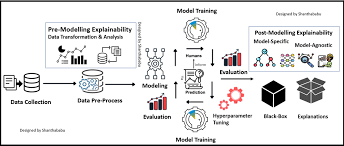
Building a trusted AI system starts with ensuring transparency in how decisions are made. Explainable AI is vital not only for addressing trust issues within organizations but also for navigating regulatory challenges. According to research from Forrester, many business leaders express concerns over AI, particularly generative AI, which surged in popularity following the 2022 release of ChatGPT by OpenAI. “AI faces a trust issue,” explained Forrester analyst Brandon Purcell, underscoring the need for explainability to foster accountability. He highlighted that explainability helps stakeholders understand how AI systems generate their outputs. “Explainability builds trust,” Purcell stated at the Forrester Technology and Innovation Summit in Austin, Texas. “When employees trust AI systems, they’re more inclined to use them.” Implementing explainable AI does more than encourage usage within an organization—it also helps mitigate regulatory risks, according to Purcell. Explainability is crucial for compliance, especially under regulations like the EU AI Act. Forrester analyst Alla Valente emphasized the importance of integrating accountability, trust, and security into AI efforts. “Don’t wait for regulators to set standards—ensure you’re already meeting them,” she advised at the summit. Purcell noted that explainable AI varies depending on whether the AI model is predictive, generative, or agentic. Building an Explainable AI System AI explainability encompasses several key elements, including reproducibility, observability, transparency, interpretability, and traceability. For predictive models, transparency and interpretability are paramount. Transparency involves using “glass-box modeling,” where users can see how the model analyzed the data and arrived at its predictions. This approach is likely to be a regulatory requirement, especially for high-risk applications. Interpretability is another important technique, useful for lower-risk cases such as fraud detection or explaining loan decisions. Techniques like partial dependence plots show how specific inputs affect predictive model outcomes. “With predictive AI, explainability focuses on the model itself,” Purcell noted. “It’s one area where you can open the hood and examine how it works.” In contrast, generative AI models are often more opaque, making explainability harder. Businesses can address this by documenting the entire system, a process known as traceability. For those using models from vendors like Google or OpenAI, tools like transparency indexes and model cards—which detail the model’s use case, limitations, and performance—are valuable resources. Lastly, for agentic AI systems, which autonomously pursue goals, reproducibility is key. Businesses must ensure that the model’s outputs can be consistently replicated with similar inputs before deployment. These systems, like self-driving cars, will require extensive testing in controlled environments before being trusted in the real world. “Agentic systems will need to rack up millions of virtual miles before we let them loose,” Purcell concluded. Like Related Posts Who is Salesforce? Who is Salesforce? Here is their story in their own words. From our inception, we’ve proudly embraced the identity of Read more Salesforce Unites Einstein Analytics with Financial CRM Salesforce has unveiled a comprehensive analytics solution tailored for wealth managers, home office professionals, and retail bankers, merging its Financial Read more AI-Driven Propensity Scores AI plays a crucial role in propensity score estimation as it can discern underlying patterns between treatments and confounding variables Read more Tectonic’s Successful Salesforce Track Record Salesforce Technology Services Integrator – Tectonic has successfully delivered Salesforce in a variety of industries including Public Sector, Hospitality, Manufacturing, Read more

Read More
gettectonic.com