SLM Archives - gettectonic.com

Moving Beyond Large Language Models

The Future of Generative AI: Moving Beyond Large Language Models Why LLMs Aren’t Enough Large Language Models (LLMs) like GPT-4, Claude, and Llama have revolutionized AI with their ability to generate human-like text. But they come with critical limitations: These flaws make LLMs unreliable for high-stakes applications like legal research, medical diagnosis, or real-time decision-making. So, what comes next? Emerging Alternatives to LLMs While LLMs won’t disappear, the next wave of AI will likely combine them with smarter, more efficient models. 1. Logical Reasoning Systems Potential Hybrid Approach:LLMs generate responses → Logical AI verifies accuracy. 2. Real-Time Learning Models (e.g., AIGO) 3. Liquid Learning Networks (LLNs) 4. Small Language Models (SLMs) The Future: Hybrid AI Systems The most powerful AI won’t rely on just one model—it will combine the best of each: This hybrid approach could finally deliver AI that’s both smart and reliable. What’s Next? The AI revolution isn’t over—it’s just getting started. Like Related Posts Who is Salesforce? Who is Salesforce? Here is their story in their own words. From our inception, we’ve proudly embraced the identity of Read more Salesforce Unites Einstein Analytics with Financial CRM Salesforce has unveiled a comprehensive analytics solution tailored for wealth managers, home office professionals, and retail bankers, merging its Financial Read more AI-Driven Propensity Scores AI plays a crucial role in propensity score estimation as it can discern underlying patterns between treatments and confounding variables Read more Tectonic’s Successful Salesforce Track Record Salesforce Technology Services Integrator – Tectonic has successfully delivered Salesforce in a variety of industries including Public Sector, Hospitality, Manufacturing, Read more

Read More
Why Domain-Specific AI Models Are Outperforming Generic LLMs in Enterprise Applications

Why Domain-Specific AI Models Are Outperforming Generic LLMs in Enterprise Applications

The Rise of Domain-Specific Language Models (DSLMs) Businesses are increasingly turning to smaller, industry-focused generative AI models rather than large language models (LLMs) like GPT-4 or Gemini, according to analysts at the Gartner Tech Growth and Innovation Conference. Domain-specific language models (DSLMs)—trained on niche datasets—deliver higher accuracy, lower costs, and better efficiency for specialized industries than general-purpose LLMs. Key Advantages of DSLMs Over LLMs ✔ Industry-Specific Expertise – Fine-tuned for legal, medical, or financial jargon✔ Lower Training Costs – Smaller datasets mean reduced compute expenses✔ Faster Performance – Optimized for real-time enterprise applications✔ Reduced Hallucinations – More precise outputs due to constrained scope Gartner predicts that over 60% of enterprise generative AI models will be domain-specific by 2028, signaling a major shift away from one-size-fits-all LLMs. Why Businesses Are Shifting to DSLMs 1. Cost Efficiency & Faster Deployment 2. Higher Accuracy for Niche Use Cases 3. Regulatory & Compliance Benefits Real-World DSLM Success Stories 1. Legal Document Automation (IBM & German Courts) 2. Healthcare Diagnostics & Imaging 3. Financial & Compliance Reporting The Future: Multimodal & Industry-Tailored AI Gartner analyst Danielle Casey predicts DSLMs will evolve to support multiple data types (text, images, voice) based on industry needs: “The future of enterprise AI isn’t bigger models—it’s smarter, specialized ones.” Key Takeaways for Businesses 🔹 DSLMs outperform LLMs in accuracy & cost for niche applications🔹 Early adopters (legal, healthcare, finance) are already seeing ROI🔹 Multimodal DSLMs will dominate industry-specific AI by 2028🔹 Regulatory-friendly AI is easier to achieve with domain-focused training Next Steps for Enterprises The shift to smaller, specialized AI is accelerating—businesses that adapt now will gain a competitive edge in efficiency and accuracy. Like Related Posts Who is Salesforce? Who is Salesforce? Here is their story in their own words. From our inception, we’ve proudly embraced the identity of Read more Salesforce Unites Einstein Analytics with Financial CRM Salesforce has unveiled a comprehensive analytics solution tailored for wealth managers, home office professionals, and retail bankers, merging its Financial Read more AI-Driven Propensity Scores AI plays a crucial role in propensity score estimation as it can discern underlying patterns between treatments and confounding variables Read more Tectonic’s Successful Salesforce Track Record Salesforce Technology Services Integrator – Tectonic has successfully delivered Salesforce in a variety of industries including Public Sector, Hospitality, Manufacturing, Read more

Read More
The Event-Driven Paradigm for Next-Generation AI Agents

The Event-Driven Paradigm for Next-Generation AI Agents

The Infrastructure Imperative for AI Evolution The enterprise landscape stands at an inflection point where AI agents promise autonomous decision-making and adaptive workflows at scale. However, the critical barrier to realizing this potential isn’t model sophistication—it’s architectural. True agentic systems require: These requirements fundamentally represent an infrastructure challenge that demands event-driven architecture (EDA) as the foundational framework for agent deployment and scaling. The Three Waves of AI Evolution First Wave: Predictive Models Characterized by: These deterministic systems excelled at specialized tasks but proved rigid and unscalable across business functions. Second Wave: Generative Models Marked by breakthroughs in: However, these models remained constrained by: Third Wave: Agentic Systems Emerging capabilities include: This evolution shifts focus from model architecture to system architecture, where EDA becomes the critical enabler. The Compound AI Advantage Modern agent systems combine multiple architectural components: This compound approach overcomes the limitations of standalone models through: Event-Driven Architecture: The Nervous System for Agents Core EDA Principles for AI Systems Implementation Benefits Architectural Patterns for Agentic Systems 1. Reflective Processing <img src=”reflection-pattern.png” width=”400″ alt=”Reflection design pattern diagram”> Agents employ meta-cognition to: 2. Dynamic Tool Orchestration <img src=”tool-use-pattern.png” width=”400″ alt=”Tool use design pattern diagram”> Capabilities include: 3. Hierarchical Planning <img src=”planning-pattern.png” width=”400″ alt=”Planning design pattern diagram”> Features: 4. Collaborative Multi-Agent Systems <img src=”multi-agent-pattern.png” width=”400″ alt=”Multi-agent collaboration diagram”> Enables: The Enterprise Integration Challenge Critical Success Factors Implementation Roadmap Phase 1: Foundation Phase 2: Capability Expansion Phase 3: Optimization The Competitive Imperative Enterprise readiness data reveals: Early adopters of event-driven agent architectures gain: The transition to agentic operations represents not just technological evolution but fundamental business transformation. Organizations that implement EDA foundations today will dominate the AI-powered enterprise landscape of tomorrow. Those failing to adapt risk joining the legacy systems they currently maintain—as historical footnotes in the annals of digital transformation. Like Related Posts Who is Salesforce? Who is Salesforce? Here is their story in their own words. From our inception, we’ve proudly embraced the identity of Read more Salesforce Unites Einstein Analytics with Financial CRM Salesforce has unveiled a comprehensive analytics solution tailored for wealth managers, home office professionals, and retail bankers, merging its Financial Read more AI-Driven Propensity Scores AI plays a crucial role in propensity score estimation as it can discern underlying patterns between treatments and confounding variables Read more Tectonic’s Successful Salesforce Track Record Salesforce Technology Services Integrator – Tectonic has successfully delivered Salesforce in a variety of industries including Public Sector, Hospitality, Manufacturing, Read more

Read More
Fivetrans Hybrid Deployment

Fivetrans Hybrid Deployment

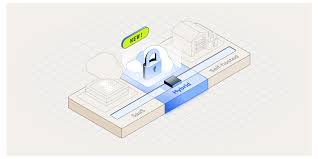
Fivetran’s Hybrid Deployment: A Breakthrough in Data Engineering In the data engineering world, balancing efficiency with security has long been a challenge. Fivetran aims to shift this dynamic with its Hybrid Deployment solution, designed to seamlessly move data across any environment while maintaining control and flexibility. Fivetrans Hybrid Deployment. The Hybrid Advantage: Flexibility Meets Control Fivetran’s Hybrid Deployment offers a new approach for enterprises, particularly those handling sensitive data or operating in regulated sectors. Often, these businesses struggle to adopt data-driven practices due to security concerns. Hybrid Deployment changes this by enabling the secure movement of data across cloud and on-premises environments, giving businesses full control over their data while maintaining the agility of the cloud. As George Fraser, Fivetran’s CEO, notes, “Businesses no longer have to choose between managed automation and data control. They can now securely move data from all their critical sources—like Salesforce, Workday, Oracle, SAP—into a data warehouse or data lake, while keeping that data under their own control.” How it Works: A Secure, Streamlined Approach Fivetran’s Hybrid Deployment relies on a lightweight local agent to move data securely within a customer’s environment, while the Fivetran platform handles the management and monitoring. This separation of control and data planes ensures that sensitive information stays within the customer’s secure perimeter. Vinay Kumar Katta, a managing delivery architect at Capgemini, highlights the flexibility this provides, enabling businesses to design pipelines without sacrificing security. Beyond Security: Additional Benefits Hybrid Deployment’s benefits go beyond just security. It also offers: Early adopters are already seeing its value. Troy Fokken, chief architect at phData, praises how it “streamlines data pipeline processes,” especially for customers in regulated industries. AI Agent Architectures: Defining the Future of Autonomous Systems In the rapidly evolving world of AI, a new framework is emerging—AI agents designed to act autonomously, adapt dynamically, and explore digital environments. These AI agents are built on core architectural principles, bringing the next generation of autonomy to AI-driven tasks. What Are AI Agents? AI agents are systems designed to autonomously or semi-autonomously perform tasks, leveraging tools to achieve objectives. For instance, these agents may use APIs, perform web searches, or interact with digital environments. At their core, AI agents use Large Language Models (LLMs) and Foundation Models (FMs) to break down complex tasks, similar to human reasoning. Large Action Models (LAMs) Just as LLMs transformed natural language processing, Large Action Models (LAMs) are revolutionizing how AI agents interact with environments. These models excel at function calling—turning natural language into structured, executable actions, enabling AI agents to perform real-world tasks like scheduling or triggering API calls. Salesforce AI Research, for instance, has open-sourced several LAMs designed to facilitate meaningful actions. LAMs bridge the gap between unstructured inputs and structured outputs, making AI agents more effective in complex environments. Model Orchestration and Small Language Models (SLMs) Model orchestration complements LAMs by utilizing smaller, specialized models (SLMs) for niche tasks. Instead of relying on resource-heavy models, AI agents can call upon these smaller models for specific functions—such as summarizing data or executing commands—creating a more efficient system. SLMs, combined with techniques like Retrieval-Augmented Generation (RAG), allow smaller models to perform comparably to their larger counterparts, enhancing their ability to handle knowledge-intensive tasks. Vision-Enabled Language Models for Digital Exploration AI agents are becoming even more capable with vision-enabled language models, allowing them to interact with digital environments. Projects like Apple’s Ferret-UI and WebVoyager exemplify this, where agents can navigate user interfaces, recognize elements via OCR, and explore websites autonomously. Function Calling: Structured, Actionable Outputs A fundamental shift is happening with function calling in AI agents, moving from unstructured text to structured, actionable outputs. This allows AI agents to interact with systems more efficiently, triggering specific actions like booking meetings or executing API calls. The Role of Tools and Human-in-the-Loop AI agents rely on tools—algorithms, scripts, or even humans-in-the-loop—to perform tasks and guide actions. This approach is particularly valuable in high-stakes industries like healthcare and finance, where precision is crucial. The Future of AI Agents With the advent of Large Action Models, model orchestration, and function calling, AI agents are becoming powerful problem solvers. These agents are evolving to explore, learn, and act within digital ecosystems, bringing us closer to a future where AI mimics human problem-solving processes. As AI agents become more sophisticated, they will redefine how we approach digital tasks and interactions. Like Related Posts Who is Salesforce? Who is Salesforce? Here is their story in their own words. From our inception, we’ve proudly embraced the identity of Read more Salesforce Marketing Cloud Transactional Emails Salesforce Marketing Cloud Transactional Emails are immediate, automated, non-promotional messages crucial to business operations and customer satisfaction, such as order Read more Salesforce Unites Einstein Analytics with Financial CRM Salesforce has unveiled a comprehensive analytics solution tailored for wealth managers, home office professionals, and retail bankers, merging its Financial Read more AI-Driven Propensity Scores AI plays a crucial role in propensity score estimation as it can discern underlying patterns between treatments and confounding variables Read more


Read More
Small Language Models Explained

Small Language Models Explained

Exploring Small Language Models (SLMs): Capabilities and Applications Large Language Models (LLMs) have been prominent in AI for some time, but Small Language Models (SLMs) are now enhancing our ability to work with natural and programming languages. While LLMs excel in general language understanding, certain applications require more accuracy and domain-specific knowledge than these models can provide. This has created a demand for custom SLMs that offer LLM-like performance while reducing runtime costs and providing a secure, manageable environment. In this insight, we dig down into the world of SLMs, exploring their unique characteristics, benefits, and applications. We also discuss fine-tuning methods applied to Llama-2–13b, an SLM, to address specific challenges. The goal is to investigate how to make the fine-tuning process platform-independent. We selected Databricks for this purpose due to its compatibility with major cloud providers like Azure, Amazon Web Services (AWS), and Google Cloud Platform. What Are Small Language Models? In AI and natural language processing, SLMs are lightweight generative models with a focus on specific tasks. The term “small” refers to: SLMs like Google Gemini Nano, Microsoft’s Orca-2–7b, and Meta’s Llama-2–13b run efficiently on a single GPU and include over 5 billion parameters. SLMs vs. LLMs Applications of SLMs SLMs are increasingly used across various sectors, including healthcare, technology, and beyond. Common applications include: Fine-Tuning Small Language Models Fine-tuning involves additional training of a pre-trained model to make it more domain-specific. This process updates the model’s parameters with new data to enhance its performance in targeted applications, such as text generation or question answering. Hardware Requirements for Fine-Tuning The hardware needs depend on the model size, project scale, and dataset. General recommendations include: Data Preparation Preparing data involves extracting text from PDFs, cleaning it, generating question-and-answer pairs, and then fine-tuning the model. Although GPT-3.5 was used for generating Q&A pairs, SLMs can also be utilized for this purpose based on the use case. Fine-Tuning Process You can use HuggingFace tools for fine-tuning Llama-2–13b-chat-hf. The dataset was converted into a HuggingFace-compatible format, and quantization techniques were applied to optimize performance. The fine-tuning lasted about 16 hours over 50 epochs, with the cost around $100/£83, excluding trial costs. Results and Observations The fine-tuned model demonstrated strong performance, with over 70% of answers being highly similar to those generated by GPT-3.5. The SLM achieved comparable results despite having fewer parameters. The process was successful on both AWS and Databricks platforms, showcasing the model’s adaptability. SLMs have some limitations compared to LLMs, such as higher operational costs and restricted knowledge bases. However, they offer benefits in efficiency, versatility, and environmental impact. As SLMs continue to evolve, their relevance and popularity are likely to increase, especially with new models like Gemini Nano and Mixtral entering the market. Like Related Posts Who is Salesforce? Who is Salesforce? Here is their story in their own words. From our inception, we’ve proudly embraced the identity of Read more Salesforce Marketing Cloud Transactional Emails Salesforce Marketing Cloud Transactional Emails are immediate, automated, non-promotional messages crucial to business operations and customer satisfaction, such as order Read more Salesforce Unites Einstein Analytics with Financial CRM Salesforce has unveiled a comprehensive analytics solution tailored for wealth managers, home office professionals, and retail bankers, merging its Financial Read more AI-Driven Propensity Scores AI plays a crucial role in propensity score estimation as it can discern underlying patterns between treatments and confounding variables Read more

Read More
Large and Small Language Models

Large and Small Language Models

Understanding Language Models in AI Language models are sophisticated AI systems designed to generate natural human language, a task that is far from simple. These models operate as probabilistic machine learning systems, predicting the likelihood of word sequences to emulate human-like intelligence. In the scientific realm, the focus of language models has been twofold: While today’s cutting-edge AI models in Natural Language Processing (NLP) are impressive, they have not yet fully passed the Turing Test—a benchmark where a machine’s communication is indistinguishable from that of a human. The Emergence of Language Models We are approaching this milestone with advancements in Large Language Models (LLMs) and the promising but less discussed Small Language Models (SLMs). Large Language Models compared to Small Language Models LLMs like ChatGPT have garnered significant attention due to their ability to handle complex interactions and provide insightful responses. These models distill vast amounts of internet data into concise and relevant information, offering an alternative to traditional search methods. Conversely, SLMs, such as Mistral 7B, while less flashy, are valuable for specific applications. They typically contain fewer parameters and focus on specialized domains, providing targeted expertise without the broad capabilities of LLMs. How LLMs Work Comparing LLMs and SLMs Choosing the Right Language Model The decision between LLMs and SLMs depends on your specific needs and available resources. LLMs are well-suited for broad applications like chatbots and customer support. In contrast, SLMs are ideal for specialized tasks in fields such as medicine, law, and finance, where domain-specific knowledge is crucial. Large and Small Language Models’ Roles Language models are powerful tools that, depending on their size and focus, can either provide broad capabilities or specialized expertise. Understanding their strengths and limitations helps in selecting the right model for your use case. Like Related Posts Who is Salesforce? Who is Salesforce? Here is their story in their own words. From our inception, we’ve proudly embraced the identity of Read more Salesforce Marketing Cloud Transactional Emails Salesforce Marketing Cloud Transactional Emails are immediate, automated, non-promotional messages crucial to business operations and customer satisfaction, such as order Read more Salesforce Unites Einstein Analytics with Financial CRM Salesforce has unveiled a comprehensive analytics solution tailored for wealth managers, home office professionals, and retail bankers, merging its Financial Read more AI-Driven Propensity Scores AI plays a crucial role in propensity score estimation as it can discern underlying patterns between treatments and confounding variables Read more

Read More
Small Language Models

Small Language Models

Large language models (LLMs) like OpenAI’s GPT-4 have gained acclaim for their versatility across various tasks, but they come with significant resource demands. In response, the AI industry is shifting focus towards smaller, task-specific models designed to be more efficient. Microsoft, alongside other tech giants, is investing in these smaller models. Science often involves breaking complex systems down into their simplest forms to understand their behavior. This reductionist approach is now being applied to AI, with the goal of creating smaller models tailored for specific functions. Sébastien Bubeck, Microsoft’s VP of generative AI, highlights this trend: “You have this miraculous object, but what exactly was needed for this miracle to happen; what are the basic ingredients that are necessary?” In recent years, the proliferation of LLMs like ChatGPT, Gemini, and Claude has been remarkable. However, smaller language models (SLMs) are gaining traction as a more resource-efficient alternative. Despite their smaller size, SLMs promise substantial benefits to businesses. Microsoft introduced Phi-1 in June last year, a smaller model aimed at aiding Python coding. This was followed by Phi-2 and Phi-3, which, though larger than Phi-1, are still much smaller than leading LLMs. For comparison, Phi-3-medium has 14 billion parameters, while GPT-4 is estimated to have 1.76 trillion parameters—about 125 times more. Microsoft touts the Phi-3 models as “the most capable and cost-effective small language models available.” Microsoft’s shift towards SLMs reflects a belief that the dominance of a few large models will give way to a more diverse ecosystem of smaller, specialized models. For instance, an SLM designed specifically for analyzing consumer behavior might be more effective for targeted advertising than a broad, general-purpose model trained on the entire internet. SLMs excel in their focused training on specific domains. “The whole fine-tuning process … is highly specialized for specific use-cases,” explains Silvio Savarese, Chief Scientist at Salesforce, another company advancing SLMs. To illustrate, using a specialized screwdriver for a home repair project is more practical than a multifunction tool that’s more expensive and less focused. This trend towards SLMs reflects a broader shift in the AI industry from hype to practical application. As Brian Yamada of VLM notes, “As we move into the operationalization phase of this AI era, small will be the new big.” Smaller, specialized models or combinations of models will address specific needs, saving time and resources. Some voices express concern over the dominance of a few large models, with figures like Jack Dorsey advocating for a diverse marketplace of algorithms. Philippe Krakowski of IPG also worries that relying on the same models might stifle creativity. SLMs offer the advantage of lower costs, both in development and operation. Microsoft’s Bubeck emphasizes that SLMs are “several orders of magnitude cheaper” than larger models. Typically, SLMs operate with around three to four billion parameters, making them feasible for deployment on devices like smartphones. However, smaller models come with trade-offs. Fewer parameters mean reduced capabilities. “You have to find the right balance between the intelligence that you need versus the cost,” Bubeck acknowledges. Salesforce’s Savarese views SLMs as a step towards a new form of AI, characterized by “agents” capable of performing specific tasks and executing plans autonomously. This vision of AI agents goes beyond today’s chatbots, which can generate travel itineraries but not take action on your behalf. Salesforce recently introduced a 1 billion-parameter SLM that reportedly outperforms some LLMs on targeted tasks. Salesforce CEO Mark Benioff celebrated this advancement, proclaiming, “On-device agentic AI is here!” Like Related Posts Who is Salesforce? Who is Salesforce? Here is their story in their own words. From our inception, we’ve proudly embraced the identity of Read more Salesforce Marketing Cloud Transactional Emails Salesforce Marketing Cloud Transactional Emails are immediate, automated, non-promotional messages crucial to business operations and customer satisfaction, such as order Read more Salesforce Unites Einstein Analytics with Financial CRM Salesforce has unveiled a comprehensive analytics solution tailored for wealth managers, home office professionals, and retail bankers, merging its Financial Read more AI-Driven Propensity Scores AI plays a crucial role in propensity score estimation as it can discern underlying patterns between treatments and confounding variables Read more
Read More
Rold of Small Language Models

Role of Small Language Models

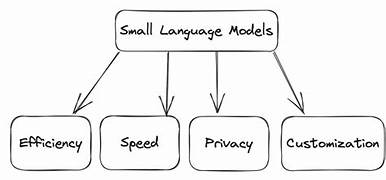
The Role of Small Language Models (SLMs) in AI While much attention is often given to the capabilities of Large Language Models (LLMs), Small Language Models (SLMs) play a vital role in the AI landscape. Role of Small Language Models. Large vs. Small Language Models LLMs, like GPT-4, excel at managing complex tasks and providing sophisticated responses. However, their substantial computational and energy requirements can make them impractical for smaller organizations and devices with limited processing power. In contrast, SLMs offer a more feasible solution. Designed to be lightweight and resource-efficient, SLMs are ideal for applications operating in constrained computational environments. Their reduced resource demands make them easier and quicker to deploy, while also simplifying maintenance. What are Small Language Models? Small Language Models (SLMs) are neural networks engineered to generate natural language text. The term “small” refers not only to the model’s physical size but also to its parameter count, neural architecture, and the volume of data used during training. Parameters are numeric values that guide a model’s interpretation of inputs and output generation. Models with fewer parameters are inherently simpler, requiring less training data and computational power. Generally, models with fewer than 100 million parameters are classified as small, though some experts consider models with as few as 1 million to 10 million parameters to be small in comparison to today’s large models, which can have hundreds of billions of parameters. How Small Language Models Work SLMs achieve efficiency and effectiveness with a reduced parameter count, typically ranging from tens to hundreds of millions, as opposed to the billions seen in larger models. This design choice enhances computational efficiency and task-specific performance while maintaining strong language comprehension and generation capabilities. Techniques such as model compression, knowledge distillation, and transfer learning are critical for optimizing SLMs. These methods enable SLMs to encapsulate the broad understanding capabilities of larger models into a more concentrated, domain-specific toolset, facilitating precise and effective applications while preserving high performance. Advantages of Small Language Models Applications of Small Language Models Role of Small Language Models is lengthy. SLMs have seen increased adoption due to their ability to produce contextually coherent responses across various applications: Small Language Models vs. Large Language Models Feature LLMs SLMs Training Dataset Broad, diverse internet data Focused, domain-specific data Parameter Count Billions Tens to hundreds of millions Computational Demand High Low Cost Expensive Cost-effective Customization Limited, general-purpose High, tailored to specific needs Latency Higher Lower Security Risk of data exposure through APIs Lower risk, often not open source Maintenance Complex Easier Deployment Requires substantial infrastructure Suitable for limited hardware environments Application Broad, including complex tasks Specific, domain-focused tasks Accuracy in Specific Domains Potentially less accurate due to general training High accuracy with domain-specific training Real-time Application Less ideal due to latency Ideal due to low latency Bias and Errors Higher risk of biases and factual errors Reduced risk due to focused training Development Cycles Slower Faster Conclusion The role of Small Language Models (SLMs) is increasingly significant as they offer a practical and efficient alternative to larger models. By focusing on specific needs and operating within constrained environments, SLMs provide targeted precision, cost savings, improved security, and quick responsiveness. As industries continue to integrate AI solutions, the tailored capabilities of SLMs are set to drive innovation and efficiency across various domains. Like Related Posts Who is Salesforce? Who is Salesforce? Here is their story in their own words. From our inception, we’ve proudly embraced the identity of Read more Salesforce Marketing Cloud Transactional Emails Salesforce Marketing Cloud Transactional Emails are immediate, automated, non-promotional messages crucial to business operations and customer satisfaction, such as order Read more Salesforce Unites Einstein Analytics with Financial CRM Salesforce has unveiled a comprehensive analytics solution tailored for wealth managers, home office professionals, and retail bankers, merging its Financial Read more AI-Driven Propensity Scores AI plays a crucial role in propensity score estimation as it can discern underlying patterns between treatments and confounding variables Read more

Read More
salesforce bulk api

What is Salesforce Bulk API

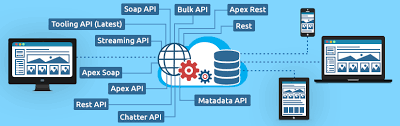
Salesforce Bulk API is a REST-based API designed for processing large volumes of data efficiently, allowing for asynchronous operations like inserting, updating, upserting, and deleting records in bulk. It’s optimized for handling large datasets and is often used with tools like Data Loader to import and export data in Salesforce.  More Details: Key Features and Benefits: How it Works: Bulk API vs. Batch API: While both handle large data volumes, Bulk API is generally used for asynchronous operations, while Batch API is more suitable for synchronous operations where you need to handle errors during the import. Bulk API processes records in batches asynchronously, allowing you to kick off the import and deal with errors later, while Batch API might be more suitable if you need to handle errors immediately during the import process.  Like Related Posts Who is Salesforce? Who is Salesforce? Here is their story in their own words. From our inception, we’ve proudly embraced the identity of Read more Salesforce Marketing Cloud Transactional Emails Salesforce Marketing Cloud Transactional Emails are immediate, automated, non-promotional messages crucial to business operations and customer satisfaction, such as order Read more Salesforce Unites Einstein Analytics with Financial CRM Salesforce has unveiled a comprehensive analytics solution tailored for wealth managers, home office professionals, and retail bankers, merging its Financial Read more AI-Driven Propensity Scores AI plays a crucial role in propensity score estimation as it can discern underlying patterns between treatments and confounding variables Read more

Read More
gettectonic.com