UX Archives - gettectonic.com
AI and UX Design

The AI Frontier Code: Laws for Taming the Wild West of UX

The digital frontier is lawless. Interfaces without intelligence. Intelligence without empathy. Designers building for yesterday while AI reshapes tomorrow. Teams drowning in possibility, paralyzed by complexity, lost in the noise of a thousand AI snake oil salesmen peddling confusion. The old rulebooks are ashes. The familiar trails have vanished. We stand at the edge of a new territory, watching the very nature of human-machine interaction transform before our eyes. But from chaos comes order. Just as the Code of the West brought structure to the untamed frontier, the AI era demands new ironclad laws—unyielding principles to guide us through this uncharted land. These aren’t suggestions. These aren’t guidelines. These are the Laws of the AI Frontier—the difference between those who’ll shape the future and those who’ll be left in the dust. As trailblazer Rob Chappell observes: “The future ain’t about guiding users from point A to B. It’s about forging bonds between people and thinking machines.” These laws are your survival guide for that journey. Branded in silicon, etched in circuits, sworn by the pioneers who’ll build tomorrow. I. The Interface IS the Intelligence The First Law: In AI territory, your UI is your brain Forget pretty wrappers around dumb tools. In this new land, every pixel shapes how the AI thinks. Every interaction teaches it how to behave. Every design choice forges its character. When you craft a notification, you’re not picking colors—you’re setting when the AI interrupts. When you design a conversation, you’re not writing words—you’re teaching metal minds how to speak human. As scout Rachel Kobetz warns: “Intelligence ain’t hidden behind the interface no more—it IS the interface. When systems learn and adapt, experience ain’t downstream from strategy. It IS the strategy.” How to stay lawful: The punishment for lawbreakers: Interfaces that feel fake, AI that seems alien, and users who’ll never trust your metal partner enough to ride together. II. Scout Tomorrow’s Trails Today The Second Law: Pioneers blaze trails—settlers just follow ruts While greenhorns debate whether AI changes design, you should be building that change. The future belongs to those who see past the horizon, who bridge to lands that don’t exist yet, who turn raw possibility into working reality. Don’t wait for briefs—write ’em. Don’t wait for strategy—create it. Don’t wait for permission—plant your flag. How to stay lawful: The punishment for lawbreakers: Eternal catch-up, always reacting instead of leading, watching others claim the future you could’ve owned. III. Show Your Hand The Third Law: Trust is the only currency that matters Users need to know more than what happened—they need confidence in what’ll happen next. In a land of black-box algorithms, transparency is the bridge between human doubt and digital trust. But clarity beats raw disclosure. Your duty is to reveal AI’s workings in ways that enlighten, not overwhelm. Think control maps—not journey maps. Don’t just chart what users do. Show who’s holding the reins—human, AI, or both—and when that changes. As Chappell notes: “The question ain’t ‘What’s the user doing?’ It’s ‘Who’s calling the shots right now, and how does that change?’” How to stay lawful: The punishment for lawbreakers: Users who never fully trust your AI, limiting its potential, dooming it to be just another broken promise in this wild land. IV. Ride Together The Fourth Law: The future’s human AND AI—not human OR AI Your job ain’t to protect humans from machines or replace cowboys with automatons. Your mission is to choreograph the dance between human gut and machine logic—partnerships that bring out the best in both. Design for the “autonomy slider”—a fluid scale where control flows between: This ain’t an on-off switch—it’s a continuous flow, creating what the wise call “co-agency.” How to stay lawful: The punishment for lawbreakers: AI that feels threatening instead of helpful, users who fight your “improvements,” and missing the magic of true partnership. The Oath: Living by the Code These laws ain’t gentle suggestions—they’re the bedrock of tomorrow’s AI UX. Every designer who’ll matter in the intelligence era lives by them. Every product that truly transforms human potential reflects them. To follow this code is to: To ignore them is to: The choice is yours, pioneer. Every designer today faces a decision that’ll define not just their career, but how humans and machines will work together for generations. You can cling to the old ways—the comfortable rules of pre-AI UX, the safety of known patterns, the ease of reactive design. Or you can swear by this new code, strap on your tools, and help write the next chapter of human-digital history. The laws are carved. The trail awaits. Like Related Posts Who is Salesforce? Who is Salesforce? Here is their story in their own words. From our inception, we’ve proudly embraced the identity of Read more Salesforce Unites Einstein Analytics with Financial CRM Salesforce has unveiled a comprehensive analytics solution tailored for wealth managers, home office professionals, and retail bankers, merging its Financial Read more AI-Driven Propensity Scores AI plays a crucial role in propensity score estimation as it can discern underlying patterns between treatments and confounding variables Read more Tectonic’s Successful Salesforce Track Record Salesforce Technology Services Integrator – Tectonic has successfully delivered Salesforce in a variety of industries including Public Sector, Hospitality, Manufacturing, Read more

Read More
Maximizing Your Salesforce Einstein Investment

Maximizing Your Salesforce Einstein Investment

Maximizing Your Salesforce Einstein Investment: The Post-Implementation Playbook Beyond Implementation: The AI Optimization Journey Implementing Einstein predictive analytics is just the beginning. To sustain value and drive continuous improvement, organizations must adopt an ongoing optimization strategy. Here’s your roadmap for long-term AI success: 1. Performance Monitoring Framework Critical Activities: Tools to Use:✔ Einstein Model Metrics dashboard✔ Salesforce Optimizer for AI systems✔ Custom Apex monitoring scripts 2. User Feedback Integration Best Practices: Example Workflow: 3. Continuous Learning System Three-Pronged Approach: Focus Area Activities Frequency System Learning Model retraining with fresh data Bi-weekly User Training Micro-learnings on new features Monthly Process Evolution Workflow optimization sprints Quarterly Pro Tip: Create an “AI Center of Excellence” with cross-functional team members to drive adoption. Key Metrics to Track Common Pitfalls to Avoid ⚠ Data Decay: Customer behavior patterns change – refresh training data at least quarterly⚠ Over-Automation: Keep humans in the loop for high-stakes decisions⚠ Compliance Blindspots: Regularly review AI governance against evolving regulations The Evolution Roadmap Year 1: Stabilize core predictive modelsYear 2: Expand to adjacent use cases (e.g., from lead scoring to renewal risk)Year 3: Achieve predictive-prescriptive AI maturity with automated actions Getting Started with Optimization “Organizations that actively manage their AI systems see 3x greater ROI than those with passive approaches.” – Forrester Research Like Related Posts Who is Salesforce? Who is Salesforce? Here is their story in their own words. From our inception, we’ve proudly embraced the identity of Read more Salesforce Marketing Cloud Transactional Emails Salesforce Marketing Cloud Transactional Emails are immediate, automated, non-promotional messages crucial to business operations and customer satisfaction, such as order Read more Salesforce Unites Einstein Analytics with Financial CRM Salesforce has unveiled a comprehensive analytics solution tailored for wealth managers, home office professionals, and retail bankers, merging its Financial Read more AI-Driven Propensity Scores AI plays a crucial role in propensity score estimation as it can discern underlying patterns between treatments and confounding variables Read more

Read More
The Rise of Conceptual AI

Emerging AI Interface Paradigms

The 7 Emerging AI Interface Paradigms Shaping the Future of UX The rise of LLMs and AI agents has supercharged traditional UI patterns like chatbots—but the real breakthrough lies in embedding AI into sophisticated, task-driven interfaces. From right-panel assistants to semantic spreadsheets, these spatial layouts aren’t just design choices—they fundamentally shape how users discover, trust, and interact with AI. This article explores seven emerging AI interface layouts, analyzing how each influences user expectations, discoverability, and agent capabilities. 1. The Customer Service Agent (Chatbot Widget) Example: Zendesk, IntercomLayout: Floating bottom-right chat window Key Traits: ✅ Discoverability: Subtle yet persistent, avoiding disruption.✅ Interaction Pattern: Asynchronous, lightweight support—users open/close as needed.✅ Agent’s Role: Reactive helper—handles FAQs, order lookups, password resets. Modern AI adds memory, personalization, and automation.❌ Limitations: Not built for proactive, multi-step reasoning or deep collaboration. 2. The Precision Assistant (Inline Overlay Prompts) Example: Notion AI, GrammarlyLayout: Context-aware suggestions within text (underlines, hovers, popovers) Key Traits: ✅ Discoverability: Triggered by user actions (typing, selecting).✅ Interaction Pattern: Micro-level edits—accept, tweak, or regenerate instantly.✅ Agent’s Role: A surgical editor—rephrases sentences, completes code snippets, adjusts tone.❌ Limitations: Struggles with open-ended creativity or multi-step logic. 3. The Creative Collaborator (Infinite Canvas) Example: TLDraw, Figma, MiroLayout: Boundless 2D workspace with AI-triggered element enhancements Key Traits: ✅ Discoverability: AI surfaces when hovering/selecting objects (stickies, shapes, text).✅ Interaction Pattern: Parallel AI calls—generate, rename, or refine canvas elements without breaking flow.✅ Agent’s Role: A visual co-creator—suggests layouts, refines ideas, augments sketches.❌ Limitations: Weak at version control or document-wide awareness. 4. The General-Purpose Assistant (Center-Stage Chat) Example: ChatGPT, Perplexity, MidjourneyLayout: Full-width conversational pane with prompt-first input Key Traits: ✅ Discoverability: Minimalist—focused on the input box.✅ Interaction Pattern: Freeform prompting—iterative refinements via follow-ups.✅ Agent’s Role: A broad-knowledge helper—answers questions, writes, codes, designs.❌ Limitations: Poor for structured workflows (e.g., app building, form filling). 5. The Strategic Partner (Left-Panel Co-Creator) Example: ChatGPT Canvas, LovableLayout: Persistent left-side chat panel + right-side workspace Key Traits: ✅ Discoverability: Aligns with F-shaped scanning—keeps AI always accessible.✅ Interaction Pattern: Multi-turn ideation—users refine outputs in real time.✅ Agent’s Role: A thought partner—structures complex projects (code, docs, designs).❌ Limitations: Overkill for lightweight tasks; vague prompts risk errors. 6. The Deep-Context Expert (Right-Panel Assistant) Example: GitHub Copilot, Microsoft Copilot, Gmail GeminiLayout: Collapsible right-hand panel for on-demand help Key Traits: ✅ Discoverability: Non-intrusive but available—stays out of the way until needed.✅ Interaction Pattern: Just-in-time assistance—debugs code, drafts emails, summarizes docs.✅ Agent’s Role: A specialist—understands deep context (coding, legal, enterprise).❌ Limitations: Not ideal for AI-first experiences; novices may overlook it. 7. The Distributed Research Agent (Semantic Spreadsheet) Example: AnswerGrid, ElicitLayout: AI-powered grid where each cell acts as a mini-agent Key Traits: ✅ Discoverability: Feels familiar (rows, columns) but autofills intelligently.✅ Interaction Pattern: Prompt-to-grid—AI scrapes data, synthesizes research, populates cells.✅ Agent’s Role: A data synthesis engine—automates research, compiles reports.❌ Limitations: Requires structured thinking; spreadsheet-savvy users only. Conclusion: AI Interfaces Are a New Design Frontier LLMs aren’t just tools—they’re a new computing medium. Just as GUIs and mobile reshaped UX decades ago, AI demands rethinking where intelligence lives in our products. Key Takeaways: 🔹 Spatial layout dictates perceived AI role (assistant vs. co-creator vs. expert).🔹 Discoverability & trust depend on placement (left/right/center).🔹 The best AI interfaces feel invisible—enhancing workflows, not disrupting them. The future belongs to context-aware, embedded AI—not just chatbots. Which paradigm will dominate your product? Like Related Posts Who is Salesforce? Who is Salesforce? Here is their story in their own words. From our inception, we’ve proudly embraced the identity of Read more Salesforce Unites Einstein Analytics with Financial CRM Salesforce has unveiled a comprehensive analytics solution tailored for wealth managers, home office professionals, and retail bankers, merging its Financial Read more AI-Driven Propensity Scores AI plays a crucial role in propensity score estimation as it can discern underlying patterns between treatments and confounding variables Read more Tectonic’s Successful Salesforce Track Record Salesforce Technology Services Integrator – Tectonic has successfully delivered Salesforce in a variety of industries including Public Sector, Hospitality, Manufacturing, Read more

Read More
Agentic AI: The Next Frontier in Intelligent Automation

Agentic AI Revolution in Customer Service

The Agentic AI Revolution in Customer Service: Lessons from Salesforce’s Million-Interaction Milestone From Chatbot Frustration to AI Partnership The agentic AI arms race has exploded onto the customer service scene in less than a year, with Salesforce emerging as a pioneer by deploying its Agentforce solution across its help portal. The results? Over 1 million customer interactions handled – and counting. But as Salesforce’s journey reveals, success with AI agents requires more than just advanced technology—it demands a fundamental shift in customer service philosophy. Breaking the “Deflection” Mindset Bernard Slowey, SVP of Digital Customer Success at Salesforce, calls out the industry’s problematic approach: “That word ‘deflection’ breaks my heart. When companies focus on driving out costs by keeping customers away from humans, they make stupid decisions.” Unlike traditional chatbots designed as “first line of defense,” Agentforce was built to:✔ Accelerate resolutions through intelligent assistance✔ Maintain human availability when needed✔ Enhance rather than replace the service experience Key Lessons from a Million Conversations 1. The Heart Matters as Much as the Brain Early versions focused on factual accuracy but lacked emotional intelligence. Salesforce: Result: Abandonment rates dropped from 26% to 8-9% 2. The Content Imperative Agent performance depends entirely on data quality. Salesforce encountered: 3. Knowing When to Step Aside The system now: The Human-AI Balance Sheet Metric Before Agentforce After Optimization Customer Abandonment 26% 8-9% Human Handoff Rate 1% 5-8% Support Engineer Capacity Static Reallocated to higher-value work The Road Ahead for Agentic AI As Slowey notes: “AI does some things amazingly well; it doesn’t create relationships. We’re entering an era of digital and human collaboration.” For companies ready to move beyond the chatbot dark ages, Salesforce’s million-interaction milestone proves agentic AI can work—when implemented with both technological rigor and human-centric design. Like Related Posts Who is Salesforce? Who is Salesforce? Here is their story in their own words. From our inception, we’ve proudly embraced the identity of Read more Salesforce Marketing Cloud Transactional Emails Salesforce Marketing Cloud Transactional Emails are immediate, automated, non-promotional messages crucial to business operations and customer satisfaction, such as order Read more Salesforce Unites Einstein Analytics with Financial CRM Salesforce has unveiled a comprehensive analytics solution tailored for wealth managers, home office professionals, and retail bankers, merging its Financial Read more AI-Driven Propensity Scores AI plays a crucial role in propensity score estimation as it can discern underlying patterns between treatments and confounding variables Read more

Read More
Autonomous GUI Interaction

Autonomous GUI Interaction

GTA1: Salesforce AI’s Breakthrough in Autonomous GUI Interaction Salesforce AI Research has unveiled GTA1, a next-generation graphical user interface (GUI) agent that redefines autonomous human-computer interaction. Unlike traditional agents limited by rigid workflows, GTA1 operates seamlessly in real operating system environments—starting with Linux—achieving a 45.2% task success rate on the OSWorld benchmark. This surpasses OpenAI’s CUA (Computer-Using Agent) and sets a new standard for open-source GUI automation. Why GUI Agents Struggle—And How GTA1 Fixes It Most GUI agents fail at two critical points: Benchmark Dominance GTA1 outperforms both open and proprietary models across key tests: Benchmark GTA1-7B Score Competitor Scores OSWorld (Task Success) 45.2% OpenAI CUA: 42.9% ScreenSpot-Pro (Grounding) 50.1% UGround-72B: 34.5% OSWorld-G (Linux GUI) 67.7% Prior SOTA: 58.1% Notably, smaller GTA1 models (7B params) outperform larger alternatives, proving efficiency isn’t just about scale. Key Innovations The Future of Agentic UI Interaction GTA1 proves that robust GUI automation doesn’t require proprietary models or bloated architectures. By combining:✔ Adaptive planning (test-time scaling)✔ Precision grounding (RL-driven clicks)✔ Clean data pipelines Salesforce AI delivers an open, scalable framework for the next era of digital assistants. What’s next? Expect GTA1 to expand beyond Linux—bringing autonomous, error-resistant UI agents to enterprise workflows. Like Related Posts Who is Salesforce? Who is Salesforce? Here is their story in their own words. From our inception, we’ve proudly embraced the identity of Read more Salesforce Marketing Cloud Transactional Emails Salesforce Marketing Cloud Transactional Emails are immediate, automated, non-promotional messages crucial to business operations and customer satisfaction, such as order Read more Salesforce Unites Einstein Analytics with Financial CRM Salesforce has unveiled a comprehensive analytics solution tailored for wealth managers, home office professionals, and retail bankers, merging its Financial Read more AI-Driven Propensity Scores AI plays a crucial role in propensity score estimation as it can discern underlying patterns between treatments and confounding variables Read more

Read More
agent2agent protocol explained

Google’s Agent2Agent Protocol Explained

Google’s Agent2Agent Protocol (A2A): The Open Standard for AI Agent Collaboration A New Era of AI Interoperability On April 9, 2025, Google introduced the Agent2Agent Protocol (A2A), a standardized framework enabling AI agents to discover, communicate, and collaborate across different platforms securely. Just months later, on June 23, 2025, Google donated A2A—including its specifications, SDKs, and developer tools—to the Linux Foundation, ensuring neutral, open governance for the protocol’s future. “By contributing A2A, Google is ensuring neutral governance for the project for the remainder of its existence.”— Mike Dolan, SVP, Legal & Strategic Programs, Linux Foundation This move prevents any single company from controlling A2A, fostering an open ecosystem where AI agents from different vendors can seamlessly interact. How A2A Works: Secure, Scalable AI Collaboration A2A defines two types of agents: Key Features 🔹 Agent Cards – Each agent advertises its capabilities (name, functions, authentication methods) without exposing proprietary logic or internal data.🔹 HTTPS-Based Messaging – Secure, real-time communication between agents.🔹 Task Delegation & Progress Tracking – Agents exchange structured messages to update on task status or request additional input.🔹 Enterprise-Grade Security – No exposure of internal states, ensuring data privacy and IP protection. Why A2A Matters Without a universal protocol, AI agent integration is manual, brittle, and hard to scale. A2A solves this by:✅ Eliminating point-to-point custom integrations✅ Enabling dynamic task routing & resource allocation✅ Reducing human intervention in automated workflows Early Adoption & Industry Support Over 100 companies—including AWS, Cisco, Microsoft, Salesforce, SAP, and ServiceNow—have endorsed A2A. A Technical Steering Committee (with members from these firms) now governs the protocol’s evolution. “PayPal, ServiceNow, and Salesforce already support A2A and are integrating it into their platforms.”— Rao Surapaneni, VP & GM, Google Cloud The Future of AI Agent Ecosystems While A2A has strong momentum, alternative protocols like: more are also emerging. However, A2A’s open governance, enterprise security, and broad industry backing position it as a leading candidate for universal AI agent interoperability. What’s Next? As businesses deploy more AI agents, A2A could become the TCP/IP of AI collaboration—a foundational layer enabling autonomous, cross-platform workflows. Sourced from Matt Vartabedian’s article in NoJitter. Like Related Posts Who is Salesforce? Who is Salesforce? Here is their story in their own words. From our inception, we’ve proudly embraced the identity of Read more Salesforce Marketing Cloud Transactional Emails Salesforce Marketing Cloud Transactional Emails are immediate, automated, non-promotional messages crucial to business operations and customer satisfaction, such as order Read more Salesforce Unites Einstein Analytics with Financial CRM Salesforce has unveiled a comprehensive analytics solution tailored for wealth managers, home office professionals, and retail bankers, merging its Financial Read more AI-Driven Propensity Scores AI plays a crucial role in propensity score estimation as it can discern underlying patterns between treatments and confounding variables Read more

Read More
Salesforce Data Cloud

Data Cloud Release Update

Data Cloud Data Governance will begin rolling out starting on July 8, 2025. This feature provides a robust framework for securing and managing data through the combined use of tags, classifications, user attributes, and policy-based governance. For additional details, check out the Data Governance Trailhead module and this Knowledge article. Release notes and additional content will be linked in the article when the rollout has completed. Like Related Posts Who is Salesforce? Who is Salesforce? Here is their story in their own words. From our inception, we’ve proudly embraced the identity of Read more Salesforce Marketing Cloud Transactional Emails Salesforce Marketing Cloud Transactional Emails are immediate, automated, non-promotional messages crucial to business operations and customer satisfaction, such as order Read more Salesforce Unites Einstein Analytics with Financial CRM Salesforce has unveiled a comprehensive analytics solution tailored for wealth managers, home office professionals, and retail bankers, merging its Financial Read more AI-Driven Propensity Scores AI plays a crucial role in propensity score estimation as it can discern underlying patterns between treatments and confounding variables Read more

Read More
New ChatGPT-4o

Ask ChatGPT in Salesforce

To “ask ChatGPT in Salesforce,” you essentially need to integrate ChatGPT’s capabilities into your Salesforce environment. This can be done through APIs, plugins, or pre-built integration solutions found on the Salesforce AppExchange. You’ll need to configure these integrations to allow ChatGPT to interact with Salesforce data and perform actions based on prompts.  Here’s a breakdown of how to do this: 1. Choose an Integration Approach: 2. Set up your API Credentials and Access: 3. Design and Implement Your Prompting: 4. Test and Iterate: Examples of what you can do with ChatGPT in Salesforce: Like Related Posts Who is Salesforce? Who is Salesforce? Here is their story in their own words. From our inception, we’ve proudly embraced the identity of Read more Salesforce Marketing Cloud Transactional Emails Salesforce Marketing Cloud Transactional Emails are immediate, automated, non-promotional messages crucial to business operations and customer satisfaction, such as order Read more Salesforce Unites Einstein Analytics with Financial CRM Salesforce has unveiled a comprehensive analytics solution tailored for wealth managers, home office professionals, and retail bankers, merging its Financial Read more AI-Driven Propensity Scores AI plays a crucial role in propensity score estimation as it can discern underlying patterns between treatments and confounding variables Read more

Read More
gradient descent

Gradient Descent

Gradient descent is a powerful optimization algorithm used in machine learning to minimize a function, often a cost function, by iteratively adjusting parameters. It works by taking steps in the direction of the negative gradient, which is the direction of steepest decrease of the function. This process continues until the algorithm converges to a minimum point.  1. The Goal: In machine learning, the goal is often to find the best set of parameters (weights and biases) for a model that minimizes the error or cost when predicting outputs from inputs. Gradient descent is a method to achieve this. 2. The Cost Function: A cost function (also called a loss function) quantifies the error of the model’s predictions. The goal of gradient descent is to find the parameters that minimize this cost function. 3. The Gradient: The gradient of a function at a given point represents the direction of the steepest ascent. In other words, it indicates the direction in which the function’s value increases the most. 4. The Iterative Process: 5. Different Variants: 6. Importance of Learning Rate: The learning rate (also known as step size) is a crucial hyperparameter. It determines the size of the steps taken during parameter updates. If the learning rate is too large, the algorithm may overshoot the minimum and fail to converge. If it’s too small, convergence may be slow.  Like Related Posts Who is Salesforce? Who is Salesforce? Here is their story in their own words. From our inception, we’ve proudly embraced the identity of Read more Salesforce Unites Einstein Analytics with Financial CRM Salesforce has unveiled a comprehensive analytics solution tailored for wealth managers, home office professionals, and retail bankers, merging its Financial Read more AI-Driven Propensity Scores AI plays a crucial role in propensity score estimation as it can discern underlying patterns between treatments and confounding variables Read more Tectonic’s Successful Salesforce Track Record Salesforce Technology Services Integrator – Tectonic has successfully delivered Salesforce in a variety of industries including Public Sector, Hospitality, Manufacturing, Read more

Read More
The Fragmented World of AI Agents and the Path to True Interoperability

Navigating the AI Revolution as a Product Designer

The AI landscape is evolving at a breakneck pace, leaving many designers grappling with both its potential and its disruptions. Anthropic’s CEO warns that AI could displace up to 50% of entry-level white-collar jobs, while Zapier’s CEO emphasizes hiring for AI fluency. Meanwhile, new roles like “model designer” are emerging, and the industry is shifting toward super IC (individual contributor) roles. For product designers, the challenge isn’t just staying relevant—it’s continuing to grow, adapt, and find fulfillment in their craft amid these seismic shifts. Three Pillars for Thriving as an AI-Native Designer To navigate this transformation, designers must focus on three key areas: Combined with strategic thinking and human-centric skills, these pillars form the foundation for the next generation of designers. 1. AI Tools: Speed as the New Standard “Man is a tool-making animal.” — Benjamin Franklin AI represents a quantum leap in tool evolution, shifting from manual execution to intelligent collaboration. Speed is no longer optional—teams like ProcessMaker have gone from shipping twice a year to every two weeks, thanks to AI automation. According to Figma’s State of Design (2025), 68% of design teams now use AI for:✔ Wireframing automation✔ Visual asset generation✔ User feedback analysis Building a Personalized AI Stack There’s no one-size-fits-all approach. A UX researcher’s toolkit differs vastly from that of a conversational AI designer or a visual artist. After experimenting with over 60 AI tools, many designers find that only 4-10 truly enhance their workflow. The key is intentional adoption—not chasing trends, but asking:🔹 Is there a smarter, faster, or more thoughtful way to do this? As design leader Agustín Sánchez notes: “You’re not a great designer because you know the latest tools. You’re great because you know what to do with them.” Prompting as a Core Design Skill Early frustrations with AI outputs often stem from poor prompting, not model limitations. Treating AI as a collaborator—structuring context, tone, and intent—dramatically improves results. John Maeda frames it well: “Prompting is just like getting the AI up to speed—or nudging it in the right direction.” For those looking to sharpen their prompting skills, key resources include: 2. AI Fluency: Designing for Probabilistic Systems AI fluency means confidently navigating intent-driven, layered, and unpredictable systems. Unlike traditional GUI interfaces (click, scroll, menus), agentic AI requires a focus on outcomes over actions. Real-world AI products involve:✔ Orchestration & memory✔ Tool integrations✔ Agentic UX flows Understanding variability, failure modes, and misuse potential is critical for responsible design. Foundational AI Learning Resources Designing AI Interactions 3. Human Advantage: The Unautomatable Edge With GPT-4o and Veo-3 producing high-quality outputs at scale, designers must ask: What remains our uniquely human advantage? Craftsmanship in the Age of AI AI generates averages, not originality. Designer Michal Malewicz describes today’s creative landscape as an “era of meh”—flooded with generic AI outputs. This raises the bar: distinctive perspective, narrative intent, and aesthetic judgment matter more than ever. As Richard Sennett argues in The Craftsman, tools evolve, but mastery remains human. Creative Direction & Agency AI handles execution; humans define vision. Two designers using the same tools can produce radically different work based on values, intent, and creative direction. Julie Zhuo emphasizes: “Even as AI matches our skills, our ability to choose why and where to apply them remains distinctly human.” 4. The AI-Native Designer of 2030 The World Economic Forum predicts that by 2030, the most valuable skills will be:✔ Analytical & creative thinking✔ Technology literacy✔ Resilience & adaptability As Fabricio Teixeira notes, design fundamentals—collaboration, communication, problem-solving—are timeless, outlasting any tool. Meanwhile, “Super IC” roles are redefining seniority—valuing deep expertise over management. In a world where creation is faster and more accessible, a designer’s true moat lies in:🔹 Unique, reliable, and memorable AI experiences🔹 Mastery of storytelling and human-centered design Conclusion: Designing the Future, Not Just Adapting to It AI isn’t replacing designers—it’s redefining their role. The designers who thrive will be those who: The future belongs to those who orchestrate AI, not just use it. Like Related Posts Who is Salesforce? Who is Salesforce? Here is their story in their own words. From our inception, we’ve proudly embraced the identity of Read more Salesforce Unites Einstein Analytics with Financial CRM Salesforce has unveiled a comprehensive analytics solution tailored for wealth managers, home office professionals, and retail bankers, merging its Financial Read more AI-Driven Propensity Scores AI plays a crucial role in propensity score estimation as it can discern underlying patterns between treatments and confounding variables Read more Tectonic’s Successful Salesforce Track Record Salesforce Technology Services Integrator – Tectonic has successfully delivered Salesforce in a variety of industries including Public Sector, Hospitality, Manufacturing, Read more

Read More
Mulesoft

Salesforce’s MuleSoft Paves the Way for Autonomous AI Agents in Enterprise IT

AI agents are coming to the enterprise—and MuleSoft is building the roads they’ll run on. As AI agents emerge as the next evolution of workplace automation, MuleSoft—Salesforce’s integration powerhouse—is rolling out new standards to bring order to the chaos. The company recently introduced two key protocols, Model Context Protocol (MCP) and Agent2Agent (A2A), designed to help AI agents operate autonomously across enterprise systems while maintaining security and oversight. This builds on Salesforce’s Agentforce toolkit, now in its third iteration, which provides developers with the building blocks to create AI agents within the Salesforce ecosystem. The latest update adds a centralized control hub and support for MCP and A2A—two emerging standards that could help AI agents work together seamlessly, even when built by different vendors. Why MuleSoft? The Missing Link for AI Agents MuleSoft, acquired by Salesforce in 2018, originally specialized in connecting siloed enterprise systems via APIs. Now, it’s applying that same expertise to AI agents, ensuring they can access data, execute tasks, and collaborate without requiring custom integrations for every new bot. The two new protocols serve distinct roles: But autonomy requires guardrails. MuleSoft’s Flex Gateway acts as a traffic controller, determining which agents can access what data, what actions they’re permitted to take, and when to terminate an interaction. This lets enterprises retrofit existing APIs for agent use without overhauling their infrastructure. How AI Agents Could Reshape Workflows A typical use case might look like this: This kind of multi-agent collaboration could automate complex workflows—but only if the agents play by the same rules. The Challenge: Agents Are Still Unpredictable While the vision is compelling, AI agents remain more promise than product. Unlike traditional software, agents interpret, learn, and adapt—which makes them powerful but also prone to unexpected behavior. Early adopters like AstraZeneca (testing agents for research and sales) and Cisco Meraki (using MuleSoft’s “AI Chain” to connect LLMs with partner portals) are still in experimental phases. MuleSoft COO Ahyoung An acknowledges the hesitation: many enterprises are intrigued but wary of the risks. Early implementations have revealed issues like agents stuck in infinite loops or processes that fail to terminate. To ease adoption, MuleSoft is offering training programs, entry-level pricing for SMBs, and stricter security controls. The Bigger Picture: Who Controls the Interface Controls the Market Salesforce isn’t trying to build the best AI agent—it’s building the platform that connects them all. Much like early cloud providers didn’t just sell storage but the tools to manage it, MuleSoft aims to be the orchestration layer for enterprise AI. The two protocols are set for general release in July. If successful, they could help turn today’s fragmented AI experiments into a scalable ecosystem of autonomous agents—with MuleSoft at the center. Key Takeaways: ✅ MuleSoft’s new protocols (MCP & A2A) standardize how AI agents interact with systems and each other.✅ Flex Gateway provides governance, ensuring agents operate within defined boundaries.✅ Early use cases show promise, but widespread adoption hinges on reliability and security.✅ Salesforce is positioning MuleSoft as the “operating system” for enterprise AI agents. The bottom line: AI agents are coming—and MuleSoft is laying the groundwork to make them enterprise-ready. Like Related Posts Who is Salesforce? Who is Salesforce? Here is their story in their own words. From our inception, we’ve proudly embraced the identity of Read more Salesforce Marketing Cloud Transactional Emails Salesforce Marketing Cloud Transactional Emails are immediate, automated, non-promotional messages crucial to business operations and customer satisfaction, such as order Read more Salesforce Unites Einstein Analytics with Financial CRM Salesforce has unveiled a comprehensive analytics solution tailored for wealth managers, home office professionals, and retail bankers, merging its Financial Read more AI-Driven Propensity Scores AI plays a crucial role in propensity score estimation as it can discern underlying patterns between treatments and confounding variables Read more

Read More
AI evolves with tools like Agentforce and Atlas

AI Development Agents: The New Productivity Powerhouse for Tech Teams

The New Productivity Powerhouse for Tech Teams The Rise of AI in Software Development Tech companies are rapidly adopting AI-powered developer agents to supercharge productivity and accelerate generative AI integration. These intelligent systems are transforming key workflows—from code generation to large-scale system migrations—delivering unprecedented efficiency gains. How AI Agents Are Revolutionizing Development According to Anupam Mishra, Director of Developer Programs at AWS India and South Asia, AI agents are now handling:✔ Moderate-complexity coding tasks✔ Automated test case generation✔ Security vulnerability detection✔ Legacy system modernization Real-World Impact: AWS Case Studies At the AWS Summit Bengaluru 2025, Mishra revealed staggering results from AI-assisted development: 1. 4X Faster .NET to Linux Migration 2. 83% Faster Java Version Upgrades 3. $260M Annual Savings from AI Automation Why AI Development Agents Are a Game-Changer ✅ Faster time-to-market – Automate repetitive coding tasks✅ Lower costs – Reduce manual debugging & refactoring✅ Enhanced security – Proactively detect vulnerabilities✅ Seamless legacy modernization – Accelerate cloud migrations The Future of AI-Assisted Development As AI agents grow more sophisticated, expect:🔹 Autonomous feature development🔹 Self-healing code that fixes bugs in real time🔹 AI-powered DevOps pipelines “We’re entering an era where AI doesn’t just assist developers—it collaborates with them,” says Mishra. “The best developers won’t be replaced by AI—they’ll be the ones using it best.” Like Related Posts Who is Salesforce? Who is Salesforce? Here is their story in their own words. From our inception, we’ve proudly embraced the identity of Read more Salesforce Unites Einstein Analytics with Financial CRM Salesforce has unveiled a comprehensive analytics solution tailored for wealth managers, home office professionals, and retail bankers, merging its Financial Read more AI-Driven Propensity Scores AI plays a crucial role in propensity score estimation as it can discern underlying patterns between treatments and confounding variables Read more Tectonic’s Successful Salesforce Track Record Salesforce Technology Services Integrator – Tectonic has successfully delivered Salesforce in a variety of industries including Public Sector, Hospitality, Manufacturing, Read more

Read More

Why 89% of AI Pilots Fail – And How to Beat the Odds

The AI Pilot Paradox: High Hopes, Low Deployment Your leadership team gets excited about AI. They greenlight an agentic AI pilot. Employees test it enthusiastically. Then… nothing happens. The project collects dust while the organization moves on to the next shiny tech initiative. This scenario plays out in 89% of companies, according to our analysis of industry data. While AI pilot projects surged 76% year-over-year in 2024 (KPMG), only 11% ever reach full deployment. The 7 Deadly Sins of AI Pilot Failure 1. Solution Looking for a Problem (60% of failures) The Trap: Starting with technology rather than business needsThe Fix: 2. The Ivory Tower Syndrome (45% of failures) The Trap: IT-led projects without business unit buy-inThe Fix: 3. Perfection Paralysis (38% of failures) The Trap: Waiting for flawless performance before launchThe Fix: 4. Data Debt Disaster (52% of failures) The Trap: Unstructured, outdated, or siloed dataThe Fix: 5. Zero-to-Hero Expectations (41% of failures) The Trap: Expecting full competency on Day 1The Fix: 6. Launch-and-Leave Mentality (63% of failures) The Trap: No ongoing optimizationThe Fix: 7. Build vs. Buy Blunders (72% of failures) The Trap: Underestimating custom AI development costsThe Fix: The Agentforce Advantage: 3 Deployment Success Stories 1. Clinical Trial AcceleratorChallenge: 6-month participant screening backlogSolution: AI agent pre-qualifies candidates using EHR dataResult: 58% faster trial enrollment 2. Luxury Retail ConciergeChallenge: High-touch customers demanded 24/7 styling adviceSolution:* Agentforce-powered shopping assistant with: 3. Global Support TransformationChallenge: 45% first-call resolution rateSolution:* Tiered AI agent deployment: Your AI Deployment Checklist ✅ [ ] Identify 3-5 measurable pain points✅ [ ] Form cross-functional pilot team✅ [ ] Conduct data health assessment✅ [ ] Select phased rollout approach✅ [ ] Define success metrics (KPIs)✅ [ ] Plan ongoing optimization process Pro Tip: Companies using this framework see 3.2x higher deployment success rates compared to ad-hoc approaches. Beyond the Pilot: The AI Maturity Journey Where is your organization on this path? The most successful enterprises treat AI adoption as a continuous transformation – not a one-time project. Like Related Posts Who is Salesforce? Who is Salesforce? Here is their story in their own words. From our inception, we’ve proudly embraced the identity of Read more Salesforce Marketing Cloud Transactional Emails Salesforce Marketing Cloud Transactional Emails are immediate, automated, non-promotional messages crucial to business operations and customer satisfaction, such as order Read more Salesforce Unites Einstein Analytics with Financial CRM Salesforce has unveiled a comprehensive analytics solution tailored for wealth managers, home office professionals, and retail bankers, merging its Financial Read more AI-Driven Propensity Scores AI plays a crucial role in propensity score estimation as it can discern underlying patterns between treatments and confounding variables Read more

Read More
The Rise of Ambient AI Agents

The Rise of Ambient AI Agents

Beyond Chat: The Rise of Ambient AI Agents Most AI applications today follow the familiar “chat UX” pattern—open ChatGPT, Claude, or another interface, type a message, wait for a response, then continue the conversation. While this feels natural (we’re used to texting), it creates a bottleneck that limits AI’s true potential. Every time you need an AI to do something, you must: You become the bottleneck in a system designed to make you more efficient. It’s like having a brilliant research assistant who only works when you’re standing over their shoulder, micromanaging every step. The Problem with Chat-Based AI 1. Serial, Not Parallel Chat-based AI forces you into a one-conversation-at-a-time model. While you’re discussing database optimization, you can’t simultaneously have another AI monitoring deployments or analyzing customer feedback. You waste time context-switching between chat windows instead of focusing on strategy. 2. Human Scalability Limits You can’t scale yourself when every AI interaction requires active participation. Your AI sits idle while you’re in meetings, sleeping, or focused elsewhere—even as your systems generate events that could benefit from real-time analysis. 3. Contradicts Autonomous Systems In my research paper The Age of AgentOps, I described how biological organisms don’t wait for conscious commands to regulate temperature, fight infections, or heal wounds. Your immune system doesn’t ask permission before attacking a virus—it responds automatically. Similarly, truly autonomous AI should act on ambient signals without human initiation. Chat works for information retrieval, but as AI evolves to deploy code, manage workflows, and coordinate systems, the request-response model becomes a fundamental constraint. Ambient Agents: The Shift from Pull to Push What Are Ambient Agents? Ambient agents represent a shift from “pull” (you request, AI responds) to “push” (AI acts proactively based on environmental signals). Traditional AI (Pull) Ambient AI (Push) Waits for your command Acts on real-time data Reactive by design Proactive & autonomous One task at a time Parallel operations Key Characteristics The Human-in-the-Loop Revolution Ambient agents don’t eliminate human involvement—they optimize it. The best systems follow three interaction patterns: This mirrors how skilled human assistants work—proactive but deferring when necessary. Real-World Applications 1. Email Management Agents like LangChain’s system prioritize emails, draft responses, and flag urgent messages—learning your preferences over time. 2. E-Commerce & Negotiation Imagine: 3. Infrastructure Monitoring Instead of waking engineers with vague alerts, agents: 4. Supply Chain Optimization B2B agents autonomously: The Future: Autonomous Business Operations In 24–36 months, ambient agents will be mainstream. Early adopters will gain three key advantages: How to Start Now The Invisible Revolution The best technology fades into the background. Ambient agents won’t replace humans—they’ll free us from being the bottleneck. The question isn’t if this shift will happen—it’s whether you’ll lead or lag behind. The future belongs to those who master coordination, not just operation. Like Related Posts Who is Salesforce? Who is Salesforce? Here is their story in their own words. From our inception, we’ve proudly embraced the identity of Read more Salesforce Unites Einstein Analytics with Financial CRM Salesforce has unveiled a comprehensive analytics solution tailored for wealth managers, home office professionals, and retail bankers, merging its Financial Read more AI-Driven Propensity Scores AI plays a crucial role in propensity score estimation as it can discern underlying patterns between treatments and confounding variables Read more Tectonic’s Successful Salesforce Track Record Salesforce Technology Services Integrator – Tectonic has successfully delivered Salesforce in a variety of industries including Public Sector, Hospitality, Manufacturing, Read more

Read More
Future of Hyper-Personalization

Future of Hyper-Personalization

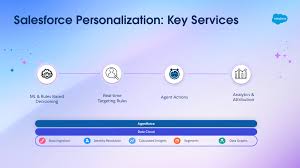
The Future of Hyper-Personalization: Salesforce’s AI-Powered Revolution From Static Campaigns to Real-Time Individualization In today’s digital interaction world, 73% of customers expect companies to understand their unique needs (based on Salesforce Research). Salesforce is answering this demand with a transformative approach to personalization, blending AI, real-time data, and cross-channel orchestration into a seamless system. The Future of Hyper-Personalization is here! The Evolution of Salesforce Personalization From Evergage to AI-Native: A Timeline Key Limitations of Legacy Solutions Introducing Salesforce Personalization: AI at the Core 3 Breakthrough Capabilities How It Works: The Technical Magic Core Components Head-to-Head: Legacy vs. Next-Gen Feature Marketing Cloud Personalization Salesforce Personalization AI Foundation Rules-based Generative + Predictive Data Source Primarily 1st-party Unified (1st/2nd/3rd-party) Channel Coverage Web-centric Omnichannel Setup Complexity High (IT-dependent) Low-code Optimization Manual A/B testing Autonomous AI Proven Impact: Early Results Implementation Roadmap For New Adopters For Existing Marketing Cloud Personalization Users The Future Vision Salesforce is advancing toward: “We’re moving from ‘right message, right time’ to ‘right message before they ask’”— Salesforce CPO Your Next Steps “The last decade was about collecting customer data. This decade is about activating it with intelligence.” Like Related Posts Who is Salesforce? Who is Salesforce? Here is their story in their own words. From our inception, we’ve proudly embraced the identity of Read more Salesforce Marketing Cloud Transactional Emails Salesforce Marketing Cloud Transactional Emails are immediate, automated, non-promotional messages crucial to business operations and customer satisfaction, such as order Read more Salesforce Unites Einstein Analytics with Financial CRM Salesforce has unveiled a comprehensive analytics solution tailored for wealth managers, home office professionals, and retail bankers, merging its Financial Read more AI-Driven Propensity Scores AI plays a crucial role in propensity score estimation as it can discern underlying patterns between treatments and confounding variables Read more

Read More
gettectonic.com