Vector Database Archives - gettectonic.com
AWS Salesforce

AWS Doubles Down on Agentic AI with New Developer Tools at NYC Summit

At its AWS Summit New York City 2025 conference, Amazon Web Services unveiled a comprehensive suite of agent-based AI tools, signaling its strategic bet on what it calls “the next fundamental shift in enterprise AI.” Core Offerings: Building Blocks for Agentic Systems The cloud leader introduced Amazon Bedrock AgentCore, now in preview, which provides seven foundational services for deploying AI agents at scale: “This represents a step function change in what’s possible for AI agents,” said Swami Sivasubramanian, AWS VP for Agentic AI, during his keynote. The suite supports any AI framework or model while addressing critical enterprise requirements around security and scalability. Complementary AI Infrastructure Updates AWS also announced: The company is backing these technical investments with an additional $100 million for its Generative AI Innovation Center, focusing on hyperautomation use cases. Developer-Centric Approach Faces Mixed Reactions Analysts note AWS’s strategy differs from competitors by targeting professional developers rather than citizen developers: “It’s geared toward the hardcore professional developer,” said Jason Andersen of Moor Insights & Strategy, contrasting AWS’s CLI-heavy approach with Salesforce’s low-code solutions. However, Omdia’s Mark Beccue cautioned: “When talking about agents, you must have the complete story.” He suggested the developer focus might overlook key decision-makers. Ecosystem Expansion Notable ecosystem developments include: Early adopters like A&I Solutions President John Balsavage highlight observability tools as critical for improving agent accuracy beyond current 90% benchmarks. Challenges Ahead While AWS aims to simplify complex AI orchestration, analysts question whether it can: The summit also revealed AWS Academy is providing free certification exam vouchers to over 6,600 students, potentially growing its AI-skilled workforce. Meanwhile, Anthropic (an AWS partner) launched new analytics for its Claude Code assistant. Like Related Posts AI Automated Offers with Marketing Cloud Personalization AI-Powered Offers Elevate the relevance of each customer interaction on your website and app through Einstein Decisions. Driven by a Read more Salesforce OEM AppExchange Expanding its reach beyond CRM, Salesforce.com has launched a new service called AppExchange OEM Edition, aimed at non-CRM service providers. Read more The Salesforce Story In Marc Benioff’s own words How did salesforce.com grow from a start up in a rented apartment into the world’s Read more Salesforce Jigsaw Salesforce.com, a prominent figure in cloud computing, has finalized a deal to acquire Jigsaw, a wiki-style business contact database, for Read more

Read More
Far Beyond Keywords

Far Beyond Keywords

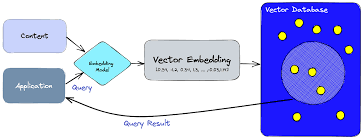
Far Beyond Keywords: The Next Era of Intelligent Search with NLP & Vector Embeddings Traditional search has served us well—scalable systems can scan structured data in seconds using keywords, tags, or schemas. But 90% of enterprise data is unstructured: emails, support tickets, PDFs, audio, and video. Keyword search fails here because human language is nuanced—we use metaphors, synonyms, and context that rigid keyword matching can’t grasp. To search unstructured data effectively, we need AI-powered semantic understanding—not just pattern matching. How Neural Networks Understand Language Modern NLP models rely on neural networks (NNs), which aren’t magic—they’re pattern-recognition engines trained on vast text datasets. Here’s how they learn: From Words to Semantic Search To search entire documents, we: Why It’s Better Than Keyword Search ✅ Finds conceptually related content (e.g., “sustainability” matches “eco-friendly initiatives”).✅ Ignores exact phrasing—understands intent.✅ Faster at scale—vector math outperforms text scanning. Scaling Semantic Search with Vector Databases Storing millions of vectors requires specialized vector databases (e.g., Pinecone, Milvus), optimized for: 🔹 Low-latency retrieval – Nearest-neighbor search in milliseconds.🔹 Horizontal scaling – Partition data across clusters.🔹 Incremental updates – Only re-embed modified text.🔹 GPU acceleration – 2-3x faster queries vs. CPU. Real-World Impact Frameworks like AgoraWiki apply these principles to deliver: The Future of Search As NLP advances, semantic search will become smarter, faster, and more contextual—transforming how enterprises unlock insights from unstructured data. Ready to move beyond keywords? Explore AI-powered search solutions today. Like Related Posts AI Automated Offers with Marketing Cloud Personalization AI-Powered Offers Elevate the relevance of each customer interaction on your website and app through Einstein Decisions. Driven by a Read more Salesforce OEM AppExchange Expanding its reach beyond CRM, Salesforce.com has launched a new service called AppExchange OEM Edition, aimed at non-CRM service providers. Read more The Salesforce Story In Marc Benioff’s own words How did salesforce.com grow from a start up in a rented apartment into the world’s Read more Salesforce Jigsaw Salesforce.com, a prominent figure in cloud computing, has finalized a deal to acquire Jigsaw, a wiki-style business contact database, for Read more

Read More

Once Upon a Time in Data Land

Once Upon a Time in Data Land: Building the Artificial Intelligence-Ready Warehouse In the early days of data, businesses simply wanted to know what had already happened in the past. Questions like “How many units shipped?” or “What were last month’s sales?” drove the first major digital settlements—the Digitally Filed Data Warehouse. Looking back this seems like the aluminum carport you can have erected in your driveway. The Meticulously Organized Library (The Digitally Filed Data Warehouse Era) Imagine a grand, meticulously organized library. Data from sales, finance, and inventory wasn’t just dumped inside—it went through ETL (Extract, Transform, Load), where it was cleaned, standardized, and structured into predefined formats. Need quarterly sales figures? They were always in the same place, ready for reliable reporting. But then, the world outside got messy. Suddenly, businesses weren’t just dealing with neat rows and columns—they faced website clicks, customer emails, sensor data, social media streams, images, and videos. The rigid Digitally Filed Data Warehouse struggled to adapt. Trying to force unstructured data through ETL was like trying to shelve a waterfall—slow, expensive, and often impossible. The Everything Shed (The Rise of the AI-Powered Warehouse) Enter the AI-Powered Warehouse—a vast, flexible storage space built for raw, unstructured data. Instead of forcing structure upfront, it embraced “store first, organize later” (schema-on-read). Data scientists could explore everything, from tweets to video transcripts, without constraints. But freedom had a cost. Without governance, many AI-Powered Warehouses became “data swamps”—cluttered, unreliable, and slow. Finding clean, trustworthy data was a treasure hunt, and building reliable AI pipelines was a challenge. Organizing the Shed (The AI-Ready Warehouse Paradigm) The solution? Structure without sacrifice. The AI-Ready Warehouse kept the flexibility of raw storage but added intelligence on top. Technologies like Delta Lake, Apache Iceberg, and Apache Hudi introduced:✔ ACID transactions (no more corrupted data)✔ Data versioning (“time travel” to past states)✔ Schema enforcement (order without rigidity)✔ Performance optimizations (speed at scale) A key innovation was the Medallion Architecture, organizing data by quality: This hybrid approach unified BI dashboards, analytics, and machine learning—all on the same foundation. The AI Factory (The Modern AI-Functioning Warehouse) Just as businesses adapted, AI evolved. Generative AI, autonomous agents, and real-time decision-making demanded more than batch-processed data. The AI-Ready Warehouse transformed into a fully integrated AI factory, built for: 🔹 Real-Time & Streaming Data 🔹 Seamless MLOps Integration 🔹 Vector Databases & Embeddings 🔹 Robust AI Governance Why This Matters for AI Agents Autonomous AI agents don’t just analyze data—they act on it. The AI-Functioning Warehouse gives them:✔ Context: Real-time data + historical insights✔ Consistency: Features match training data✔ Memory: Logged actions for continuous learning The Future: An AI-Native Data Ecosystem The journey from Digitally Filed Data Warehouse to AI-Powered Warehouse to AI-Functioning Warehouse reflects a shift from static reporting to dynamic intelligence. For businesses embracing AI, the question is no longer “Do we need a data strategy?” but “Is our data foundation AI-ready?” The answer will separate the leaders from the laggards in the age of AI. Next Steps: The future belongs to those who build not just for data, but for AI. Like Related Posts AI Automated Offers with Marketing Cloud Personalization AI-Powered Offers Elevate the relevance of each customer interaction on your website and app through Einstein Decisions. Driven by a Read more Salesforce OEM AppExchange Expanding its reach beyond CRM, Salesforce.com has launched a new service called AppExchange OEM Edition, aimed at non-CRM service providers. Read more The Salesforce Story In Marc Benioff’s own words How did salesforce.com grow from a start up in a rented apartment into the world’s Read more Salesforce Jigsaw Salesforce.com, a prominent figure in cloud computing, has finalized a deal to acquire Jigsaw, a wiki-style business contact database, for Read more

Read More
Model Context Protocol

Model Context Protocol

The AI Revolution Has Arrived: Meet MCP, the Protocol Changing Everything Imagine an AI that doesn’t just respond—it understands. It reads your emails, analyzes your databases, knows your business inside out, and acts on live data—all through a single universal standard. That future is here, and it’s called MCP (Model Context Protocol). Already adopted by OpenAI, Google, Microsoft, and more, MCP is about to redefine how we work with AI—forever. No More Copy-Paste AI Picture this: You ask your AI assistant about Q3 performance. Instead of scrambling through spreadsheets, Slack threads, and CRM reports, the AI already knows. It pulls real-time sales figures, checks customer feedback, and delivers a polished analysis—in seconds. This isn’t sci-fi. It’s happening today, thanks to MCP. The Problem With Today’s AI: Isolated Intelligence Most AI models are like geniuses locked in a library—brilliant but cut off from the real world. Every time you copy-paste data into ChatGPT or upload files to Claude, you’re working around a fundamental flaw: AI lacks context. For businesses, deploying AI means endless custom integrations: MCP: The Universal Language for AI Introduced by Anthropic in late 2024, MCP is the USB-C of AI—a single standard connecting any AI to any data source. Here’s how it works: Instead of building N×M connections (every AI × every data source), you build N + M—one integration per AI model and one per data source. MCP in Action: The Future of Work Why MCP Changes Everything The MCP Ecosystem is Exploding In less than a year, MCP has been adopted by: Beyond RAG: Real-Time Knowledge Traditional RAG (Retrieval-Augmented Generation) relies on stale vector databases. MCP changes the game: Security & Governance Built In The Next Frontier: AI Agents & Workflow Automation MCP enables AI agents that don’t just follow scripts—they adapt. The Time to Act is Now MCP isn’t just another API—it’s the foundation for true AI integration. The question isn’t if you’ll adopt it, but how fast. Welcome to the era of connected intelligence. Like Related Posts AI Automated Offers with Marketing Cloud Personalization AI-Powered Offers Elevate the relevance of each customer interaction on your website and app through Einstein Decisions. Driven by a Read more Salesforce OEM AppExchange Expanding its reach beyond CRM, Salesforce.com has launched a new service called AppExchange OEM Edition, aimed at non-CRM service providers. Read more The Salesforce Story In Marc Benioff’s own words How did salesforce.com grow from a start up in a rented apartment into the world’s Read more Salesforce Jigsaw Salesforce.com, a prominent figure in cloud computing, has finalized a deal to acquire Jigsaw, a wiki-style business contact database, for Read more

Read More
enterprise ai rag

Enterprise AI RAG

Retrieval-Augmented Generation (RAG): Enhancing AI with External Knowledge Large language models (LLMs) can answer nearly any question—but their responses aren’t always based on verified or up-to-date information. Retrieval-augmented generation (RAG) bridges this gap by enabling AI applications to access external knowledge sources, making it invaluable for enterprises leveraging proprietary data. By integrating RAG into their AI strategy, organizations can deliver accurate, secure, and compliant AI-powered solutions grounded in real-time, internal knowledge. To get started, explore RAG’s architecture, benefits, and challenges, then follow a six-step best practices checklist for enterprise adoption. How RAG Works In a standard LLM, responses are generated solely from pre-trained data, limiting accuracy to the model’s training cutoff date and excluding proprietary business knowledge. RAG enhances this process in three stages: Why Enterprises Need RAG RAG overcomes three key LLM limitations: Challenges to Address: 6 Best Practices for Implementing RAG Integrating RAG into Your AI Roadmap Start with high-impact use cases like customer support, internal knowledge bases, or compliance documentation. Take a phased approach, building expertise in data preparation, embeddings, and prompt engineering. Complement RAG with fine-tuning and supervised learning for a robust, enterprise-ready AI solution. Like Related Posts AI Automated Offers with Marketing Cloud Personalization AI-Powered Offers Elevate the relevance of each customer interaction on your website and app through Einstein Decisions. Driven by a Read more Salesforce OEM AppExchange Expanding its reach beyond CRM, Salesforce.com has launched a new service called AppExchange OEM Edition, aimed at non-CRM service providers. Read more The Salesforce Story In Marc Benioff’s own words How did salesforce.com grow from a start up in a rented apartment into the world’s Read more Salesforce Jigsaw Salesforce.com, a prominent figure in cloud computing, has finalized a deal to acquire Jigsaw, a wiki-style business contact database, for Read more

Read More
Generative AI Energy Consumption Rises

Generative AI Tools

Generative AI Tools: A Comprehensive Overview of Emerging Capabilities The widespread adoption of generative AI services like ChatGPT has sparked immense interest in leveraging these tools for practical enterprise applications. Today, nearly every enterprise app integrates generative AI capabilities to enhance functionality and efficiency. A broad range of AI, data science, and machine learning tools now support generative AI use cases. These tools assist in managing the AI lifecycle, governing data, and addressing security and privacy concerns. While such capabilities also aid in traditional AI development, this discussion focuses on tools specifically designed for generative AI. Not all generative AI relies on large language models (LLMs). Emerging techniques generate images, videos, audio, synthetic data, and translations using methods such as generative adversarial networks (GANs), diffusion models, variational autoencoders, and multimodal approaches. Here is an in-depth look at the top categories of generative AI tools, their capabilities, and notable implementations. It’s worth noting that many leading vendors are expanding their offerings to support multiple categories through acquisitions or integrated platforms. Enterprises may want to explore comprehensive platforms when planning their generative AI strategies. 1. Foundation Models and Services Generative AI tools increasingly simplify the development and responsible use of LLMs, initially pioneered through transformer-based approaches by Google researchers in 2017. 2. Cloud Generative AI Platforms Major cloud providers offer generative AI platforms to streamline development and deployment. These include: 3. Use Case Optimization Tools Foundation models often require optimization for specific tasks. Enterprises use tools such as: 4. Quality Assurance and Hallucination Mitigation Hallucination detection tools address the tendency of generative models to produce inaccurate or misleading information. Leading tools include: 5. Prompt Engineering Tools Prompt engineering tools optimize interactions with LLMs and streamline testing for bias, toxicity, and accuracy. Examples include: 6. Data Aggregation Tools Generative AI tools have evolved to handle larger data contexts efficiently: 7. Agentic and Autonomous AI Tools Developers are creating tools to automate interactions across foundation models and services, paving the way for autonomous AI. Notable examples include: 8. Generative AI Cost Optimization Tools These tools aim to balance performance, accuracy, and cost effectively. Martian’s Model Router is an early example, while traditional cloud cost optimization platforms are expected to expand into this area. Generative AI tools are rapidly transforming enterprise applications, with foundational, cloud-based, and domain-specific solutions leading the way. By addressing challenges like accuracy, hallucination, and cost, these tools unlock new potential across industries and use cases, enabling enterprises to stay ahead in the AI-driven landscape. Like Related Posts AI Automated Offers with Marketing Cloud Personalization AI-Powered Offers Elevate the relevance of each customer interaction on your website and app through Einstein Decisions. Driven by a Read more Salesforce OEM AppExchange Expanding its reach beyond CRM, Salesforce.com has launched a new service called AppExchange OEM Edition, aimed at non-CRM service providers. Read more The Salesforce Story In Marc Benioff’s own words How did salesforce.com grow from a start up in a rented apartment into the world’s Read more Salesforce Jigsaw Salesforce.com, a prominent figure in cloud computing, has finalized a deal to acquire Jigsaw, a wiki-style business contact database, for Read more

Read More
Gen AI Unleased With Vector Database

Knowledge Graphs and Vector Databases

The Role of Knowledge Graphs and Vector Databases in Retrieval-Augmented Generation (RAG) In the dynamic AI landscape, Retrieval-Augmented Generation (RAG) systems are revolutionizing data retrieval by combining artificial intelligence with external data sources to deliver contextual, relevant outputs. Two core technologies driving this innovation are Knowledge Graphs and Vector Databases. While fundamentally different in their design and functionality, these tools complement one another, unlocking new potential for solving complex data problems across industries. Understanding Knowledge Graphs: Connecting the Dots Knowledge Graphs organize data into a network of relationships, creating a structured representation of entities and how they interact. These graphs emphasize understanding and reasoning through data, offering explainable and highly contextual results. How They Work Strengths Limitations Applications Vector Databases: The Power of Similarity In contrast, Vector Databases thrive in handling unstructured data such as text, images, and audio. By representing data as high-dimensional vectors, they excel at identifying similarities, enabling semantic understanding. How They Work Strengths Limitations Applications Combining Knowledge Graphs and Vector Databases: A Hybrid Approach While both technologies excel independently, their combination can amplify RAG systems. Knowledge Graphs bring reasoning and structure, while Vector Databases offer rapid, similarity-based retrieval, creating hybrid systems that are more intelligent and versatile. Example Use Cases Knowledge Graphs vs. Vector Databases: Key Differences Feature Knowledge Graphs Vector Databases Data Type Structured Unstructured Core Strength Relational reasoning Similarity-based retrieval Explainability High Low Scalability Limited for large datasets Efficient for massive datasets Flexibility Schema-dependent Schema-free Challenges in Implementation Future Trends: The Path to Convergence As AI evolves, the distinction between Knowledge Graphs and Vector Databases is beginning to blur. Emerging trends include: This convergence is paving the way for smarter, more adaptive systems that can handle both structured and unstructured data seamlessly. Conclusion Knowledge Graphs and Vector Databases represent two foundational technologies in the realm of Retrieval-Augmented Generation. Knowledge Graphs excel at reasoning through structured relationships, while Vector Databases shine in unstructured data retrieval. By combining their strengths, organizations can create hybrid systems that offer unparalleled insights, efficiency, and scalability. In a world where data continues to grow in complexity, leveraging these complementary tools is essential. Whether building intelligent healthcare systems, enhancing recommendation engines, or powering semantic search, the synergy between Knowledge Graphs and Vector Databases is unlocking the next frontier of AI innovation, transforming how industries harness the power of their data. Like Related Posts AI Automated Offers with Marketing Cloud Personalization AI-Powered Offers Elevate the relevance of each customer interaction on your website and app through Einstein Decisions. Driven by a Read more Salesforce OEM AppExchange Expanding its reach beyond CRM, Salesforce.com has launched a new service called AppExchange OEM Edition, aimed at non-CRM service providers. Read more The Salesforce Story In Marc Benioff’s own words How did salesforce.com grow from a start up in a rented apartment into the world’s Read more Salesforce Jigsaw Salesforce.com, a prominent figure in cloud computing, has finalized a deal to acquire Jigsaw, a wiki-style business contact database, for Read more

Read More
Evaluating RAG With Needle in Haystack Test

Agentic RAG

Agentic RAG: The Next Evolution of AI-Powered Knowledge Retrieval From RAG to Agentic RAG: A Paradigm Shift in AI Applications While Retrieval-Augmented Generation (RAG) dominated AI advancements in 2023, agentic workflows are now driving the next wave of innovation in 2024. By integrating AI agents into RAG pipelines, developers can build more powerful, adaptive, and intelligent LLM-powered applications. This article explores:✔ What is Agentic RAG?✔ How it works (single-agent vs. multi-agent architectures)✔ Implementation methods (function calling vs. agent frameworks)✔ Enterprise adoption & real-world use cases✔ Benefits & limitations Understanding the Foundations: RAG & AI Agents What is Retrieval-Augmented Generation (RAG)? RAG enhances LLMs by retrieving external knowledge before generating responses, reducing hallucinations and improving accuracy. Traditional (Vanilla) RAG Pipeline: Limitations of Vanilla RAG: ❌ Single knowledge source (no dynamic tool integration).❌ One-shot retrieval (no iterative refinement).❌ No reasoning over retrieved data quality. What Are AI Agents? AI agents are autonomous LLM-driven systems with: The ReAct Framework (Reason + Act) What is Agentic RAG? Agentic RAG embeds AI agents into RAG pipelines, enabling:✅ Multi-source retrieval (databases, APIs, web search).✅ Dynamic query refinement (self-correcting searches).✅ Validation of results (quality checks before generation). How Agentic RAG Works Instead of a static retrieval step, an AI agent orchestrates: Agentic RAG Architectures 1. Single-Agent RAG (Router) 2. Multi-Agent RAG (Orchestrated Workflow) Implementing Agentic RAG Option 1: LLMs with Function Calling Example: Function Calling with Ollama python Copy def ollama_generation_with_tools(query, tools_schema): # LLM decides tool use → executes → refines response … Option 2: Agent Frameworks Why Enterprises Are Adopting Agentic RAG Real-World Use Cases 🔹 Replit’s AI Dev Agent – Helps debug & write code.🔹 Microsoft Copilots – Assist users in real-time tasks.🔹 Customer Support Bots – Multi-step query resolution. Benefits ✔ Higher accuracy (validated retrievals).✔ Dynamic tool integration (APIs, web, databases).✔ Autonomous task handling (reducing manual work). Limitations ⚠ Added latency (LLM reasoning steps).⚠ Unpredictability (agents may fail without safeguards).⚠ Complex debugging (multi-agent coordination). Conclusion: The Future of Agentic RAG Agentic RAG represents a leap beyond traditional RAG, enabling:🚀 Smarter, self-correcting retrieval.🤖 Seamless multi-tool workflows.🔍 Enterprise-grade reliability. As frameworks mature, expect AI agents to become the backbone of next-gen LLM applications—transforming industries from customer service to software development. Ready to build your own Agentic RAG system? Explore frameworks like LangChain, CrewAI, or OpenAI’s function calling to get started. Like Related Posts AI Automated Offers with Marketing Cloud Personalization AI-Powered Offers Elevate the relevance of each customer interaction on your website and app through Einstein Decisions. Driven by a Read more Salesforce OEM AppExchange Expanding its reach beyond CRM, Salesforce.com has launched a new service called AppExchange OEM Edition, aimed at non-CRM service providers. Read more The Salesforce Story In Marc Benioff’s own words How did salesforce.com grow from a start up in a rented apartment into the world’s Read more Salesforce Jigsaw Salesforce.com, a prominent figure in cloud computing, has finalized a deal to acquire Jigsaw, a wiki-style business contact database, for Read more

Read More

Agentforce Autonomous Agents

Agentforce: Transforming Business Operations with Autonomous Agents Agentforce empowers organizations to create and manage autonomous agents that streamline tasks across various business departments. These include Sales Agents, Service Agents, Marketing Agents, Commerce Agents, and Platform Agents—truly delivering on the vision of “an Agentforce in every app.” But how does Agentforce work, and what are the building blocks for configuring these agents? Salesforce emphasizes that Agentforce is built with clicks, not code, making it highly accessible to users. This claim was validated by many attendees at the ‘Agentforce Launchpad’ during Dreamforce, who noted that the tool is as declarative and user-friendly as Salesforce promised. The Building Blocks of Agentforce 1. Agent Builder The journey begins with the Agent Builder within Agentforce Studio. This configuration tool allows users to define their agent’s attributes, such as the avatar, name, and description, using natural language inputs—essentially describing the agent in conversational terms. Salesforce describes it as: “If you can dream it, Agentforce can do it.” The Agent Builder interface comprises: Salesforce also provides out-of-the-box agents, such as Sales Agents, which can be enabled via guided setup. 2. Agent Topics Topics are the foundational building blocks that determine an agent’s scope of work. For example, a topic like “Order Management” grants the agent access to data such as order histories and product specifications. In the Dreamforce keynote, Saks’ service agent demonstrated the importance of topics by resolving customer queries tied to its assigned topics. However, queries outside the defined topics were flagged as “guardrails,” ensuring the agent stayed within its designated scope. 3. Topic Actions Actions, tied to topics, define what an agent can do. These actions are often flows, such as querying a CRM database or triggering automated processes. Users can assign existing actions or create new ones by referencing Apex, Flow, prompts, or MuleSoft APIs. For example, integrating external data sources requires defining a new Agentforce action tied to a MuleSoft API. This allows the agent to query data just as human users would. Testing Agents with the Atlas Reasoning Engine Agentforce’s Atlas Reasoning Engine powers agents with advanced capabilities. Users can test agents within the Agent Builder interface, following the reasoning process step-by-step: Once configured, agents are ready to operate across their assigned communication channels (e.g., email, WhatsApp, voice). Omni Supervisor: Real-Time Agent Monitoring Omni Supervisor, originally a Service Cloud feature, now extends to monitoring agents. It provides insights into overall trends, allows real-time oversight of interactions, and even enables listening to recent conversations. The Role of Data Cloud in Agentforce Data powers Agentforce, enabling agents to provide highly contextual responses. The Data Cloud processes both structured data (e.g., Salesforce records) and unstructured data (e.g., emails, voice memos) using its Vector Database for advanced processing. 1. Retrieval Augmented Generation (RAG) Salesforce employs RAG to enhance the accuracy of agent responses. RAG integrates the Atlas Reasoning Engine with Data Cloud, creating a feedback loop. Data Cloud enriches user prompts by retrieving relevant data, making agent responses more contextual and informed. 2. New Data Streams To enhance Agentforce capabilities, data can be ingested into the platform in three ways: For instance, connecting an order management system like Snowflake is streamlined via Salesforce’s prebuilt connectors. 3. Data Graphs Data Graphs visualize relationships between Data Model Objects (DMOs), enabling users to ensure all necessary data is available for optimal agent performance. Real-time Data Graphs enhance identity resolution, segmentation, and action execution for seamless data flow. Inside Prompt Builder Prompt Builder allows users to create or refine prompts that power Agentforce actions. Low-code tools guide users through the process, offering features such as previewing results and assessing feedback toxicity ratings. Search Index in RAG The Search Index is a critical component of RAG. It retrieves relevant data from Data Cloud to enhance agent reasoning. Search parameters can be configured in three ways: Tectonic’s Thoughts Agentforce, powered by Data Cloud and advanced AI tools like the Atlas Reasoning Engine, represents a new era of automation and efficiency for businesses. Whether through Sales, Service, or Marketing Agents, organizations can leverage this technology to streamline operations, personalize customer experiences, and achieve better outcomes. With over 5,200 customers implementing Agentforce in their sandboxes within the first two days of Dreamforce, the platform is already proving its transformative potential. By 2025 over a billion agents had been created! Agentforce isn’t just about improving efficiency; it’s about redefining what’s possible for business operations. Content updated January 2025. Like Related Posts AI Automated Offers with Marketing Cloud Personalization AI-Powered Offers Elevate the relevance of each customer interaction on your website and app through Einstein Decisions. Driven by a Read more Salesforce OEM AppExchange Expanding its reach beyond CRM, Salesforce.com has launched a new service called AppExchange OEM Edition, aimed at non-CRM service providers. Read more The Salesforce Story In Marc Benioff’s own words How did salesforce.com grow from a start up in a rented apartment into the world’s Read more Salesforce Jigsaw Salesforce.com, a prominent figure in cloud computing, has finalized a deal to acquire Jigsaw, a wiki-style business contact database, for Read more

Read More
Agentforce - AI's New Role in Sales and Service

Agentforce – AI’s New Role in Sales and Service

From Science Fiction to Reality: AI’s Game-Changing Role in Service and Sales AI for service and sales has reached a critical tipping point, driving rapid innovation. At Dreamforce in San Francisco, hosted by Salesforce we explored how Salesforce clients are leveraging CRM, Data Cloud, and AI to extract real business value from their Salesforce investments. In previous years, AI features branded under “Einstein” had been met with skepticism. These features, such as lead scoring, next-best-action suggestions for service agents, and cross-sell/upsell recommendations, often required substantial quality data in the CRM and knowledge base to be effective. However, customer data was frequently unreliable, with duplicate records and missing information, and the Salesforce knowledge base was underused. Building self-service capabilities with chatbots was also challenging, requiring accurate predictions of customer queries and well-structured decision trees. This year’s Dreamforce revealed a transformative shift. The advancements in AI, especially for customer service and sales, have become exceptionally powerful. Companies now need to take notice of Salesforce’s capabilities, which have expanded significantly. Agentforce – AI’s New Role in Sales and Service Some standout Salesforce features include: At Dreamforce, we participated in a workshop where they built an AI agent capable of responding to customer cases using product sheets and company knowledge within 90 minutes. This experience demonstrated how accessible AI solutions have become, no longer requiring developers or LLM experts to set up. The key challenge lies in mapping external data sources to a unified data model in Data Cloud, but once achieved, the potential for customer service and sales is immense. How AI and Data Integrate to Transform Service and Sales Businesses can harness the following integrated components to build a comprehensive solution: Real-World Success and AI Implementation OpenTable shared a successful example of building an AI agent for its app in just two months, using a small team of four. This was a marked improvement from the company’s previous chatbot projects, highlighting the efficiency of the latest AI tools. Most CEOs of large enterprises are exploring AI strategies, whether by developing their own LLMs or using pre-existing models. However, many of these efforts are siloed, and engineering costs are high, leading to clunky transitions between AI and human agents. Tectonic is well-positioned to help our clients quickly deploy AI-powered solutions that integrate seamlessly with their existing CRM and ERP systems. By leveraging AI agents to streamline customer interactions, enhance sales opportunities, and provide smooth handoffs to human agents, businesses can significantly improve customer experiences and drive growth. Tectonic is ready to help businesses achieve similar success with AI-driven innovation. Like Related Posts AI Automated Offers with Marketing Cloud Personalization AI-Powered Offers Elevate the relevance of each customer interaction on your website and app through Einstein Decisions. Driven by a Read more Salesforce OEM AppExchange Expanding its reach beyond CRM, Salesforce.com has launched a new service called AppExchange OEM Edition, aimed at non-CRM service providers. Read more The Salesforce Story In Marc Benioff’s own words How did salesforce.com grow from a start up in a rented apartment into the world’s Read more Salesforce Jigsaw Salesforce.com, a prominent figure in cloud computing, has finalized a deal to acquire Jigsaw, a wiki-style business contact database, for Read more

Read More
guide to RAG

Tectonic Guide to RAG

Guide to RAG (Retrieval-Augmented Generation) Retrieval-Augmented Generation (RAG) has become increasingly popular, and while it’s not yet as common as seeing it on a toaster oven manual, it is expected to grow in use. Despite its rising popularity, comprehensive guides that address all its nuances—such as relevance assessment and hallucination prevention—are still scarce. Drawing from practical experience, this insight offers an in-depth overview of RAG. Why is RAG Important? Large Language Models (LLMs) like ChatGPT can be employed for a wide range of tasks, from crafting horoscopes to more business-centric applications. However, there’s a notable challenge: most LLMs, including ChatGPT, do not inherently understand the specific rules, documents, or processes that companies rely on. There are two ways to address this gap: How RAG Works RAG consists of two primary components: While the system is straightforward, the effectiveness of the output heavily depends on the quality of the documents retrieved and how well the Retriever performs. Corporate documents are often unstructured, conflicting, or context-dependent, making the process challenging. Search Optimization in RAG To enhance RAG’s performance, optimization techniques are used across various stages of information retrieval and processing: Python and LangChain Implementation Example Below is a simple implementation of RAG using Python and LangChain: pythonCopy codeimport os import wget from langchain.vectorstores import Qdrant from langchain.embeddings import OpenAIEmbeddings from langchain import OpenAI from langchain_community.document_loaders import BSHTMLLoader from langchain.chains import RetrievalQA # Download ‘War and Peace’ by Tolstoy wget.download(“http://az.lib.ru/t/tolstoj_lew_nikolaewich/text_0073.shtml”) # Load text from html loader = BSHTMLLoader(“text_0073.shtml”, open_encoding=’ISO-8859-1′) war_and_peace = loader.load() # Initialize Vector Database embeddings = OpenAIEmbeddings() doc_store = Qdrant.from_documents( war_and_peace, embeddings, location=”:memory:”, collection_name=”docs”, ) llm = OpenAI() # Ask questions while True: question = input(‘Your question: ‘) qa = RetrievalQA.from_chain_type( llm=llm, chain_type=”stuff”, retriever=doc_store.as_retriever(), return_source_documents=False, ) result = qa(question) print(f”Answer: {result}”) Considerations for Effective RAG Ranking Techniques in RAG Dynamic Learning with RELP An advanced technique within RAG is Retrieval-Augmented Language Model-based Prediction (RELP). In this method, information retrieved from vector storage is used to generate example answers, which the LLM can then use to dynamically learn and respond. This allows for adaptive learning without the need for expensive retraining. Guide to RAG RAG offers a powerful alternative to retraining large language models, allowing businesses to leverage their proprietary knowledge for practical applications. While setting up and optimizing RAG systems involves navigating various complexities, including document structure, query processing, and ranking, the results are highly effective for most business use cases. Like Related Posts AI Automated Offers with Marketing Cloud Personalization AI-Powered Offers Elevate the relevance of each customer interaction on your website and app through Einstein Decisions. Driven by a Read more Salesforce OEM AppExchange Expanding its reach beyond CRM, Salesforce.com has launched a new service called AppExchange OEM Edition, aimed at non-CRM service providers. Read more The Salesforce Story In Marc Benioff’s own words How did salesforce.com grow from a start up in a rented apartment into the world’s Read more Salesforce Jigsaw Salesforce.com, a prominent figure in cloud computing, has finalized a deal to acquire Jigsaw, a wiki-style business contact database, for Read more

Read More
gettectonic.com