
Salesforce Unveils Data Cloud Vector Database with GenAI Integration
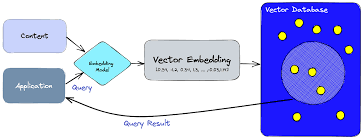
Salesforce has officially launched its Data Cloud Vector Database, leveraging GenAI to rapidly process a company’s vast collection of PDFs, emails, transcripts, online reviews, and other unstructured data. Gen AI Unleased With Vector Database.
Rahul Auradkar, Executive Vice President and General Manager of Salesforce Unified Data Services and Einstein Units, highlighted the efficiency gains in a one-on-one briefing with InformationWeek. Auradkar demonstrated the new capabilities through a live demo, showcasing the potential of the Data Cloud Vector Database.
Enhanced Efficiency and Data Utilization
The new Data Cloud integrates with the Einstein 1 platform, combining unstructured and structured data for rapid analysis by sales, marketing, and customer service teams. This integration significantly enhances the accuracy of Einstein Copilot, Salesforce’s enterprise conversational AI assistant.
Gen AI Unleased With Vector Database
Auradkar demonstrated how a customer service query could retrieve multiple relevant results within seconds. This process, which typically takes hours of manual effort, now leverages unstructured data, which makes up 90% of customer data, to deliver swift and accurate results.
“This advancement allows our customers to harness the full potential of 90% of their enterprise data—unstructured data that has been underutilized or siloed—to drive use cases, AI, automation, and analytics experiences across both structured and unstructured data,” Auradkar explained.
Comprehensive Data Management
Using Salesforce’s Einstein 1 platform, Data Cloud enables users to ingest, store, unify, index, and perform semantic queries on unstructured data across all applications. This data encompasses diverse unstructured content from websites, social media platforms, and other sources, resulting in more accurate outcomes and insights.
Auradkar emphasized, “This represents an order of magnitude improvement in productivity and customer satisfaction. For instance, a large shipping company with thousands of customer cases can now categorize and access necessary information far more efficiently.”
Additional Announcements
Salesforce also introduced several new AI and Data Cloud features:
- Hybrid Search Pilot: Combines semantic search with traditional keyword search.
- Data Cloud in Sandbox Environments: Allows IT teams to configure and test innovations before deployment.
- Data Cloud on Hyperforce in the UK: Available starting July 31.
Auradkar noted that these innovations enhance Salesforce’s competitive edge by prioritizing flexibility and enabling customers to take control of their data.
“We’ll continue on this journey,” Auradkar said. “Our future investments will focus on how this product evolves and scales. We’re building significant flexibility for our customers to use any model they choose, including any large language model.”
For more insights and updates, visit Salesforce’s official announcements and stay tuned for further developments.
Who is Salesforce? Here is their story in their own words. From our inception, we've proudly embraced the identity of Read more
Salesforce Marketing Cloud Transactional Emails are immediate, automated, non-promotional messages crucial to business operations and customer satisfaction, such as order Read more

Salesforce has unveiled a comprehensive analytics solution tailored for wealth managers, home office professionals, and retail bankers, merging its Financial Read more
AI plays a crucial role in propensity score estimation as it can discern underlying patterns between treatments and confounding variables Read more


