
Visual Concepts Archives - gettectonic.com
The Rise of Conceptual AI

The Rise of Conceptual AI

The Rise of Conceptual AI: How Meta’s Large Concept Models Are Redefining Intelligence Beyond Tokens: The Next Evolution of AI Meta’s groundbreaking Large Concept Models (LCMs) represent a quantum leap in artificial intelligence, moving beyond the limitations of traditional language models to operate at the level of human-like conceptual understanding. Unlike conventional LLMs that process words as discrete tokens, LCMs work with semantic concepts—enabling unprecedented coherence, multimodal fluency, and cross-linguistic capabilities. How LCMs Differ From Traditional AI The Token vs. Concept Paradigm Feature Traditional LLMs (GPT, BERT) Meta’s LCMs Processing Unit Words/subwords (tokens) Full sentences/concepts Context Window Limited by token sequence length Holistic conceptual understanding Multimodality Text-focused Native text, speech, & emerging vision support Language Support Per-model limitations 200+ languages in unified space Output Coherence Degrades over long sequences Maintains narrative flow Key Innovation: The SONAR embedding space—a multidimensional framework where concepts from text, speech, and eventually images share a common mathematical representation. Inside the LCM Architecture: A Technical Breakdown 1. Conceptual Processing Pipeline 2. Benchmark Dominance Transformative Applications Enterprise Use Cases Consumer Impact Challenges on the Frontier 1. Computational Intensity 2. The Interpretability Gap 3. Expanding the Sensory Horizon The Road Ahead Meta’s research suggests LCMs could achieve human-parity in contextual understanding by 2027. Early adopters in legal and healthcare sectors already report: “Our contract review time dropped from 40 hours to 3—with better anomaly detection than human lawyers.”— Fortune 100 Legal Operations Director Why This Matters LCMs don’t just generate text—they understand and reason with concepts. This shift enables: ✅ True compositional creativity (novel solutions from combined concepts)✅ Self-correcting outputs (maintains thesis-like coherence)✅ Generalizable intelligence (skills transfer across domains) Next Steps for Organizations: “We’re not teaching AI language—we’re teaching it to think.”— Meta AI Research Lead Like Related Posts Who is Salesforce? Who is Salesforce? Here is their story in their own words. From our inception, we’ve proudly embraced the identity of Read more Salesforce Unites Einstein Analytics with Financial CRM Salesforce has unveiled a comprehensive analytics solution tailored for wealth managers, home office professionals, and retail bankers, merging its Financial Read more AI-Driven Propensity Scores AI plays a crucial role in propensity score estimation as it can discern underlying patterns between treatments and confounding variables Read more Tectonic’s Successful Salesforce Track Record Salesforce Technology Services Integrator – Tectonic has successfully delivered Salesforce in a variety of industries including Public Sector, Hospitality, Manufacturing, Read more

Read More
Tectonic Salesforce Integrations

Digital Experience and Ecommerce Dictionary

Essential Ecommerce and Digital Experience Terminology The world of ecommerce and digital experiences is constantly evolving, bringing with it a steady stream of new buzzwords and concepts. While this list isn’t exhaustive, it serves as an excellent introduction to some of the latest trends and terminology shaping online shopping experiences. Accessibility Ensuring that web content is accessible across all devices is only part of the equation—compliance with international regulations is crucial to supporting individuals with disabilities. Here are key terms related to digital accessibility: Content Marketing Content marketing has evolved beyond catalogs and newsletters. It’s now an integral part of the shopping experience, helping customers discover and engage with brands in meaningful ways. Data-Driven Strategies Leading brands leverage data-driven ecommerce to deliver personalized, seamless shopping experiences. This ever-evolving space includes key concepts such as: Mobile Commerce Consumers expect to shop seamlessly across multiple devices. Mobile commerce trends ensure a smooth experience, no matter where they browse. Omnichannel Experiences Shoppers today expect a cohesive experience whether they shop online, on social media, or in-store. Here are key omnichannel concepts: Tech & Digital Experience Platforms To meet changing consumer expectations, retailers are adopting advanced technologies that streamline operations and enhance user experiences. Social Commerce Social commerce enables direct purchases through social media platforms, streamlining the shopping journey from discovery to checkout. Security & Privacy Data privacy is a growing concern among consumers. Here are key regulations shaping ecommerce security: Search Search functionality is crucial for delivering relevant results and optimizing user experience. Emerging trends include: Final Thoughts The ecommerce webscape is always changing, with new technologies and trends shaping the way consumers shop online. By staying abreast of these key terms, businesses can enhance customer experiences and remain competitive in the digital marketplace. Explore these topics further with our resources and insights! Like Related Posts Who is Salesforce? Who is Salesforce? Here is their story in their own words. From our inception, we’ve proudly embraced the identity of Read more Salesforce Marketing Cloud Transactional Emails Salesforce Marketing Cloud Transactional Emails are immediate, automated, non-promotional messages crucial to business operations and customer satisfaction, such as order Read more Salesforce Unites Einstein Analytics with Financial CRM Salesforce has unveiled a comprehensive analytics solution tailored for wealth managers, home office professionals, and retail bankers, merging its Financial Read more AI-Driven Propensity Scores AI plays a crucial role in propensity score estimation as it can discern underlying patterns between treatments and confounding variables Read more

Read More

How To Describe The World to AI

Guide to Practical Worldbuilding: Modeling Our World for AI Have you ever wondered how kids explore the world around them? How do they make sense of objects, relationships, actions, and societal rules? Picture a child seeing a cat for the first time. At first, it’s just a furry creature, walking, climbing, and purring. Then, they notice another cat with a white face and black stripes. Over time, they learn that cats are living creatures—just like dogs. But unlike dogs, cats don’t run or bark. Through exploration and reasoning, kids continuously refine their understanding of the world. How To Describe The World to AI. Now imagine a similar process, but for artificial intelligence. Like children encountering new experiences, AI requires a framework to comprehend the world—yet AI lacks the ability to crawl in the grass, taste objects, or watch sunsets. Instead, it relies on humans to provide structured models that serve as digital maps of reality. These semantic models, akin to globes in geography class, allow AI to grasp the relationships between concepts, understand unstructured data, and operate effectively within our world. 🔔🔔  Follow us on LinkedIn  🔔🔔 Why AI Needs Models of Our World While AI systems like predictive maintenance tools or autonomous cars excel at solving specific problems, they depend on carefully prepared data for training. However, generative AI has sparked excitement by working with unstructured information, leading us to believe in intelligent agents that can automate workflows, book trips, process calls, or write code. Yet, such agents often fall short because they lack a deep understanding of our world. Large Language Models (LLMs) can process information but struggle with ambiguity, such as linking corporate database entities to real-world concepts. Without models that provide contextual meaning, even advanced algorithms remain limited tools. These semantic models allow machines—and humans—to bridge vast data sources, integrate knowledge, and interpret complex systems. Modeling Reality: Key Lessons Lesson 1: Model for the Use Case Building a model is like creating a world: it depends on your goals and perspective. For instance, if you’re modeling temperature changes in an IoT system, your approach depends on whether the focus is the sensor’s behavior (event-driven) or the temperature data itself (state-driven). Similarly, some models emphasize persistent entities (continuants) like employees, while others focus on events (occurents) like meetings. Your philosophical assumptions—whether descriptive (open to integration) or prescriptive (closed to external input)—shape the model’s design. Lesson 2: Relationships Are Key Semantic models are most powerful when they show relationships between entities. These connections provide data with context, transforming raw information into actionable insights. For example, a manufacturing company could unify quality assurance, operations, and performance metrics into a shared ontology, replacing siloed dashboards with an integrated view. Visualizing these relationships helps humans see systems as interconnected rather than isolated, enabling better analysis and decision-making. Lesson 3: Serve Humans and Machines Every model must serve three audiences: Semantic models enable AI-powered tools to augment human productivity. For example, an ancient codebase can be transformed into a graph of abstract syntax trees (AST), making it accessible for AI-driven modernization. Similarly, metadata—ranging from classification labels to data lineage—plays a critical role in organizing, governing, and contextualizing data for machine learning and reasoning. The Impact of Modeling Modeling isn’t just a technical exercise; it’s a creative process akin to worldbuilding in fiction. By formalizing the relationships and rules of our domain, we create maps that help humans and machines navigate complexity. Whether you’re modeling an enterprise, designing an AI system, or simply trying to understand your organization better, semantic models offer the tools to unify knowledge, reveal insights, and drive meaningful progress. How To Describe The World to AI. In the words of Frank Herbert: “Deep in the human unconscious is a pervasive need for a logical universe that makes sense. But the real universe is always one step beyond logic.” Like Related Posts Who is Salesforce? Who is Salesforce? Here is their story in their own words. From our inception, we’ve proudly embraced the identity of Read more Salesforce Marketing Cloud Transactional Emails Salesforce Marketing Cloud Transactional Emails are immediate, automated, non-promotional messages crucial to business operations and customer satisfaction, such as order Read more Salesforce Unites Einstein Analytics with Financial CRM Salesforce has unveiled a comprehensive analytics solution tailored for wealth managers, home office professionals, and retail bankers, merging its Financial Read more AI-Driven Propensity Scores AI plays a crucial role in propensity score estimation as it can discern underlying patterns between treatments and confounding variables Read more

Read More
Gen AI Unleased With Vector Database

Knowledge Graphs and Vector Databases

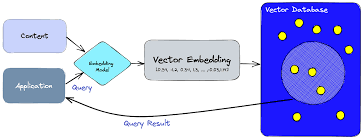
The Role of Knowledge Graphs and Vector Databases in Retrieval-Augmented Generation (RAG) In the dynamic AI landscape, Retrieval-Augmented Generation (RAG) systems are revolutionizing data retrieval by combining artificial intelligence with external data sources to deliver contextual, relevant outputs. Two core technologies driving this innovation are Knowledge Graphs and Vector Databases. While fundamentally different in their design and functionality, these tools complement one another, unlocking new potential for solving complex data problems across industries. Understanding Knowledge Graphs: Connecting the Dots Knowledge Graphs organize data into a network of relationships, creating a structured representation of entities and how they interact. These graphs emphasize understanding and reasoning through data, offering explainable and highly contextual results. How They Work Strengths Limitations Applications Vector Databases: The Power of Similarity In contrast, Vector Databases thrive in handling unstructured data such as text, images, and audio. By representing data as high-dimensional vectors, they excel at identifying similarities, enabling semantic understanding. How They Work Strengths Limitations Applications Combining Knowledge Graphs and Vector Databases: A Hybrid Approach While both technologies excel independently, their combination can amplify RAG systems. Knowledge Graphs bring reasoning and structure, while Vector Databases offer rapid, similarity-based retrieval, creating hybrid systems that are more intelligent and versatile. Example Use Cases Knowledge Graphs vs. Vector Databases: Key Differences Feature Knowledge Graphs Vector Databases Data Type Structured Unstructured Core Strength Relational reasoning Similarity-based retrieval Explainability High Low Scalability Limited for large datasets Efficient for massive datasets Flexibility Schema-dependent Schema-free Challenges in Implementation Future Trends: The Path to Convergence As AI evolves, the distinction between Knowledge Graphs and Vector Databases is beginning to blur. Emerging trends include: This convergence is paving the way for smarter, more adaptive systems that can handle both structured and unstructured data seamlessly. Conclusion Knowledge Graphs and Vector Databases represent two foundational technologies in the realm of Retrieval-Augmented Generation. Knowledge Graphs excel at reasoning through structured relationships, while Vector Databases shine in unstructured data retrieval. By combining their strengths, organizations can create hybrid systems that offer unparalleled insights, efficiency, and scalability. In a world where data continues to grow in complexity, leveraging these complementary tools is essential. Whether building intelligent healthcare systems, enhancing recommendation engines, or powering semantic search, the synergy between Knowledge Graphs and Vector Databases is unlocking the next frontier of AI innovation, transforming how industries harness the power of their data. Like Related Posts Who is Salesforce? Who is Salesforce? Here is their story in their own words. From our inception, we’ve proudly embraced the identity of Read more Salesforce Unites Einstein Analytics with Financial CRM Salesforce has unveiled a comprehensive analytics solution tailored for wealth managers, home office professionals, and retail bankers, merging its Financial Read more AI-Driven Propensity Scores AI plays a crucial role in propensity score estimation as it can discern underlying patterns between treatments and confounding variables Read more Tectonic’s Successful Salesforce Track Record Salesforce Technology Services Integrator – Tectonic has successfully delivered Salesforce in a variety of industries including Public Sector, Hospitality, Manufacturing, Read more

Read More
AI Agents

Gen AI and Software Development

The Future of Software Development with Generative AI Imagine developing software products at unprecedented speed and cost efficiency, allowing your company to test more ideas with real—and even virtual—customers. This capability could accelerate the time to market for targeted products while minimizing risk and resource waste. Generative AI (GenAI) is making this vision a reality. But how exactly will AI-powered product development work? We propose a four-stage framework that leverages GenAI to streamline today’s labor-intensive processes. The Challenge with Traditional Software Development As Marty Cagan of Silicon Valley Product Group has pointed out, most companies still rely on a lengthy, complex software development cycle. Typically, it follows this pattern: This approach is expensive and fraught with risk. Predicting a product’s ROI before release is notoriously inaccurate. Additionally, testing product designs with real users is both time-consuming and costly. If a final product fails to attract customers, the company loses valuable time, money, and human effort—something we’ve seen in cases like Quibi and Clubhouse. To mitigate these risks, some firms have embraced iterative development, involving end users early in the process and continuously refining their solutions. While this method improves outcomes, GenAI offers the potential to revolutionize the entire approach. How GenAI Transforms Software Development GenAI moves beyond traditional A/B testing and incremental improvements. Consider the perspective of Nikita Bier, Product Growth Partner at Lightspeed Venture Partners, who recently stated: “No, I just ship the app—and if it’s not ranked in the Apple Store, I change it until it is.” This mindset—enabled by GenAI—suggests a more agile, data-driven approach to product development, where software is rapidly iterated based on real-world feedback. We propose a simplified four-step framework that highlights GenAI’s role in transforming each stage: 1. User Research Today: Companies analyze user problems, market needs, and contextual factors to determine why a product should be built. With GenAI: AI can simulate realistic consumer behavior, reducing the need for expensive user research. For example, a recent study used OpenAI’s GPT-3.5 to predict laptop purchasing decisions based on simulated income levels. The AI accurately adjusted its price sensitivity based on whether it “earned” $50,000 or $120,000 annually—mimicking real consumer behavior. 2. Design Today: Product teams develop solutions, mapping interactions between users and the product. With GenAI: AI can translate ideas into designs for different types of creators. Visual thinkers can sketch concepts, which AI converts into formal design assets. Those who work better with words can use AI tools like Galileo and Genius to generate wireframes from natural language descriptions—seamlessly integrating with design platforms like Figma. 3. Build Today: Developers determine how the product’s components fit together, writing code to bring it to life. With GenAI: AI can generate functional software code with minimal human input. For instance, aerospace engineer Brandon Starr used a single sentence—“Create a bunny-themed Flappy Bird as an iOS app”—to instruct Replit Agent, which then built the app autonomously. 4. Learn Today: Companies analyze product performance and user feedback to refine future iterations. With GenAI: AI will integrate with top-tier product analytics tools, synthesizing data to automate improvements, rebuilds, and relaunches. As Wharton professor Ethan Mollick has demonstrated, GPT’s advanced data analysis capabilities can already perform this type of iterative optimization. The Future of AI-Powered Development What about traditional product development steps like market research, segmentation, and feature prioritization? Some will be absorbed into these four stages, while others—like extensive market analysis—will become less critical as development accelerates. An even more transformative shift is on the horizon: natural language interfaces that guide product developers through the entire process. Imagine describing a vague product idea, and AI not only builds it but also evaluates its business viability. This shift could redefine how companies structure development teams—or even empower individuals to create software on demand, much like smartphones democratized video production. As GenAI pioneers the next frontier, software development is poised to become one of its most revolutionary applications. Like Related Posts Who is Salesforce? Who is Salesforce? Here is their story in their own words. From our inception, we’ve proudly embraced the identity of Read more Salesforce Unites Einstein Analytics with Financial CRM Salesforce has unveiled a comprehensive analytics solution tailored for wealth managers, home office professionals, and retail bankers, merging its Financial Read more AI-Driven Propensity Scores AI plays a crucial role in propensity score estimation as it can discern underlying patterns between treatments and confounding variables Read more Tectonic’s Successful Salesforce Track Record Salesforce Technology Services Integrator – Tectonic has successfully delivered Salesforce in a variety of industries including Public Sector, Hospitality, Manufacturing, Read more

Read More
gettectonic.com