- gettectonic.com - Page 3
Pulse for Salesforce

Pulse for Salesforce

Salesforce Unveils Pulse for Salesforce: Integrating Tableau Analytics with CRM to Revolutionize Data-Driven Decision-Making In today’s data heavy business world, where data-driven decision-making is essential for success, the fusion of advanced analytics with customer relationship management (CRM) systems is more crucial than ever. Addressing this need, Salesforce has introduced Pulse for Salesforce, a groundbreaking tool that integrates Tableau’s powerful analytics directly into the Salesforce CRM environment. Meeting the Demand for Actionable Insights This launch aligns with a broader trend in the business intelligence (BI) market, where companies strive to make data analytics more accessible and actionable for non-technical users. Recent studies indicate that while 80% of business leaders view data as critical to decision-making, nearly one-third feel overwhelmed by the sheer volume of information available. Moreover, 91% of these leaders believe their organizations would significantly benefit from generative AI (Gen AI) technologies. Pulse for Salesforce marks a significant milestone in Salesforce’s ongoing strategy following its $15.7 billion acquisition of Tableau in 2019. Tableau, a leader in data visualization and BI since its founding in 2003, has been central to Salesforce’s mission of enhancing customer data management and analysis. The integration of Tableau’s capabilities within Salesforce’s CRM platform represents a major step forward in providing a comprehensive, data-driven solution. Ryan Aytay, President and CEO of Tableau, on the New Integration “Historically, sales leaders and teams have lacked personalized, accessible data insights in their daily flow of work, and analysts often spend considerable time on ad hoc requests and repetitive queries, slowing down decision-making and business growth,” says Ryan Aytay, CEO of Tableau. “By integrating Tableau Pulse’s AI-driven insights into Salesforce, we’re addressing these needs and enhancing data-driven decision-making to help businesses accelerate growth.” Boosting CRM Productivity with Salesforce’s AI Platform Pulse for Salesforce is built on Salesforce’s Einstein 1 AI Platform and leverages Gen AI to provide contextual metrics and insights directly within the Salesforce interface. This seamless integration streamlines decision-making for sales teams by reducing the need for manual data searches or reliance on analysts for ad-hoc queries. Key Features of Pulse for Salesforce Practical Applications and Data Security A practical application of Pulse for Salesforce is performance monitoring. Sales leaders can track team win rate trends directly from their homepage, quickly identifying areas or individuals needing additional support. Similarly, individual sales representatives can monitor their conversion rates and use natural language queries to analyze data by industry, potentially leading to more targeted sales efforts. The integration also addresses data security concerns, a critical issue in the age of AI-powered analytics. Pulse for Salesforce employs the Einstein Trust Layer, a secure AI architecture built into the Einstein 1 Platform, ensuring that customer data remains protected while benefiting from the advanced capabilities of generative AI. Collaboration Salesforce partnered with key industry players and partners to bring this innovative solution to market. With Pulse for Salesforce, organizations can now fully harness the power of integrated analytics and CRM to drive informed decision-making, enhance productivity, and ultimately accelerate business growth. Like1 Related Posts Who is Salesforce? Who is Salesforce? Here is their story in their own words. From our inception, we’ve proudly embraced the identity of Read more Salesforce Marketing Cloud Transactional Emails Salesforce Marketing Cloud Transactional Emails are immediate, automated, non-promotional messages crucial to business operations and customer satisfaction, such as order Read more Salesforce Unites Einstein Analytics with Financial CRM Salesforce has unveiled a comprehensive analytics solution tailored for wealth managers, home office professionals, and retail bankers, merging its Financial Read more AI-Driven Propensity Scores AI plays a crucial role in propensity score estimation as it can discern underlying patterns between treatments and confounding variables Read more

Read More
GPT 4o and GPT 4

GPT 4o and GPT 4

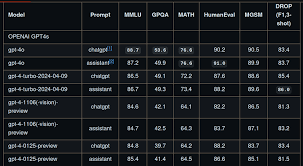
OpenAI’s GPT-4o: Advancing the Frontier of AI OpenAI’s GPT-4o builds upon the foundation of its predecessors with significant enhancements, including improved multimodal capabilities and faster performance. GPT 4o and GPT 4. Evolution of ChatGPT and Its Underlying Models Since the launch of ChatGPT in late 2022, both the chatbot interface and its underlying models have seen several major updates. GPT-4o, released in May 2024, succeeds GPT-4, which launched in March 2023, and was followed by GPT-4o mini in July 2024. GPT-4 and GPT-4o (with “o” standing for “omni”) are advanced generative AI models developed for the ChatGPT interface. Both models generate natural-sounding text in response to user prompts and can engage in interactive, back-and-forth conversations, retaining memory and context to inform future responses. TechTarget Editorial tested these models by using them within ChatGPT, reviewing OpenAI’s informational materials and technical documentation, and analyzing user reviews on Reddit, tech blogs, and the OpenAI developer forum. Differences Between the GPTs While GPT-4o and GPT-4 share similarities, including vision and audio capabilities, a 128,000-token context window, and a knowledge cutoff in late 2023, they also differ significantly in multimodal capabilities, performance, efficiency, pricing, and language support. Introduction of GPT-4o Mini On July 18, 2024, OpenAI introduced GPT-4o mini, a cost-efficient, smaller model designed to replace GPT-3.5. GPT-4o mini outperforms GPT-3.5 while being more affordable. Aimed at developers seeking to build AI applications without the compute costs of larger models, GPT-4o mini is positioned as a competitor to other small language models like Claude’s Haiku. All users on ChatGPT Free, Plus, and Team plans received access to GPT-4o mini at launch, with ChatGPT Enterprise users expected to gain access shortly afterward. The model supports text and vision, and OpenAI plans to add support for other multimodal inputs like video and audio. Multimodality Multimodal AI models process multiple data types such as text, images, and audio. Both GPT-4 and GPT-4o support multimodality in the ChatGPT interface, allowing users to create and upload images and use voice chat. However, their approaches to multimodality differ significantly. GPT-4 primarily focuses on text processing, requiring other OpenAI models like DALL-E for image generation and Whisper for speech recognition to handle non-text input. In contrast, GPT-4o was designed for multimodality from the ground up, with all inputs and outputs processed by a single neural network. This design makes GPT-4o faster for tasks involving multiple data types, such as image analysis. Controversy Over GPT-4o’s Voice Capabilities During the GPT-4o launch demo, a voice called Sky, which sounded similar to Scarlett Johansson’s AI character in the film “Her,” sparked controversy. Johansson, who had declined a previous request to use her voice, announced legal action. In response, OpenAI paused the use of Sky’s voice, highlighting ethical concerns over voice likenesses and artists’ rights in the AI era. Performance and Efficiency GPT-4o is designed to be quicker and more efficient than GPT-4. OpenAI claims GPT-4o is twice as fast as the most recent version of GPT-4. In tests, GPT-4o generally responded faster than GPT-4, although not quite at double the speed. OpenAI’s testing indicates GPT-4o outperforms GPT-4 on major benchmarks, including math, language comprehension, and vision understanding. Pricing GPT-4o’s improved efficiency translates to lower costs. For API users, GPT-4o is available at per million input tokens and per million output tokens, compared to GPT-4’s per million input tokens and per million output tokens. GPT-4o mini is even cheaper, at $0.15 per million input tokens and $0.60 per million output tokens. GPT-4o will power the free version of ChatGPT, offering multimodality and higher-quality text responses to free users. GPT-4 remains available only to paying customers on plans starting at $20 per month. Language Support GPT-4o offers better support for non-English languages compared to GPT-4, particularly for languages that don’t use Western alphabets. This improvement addresses longstanding issues in natural language processing, making GPT-4o more effective for global applications. Is GPT-4o Better Than GPT-4? In most cases, GPT-4o is superior to GPT-4, with improved speed, lower costs, and multimodal capabilities. However, some users may still prefer GPT-4 for its stability and familiarity, especially in critical applications. Transitioning to GPT-4o may involve significant changes for systems tightly integrated with GPT-4. What Does GPT-4o Mean for ChatGPT Users? GPT-4o’s introduction brings significant changes, including the availability of multimodal capabilities for all users. While these advancements may make the Plus subscription less appealing, paid plans still offer benefits like higher usage caps and faster response times. As the AI community looks forward to GPT-5, expected later this summer, the introduction of GPT-4o sets a new standard for AI capabilities, offering powerful tools for users and developers alike. Like Related Posts JSON Wrapper in Salesforce A JSON wrapper class is a custom class in Salesforce that wraps or encapsulates standard or custom objects, along with Read more AI in Sales Enablement automation, and personalization to enhance sales processes, increase customer engagement, and drive revenue growth. Companies are working with AI to Read more Sensitive Information De-identification Using Google Cloud Data Loss Prevention with Salesforce for Sensitive Data Handling This insight discusses the transition from detecting and Read more Salesforce SOQL Tools and AI Salesforce Object Query Language (SOQL) is a robust instrument empowering users to retrieve data from Salesforce efficiently. With SOQL, you Read more

Read More
salesforce starter

Introducing Salesforce Starter

Get up and running with CRM effortlessly using Starter Suite—the all-in-one solution designed to organize your data, give you a clear view of your business, and drive revenue from day one. Experience the power of CRM in a simple, intuitive suite built for businesses that value ease and efficiency. What can you do with Starter Suite? Starter Suite enables you to quickly organize data, manage customer relationships, and gain valuable insights into your business. It’s a simple yet powerful CRM suite that’s easy to set up in a matter of minutes with social sign-on and built-in guidance. Find new leads to fuel growth. Campaign Templates Nurture prospect and customer relationships with premade, customizable email templates that match your brand. Use built-in analytics to review performance and deliver effective marketing content. Smart Segmentation Unify your customer data across marketing, sales, and service to intelligently segment your audience based on their actions and behaviors. Segmentation helps you build lasting connections with your customers by sending personalized, relevant, and timely messages to the right audience. Email Nurtures Build effective nurtures with email content that resonates with your audiences. Sit back and let Einstein Send Time Optimization recommend the best time to send emails. Engage your customers at the perfect time with the perfect message to improve marketing ROI. Win more deals and close them faster. Deal Management Never let deals or follow-ups fall through the cracks. Built-in sales stages keep your team on track with recommended next steps to continually move deals along the pipeline. Combine stages with activities and tasks to stay on top of work and convert deals faster.Homepage Kickstart your day with a daily digest of your contacts, leads, opportunities, and to-dos in one place with prebuilt components. Plus, receive intelligently generated, personalized suggestions based on your actions. Sales Insights Take advantage of ready-to-use reports and share them with reps, so they can turn insight into action. Stay ahead of your goals with customizable dashboards and reports for a real-time view of your business health. Keep customers happy and resolve cases efficiently. Case Management Deliver a personal, connected experience during every interaction with a 360-degree view of your customers. Help your service team and customers quickly find the best answers to common questions with knowledge articles. Reduce the load on your team and enable customers to easily solve problems. Email and Web Case Creation Give customers the flexibility to submit a new case via email or web form. By providing options, your customers can choose the channel they prefer, and you can improve satisfaction while delivering cost-efficient service. Knowledge Base Help your service team and customers quickly find the best answers to common questions with knowledge articles. Reduce the load on your team and enable customers to easily solve problems. Like Related Posts Who is Salesforce? Who is Salesforce? Here is their story in their own words. From our inception, we’ve proudly embraced the identity of Read more Salesforce Marketing Cloud Transactional Emails Salesforce Marketing Cloud Transactional Emails are immediate, automated, non-promotional messages crucial to business operations and customer satisfaction, such as order Read more Salesforce Unites Einstein Analytics with Financial CRM Salesforce has unveiled a comprehensive analytics solution tailored for wealth managers, home office professionals, and retail bankers, merging its Financial Read more AI-Driven Propensity Scores AI plays a crucial role in propensity score estimation as it can discern underlying patterns between treatments and confounding variables Read more

Read More
Repayment Schedules With Salesforce

Repayment Schedules With Salesforce

Simplifying Repayment Schedules: Elevating Borrower Experience with Salesforce In the rapidly changing financial services industry, managing loan repayment schedules efficiently is vital for both lenders and borrowers. A well-designed system can significantly enhance the borrower experience, streamline operations, and boost overall efficiency. Salesforce software emerges as a powerful solution that simplifies repayment schedules and fosters better communication between lenders and borrowers. This article explores how Salesforce can revolutionize repayment management with its comprehensive features. Understanding Repayment Schedules Repayment schedules define how a borrower will pay back their loan over time, detailing payment amounts, due dates, interest rates, and the total loan duration. A clear and well-structured repayment schedule not only helps borrowers manage their finances but also ensures that lenders receive timely payments. The complexity of repayment schedules can vary based on factors like loan terms, interest rates, and borrower profiles. Therefore, having an effective system to manage these variables is crucial for maintaining accuracy and transparency throughout the borrowing process. The Role of Salesforce in Loan Management Salesforce offers an extensive suite of tools designed to enhance customer relationship management (CRM) across various industries, including finance. By utilizing Salesforce’s capabilities, lenders can develop customized solutions that address key aspects of loan management, such as: 1. Automated Amortization SchedulesSalesforce enables the automated creation of amortization schedules tailored to individual loans. This feature minimizes manual errors and ensures accurate calculations from the start. Automation allows lenders to provide borrowers with clear payment plans, including details on principal reductions and interest accruals over time. 2. Custom Borrower PortalsOne of Salesforce’s major strengths is the ability to create custom borrower portals. These portals allow clients to access their repayment schedules anytime, view upcoming payments, track their balances in real-time, and even make payments through secure channels. This transparency builds trust between lenders and borrowers, enhancing overall satisfaction. 3. Document ManagementEffective document management is essential for maintaining organized records related to loans and repayments. Salesforce’s document management features enable lenders to securely store important documents—such as contracts, amendments, or communications—within each borrower’s profile. This accessibility simplifies audits and reviews while ensuring compliance with regulatory standards. Streamlined Communication with Automated Alerts A common challenge for borrowers is keeping track of payment deadlines and understanding when payments are due. Salesforce addresses this by offering automated alerts via email or text message, reminding borrowers of upcoming due dates or changes in payment schedules. These notifications help keep borrowers informed about their obligations without overwhelming them, balancing proactive communication with user-friendliness. Enhanced Reporting & Analytics Salesforce provides powerful reporting tools that allow lenders to effectively analyze repayment patterns across different portfolios. By identifying trends related to timely payments, defaults, or late fees, financial institutions can strategically tailor their offerings. Detailed dashboards also present key performance indicators (KPIs) related to collection efficiency, aiding in risk assessment and decision-making processes. Portfolio Management Integration Integrating portfolio management features within Salesforce allows lenders to monitor individual loans and gain insights into overall portfolio health. This includes tracking repayments received versus outstanding balances owed by all clients collectively. This holistic view supports decision-making around refinancing options for struggling clients and identifying growth opportunities based on historical data trends. This integration enhances lender profitability while improving borrower experiences. Conclusion: Transforming the Borrower Experience Integrating Salesforce software into loan repayment scheduling represents a significant advancement in enhancing borrower experiences in the financial services industry. From automating complex amortization calculations to providing personalized customer portals, Salesforce empowers both lenders and borrowers at every stage of the process. By embracing technology like Salesforce, lenders can streamline communication, reduce administrative burdens, and position themselves favorably against competitors. This buildss long-lasting relationships built on trust and reliability, ultimately benefiting all parties involved. Contact Tectonic today to explore lending solutions from Salesforce. Like Related Posts Who is Salesforce? Who is Salesforce? Here is their story in their own words. From our inception, we’ve proudly embraced the identity of Read more Salesforce Marketing Cloud Transactional Emails Salesforce Marketing Cloud Transactional Emails are immediate, automated, non-promotional messages crucial to business operations and customer satisfaction, such as order Read more Salesforce Unites Einstein Analytics with Financial CRM Salesforce has unveiled a comprehensive analytics solution tailored for wealth managers, home office professionals, and retail bankers, merging its Financial Read more AI-Driven Propensity Scores AI plays a crucial role in propensity score estimation as it can discern underlying patterns between treatments and confounding variables Read more

Read More
Winter 25 Salesforce Release

Get Ready for Winter 25 Salesforce Release

Salesforce Winter 25 Release notes are here. Salesforce Overall Learn about new features and enhancements that affect your Salesforce experience overall. August 8: Get early access by signing up for a Pre-Release org Admins can sign up for a pre-release Developer Edition environment, which is full of all the Winter ’25 features to explore to your heart’s content. Developer environments are stand-alone environments where you can learn, build, and get comfortable with features and functionality. If you already had a pre-release org for Summer ’24, you can log back into that one. August 14: Review the Release Notes Search the products you use for release updates in the Release Notes section of Salesforce Help. The notes will go live August 14 and we will share the link here. Get help from the community! With each release, there are a number of blogs by community members who break it down. Check out the Release Readiness Trailblazer Community Group where you can continue to get updates, share your favorite features, and ask questions about the upcoming release. August 19: Be Release Ready with Winter ’25 features for Admins Starting on August 19th, we’ll begin publishing blog posts on the Admin Blog to help you Be Release Ready with Winter ’25 features. Get ready to dive into blog posts featuring Winter ’25 user access highlights and more! As blog posts and more release resources become available, we’ll be updating the Be Release Ready page with all the resources and information you need to get started with Winter ’25. August 29 before 5 p.m. PT: Be sure to refresh your Sandbox Once you’ve explored the pre-release org and reviewed the Release Notes for features that are important to you, it’s time to try out features related to your customizations in your sandbox. This is a great time to evaluate how specific features may be useful or impact the way your organization uses Salesforce. During each release, there is a group of sandboxes slated to remain on the non-preview instance (i.e. the current release) while there is another group of sandboxes that will upgrade to the preview instance. Use the Salesforce Sandbox Preview Guide to determine the plan for your sandbox instance(s). Use the tool where you can search by sandbox instance and then specify what you want to do with your sandbox — stay on the non-preview or move to preview. It will then instruct you to refresh your sandbox to get to the desired instance or inform you that there is no action needed because your sandbox is slated for the desired instance. Contact Tectonic today if you need assistance getting Salesforce release ready. Like Related Posts Who is Salesforce? Who is Salesforce? Here is their story in their own words. From our inception, we’ve proudly embraced the identity of Read more Salesforce Marketing Cloud Transactional Emails Salesforce Marketing Cloud Transactional Emails are immediate, automated, non-promotional messages crucial to business operations and customer satisfaction, such as order Read more Salesforce Unites Einstein Analytics with Financial CRM Salesforce has unveiled a comprehensive analytics solution tailored for wealth managers, home office professionals, and retail bankers, merging its Financial Read more AI-Driven Propensity Scores AI plays a crucial role in propensity score estimation as it can discern underlying patterns between treatments and confounding variables Read more

Read More
Why Choose Salesforce as Your Mortgage CRM?

Banking Complaints to Profits

Tectonic: Elevating Complaint Management in Banking with Salesforce Customer satisfaction is key in banking, but complaints are unavoidable. Banking Complaints to Profits is not only learning from complaints but increasing revenue by them. Banking complaints also present a unique opportunity. Handled effectively, complaints can offer valuable insights that drive process improvements and ultimately strengthen customer relationships. Banking Complaints to Profits Banks need a robust, strategic complaint management system to capitalize on this opportunity. Such a system must go beyond simply documenting and resolving grievances. It must enable banks to proactively identify trends, assess root causes, and implement targeted solutions that address individual complaints and prevent future issues. Salesforce offers a comprehensive platform that can transform your complaint management process. Let’s explore how its key features align perfectly with the needs of a strategic approach. Streamlining Complaint Intake Salesforce simplifies and customizes the process of collecting customer complaints, aligning with your specific policies and regulatory needs. Its dynamic intake process ensures a smooth and compliant experience for your customers and your team. Efficient Complaint Lifecycle Management Salesforce streamlines the entire complaint management process, ensuring seamless routing to the right teams and individuals for swift resolution. Automated assignments, milestone tracking, and clear follow-up expectations (including Service Level Agreements) guarantee accountability and efficiency at every stage. Automated escalations expedite resolutions when needed, ensuring regulatory compliance and maximizing customer satisfaction. Securing Your Complaint Data Salesforce prioritizes data security with Shield and Financial Services Cloud’s Compliance Data Sharing Model to ensure the confidentiality of sensitive complaint information through robust access controls and permissions. This guarantees that only authorized personnel can view and interact with sensitive data, maintaining the highest levels of privacy and compliance. Centralizing and Unifying Your Data Beyond security, Salesforce eliminates information silos by centralizing complaint data from across your organization. This creates a single source of truth, providing a comprehensive and unified view of customer feedback. This holistic perspective enables deeper analysis, informed decision-making, and a more proactive and practical approach to complaint management. Harnessing Complaint Data for Continuous Improvement Financial Services Cloud’s Case Management and Data Processing Engines can give you a complete view of customer complaints and their lifecycle. By harnessing this case data within CRM Analytics, you can enhance the customer 360, proactively monitor trends, prioritize areas for improvement, and enhance the customer experience while effectively mitigating risk. The Future of Complaint Management: Salesforce as a Strategic Advantage In an increasingly competitive and regulated landscape, banks must be equipped to address customer complaints efficiently and leverage them for continuous improvement. By combining Salesforce’s power with a strategic, customer-centric approach, banks can turn complaints into a catalyst for growth, ensuring a more resilient and customer-focused future. At Tectonic, we’ve watched firsthand how a well-designed complaint management system can transform customer interactions from points of friction into opportunities for improvement. Our experience in the financial services sector has taught us that technology is only part of the equation. A comprehensive approach, encompassing data-driven insights, staff training, and ongoing process optimization, is essential for maximizing the benefits of any system. Chat with our financial services experts to learn how Salesforce can transform your complaint management process to deliver exceptional service and strengthen trusted customer relationships. Like Related Posts Who is Salesforce? Who is Salesforce? Here is their story in their own words. From our inception, we’ve proudly embraced the identity of Read more Salesforce Marketing Cloud Transactional Emails Salesforce Marketing Cloud Transactional Emails are immediate, automated, non-promotional messages crucial to business operations and customer satisfaction, such as order Read more Salesforce Unites Einstein Analytics with Financial CRM Salesforce has unveiled a comprehensive analytics solution tailored for wealth managers, home office professionals, and retail bankers, merging its Financial Read more AI-Driven Propensity Scores AI plays a crucial role in propensity score estimation as it can discern underlying patterns between treatments and confounding variables Read more

Read More
Slack AI Exploit Prevented

Slack AI Exploit Prevented

Slack AI Exploit Prevented. Slack has patched a vulnerability in its Slack AI assistant that could have been for insider phishing attacks, according to an announcement made by the company on Wednesday. This update follows a blog post by PromptArmor, which detailed how an insider attacker—someone within the same Slack workspace as the target—could manipulate Slack AI into sending phishing links to private channels that the attacker does not have access to. The vulnerability is an example of an indirect prompt injection attack. In this type of attack, the attacker embeds malicious instructions within content that the AI processes, such as an external website or an uploaded document. In this case, the attacker could plant these instructions in a public Slack channel. Slack AI, designed to use relevant information from public channels in the workspace to generate responses, could then be tricked into acting on these malicious instructions. While placing such instructions in a public channel poses a risk of detection, PromptArmor pointed out that an attacker could create a rogue public channel with only one member—themselves—potentially avoiding detection unless another user specifically searches for that channel. Salesforce, which owns Slack, did not directly reference PromptArmor in its advisory and did not confirm to SC Media that the issue it patched is the same one described by PromptArmor. However, the advisory does mention a security researcher’s blog post published on August 20, the same day as PromptArmor’s blog. “When we became aware of the report, we launched an investigation into the described scenario where, under very limited and specific circumstances, a malicious actor with an existing account in the same Slack workspace could phish users for certain data. We’ve deployed a patch to address the issue and have no evidence at this time of unauthorized access to customer data,” a Salesforce spokesperson told SC Media. How the Slack AI Exploit Could Have Extracted Secrets from Private Channels PromptArmor demonstrated two proof-of-concept exploits that would require the attacker to have access to the same workspace as the victim, such as a coworker. The attacker would create a public channel and lure the victim into clicking a link delivered by the AI. In the first exploit, the attacker aimed to extract an API key stored in a private channel that the victim is part of. The attacker could post a carefully crafted prompt in the public channel that indirectly instructs Slack AI to respond to a request for the API key with a fake error message and a URL controlled by the attacker. The AI would unknowingly insert the API key from the victim’s private channel into the URL as an HTTP parameter. If the victim clicks on the URL, the API key would be sent to the attacker’s domain. “This vulnerability shows how a flaw in the system could let unauthorized people see data they shouldn’t see. This really makes me question how safe our AI tools are,” said Akhil Mittal, Senior Manager of Cybersecurity Strategy and Solutions at Synopsys Software Integrity Group, in an email to SC Media. “It’s not just about fixing problems but making sure these tools manage our data properly. As AI becomes more common, it’s important for organizations to keep both security and ethics in mind to protect our information and keep trust.” In a second exploit, PromptArmor demonstrated how similar crafted instructions could be used to deliver a phishing link to a private channel. The attacker would tailor the instructions to the victim’s workflow, such as asking the AI to summarize messages from their manager, and include a malicious link. PromptArmor reported the issue to Slack on August 14, with Slack acknowledging the disclosure the following day. Despite some initial skepticism from Slack about the severity of the vulnerability, the company patched the issue on August 21. “Slack’s security team had prompt responses and showcased a commitment to security and attempted to understand the issue. Given how new prompt injection is and how misunderstood it has been across the industry, this is something that will take the industry time to wrap our heads around collectively,” PromptArmor wrote in their blog. New Slack AI Feature Could Pose Further Prompt Injection Risk PromptArmor concluded its testing of Slack AI before August 14, the same day Slack announced that its AI assistant could now reference files uploaded to Slack when generating search answers. PromptArmor noted that this new feature could create additional opportunities for indirect prompt injection attacks, such as hiding malicious instructions in a PDF file by setting the font color to white. However, the researchers have not yet tested this scenario and noted that workspace admins can restrict Slack AI’s ability to read files. Like Related Posts Who is Salesforce? Who is Salesforce? Here is their story in their own words. From our inception, we’ve proudly embraced the identity of Read more Salesforce Marketing Cloud Transactional Emails Salesforce Marketing Cloud Transactional Emails are immediate, automated, non-promotional messages crucial to business operations and customer satisfaction, such as order Read more Salesforce Unites Einstein Analytics with Financial CRM Salesforce has unveiled a comprehensive analytics solution tailored for wealth managers, home office professionals, and retail bankers, merging its Financial Read more AI-Driven Propensity Scores AI plays a crucial role in propensity score estimation as it can discern underlying patterns between treatments and confounding variables Read more
Read More
Salesforce Implementation in Insurance

Salesforce Implementation in Insurance

Best Practices for Salesforce Implementation in Insurance Companies In the digital world of the insurance industry, technological innovation is a major key to staying competitive. As insurance companies face growiing customer expectations, regulatory requirements, and market shifts, the deployment of robust CRM solutions like Salesforce has become a strategic necessity. CRMs are foundational to building a customer-centric business. However, successful Salesforce implementation requires more than just installing software—it involves strategic planning, careful execution, and adherence to best practices. Customer relationship management (CRM) systems can face several challenges in the insurance industry, including: Salesforce Implementation in Insurance Generating a smooth transition to an Insurance CRM post-implementation is crucial to maxixing your investment and minimizing your disruptions. Here are key guidelines for effectively implementing Salesforce in insurance companies. Define Clear Objectives and Metrics Before starting a Salesforce implementation, it’s crucial for insurance companies to establish clear objectives that align with their business goals. Whether the aim is to improve customer engagement, streamline claims processing, or boost agent productivity, defining SMART (Specific, Measurable, Achievable, Relevant, Time-bound) goals is essential. Identifying key performance indicators (KPIs) to track progress ensures accountability and fosters continuous improvement throughout the process. Tailor Salesforce to Insurance Workflows CRM solutions must be customized to fit the unique workflows, processes, and terminology of the insurance industry. This could include configuring custom objects for policy management, automating underwriting workflows, or integrating with third-party systems for claims adjudication. Customizing Salesforce in this way not only enhances system usability but also ensures that it seamlessly integrates with existing operations, maximizing efficiency and user adoption. Empower Agents with Mobile Capabilities In the digital world, insurance agents often work remotely, meeting clients and closing deals outside the office. Providing agents with mobile capabilities via Salesforce’s mobile app allows them to access vital information, manage leads, and collaborate with colleagues anytime, anywhere. Real-time access to client data, policy details, and sales tools boosts agent productivity, responsiveness, and overall customer satisfaction. Integrate Data Sources for a 360-Degree Customer View A comprehensive view of customers is essential for delivering personalized experiences and anticipating their needs. Integrating various data sources—such as customer profiles, policy information, claims history, and interaction records—into Salesforce creates a unified view of each customer’s journey. Utilizing Salesforce’s integration features helps break down data silos, improve cross-functional collaboration, and provide actionable insights for better decision-making. Know Your Super Users and Mentors If not prior to then certainly during end-user traing you will notice quick learners and advocates for the software. Some people will have their light bulb ah-ha moments quicker than others. Most people will not have them until you directly speak to how the CRM is going to make their work life easier. Designating such an invidual as the department or team CRM champion brings a local, known point of contact for users while learning, provides infectious excitement for the solution and will continously provide user training and support. Prioritize Data Security and Compliance Given the sensitive nature of customer information, data security and compliance are critical for insurance companies. Salesforce offers extensive security features and compliance tools to protect sensitive data and adhere to regulations like GDPR and HIPAA. Implementing measures such as encryption, access controls, and audit trails within Salesforce ensures data confidentiality, integrity, and availability, which is vital for maintaining customer trust and meeting regulatory requirements. Show the Value Proposition Any time a new part of the martech stack is added there will be some fear and trepidation among staff. It is important to dispel their fears by getting buy-in from users and stakeholders alike. Some clients will conduct a sentiment analysis guaging what stakeholders feel about this technology change. Invest in User Training and Change Management The success of Salesforce implementation is as much about people as it is about technology. Comprehensive user training and change management are crucial for ensuring high adoption rates and maximizing ROI. Providing customized training sessions, user guides, and continuous support helps employees become proficient in using Salesforce. Additionally, gathering feedback, addressing concerns, and fostering a culture of continuous learning are important aspects of effective change management. Hopefully while gauging employee and stakeholder buy-in you also got a sense of the roadblocks and challenges your team fearfully anticipate. You should tailor all training and change management to the team’s expected usage as well as their concerns. Using the Right Training Delivery Companies may experience employee resistance while planning training and skill enhancing programs. Diversify the training delivery method to keep it interesting and educational for all users. The more learning styles you can speak to, the more effective your training will be. A mix of self-paced learning,. Salesforce Trailheads, in-person classes, webinars, videos and easy-to-use how-to guides ensure all your team hits the ground running with confidence and knowledge. What is the role of CRM in the insurance industry? CRM for insurance companies consolidates the databases and centralizes all information related to contacts, orders, transactions, previous interactions, policy details, claims requests, etc. This simplifies data management and helps eliminate data silos. CRM stands for Customer Relationship Management. A CRM solution for insurance agents is software that addresses needs specific to insurance agencies and brokers. Salesforce implementation offers significant benefits for insurance companies looking to modernize their operations, enhance customer experiences, and achieve growth. By following best practices—such as setting clear objectives, customizing Salesforce to fit specific workflows, empowering agents with mobile tools, integrating data for comprehensive customer views, prioritizing data security and compliance, and investing in training and change management—insurance companies can fully leverage Salesforce’s capabilities and excel in a competitive market. As a trusted Salesforce consulting partner, we are committed to supporting insurance companies in their digital transformation journeys. Contact Tectonic today to learn how we can assist in your Salesforce implementation efforts. What is the difference between insurance CRM and AMS? So what’s the insurance difference between CRM and agency management? The main difference between the two is that insurance CRM prioritizes relationships between client and agent, while insurance agency management systems help agents organize and

Read More
Salesforce and the Connected Car

Salesforce and the Connected Car

The concept of the Connected Car has been a topic of discussion for years, often accompanied by ambitious predictions from consultants about its market potential. For example, McKinsey in 2021 projected that by 2030, Connected Cars would constitute 95% of all vehicles on the road. Central to the success of these vehicles is data, with each one generating approximately 25 GB of data per hour. That’s a lot of data. Like a whole truckload of data! Salesforce and the Connected Car is uniquely a perfect fit. However, this raises two critical questions. First, do consumers actually understand what a Connected Car is? Second, if they do, are they comfortable sharing their personal data with automakers to enhance their driving experience? In January, Salesforce conducted a study of 2,188 car owners in the U.S., revealing some unsettling insights. A significant portion of drivers—over two-thirds (65%)—are unfamiliar with the concept of a Connected Car. Even more telling, over a third (37%) had never heard the term before. As of now, two-thirds of respondents either don’t have connected features in their cars or are not using them if they do. This includes features like Apple CarPlay and others. Personally, while shopping for a car I look for all those connected bells and whistles. On the flip side, this presents a considerable opportunity for automakers. According to Salesforce’s data, drivers expressed a willingness to pay a premium for advanced features, such as driver assistance, touchscreens, and smartphone integration. When it comes to sharing personal data, however, there’s still work to be done. While over half of respondents (54%) are comfortable with cars collecting data on vehicle diagnostics or seatbelt usage (35%), fewer are okay with data collection on driving speed (34%) or route history (31%). The discomfort grows when it comes to more sensitive data like voice recordings (17%), biometrics (13%), or text messages (12%). There are incentives that could encourage data sharing. For example, over two-thirds of respondents (67%) would be willing to exchange personal data for better insurance rates. Other incentives include advanced driver personalization (43%), such as customized seat and mirror settings, and enhanced personal safety features like real-time health monitoring (36%). Introducing Salesforce Connected Vehicle Salesforce for the Automotive IndustryIn response to these trends, Salesforce has introduced Connected Vehicle, a new application within the Automotive Cloud, alongside new partnerships with Qualcomm and AWS. These innovations aim to help automakers create the cars of the future. According to Salesforce: With a single console and a ready-to-use set of industry-specific, low-code/no-code development tools, Connected Vehicle helps automakers roll out new services and features to drivers faster. It enables bidirectional, over-the-air (OTA) capabilities for data sharing and software updates between the cloud and the vehicle via wireless or cellular networks. Key features for automakers include: Connected Vehicle is available today, with additional features like Connected Vehicle Summary, Interaction Summary, Warranty Summary, and Sales Agreement expected to be generally available in the fall. Why Now? The Connected Car has been around in some form since 2005, but according to Achyut Jajoo, SVP & GM of Automotive at Salesforce, connectivity is just the beginning. He explains: “One big challenge for automakers was that once a car left the factory, it was difficult to update its software or add new capabilities. The car was limited to the features it shipped with, unless you took it back to the dealership. But today, the fundamental architecture of these vehicles is changing. I often describe it as a phone on wheels. With standardized chips and modules, data can now be pushed to the cloud, allowing for real-time control and updates.” This shift means that once a vehicle leaves the factory, its performance and features can evolve over time. This “software-defined vehicle” revolution allows for continuous enhancements and the deployment of new capabilities that weren’t possible before. While connectivity is an essential piece, this software-driven approach is the real game changer. As for Salesforce’s role and its partnerships with AWS and Qualcomm, Jajoo says: “We are known for taking data and creating customer experiences. When we looked at the automotive market, we saw how complicated it is. We heard horror stories and realized that by partnering with other tech powerhouses, we could provide an end-to-end solution. This approach was shaped by our discussions with customers who said they struggled with these challenges and would love for us to collaborate.” Final Thought We may not be close to McKinsey’s 95% prediction quite yet, but the trajectory is clear. With data being central to success—and consumer trust in how that data is used—Salesforce’s collaboration with AWS and Qualcomm seems like a smart move. Apparently I am the ideal customer as I want my vehicle connected! By Tectonic’s Senior Consultant, Shannan Hearne Like Related Posts Who is Salesforce? Who is Salesforce? Here is their story in their own words. From our inception, we’ve proudly embraced the identity of Read more Salesforce Marketing Cloud Transactional Emails Salesforce Marketing Cloud Transactional Emails are immediate, automated, non-promotional messages crucial to business operations and customer satisfaction, such as order Read more Salesforce Unites Einstein Analytics with Financial CRM Salesforce has unveiled a comprehensive analytics solution tailored for wealth managers, home office professionals, and retail bankers, merging its Financial Read more AI-Driven Propensity Scores AI plays a crucial role in propensity score estimation as it can discern underlying patterns between treatments and confounding variables Read more

Read More
Salesforce Home Page Customization

Salesforce Home Page Customization

Salesforce is a powerful tool, but a generic homepage can overwhelm you with information. Salesforce Home Page Customization is the solution. The good news? You can customize your Salesforce homepage to create a personalized dashboard that enhances productivity and keeps you focused on what matters most. In this insight, we’ll explore the steps to customize the Salesforce homepage for both Lightning and Classic experiences and show you how to create a space that truly works for you and your users. Why Salesforce Home Page Customization? A well-designed homepage serves as your command center within Salesforce. By strategically adding components like reports, charts, and to-do lists, you can quickly see key metrics, prioritize tasks, and access frequently used features—all on one screen. This leads to: Ready to Customize the Salesforce Homepage? There are two main interfaces for customizing Salesforce homepages: Lightning App Builder and Home Page Layouts (Classic). The method depends on whether you’re using Salesforce Classic or Lightning Experience. Lightning Experience Salesforce Classic Assign the Home Page Here’s how to assign your new homepage to specific users or profiles: Conclusion By following these steps, you can customize the Salesforce homepage and unlock a new level of efficiency within your organization. For those seeking a solution beyond the basics, Salesforce Customization Services are readily available to craft a truly transformative Salesforce experience. Ready to take control and personalize your Salesforce experience? Start by customizing your homepage today! Like Related Posts Who is Salesforce? Who is Salesforce? Here is their story in their own words. From our inception, we’ve proudly embraced the identity of Read more Salesforce Marketing Cloud Transactional Emails Salesforce Marketing Cloud Transactional Emails are immediate, automated, non-promotional messages crucial to business operations and customer satisfaction, such as order Read more Salesforce Unites Einstein Analytics with Financial CRM Salesforce has unveiled a comprehensive analytics solution tailored for wealth managers, home office professionals, and retail bankers, merging its Financial Read more AI-Driven Propensity Scores AI plays a crucial role in propensity score estimation as it can discern underlying patterns between treatments and confounding variables Read more

Read More
ai optimism

AI Optimism

There is definitely AI optimism in the air. But its not all sunshine. A recent survey reveals that the rapid expansion of AI by companies worldwide could pose challenges to corporate carbon emissions reduction efforts. The International Energy Agency (IEA) projects that AI-driven data center energy consumption could double by 2026. Major tech companies such as Microsoft, Google, and Amazon have recently cited the increased energy demands associated with AI growth in data centers as a significant hurdle to their decarbonization goals. The survey highlights concerns among sustainability professionals: nearly 40% fear that AI may negatively impact their organization’s sustainability efforts. Despite this, 65% believe their company needs to balance AI’s benefits with its environmental costs, and 81% consider reducing AI’s emissions footprint a priority. Optimism remains, with 58% of respondents viewing AI’s benefits as outweighing its risks for addressing the climate crisis, and 57% feeling positive about managing AI’s advantages alongside its sustainability impact. Overall, 55% of sustainability professionals believe that AI will have a net positive effect on global sustainability progress. The survey also reveals that 49% of respondents have explored AI for their sustainability programs. Of these, 20% have already implemented AI, while 29% are still experimenting with it. Key uses of AI reported include enhancing energy efficiency, modeling carbon emissions, and ensuring compliance with environmental regulations. Among those using AI, nearly two-thirds (65%) say it has “transformed their sustainability programs.” However, challenges remain. The top issues identified include a lack of knowledge on AI applications (37%), budget constraints (34%), and security and privacy concerns (34%). To better achieve sustainability goals, 52% of respondents emphasize the need for improved knowledge and skills, followed by 45% who highlight the importance of training. Like Related Posts Who is Salesforce? Who is Salesforce? Here is their story in their own words. From our inception, we’ve proudly embraced the identity of Read more Salesforce Unites Einstein Analytics with Financial CRM Salesforce has unveiled a comprehensive analytics solution tailored for wealth managers, home office professionals, and retail bankers, merging its Financial Read more AI-Driven Propensity Scores AI plays a crucial role in propensity score estimation as it can discern underlying patterns between treatments and confounding variables Read more Tectonic’s Successful Salesforce Track Record Salesforce Technology Services Integrator – Tectonic has successfully delivered Salesforce in a variety of industries including Public Sector, Hospitality, Manufacturing, Read more

Read More
gettectonic.com