- gettectonic.com - Page 2
AI Capabilities for Nonprofit Cloud

AI Capabilities for Nonprofit Cloud

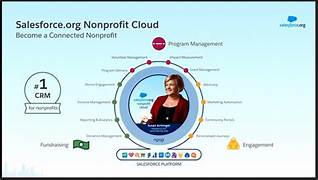
Nonprofit organizations must ensure that every dollar they raise is not only accounted for but also allocated in ways that best support their mission. With its ability to streamline processes, optimize outcomes, and enhance data transparency, AI is poised to significantly impact the nonprofit sector. Salesforce has introduced new AI capabilities for Nonprofit Cloud designed to help organizations harness AI-driven decision-making and maximize their impact. AI-Powered Proposals and Summaries The latest AI and data enhancements in Nonprofit Cloud are designed to boost efficiency, personalize donor engagement, and ultimately increase fundraising opportunities. Built on the Einstein 1 Platform, Salesforce has introduced the following features: Closing Thoughts “Every nonprofit wants to provide the best experience for donors, volunteers, board members, staff — and most importantly, the people and causes they serve,” says Lori Freeman, VP & Global GM of Nonprofit at Salesforce. “But they have a lot to accomplish with limited resources. With industry-specific AI and data tools, Salesforce is helping nonprofits boost productivity by augmenting staff with AI, using data more effectively to build deeper relationships with their stakeholders, and ultimately, raising the funds needed to meet their mission.” The nonprofit sector stands to gain significantly from GenAI. By building on its existing Nonprofit Cloud, Salesforce addresses key challenges within the industry. What’s particularly noteworthy about these updates is the duality of outcomes supported by GenAI: it not only simplifies the tracking and sharing of campaign metrics, enabling better-informed decision-making, but it also enhances the personalization of donor engagement. While the ultimate goal is to increase funding, these advancements also underscore GenAI’s flexibility and its potential to rapidly transform organizational operations. Availability Like Related Posts Who is Salesforce? Who is Salesforce? Here is their story in their own words. From our inception, we’ve proudly embraced the identity of Read more Salesforce Marketing Cloud Transactional Emails Salesforce Marketing Cloud Transactional Emails are immediate, automated, non-promotional messages crucial to business operations and customer satisfaction, such as order Read more Salesforce Unites Einstein Analytics with Financial CRM Salesforce has unveiled a comprehensive analytics solution tailored for wealth managers, home office professionals, and retail bankers, merging its Financial Read more AI-Driven Propensity Scores AI plays a crucial role in propensity score estimation as it can discern underlying patterns between treatments and confounding variables Read more

Read More
Salesforce Holiday Forecast

Salesforce Holiday Forecast

Value-conscious consumers are increasingly opting for lower-cost options, waiting strategically for discounts, and turning to budget-friendly Chinese shopping apps, leading to a projected 2% year-over-year (YoY) growth in holiday sales both in the U.S. and globally, according to the Salesforce Shopping Index. This index analyzes data from over 1.5 billion global consumers on retail sites. The Salesforce Holiday Forecast isn’t necessarily bleak, but it will leave some merchants feeling glum. In 2023, holiday sales grew by 3% YoY, reaching .17 trillion. However, Salesforce forecasts that global sales for November through December 2024 will only reach .19 trillion, with the U.S. contributing $277 billion. This modest projection aligns with Salesforce consumer surveys, which indicate that while 47% of shoppers plan to spend the same amount as in 2023, 40% intend to spend less this year. “The global economy remains fraught with risks, despite inflation stabilizing,” said Rob Garf, VP and General Manager of Consumer Goods at Salesforce, during a recent briefing. “Interest rates are still high, global conflicts are disrupting supply chains, and we see consumers transferring inflationary costs to debt.” Indeed, a Salesforce survey conducted earlier this month revealed that 37% of consumers are using credit cards more frequently than last year, 32% are turning to buy now, pay later (BNPL) services, and 43% are carrying more monthly debt. Rising Popularity of Chinese Shopping Apps Consumers seeking value are gravitating towards deep-discount Chinese shopping apps like Temu, Shein, and increasingly, TikTok. According to Salesforce’s August 2024 survey, 63% of consumers have made a purchase through these apps in the past six months, and 50% plan to use them during the holiday season. These figures are even higher among Gen Z and millennial consumers, with 80% having purchased from these apps in the past six months and nearly 70% planning to do so during the holidays. Overall, Salesforce predicts that Chinese shopping apps will account for just over 21% of holiday purchases! “Temu and Shein lead the pack, but TikTok is gaining traction, up 24% since April, making it the third most popular app,” said Caila Schwartz, Director of Consumer Insights and Strategy at Salesforce. Consumers cite value as the primary reason for using these apps (58%), far ahead of fast shipping (28%). Consumers Plan to Wait for Cyber Week Deals Many shoppers intend to stretch their budgets by holding off on purchases until Cyber Week, the period around Thanksgiving that includes Black Friday and Cyber Monday. “In 2023, price-conscious consumers waited for Cyber Week to make purchases, and we expect this trend to be even stronger this year,” Schwartz noted. Salesforce data shows that 67% of shoppers are delaying “splurge” purchases until Cyber Week. Salesforce forecasts that global discount rates will briefly rise in October, likely coinciding with the fall edition of Amazon Prime Day, when many retailers run promotions to capture the holiday season’s momentum. Discount rates are expected to peak at an average of 28% globally during Cyber Week, with U.S. discounts forecasted to reach 30%. Shorter Season Highlights BOPIS Importance With only 27 days between Thanksgiving (Nov. 28) and Christmas this year, retailers with strong buy online, pick up in-store (BOPIS) offerings will have a significant advantage. Salesforce predicts that BOPIS will account for one-third (33%) of global online orders during the week before Christmas and Boxing Week. The compressed season will increase the pressure on retailers to execute BOPIS effectively, as failing to meet customer expectations could have serious reputational costs. “Retailers can extend the digital shopping season with BOPIS, but the real winners will be those who can deliver on it,” Garf emphasized. “Store associates are already feeling the strain, especially during the holidays, and some retailers have scaled back their BOPIS offerings, citing increased anxiety among both staff and customers.” Holiday Strategy: Prioritize Customer Acquisition To capture a share of what may be a smaller holiday “pie,” retailers should focus on customer acquisition—and the sooner, the better. With the 2024 elections in the U.S. and many other countries, advertising costs and space availability will be at a premium, making it harder for brands to reach consumers. “Online traffic is cheaper now than it will be in a few months, when political ad spending ramps up,” said David Oksman, VP of Marketing and DTC at Samsonite, who joined Garf and Schwartz at the briefing. “Acquisition costs will rise even more than we’ve seen before.” One additional challenge of holiday sales in an election year. Oksman recommends tried-and-true tactics for driving acquisition and gathering customer data: “Fall is a great time for sweepstakes and giveaways. The old playbooks still work, and customer acquisition is gold.” A sweepstakes prize like a shopping spree or offering exclusive early access to products or deals can incentivize consumers to share their email addresses with a brand. “Loyalty programs are another strong value proposition in the consumer’s mind,” Schwartz added. “Even if you’re not offering points, benefits like free returns or shipping can encourage shoppers to sign up.” Right now is the best time to engage in reactivation campaigns to old customers and prospects. Like Related Posts Who is Salesforce? Who is Salesforce? Here is their story in their own words. From our inception, we’ve proudly embraced the identity of Read more Salesforce Marketing Cloud Transactional Emails Salesforce Marketing Cloud Transactional Emails are immediate, automated, non-promotional messages crucial to business operations and customer satisfaction, such as order Read more Salesforce Unites Einstein Analytics with Financial CRM Salesforce has unveiled a comprehensive analytics solution tailored for wealth managers, home office professionals, and retail bankers, merging its Financial Read more AI-Driven Propensity Scores AI plays a crucial role in propensity score estimation as it can discern underlying patterns between treatments and confounding variables Read more
Read More
MCG and Salesforce Health Cloud

MCG and Salesforce Health Cloud

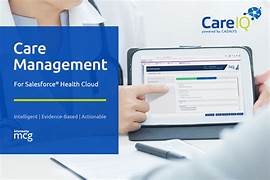
Independent Publisher of Evidence-Based Guidance Integrates with Salesforce Health Cloud to Enhance Chronic Disease Care SEATTLE, Aug. 27, 2024 /PRNewswire-PRWeb/ — MCG Health, a member of the Hearst Health network and a leader in evidence-based clinical guidance, announces a new integration with Salesforce Health Cloud. This partnership aims to improve the management of patients with chronic conditions and those transitioning to different care settings, such as ambulatory care, recovery facilities, or home care. The integration combines Salesforce Health Cloud, the leading AI-powered CRM, with MCG Health’s trusted, evidence-based guidelines to support better patient outcomes. “This integration deepens our collaboration with MCG and delivers greater return on investment for our Health Cloud customers by emphasizing patient-focused and evidence-based disease management,” said Amit Khanna, Senior Vice President and General Manager of Health at Salesforce. Enhanced Care Planning with Salesforce Health Cloud Salesforce Health Cloud’s Integrated Care Management (ICM) feature now incorporates MCG Health’s industry-leading, evidence-based guidelines for Chronic Care and Transitions of Care. This interactive integration simplifies and optimizes care planning for patients’ post-acute journeys. The solution includes tools for identifying patient needs related to social determinants of health (SDOH) and offers branching logic tailored to individual patient situations. This enhancement significantly reduces administrative burdens for hospital and health plan staff while supporting evidence-based care management for populations with chronic conditions and those needing transition management. Additionally, patient education materials from MCG Health can now be easily distributed from within Salesforce Health Cloud, providing patients with enhanced information on their diagnosis and treatment. “MCG’s collaboration with Salesforce Health Cloud provides a powerful, evidence-based tool for managing chronic disease,” said Jon Shreve, President and CEO of MCG Health. “Through this new integration, we can help Salesforce’s healthcare customers streamline their care planning and disease management programs. This solution enhances hospitals’ and health plans’ ability to adhere to evidence-based practices, improving clinical workflows and benefiting both healthcare organizations and, most importantly, patients.” A Strategic Partnership for Better Patient Outcomes “Salesforce is excited to partner with MCG to integrate their trusted, evidence-based guidance into Health Cloud, advancing the care of patients with chronic and complex diseases,” said Amit Khanna, Senior Vice President and General Manager of Health at Salesforce. “This integration strengthens our ongoing collaboration with MCG and delivers more value to our Health Cloud customers by focusing on patient-centered and evidence-based disease management.” Interested parties can request a demo from MCG via this link: Schedule a Demo. About MCG Health MCG Health, part of the Hearst Health network, provides unbiased clinical guidance that empowers healthcare organizations to deliver patient-centered care with confidence. MCG’s AI-driven technology, combined with clinical expertise, enables clients to prioritize and simplify their work. MCG’s world-class customer service ensures clients maximize the benefits of MCG solutions, resulting in improved clinical and financial outcomes. For more information, visit MCG Health. Salesforce, Health Cloud, and related marks are trademarks of Salesforce, Inc. Like Related Posts Who is Salesforce? Who is Salesforce? Here is their story in their own words. From our inception, we’ve proudly embraced the identity of Read more Salesforce Marketing Cloud Transactional Emails Salesforce Marketing Cloud Transactional Emails are immediate, automated, non-promotional messages crucial to business operations and customer satisfaction, such as order Read more Salesforce Unites Einstein Analytics with Financial CRM Salesforce has unveiled a comprehensive analytics solution tailored for wealth managers, home office professionals, and retail bankers, merging its Financial Read more AI-Driven Propensity Scores AI plays a crucial role in propensity score estimation as it can discern underlying patterns between treatments and confounding variables Read more
Read More
Uplimit AI-Powered ELP

Uplimit AI-Powered ELP

Uplimit Secures $11M in Series A Funding to Enhance AI-Powered Enterprise Learning SAN FRANCISCO, July 24, 2024 /PRNewswire/ — Uplimit, a leading provider of AI-powered enterprise learning solutions, has announced the successful completion of an $11M Series A funding round. This funding, led by Salesforce Ventures with participation from existing investors GSV Ventures, Greylock Partners, and Cowboy Ventures, as well as new investors Translink Capital, Workday Ventures, and Conviction, underscores the growing importance of effective employee upskilling in response to the rapid advancements in Generative AI technology. Uplimit AI-Powered ELP. “Helping employees stay ahead of technological advancements is now a critical priority for the organizations we serve,” said Claudine Emeott, Partner at Salesforce Ventures and Head of the Salesforce Ventures Impact Fund. “AI has the potential to equip both companies and individuals with the necessary skills to thrive, and Uplimit is at the forefront of integrating AI into education and training. We are excited to support their continued growth and look forward to seeing the significant impact they will have in the coming years.” “AI has the potential to equip both companies and individuals with the necessary skills to thrive, and Uplimit is at the forefront of integrating AI into education and training. We are excited to support their continued growth and look forward to seeing the significant impact they will have in the coming years.” Claudine Emeott, Partner at Salesforce Ventures and Head of the Salesforce Ventures Impact Fund Uplimit AI-Powered ELP With this new funding, Uplimit plans to expand its enterprise platform offerings, aiming to provide comprehensive upskilling solutions to more organizations and employees. Traditional education systems often require extensive resources for content creation, personalized feedback, and support, which can hinder scalability. While some scalable solutions exist, they often compromise on quality and outcomes. Uplimit is addressing this challenge with an innovative approach that combines scale and effectiveness. Their AI-driven platform enhances cohort management, learner support, and course authoring, enabling companies to deliver personalized learning experiences at scale. Uplimit’s recent introduction of AI-enabled role-play scenarios provides learners with immediate feedback, revolutionizing training and development for roles such as managers, support teams, and sales professionals. “Quality education has historically been a scarce resource, but AI is changing that,” said Julia Stiglitz, CEO and Co-founder of Uplimit. “AI allows us to create and update educational content rapidly, ensuring that learners receive personalized experiences even in large-scale courses. This is crucial as the demand for new skills, driven by the rapid evolution of AI technologies, continues to grow. Uplimit provides the tools needed for employees to quickly grasp new skills, tailored to their current knowledge and needs.” Uplimit has collaborated with a diverse range of companies, from Fortune 500 giants like GE Healthcare and Kraft Heinz to innovative startups such as Procore. Databricks, a leader in AI-powered data intelligence, was an early adopter of Uplimit’s platform for customer education. “We needed a learning platform that could scale to hundreds of thousands of learners while maintaining high levels of engagement and completion,” said Rochana Golani, VP of Learning and Enablement at Databricks. “Uplimit’s platform offers the perfect blend of real-time human instruction and personalized AI support, along with valuable peer interaction. This approach is set to be transformative for many of our customers.” The new funding will enable Uplimit to further enhance its enterprise and customer education offerings, expanding its AI capabilities to include advanced cohort management tools, rapid course feedback integration, interactive practice and assessment modules, and AI-powered course authoring. Join us on August 14th for our launch event, where we will explore how this funding will accelerate our mission and demonstrate the impact our platform is having on enterprise learning. About Uplimit Uplimit is a comprehensive AI-driven learning platform designed to equip companies with the tools needed to train employees and customers in emerging skills. The platform leverages AI to scale learning programs effectively, offering features such as AI-powered learner support, generative AI for content creation, and live cohort management tools. This approach ensures high engagement and completion rates, significantly surpassing traditional online courses. Uplimit also offers a marketplace of advanced courses in AI, technology, and leadership, taught by industry experts. Founded by Julia Stiglitz, Sourabh Bajaj, and Jake Samuelson, Uplimit is backed by Salesforce Ventures, Greylock Partners, Cowboy Ventures, GSV Ventures, Conviction, Workday Ventures, and Translink Capital, with contributions from the co-founders of OpenAI and DeepMind. Notable customers include GE Healthcare, Kraft Heinz, and Databricks. Uplimit has been featured in leading industry publications such as ATD, Josh Bersin, and Fast Company. Like Related Posts Who is Salesforce? Who is Salesforce? Here is their story in their own words. From our inception, we’ve proudly embraced the identity of Read more Salesforce Marketing Cloud Transactional Emails Salesforce Marketing Cloud Transactional Emails are immediate, automated, non-promotional messages crucial to business operations and customer satisfaction, such as order Read more Salesforce Unites Einstein Analytics with Financial CRM Salesforce has unveiled a comprehensive analytics solution tailored for wealth managers, home office professionals, and retail bankers, merging its Financial Read more AI-Driven Propensity Scores AI plays a crucial role in propensity score estimation as it can discern underlying patterns between treatments and confounding variables Read more

Read More
Salesforce Health Cloud

MCG and Salesforce Health Cloud

MCG Health Integrates with Salesforce Health Cloud to Enhance Chronic Care Management SEATTLE, Aug. 27, 2024 /PRNewswire-PRWeb/ — MCG Health, a leading provider of technology-enabled, evidence-based guidance and a member of the Hearst Health network, has announced a new integration with Salesforce Health Cloud. This integration is designed to improve the management of patients with chronic conditions and those transitioning between different care settings, such as ambulatory care, recovery facilities, or home care. By combining the #1 AI-driven customer relationship management (CRM) platform with the healthcare industry’s most trusted evidence-based guidance, this partnership aims to streamline and enhance patient care. Salesforce Health Cloud’s Integrated Care Management (ICM) feature now incorporates MCG’s Chronic Care and Transitions of Care guidelines in an interactive format. This powerful combination of technology and clinical decision support optimizes and simplifies care planning for patients as they move through their post-acute journey. The integration offers tools to identify patient needs related to social determinants of health (SDOH) and includes branching logic to accommodate individual patient situations. This innovation is expected to significantly reduce administrative burdens for hospitals and health plan staff while promoting evidence-based care management for patients with chronic conditions and those requiring transition management. Additionally, patient education materials from MCG Health can now be easily sent to patients directly from within Salesforce Health Cloud, enhancing their understanding of diagnoses and treatment options. “This integration further enhances our ongoing collaboration with MCG and brings greater return-on-investment to our Health Cloud customers by focusing on delivering patient-centered and evidence-based disease management,” said Amit Khanna, Senior Vice President and General Manager of Health at Salesforce. Jon Shreve, President and CEO of MCG, added, “Our collaboration with Salesforce Health Cloud introduces a powerful, evidence-based tool for managing chronic disease. This integration allows MCG to assist Salesforce’s healthcare customers in streamlining their care planning and disease management programs. The solution not only improves adherence to evidence-based practices but also enhances clinical workflows, benefiting healthcare organizations and, most importantly, the patients.” Amit Khanna of Salesforce reiterated, “We are excited to integrate MCG’s trusted, evidence-based guidance into Health Cloud, further advancing the care of patients with chronic and complex diseases. This integration enhances our existing work with MCG, providing more value to our Health Cloud customers by emphasizing patient-focused, evidence-based disease management.” Those interested in learning more about this integration can request a demo from MCG at this link. About MCG HealthMCG, part of the Hearst Health network, offers unbiased clinical guidance that empowers healthcare organizations to deliver patient-centered care with confidence. By combining artificial intelligence and technology with clinical expertise, MCG helps clients prioritize and simplify their work, leading to improved clinical and financial outcomes. MCG also provides world-class customer service, ensuring that clients fully benefit from their solutions. For more information, visit MCG Health. About Hearst HealthHearst Health’s mission is to guide critical care moments by delivering essential information to everyone involved in a patient’s health journey. Hearst Health’s care guidance impacts the majority of people in the U.S. and includes a network of companies such as FDB (First Databank), Zynx Health, MCG, Homecare Homebase, and MHK (formerly MedHOK). Hearst also holds a minority stake in Aster Insights, a precision medicine and oncology analytics company. Follow Hearst Health on X @HearstHealth and LinkedIn @Hearst-Health. Like Related Posts Tectonic’s Successful Salesforce Track Record Salesforce Technology Services Integrator – Tectonic has successfully delivered Salesforce in a variety of industries including Public Sector, Hospitality, Manufacturing, Read more Salesforce Health Cloud Information Since its inception in 2016, Salesforce Health Cloud has evolved significantly, adapting to the intricacies of the sensitive and dynamic Read more Business Card Scanner App for Salesforce Can I Scan a Business Card into Salesforce? Yes, you can scan a business card into Salesforce if your scanning Read more Salesforce Health Cloud for Payers Utilization Management (UM) has been a familiar term since the 1970s, but its significance has grown considerably as a tool Read more

Read More
Healthcare Cybersecurity Act

Healthcare Cybersecurity Act

Lawmakers have introduced the Healthcare Cybersecurity Act in the House of Representatives, aiming to enhance protections for healthcare data amid a surge of cyberattacks targeting the industry. The bipartisan bill is spearheaded by Representatives Jason Crow (D-Colo.), Brian Fitzpatrick (R-Pa.), and Andy Kim (D-N.J.). A Senate companion bill was introduced in July 2024 by Senators Jacky Rosen (D-Nev.), Todd Young (R-Ind.), and Angus King (I-Me.). The legislation mandates a collaboration between the Cybersecurity and Infrastructure Security Agency (CISA) and the Department of Health and Human Services (HHS) to strengthen cybersecurity within the healthcare sector. It also seeks to make cyber defense resources available to nonfederal healthcare entities. Lawmakers cited a 2022 HHS Office for Civil Rights (OCR) report showing a 107% rise in data breaches involving unsecured protected health information since 2018. “Hospitals and health centers are critical parts of our nation’s infrastructure,” said Fitzpatrick. “With the alarming increase in cyberattacks, we must act swiftly to prevent data breaches, rising healthcare costs, and compromised patient care.” The bill calls for more coordination between CISA and HHS to manage cybersecurity risks. It proposes the appointment of a special liaison within CISA to act as a point of contact with HHS, ensuring better communication and threat sharing during cybersecurity incidents. If passed, the Healthcare Cybersecurity Act would also require HHS and CISA to submit a report detailing their efforts to improve cybersecurity coordination. Past collaborations between HHS and CISA include the October 2023 release of a healthcare cybersecurity toolkit, which provides industry-specific resources for managing and mitigating cyber threats. The toolkit combines materials like CISA’s cyber hygiene services and HHS’s Health Industry Cybersecurity Practices. “The bipartisan Healthcare Cybersecurity Act will play a vital role in protecting patient data, healthcare provider capabilities, and our broader cybersecurity infrastructure,” said King, stressing the need for decisive action in this area. Like Related Posts Who is Salesforce? Who is Salesforce? Here is their story in their own words. From our inception, we’ve proudly embraced the identity of Read more Salesforce Unites Einstein Analytics with Financial CRM Salesforce has unveiled a comprehensive analytics solution tailored for wealth managers, home office professionals, and retail bankers, merging its Financial Read more AI-Driven Propensity Scores AI plays a crucial role in propensity score estimation as it can discern underlying patterns between treatments and confounding variables Read more Tectonic’s Successful Salesforce Track Record Salesforce Technology Services Integrator – Tectonic has successfully delivered Salesforce in a variety of industries including Public Sector, Hospitality, Manufacturing, Read more
Read More
Not Ready For All That AI

Not Ready For All That AI

The Hesitation Towards Digital Workers It appears that people are not ready for “digital workers” just yet. This is the lesson Sarah Franklin, CEO of Lattice, a human resources and performance management platform, has learned. Lattice offers tools such as performance coaching, talent reviews, onboarding automation, and compensation management to over 5,000 organizations worldwide. Discovering the entire workplace is Not Ready For All That AI shouldn’t be so surprising. What is a Digital Employee? According to Franklin, digital employees are avatars like Devin the engineer, Harvey the lawyer, Einstein the service agent, and Piper the sales agent, who have “entered the workforce and become our colleagues.” These are not real workers; they are AI-powered bots introduced by companies like Salesforce and startups like Cognition.ai and Qualified to perform tasks in lieu of humans. For instance, Salesforce’s Einstein helps sales and marketing professionals predict revenues, complete tasks, and liaise with prospects. Cognition’s software engineer Devin plans and executes complex engineering tasks, learning and correcting mistakes over time. Qualified’s sales rep Piper converts inbound website traffic into pipeline, working tirelessly without the need for health insurance, paid time off, or retirement plans. Lattice’s Bold Move Seeing an opportunity, Franklin announced on July 9 that Lattice would begin supporting digital employees as part of its platform, treating them like any other employee. She proclaimed, “Today Lattice is making AI history. We will be the first to give digital workers official employee records in Lattice. Digital workers will be securely onboarded, trained, and assigned goals, performance metrics, appropriate systems access, and even a manager, just as any person would be.” The Backlash The pushback was immediate and intense, particularly on LinkedIn. Sawyer Middeleer, an executive at a firm using AI for sales research, criticized the move, saying, “Treating AI agents as employees disrespects the humanity of your real employees. Worse, it implies that you view humans simply as ‘resources’ to be optimized and measured against machines.” Scott Burgess, a self-employed marketing executive, was even more direct, calling the move “terrifying” and expressing concerns about the impact on human workers. The backlash was strong enough to force Franklin to suspend the plans just three days after the announcement. The Reality of AI While these concerns are legitimate, the question remains: aren’t “digital employees” inevitable? AI is currently overhyped. Embarrassing AI failures from Google, the underwhelming performance of Microsoft’s Copilot AI, and the rudimentary capabilities of current digital assistants demonstrate that AI is still in its infancy. Most executives view AI at this stage as untrustworthy. Timing is Everything Franklin made the same mistake that Microsoft, Google, and other big tech platforms have made: overhyping something not yet ready for prime time to gain a marketing edge. Her vision was not flawed, but the execution was premature. AI is still early in its development, and society is still grappling with its implications. Digital employees will undoubtedly work alongside human employees in the future, but clearly, that future is not today. Like Related Posts Who is Salesforce? Who is Salesforce? Here is their story in their own words. From our inception, we’ve proudly embraced the identity of Read more Salesforce Marketing Cloud Transactional Emails Salesforce Marketing Cloud Transactional Emails are immediate, automated, non-promotional messages crucial to business operations and customer satisfaction, such as order Read more Salesforce Unites Einstein Analytics with Financial CRM Salesforce has unveiled a comprehensive analytics solution tailored for wealth managers, home office professionals, and retail bankers, merging its Financial Read more AI-Driven Propensity Scores AI plays a crucial role in propensity score estimation as it can discern underlying patterns between treatments and confounding variables Read more

Read More
ai analytics

AI Analytics Explained

While both AI analytics and predictive AI leverage data analysis, AI analytics is a broader field encompassing various AI techniques for data processing and analysis, while predictive AI specifically focuses on forecasting future outcomes based on historical data patterns. Here’s a more detailed breakdown: AI Analytics (Broad) Predictive AI (Specific) What is AI Analytics? AI analytics leverages machine learning (ML) and artificial intelligence (AI) to automate the analysis of vast amounts of data, uncovering insights faster and more accurately than traditional methods. By continuously monitoring data streams, AI analytics identifies patterns, anomalies, and trends—tasks that would typically require extensive manual effort from data analysts. Business Analytics in the AI Era AI is transforming industries, and business analytics is no exception. While traditional analytics relies on statistical models developed over centuries, AI-powered analytics introduces unprecedented speed, scalability, and precision, enabling businesses to make real-time, data-driven decisions. This article explores: What is Analytics? Analytics is the process of extracting meaningful insights from raw data to answer business questions, predict trends, and guide decision-making. It involves various techniques, including: The Four Stages of Analytics (Gartner’s Analytic Ascendancy Model) AI, Machine Learning, and AI Analytics Artificial Intelligence (AI) AI refers to machines performing tasks that typically require human intelligence, such as: Machine Learning (ML) A subset of AI, ML uses algorithms trained on data to make predictions without explicit programming. Key approaches include: AI Analytics AI analytics automates data analysis by: Unlike traditional analytics, which relies on manual hypothesis testing, AI analytics continuously scans data, delivering faster, more objective insights. AI Analytics vs. Traditional Analytics Feature Traditional Analytics AI Analytics Speed Slow (weeks to months) Real-time processing Scale Limited by human capacity Handles billions of data points Granularity Broad trends Micro-level insights (e.g., per-user) Bias Human assumptions influence results Data-driven, unbiased analysis Automation Manual hypothesis testing Self-learning algorithms Advantages of AI Analytics ✅ Faster detection – Identifies issues in hours, not weeks.✅ Higher accuracy – Reduces errors by 30-50% (McKinsey).✅ Unbiased insights – Tests millions of hypotheses objectively. Real-World Applications of AI Analytics 1. Demand Forecasting (Predictive Analytics) 2. Predictive Maintenance 3. Business Monitoring (Diagnostic Analytics) 4. Cloud Cost Optimization Conclusion: AI Analytics is the Future AI analytics supercharges business intelligence by:🚀 Automating tedious analysis – Freeing analysts for strategic work.🔍 Uncovering hidden insights – Detecting patterns humans miss.⏱ Delivering real-time decisions – Keeping businesses agile. As AI continues to evolve, companies that adopt AI-powered analytics will gain a competitive edge—transforming raw data into actionable intelligence at unprecedented speed. Ready to integrate AI analytics into your business? Explore how AI can revolutionize your data strategy today. Contact Tectonic. Like Related Posts Who is Salesforce? Who is Salesforce? Here is their story in their own words. From our inception, we’ve proudly embraced the identity of Read more Salesforce Marketing Cloud Transactional Emails Salesforce Marketing Cloud Transactional Emails are immediate, automated, non-promotional messages crucial to business operations and customer satisfaction, such as order Read more Salesforce Unites Einstein Analytics with Financial CRM Salesforce has unveiled a comprehensive analytics solution tailored for wealth managers, home office professionals, and retail bankers, merging its Financial Read more AI-Driven Propensity Scores AI plays a crucial role in propensity score estimation as it can discern underlying patterns between treatments and confounding variables Read more

Read More
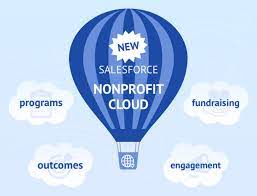
Introducing the New Nonprofit Cloud

Salesforce Transforming Nonprofit Operations with AI

Salesforce Enhances Nonprofit Cloud with Generative AI Capabilities On August 6, 2024, Salesforce announced that its Nonprofit Cloud is now equipped with generative AI capabilities powered by the Einstein 1 Platform. This integration represents the first time Salesforce’s Industry Cloud portfolio has incorporated the Einstein 1 Platform, signaling a broader commitment to embedding AI tools across its product offerings. The update aims to revolutionize nonprofit operations by providing AI-powered tools for personalized donor engagement, operational efficiency, and funding discovery. Key features include AI-generated fundraising proposals and program summaries, which provide concise insights into grant details, donor histories, and program outcomes. Transforming Nonprofit Operations with AI The integration of generative AI into Nonprofit Cloud aligns with Salesforce’s strategy to empower nonprofits to navigate challenges such as donor fatigue, increased operational costs, and rising service demands. Notable enhancements include: Additionally, Salesforce launched Data Cloud for Nonprofits, enabling a unified, real-time view of donor, volunteer, and program data. This innovation breaks down data silos, empowering nonprofits to create tailored outreach strategies and assess program performance effectively. Four Pillars of AI Success Salesforce’s enhancements to Nonprofit Cloud embody its “four-pillar” approach to enterprise AI success: Key Innovations in Nonprofit Cloud Salesforce introduced three groundbreaking innovations to address nonprofit-specific challenges: These features, coupled with Nonprofit Cloud Einstein 1 Edition (which bundles Nonprofit Cloud, Data Cloud, Einstein, Experience Cloud, and Slack), provide nonprofits with comprehensive tools to drive impact. Nonprofit Adoption and Impact Nonprofits are already experiencing the transformative potential of AI. According to Salesforce’s Nonprofit Trends Report, organizations leveraging these AI tools have seen: Julie Fleshman, CEO of the Pancreatic Cancer Action Network, shared her organization’s success with Nonprofit Cloud: “Salesforce has been instrumental in helping us connect patients with specialized healthcare providers and clinical trials, advancing our mission and saving valuable time.” Nonprofit Cloud vs. NPSP While Nonprofit Cloud offers a unified, scalable platform with AI-driven insights and advanced donor management tools, the Nonprofit Success Pack (NPSP) serves as a free, open-source solution for smaller organizations. Here’s a quick comparison: Feature Nonprofit Cloud NPSP Functionality Comprehensive CRM with advanced tools Free app with basic CRM functionality Integration Seamless with other Salesforce products Requires additional configuration Ease of Use User-friendly and designed for nonprofits May require technical expertise Cost Subscription-based Free with optional paid add-ons Scalability Built for growing organizations Requires customization for growth Ideal Users Large and mid-sized nonprofits Small nonprofits Maximizing Fundraising with Nonprofit Cloud Nonprofit Cloud offers nonprofits flexibility and efficiency in managing their fundraising efforts, helping them overcome challenges like donor fatigue and retention. Its advanced features include: By leveraging these tools, nonprofits can improve engagement, strengthen donor relationships, and make data-driven decisions, ultimately amplifying their impact. The Tectonic Role Tectonic has been instrumental in implementing Salesforce Nonprofit Cloud for multiple organizations, ensuring they harness its full potential to optimize operations, engage donors, and achieve their missions. With Salesforce’s AI-driven enhancements and Tectonic’s expertise, nonprofits are poised to navigate challenges, unlock new opportunities, and amplify their societal impact. Like Related Posts Who is Salesforce? Who is Salesforce? Here is their story in their own words. From our inception, we’ve proudly embraced the identity of Read more Salesforce Marketing Cloud Transactional Emails Salesforce Marketing Cloud Transactional Emails are immediate, automated, non-promotional messages crucial to business operations and customer satisfaction, such as order Read more Salesforce Unites Einstein Analytics with Financial CRM Salesforce has unveiled a comprehensive analytics solution tailored for wealth managers, home office professionals, and retail bankers, merging its Financial Read more AI-Driven Propensity Scores AI plays a crucial role in propensity score estimation as it can discern underlying patterns between treatments and confounding variables Read more

Read More
Unlocking Enterprise AI Success

Unlocking Enterprise AI Success

Companies are diving into artificial intelligence. Unlocking enterprise AI success depends on four main factors. Tectonic is here to help you address each. Trust is Important-Trust is Everything Data is everything—it’s reshaping business models and steering the world through health and economic challenges. But data alone isn’t enough; in fact, it can be worse than useless—it’s a risk unless it’s trustworthy. The solution lies in a data trust strategy: one that maximizes data’s potential to create value while minimizing the risks associated with it. Data Trust is Declining, Not Improving Do you believe your company is making its data and data practices more trustworthy? If so, you’re in line with most business leaders. However, there’s a disconnect: consumers don’t share this belief. While 55% of business leaders think consumers trust them with data more than they did two years ago, only 21% of consumers report increased trust in how companies use their data. In fact, 28% say their trust has decreased, and a staggering 76% of global consumers view sharing their data with companies as a “necessary evil.” For companies that manage to build trust in their data, the benefits are substantial. Yet, only 37% of companies with a formal data valuation process involve privacy teams. Integrating privacy is just one aspect of building data trust, but companies that do so are already more than twice as likely as their peers to report returns on investment from key data-driven initiatives, such as developing new products and services, enhancing workforce effectiveness, and optimizing business operations. To truly excel, companies need to create an ongoing system that continually transforms raw information into trusted, business-critical data. Data is the Backbone-Data is the Key Data leaks, as shown below, are a major factor on data trust and quality. As bad as leaked data is to security, data availability is to being a data-driven organization. Extortionist Attack on Costa Rican Government Agencies In an unprecedented event in April 2022, the extortionist group Conti launched a cyberattack on Costa Rican government agencies, demanding a million ransom. The attack crippled much of the country’s IT infrastructure, leading to a declared state of emergency. Lapsus$ Attacks on Okta, Nvidia, Microsoft, Samsung, and Other Companies The Lapsus$ group targeted several major IT companies in 2022, including Okta, Nvidia, Microsoft, and Samsung. Earlier in the year, Okta, known for its account and access management solutions—including multi-factor authentication—was breached. Attack on Swissport International Swissport International, a Swiss provider of air cargo and ground handling services operating at 310 airports across 50 countries, was hit by ransomware. The attack caused numerous flight delays and resulted in the theft of 1.6 TB of data, highlighting the severe consequences of such breaches on global logistics. Attack on Vodafone Portugal Vodafone Portugal, a major telecommunications operator, suffered a cyberattack that disrupted services nationwide, affecting 4G and 5G networks, SMS messaging, and TV services. With over 4 million cellular subscribers and 3.4 million internet users, the impact was widespread across Portugal. Data Leak of Indonesian Citizens In a massive breach, an archive containing data on 105 million Indonesian citizens—about 40% of the country’s population—was put up for sale on a dark web forum. The data, believed to have been stolen from the “General Election Commission,” included full names, birth dates, and other personal information. The Critical Importance of Accurate Data There’s no shortage of maxims emphasizing how data has become one of the most vital resources for businesses and organizations. At Tectonic, we agree that the best decisions are driven by accurate and relevant data. However, we also caution that simply having more data doesn’t necessarily lead to better decision-making. In fact, we argue that data accuracy is far more important than data abundance. Making decisions based on incorrect or irrelevant data is often worse than having too little of the right data. This is why accurate data is crucial, and we’ll explore this concept further in the following sections. Accurate data is information that truly reflects reality or another source of truth. It can be tested against facts or evidence to verify that it represents something as it actually is, such as a person’s contact details or a location’s coordinates. Accuracy is often confused with precision, but they are distinct concepts. Precision refers to how consistent or varied values are relative to one another, typically measured against some other variable. Thus, data can be accurate, precise, both, or neither. Another key factor in data accuracy is the time elapsed between when data is produced and when it is collected and used. The shorter this time frame, the more likely the data is to be accurate. As modern businesses integrate data into more aspects of their operations, they stand to gain significant competitive advantages if done correctly. However, this also means there’s more at stake if the data is inaccurate. The following points will highlight why accurate data is critical to various facets of your company. Ease and speed of access Access speeds are measured in bytes per second (Bps). Slower devices operate in thousands of Bps (kBps), while faster devices can reach millions of Bps (MBps). For example, a hard drive can read and write data at speeds of 300MBps, which is 5,000 times faster than a floppy disk! Fast data refers to data in motion, streaming into applications and computing environments from countless endpoints—ranging from mobile devices and sensor networks to financial transactions, stock tick feeds, logs, retail systems, and telco call routing and authorization systems. Improving data access speeds can significantly enhance operational efficiency by providing timely and accurate data to stakeholders throughout an organization. This can streamline business processes, reduce costs, and boost productivity. However, data access is not just about retrieving information. It plays a crucial role in ensuring data integrity, security, and regulatory compliance. Effective data access strategies help organizations safeguard sensitive information from unauthorized access while making it readily available to those who are authorized. Additionally, the accuracy and availability of data are essential to prevent data silos

Read More
AI as a Service

AI as a Service

The latest research study from HTF MI, titled Global Artificial Intelligence (AI) As a Service Market Size, Player Analysis & Segment Growth 2020-2032, offers an in-depth evaluation of market risks, opportunities, and strategic decision-making support. The report delves into trends, growth drivers, technological advancements, and the evolving investment landscape within the Global AI As a Service market. Key players featured in the study include Google, Amazon Web Services, IBM, Microsoft, SAP, Salesforce, Intel, Baidu, FICO, SAS, and BigML. Market Overview: The study provides an extensive view of the AI As a Service market, with segmentation across industries such as banking, financial services, insurance, healthcare, retail, telecommunications, government and defense, manufacturing, and energy. Covering 18+ countries globally, it also highlights both emerging and established players. The report offers tailored analysis based on specific business objectives or geographic requirements. AI As a Service Market: Demand Analysis & Opportunity Outlook 2030 This research defines the market size across various segments and countries by analyzing historical data and forecasting future values through 2030. It combines qualitative and quantitative insights, including market share, value, and volume forecasts from 2019 to 2023, with projections extending to 2030. Key elements such as growth drivers, restraining factors, and critical statistics shape the market’s outlook. Market Segmentation: The report categorizes the AI As a Service market into the following: Key Players: The study profiles major industry players such as Google, Amazon Web Services, IBM, Microsoft, SAP, Salesforce, Intel, Baidu, FICO, SAS, and BigML, analyzing their market strategies and positioning. Geographic Scope: The global report covers multiple regions, including: Key Questions Addressed: Report Chapters Overview: For more information, request a sample report or inquire about the full research study through the provided links. Like Related Posts Who is Salesforce? Who is Salesforce? Here is their story in their own words. From our inception, we’ve proudly embraced the identity of Read more Salesforce Marketing Cloud Transactional Emails Salesforce Marketing Cloud Transactional Emails are immediate, automated, non-promotional messages crucial to business operations and customer satisfaction, such as order Read more Salesforce Unites Einstein Analytics with Financial CRM Salesforce has unveiled a comprehensive analytics solution tailored for wealth managers, home office professionals, and retail bankers, merging its Financial Read more AI-Driven Propensity Scores AI plays a crucial role in propensity score estimation as it can discern underlying patterns between treatments and confounding variables Read more
Read More
AI Services and Models Security Shortcomings

AI Services and Models Security Shortcomings

Orca Report: AI Services and Models Show Security Shortcomings Recent research by Orca Security reveals significant security vulnerabilities in AI services and models deployed in the cloud. The “2024 State of AI Security Report,” released in 2024, underscores the urgent need for improved security practices as AI technologies advance rapidly. AI Services and Models Security Shortcomings. AI usage is exploding. Gartner predicts that the AI software market will grow19.1% annually, reaching 8 billion by 2027. In many ways, AI is now inthe stage reminiscent of where cloud computing was over a decade ago. Orca’s analysis of cloud assets across major platforms—AWS, Azure, Google Cloud, Oracle Cloud, and Alibaba Cloud—has highlighted troubling risks associated with AI tools and models. Despite the surge in AI adoption, many organizations are neglecting fundamental security measures, potentially exposing themselves to significant threats. The report indicates that while 56% of organizations use their own AI models for various purposes, a substantial portion of these deployments contain at least one known vulnerability. Orca’s findings suggest that although most vulnerabilities are currently classified as low to medium risk, they still pose a serious threat. Notably, 62% of organizations have implemented AI packages with vulnerabilities, which have an average CVSS score of 6.9. Only 0.2% of these vulnerabilities have known public exploits, compared to the industry average of 2.5%. Insecure Configurations and Controls Orca’s research reveals concerning security practices among widely used AI services. For instance, Azure OpenAI, a popular choice for building custom applications, was found to be improperly configured in 27% of cases. This lapse could allow attackers to access or manipulate data transmitted between cloud resources and AI services. The report also criticizes default settings in Amazon SageMaker, a prominent machine learning service. It highlights that 45% of SageMaker buckets use non-randomized default names, and 98% of organizations have not disabled default root access for SageMaker notebook instances. These defaults create vulnerabilities that attackers could exploit to gain unauthorized access and perform actions on the assets. Additionally, the report points out a lack of self-managed encryption keys and encryption protection. For instance, 98% of organizations using Google Vertex have not enabled encryption at rest for their self-managed keys, potentially exposing sensitive data to unauthorized access or alteration. Exposed Access Keys and Platform Risks Security issues extend to popular AI platforms like OpenAI and Hugging Face. Orca’s report found that 20% of organizations using OpenAI and 35% using Hugging Face have exposed access keys, heightening the risk of unauthorized access. This follows recent research by Wiz, which demonstrated vulnerabilities in Hugging Face during Black Hat USA 2024, where sensitive data was compromised. Addressing the Security Challenge Orca co-founder and CEO Gil Geron emphasizes the need for clear roles and responsibilities in managing AI security. He stresses that security practitioners must recognize and address these risks by setting policies and boundaries. According to Geron, while the challenges are not new, the rapid development of AI tools makes it crucial to address security from both engineering and practitioner perspectives. Geron also highlights the importance of reviewing and adjusting default settings to enhance security, advocating for rigorous permission management and network hygiene. As AI technology continues to evolve, organizations must remain vigilant and proactive in safeguarding their systems and data. In conclusion, the Orca report serves as a critical reminder of the security risks associated with AI services and models. Organizations must take concerted action to secure their AI deployments and protect against potential vulnerabilities. Balance Innovation and Security in AI Tectonic notes Salesforce was not included in the sampling. Content updated September 2024. Like Related Posts Who is Salesforce? Who is Salesforce? Here is their story in their own words. From our inception, we’ve proudly embraced the identity of Read more Salesforce Unites Einstein Analytics with Financial CRM Salesforce has unveiled a comprehensive analytics solution tailored for wealth managers, home office professionals, and retail bankers, merging its Financial Read more AI-Driven Propensity Scores AI plays a crucial role in propensity score estimation as it can discern underlying patterns between treatments and confounding variables Read more Tectonic’s Successful Salesforce Track Record Salesforce Technology Services Integrator – Tectonic has successfully delivered Salesforce in a variety of industries including Public Sector, Hospitality, Manufacturing, Read more

Read More
Education Cloud Recruitment and Admissions

Education Cloud Recruitment and Admissions

Today’s prospective students and learners expect a seamless, connected online experience throughout their higher education journey. The days of relying on phone calls and postal mail for application processes are behind us. Faculty and staff require a complete, unified view of each learner—no more data scattered across departments. Education Cloud recruitment and admissions enables your institution to operate efficiently and effectively in the digital age. At its very heart, recuitment and admissions is only a variation on any other marketing process that has been improved with automation. No one knows automation like Salesforce. And no one knows how to build a engaging portal in Education Cloud to cator to your students than Tectonic. At the core of the recruitment and admissions process in Education Cloud is an online portal that allows learners to: This learner portal captures and records all relevant information directly in Salesforce. However, managing the multitude of interactions and documents can be challenging. That’s where the Recruiting and Admissions Consoles come in, serving as a centralized hub for faculty and staff to manage their tasks and monitor progress. The Recruitment & Admissions Consoles offer several key benefits: Like Related Posts Who is Salesforce? Who is Salesforce? Here is their story in their own words. From our inception, we’ve proudly embraced the identity of Read more Salesforce Marketing Cloud Transactional Emails Salesforce Marketing Cloud Transactional Emails are immediate, automated, non-promotional messages crucial to business operations and customer satisfaction, such as order Read more Salesforce Unites Einstein Analytics with Financial CRM Salesforce has unveiled a comprehensive analytics solution tailored for wealth managers, home office professionals, and retail bankers, merging its Financial Read more AI-Driven Propensity Scores AI plays a crucial role in propensity score estimation as it can discern underlying patterns between treatments and confounding variables Read more

Read More
Loan Boarding and Approval

Loan Boarding and Approval

Streamlining Loan Boarding and Approval Processes with Salesforce Technology The financial services industry is undergoing a rapid transformation, driven by the need for greater efficiency and improved customer experiences. One area where this shift is particularly evident is in the loan boarding and approval processes. Leveraging Salesforce technology, financial institutions can streamline these essential workflows, enhancing both speed and accuracy while delivering a superior borrower experience. Understanding Loan Boarding Loan boarding is the process of transitioning a loan from its origination phase into servicing. This involves several key steps, including data entry, document management, and compliance checks. Traditionally, this process has been manual, cumbersome, and prone to errors. However, Salesforce offers robust capabilities that allow organizations to automate and optimize these tasks, significantly reducing inefficiencies. Automating Data Entry Salesforce facilitates automated data entry through its customizable forms and integration capabilities. Tools like Salesforce Flow and Apex enable businesses to create workflows that automatically populate fields based on predefined criteria or data extracted from documents using Optical Character Recognition (OCR) technology. This automation reduces manual errors and accelerates the loan boarding process. Efficient Document Management Effective document management is crucial in loan boarding. Salesforce provides a centralized platform for secure storage and easy access to all necessary documents. Features like Salesforce Files enable organizations to manage documentation efficiently, allowing for easy retrieval, sharing, and version control. This streamlined document management ensures that all relevant information is readily available throughout the loan lifecycle. Streamlining Handoff and Approval Processes After a loan is boarded, it must go through a series of approvals before disbursement. The handoff between departments such as underwriting and risk assessment can cause delays if not properly managed. Salesforce’s collaborative tools facilitate seamless communication among stakeholders, ensuring a smooth transition through the approval process. Customizable Approval Workflows Salesforce allows for the creation of customizable approval workflows, enabling organizations to define specific criteria for each stage of loan approval. This flexibility ensures that loans are reviewed by the appropriate personnel based on their complexity or risk profile. Automated alerts notify relevant team members when their input is needed, minimizing bottlenecks and keeping the process moving efficiently. Enhanced Visibility with Real-Time Dashboards One of Salesforce’s standout features is its ability to generate real-time dashboards that provide insights into various stages of the loan process. Stakeholders can monitor key metrics, such as the average time for approvals or the number of loans pending at each stage, through intuitive visualizations. This transparency promotes quicker decision-making and fosters accountability within the team. Seamless Disbursement Process Once loans are approved, the disbursement phase is the next critical step. Salesforce’s integration capabilities with payment processing systems, such as NACHA/ACH solutions, allow organizations to automate fund transfers directly within the platform, streamlining the disbursement process. Automating Payment Processing Automated triggers for payments can be set up within Salesforce, reducing the need for manual intervention. This automation speeds up the disbursement process and minimizes the risk of errors associated with manual data entry during fund transfers, ensuring a smooth and reliable process. Comprehensive Portfolio Management Managing a large loan portfolio requires meticulous tracking of various elements, including amortization schedules, repayments, interest accruals, and fees. Salesforce excels in these areas, offering tools to manage all aspects of a loan portfolio effectively. Dynamic Amortization and Repayment Schedules Salesforce enables the creation of dynamic amortization schedules tailored to individual borrower agreements, easily accessible via custom borrower portals. These portals enhance borrower engagement by providing real-time information about repayment obligations and remaining balances, improving transparency and customer satisfaction. Fee Automation Automating fee calculations within Salesforce reduces administrative burdens and ensures accurate billing according to agreed-upon terms. This feature helps avoid discrepancies and delays, providing a seamless experience for both the lender and the borrower. Risk Management and Collections In today’s volatile economic environment, effective risk management is essential for financial institutions. Salesforce’s advanced analytics and performance rating tools allow organizations to proactively identify potential risks before they escalate, enabling more informed lending decisions. Performance and Risk Ratings By analyzing historical data, Salesforce enables lenders to assign risk ratings based on borrowers’ past behaviors and external market conditions. This data-driven approach supports more accurate and strategic lending decisions, helping to mitigate risk. Effective Collections Strategies For overdue accounts, Salesforce’s task management features automate reminders and follow-ups, ensuring timely communication and effective debt recovery. Maintaining open communication channels with borrowers during the collections process is crucial for preserving relationships and achieving successful outcomes. Conclusion: Embracing Digital Transformation By embracing digital transformation through Salesforce technology, financial institutions can significantly streamline their loan boarding and approval processes. This not only enhances operational efficiency but also positions them competitively in a tech-driven marketplace, delivering the high-quality service that today’s consumers demand. Salesforce’s powerful tools enable institutions to meet the unique needs of their borrowers effectively, ensuring both efficiency and excellence in service delivery. Like Related Posts Who is Salesforce? Who is Salesforce? Here is their story in their own words. From our inception, we’ve proudly embraced the identity of Read more Salesforce Marketing Cloud Transactional Emails Salesforce Marketing Cloud Transactional Emails are immediate, automated, non-promotional messages crucial to business operations and customer satisfaction, such as order Read more Salesforce Unites Einstein Analytics with Financial CRM Salesforce has unveiled a comprehensive analytics solution tailored for wealth managers, home office professionals, and retail bankers, merging its Financial Read more AI-Driven Propensity Scores AI plays a crucial role in propensity score estimation as it can discern underlying patterns between treatments and confounding variables Read more
Read More
gettectonic.com