- gettectonic.com - Page 8
Building Trust in AI-Powered CRM

Embracing AI in 2024

Embracing AI in 2024: A Strategic Approach to Building AI Software Artificial Intelligence (AI) has become the cornerstone of innovation in the IT industry, captivating big tech, corporations, and investors alike. Participation in AI isn’t just beneficial—it’s imperative. While the specter of an ‘AI Bubble’ looms in public discourse, with fears of job displacement, the reality is more nuanced. AI-driven tools are indeed transforming industries, yet they also present opportunities for innovation and efficiency. Key Considerations for Harnessing AI Power Integration into Digital Services The future of AI lies in embedding it seamlessly within digital services rather than creating standalone products. This approach leverages AI’s capabilities effectively, particularly in generative AI applications. Positioning AI: Core Product vs. Business Solution When incorporating AI into your business strategy, clarity is crucial. Determine whether AI serves as the core product, enhances existing features, or solves specific business challenges. Avoid falling into commodity categories or gimmicky features that lack substantial user value. Assessing Feasibility and Readiness Evaluate your team’s AI competencies, familiarity with tools, budget constraints, and current revenue streams. Understanding these factors helps gauge the feasibility of AI development and integration within your organization. Leveraging Existing Solutions Explore AI solutions offered by major cloud providers and companies. Opt for tools that offer higher abstraction levels, simplifying integration and maintenance. Practical Steps to AI Software Development Navigating AI Use Cases Identify unique use cases where AI can solve real business problems effectively. Avoid pursuing solutions solely for novelty or investor appeal. Building Capability Assess your capability to develop AI systems. Whether you have in-house expertise or need to recruit talent, align your team with the skills required for successful implementation. Data: The Foundation of AI Success Establish robust data acquisition, processing, and storage capabilities. High-quality data is fundamental for AI performance and reliability. Designing Scalable Architecture Develop a scalable AI system architecture that supports seamless data flow, model training, deployment, and user interaction. Keep simplicity and functionality at the forefront. Continuous Improvement Monitor and refine your AI system continuously based on user feedback and industry advancements. Embrace a culture of ongoing learning and adaptation to stay ahead. Conclusion: Navigating the AI Landscape In 2024, building AI software demands a blend of innovation and pragmatism. Clear use cases, robust data management, and practical implementation are key to success. Whether adopting existing AI tools or developing proprietary solutions, prioritize delivering tangible value to users. Stay agile, continuously refine your approach, and embrace the transformative potential of AI in driving business growth and innovation. Like Related Posts Who is Salesforce? Who is Salesforce? Here is their story in their own words. From our inception, we’ve proudly embraced the identity of Read more Salesforce Unites Einstein Analytics with Financial CRM Salesforce has unveiled a comprehensive analytics solution tailored for wealth managers, home office professionals, and retail bankers, merging its Financial Read more AI-Driven Propensity Scores AI plays a crucial role in propensity score estimation as it can discern underlying patterns between treatments and confounding variables Read more Tectonic’s Successful Salesforce Track Record Salesforce Technology Services Integrator – Tectonic has successfully delivered Salesforce in a variety of industries including Public Sector, Hospitality, Manufacturing, Read more

Read More
More Cool AI Tools

Demystifying AI: Separating Fact from Fiction

1. The Consciousness Conundrum Myth: AI possesses human-like intelligence and consciousnessReality: Today’s AI, including advanced generative models, operates through pattern recognition—not genuine understanding. These systems process language statistically, without consciousness or emotional experience. Key Insight: AI can write poetry but doesn’t feel inspiration; it analyzes medical images without comprehending suffering. 2. The Future of Work Myth: AI will make human workers obsoleteReality: While AI automates 40-50% of repetitive tasks (McKinsey), it’s creating more jobs than it eliminates. The World Economic Forum predicts AI will generate 97 million new roles by 2025 focused on AI management, training, and ethical oversight. 3. The Bias Blind Spot Myth: AI delivers perfectly objective decisionsReality: A 2023 Stanford study found commercial AI systems exhibit demographic biases at alarming rates. For example: Solution: Regular bias audits and diverse training datasets are essential. 4. Emotional Intelligence Limits Myth: AI experiences human emotionsReality: While sentiment analysis achieves 85-90% accuracy in detecting emotions from text (MIT Tech Review), these systems simulate empathy without experiencing it—like a sophisticated mood ring. 5. The AGI Mirage Myth: Superintelligent AI is imminentReality: Current narrow AI excels at specific tasks but lacks the generalized reasoning of a five-year-old. OpenAI’s GPT-4 scores ~158 on IQ tests (human average: 100), yet fails at basic physical reasoning that toddlers master. 6. Transparency Spectrum Myth: All AI decisions are unexplainableReality: Tools like LIME and SHAP now visualize how models weigh factors in: Emerging Standard: The EU AI Act mandates explainability for high-risk applications. 7. Cost Realities Myth: AI implementation requires massive investmentReality: Cloud-based AI services now offer: 8. The Creativity Gap Myth: AI can replace human ingenuityReality: While AI generates plausible ideas, humans dominate in: 9. The Human-AI Partnership Myth: AI systems are autonomousReality: Every successful AI implementation requires: 10. ROI Realities Myth: AI guarantees business successReality: A 2024 Gartner survey found only 53% of AI projects move past pilot stage. Success factors include: Moving Forward Wisely Understanding these realities helps organizations: “The greatest danger of artificial intelligence isn’t that it will rebel against us, but that we’ll attribute superhuman capabilities to what is ultimately sophisticated pattern matching.”—Adapted from Pedro Domingos, “The Master Algorithm” Like Related Posts Who is Salesforce? Who is Salesforce? Here is their story in their own words. From our inception, we’ve proudly embraced the identity of Read more Salesforce Unites Einstein Analytics with Financial CRM Salesforce has unveiled a comprehensive analytics solution tailored for wealth managers, home office professionals, and retail bankers, merging its Financial Read more AI-Driven Propensity Scores AI plays a crucial role in propensity score estimation as it can discern underlying patterns between treatments and confounding variables Read more Tectonic’s Successful Salesforce Track Record Salesforce Technology Services Integrator – Tectonic has successfully delivered Salesforce in a variety of industries including Public Sector, Hospitality, Manufacturing, Read more

Read More
Read AI Salesforce Integration

Read AI Salesforce Integration

Last month, Read AI announced the launch of its integration with HubSpot, and today the company continues its momentum in the CRM space by announcing support for 1-click connections to Salesforce. Salesforce, the leading name in CRM software, is widely adopted across virtually every industry. Read AI users can now sync their Meeting Reports directly to corresponding records within their Salesforce instance, either automatically or manually. After a meeting measured by Read AI, this integration will automatically connect any Contacts, Leads, Accounts, and Opportunities within Salesforce that are related to the external participants who attended the call. Read AI will sync Meeting Report summaries, action items, key questions, and other meeting data directly to those records, providing a comprehensive view of meeting content and progress without leaving Salesforce. This eliminates the need to spend hours updating opportunities. With Read AI, Opportunities are more up-to-date and comprehensive than anything manually written. The integration operates in the background, automatically. For those who prefer not to automatically sync Meeting Reports into Salesforce, Automatic Syncing can be turned off in Integration Settings, allowing individual push of Meeting Reports to Salesforce. To ensure historical Meeting Reports are synced to Salesforce, users can backfill Meeting Report data with one click using the ‘Sync past meetings’ button in Salesforce Integration Settings. For individual sellers, this integration removes the need to block out time to update contacts and opportunities, as Read AI automatically makes those updates. Sales Managers will no longer need to chase down sellers to update their opportunities in Salesforce, allowing more focus on sales strategy with the most complete and timely insights from SFDC. This integration promises a significant boost in productivity for users of both Read AI and Salesforce. Users no longer need to take notes during important sales calls and can easily find meeting details within Salesforce. Read AI empowers sellers to close deals while handling the administrative tasks to ensure opportunities are accurate and updated. Like Related Posts Who is Salesforce? Who is Salesforce? Here is their story in their own words. From our inception, we’ve proudly embraced the identity of Read more Salesforce Marketing Cloud Transactional Emails Salesforce Marketing Cloud Transactional Emails are immediate, automated, non-promotional messages crucial to business operations and customer satisfaction, such as order Read more Salesforce Unites Einstein Analytics with Financial CRM Salesforce has unveiled a comprehensive analytics solution tailored for wealth managers, home office professionals, and retail bankers, merging its Financial Read more AI-Driven Propensity Scores AI plays a crucial role in propensity score estimation as it can discern underlying patterns between treatments and confounding variables Read more

Read More
AI in scams

AIs Role in Scams

How Generative AI is Supporting the Creation of Lures & Scams A Guide for Value Added Resellers Copyright © 2024 Gen Digital Inc. All rights reserved. Avast is part of Gen™. A long, long time ago, I worked for an antivirus company who has since been acquired by Avast.  Knowing many of the people involved in this area of artificial intelligence, I pay attention when they publish a white paper. AI in scams is something we all should be concerned about. I am excited to share it in our Tectonic Insights. Executive Summary The capabilities and global usage of both large language models (LLMs) and generative AI are rapidly increasing. While these tools offer significant benefits to the general public and businesses, they also pose potential risks for misuse by malicious actors, including the misuse of tools like OpenAI’s ChatGPT and other GPTs. This document explores how the ChatGPT brand is exploited for lures, scams, and other social engineering threats. Generative AI is expected to play a crucial role in the cyber threat world challenges, particularly in creating highly believable, multilingual texts for phishing and scams. These advancements provide more opportunities for sophisticated social engineering by even less sophisticated scammers than ever before. Conversely, we believe generative AI will not drastically change the landscape of malware generation in the near term. Despite numerous proofs of concept, the complexity of generative AI methods still makes traditional, simpler methods more practical for malware creation. In short, the good may not outweigh the bad – just yet. Recognizing the value of generative AI for legitimate purposes is important. AI-based security and assistant tools with various levels of maturity and specialization are already emerging in the market. As these tools evolve and become more widely available, substantial improvements in their capabilities are anticipated. AI-Generated Lures and Scams AI-generated lures and scams are increasingly prevalent. Cybercriminals use AI to create lures and conduct phishing attempts and scams through various texts—emails, social media content, e-shop reviews, SMS scams, and more. AI improves the credibility of social scams by producing trustworthy, authentic texts, eliminating traditional phishing red flags like broken language and awkward addressing. These advanced threats have exploited societal issues and initiatives, including cryptocurrencies, Covid-19, and the war in Ukraine. The popularity of ChatGPT among hackers stems more from its widespread recognition than its AI capabilities, making it a prime target for investigation by attackers. How is Generative AI Supporting the Creation of Lures and Scams? Generative AI, particularly ChatGPT, enhances the language used in scams, enabling cybercriminals to create more advanced texts than they could otherwise. AI can correct grammatical errors, provide multilingual content, and generate multiple text variations to improve believability. For sophisticated phishing attacks, attackers must integrate the AI-generated text into credible templates. They can purchase functional, well-designed phishing kits or use web archiving tools to replicate legitimate websites, altering URLs to phish victims. Currently, attackers need to manually build some aspects of their attempts. ChatGPT is not yet an “out-of-the-box” solution for advanced malware creation. However, the emergence of multi-type models, combining outputs like images, audio, and video, will enhance the capabilities of generative AI for creating believable phishing and scam campaigns. Malvertising Malvertising, or “malicious advertising,” involves disseminating malware through online ads. Cybercriminals exploit the widespread reach and interactive nature of digital ads to distribute harmful content. Instances have been observed where ChatGPT’s name is used in malicious vectors on platforms like Facebook, leading users to fraudulent investment portals. Users who provide personal information become vulnerable to identity theft, financial fraud, account takeovers, and further scams. The collected data is often sold on the dark web, contributing to the broader cybercrime ecosystem. Recognizing and mitigating these deceptive tactics is crucial. YouTube Scams YouTube, one of the world’s most popular platforms, is not immune to cybercrime. Fake videos featuring prominent figures are used to trick users into harmful actions. This strategy, known as the “Appeal to Authority,” exploits trust and credibility to phish personal details or coerce victims into sending money. For example, videos featuring Elon Musk discussing OpenAI have been modified to scam victims. A QR code displayed in the video redirects users to a scam page, often a cryptocurrency scam or phishing attempt. As AI models like Midjourney and DALL-E mature, the use of fake images, videos, and audio is expected to increase, enhancing the credibility of these scams. Typosquatting Typosquatting involves minor changes in URLs to redirect users to different websites, potentially leading to phishing attacks or the installation of malicious applications. An example is an Android app named “Open Chat GBT: AI Chat Bot,” where a subtle URL alteration can deceive users into downloading harmful software. Browser Extensions The popularity of ChatGPT has led to the emergence of numerous browser extensions. While many are legitimate, others are malicious, designed to lure victims. Attackers create extensions with names resembling ChatGPT to deceive users into downloading harmful software, such as adware or spyware. These extensions can also subscribe users to services that periodically charge fees, known as fleeceware. For instance, a malicious extension mimicking “ChatGPT for Google” was reported by Guardio. This extension stole Facebook sessions and cookies but was removed from the Chrome Web Store after being reported. Installers and Cracks Malicious installers often mimic legitimate tools, tricking users into installing malware. These installers promise to install ChatGPT but instead deploy malware like NodeStealer, which steals passwords and browser cookies. Cracked or unofficial software versions pose similar risks, hiding malware that can steal personal information or take control of computers. This particular method of installing malware has been around for decades. However the usage of ChatGPT and other free to download tools has given it a resurrection. Fake Updates Fake updates are a common tactic where users are prompted to update their browser to access content. Campaigns like SocGholish use ChatGPT-related articles to lure users into downloading remote access trojans (RATs), giving attackers control over infected devices. These pages are often hosted on vulnerable WordPress sites or sites with

Read More
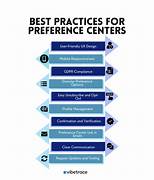
July Changes to Preference Center

July Changes to Preference Center

Privacy Center Update What’s the July Changes to Preference Center? Starting in July 2024, the Privacy Center app within the core platform now supports retention features. July Changes to Preference Center introduces a new Hyperforce-based retention store, allows for retention testing in sandboxes, and offers the option to mask data during retention. The new Hyperforce-based retention store can be provisioned using the core Privacy Center app, eliminating the need for Heroku or the Privacy Center managed package. The rollout of this new retention capability will be phased across regions, initially launching in Germany, Australia, and America East. You can spin up a retention store once it’s available in your region. For more details, refer to the Privacy Center’s Hyperforce-Based Retention Store FAQ. What action do I need to take? What if I don’t take any action? You can continue using the legacy Privacy Center app (managed package version) for data retention, but it will no longer be enhanced and will remain in maintenance mode. Heroku can still be used for managing data retention policies until the end of your contract. Where can I learn more about this upcoming change? Review the Privacy Center’s Hyperforce-Based Retention Store FAQ for more information. Like Related Posts Who is Salesforce? Who is Salesforce? Here is their story in their own words. From our inception, we’ve proudly embraced the identity of Read more Salesforce Marketing Cloud Transactional Emails Salesforce Marketing Cloud Transactional Emails are immediate, automated, non-promotional messages crucial to business operations and customer satisfaction, such as order Read more Salesforce Unites Einstein Analytics with Financial CRM Salesforce has unveiled a comprehensive analytics solution tailored for wealth managers, home office professionals, and retail bankers, merging its Financial Read more AI-Driven Propensity Scores AI plays a crucial role in propensity score estimation as it can discern underlying patterns between treatments and confounding variables Read more

Read More
ChatGPT Word Choices

ChatGPT Word Choices

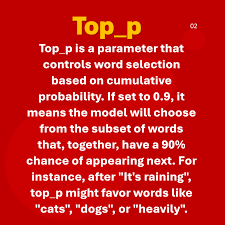
Why Does ChatGPT Use the Word “Delve” So Much? Mystery Solved. The mystery behind ChatGPT’s frequent use of the word “delve” (one of the 10 most common words it uses) has finally been unraveled, and the answer is quite unexpected. Why ChatGPT Word Choices are repetitive. While “delve” and other words like “tapestry” aren’t common in everyday conversations, ChatGPT seems to favor them. You may have noticed this tendency in its outputs. The sudden rise in the use of “delve” in medical papers from March 2024, coincides with the first full year of ChatGPT’s widespread use. “Delve,” along with phrases like “as an AI language model…,” has become a hallmark of ChatGPT’s language, almost a giveaway that a text is AI-generated. But why does ChatGPT overuse “delve”? If it’s trained on human data, how did it develop this preference? Is it emergent behavior? And why “delve” specifically? A Guardian article, “How Cheap, Outsourced Labour in Africa is Shaping AI English,” provides a clue. The key lies in how ChatGPT was built. Why “Delve” So Much? The overuse of “delve” suggests ChatGPT’s language might have been influenced after its initial training on internet data. After training on a massive corpus of data, an additional supervised learning step is used to align the AI’s behavior. Human annotators evaluate the AI’s outputs, and their feedback fine-tunes the model. Here’s a summary of the process: This iterative process involves human feedback to improve the AI’s responses, ensuring it stays aligned and useful. However, this feedback is often provided by a workforce in the global south, where English-speaking annotators are more affordable. In Nigeria, “delve” is more commonly used in business English than in the US or UK. Annotators from these regions provided examples using their familiar language, influencing the AI to adopt a slightly African English style. This is an example of poor sampling, where the evaluators’ language differs from that of the target users, introducing a bias in the writing style. This bias likely stems from the RLHF step rather than the initial training. ChatGPT’s writing style, with or without “delve,” is already somewhat robotic and easy to detect. Understanding these potential pitfalls helps us avoid similar issues in future AI development. Making ChatGPT More Human-Like To make ChatGPT sound more human and avoid overused words like “delve,” consider these Prompt Engineering approaches: These methods can be time-consuming. Ideally, a quick, reliable tool, like a Chrome extension, would streamline this process. If you’ve found a solution or a reliable tool for this issue, share it below in the comments. This is a widespread challenge that many users face. Like Related Posts Who is Salesforce? Who is Salesforce? Here is their story in their own words. From our inception, we’ve proudly embraced the identity of Read more Salesforce Marketing Cloud Transactional Emails Salesforce Marketing Cloud Transactional Emails are immediate, automated, non-promotional messages crucial to business operations and customer satisfaction, such as order Read more Salesforce Unites Einstein Analytics with Financial CRM Salesforce has unveiled a comprehensive analytics solution tailored for wealth managers, home office professionals, and retail bankers, merging its Financial Read more AI-Driven Propensity Scores AI plays a crucial role in propensity score estimation as it can discern underlying patterns between treatments and confounding variables Read more

Read More
July Changes to Marketing Cloud

July Changes to Marketing Cloud Growth

You now have access to the new Marketing app, which includes the latest version of Marketing Cloud Growth. This new app replaces the previous Marketing app, now named Marketing (Original). July Changes to Marketing Cloud Growth. What do I need to do – July Changes to Marketing Cloud? To access the new Marketing app, open the App Launcher and select Marketing. For all accounts provisioned prior to Summer ’24, the new Marketing app will be created and it will maintain most of the settings from the Marketing (Original) app. It includes access to all your campaigns and reports. However, you must reconfigure the user access and recreate the customizations that you want to keep. After finishing the setup of the new Marketing app, remove user access to the Marketing (Original) app to avoid using outdated tools. The new Marketing app retains most settings from the Marketing (Original) app, including access to all your campaigns and reports. However, you will need to reconfigure user access and recreate any customizations you want to keep. Learn more in Help. After setting up the new Marketing app, remove user access to the Marketing (Original) app to avoid using outdated tools. Why is this change happening? Beginning Summer ’24 release, Marketing Cloud Growth customers will have access to a new Marketing app. This app replaces the previous Marketing app for Marketing Cloud Growth, which will be renamed Marketing (Original). Newly provisioned accounts will have the Marketing app only.We’ve improved the back end to provide a more streamlined user experience. What if I don’t take action? We will eventually stop supporting the Marketing (Original) app, which may impact your business. Further details will be announced later. How can I get more information? If you have questions regarding the changes to the Marketing app, contact Salesforce Customer Support. Like Related Posts Who is Salesforce? Who is Salesforce? Here is their story in their own words. From our inception, we’ve proudly embraced the identity of Read more Salesforce Marketing Cloud Transactional Emails Salesforce Marketing Cloud Transactional Emails are immediate, automated, non-promotional messages crucial to business operations and customer satisfaction, such as order Read more Salesforce Unites Einstein Analytics with Financial CRM Salesforce has unveiled a comprehensive analytics solution tailored for wealth managers, home office professionals, and retail bankers, merging its Financial Read more AI-Driven Propensity Scores AI plays a crucial role in propensity score estimation as it can discern underlying patterns between treatments and confounding variables Read more

Read More
Ask ChatGPT Vision Action

Ask ChatGPT Vision Action

Enhance Your Workflow with the Ask ChatGPT Vision Action Extend the use of artificial intelligence in your daily operations by leveraging the Ask ChatGPT Vision action. This feature allows ChatGPT to analyze images attached to your Salesforce records and apply its insights directly to your workflows. The action is compatible with ChatGPT models that accept image input. How to Use the Ask ChatGPT Vision Action: Create a Macro for Repeated Use: To streamline usage, create a Macro with preconfigured prompts and result fields. Assign the macro to users or profiles to ensure consistent use of the Ask ChatGPT Vision action. Examples: Object Prompt Result Field Case Determine if the image content matches this description: “{!Description}”. Answer “Yes” or “No”. Custom picklist field ‘Attachment matches description’ with values Yes and No Use Cases: For example, use the Ask ChatGPT Vision action to verify if attachments in Cases align with the case’s subject and description. If an attachment matches, automatically route the case to a support agent; otherwise, flag it for review. Expand Your Options: For more flexibility, you can create custom classes and actions to integrate additional data sources or automate further tasks based on ChatGPT’s responses. Explore options like sending emails, creating tasks, or updating records with the information retrieved. For more details on using ChatGPT and managing data privacy, please refer to OpenAI’s website. Like Related Posts Who is Salesforce? Who is Salesforce? Here is their story in their own words. From our inception, we’ve proudly embraced the identity of Read more Salesforce Marketing Cloud Transactional Emails Salesforce Marketing Cloud Transactional Emails are immediate, automated, non-promotional messages crucial to business operations and customer satisfaction, such as order Read more Salesforce Unites Einstein Analytics with Financial CRM Salesforce has unveiled a comprehensive analytics solution tailored for wealth managers, home office professionals, and retail bankers, merging its Financial Read more AI-Driven Propensity Scores AI plays a crucial role in propensity score estimation as it can discern underlying patterns between treatments and confounding variables Read more

Read More
Education Cloud Program Objects

Education Cloud Program Objects

Use program objects to track how your learning offerings are structured and administered, and what they require for enrollment and completion. Education Cloud Program Objects let you customize all your programs for ease of use. Programs can be degree or credential programs, academic support programs, recreational programs, continuing education, and more. We use the same architectural building blocks to model each of them in Education Cloud. A Sample Degree Program Offering See an example of how Education Cloud objects represent a program offering. The Biological Sciences Department at Astro University offers an undergraduate Biology degree. This degree program is represented with these objects. To earn the B.S. Biology degree, students complete a sequence of study defined in the university’s course catalog. These high-level requirements for the degree are organized using the learning program plan object. For the student cohort enrolling in the 2023–2024 academic year, a learning program plan record named Biology Catalog Year 2023–2024 represents the set of requirements in effect at that time. When Astro University finalizes its catalog for the next academic year, requirements likely changed slightly and are captured in another Program Plan record named Biology Catalog Year 2024–2025. The learning program plan object represents a general set of requirements. The learning program plan requirement object represents the specific requirements, such as required courses, thesis work, or an internship. To help organize your programs, we recommend that you create accounts for each department or college in your institution. Then, when you create records, assign them to the appropriate account. Manage your program offerings with the Academic Operations app. Like1 Related Posts Who is Salesforce? Who is Salesforce? Here is their story in their own words. From our inception, we’ve proudly embraced the identity of Read more Salesforce Marketing Cloud Transactional Emails Salesforce Marketing Cloud Transactional Emails are immediate, automated, non-promotional messages crucial to business operations and customer satisfaction, such as order Read more Salesforce Unites Einstein Analytics with Financial CRM Salesforce has unveiled a comprehensive analytics solution tailored for wealth managers, home office professionals, and retail bankers, merging its Financial Read more AI-Driven Propensity Scores AI plays a crucial role in propensity score estimation as it can discern underlying patterns between treatments and confounding variables Read more

Read More
State of AI

State of AI

With the Dreamforce conference just a few weeks away, AI is set to be a central theme once again. This week, Salesforce offered a preview of what to expect in September with the release of its “Trends in AI for CRM” report. This report consolidates findings from several Salesforce research studies conducted from February last year to April this year. The report’s executive summary highlights four key insights: The Fear of Missing Out (FOMO) An intriguing statistic from Salesforce’s “State of Data and Analytics” report reveals that 77% of business leaders feel a fear of missing out on generative AI. This concern is particularly pronounced among marketers (88%), followed by sales executives (78%) and customer service professionals (73%). Given the continued hype around generative AI, these numbers are likely still relevant or even higher as of July 2024. As Salesforce AI CEO Clara Shih puts it: “The majority of business executives fear they’re missing out on AI’s benefits, and it’s a well-founded concern. Today’s technology world is reminiscent of 1998 for the Internet—full of opportunities but also hype.” Shih adds: “How do we separate the signal from the noise and identify high-impact enterprise use cases?” The Quest for ROI and Value The surge of hype around generative AI over the past 18 months has led to high expectations. While Salesforce has been more responsible in managing user expectations, many executives view generative AI as a cure-all. However, this perspective can be problematic, as “silver bullets” often miss their mark. Recent tech sector developments reflect a shift toward a longer-term view of AI’s impact. Meta’s share price fell when Mark Zuckerberg emphasized AI as a multi-year project, and Alphabet’s Sundar Pichai faced tough questions from Wall Street about the need for continued investment. State of AI Shih notes a growing impatience with the time required to realize AI’s value: “It’s been over 18 months since ChatGPT sparked excitement about AI in business. Many companies are still grappling with building or buying solutions that are not overly siloed and can be customized. The challenge is finding a balance between quick implementation and configurability.” She adds: “The initial belief was that companies could just integrate ChatGPT and see instant transformation. However, there are security risks and practical challenges. For LLMs to be effective, they need contextual data about users and customers.” Conclusion: A Return to the Future Shih likens the current AI landscape to the late 90s Internet boom, noting: “It’s similar to the late 90s when people questioned if the Internet was overhyped. While some investments will not pan out, the transformative potential of successful use cases is enormous. Just as with the Internet, discovering the truly valuable applications of AI may require experimentation and time. We are very much in the 1998 moment for AI now.” Like Related Posts Who is Salesforce? Who is Salesforce? Here is their story in their own words. From our inception, we’ve proudly embraced the identity of Read more Salesforce Marketing Cloud Transactional Emails Salesforce Marketing Cloud Transactional Emails are immediate, automated, non-promotional messages crucial to business operations and customer satisfaction, such as order Read more Salesforce Unites Einstein Analytics with Financial CRM Salesforce has unveiled a comprehensive analytics solution tailored for wealth managers, home office professionals, and retail bankers, merging its Financial Read more AI-Driven Propensity Scores AI plays a crucial role in propensity score estimation as it can discern underlying patterns between treatments and confounding variables Read more

Read More
AI for Consumers and Retailers

AI for Consumers and Retailers

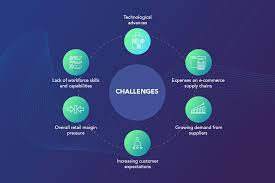
Before generative AI became mainstream, tech-savvy retailers had long been leveraging transformative technologies to automate tasks and understand consumer behavior. Insights from consumer and future trends, along with predictive analytics, have long guided retailers in improving customer experiences and enhancing operational efficiency. AI for Consumers and Retailers improved customer experiences. While AI is currently used for personalized recommendations and online customer support, many consumers still harbor distrust towards AI. Salesforce is addressing this concern by promoting trustworthy AI with human oversight and implementing powerful controls that focus on mitigating high-risk AI outcomes. This approach is crucial as many knowledge workers fear losing control over AI. Although people trust AI to handle significant portions of their work, they believe that increased human oversight would bolster their confidence in AI. Building this trust is a challenge retailers must overcome to fully harness AI’s potential as a reliable assistant. So, where does the retail industry stand with AI, and how can retailers build consumer trust while developing AI responsibly? AI for Consumers and Retailers Recent research from Salesforce and the Retail AI Council highlights how AI is reshaping consumer behavior and retailer interactions. AI is now integral to providing personalized deals, suggesting tailored products, and enhancing customer service through chatbots. Retailers are increasingly embedding generative AI into their business operations. A significant majority (93%) of retailers report using generative AI for personalization, enabling customers to find products and make purchases faster through natural language interactions on digital storefronts and messaging apps. For instance, a customer might tell a retailer’s AI assistant about their camping needs, and based on location, preferences, and past purchases, the AI can recommend a suitable tent and provide a direct link for checkout and store collection. As of early 2024, 92% of retailers’ investments were directed towards AI technology. While AI is not new to retail, with 59% of merchants already using it for product recommendations and 55% utilizing digital assistants for online purchases, its applications continue to expand. From demand forecasting to customer sentiment analysis, AI enhances consumer experiences by predicting preferences and optimizing inventory levels, thereby reducing markdowns and improving efficiency. Barriers and Ethical Considerations Despite its promise, integrating generative AI in retail faces significant challenges, particularly regarding bias in AI outputs. The need for clear ethical guidelines in AI use within retail is pressing, underscoring the gap between adoption rates and ethical stewardship. Strategies that emphasize transparency and accountability are vital for fostering responsible AI innovation. Half of the surveyed retailers indicated they could fully comply with stringent data security standards and privacy regulations, demonstrating the industry’s commitment to protecting consumer data amidst evolving regulatory landscapes. Retailers are increasingly aware of the risks associated with AI integration. Concerns about bias top the list, with half of the respondents worried about prejudiced AI outcomes. Additionally, issues like hallucinations (38%) and toxicity (35%) linked to generative AI implementation highlight the need for robust mitigation strategies. A majority (62%) of retailers have established guidelines to address transparency, data security, and privacy concerns related to the ethical deployment of generative AI. These guidelines ensure responsible AI use, emphasizing trustworthy and unbiased outputs that adhere to ethical standards in the retail sector. These insights reveal a dual imperative for retailers: leveraging AI technologies to enhance operational efficiency and customer experiences while maintaining stringent ethical standards and mitigating risks. Consumer Perceptions and the Future of AI in Retail As AI continues to redefine retail, balancing ethical considerations with technological advancements is essential. To combat consumer skepticism, companies should focus on transparent communication about AI usage and emphasize that humans, not technology, are ultimately in control. Whether aiming for top-line growth or bottom-line efficiency, AI is a crucial addition to a retailer’s technology stack. However, to fully embrace AI, retailers must take consumers on the journey and earn their trust. Like Related Posts Who is Salesforce? Who is Salesforce? Here is their story in their own words. From our inception, we’ve proudly embraced the identity of Read more Salesforce Marketing Cloud Transactional Emails Salesforce Marketing Cloud Transactional Emails are immediate, automated, non-promotional messages crucial to business operations and customer satisfaction, such as order Read more Salesforce Unites Einstein Analytics with Financial CRM Salesforce has unveiled a comprehensive analytics solution tailored for wealth managers, home office professionals, and retail bankers, merging its Financial Read more AI-Driven Propensity Scores AI plays a crucial role in propensity score estimation as it can discern underlying patterns between treatments and confounding variables Read more

Read More
Rold of Small Language Models

Role of Small Language Models

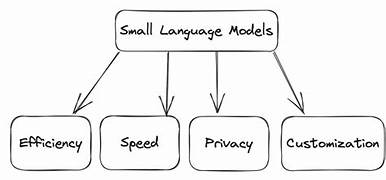
The Role of Small Language Models (SLMs) in AI While much attention is often given to the capabilities of Large Language Models (LLMs), Small Language Models (SLMs) play a vital role in the AI landscape. Role of Small Language Models. Large vs. Small Language Models LLMs, like GPT-4, excel at managing complex tasks and providing sophisticated responses. However, their substantial computational and energy requirements can make them impractical for smaller organizations and devices with limited processing power. In contrast, SLMs offer a more feasible solution. Designed to be lightweight and resource-efficient, SLMs are ideal for applications operating in constrained computational environments. Their reduced resource demands make them easier and quicker to deploy, while also simplifying maintenance. What are Small Language Models? Small Language Models (SLMs) are neural networks engineered to generate natural language text. The term “small” refers not only to the model’s physical size but also to its parameter count, neural architecture, and the volume of data used during training. Parameters are numeric values that guide a model’s interpretation of inputs and output generation. Models with fewer parameters are inherently simpler, requiring less training data and computational power. Generally, models with fewer than 100 million parameters are classified as small, though some experts consider models with as few as 1 million to 10 million parameters to be small in comparison to today’s large models, which can have hundreds of billions of parameters. How Small Language Models Work SLMs achieve efficiency and effectiveness with a reduced parameter count, typically ranging from tens to hundreds of millions, as opposed to the billions seen in larger models. This design choice enhances computational efficiency and task-specific performance while maintaining strong language comprehension and generation capabilities. Techniques such as model compression, knowledge distillation, and transfer learning are critical for optimizing SLMs. These methods enable SLMs to encapsulate the broad understanding capabilities of larger models into a more concentrated, domain-specific toolset, facilitating precise and effective applications while preserving high performance. Advantages of Small Language Models Applications of Small Language Models Role of Small Language Models is lengthy. SLMs have seen increased adoption due to their ability to produce contextually coherent responses across various applications: Small Language Models vs. Large Language Models Feature LLMs SLMs Training Dataset Broad, diverse internet data Focused, domain-specific data Parameter Count Billions Tens to hundreds of millions Computational Demand High Low Cost Expensive Cost-effective Customization Limited, general-purpose High, tailored to specific needs Latency Higher Lower Security Risk of data exposure through APIs Lower risk, often not open source Maintenance Complex Easier Deployment Requires substantial infrastructure Suitable for limited hardware environments Application Broad, including complex tasks Specific, domain-focused tasks Accuracy in Specific Domains Potentially less accurate due to general training High accuracy with domain-specific training Real-time Application Less ideal due to latency Ideal due to low latency Bias and Errors Higher risk of biases and factual errors Reduced risk due to focused training Development Cycles Slower Faster Conclusion The role of Small Language Models (SLMs) is increasingly significant as they offer a practical and efficient alternative to larger models. By focusing on specific needs and operating within constrained environments, SLMs provide targeted precision, cost savings, improved security, and quick responsiveness. As industries continue to integrate AI solutions, the tailored capabilities of SLMs are set to drive innovation and efficiency across various domains. Like Related Posts Who is Salesforce? Who is Salesforce? Here is their story in their own words. From our inception, we’ve proudly embraced the identity of Read more Salesforce Marketing Cloud Transactional Emails Salesforce Marketing Cloud Transactional Emails are immediate, automated, non-promotional messages crucial to business operations and customer satisfaction, such as order Read more Salesforce Unites Einstein Analytics with Financial CRM Salesforce has unveiled a comprehensive analytics solution tailored for wealth managers, home office professionals, and retail bankers, merging its Financial Read more AI-Driven Propensity Scores AI plays a crucial role in propensity score estimation as it can discern underlying patterns between treatments and confounding variables Read more

Read More
Healthcare IT Lessons from CrowdStrike

Healthcare IT Lessons from CrowdStrike

Post-Outage Recovery and Lessons from the CrowdStrike Incident Following the CrowdStrike outage on July 19, 2024, companies globally have been working to restore business continuity and enhance their resilience for future incidents. The outage, caused by a faulty content update, led to crashes on approximately 8.5 million Windows devices, affecting hospitals, airlines, and other businesses. Although less than 1% of all Windows machines were impacted, the incident caused significant disruptions, including appointment cancellations at hospitals. For instance, Mass General Brigham canceled all non-urgent visits on the day the outage began. Other healthcare organizations, such as Memorial Sloan Kettering Cancer Center, Cleveland Clinic, and Mount Sinai, also faced operational challenges. The cause of the outage was a defective content configuration update to CrowdStrike’s Falcon threat detection platform, not a cyberattack. A bug in the content validator allowed the faulty update to bypass validation, as noted in CrowdStrike’s preliminary post-incident review. David Finn, Executive Vice President of Governance, Risk, and Compliance at First Health Advisory, shared with TechTarget Editorial, “The recovery is well underway, and most healthcare organizations are back up and running. While the scope was smaller compared to other recent incidents in healthcare, the response was effective. There are valuable lessons to be learned.” Preparing for Future Incidents Finn, with 40 years of experience in health IT security, emphasized that incidents are inevitable. “The challenge is to plan, prepare, and be able to recover and stay resilient,” he stated. Whether facing a major cyberattack like the February 2024 Change Healthcare incident or an IT outage without malicious intent, healthcare organizations must be ready for various cyber incidents affecting critical systems. He highlighted the importance of thorough due diligence and incident response planning. Addressing potential operational challenges in advance and planning for cybersecurity events or IT failures will prove beneficial when an incident occurs. “We need to rethink how we deploy software,” Finn added. “Human errors will always happen, and it’s our job to protect against those mistakes.” Building Cyber-Resilience Cyber-resilience is crucial for quickly recovering and resuming operations. Organizations should anticipate incidents and focus on building resilience. Finn noted, “While I still trust CrowdStrike, trust does not guarantee perfection. Resilience and redundancy are vital.” Healthcare organizations responded swiftly to the CrowdStrike incident, with Mass General Brigham activating its incident command to manage the situation. The organization ensured that clinics and emergency departments remained open for urgent health concerns and resumed scheduled appointments and procedures by July 22. Evaluating Risk and Updating Protocols Erik Weinick, co-head of the privacy and cybersecurity practice at Otterbourg, urged organizations to use the CrowdStrike incident as an opportunity to reevaluate their risk management protocols. “Even if the incident was accidental, organizations should conduct information audits, penetration testing, update system mappings, and reinforce security practices like multifactor authentication and strong password policies.” Addressing Third-Party Risk The outage underscored the importance of managing third-party risks. The interconnectedness of healthcare systems amplifies these risks, as evidenced by some of the largest healthcare data breaches in recent years originating from third-party vendors. Finn suggested that while organizations may conduct risk analyses on vendors like CrowdStrike, they should also inquire about the tools used in software development. “We need standards and certifications for software used in critical infrastructure sectors,” he said. In response to the incident, CrowdStrike committed to enhancing its software resilience by adding more validation checks and conducting independent third-party security code reviews. Weinick advised reviewing vendor agreements, updating business disruption insurance coverage, and conducting tabletop exercises to rehearse business continuity and recovery procedures for all potential disruptions. Overall, the CrowdStrike outage highlighted critical IT and security considerations, emphasizing the need for resilience, effective third-party risk management, and robust incident response and recovery plans. Like Related Posts Who is Salesforce? Who is Salesforce? Here is their story in their own words. From our inception, we’ve proudly embraced the identity of Read more Salesforce Marketing Cloud Transactional Emails Salesforce Marketing Cloud Transactional Emails are immediate, automated, non-promotional messages crucial to business operations and customer satisfaction, such as order Read more Salesforce Unites Einstein Analytics with Financial CRM Salesforce has unveiled a comprehensive analytics solution tailored for wealth managers, home office professionals, and retail bankers, merging its Financial Read more AI-Driven Propensity Scores AI plays a crucial role in propensity score estimation as it can discern underlying patterns between treatments and confounding variables Read more

Read More
AI and Productivity

AI and Productivity

AI and Productivity. Agencies and brands often find themselves tangled in tasks that don’t add much value. Enter AI—a tool that might just bring some much-needed order to this chaos. AI won’t eliminate the intensity of agency life, but it can transform that intensity into something valuable.. Grace Meldrum from Salesforce has some ideas on how AI can streamline operations. Imagine working at or with an agency. For many marketers, it’s a rollercoaster ride. On a good day, it’s all about creativity and pushing boundaries. On a bad day, it’s chaotic and stressful. Stephen Quinn, CEO of Atomic, recently likened it to “air traffic control”—only with more turbulence. Campaigns are constantly taking off, changing direction, and landing in unexpected places. With marketing budgets slashed by 15% over the past year, making the most of these moments is crucial for agencies—it can mean the difference between landing new clients or losing key accounts. Fortunately, progress is on the horizon. Emerging AI tools are set to make life easier for agencies and their brand partners. Communication platforms have already improved global team connectivity, and integration with other apps has facilitated smooth cross-functional work. Now, AI is ready to take things to the next level. Powered by AI – AI and Productivity In a world where time is always running short—whether it’s a looming deadline, a product launch, or a quarter-end—AI can help reclaim those precious hours. Many of us find ourselves bogged down with repetitive tasks that don’t really add value. Here’s where AI steps in. Take recent experience coordinating a world tour event. The event was a complex puzzle of moving parts. While oversight was crucial, keeping track of every detail manually would have been impossible. Enter AI. Using Slack’s AI-driven recap and thread summary tools, we received daily updates highlighting key insights and decisions. It was a game-changer. We didn’t have to dig through endless emails or ask agencies to provide recaps. AI saved us a whopping 373 minutes of reading time—over six hours that we could reinvest into delivering an exceptional event. Multiply those savings across teams, and the impact of AI becomes even more apparent. Keeping It Human While AI can boost efficiency, it’s not here to replace creativity. Sam Pepper, group creative director at Wasserman, aptly describes AI as “the enemy of the mundane.” AI excels at handling repetitive tasks, but creativity remains a human domain. Creativity thrives on human elements—brainstorming, collaborating, and sometimes making mistakes. AI should complement these processes, not replace them. By offloading mundane tasks to AI, we can focus more on the messy, iterative process of crafting standout campaigns. Jumping into the AI Era Marketers are no strangers to change, from the advent of TV to the rise of social media. When it comes to AI, the best approach is to dive in. Start small—experiment with a few use cases. Many AI tools, like the recap feature in Slack, require minimal setup. AI and Productivity. Moreover, centralizing your data can maximize AI’s effectiveness. Tools like Slack bring together your resources and team, providing AI with the insights it needs to deliver real value. AI won’t eliminate the intensity of agency life, but it can transform that intensity into something valuable. By reducing administrative drudgery and freeing up time, AI can shift the focus from stressful days to moments of creative brilliance. Ready to elevate your marketing game? Explore the possibilities with Slack today. Like Related Posts Who is Salesforce? Who is Salesforce? Here is their story in their own words. From our inception, we’ve proudly embraced the identity of Read more Salesforce Marketing Cloud Transactional Emails Salesforce Marketing Cloud Transactional Emails are immediate, automated, non-promotional messages crucial to business operations and customer satisfaction, such as order Read more Salesforce Unites Einstein Analytics with Financial CRM Salesforce has unveiled a comprehensive analytics solution tailored for wealth managers, home office professionals, and retail bankers, merging its Financial Read more AI-Driven Propensity Scores AI plays a crucial role in propensity score estimation as it can discern underlying patterns between treatments and confounding variables Read more

Read More
guide to RAG

Tectonic Guide to RAG

Guide to RAG (Retrieval-Augmented Generation) Retrieval-Augmented Generation (RAG) has become increasingly popular, and while it’s not yet as common as seeing it on a toaster oven manual, it is expected to grow in use. Despite its rising popularity, comprehensive guides that address all its nuances—such as relevance assessment and hallucination prevention—are still scarce. Drawing from practical experience, this insight offers an in-depth overview of RAG. Why is RAG Important? Large Language Models (LLMs) like ChatGPT can be employed for a wide range of tasks, from crafting horoscopes to more business-centric applications. However, there’s a notable challenge: most LLMs, including ChatGPT, do not inherently understand the specific rules, documents, or processes that companies rely on. There are two ways to address this gap: How RAG Works RAG consists of two primary components: While the system is straightforward, the effectiveness of the output heavily depends on the quality of the documents retrieved and how well the Retriever performs. Corporate documents are often unstructured, conflicting, or context-dependent, making the process challenging. Search Optimization in RAG To enhance RAG’s performance, optimization techniques are used across various stages of information retrieval and processing: Python and LangChain Implementation Example Below is a simple implementation of RAG using Python and LangChain: pythonCopy codeimport os import wget from langchain.vectorstores import Qdrant from langchain.embeddings import OpenAIEmbeddings from langchain import OpenAI from langchain_community.document_loaders import BSHTMLLoader from langchain.chains import RetrievalQA # Download ‘War and Peace’ by Tolstoy wget.download(“http://az.lib.ru/t/tolstoj_lew_nikolaewich/text_0073.shtml”) # Load text from html loader = BSHTMLLoader(“text_0073.shtml”, open_encoding=’ISO-8859-1′) war_and_peace = loader.load() # Initialize Vector Database embeddings = OpenAIEmbeddings() doc_store = Qdrant.from_documents( war_and_peace, embeddings, location=”:memory:”, collection_name=”docs”, ) llm = OpenAI() # Ask questions while True: question = input(‘Your question: ‘) qa = RetrievalQA.from_chain_type( llm=llm, chain_type=”stuff”, retriever=doc_store.as_retriever(), return_source_documents=False, ) result = qa(question) print(f”Answer: {result}”) Considerations for Effective RAG Ranking Techniques in RAG Dynamic Learning with RELP An advanced technique within RAG is Retrieval-Augmented Language Model-based Prediction (RELP). In this method, information retrieved from vector storage is used to generate example answers, which the LLM can then use to dynamically learn and respond. This allows for adaptive learning without the need for expensive retraining. Guide to RAG RAG offers a powerful alternative to retraining large language models, allowing businesses to leverage their proprietary knowledge for practical applications. While setting up and optimizing RAG systems involves navigating various complexities, including document structure, query processing, and ranking, the results are highly effective for most business use cases. Like Related Posts Who is Salesforce? Who is Salesforce? Here is their story in their own words. From our inception, we’ve proudly embraced the identity of Read more Salesforce Unites Einstein Analytics with Financial CRM Salesforce has unveiled a comprehensive analytics solution tailored for wealth managers, home office professionals, and retail bankers, merging its Financial Read more AI-Driven Propensity Scores AI plays a crucial role in propensity score estimation as it can discern underlying patterns between treatments and confounding variables Read more Tectonic’s Successful Salesforce Track Record Salesforce Technology Services Integrator – Tectonic has successfully delivered Salesforce in a variety of industries including Public Sector, Hospitality, Manufacturing, Read more
Read More
gettectonic.com